VRINDAVAN (UTTAR PRADESH) – KRISHNA’S CHILDHOOD LAND
Vrindavan is one of the most spiritually significant towns in India, deeply associated with the early life of Lord Krishna. Located on the banks of the Yamuna River, it holds immense cultural, historical, and religious importance in Hindu tradition. Vrindavan is widely known as the place where Lord Krishna spent his childhood, performed divine pastimes, and spread the message of love, devotion and righteousness.
The town is filled with thousands of temples, sacred groves, ghats, and ashrams that attract devotees and visitors from across the world. Among its most famous landmarks are Banke Bihari Temple ISKCON Temple, Prem Mandir, and Radha Raman Temple. Each of these places reflects devotion and architectural beauty that adds to the spiritual atmosphere of the city.
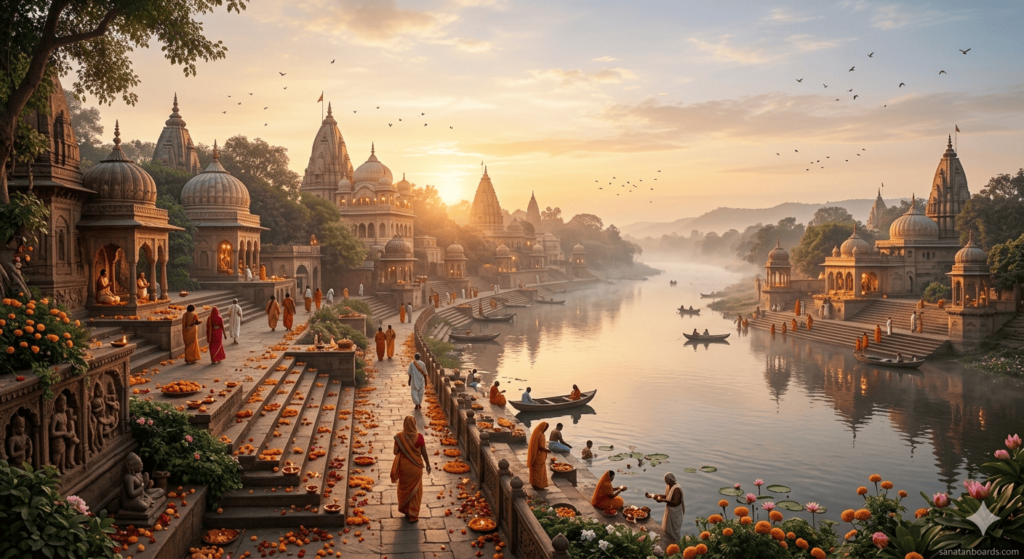
Vrindavan is not just a religious destination; it is a living symbol of faith and devotion. The streets echo with devotional songs, chants of “Radhe Radhe,” and rituals performed throughout the day. The town represents a unique blend of spirituality and culture that has been preserved for centuries.
Pilgrims believe that visiting Vrindavan brings peace of mind and spiritual upliftment. It is also closely connected with the neighboring city of Mathura, the birthplace of Lord Krishna. Together, these cities form a sacred pilgrimage circuit.
In modern times, Vrindavan has also become a center for spiritual tourism, attracting both Indian and international visitors. Despite modernization, it still retains its ancient charm and divine atmosphere.
Vrindavan stands as a timeless reminder of devotion, love, and spiritual connection, making it one of the most revered destinations in India.
What Is Vrindavan (Uttar Pradesh) – Krishna’s Childhood Land ?
Vrindavan is a sacred town in Uttar Pradesh, India, known globally as the childhood abode of Lord Krishna. According to Hindu scriptures, this is the place where Krishna spent his early years, playing with friends, performing divine miracles, and engaging in playful yet spiritually meaningful activities known as “leelas.”
The identity of Vrindavan is deeply rooted in devotion, especially toward Lord Krishna and Radha. It is believed that every corner of the town is filled with divine presence. The forests, once lush and natural, were the setting for Krishna’s childhood pastimes such as playing the flute, dancing with the gopis, and protecting the village from evil forces.
Today, Vrindavan is a major pilgrimage destination. It contains hundreds of temples dedicated to Krishna and Radha. The spiritual environment is maintained through continuous prayers, bhajans, and religious gatherings. The town is also a part of the larger Braj Bhoomi region, which is sacred in Hindu mythology.
Vrindavan is not only important for religious reasons but also for its cultural and historical significance. It preserves ancient traditions of devotion (bhakti) that continue to inspire millions of followers worldwide. The town symbolizes love, devotion, and the eternal bond between humans and the divine.
Many spiritual organizations, including ISKCON, have contributed to spreading the teachings of Krishna from Vrindavan to the global stage. As a result, the town has become a universal symbol of peace and devotion.
Who Is Required Vrindavan (Uttar Pradesh) – Krishna’s Childhood Land ?
Vrindavan holds significance for devotees of Lord Krishna, spiritual seekers, historians, cultural researchers, and tourists. It is especially important for followers of Hinduism who regard Krishna as a supreme deity and visit Vrindavan to connect with his divine presence.
Devotees are the primary group for whom Vrindavan is required. They visit temples, participate in rituals, and engage in devotional singing to experience spiritual peace and fulfillment. For them, Vrindavan is not just a geographical location but a sacred space that strengthens their faith.
Spiritual teachers and monks also consider Vrindavan essential. It serves as a center for learning, meditation, and teaching religious philosophy. Many ashrams in Vrindavan offer spiritual guidance and training in ancient scriptures.
Historians and researchers require Vrindavan to study its cultural evolution, religious traditions, and architectural heritage. The temples and ancient sites provide insights into centuries-old practices and beliefs.
Tourists and cultural explorers also visit Vrindavan to experience Indian spirituality and heritage. International visitors are often drawn by curiosity about Hindu traditions and Krishna’s stories.
Additionally, Vrindavan is important for artists, musicians, and writers who find inspiration in its devotional atmosphere. The town’s spiritual energy influences music, literature, and visual arts.
In modern times, Vrindavan is also required for spiritual tourism development, contributing to local economy and cultural preservation. It supports hospitality, handicrafts, and religious tourism industries.
Thus, Vrindavan is required by multiple groups for religious, cultural, academic, and economic reasons, making it a globally significant spiritual destination.
When Vrindavan (Uttar Pradesh) – Krishna’s Childhood Land Is Required ?
Vrindavan becomes especially significant during various religious festivals and spiritual occasions throughout the year. The most important times when Vrindavan is required are during Janmashtami, Radhashtami, Holi, and Kartik Purnima.
Janmashtami, the celebration of Lord Krishna’s birth, is one of the biggest festivals in Vrindavan. During this time, thousands of devotees gather to witness midnight celebrations, fasting rituals, and devotional performances. Temples are beautifully decorated, and the entire town becomes vibrant with spiritual energy.
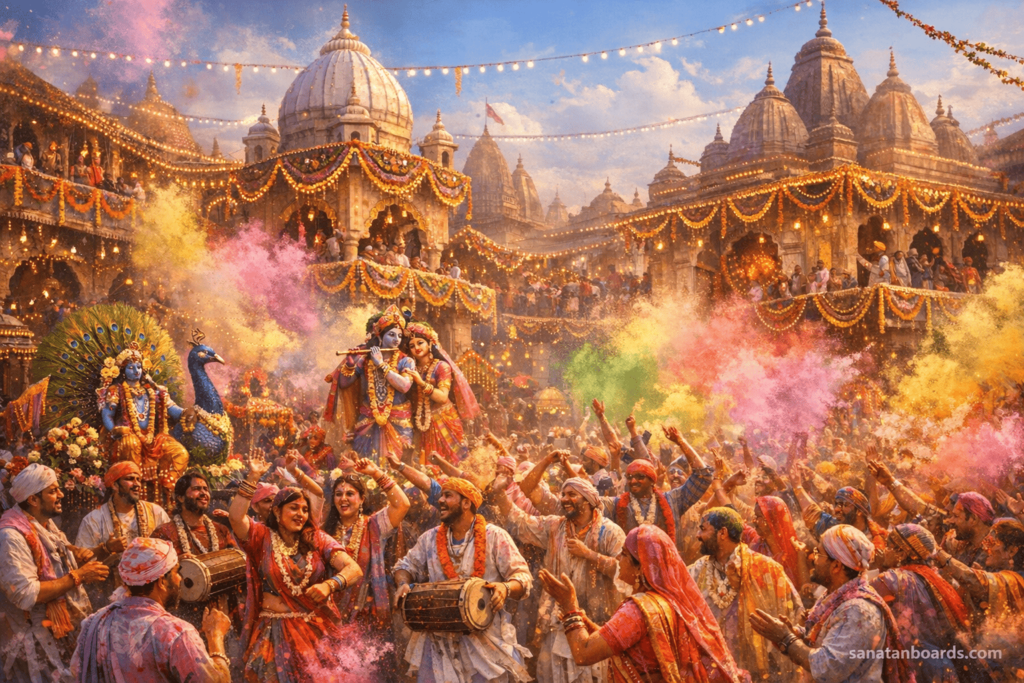
Holi, the festival of colors, is another major occasion when Vrindavan gains global attention. Known as “Braj Holi,” it is celebrated with great enthusiasm and devotion. People play with colors, sing devotional songs, and recreate scenes from Krishna’s playful childhood.
Radhashtami, which celebrates the birth of Radha, is also widely observed. Devotees visit temples and perform special prayers dedicated to Radha and Krishna’s divine love.
Kartik month (October–November) is considered highly sacred in Vrindavan. Devotees participate in evening aartis, lighting lamps along the Yamuna River and visiting temples for spiritual purification.
Apart from festivals, Vrindavan is also required throughout the year by pilgrims seeking peace, devotion, and spiritual growth. Many people visit during weekends, holidays, or spiritual retreats.
The timing of visits is also important for researchers and cultural observers who study how religious practices change during different seasons and festivals.
Even in modern times, Vrindavan is required during spiritual tourism seasons when travel agencies organize religious tours for domestic and international visitors.
Thus, Vrindavan is not limited to a specific time; it becomes spiritually active and relevant during multiple occasions throughout the year, especially during major Hindu festivals and devotional seasons.
Where Vrindavan (Uttar Pradesh) – Krishna’s Childhood Land Is Required ?
Vrindavan is located in the Mathura district of the northern Indian state of Uttar Pradesh. It lies on the western bank of the Yamuna River and forms an important part of the Braj region, which is deeply associated with Lord Krishna’s life.
Geographically, Vrindavan is situated close to Mathura city, which is considered Krishna’s birthplace. The proximity of these two cities makes them part of a major pilgrimage circuit for devotees. Vrindavan is approximately 10–15 kilometers from Mathura and is well connected by road and rail networks.
The town is required in religious geography as one of the most sacred pilgrimage sites in India. It contains hundreds of temples spread across narrow lanes, ghats, and spiritual centers. Each temple marks a specific event or story from Krishna’s life.
Vrindavan is also required in cultural mapping of India’s spiritual landscape. It represents a core location in Hindu mythology and devotional traditions. The forests, once natural landscapes, are symbolically preserved through temples and sacred groves.
From a tourism perspective, Vrindavan is required as part of the Golden Triangle spiritual extension (Delhi–Agra–Mathura–Vrindavan). It attracts millions of visitors annually.
The town is also required in global spiritual networks due to the presence of international organizations like ISKCON, which maintain temples and cultural centers connecting Vrindavan to devotees worldwide.
Economically, Vrindavan’s location supports religious tourism industries, including hotels, transport services, guide services, and handicrafts.
Thus, Vrindavan’s “where” is not just geographical but also cultural, spiritual, and economic, making it an essential location in India’s religious and tourism framework.
How Vrindavan (Uttar Pradesh) – Krishna’s Childhood Land Is Required ?
Vrindavan is required through various practices, traditions, and systems that sustain its spiritual importance. It functions through devotion, temple rituals, festivals, and cultural preservation.
Devotional practices are the primary way Vrindavan is required. Daily rituals such as aarti, bhajan, kirtan, and chanting maintain the spiritual atmosphere. Devotees participate actively in these practices to experience divine connection.
Temples play a key role in how Vrindavan is required. Each temple follows structured rituals, including morning prayers, offerings, and evening ceremonies. These rituals preserve ancient traditions passed down for generations.
Festivals also define how Vrindavan is required. During events like Janmashtami and Holi, the entire town transforms into a spiritual celebration space. Temporary arrangements, crowd management, and special rituals are organized to accommodate large gatherings.
Spiritual organizations, such as ISKCON, help maintain Vrindavan’s global relevance. They organize teachings, meditation programs, and cultural events that spread Krishna’s philosophy.
Tourism infrastructure is another way Vrindavan is required. Hotels, transport services, guides, and local businesses support visitors while maintaining the spiritual environment.
Cultural preservation efforts ensure that Vrindavan’s heritage is protected. Restoration of temples, cleaning of ghats, and environmental initiatives help maintain its sacred identity.
Educational programs and research studies also contribute to understanding Vrindavan’s historical and spiritual importance.
Thus, Vrindavan is required through a combination of devotion, tradition, infrastructure, and global spiritual engagement, making it a continuously active religious center.
Case Study Vrindavan (Uttar Pradesh) – Krishna’s Childhood Land
Vrindavan serves as a unique case study in religious tourism, cultural preservation, and spiritual heritage management. As one of India’s most visited pilgrimage destinations, it offers valuable insights into how sacred spaces evolve while maintaining traditional identity.
A major aspect of Vrindavan’s case study is its transformation from a forested mythological landscape into a densely populated spiritual town. Over centuries, it has developed into a hub of temples, ashrams, and religious institutions. Despite urbanization, it has preserved its spiritual essence through strict cultural practices.
Religious tourism is a key focus area. Millions of pilgrims visit Vrindavan annually, especially during festivals like Janmashtami and Holi. This influx creates both opportunities and challenges. On one hand, it supports the local economy through hospitality, transportation, and handicrafts. On the other hand, it creates issues like overcrowding, waste management, and environmental pressure.
Temple management is another important element. Major temples such as Banke Bihari Temple and ISKCON Temple follow structured systems for crowd control, rituals, and visitor engagement. These institutions balance tradition with modern management techniques.
Environmental sustainability is a growing concern. The Yamuna River, which holds spiritual significance, faces pollution challenges. Several initiatives have been introduced to clean the river and restore its ecological balance. Green campaigns and awareness programs are increasingly part of Vrindavan’s development model.
Cultural preservation efforts are also significant. Traditional music, dance, and devotional practices are actively maintained. Festivals are not only religious events but also cultural showcases that attract global attention.
Economically, Vrindavan supports a large informal and formal economy. Local artisans, flower sellers, food vendors, and hotel operators depend heavily on pilgrimage-driven income. This makes tourism a critical economic backbone.
Socially, Vrindavan is home to many ashrams and elderly care centers, often called “seva dham,” where spiritual living and service-oriented lifestyles are practiced. It also attracts international devotees who settle permanently for spiritual learning.
However, challenges exist. Infrastructure strain, sanitation issues, and uncontrolled urban expansion threaten the town’s sustainability. Authorities and religious organizations are working together to improve facilities while preserving its sacred identity.
Technological integration is also emerging. Digital donation systems, online darshan, and virtual tours have expanded Vrindavan’s reach globally.
In conclusion, Vrindavan represents a complex case study where spirituality, culture, economy, and environmental concerns intersect. It demonstrates how ancient religious centers can adapt to modern demands while preserving their core identity.
White Paper On Vrindavan (Uttar Pradesh) – Krishna’s Childhood Land
Vrindavan stands as a globally significant spiritual and cultural heritage site. This white paper examines its religious importance, socio-economic impact, environmental challenges, and future development opportunities.
Vrindavan’s primary identity is rooted in Hindu mythology as the childhood land of Lord Krishna. It serves as a major pilgrimage center, attracting millions of devotees annually. Its religious ecosystem is built around temples, rituals, festivals, and devotional practices.
From a cultural perspective, Vrindavan represents the Bhakti movement’s living tradition. Devotion, love, and surrender to the divine are central themes expressed through music, dance, and worship practices. These traditions continue to thrive in modern times.
Economically, Vrindavan plays a vital role in Uttar Pradesh’s tourism sector. Religious tourism generates employment in hospitality, transport, retail, and services. Local communities depend heavily on pilgrimage-driven income, making it a significant economic driver.
Infrastructure development has improved accessibility, but challenges remain. Narrow roads, overcrowding during festivals, and limited urban planning create pressure on existing systems. Sustainable development is essential to balance growth with preservation.
Environmental concerns are critical. The Yamuna River, sacred to Vrindavan, faces pollution due to urban waste and industrial discharge. Conservation projects are underway, focusing on river cleaning, waste management, and ecological restoration.
Socially, Vrindavan is unique due to its large population of spiritual seekers, monks, and elderly residents. Ashrams and charitable institutions provide shelter, food, and spiritual guidance to thousands of people.
Technological integration is gradually transforming Vrindavan. Digital platforms for donations, online temple services, and virtual pilgrimages are expanding accessibility for global devotees.
However, there is a need for structured governance to manage tourism, environmental protection, and cultural preservation. Collaboration between government bodies, religious institutions, and local communities is essential.
Future opportunities include eco-spiritual tourism, heritage conservation projects, and smart infrastructure development. Vrindavan can serve as a model for sustainable religious tourism if managed effectively.
In conclusion, Vrindavan is not only a sacred town but #Sanatanboardsinvasai also a dynamic ecosystem of spirituality, economy, and culture. Its preservation and development require a balanced approach that respects tradition while embracing modernization.
Industry Application On Vrindavan (Uttar Pradesh) – Krishna’s Childhood Land
Vrindavan plays a significant role in multiple industries due to its global recognition as a major spiritual and pilgrimage destination. Its economic and cultural ecosystem supports several interconnected sectors that benefit from continuous religious tourism and heritage significance.
1. Tourism and Travel Industry
Vrindavan is a core destination in India’s religious tourism sector. Travel agencies design pilgrimage packages that include Vrindavan along with nearby sacred cities like Mathura and Govardhan. The town attracts millions of visitors annually, especially during festivals such as Janmashtami and Holi, driving demand for transport services, guides, and tour operators.
2. Hospitality Industry
Hotels, guest houses, dharamshalas, and lodges form a strong hospitality network in Vrindavan. This sector caters to domestic pilgrims as well as international visitors. Food services, local restaurants, and community kitchens also benefit from continuous visitor flow, creating employment opportunities for local residents.
3. Religious and Spiritual Services Industry
Vrindavan is a major center for spiritual organizations, temple administrations, and devotional institutions. Services such as puja arrangements, priest consultations, spiritual counseling, and donation management systems form an organized religious service ecosystem. Organizations like ISKCON contribute to global outreach and spiritual education.
4. Handicrafts and Local Economy
The local economy is supported by small-scale industries producing devotional items such as garlands, idols, prayer beads, incense sticks, and souvenirs. These products are in constant demand from pilgrims and tourists, supporting artisans and small vendors.
5. Education and Research Industry
Vrindavan is widely studied in fields like history, religious studies, anthropology, and cultural tourism. Universities and researchers use it as a live model for understanding Bhakti traditions, temple economies, and pilgrimage management systems.
6. Digital and Technology Industry
Modern digital platforms are increasingly used in Vrindavan for online darshan, virtual temple tours, e-donation systems, and mobile apps for pilgrims. Technology companies are also contributing to improving tourism management and crowd control systems.
7. Real Estate and Infrastructure Industry
Due to growing tourism, demand for hotels, residential spaces, and commercial properties has increased. Infrastructure development includes roads, sanitation systems, and smart city initiatives aimed at improving visitor experience.
Conclusion
Vrindavan functions as a multi-industry ecosystem where spirituality and economy are deeply interconnected. Its influence extends beyond #Sanatanboardsinmumbai religion, contributing significantly to tourism, hospitality, local trade, education, and digital transformation industries.
source : Vidushi lifestyle
ASK FAQ
1. What is Vrindavan famous for?
Vrindavan is famous as the childhood land of Lord Krishna and is known for its temples, devotion, and spiritual atmosphere.
2. Where is Vrindavan located?
Vrindavan is located in the Mathura district of Uttar Pradesh, India, on the banks of the Yamuna River.
3. Why do people visit Vrindavan?
People visit Vrindavan for pilgrimage, temple darshan, spiritual peace, festivals like Holi and Janmashtami, and religious tourism.
4. Which are the famous temples in Vrindavan?
Famous temples include Banke Bihari Temple, ISKCON Temple, Prem Mandir, and Radha Raman Temple.
5. What is the importance of Vrindavan in Hinduism?
Vrindavan is considered highly sacred in Hinduism as it is believed to be the place where Lord Krishna spent his childhood and performed divine pastimes.
Table of Contents
DISCLAIMER
This content is intended for informational, educational, and knowledge-based purposes only. It is written to provide general understanding of cultural, historical, and spiritual aspects associated with the subject. It does not intend to promote or interpret any religious belief in a biased manner.