
VARANASI (KASHI) (UTTAR PRADESH) – HOLY CITY OF SHIVA
Varanasi, also known as Kashi, is one of the oldest continuously inhabited cities in the world, located in the northern Indian state of Uttar Pradesh. Situated on the banks of the sacred river Ganga, the city holds immense spiritual, cultural, and historical importance. It is widely regarded as the spiritual capital of India and is deeply associated with Lord Shiva.
The city is a major center of learning, philosophy, mysticism, and devotion. For centuries, pilgrims from across the world have visited this divine city to seek spiritual liberation, perform rituals, and experience its unique cultural atmosphere. The presence of countless temples ghats and sacred sites makes it one of the most visited pilgrimage destinations.
Varanasi has a unique identity where life and spirituality blend seamlessly. The sound of temple bells, chanting of mantras, and evening aarti on the ghats create a divine ambiance that attracts not only devotees but also researchers, historians, and travelers. It represents the eternal cycle of life, death, and rebirth.
The city is also a hub of traditional arts, music, silk weaving, and education. Classical music and cultural traditions of India have flourished here for centuries. Varanasi is not just a geographical location but a living symbol of India’s spiritual heritage.
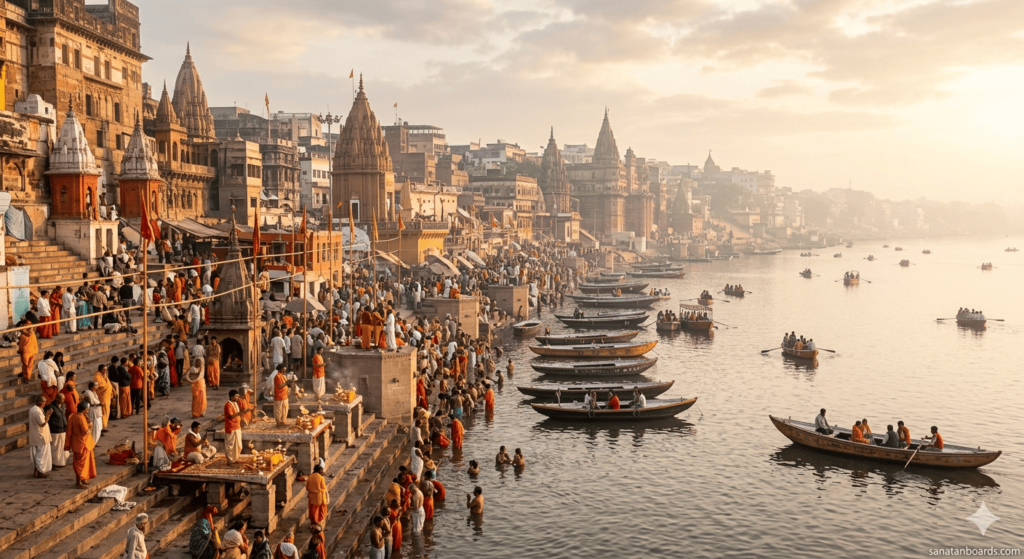
What Is Varanasi (Kashi) (Uttar Pradesh) – Holy City Of Shiva ?
Varanasi, also known as Kashi, is one of the oldest living cities in the world, located in the northern Indian state of Uttar Pradesh on the banks of the sacred River Ganga. It is widely recognized as the spiritual capital of India and holds immense religious, cultural, and historical importance. The city is deeply associated with Lord Shiva, and according to ancient beliefs, it is considered his divine abode. Because of this sacred connection, Varanasi is also known as the Holy City of Shiva.
The city is a major center of Hindu spirituality and pilgrimage. Millions of devotees from across India and the world visit Varanasi every year to seek blessings, perform religious rituals, and experience its divine atmosphere. One of the most important landmarks of the city is the Kashi Vishwanath Temple, which is dedicated to Lord Shiva and is one of the twelve Jyotirlingas in India. This temple is considered extremely sacred and plays a central role in the spiritual identity of Varanasi.
Varanasi is also famous for its ghats along the River Ganga. These ghats are steps leading down to the river, where people perform daily rituals, prayers, bathing ceremonies, and cremation rites. Among the most important ghats are Dashashwamedh Ghat and Manikarnika Ghat. These places represent the Hindu belief in the cycle of life, death, and rebirth. Many people believe that dying in Varanasi or having their last rites performed here leads to moksha, or liberation from the cycle of rebirth.
Apart from its religious importance, Varanasi is also a center of culture, education, and arts. The city has a long tradition of classical music, dance, philosophy, and Sanskrit learning. The famous Banaras Gharana of music has produced many legendary artists who have contributed to Indian classical music. The city is also known for its Banarasi silk sarees, which are highly valued in India and across the world for their intricate designs and craftsmanship.
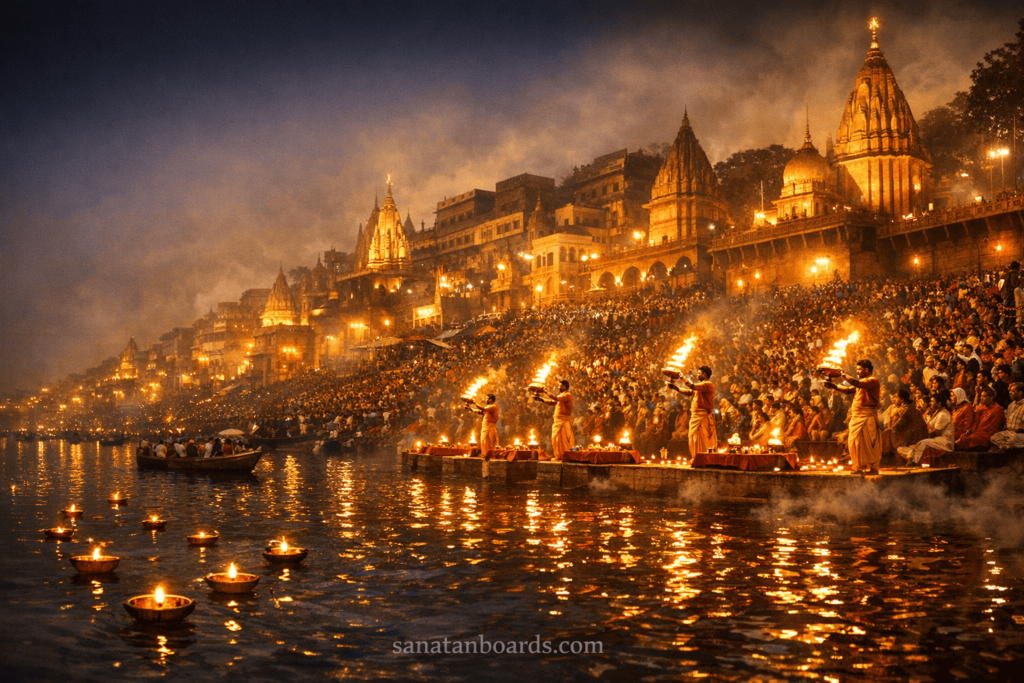
Varanasi has a unique lifestyle where spirituality is deeply integrated into daily life. The sound of temple bells, chanting of mantras, and the evening Ganga Aarti create a powerful spiritual environment. The Ganga Aarti, performed every evening at the ghats, is a major attraction where priests offer prayers to the river using lamps, incense, and chants, creating a mesmerizing and divine experience.
In addition, Varanasi is an important educational hub. Institutions like Banaras Hindu University attract students from all over the country and abroad. The city promotes studies in philosophy, arts, science, and culture, making it a blend of ancient knowledge and modern education.
Who Is Required Varanasi (Kashi) (Uttar Pradesh) – Holy City Of Shiva ?
Varanasi holds importance for multiple groups of people, each connected to the city in different ways. For spiritual seekers, it is a place of liberation and divine connection. Many believe that dying in Kashi grants salvation or moksha, freeing the soul from the cycle of rebirth.
For devotees of Lord Shiva, the city is a living manifestation of faith. Pilgrims visit to perform rituals, offer prayers, and participate in religious ceremonies along the ghats of the Ganga. Priests, saints, and spiritual leaders also consider it a sacred center for their practices.
For historians and researchers, Varanasi is a treasure of ancient knowledge, traditions, and architecture. It provides insights into India’s cultural evolution over thousands of years.
For artists and musicians, the city is a source of inspiration. The Banaras Gharana of classical music has produced legendary artists who have contributed significantly to Indian culture.
Tourists and learners also find the city valuable for understanding spirituality, culture, and heritage. Thus, Varanasi is required for spiritual growth, cultural preservation, academic research, and artistic inspiration.
When Varanasi (Kashi) (Uttar Pradesh) – Holy City Of Shiva Is Required ?
The importance of Varanasi is not limited to a specific time period; it is required throughout all stages of human life according to spiritual beliefs and cultural practices.
From a religious perspective, the city is required during important life events such as birth ceremonies, marriages, and death rituals. Many Hindus believe that visiting Varanasi at least once in a lifetime is essential for spiritual purification. The city is especially significant during festivals like Mahashivratri, Dev Deepawali, and Kartik Purnima, when thousands of devotees gather.
In times of personal spiritual search, individuals visit Varanasi to seek peace, enlightenment, and guidance. The city becomes a retreat for meditation and self-realization. Sadhus and saints often reside here permanently.
Historically, Varanasi has always been required as a center of learning and wisdom. Ancient scholars traveled here for studies in philosophy and scriptures.
Thus, Varanasi is timeless and continuously required in spiritual, cultural, and educational contexts.
Where Varanasi (Kashi) (Uttar Pradesh) – Holy City Of Shiva Is Required ?
Varanasi is required in multiple physical and spiritual locations. Geographically, it is situated on the banks of the sacred River Ganga in Uttar Pradesh. The ghats such as Dashashwamedh Ghat, Assi Ghat, and Manikarnika Ghat are the main centers of religious activity.
It is required in temples across the city, especially the Kashi Vishwanath Temple, which is the spiritual heart of Varanasi. These places serve as centers of worship, rituals, and devotion.
Beyond physical locations, Varanasi is required in cultural and religious traditions across India. It represents Indian spirituality and is often mentioned in religious scriptures, mythology, and philosophical texts.
Globally, Varanasi is required as a symbol of ancient civilization and spiritual heritage. It is studied and admired in tourism, culture, and academic research.
Even in emotional and spiritual dimensions, Varanasi is required in the hearts of devotees who may never visit physically but still connect with it through faith and devotion.
Thus, Varanasi exists not only in one place but across physical, cultural, and spiritual spaces.
How Varanasi (Kashi) (Uttar Pradesh) – Holy City Of Shiva Is Required ?
Varanasi is required through rituals, traditions, and spiritual practices followed by millions of devotees. One of the main ways it is required is through bathing in the River Ganga, which is believed to purify the soul and remove sins.
It is also required through daily prayers and temple worship, especially at the Kashi Vishwanath Temple. Devotees perform offerings, chants, and rituals dedicated to Lord Shiva.
The evening Ganga Aarti is another important practice that shows how Varanasi is required in spiritual life. The synchronized rituals performed on the ghats create a powerful spiritual experience.
Varanasi is also required through cultural traditions such as classical music, dance, and silk weaving. These art forms are deeply rooted in the city’s identity.
In education, it is required as a center for learning philosophy, Sanskrit, and ancient scriptures. Many institutions in Varanasi preserve and promote traditional knowledge.
It is also required in meditation and spiritual practices, where saints and seekers aim for self-realization and inner peace.
Thus, Varanasi is required through religious rituals, cultural traditions, and spiritual disciplines.
Case Study On Varanasi (Kashi) (Uttar Pradesh) – Holy City Of Shiva
Varanasi is one of the most powerful examples of a living heritage city in the world. It represents a continuous flow of culture, spirituality, and tradition that has existed for thousands of years without interruption. A major case study is the transformation of the Kashi Vishwanath Corridor, which improved access to the temple while preserving its historical and cultural identity. This development shows how modern infrastructure can coexist with ancient heritage.
Another important case is the Ganga Aarti at Dashashwamedh Ghat, which has become a global attraction. Every evening, priests perform synchronized rituals with lamps, chants, and prayers, creating a spiritual experience that draws visitors from across the world. This demonstrates how religious traditions can become a part of global cultural tourism.
The Banarasi silk industry is another strong case study. This traditional craft has survived centuries and continues to support thousands of artisans. It is now a globally recognized textile industry, showing how heritage crafts can contribute to modern economies.
Banaras Hindu University is also a key case study. It integrates modern education with traditional Indian knowledge systems, making Varanasi a center of academic excellence.
The city also demonstrates how spirituality and urban life coexist. Despite heavy population and modernization, Varanasi continues to preserve its ancient rituals, temples, and traditions.
However, challenges such as pollution of the River Ganga, overcrowding, and infrastructure pressure remain. These issues highlight the need for sustainable urban planning.
Overall, Varanasi serves as a living model of cultural sustainability, where spirituality, economy, education, and tourism exist together in harmony.
White Paper On Varanasi (Kashi) (Uttar Pradesh) – Holy City Of Shiva
Varanasi represents a unique and complex heritage ecosystem where spirituality, economy, culture, and education are deeply interconnected. The city is not only a religious center but also a living cultural and economic system that has evolved over thousands of years.
From a heritage perspective, Varanasi is one of the oldest continuously inhabited cities in the world. Its temples, ghats, and rituals form an unbroken chain of cultural continuity. Protecting this heritage while allowing modernization is a key requirement for sustainable development.
From a tourism perspective, Varanasi is one of India’s most visited spiritual destinations. The city attracts millions of domestic and international tourists every year. This creates economic opportunities but also puts pressure on infrastructure, transportation, and waste management systems.
Environmental sustainability is one of the biggest challenges. The River Ganga, which is central to the city’s identity, faces pollution issues due to urbanization and human activity. Conservation efforts and strict environmental policies are necessary to protect this sacred river.
Economically, Varanasi depends heavily on tourism, handicrafts, and silk weaving industries. Supporting traditional artisans and modernizing production techniques can improve livelihoods while preserving cultural identity.
From a social perspective, Varanasi represents diversity and coexistence. People from different backgrounds, beliefs, and regions live together in harmony, making it a socially rich environment.
Educationally, institutions in Varanasi play a major role in preserving ancient knowledge systems while also providing modern education. This dual system strengthens cultural continuity.
Policy recommendations include sustainable tourism #Sanatanboardsinvasai management, river conservation projects, heritage protection laws, and support for traditional industries. Smart urban planning is essential to balance development and preservation.
Thus, Varanasi stands as a model for heritage-based urban development where spirituality, economy, and culture must be carefully balanced for future sustainability.
Industry Application On Varanasi (Kashi) (Uttar Pradesh) – Holy City Of Shiva
Varanasi (Kashi) holds strong relevance across multiple industries due to its deep cultural heritage, spiritual significance, traditional craftsmanship, and growing modern infrastructure. The city is not only a religious destination but also an important economic and cultural hub that contributes to various sectors at local, national, and global levels.
Tourism and Hospitality Industry
Varanasi is one of the most important spiritual tourism destinations in India. Millions of domestic and international tourists visit the city every year to experience the ghats, temples, and Ganga Aarti. This has led to the growth of hotels, guest houses, travel agencies, tour guides, transport services, and food businesses. The hospitality sector heavily depends on pilgrimage tourism, making it one of the strongest industries in the region.
Textile and Handicraft Industry
The city is globally famous for Banarasi silk sarees and handwoven textiles. This industry is one of the oldest surviving traditional crafts in India. It provides employment to thousands of artisans and weavers. The demand for Banarasi silk in fashion, weddings, and luxury clothing markets supports both domestic and international trade. Handicrafts such as wooden toys, brassware, and decorative items also contribute to this sector.
Education and Research Industry
Varanasi is a major center for education, philosophy, Sanskrit studies, and cultural research. Institutions like Banaras Hindu University play a significant role in higher education and research. The city contributes to studies in Indian culture, history, religion, music, and social sciences, making it an important knowledge hub.
Cultural and Creative Industry
Varanasi has a strong influence on Indian classical music, dance, and art forms. The Banaras Gharana of music is world-renowned. The city inspires artists, filmmakers, writers, and content creators. Many documentaries, films, and digital media projects are based on its spiritual and cultural identity.
Religious and Pilgrimage Economy
Religious activities such as temple rituals, Ganga Aarti, and festivals like Mahashivratri generate a strong pilgrimage economy. Priests, priests’ services, donation systems, and religious tourism contribute significantly to the local economy.
Urban Development and Infrastructure Industry
Recent projects like the Kashi Vishwanath Corridor have boosted infrastructure development. Construction, transportation, smart city planning, and riverfront development projects are transforming the city while maintaining its heritage identity.
Environmental and River Management Industry
The River Ganga plays a central role in Varanasi’s identity. This has created focus areas in water management, pollution control, waste management, and environmental conservation projects. Various government and private initiatives work toward preserving the river ecosystem.
Conclusion
Varanasi serves as a multi-industry hub where tradition and modern development coexist. Its economy is driven by spirituality, culture, tourism, #Sanatanboardsinmumbai craftsmanship, education, and infrastructure development, making it one of the most unique cities in the world.
source : Muted Mythology
ASK FAQ
1. What is Varanasi (Kashi) famous for?
Varanasi is famous for its ancient temples, ghats of River Ganga, Ganga Aarti, Kashi Vishwanath Temple, spiritual significance, and Banarasi silk.
2. Why is Varanasi called the Holy City of Shiva?
Varanasi is called the Holy City of Shiva because it is believed to be founded by Lord Shiva and is home to the sacred Kashi Vishwanath Temple.
3. What is the importance of Varanasi in Hinduism?
Varanasi is considered one of the holiest cities where devotees believe visiting or dying brings moksha (liberation from rebirth).
4. What are the main industries in Varanasi?
The main industries in Varanasi include tourism, Banarasi silk weaving, handicrafts, education, cultural arts, and religious services.
5. Why do tourists visit Varanasi?
Tourists visit Varanasi to experience spiritual rituals, Ganga Aarti, ancient temples, cultural heritage, and traditional Indian lifestyle.
Table of Contents
DISCLAIMER
This blog is written for informational and educational purposes only. It is intended to provide general knowledge and structured understanding of the subject. It does not claim absolute historical, cultural, or scientific accuracy. Readers are advised to consult verified academic and official sources for detailed study.