
SRI VENKATESWARA TEMPLE (SYDNEY, AUSTRALIA)
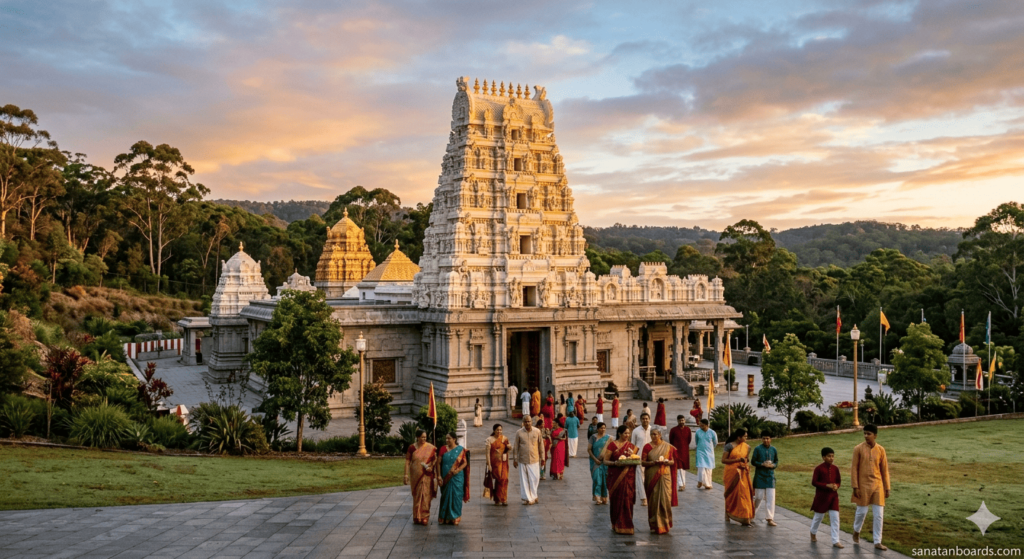
The Sri Venkateswara Temple, Sydney, Australia is one of the most significant Hindu temples in Australia, serving as a spiritual, cultural, and community landmark for devotees of Lord Venkateswara. Located in the southern region near Sydney, the temple represents a strong connection between traditional Indian religious practices and the multicultural landscape of modern Australia.
This temple is dedicated to Lord Venkateswara, a revered form of Lord Vishnu, who is worshipped widely in South India and across global Hindu communities. The temple acts as a center for religious devotion, cultural preservation, and community gathering for Hindu families living in Australia and visitors from around the world.
Beyond its spiritual importance, the temple also reflects the migration and settlement of Indian communities in Australia. It stands as a symbol of how cultural identity can be preserved even when people move far from their homeland. The temple architecture, rituals, and festivals closely follow traditional South Indian Agama Shastra practices, making it an authentic place of worship.
The temple is not only a religious site but also a cultural hub where festivals like Brahmotsavam Vaikunta Ekadasi, and other Hindu celebrations are observed with devotion. It provides educational programs, spiritual discourses, and community services that help younger generations understand their heritage.
What Is Sri Venkateswara Temple (Sydney, Australia) ?
The Sri Venkateswara Temple in Sydney is a Hindu place of worship dedicated primarily to Lord Venkateswara, a manifestation of Lord Vishnu. It is designed to follow traditional South Indian temple architecture and rituals, making it one of the most authentic Hindu temples outside India.
This temple serves as a sacred space where devotees come to offer prayers, perform rituals, and participate in spiritual activities. It is managed by a community organization that ensures that daily poojas (worship services), abhishekams (ritual bathing of the deity), and special religious ceremonies are conducted according to ancient scriptures.
The temple is also a representation of cultural preservation. It provides a familiar environment for Hindu immigrants who seek to maintain their religious identity while living abroad. It helps them stay connected to their roots and traditions.
In addition to its religious function, the temple acts as an educational institution where children and adults learn about Hindu scriptures, Sanskrit chants, and moral values. It also conducts cultural programs such as classical dance, music, and religious storytelling.
The temple is open to people of all backgrounds, making it an inclusive space that promotes cultural understanding. Visitors can observe rituals, learn about Hindu philosophy, and experience Indian traditions firsthand.
Overall, the Sri Venkateswara Temple is not just a building but a living institution that supports spiritual growth, cultural identity, and community bonding.
Who Is Required Sri Venkateswara Temple (Sydney, Australia) ?
The Sri Venkateswara Temple in Sydney is required and valued by multiple groups of people, especially those seeking spiritual, cultural, and community connection.
Primarily, Hindu devotees require the temple as a sacred space for worshipping Lord Venkateswara. For many families, especially those of South Indian origin, the temple provides continuity of religious practices that they would otherwise experience in India. It allows them to perform rituals, celebrate festivals, and seek spiritual guidance.
Secondly, the Indian diaspora in Australia requires the temple as a cultural anchor. Migrants often face challenges in preserving traditions in a foreign land. The temple helps them maintain identity, language, customs, and values, especially for younger generations born in Australia.
Thirdly, spiritual seekers and learners benefit from the temple. People interested in Hindu philosophy, meditation, and ancient traditions visit the temple to gain knowledge and experience peaceful spiritual environments.
Fourthly, children and youth require the temple as an educational platform. Through classes, storytelling sessions, and cultural programs, they learn moral values, scriptures, and cultural heritage.
Lastly, the broader multicultural Australian society benefits from the temple as it promotes cultural diversity, tolerance, and interfaith understanding.
Thus, the temple is required not only for religious worship but also for cultural preservation, education, and social harmony.
When Sri Venkateswara Temple (Sydney, Australia) Is Required ?
The Sri Venkateswara Temple in Sydney is required during multiple religious, cultural, and personal occasions throughout the year. Its importance is not limited to specific times but extends across daily life, festivals, and life events.
On a daily basis, devotees require the temple for morning and evening prayers, known as poojas and darshan (viewing of the deity). These daily rituals provide spiritual discipline and emotional peace.
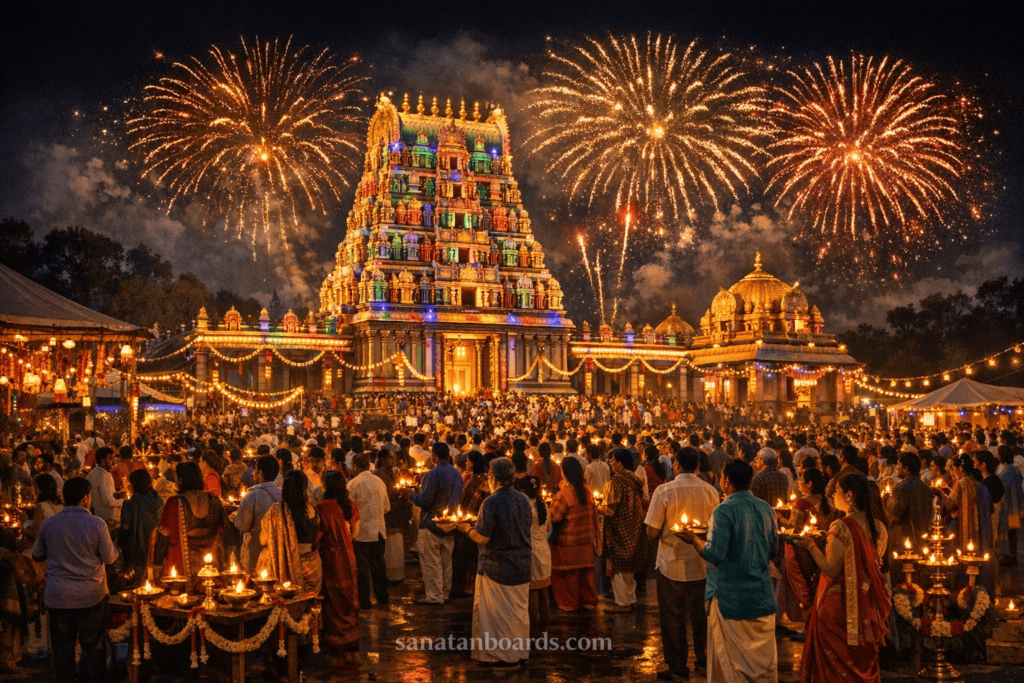
During major Hindu festivals, the temple becomes especially important. Events like Brahmotsavam, Vaikunta Ekadasi, Diwali, Navaratri, and Rama Navami attract large gatherings of devotees. During these times, special rituals, processions, and cultural performances are conducted, making the temple a center of celebration and devotion.
The temple is also required during personal life milestones. Families visit for naming ceremonies, weddings, housewarming rituals, and blessings for new beginnings. It is considered auspicious to seek divine blessings during such important events.
In times of emotional difficulty or uncertainty, devotees also turn to the temple for spiritual comfort and guidance. Prayer and meditation in the temple environment help individuals cope with stress, loss, or challenges.
Additionally, the temple is required during educational and cultural events organized throughout the year. These include language classes, scripture study sessions, and youth programs that are often scheduled on weekends or holidays.
Even visitors and tourists may require the temple when exploring cultural landmarks in Sydney. It serves as a place to understand Hindu traditions and experience spiritual atmosphere.
Where Sri Venkateswara Temple (Sydney, Australia) Is Required ?
The Sri Venkateswara Temple is primarily required in the geographical region of Sydney and surrounding areas in New South Wales, Australia. It serves devotees who are spread across urban and suburban communities, especially those with Indian and South Asian heritage.
The temple is especially important for residents in and around southern Sydney, where many Hindu families live. It acts as a central place of worship for people who might otherwise not have easy access to traditional temples.
Beyond its physical location, the temple is also required in a cultural and social sense wherever Hindu communities exist in Australia. Families who may live far from the temple still travel to attend major festivals and important rituals, showing its regional importance.
The temple is also required in educational spaces such as community halls, cultural centers, and schools where outreach programs are conducted. It extends its influence beyond its physical boundaries through religious teachings and cultural events.
In a broader global context, the temple represents the presence of Hindu culture in Western countries. It is required as a symbol of multicultural integration and religious diversity in Australia.
For tourists and visitors, the temple becomes a destination within Sydney’s cultural map. It is part of religious tourism routes that include temples, cultural centers, and heritage sites.
Thus, while physically located in Helensburgh near Sydney, its importance extends across regional, national, and cultural spaces where Hindu identity and traditions are practiced or appreciated.
How Sri Venkateswara Temple (Sydney, Australia) Is Required ?
The Sri Venkateswara Temple is required through structured religious practices, community participation, and cultural systems that ensure its continuous function.
It is required through daily rituals such as poojas, archana (chanting of names), and abhishekam, which are performed by trained priests following traditional Agama Shastra guidelines. These rituals maintain the spiritual energy and sanctity of the temple.
The temple is also required through volunteer participation. Community members contribute time and effort in organizing festivals, maintaining facilities, and supporting events. This collective involvement ensures smooth functioning.
Financially, it is required through donations and offerings from devotees, which help maintain temple operations, conduct festivals, and support cultural programs.
Educationally, it is required through structured classes in Sanskrit, religious studies, and cultural arts. These programs ensure that traditions are passed on to younger generations.
Technologically and administratively, the temple is required through modern systems such as online booking for rituals, event management, and communication platforms that help coordinate large gatherings.
Spiritually, it is required as a space for meditation, prayer, and reflection. Devotees use the temple environment to connect with faith, seek peace, and find meaning in life.
Thus, the temple functions through a combination of tradition, community support, and modern organization.
Case Study On Sri Venkateswara Temple (Sydney, Australia)
The Sri Venkateswara Temple, Sydney, Australia serves as an important case study in understanding how religious institutions function within migrant communities and how cultural identity is preserved outside the country of origin.
This temple was developed primarily to meet the spiritual needs of Hindu migrants, especially those from South India, who settled in Australia over several decades. As migration increased, families found it difficult to access authentic places of worship that followed traditional Vedic and Agamic practices. This gap led to the formation of a structured community initiative that eventually resulted in the establishment of the temple.
1. Foundation and Community Effort
The temple was not built by a single organization but through collective effort. Community members contributed financially, physically, and administratively. Volunteers played a critical role in land acquisition, construction planning, and ritual establishment. This demonstrates a strong model of community-driven institution building.
2. Cultural Continuity
One of the strongest outcomes of the temple is cultural continuity. Despite being located far from India, the temple maintains strict adherence to traditional South Indian temple rituals. Priests trained in Agamic traditions perform daily poojas, abhishekams, and festival ceremonies. This ensures authenticity and preserves centuries-old religious practices.
3. Social Integration
The temple also plays a major role in social integration. It acts as a meeting point for families, elders, youth, and newcomers. Social networks formed within the temple help new migrants adjust to Australian society while maintaining cultural roots. Events like festivals and weekly gatherings strengthen interpersonal relationships.
4. Education and Youth Engagement
A major success factor is the temple’s educational outreach. Children born in Australia often grow up detached from their ancestral culture. The temple addresses this by offering classes in Sanskrit chanting, Hindu philosophy, Bharatanatyam, Carnatic music, and moral education. These programs ensure intergenerational cultural transfer.
5. Challenges Faced
Despite its success, the temple has faced multiple challenges:
- Managing large crowds during major festivals
- Financial sustainability through donations
- Maintaining authenticity while adapting to Australian regulations
- Balancing traditional practices with modern community expectations
6. Adaptation and Growth
Over time, the temple has evolved into a well-organized institution. It introduced structured scheduling systems, volunteer coordination models, and digital communication tools for event management. These improvements helped increase participation and efficiency.
7. Impact Assessment
The temple’s impact can be measured in three dimensions:
- Spiritual impact: Provides consistent religious guidance
- Cultural impact: Preserves Indian traditions abroad
- Social impact: Builds strong community networks
Conclusion of Case Study
This temple demonstrates how diaspora communities can successfully recreate cultural ecosystems in foreign environments. It stands as a model for sustainable cultural preservation, combining tradition with modern organizational systems.
White Paper On Sri Venkateswara Temple (Sydney, Australia)
The Sri Venkateswara Temple, Sydney, Australia represents a significant model of diaspora-led cultural institution development. This white paper analyzes its structure, governance, operational model, and long-term sustainability within a multicultural society.
1. Purpose and Objectives
The primary objective of the temple is to preserve Hindu religious traditions, especially those related to Lord Venkateswara worship, while serving the spiritual and cultural needs of the Hindu diaspora in Australia. Secondary objectives include cultural education, youth engagement, and community welfare.
2. Governance Structure
The temple operates as a non-profit, community-managed organization. Governance is typically handled by:
- A board of trustees
- Volunteer committees
- Religious advisory priests
This decentralized governance model ensures transparency and community participation in decision-making.
3. Operational Framework
The temple operates through three main pillars:
a) Religious Operations
Daily rituals, special poojas, festival ceremonies, and spiritual discourses form the core religious activities. These are conducted according to traditional Agamic principles.
b) Cultural Operations
The temple organizes cultural education programs, including language classes, devotional music training, dance workshops, and storytelling sessions based on Hindu scriptures.
c) Community Operations
Community support activities include charity drives, food distribution, counseling services, and support for new migrants.
4. Financial Model
The temple is financially sustained through:
- Donations from devotees
- Sponsorship of festivals
- Community fundraising events
There is no commercial profit motive; all funds are reinvested into maintenance and development.
5. Technological Integration
Modern technology plays an increasing role in operations:
- Online booking for rituals
- Digital donation systems
- Event communication platforms
- Social media engagement
This has improved accessibility and participation, especially among younger generations.
6. Cultural Sustainability
The temple ensures cultural sustainability through structured education programs. These programs aim to preserve language, rituals, and traditional values across generations.
7. Strategic Importance
The temple functions as a cultural anchor for Hindu identity in Australia. It also contributes to multicultural harmony by promoting interfaith dialogue and cultural awareness.
8. Challenges and Risk Factors
Key challenges include:
- Volunteer dependency
- Financial variability
- Increasing demand for infrastructure expansion
- Balancing tradition with modernization
9. Recommendations
- Strengthening youth leadership programs
- Expanding digital infrastructure
- Increasing cross-cultural outreach programs
- Developing long-term financial planning models
Conclusion of White Paper
The temple represents a successful model of #sanatanboardsinmumbai diaspora cultural governance. It demonstrates how religious institutions can function effectively in modern societies while preserving ancient traditions.
Industry Application On Sri Venkateswara Temple (Sydney, Australia)
The Sri Venkateswara Temple, Sydney, Australia has wide-ranging applications across multiple industries, including tourism, education, cultural services, nonprofit management, and community development.
1. Tourism Industry Application
The temple contributes significantly to religious and cultural tourism in Australia. Visitors include:
- Hindu pilgrims
- International tourists
- Cultural researchers
- Local Australian residents interested in multicultural experiences
It functions as a heritage attraction showcasing Indian temple architecture, rituals, and traditions. This contributes to local tourism revenue and cultural diversity awareness.
2. Education Industry Application
The temple acts as an informal educational institution. It supports:
- Language learning (Sanskrit and regional Indian languages)
- Religious studies (Hindu philosophy and scriptures)
- Performing arts education (classical dance and music)
Schools and universities may collaborate with the temple for cultural studies, research projects, and field visits.
3. Cultural Industry Application
The temple plays a vital role in preserving and promoting Indian cultural arts. It provides platforms for:
- Bharatanatyam performances
- Carnatic music concerts
- Traditional storytelling and drama
- Festival-based cultural exhibitions
This helps sustain classical Indian art forms in diaspora environments.
4. Nonprofit and Community Development Application
As a nonprofit institution, the temple serves as a model for community-driven development. Its applications include:
- Volunteer management systems
- Charity distribution programs
- Social welfare support
- Elderly community engagement
These activities strengthen social cohesion and support vulnerable groups.
5. Interfaith and Multicultural Application
The temple contributes to intercultural dialogue in Australia. It hosts:
- Open house cultural tours
- Interfaith discussions
- Public festivals inviting diverse communities
This promotes mutual understanding and social harmony in a multicultural society.
6. Organizational Management Application
The temple demonstrates effective nonprofit organizational management through:
- Volunteer coordination models
- Event management systems
- Hierarchical yet community-based governance
- Transparent financial practices
These practices are studied as models for other nonprofit organizations.
7. Digital Transformation Application
The temple has adopted digital tools for:
- Online donations
- Event registrations
- Live streaming of rituals
- Community announcements
This ensures engagement with global devotees beyond physical boundaries.
8. Economic and Social Impact
Although non-commercial, the temple contributes to the local economy through:
- Tourism-related spending
- Event-based commerce
- Employment of priests and staff
- Cultural event hosting
Socially, it strengthens community identity and reduces cultural displacement among migrants.
Conclusion of Industry Application
The temple is not only a religious institution but also a multi-sector contributor. It intersects with tourism, education, culture, nonprofit governance, and #sanatanboardsinvasai digital transformation, making it a valuable model of integrated community infrastructure.
source : Manisha & Abhijeet
ASK FAQ
1. What is Sri Venkateswara Temple in Sydney known for?
It is known as a major Hindu temple in Australia dedicated to Lord Venkateswara, serving as a spiritual and cultural center for the Hindu community.
2. Where is Sri Venkateswara Temple located in Australia?
It is located in Helensburgh, near Sydney, New South Wales, and is one of the most prominent Hindu temples in the region.
3. Why is Sri Venkateswara Temple important for Hindus in Sydney?
It is important because it provides a place for worship, cultural preservation, festivals, and community gathering for Hindu families living in Australia.
4. What festivals are celebrated at Sri Venkateswara Temple Sydney?
Major Hindu festivals like Brahmotsavam, Diwali, Navaratri, and Vaikunta Ekadasi are celebrated with traditional rituals and large community participation.
5. Who visits Sri Venkateswara Temple in Sydney?
It is visited by Hindu devotees, Indian diaspora families, spiritual seekers, tourists, and anyone interested in learning about Hindu culture and traditions.
Table of Contents
DISCLAIMER
This content is provided for educational and informational purposes only. It is written to offer general knowledge about the Sri Venkateswara Temple in Sydney, Australia, and does not represent any official religious authority, temple administration, or governing body. All historical, cultural, and organizational descriptions are based on general understanding and publicly available information and should not be treated as verified institutional statements. Readers are advised to independently verify facts if needed before using this information for academic, research, or professional purposes. The intention of this content is purely to inform and educate about cultural and religious significance and should not be interpreted as religious guidance, endorsement, or official documentation.