
CARIBBEAN & SOUTH AMERICA
The Caribbean and South America represent two highly significant and diverse regions of the Western Hemisphere, known for their rich cultural heritage, ecological diversity, historical importance, and economic potential. These regions are often studied together due to their geographical proximity, shared colonial history, and interconnected economic and environmental systems.
The Caribbean region consists of thousands of islands, islets, and cays scattered across the Caribbean Sea. It includes well-known island nations such as Jamaica, Cuba, the Dominican Republic, and Trinidad and Tobago. South America, on the other hand, is a vast continent that includes countries such as Brazil, Argentina, Colombia, Peru, and Chile. Together, they form a critical part of the global south, contributing significantly to biodiversity, tourism, agriculture, and energy resources.
These regions are home to a blend of Indigenous, African, European, and Asian influences, resulting in unique cultural expressions in language, music, food, and traditions. Economically, they vary widely, with some nations being highly industrialized while others rely heavily on agriculture and tourism.
From rainforests like the Amazon in South America to coral reefs in the Caribbean, these regions are also environmental treasures that play a vital role in maintaining global ecological balance. However, they also face challenges such as climate change, economic inequality, political instability, and natural disasters.
Understanding the Caribbean and South America is essential for appreciating global cultural diversity, environmental sustainability, and international economic relations. These regions continue to grow in importance in global discussions on trade, climate action, and cultural exchange.
What Is Caribbean & South America
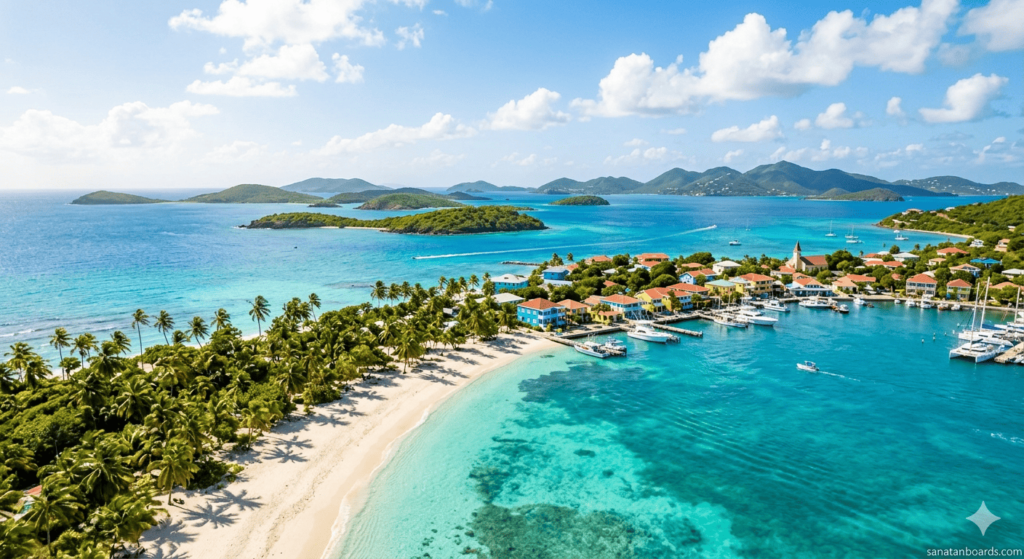
The Caribbean and South America are two distinct yet interconnected geographical regions located in the Western Hemisphere.
The Caribbean refers to a region composed of the Caribbean Sea, its islands, and surrounding coastal areas. It is divided into three main island groups: the Greater Antilles, the Lesser Antilles and the Bahamas. These islands vary in size, population, and economic structure. Many Caribbean nations gained independence from European colonial powers during the 20th century, and today they operate as independent states or territories.
South America is a continent located primarily in the Southern Hemisphere, bordered by the Pacific Ocean to the west and the Atlantic Ocean to the east. It is the fourth-largest continent in the world and consists of twelve sovereign countries and several territories. It is home to major geographical features such as the Andes Mountains, the Amazon River, and the Amazon Rainforest.
Both regions share historical connections through colonization by Spain, Portugal, Britain, France, and the Netherlands. This history has shaped their languages, legal systems, and cultural identities. Spanish and Portuguese are the dominant languages in South America, while English, Spanish, French, and Dutch are commonly spoken in the Caribbean.
Economically, South America is rich in natural resources such as oil, minerals, and agricultural products, while the Caribbean relies heavily on tourism, shipping, and offshore financial services.
Together, the Caribbean and South America form a diverse and dynamic region that plays a crucial role in global biodiversity, trade, and cultural exchange.
Who Is Required Caribbean & South America ?
The knowledge and understanding of the Caribbean and South America are required by a wide range of individuals, institutions, and industries across the world.
Students and researchers in geography, history, political science, environmental studies, and international relations require detailed knowledge of these regions for academic development. Understanding their ecosystems, colonial history, and political structures helps in global education and research.
Governments and policymakers also require insights into these regions for diplomatic relations, trade agreements, environmental cooperation, and migration policies. Since South America is rich in natural resources and the Caribbean is strategically located for global shipping routes, international cooperation is essential.
Businesses and investors require knowledge of these regions for opportunities in tourism, agriculture, mining, energy, and financial services. The Caribbean is a major tourism hub, while South America is a key supplier of commodities like soy, coffee, oil, and metals.
Environmental organizations and climate scientists require this knowledge due to the presence of critical ecosystems such as the Amazon rainforest and coral reef systems. These areas are essential for global climate stability and biodiversity conservation.
Additionally, cultural researchers, travel professionals, and global development agencies require an understanding of these regions to promote sustainable development, cultural preservation, and international tourism.
Thus, the Caribbean and South America are required areas of study and engagement for anyone involved in global development, environmental sustainability, economics, or cultural studies.
When Caribbean & South America Is Required ?
The Caribbean and South America become highly relevant in various global, regional, and situational contexts where geography, economy, environment, and culture intersect.
They are required during international trade discussions, especially when countries negotiate import-export agreements involving natural resources, agricultural products, and manufactured goods. South America is a major exporter of commodities, while the Caribbean serves as a key transit and service region for global trade routes.
They are also required during climate change discussions and environmental planning. The Amazon rainforest plays a critical role in regulating the Earth’s climate, making South America central to global environmental policies. Similarly, the Caribbean islands are highly vulnerable to hurricanes, sea-level rise, and coral reef degradation, requiring constant international attention and support.
In tourism development planning, these regions are required when designing travel routes, infrastructure projects, and cultural promotion strategies. The Caribbean is a major global tourism destination, while South America attracts eco-tourism and adventure tourism due to its diverse landscapes.
They are also essential in times of natural disasters such as earthquakes, hurricanes, floods, and droughts. International organizations, humanitarian agencies, and governments rely on regional knowledge to coordinate relief efforts and disaster response.
During academic research and global studies, these regions are required when analyzing topics like colonial history, indigenous cultures, biodiversity, and economic development models.
Furthermore, they are important in geopolitical situations, especially when discussing regional alliances, border issues, or economic cooperation between nations.
Where Caribbean & South America Is Required ?
The Caribbean and South America are required in multiple geographical, economic, environmental, and institutional settings across the world.
Geographically, they are required in studies related to the Western Hemisphere, tropical climates, oceanic systems, and biodiversity hotspots. The Caribbean Sea and the South American continent are key areas for mapping climate zones, ocean currents, and ecological systems.
Economically, these regions are required in global markets involving agriculture, mining, energy production, and tourism. South America is essential in global supply chains for soybeans, beef, coffee, copper, and oil. The Caribbean is required in discussions of cruise tourism, hospitality industries, and offshore financial services.
In environmental conservation zones, these regions are required in protected areas such as the Amazon Rainforest, Galápagos Islands, coral reefs, and national parks. International environmental organizations focus heavily on these regions due to their global ecological significance.
Politically and institutionally, they are required in organizations like the United Nations, Organization of American States (OAS), and regional trade blocs. These platforms use Caribbean and South American data to develop policies on development, security, and cooperation.
In education and research institutions, they are required in geography, anthropology, economics, and environmental science departments. Universities often include case studies and field research based on these regions.
They are also required in global tourism industries, travel agencies, and aviation networks when designing routes, packages, and destination marketing strategies.
Thus, the Caribbean and South America are required wherever global interaction meets regional identity—whether in trade, environment, education, tourism, or governance systems.
How Caribbean & South America Is Required ?
The Caribbean and South America are required through structured systems of study, planning, policy-making, and practical implementation across various fields.
In education, they are required through curriculum design in geography, history, environmental science, and international studies. Students learn about their ecosystems, cultures, economies, and political systems to understand global diversity.
In economics and trade, they are required through import-export frameworks, resource distribution networks, and market analysis. Governments and businesses use regional data to plan investments, trade agreements, and economic partnerships.
In environmental management, they are required through conservation programs, climate modeling, and sustainability projects. The Amazon rainforest is monitored for deforestation, while Caribbean marine ecosystems are studied for coral reef protection and ocean health.
In tourism and hospitality, they are required through destination planning, infrastructure development, and cultural heritage promotion. Travel industries depend on accurate regional knowledge to design safe and attractive travel experiences.
In governance and diplomacy, they are required through bilateral and multilateral relations, where countries collaborate on security, migration, and development issues. Regional organizations use this knowledge to strengthen cooperation.
In disaster management, they are required through early warning systems, emergency planning, and humanitarian aid distribution. Hurricanes in the Caribbean and floods in South America require coordinated global response systems.
In technology and data systems, they are required through geographic information systems (GIS), climate monitoring tools, and economic modeling platforms.
Overall, the Caribbean and South America are required through integrated systems that combine knowledge, planning, and action to address global challenges and opportunities.
Case Study On Caribbean & South America
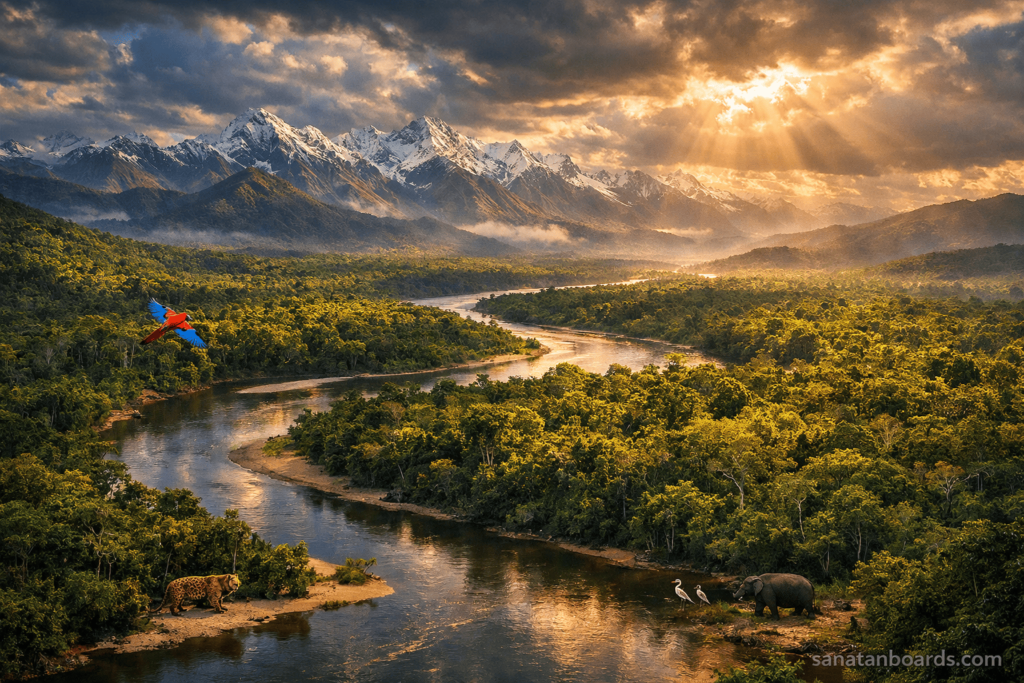
A significant case study involving the Caribbean and South America is the impact of climate change on the Amazon Rainforest and Caribbean island nations.
The Amazon Rainforest, located primarily in South America, is one of the most critical ecosystems on Earth. It acts as a major carbon sink, absorbing large amounts of carbon dioxide and helping regulate global temperatures. However, deforestation due to agriculture, logging, and mining has significantly reduced forest cover. This has led to biodiversity loss, increased carbon emissions, and disruption of indigenous communities who depend on the forest for survival.
At the same time, Caribbean island nations face severe threats from climate change, particularly rising sea levels and extreme weather events. Hurricanes have become more frequent and intense, causing widespread damage to infrastructure, agriculture, and tourism industries.
In this case study, the connection between South America’s environmental degradation and the Caribbean’s climate vulnerability becomes clear. Changes in the Amazon affect global weather patterns, which in turn influence hurricane formation in the Caribbean Sea.
Governments in Brazil, Colombia, and Peru have implemented conservation programs aimed at reducing deforestation through protected areas and sustainable development policies. International organizations such as the United Nations and environmental NGOs support these initiatives through funding and research.
In the Caribbean, countries like Jamaica, Barbados, and the Bahamas have invested in climate resilience strategies, including hurricane-resistant infrastructure, early warning systems, and renewable energy adoption. Regional organizations such as CARICOM play a key role in coordinating climate action among member states.
Despite these efforts, challenges remain. Illegal logging, weak enforcement of environmental laws, limited financial resources, and global demand for commodities continue to drive environmental degradation. Similarly, Caribbean nations struggle with high recovery costs after natural disasters and limited economic diversification.
This case study highlights the interconnected nature of global environmental systems. It demonstrates that actions in South America’s rainforests directly affect the climate resilience of Caribbean nations. It also emphasizes the need for international cooperation in addressing climate change.
The key lesson is that environmental protection and climate adaptation must be addressed together. Sustainable development, global policy coordination, and scientific research are essential for protecting both regions.
White Paper On Caribbean & South America
The Caribbean and South America represent a strategically important region for global economic development, environmental sustainability, and cultural diversity. This white paper outlines the key opportunities, challenges, and policy recommendations for the sustainable development of these regions.
Economically, South America is rich in natural resources including oil, gas, minerals, and agricultural products. The Caribbean, while smaller in land area, plays a vital role in global tourism, maritime trade routes, and financial services. However, both regions face structural economic challenges such as inequality, dependency on primary industries, and limited industrial diversification.
Environmentally, the Amazon Rainforest in South America is critical for global climate regulation, while the Caribbean Sea hosts some of the world’s most fragile marine ecosystems. Deforestation, pollution, overfishing, and climate change threaten these natural systems.
Socially, both regions have diverse populations shaped by indigenous heritage, colonial history, and migration. Despite cultural richness, issues such as poverty, unemployment, and access to healthcare remain significant challenges.
Politically, governance varies widely across the region, with some countries experiencing stable democratic systems while others face political instability or institutional weaknesses.
Policy recommendations include:
- Strengthening environmental protection laws and enforcement mechanisms to prevent deforestation and marine ecosystem degradation.
- Promoting economic diversification, particularly in renewable energy, technology, and sustainable tourism sectors.
- Enhancing regional cooperation through organizations such as MERCOSUR and CARICOM to improve trade and policy coordination.
- Increasing investment in climate resilience infrastructure, especially in Caribbean island states vulnerable to hurricanes and sea-level rise.
- Supporting indigenous communities and ensuring their participation in environmental and economic decision-making processes.
- Expanding education and research initiatives focused on sustainable development and environmental science.
International cooperation is essential for achieving these goals. Developed countries, multinational organizations, and regional governments must collaborate to provide funding, technology transfer, and policy support.
In conclusion, the Caribbean and South America hold immense #sanatanboardsinvasai potential for sustainable growth. However, realizing this potential requires coordinated action that balances economic development with environmental protection and social equity.
Industry Application On Caribbean & South America
The Caribbean and South America play a vital role in multiple global industries due to their natural resources, strategic location, and cultural influence.
In the energy industry, South America is a major producer of oil, gas, and hydroelectric power. Countries such as Brazil and Venezuela contribute significantly to global energy markets. The region is also investing in renewable energy, particularly wind and solar power. The Caribbean is increasingly adopting solar and wind energy to reduce dependence on imported fossil fuels.
In agriculture, South America is one of the world’s largest exporters of soybeans, coffee, beef, sugar, and fruits. The fertile lands and favorable climate support large-scale farming. The Caribbean, while smaller in agricultural output, focuses on sugarcane, bananas, and niche tropical crops.
The tourism industry is one of the most important sectors in the Caribbean, driven by beaches, cruise tourism, cultural heritage, and marine biodiversity. South America attracts eco-tourism, adventure tourism, and cultural tourism, with destinations such as the Amazon, Andes, and Machu Picchu.
In mining and natural resources, South America is rich in copper, lithium, gold, and iron ore. These materials are essential for global manufacturing, electronics, and infrastructure development.
The financial services industry is particularly important in Caribbean offshore centers, which provide banking, insurance, and investment services to international clients.
In transportation and logistics, the Caribbean serves as a key maritime hub due to its location between North and South America. South America has major ports that facilitate global trade routes.
In technology and innovation, both regions are gradually expanding digital infrastructure, fintech services, and smart agriculture solutions.
In environmental industries, there is growing investment in conservation, carbon trading, and sustainable development projects, especially related to the #sanatanboardsinmumbai Amazon rainforest and marine ecosystems.
Overall, these regions contribute significantly to global industry networks and continue to evolve as important economic players.
source : EpicExplorationsTV EN
ASK FAQ
1. What is the Caribbean and South America known for?
The Caribbean and South America are known for rich cultural diversity, natural beauty, tourism, the Amazon rainforest, and strong agricultural and mineral resources.
2. Why are the Caribbean and South America important globally?
They are important for biodiversity, climate regulation, global trade, tourism industries, and natural resource supply like oil, minerals, and agricultural products.
3. What countries are part of South America?
South America includes Brazil, Argentina, Colombia, Peru, Chile, Venezuela, Ecuador, Bolivia, Paraguay, Uruguay, Guyana, and Suriname.
4. What is the main economy of the Caribbean region?
The Caribbean economy mainly depends on tourism, agriculture, shipping services, and offshore financial industries.
5. What is the Amazon rainforest’s role in South America?
The Amazon rainforest helps regulate global climate, produces oxygen, supports biodiversity, and stores large amounts of carbon dioxide.
Table of Contents
Disclaimer
This content is prepared for educational and informational purposes only. It is intended to provide a general understanding of the Caribbean and South America and should not be considered as professional, legal, financial, or policy advice. While efforts have been made to ensure accuracy and reliability, no guarantees are made regarding completeness or correctness of the information. Readers are advised to verify facts from official and authoritative sources before making any decisions based on this material. The author or publisher is not responsible for any loss, misunderstanding, or misuse of the information provided in this content.