
MANIKARNIKA GHAT (VARANASI) – SACRED CREMATION GHAT
Located on the banks of the holy Ganges River in the ancient city of Varanasi, Manikarnika Ghat stands as one of the most sacred and spiritually significant cremation sites in the world. Known as the “Mahashamshan” (great cremation ground), this ghat is deeply intertwined with the beliefs and rituals of Hinduism, where life, death and liberation converge in a profound cycle. Unlike other ghats that serve purposes such as bathing or rituals, Manikarnika Ghat is primarily dedicated to the final rites of the deceased.
The ghat is believed to be a gateway to moksha (liberation from the cycle of rebirth), making it one of the most sought-after places for cremation among Hindus. According to legend, Lord Shiva himself whispers the sacred mantra of liberation into the ears of those cremated here, ensuring their soul’s freedom. This belief draws thousands of families from across India to perform last rites at this sacred location.
Manikarnika Ghat is unique for its eternal flame, said to have been burning continuously for centuries. Funeral pyres are lit using this sacred fire symbolizing the unbroken cycle of life and death. The atmosphere is intense yet deeply spiritual, where mourning coexists with faith and acceptance.
The ghat is not only a religious site but also a cultural and philosophical symbol. It reflects the Hindu worldview that death is not an end but a transition. Visitors often find the experience transformative, offering a rare perspective on mortality and detachment.
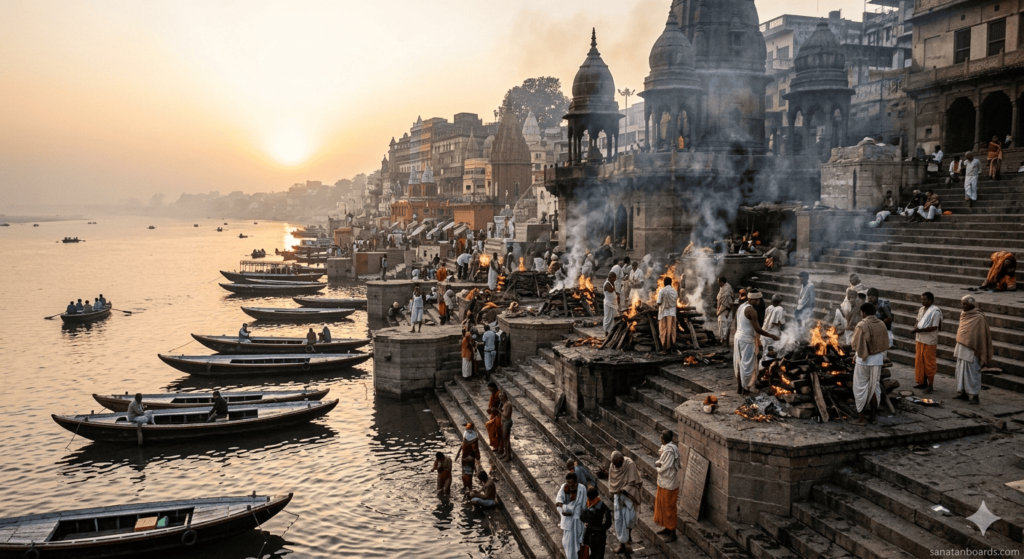
What Is Manikarnika Ghat (Varanasi) – Sacred Cremation Ghat ?
Manikarnika Ghat is one of the oldest and most important cremation ghats in Varanasi, a city considered the spiritual capital of India. It serves as a primary site for Hindu cremation rituals, where the dead are brought for their final journey. The ghat operates continuously, with funeral pyres burning day and night, symbolizing the uninterrupted flow of life and death.
The term “Manikarnika” is derived from two words: “Mani” (jewel) and “Karnika” (earring). According to mythology, Goddess Parvati lost her earring here while bathing, and Lord Shiva declared the site sacred. This mythological significance enhances the spiritual importance of the ghat.
At its core, Manikarnika Ghat is a place where the last rites, known as “Antyesti,” are performed. The body is first dipped in the Ganges River, then placed on a funeral pyre made of wood, and finally cremated. The ashes are later immersed in the river, completing the cycle.
The ghat is managed by specific communities, such as the Dom caste, who traditionally oversee cremation activities. Their role is essential in maintaining the rituals and ensuring the sacred fire is preserved.
Beyond its physical function, Manikarnika Ghat is a philosophical symbol. It embodies the Hindu belief in impermanence and the cyclical nature of existence. Death here is not feared but accepted as a natural transition.
Who Is Required Manikarnika Ghat (Varanasi) – Sacred Cremation Ghat ?
Manikarnika Ghat is primarily required by individuals and families who follow Hindu traditions and seek to perform the last rites of their loved ones in a spiritually significant location. For devout Hindus, being cremated in Varanasi is believed to grant moksha, освобождение from the cycle of birth and death. Therefore, people from across India bring the deceased to this sacred ghat.
Families who strongly adhere to religious customs consider Manikarnika Ghat essential for fulfilling their spiritual duties. The rituals performed here are believed to ensure peace for the departed soul and spiritual closure for the family members.
Priests and ritual specialists also depend on the ghat for conducting ceremonies. They guide families through the complex rites, ensuring that every step aligns with traditional practices. The Dom community plays a crucial role, as they manage the cremation process and maintain the sacred flame used to light pyres.
Spiritual seekers, scholars, and tourists are another group drawn to Manikarnika Ghat. They come not for cremation but to witness and understand the philosophical depth of Hindu beliefs about life and death. Observing the rituals provides insights into the concept of detachment and acceptance.
Additionally, individuals nearing the end of life sometimes choose to spend their final days in Varanasi, hoping their last rites will be performed at this ghat. This reflects the deep-rooted belief in its spiritual power.
When Manikarnika Ghat (Varanasi) – Sacred Cremation Ghat Is Required ?
Manikarnika Ghat is required at the most critical and inevitable moment of human existence—death. In Hindu tradition, the timing of cremation and associated rituals holds immense importance, and this ghat plays a central role in ensuring that these rites are conducted properly and meaningfully.
The ghat is required immediately after death, when the body is prepared for the final rites. Families bring the deceased to Varanasi as soon as possible, often within hours, to begin the cremation process. The urgency reflects the belief that the soul’s journey should not be delayed.
Unlike many other cremation grounds, Manikarnika Ghat operates continuously—24 hours a day, 7 days a week. There is no fixed time for cremation, as death can occur at any moment. This constant activity underscores the idea that life and death are ongoing processes, not confined to specific hours.
The ghat is especially required during certain religious periods and auspicious times when the spiritual benefits of cremation are believed to be even greater. For instance, deaths occurring during holy months or festivals are considered particularly significant, and families make extra efforts to perform rites at this location.
It is also required when individuals have expressed a wish to be cremated in Varanasi. Many elderly people relocate to the city in their final years, ensuring that their last rites will take place at Manikarnika Ghat. This reflects a lifelong aspiration tied to spiritual beliefs.
Furthermore, the ghat becomes essential during large-scale events or pandemics, where the demand for cremation services increases significantly. Even in such times, the ghat continues to function, maintaining its role as a sacred and reliable site for अंतिम संस्कार (last rites).
Where Manikarnika Ghat (Varanasi) – Sacred Cremation Ghat Is Required ?
Manikarnika Ghat is located in the heart of Varanasi, along the western banks of the sacred Ganges River. Its geographical placement is not accidental but deeply rooted in religious and cultural significance. The city itself is considered one of the oldest living cities in the world and holds a central place in Hindu spirituality.
The ghat is part of a long series of riverfront steps known as ghats, each serving different purposes such as bathing, rituals, and ceremonies. However, Manikarnika Ghat is specifically designated for cremation, making it unique among them. Its location near important temples and spiritual centers further enhances its importance.
The requirement of this ghat is not limited to its physical location but extends to its symbolic presence within the spiritual geography of India. For many Hindus, Varanasi represents the ultimate destination for the soul’s liberation, and Manikarnika Ghat is at the core of this belief.
People from various parts of the country transport the deceased to this specific location, sometimes traveling long distances. This demonstrates that the “where” is not just about proximity but about spiritual significance. Even those living far away consider this ghat the most appropriate place for cremation.
Additionally, the ghat’s proximity to the Ganges River is crucial. The river is considered sacred and purifying, and its waters are believed to cleanse sins and aid in the soul’s journey. The immersion of ashes in the river completes the final rites.
In modern times, while alternative cremation facilities exist in different cities, Manikarnika Ghat remains irreplaceable due to its धार्मिक (religious) importance. It is required specifically at this location because of its association with moksha and divine presence.
Thus, Manikarnika Ghat is required in Varanasi not just as a physical site but as a sacred destination that holds deep spiritual meaning for millions.
How Manikarnika Ghat (Varanasi) – Sacred Cremation Ghat Is Required ?
Manikarnika Ghat is required through a well-defined process of rituals and practices that form an integral part of Hindu अंतिम संस्कार (last rites). The “how” involves a sequence of steps that ensure the proper transition of the soul from the physical world to the spiritual realm.
The process begins with the transportation of the deceased to Varanasi. Upon arrival at Manikarnika Ghat, the body is placed on the steps and prepared for cremation. It is then taken to the Ganges River, where it is dipped in the holy water as a purification ritual.
Next, the body is wrapped in cloth and placed on a wooden pyre. The type and amount of wood used can vary depending on tradition and financial capacity. The sacred fire, maintained continuously at the ghat, is used to light the pyre. This fire is believed to be eternal and spiritually powerful.
A key figure in the process is the eldest son or a close male relative, who performs the ritual of lighting the pyre. This act is considered a duty and a final gesture of respect. Priests guide the family through मंत्र (chants) and rituals, ensuring that every step is performed correctly.
The cremation process can take several hours. Once the body is fully burned, the ashes and remaining fragments are collected and immersed in the Ganges River. This final act signifies the release of the soul.
The Dom community plays a vital role in facilitating the entire process. They manage the logistics, provide the sacred fire, and assist families in carrying out the rituals.
Thus, Manikarnika Ghat is required as a structured system where religious beliefs, cultural practices, and human emotions converge, ensuring that the अंतिम यात्रा (final journey) is completed with dignity and spiritual significance.
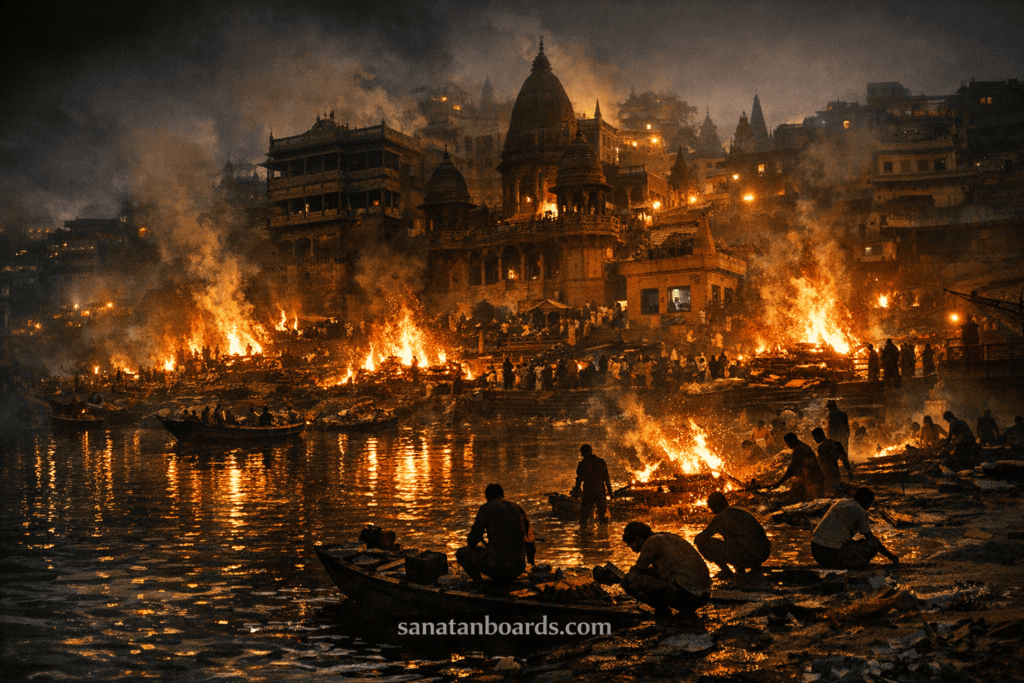
Case Study On Manikarnika Ghat (Varanasi) – Sacred Cremation Ghat
Manikarnika Ghat serves as a compelling case study in understanding the intersection of religion, culture, economy, and urban dynamics. Situated in Varanasi, it operates as one of the busiest cremation sites globally, handling hundreds of cremations daily.
One notable case involves the traditional management system led by the Dom community. Despite modernization, this hereditary group continues to control the cremation process, preserving centuries-old practices. Their role highlights the coexistence of tradition and continuity in a rapidly changing world.
Another important aspect is the economic ecosystem surrounding the ghat. The cremation process involves multiple stakeholders, including wood suppliers, priests, transport services, and ritual assistants. This creates a micro-economy that sustains many livelihoods. However, it also raises concerns about affordability, as the cost of cremation can vary significantly.
Environmental considerations form another critical dimension. The large number of cremations contributes to air and water pollution, particularly affecting the Ganges River. Efforts have been made by authorities to introduce electric crematoriums, but traditional beliefs often limit their acceptance.
A case during the COVID-19 pandemic further highlighted the importance of Manikarnika Ghat. The surge in deaths led to an unprecedented increase in cremation activities, testing the capacity and resilience of the system. Despite challenges, the ghat continued to function, demonstrating its critical role in society.
Socially, the ghat also challenges conventional perceptions of death. Visitors often report a shift in mindset after witnessing the rituals, gaining a deeper understanding of impermanence and acceptance.
Urban planning is another area where the ghat plays a role. Managing space, waste, and crowd flow in such a high-demand area requires careful coordination. Authorities have implemented measures to improve infrastructure while respecting the site’s sanctity.
This case study illustrates that Manikarnika Ghat is not just a religious site but a complex system involving cultural heritage, economic activity, environmental impact, and social transformation. Its continued relevance underscores the enduring power of tradition in shaping human behavior and societal structures.
White Paper On Manikarnika Ghat (Varanasi) – Sacred Cremation Ghat
Manikarnika Ghat, situated in Varanasi along the sacred Ganges River, represents one of the most significant continuous cremation sites in the world. This white paper aims to examine its religious importance, operational structure, socio-economic impact, and environmental challenges while proposing sustainable pathways for its future.
Introduction and Background
Manikarnika Ghat is deeply embedded in Hindu philosophy, where death is not viewed as an end but as a transition toward liberation (moksha). The belief that cremation at this site ensures freedom from the cycle of rebirth makes it a highly sought-after destination for final rites. The ghat operates круглосуточно (24/7), handling a constant flow of cremations, which reflects its enduring relevance.
Operational Framework
The functioning of Manikarnika Ghat is supported by a traditional system led by the Dom community, who are responsible for maintaining the sacred fire and facilitating cremations. The process involves multiple stages, including preparation of the body, ritual bathing in the Ganges, arrangement of wooden pyres, and final immersion of ashes.
The supply chain includes wood vendors, transport providers, priests, and laborers, forming a structured yet informal operational network. Despite its traditional nature, the system demonstrates remarkable efficiency in handling high volumes ежедневно.
Socio-Economic Impact
Manikarnika Ghat supports a significant micro-economy. Thousands of individuals depend directly or indirectly on its activities for livelihood. From wood sellers to ritual specialists, the ghat sustains an ecosystem that blends spirituality with economic necessity.
However, the cost of cremation can vary widely, raising concerns about accessibility for economically weaker sections. While basic cremations are possible, additional rituals and materials can increase expenses, highlighting the need for financial inclusivity.
Environmental Challenges
One of the most pressing concerns is environmental sustainability. Traditional wood-based cremation contributes to deforestation, air pollution, and carbon emissions. Additionally, partially burned remains and ritual offerings can affect the water quality of the Ganges River.
Efforts have been made to introduce electric crematoriums in Varanasi, but their adoption remains limited due to strong cultural and religious preferences. This creates a challenge in balancing tradition with ecological responsibility.
Policy and Governance Issues
The governance of Manikarnika Ghat involves local authorities, religious groups, and informal community leadership. While regulations exist, enforcement can be inconsistent due to the sensitive nature of religious practices.
There is a need for policies that respect cultural sentiments while promoting sustainability. Public-private partnerships and community engagement can play a crucial role in implementing effective solutions.
Recommendations
- Eco-Friendly Alternatives: Promote the use of alternative fuels such as compressed biomass or cow-dung logs.
- Subsidies: Provide financial support for families opting for sustainable cremation methods.
- Awareness Campaigns: Educate communities about environmental impacts without challenging religious beliefs.
- Infrastructure Development: Improve waste management and river protection systems.
- Research and Monitoring: Conduct continuous studies to assess environmental and social impacts.
Conclusion
Manikarnika Ghat stands as a powerful symbol of faith, tradition, and continuity. Its importance extends beyond religion into social, economic, and environmental domains. By adopting sustainable practices and inclusive policies, it is possible to #Sanatanboardsinvasai preserve the sanctity of this sacred site while addressing modern challenges. The future of Manikarnika Ghat depends on a balanced approach that honors tradition while embracing responsible innovation.
Industry Application On Manikarnika Ghat (Varanasi) – Sacred Cremation Ghat
Manikarnika Ghat in Varanasi is not only a religious and cultural landmark but also a site with diverse applications across multiple industries. Its continuous operation, cultural depth, and socio-economic ecosystem make it a valuable case for analysis and utilization in various professional fields.
Tourism and Hospitality Industry
Manikarnika Ghat plays a significant role in spiritual and cultural tourism. Visitors from across the world come to witness its unique practices and understand the philosophical approach to death in Hinduism. Tour operators design curated experiences that include guided visits to the ghats, storytelling sessions, and cultural walks.
Hotels, guesthouses, and local businesses benefit from this influx of tourists. However, ethical tourism practices are essential to ensure respect for the sensitive nature of cremation rituals.
Media and Film Industry
The ghat has been featured in numerous documentaries, films, and photography projects. Its raw and authentic portrayal of life and death makes it a compelling subject for storytelling. Filmmakers often explore themes of mortality, spirituality, and human existence through visuals captured at this location.
Content creators must navigate ethical considerations, ensuring that their work does not exploit or disrespect the rituals and emotions involved.
Academic and Research Sector
Manikarnika Ghat serves as a living laboratory for disciplines such as sociology, anthropology, religious studies, and urban planning. Researchers study its rituals, social structures, and economic systems to gain insights into human behavior and cultural continuity.
Environmental scientists analyze its impact on the Ganges River, focusing on pollution levels and sustainability challenges. These studies contribute to policy-making and conservation efforts.
Environmental and Sustainability Sector
The environmental implications of continuous cremation activities have led to innovations in sustainable practices. Organizations and researchers are exploring alternatives such as eco-friendly pyres, electric cremation, and improved waste management systems.
Manikarnika Ghat provides a real-world context for testing and implementing such solutions, making it relevant to environmental engineering and sustainability initiatives.
Public Administration and Urban Planning
Managing a site like Manikarnika Ghat requires effective governance and infrastructure planning. Authorities must address issues such as crowd control, sanitation, waste disposal, and resource management.
Urban planners study the ghat to understand how traditional systems can coexist with modern infrastructure. Lessons learned here can be applied to other high-density, culturally sensitive locations.
Ritual Services and Funeral Industry
The ghat is central to the traditional funeral services sector. It supports a network of priests, wood suppliers, transport providers, and ritual assistants. This industry operates on a blend of धार्मिक tradition and practical logistics.
Modern funeral service providers can learn from this system to integrate cultural sensitivity into their offerings while improving efficiency and accessibility.
Philosophy and Wellness Industry
In recent years, the concepts associated with Manikarnika Ghat—such as acceptance of death and detachment—have influenced the wellness and mindfulness industry. Spiritual retreats and workshops often draw inspiration from the philosophical teachings observed at the ghat.
These ideas are incorporated into practices aimed at reducing anxiety, promoting mental well-being, and encouraging a deeper understanding of life.
Conclusion
Manikarnika Ghat is more than a sacred cremation site; it is a multifaceted institution with applications across tourism, media, academia, environment, governance, and #Sanatanboardsinmumbai wellness industries. Its ability to integrate tradition with real-world functionality makes it a unique and valuable model for various sectors.
By studying and respecting its practices, industries can derive meaningful insights that contribute to innovation, sustainability, and cultural understanding.
source :Official People Of India
ASK FAQ
1. What is Manikarnika Ghat known for?
Manikarnika Ghat is known as one of the most sacred cremation ghats in Varanasi, where continuous funeral rites are performed and it is believed that cremation here leads to moksha (liberation from the cycle of rebirth).
2. Why is Manikarnika Ghat considered sacred in Hinduism?
It is considered sacred due to its association with Lord Shiva and Goddess Parvati, and the belief that souls cremated here attain spiritual liberation.
3. Where is Manikarnika Ghat located?
Manikarnika Ghat is located on the banks of the Ganges River in Varanasi, one of the oldest and holiest cities in India.
4. What happens at Manikarnika Ghat?
At Manikarnika Ghat, Hindu cremation rituals are performed 24/7, where bodies are burned on funeral pyres and ashes are immersed in the Ganges River as part of the final rites.
5. Can tourists visit Manikarnika Ghat?
Yes, tourists can visit Manikarnika Ghat to observe its cultural and spiritual significance, but they are expected to maintain respect and follow local customs due to the sensitive nature of the rituals.
Table of Contents
Disclaimer
This content is provided for general informational purposes only and is based on cultural, historical, and religious perspectives related to Manikarnika Ghat in Varanasi; practices, beliefs, and interpretations may vary across communities and individuals, and the information presented may not fully represent all viewpoints or current conditions. It should not be considered professional, legal, environmental, or religious advice, and readers are encouraged to consult knowledgeable sources or local authorities for specific guidance; while efforts have been made to ensure accuracy, no responsibility is assumed for any errors, omissions, or actions taken based on this content.