MATHURA (UTTAR PRADESH) – BIRTHPLACE OF LORD KRISHNA
Mathura, located in the northern Indian state of Uttar Pradesh, holds immense historical, cultural, and spiritual significance. Revered as the birthplace of Lord Krishna, this ancient city is one of the most sacred destinations in Hinduism. Situated on the banks of the Yamuna River, Mathura has been a center of devotion, pilgrimage, and artistic heritage for thousands of years.
The city’s importance is deeply rooted in mythology and religious texts such as the Bhagavata Purana and the Mahabharata, which narrate the divine birth and early life of Lord Krishna. Pilgrims from across India and the world visit Mathura to experience its spiritual atmosphere and to connect with the life and teachings of Krishna, who symbolizes love, compassion and righteousness.
Mathura is not just a religious hub but also a historical city that has witnessed the rise and fall of various dynasties, including the Mauryas, Kushans, and Guptas. Its rich heritage is reflected in its temples, sculptures, and archaeological remains. The famous Krishna Janmabhoomi Temple marks the exact spot believed to be Krishna’s birthplace making it the focal point of devotion.
The city also plays a vital role in promoting cultural traditions, festivals, and rituals. Celebrations like Janmashtami and Holi are observed with unmatched enthusiasm, attracting visitors from around the globe. Mathura’s vibrant culture, spiritual depth, and historical legacy make it a unique destination that offers both religious fulfillment and cultural enrichment.
What Is Mathura (Uttar Pradesh) – Birthplace Of Lord Krishna ?
Mathura is an ancient city recognized as the sacred birthplace of Lord Krishna and one of the seven most holy cities in India, known as “Sapta Puri.” It serves as a prominent center for Hindu pilgrimage and spiritual learning. The identity of Mathura is inseparably linked with Krishna’s life, particularly his birth, childhood adventures, and divine acts.
Historically, Mathura has been a thriving center of trade, art, and religion. It is known for the “Mathura School of Art,” which flourished during the Kushan period and contributed significantly to Indian sculpture and iconography. The city’s archaeological richness highlights its importance in ancient Indian civilization.
Spiritually, Mathura represents devotion, love, and divine play (Leela). The temples and shrines scattered across the city narrate stories from Krishna’s life, offering devotees a chance to relive these sacred moments. The Krishna Janmabhoomi complex, Dwarkadhish Temple, and Vishram Ghat are some of the key religious landmarks.
Mathura also forms part of the Braj region, which includes nearby places like Vrindavan and Govardhan, all associated with Krishna’s life. Together, these places create a spiritual circuit that attracts millions of devotees every year.
Beyond religion, Mathura contributes to India’s cultural identity through its festivals, music, dance, and traditions. It is a city where mythology and history blend seamlessly, making it a living heritage site. Mathura is not just a location; it is a symbol of faith, devotion, and timeless spiritual wisdom.
Who Is Required Mathura (Uttar Pradesh) – Birthplace Of Lord Krishna ?
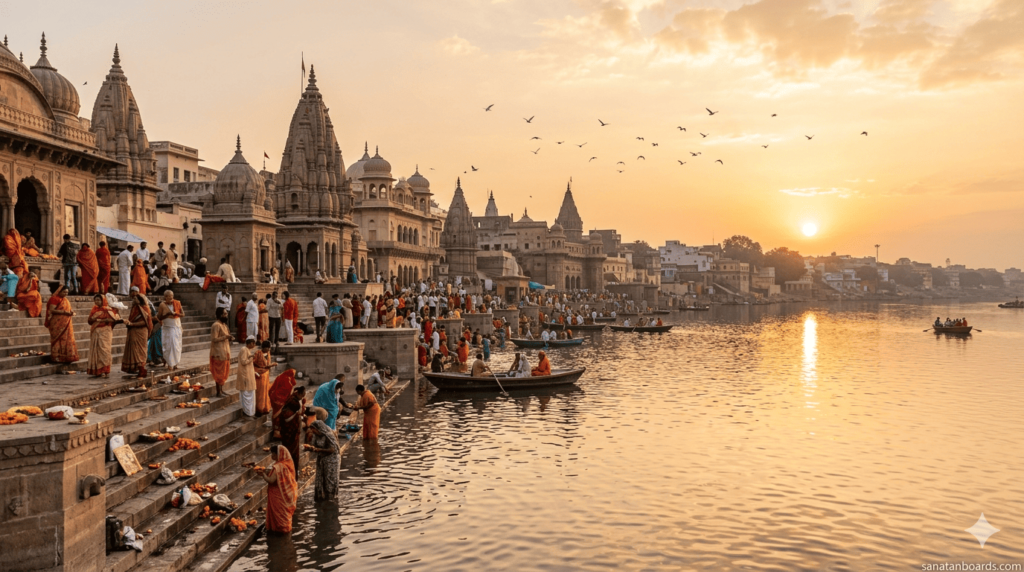
The ghats of Mathura, particularly along the Yamuna River, are essential for various groups of people due to their religious, cultural, and social significance. Pilgrims and devotees are the primary visitors who require these ghats for performing rituals, prayers, and holy baths. It is believed that taking a dip in the Yamuna at these ghats purifies the soul and removes sins.
Priests and religious practitioners also rely on these ghats to conduct ceremonies such as pujas, aartis, and last rites. Vishram Ghat, one of the most important ghats, is considered the place where Lord Krishna rested after defeating Kansa. It serves as a central location for daily rituals and spiritual gatherings.
Tourists and cultural enthusiasts visit these ghats to experience the spiritual ambiance and witness traditional practices. The evening Yamuna Aarti is a major attraction that showcases the devotional spirit of the city. Photographers and researchers also find the ghats valuable for documenting cultural and religious practices.
Local communities depend on the ghats for their daily activities, including washing, bathing, and social interactions. These ghats act as community spaces where people come together, strengthening social bonds.
Additionally, historians and scholars study these ghats to understand ancient traditions and the continuity of religious practices over centuries. Thus, the ghats of Mathura are required by a diverse group of people, each finding unique meaning and purpose in these sacred spaces.
When Mathura (Uttar Pradesh) – Birthplace Of Lord Krishna Is Required ?
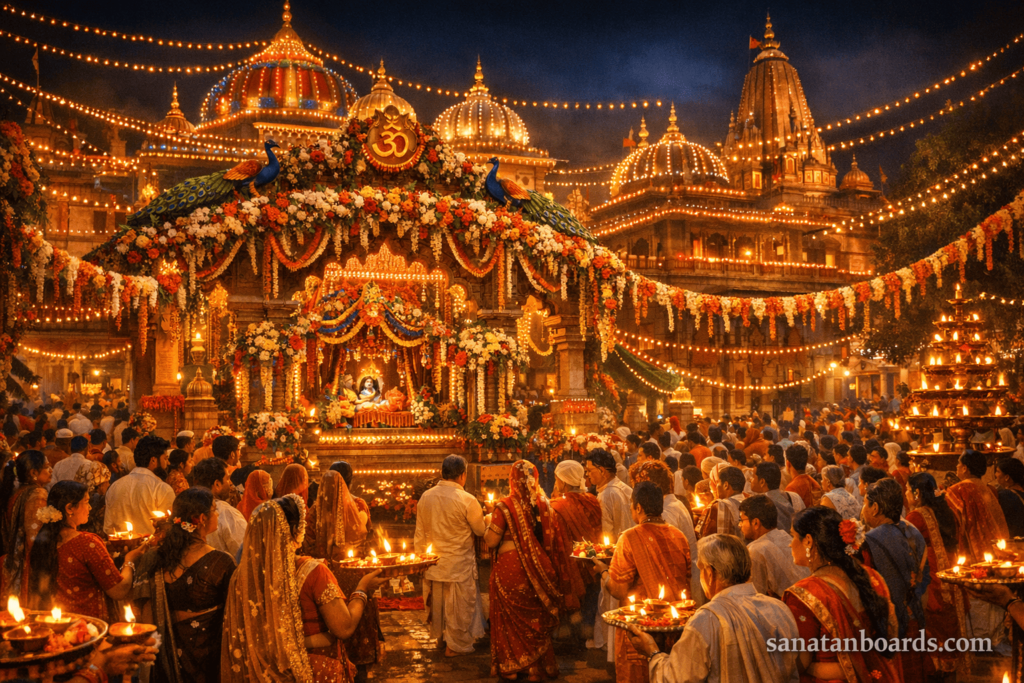
Mathura becomes especially significant and required during specific times of the year, particularly during major Hindu festivals and religious occasions. The most important of these is Janmashtami, which marks the birth of Lord Krishna. During this festival, the city transforms into a vibrant center of devotion, attracting millions of pilgrims who gather to celebrate with prayers, fasting, and cultural performances.
Another important time is the festival of Holi, which is celebrated with great enthusiasm in Mathura and the surrounding Braj region. The celebrations here are unique, involving traditional songs, dances, and rituals that reflect Krishna’s playful nature. This period draws tourists and devotees from across the world.
Mathura is also required during regular pilgrimage seasons when devotees undertake spiritual journeys to visit sacred sites associated with Krishna. The months of Kartik and Shravan are considered highly auspicious, and many people visit the city to perform rituals and seek blessings.
Apart from festivals, Mathura is required during personal religious milestones such as marriages, naming ceremonies, and ancestral rituals. Many families choose this sacred city to perform important rites, believing it brings divine blessings and prosperity.
The city is also relevant during academic and cultural studies related to Indian history, religion, and art. Scholars and students visit Mathura throughout the year to explore its rich heritage and gain deeper insights into ancient traditions.
Additionally, Mathura is required during tourism seasons when people seek spiritual and cultural experiences. The winter months are particularly favorable due to pleasant weather, making it an ideal time for travel.
Thus, Mathura is not limited to a specific time but remains relevant throughout the year, with peak significance during festivals, pilgrimages, and cultural events.
Where Mathura (Uttar Pradesh) – Birthplace Of Lord Krishna Is Required ?
Mathura is required and significant in various geographical, cultural, and spiritual contexts. Geographically, it is located in northern India, forming a crucial part of the Braj region. Its proximity to cities like Delhi and Agra makes it easily accessible, increasing its importance as a pilgrimage and tourist destination.
Spiritually, Mathura is required wherever devotion to Lord Krishna is practiced. Temples, cultural institutions, and religious organizations across India and abroad refer to Mathura as a central point of inspiration. It acts as a symbolic and physical origin of Krishna devotion.
In educational contexts, Mathura is required in universities, research institutions, and cultural studies programs focusing on Indian history, religion, and art. It serves as a case study for understanding ancient urban development, religious practices, and artistic traditions.
In tourism, Mathura is required as a key destination in spiritual travel circuits. Travel agencies and tourism boards include it in itineraries alongside Vrindavan and Agra, making it an essential part of cultural tourism.
Mathura is also required in media and literature, where it is depicted as a setting for stories, documentaries, and films related to Krishna and Indian mythology. It influences creative works and storytelling across various platforms.
Furthermore, Mathura is relevant in global contexts where Indian culture and spirituality are studied or practiced. Temples and communities dedicated to Krishna around the world often draw inspiration from Mathura’s traditions and rituals.
Thus, Mathura’s importance extends beyond its physical location, making it relevant in multiple domains including religion, education, tourism, and global cultural exchange.
How Mathura (Uttar Pradesh) – Birthplace Of Lord Krishna Is Required ?
Mathura plays a vital role in multiple dimensions such as religion, culture, economy, education, and tourism, making it highly relevant in both traditional and modern contexts. Understanding how Mathura is required involves analyzing its functional importance across different sectors and communities.
From a religious perspective, Mathura is required as a central pilgrimage destination for millions of devotees of Lord Krishna. Devotees visit the city to seek spiritual fulfillment, perform rituals, and connect with divine history. The presence of sacred temples, especially the Krishna Janmabhoomi Temple, allows individuals to engage in worship and experience a sense of devotion and inner peace. Religious leaders and institutions depend on Mathura to preserve and promote spiritual teachings associated with Krishna.
In terms of cultural importance, Mathura is required as a living center of traditions and heritage. Festivals such as Janmashtami and Holi are celebrated with unique customs that reflect the city’s deep-rooted cultural identity. Artists, performers, and cultural organizations rely on Mathura as a source of inspiration for music, dance, and literature. These traditions are not only preserved locally but also influence cultural practices across India and abroad.
Economically, Mathura is required as a hub for religious tourism, which significantly contributes to the local and regional economy. Businesses such as hotels, restaurants, transport services, and souvenir shops thrive due to the continuous influx of visitors. Local artisans and craftsmen benefit from the demand for religious items, handicrafts, and traditional products. The city’s economy is closely linked to its religious significance, making tourism a primary driver of growth.
In the educational domain, Mathura is required as a center for learning and research. Scholars, historians, and students visit the city to study ancient Indian civilization, religious texts, and archaeological findings. The city provides real-world insights into historical continuity, urban development, and cultural evolution. Educational institutions often include Mathura in their curriculum to help learners understand India’s spiritual and historical landscape.
From a social perspective, Mathura is required as a community space that brings people together through shared beliefs and practices. The ghats, temples, and public areas serve as gathering points where individuals interact, celebrate, and participate in collective activities. This strengthens social bonds and fosters a sense of unity among diverse groups.
In terms of environmental awareness, Mathura highlights the need for sustainable practices, especially concerning the Yamuna River. The city serves as an example of how religious and environmental responsibilities must coexist. Efforts to clean and preserve the river demonstrate how communities can work together to protect natural resources.
Additionally, Mathura is required in the global context as a symbol of Indian spirituality and cultural heritage. International tourists and spiritual seekers visit the city to explore its traditions and philosophies. Temples and organizations worldwide draw inspiration from Mathura, spreading its influence beyond national boundaries.
Thus, Mathura is required not only as a physical location but also as a spiritual, cultural, economic, and educational resource. Its relevance continues to grow as it adapts to modern needs while preserving its ancient heritage.
Case Study On Mathura (Uttar Pradesh) – Birthplace Of Lord Krishna
Mathura represents a unique case study that demonstrates the coexistence of ancient traditions and modern development. As one of the oldest continuously inhabited cities in India, it provides valuable insights into how religious significance can shape urban growth, economic activity, and cultural identity.
One of the most important aspects of this case study is the impact of religious tourism. Mathura attracts millions of visitors every year, especially during major festivals like Janmashtami and Holi. This influx of tourists creates significant economic opportunities for local businesses, including hotels, restaurants, transportation services, and retail shops. The tourism industry generates employment and supports livelihoods for thousands of residents. However, it also creates challenges such as overcrowding, traffic congestion, and pressure on public infrastructure.
Another critical dimension is cultural preservation. Mathura has successfully maintained its traditional practices, rituals, and festivals despite the influence of modernization. The city continues to celebrate age-old customs, ensuring that cultural heritage is passed down to future generations. Government initiatives and local organizations play a key role in protecting historical monuments, temples, and ghats. However, balancing preservation with development remains an ongoing challenge.
Urban development in Mathura highlights the complexities of managing growth in a heritage city. While infrastructure improvements such as better roads, public facilities, and transportation systems have been implemented, rapid urbanization has led to issues like pollution, waste management problems, and environmental degradation. The Yamuna River, which holds great religious significance, faces serious pollution concerns that require urgent attention.
Governance and policy-making are crucial elements in this case study. Authorities have introduced various योजनाएँ and development programs aimed at improving tourism facilities and preserving heritage sites. Effective coordination between government agencies, private sectors, and local communities is essential for sustainable development. Policies must address both economic growth and environmental protection to ensure long-term stability.
Community participation is another key factor in Mathura’s development. Local residents actively contribute to maintaining traditions and supporting tourism activities. Their involvement ensures that development initiatives align with cultural values and community needs. Public awareness programs and community-driven initiatives can further enhance sustainability efforts.
Technology also plays an emerging role in Mathura’s transformation. Digital platforms are being used to promote tourism, provide information to visitors, and improve service delivery. Smart city initiatives can help address challenges related to infrastructure, traffic management, and resource utilization.
In conclusion, Mathura serves as a valuable case study for understanding how heritage cities can balance tradition and modernity. It highlights the importance of sustainable development, cultural preservation, and community involvement in achieving long-term growth.
White Paper On Mathura (Uttar Pradesh) – Birthplace Of Lord Krishna
Mathura stands as a prominent heritage city with immense religious, cultural, and economic significance. This white paper aims to analyze its current status, identify key challenges, and propose strategic solutions for sustainable development.
The primary strength of Mathura lies in its identity as the birthplace of Lord Krishna, which attracts millions of pilgrims and tourists annually. This consistent flow of visitors creates a strong economic foundation driven by the tourism and hospitality sectors. However, the growing number of visitors also places significant pressure on infrastructure, public services, and natural resources.
One of the major challenges facing Mathura is environmental sustainability. The Yamuna River, which is central to the city’s identity, is heavily polluted due to industrial waste, sewage discharge, and human activities. Immediate measures such as waste treatment facilities, strict regulations, and public awareness campaigns are necessary to restore the river’s health.
Infrastructure development is another critical area that requires attention. Improving transportation systems, accommodation facilities, and public amenities can enhance the overall visitor experience. Investments in smart technologies, such as digital information systems and traffic management solutions, can help address urban challenges effectively.
Cultural preservation is essential for maintaining Mathura’s unique identity. Protecting historical monuments, temples, and ghats should be a priority. Restoration projects, heritage conservation programs, and strict enforcement of regulations can help safeguard these sites. Promoting traditional arts and crafts can also contribute to cultural sustainability and provide economic opportunities for local artisans.
The role of governance is crucial in implementing effective policies and ensuring coordination among various stakeholders. Public-private partnerships can play a significant role in funding and executing development projects. Transparent governance and community involvement are key to achieving sustainable outcomes.
Education and awareness are also important components of this strategy. Encouraging responsible tourism practices and educating visitors about the city’s cultural and environmental significance can help reduce negative impacts.
In conclusion, Mathura has the potential to become a model heritage city by integrating tourism, sustainability, and cultural preservation. #Sanatanboardsinvasai Strategic planning, effective governance, and community participation are essential for achieving this goal.
Industry Application On Mathura (Uttar Pradesh) – Birthplace Of Lord Krishna
Mathura has wide-ranging applications across multiple industries due to its religious significance, cultural heritage, and economic potential. These applications demonstrate how a heritage city can contribute to various sectors while maintaining its traditional identity.
In the tourism industry, Mathura serves as a major destination for religious and cultural travel. Pilgrimage tourism forms the backbone of the local economy, attracting millions of visitors annually. Travel agencies, tour operators, and hospitality services benefit from the steady demand for accommodation, transportation, and guided tours. The development of tourism infrastructure, including hotels and transportation networks, further enhances the city’s appeal.
The hospitality industry plays a crucial role in supporting tourism in Mathura. Hotels, guesthouses, and restaurants cater to the needs of visitors, providing services that range from budget accommodations to luxury experiences. The growth of this sector creates employment opportunities and contributes to economic development.
In the cultural industry, Mathura acts as a center for promoting traditional arts, music, and dance forms associated with Lord Krishna. Festivals and cultural events provide platforms for artists to showcase their talents, preserving and promoting cultural heritage. These activities also attract tourists and contribute to the city’s cultural economy.
The education sector utilizes Mathura as a valuable resource for research and learning. Universities and academic institutions conduct studies on topics such as history, archaeology, religion, and cultural studies. Educational tours and research projects provide students with practical insights into India’s heritage and traditions.
The media and entertainment industry also benefits from Mathura’s cultural and religious significance. Films, television shows, documentaries, and literature often draw inspiration from the life of Lord Krishna and the city’s historical background. This helps in spreading awareness about Mathura’s heritage on a global scale.
In the handicraft and retail industry, Mathura supports local artisans who produce religious items, souvenirs, and traditional products. These goods are sold to tourists, providing income for local communities and preserving traditional craftsmanship.
Additionally, the transportation industry benefits from the movement of tourists and pilgrims. Railways, buses, and private transport services play a vital role in connecting Mathura with other cities, ensuring accessibility and convenience for visitors.
Thus, Mathura’s applications extend across multiple industries, #Sanatanboardsinmumbai making it an important contributor to economic growth, cultural preservation, and educational development.
source : StudyIQ IAS
ASK FAQ
1. Why is Mathura known as the birthplace of Lord Krishna?
Mathura is believed to be the birthplace of Lord Krishna according to Hindu scriptures like the Bhagavata Purana. The Krishna Janmabhoomi Temple marks the exact location where Krishna was born.
2. What are the main attractions in Mathura?
Major attractions include Krishna Janmabhoomi Temple, Dwarkadhish Temple, Vishram Ghat, and nearby Vrindavan. These places are closely associated with the life and teachings of Lord Krishna.
3. When is the best time to visit Mathura?
The best time to visit Mathura is during festivals like Janmashtami and Holi, as well as in winter months (October to March) when the weather is pleasant for travel and sightseeing.
4. How to reach Mathura, Uttar Pradesh?
Mathura is well-connected by road, rail, and nearby airports. It lies on major railway routes and is easily accessible from cities like Delhi and Agra via highways and trains.
5. What is the significance of ghats in Mathura?
The ghats along the Yamuna River in Mathura are important for religious rituals, holy baths, and evening aartis. They hold spiritual importance for devotees visiting the birthplace of Lord Krishna.
Table of Contents
Disclaimer
This content is intended solely for informational, educational, and knowledge-sharing purposes. The information presented is based on general historical, cultural, and religious references. It does not intend to offend any beliefs or sentiments and should be interpreted in a respectful and academic context.