
KUMBAKONAM (TAMIL NADU) – NAVAGRAHA TEMPLES
Kumbakonam, located in the southern Indian state of Tamil Nadu, is a culturally rich and spiritually significant town known for its numerous ancient temples and religious heritage. Among its many sacred attractions, the Navagraha Temples hold a special place in Hindu tradition. These temples are dedicated to the nine celestial bodies, known as the Navagrahas—Surya (Sun), Chandra (Moon), Angaraka (Mars) Budha (Mercury), Guru (Jupiter), Shukra (Venus), Shani (Saturn), Rahu, and Ketu. Each of these planetary deities is believed to influence human life and destiny according to Hindu astrology.
The Navagraha Temples around Kumbakonam are not just places of worship but also centers of faith, rituals, and astrological remedies. Devotees visit these temples to seek blessings, reduce the adverse effects of planetary positions, and improve their well-being. Each temple is uniquely associated with one of the nine planets and has its own rituals, traditions, and significance.
The temples are spread across different locations around Kumbakonam, making the region a popular pilgrimage circuit. Pilgrims often undertake a Navagraha Yatra, visiting all nine temples in a specific sequence. The architecture of these temples reflects the grandeur of Dravidian style, with intricate carvings, towering gopurams, and sacred tanks.
Kumbakonam itself is often referred to as the “Temple Town” due to its dense concentration of temples and spiritual atmosphere. The Navagraha Temples contribute significantly to this identity, attracting thousands of devotees and tourists every year. Their importance lies not only in religious beliefs but also in preserving centuries-old traditions and cultural practices.
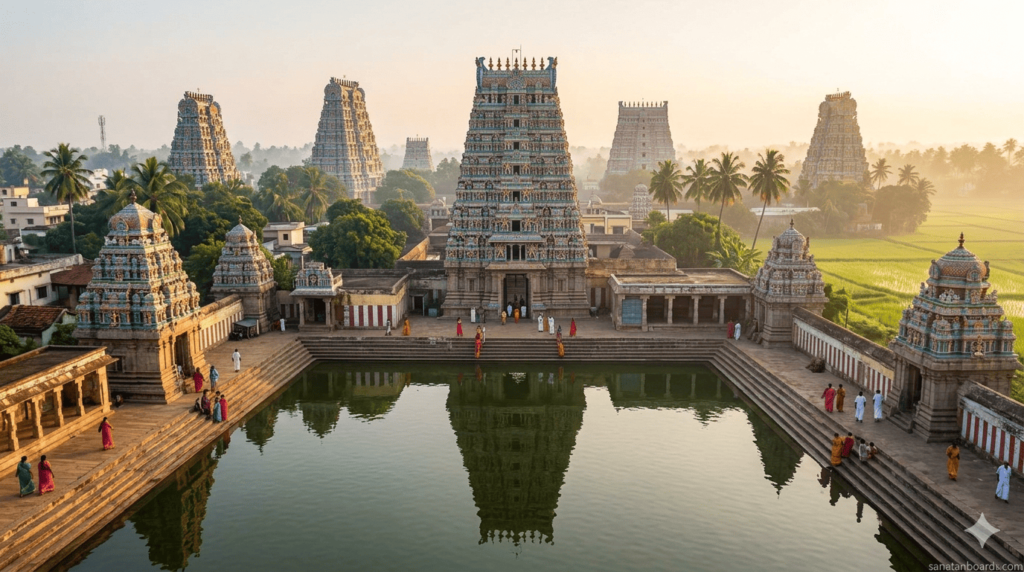
What Is Kumbakonam (Tamil Nadu) – Navagraha Temples ?
Kumbakonam (Tamil Nadu) – Navagraha Temples refer to a group of nine Hindu temples located in and around Kumbakonam, each dedicated to one of the nine celestial planets recognized in Vedic astrology. These temples collectively form an important pilgrimage circuit known as the Navagraha Yatra. The Navagrahas are believed to play a vital role in influencing human life, destiny, and karmic outcomes.
Each temple is associated with a specific planet: Suriyanar Temple for the Sun, Thingalur for the Moon, Vaitheeswaran Koil for Mars, Thiruvenkadu for Mercury, Alangudi for Jupiter, Kanjanur for Venus, Thirunallar for Saturn, Thirunageswaram for Rahu, and Keezhaperumpallam for Ketu. These temples are spread within a radius of approximately 60–80 kilometers around Kumbakonam.
The concept of Navagraha worship is deeply rooted in Hindu philosophy, where planets are considered divine forces governing various aspects of life. Devotees believe that unfavorable planetary alignments in their horoscope can lead to difficulties, while favorable alignments bring prosperity and success. Worship at these temples is believed to help balance these influences.
The temples are not only religious centers but also represent the architectural and cultural heritage of Tamil Nadu. Built during the Chola dynasty, they exhibit intricate stone carvings, sculptures, and inscriptions that reflect historical significance.
The Navagraha Temples also serve as a bridge between spirituality and astrology. Priests perform specific rituals, homams, and poojas tailored to each planet, offering remedies to devotees. These temples continue to attract pilgrims seeking both spiritual peace and astrological solutions.
Who Is Required Kumbakonam (Tamil Nadu) – Navagraha Temples ?
The Navagraha Temples of Kumbakonam are visited by a wide range of individuals who seek spiritual guidance, astrological remedies, and inner peace. Primarily, devotees who believe in Hindu astrology and planetary influences consider these temples essential for addressing life challenges. Individuals experiencing difficulties related to health, career, finances, or relationships often visit these temples to seek relief from negative planetary effects.
People undergoing major life transitions, such as marriage, career changes, or starting new ventures, also find these temples significant. They believe that performing rituals and prayers at the Navagraha Temples can ensure success and remove obstacles. Students and professionals often visit to seek blessings for academic and career growth.
Astrologers frequently recommend visits to these temples as part of remedial measures for doshas (planetary faults) identified in a person’s horoscope. For instance, those affected by Shani dosha (Saturn-related challenges) may visit Thirunallar Temple, while those facing Rahu or Ketu doshas visit Thirunageswaram or Keezhaperumpallam.
Apart from believers in astrology, spiritual seekers and tourists also visit these temples. The serene environment, historical significance, and architectural beauty attract individuals interested in culture and heritage. Pilgrims from across India and even abroad come to experience the spiritual energy of these sacred sites.
Elderly individuals often undertake the Navagraha Yatra as a form of spiritual fulfillment, while families visit together to perform rituals for collective well-being. Thus, the Navagraha Temples cater to a diverse group of people, united by faith, curiosity, and the desire for harmony in life.
When Kumbakonam (Tamil Nadu) – Navagraha Temples Is Required ?
The need to visit the Navagraha Temples of Kumbakonam often arises during specific phases of life, particularly when individuals face challenges believed to be linked to planetary influences. In Hindu astrology, the position and movement of planets play a crucial role in determining one’s life events. Therefore, people seek these temples during periods of astrological imbalance.
One of the most common times to visit is during planetary transitions, known as “Gochar.” For example, when Saturn changes its position (Shani Peyarchi), thousands of devotees visit temples like Thirunallar to seek protection from potential hardships. Similarly, Rahu and Ketu transitions also draw significant crowds.
Another important time is during unfavorable planetary periods, such as “Dasha” or “Antardasha,” which are specific time cycles in astrology. If a person is undergoing a difficult phase associated with a particular planet, visiting the corresponding temple is considered beneficial.
Festivals and auspicious days also mark important times for visiting these temples. Days associated with specific planets, such as Sundays for the Sun or Saturdays for Saturn, are considered ideal for performing rituals. Special occasions like eclipses are also seen as powerful times for prayer and spiritual activities.
Life events such as marriage, childbirth, or starting a new business often prompt visits to these temples. Devotees seek blessings to ensure positive outcomes and avoid obstacles. Additionally, people may visit after facing repeated failures or setbacks, hoping to change their fortune.
The Navagraha Yatra is also undertaken during spiritually significant periods, such as the Tamil month of Margazhi or during Navaratri. Pilgrims often plan their visits during these times to maximize spiritual benefits.
Thus, the Navagraha Temples are considered essential during times of uncertainty, transition, and aspiration, offering guidance and reassurance through faith and tradition.
Where Kumbakonam (Tamil Nadu) – Navagraha Temples Is Required ?
The Navagraha Temples are located in and around Kumbakonam in Tamil Nadu, forming a sacred geographical cluster. Kumbakonam serves as the central hub for pilgrims visiting these temples, which are spread across nearby towns and villages within a manageable distance.
Each temple is situated in a unique location that adds to its spiritual significance. Suriyanar Temple, dedicated to the Sun, is located near Aduthurai. Thingalur, associated with the Moon, lies close to Thiruvaiyaru. Vaitheeswaran Koil, dedicated to Mars, is known for its healing properties and is located near Mayiladuthurai.
Thiruvenkadu, representing Mercury, is famous for its three sacred tanks. Alangudi, dedicated to Jupiter, is situated on the banks of the Kaveri River and is known for Guru worship. Kanjanur, associated with Venus, is located near Aduthurai and is unique for its association with Lord Shiva.
Thirunallar, dedicated to Saturn, is one of the most visited temples and is located near Karaikal. Thirunageswaram, representing Rahu, is known for its unique milk abhishekam ritual. Keezhaperumpallam, dedicated to Ketu, is located near Poompuhar.
These temples are well-connected by road and can be visited individually or as part of a pilgrimage circuit. Many pilgrims prefer to stay in Kumbakonam and travel to each temple over one or two days.
The geographical distribution of these temples allows devotees to experience a journey that combines spirituality, travel, and cultural exploration. The surroundings include rivers, lush greenery, and traditional villages, enhancing the overall experience.
Thus, the Navagraha Temples are not confined to a single location but form a spiritual network centered around Kumbakonam, making the region a significant destination for pilgrimage and cultural tourism.
How Kumbakonam (Tamil Nadu) – Navagraha Temples Is Required ?
The importance of the Navagraha Temples is realized through specific rituals, practices, and pilgrimage methods followed by devotees. Visiting these temples is not merely a physical journey but a structured spiritual process guided by tradition and belief.
Devotees typically begin their pilgrimage from Kumbakonam and follow a sequence to visit all nine temples. This sequence may vary, but it often starts with the Sun temple and ends with Ketu. Each temple visit involves offering prayers, performing rituals, and seeking blessings from the respective planetary deity.
Rituals such as abhishekam (sacred bathing), archana (offering prayers), and homam (fire rituals) are performed to appease the planets. Devotees may also offer specific items associated with each planet, such as colors, grains, or flowers.
Priests play a crucial role in guiding devotees through the rituals. They often suggest remedies based on individual horoscopes. These remedies may include chanting mantras, donating items, or performing specific poojas.
The pilgrimage also involves observing certain disciplines, such as fasting, maintaining cleanliness, and following a respectful approach within temple premises. Many devotees wear traditional attire as a mark of respect.
The experience is both spiritual and introspective, allowing individuals to reflect on their lives and seek inner peace. The belief that planetary influences can be balanced through devotion adds to the significance of the pilgrimage.
Thus, the Navagraha Temples are required as part of a holistic approach to spiritual well-being, combining faith, ritual, and personal transformation.

Case Study On Kumbakonam (Tamil Nadu) – Navagraha Temples
A detailed case study of the Navagraha Temples in Kumbakonam highlights their role not only as religious centers but also as places of emotional strength, cultural continuity, and community engagement. One such case involves a middle-class family from Chennai who experienced prolonged personal and professional difficulties over several years. The family faced issues such as unstable income, recurring health problems, and delays in important life events like marriage and career progression.
After consulting a traditional astrologer, it was suggested that unfavorable planetary alignments—particularly involving Saturn (Shani), Rahu, and Ketu—were influencing their lives. As a remedial measure, the family was advised to undertake the Navagraha pilgrimage in Kumbakonam and perform specific rituals at the corresponding temples.
The family planned a structured two-day pilgrimage covering all nine temples. They began their journey at the Suriyanar Temple (Sun) and followed a sequence that included Thingalur (Moon), Vaitheeswaran Koil (Mars), Thiruvenkadu (Mercury), Alangudi (Jupiter), Kanjanur (Venus), Thirunallar (Saturn), Thirunageswaram (Rahu), and Keezhaperumpallam (Ketu). At each temple, they performed rituals such as abhishekam, archana, and special homams guided by temple priests.
The experience was deeply immersive. Apart from performing rituals, the family observed fasting, maintained discipline, and participated in prayers with devotion. They also engaged with local traditions, understood the significance of each temple, and followed prescribed remedies such as offering specific items related to each planet.
Following the pilgrimage, the family reported a gradual transformation in their circumstances over the next several months. Financial stability improved as new opportunities emerged. Health conditions that had persisted for years began to show signs of recovery. Additionally, long-delayed personal milestones were achieved, bringing a sense of fulfillment and relief.
While these outcomes cannot be empirically linked to the temple visit, the psychological and emotional impact of the pilgrimage was evident. The journey provided the family with renewed hope, clarity, and a positive mindset. It also strengthened their belief system and helped them cope better with life’s uncertainties.
This case study demonstrates how the Navagraha Temples function beyond their religious role. They act as centers for mental reassurance, cultural identity, and spiritual healing. The structured nature of the pilgrimage, combined with ritualistic practices, creates a sense of purpose and discipline that can positively influence individuals’ outlook on life.
White Paper On Kumbakonam (Tamil Nadu) – Navagraha Temples
The Navagraha Temples of Kumbakonam represent a significant confluence of spirituality, astrology, heritage conservation, and regional economic development. These temples, dedicated to the nine planetary deities of Hindu astrology, form a structured pilgrimage network that attracts a large number of devotees annually.
From a historical perspective, the temples date back to the Chola period and reflect the architectural brilliance of Dravidian temple design. Intricate carvings, inscriptions, and structural layouts provide valuable insights into the socio-cultural and religious practices of ancient South India. The temples continue to function as living heritage sites where rituals and traditions have been preserved over centuries.
In terms of religious significance, the Navagraha Temples are deeply rooted in Vedic astrology. The belief that planetary positions influence human destiny forms the foundation of their importance. Devotees visit these temples to perform remedial rituals aimed at mitigating negative planetary effects and enhancing positive influences. These practices include poojas, homams, and offerings tailored to specific planets.
Economically, the temples contribute significantly to the local and regional economy. Kumbakonam serves as a central hub for pilgrims, leading to increased demand for accommodation, transportation, food services, and local handicrafts. This creates employment opportunities and supports small businesses, contributing to sustainable economic growth.
From a tourism perspective, the Navagraha circuit is a major attraction. Travel agencies offer organized pilgrimage packages that include guided tours, transportation, and accommodation. The integration of spirituality with tourism enhances the overall visitor experience and promotes cultural exchange.
Psychologically, the temples serve as spaces for emotional healing and stress relief. The act of pilgrimage, combined with ritual participation, provides individuals with a sense of control and hope. This is particularly relevant in modern times, where people face increasing levels of stress and uncertainty.
However, the reliance on astrology and ritual-based remedies also raises discussions about scientific validation. While there is limited empirical evidence supporting the direct impact of planetary worship, the cultural and psychological benefits are widely acknowledged.
Efforts are being made to improve infrastructure, manage crowds, and preserve the heritage value of these temples. Digital initiatives, such as online booking for rituals and virtual tours, are also being introduced to enhance accessibility.
In conclusion, the Navagraha Temples of Kumbakonam are multifaceted institutions that combine religion, culture, economy, and psychology. #Sanatanboardsinvasai Their continued relevance underscores the importance of preserving traditional knowledge systems while adapting to contemporary needs.
Industry Application On Kumbakonam (Tamil Nadu) – Navagraha Temples
The Navagraha Temples of Kumbakonam have significant applications across various industries, including tourism, hospitality, wellness, digital services, and cultural research. These temples are not only spiritual centers but also key contributors to economic and social development.
In the tourism industry, the Navagraha circuit is a well-established pilgrimage route that attracts both domestic and international visitors. Travel companies design specialized packages that include guided temple visits, transportation, and accommodation. These packages cater to different segments, such as budget यात्रियों, luxury यात्रियों, and senior citizens. The structured nature of the pilgrimage makes it ideal for organized tourism.
The hospitality industry benefits greatly from the influx of pilgrims. Hotels, guest houses, and homestays in and around Kumbakonam experience high occupancy rates, especially during festivals and auspicious periods. Restaurants and local food vendors also thrive due to increased demand.
In the wellness and spiritual industry, the temples are associated with healing and stress relief. Many wellness retreats incorporate temple visits into their programs, combining traditional practices with modern wellness approaches. Meditation, yoga, and spiritual counseling are often integrated with pilgrimage experiences.
The astrology and consultation industry also finds strong relevance here. Astrologers often recommend visits to these temples as part of remedial measures. This creates a network of services that includes horoscope analysis, ritual planning, and personalized पूजा arrangements.
Digital transformation has further expanded the reach of the Navagraha Temples. Online platforms now offer virtual darshan, e-pooja services, and digital booking for temple rituals. This allows devotees from across the world to participate without physically visiting the temples.
In the field of cultural and academic research, the temples serve as important case studies for understanding ancient architecture, religious practices, and social systems. Researchers and scholars study these temples to gain insights into historical developments and cultural continuity.
Local artisans and handicraft industries also benefit from temple tourism. Traditional items such as पूजा materials, idols, and souvenirs are sold to pilgrims, supporting local craftsmanship.
Transportation services, including taxis, buses, and tour operators, form another important industry linked to the Navagraha circuit. Efficient connectivity between temples enhances the overall pilgrimage experience.
Overall, the Navagraha Temples of Kumbakonam play a vital role in multiple industries by creating opportunities for growth, employment, and innovation. #Sanatanboardsinmumbai Their influence extends beyond spirituality, making them an integral part of regional and national development.
source : Nanda’s Journey
ASK FAQ
1. What are the Navagraha Temples in Kumbakonam (Tamil Nadu)?
The Navagraha Temples in Kumbakonam are a group of nine Hindu temples dedicated to the nine planetary deities in Vedic astrology. Each temple represents one planet and is believed to influence different aspects of human life.
2. Why are Navagraha Temples in Kumbakonam important?
These temples are important because they are believed to reduce negative planetary effects and bring peace, prosperity, and success through specific rituals and prayers.
3. How to visit Navagraha Temples in Kumbakonam?
Devotees usually follow a planned route starting from Kumbakonam and visit all nine temples in sequence over one or two days using local transport or tour packages.
4. Which is the most famous Navagraha Temple near Kumbakonam?
Thirunallar Temple, dedicated to Lord Shani (Saturn), is the most famous Navagraha temple and attracts a large number of devotees seeking relief from Saturn-related issues.
5. When is the best time to visit Navagraha Temples in Kumbakonam?
The best time to visit is during planetary transition periods, festivals, and auspicious days like Saturdays for Shani or Sundays for Surya, when special rituals are performed.
Table of Contents
Disclaimer
This content is intended for informational and educational purposes only. The beliefs, practices, and interpretations described are based on traditional and cultural perspectives. Individual experiences may vary, and the information provided does not guarantee specific outcomes. Readers are encouraged to approach the subject with personal discretion and understanding.