
HINDU TEMPLE (GUYANA)
Hindu temples in Guyana represent an important part of the country’s cultural, spiritual, and historical landscape. Guyana, located on the northern coast of South America, is a diverse nation where multiple ethnic and religious communities live together, including Indo-Guyanese people who trace their ancestry to India. Hinduism was brought to Guyana by indentured laborers during the colonial period, and over time, temples became central spaces for preserving religious traditions, cultural identity, and community unity.
Hindu temples in Guyana are not only places of worship but also centers of learning, cultural celebration, and social gathering. They reflect centuries-old traditions of devotion, rituals, festivals, and community service. These temples often host religious ceremonies such as pujas, weddings, naming ceremonies and major festivals like Diwali and Phagwah (Holi), which are widely celebrated across the country.
Architecturally, Hindu temples in Guyana may vary from simple community-built structures to more elaborate designs featuring traditional Hindu symbols, statues of deities, and sacred spaces for prayer. Despite differences in size and design, they all serve a common purpose: to provide a spiritual environment for devotees.
Over the years, Hindu temples have also played a role in education and cultural preservation. Many temples conduct classes in Hindi, Sanskrit chants, and religious teachings for younger generations. They help maintain cultural continuity among Indo-Guyanese people, especially in a multicultural society.
In modern Guyana, Hindu temples continue to remain relevant as they adapt to contemporary needs while preserving ancient traditions. They are symbols of faith, identity resilience, and community unity. Understanding Hindu temples in Guyana provides insight into how religion and culture can shape society across generations.
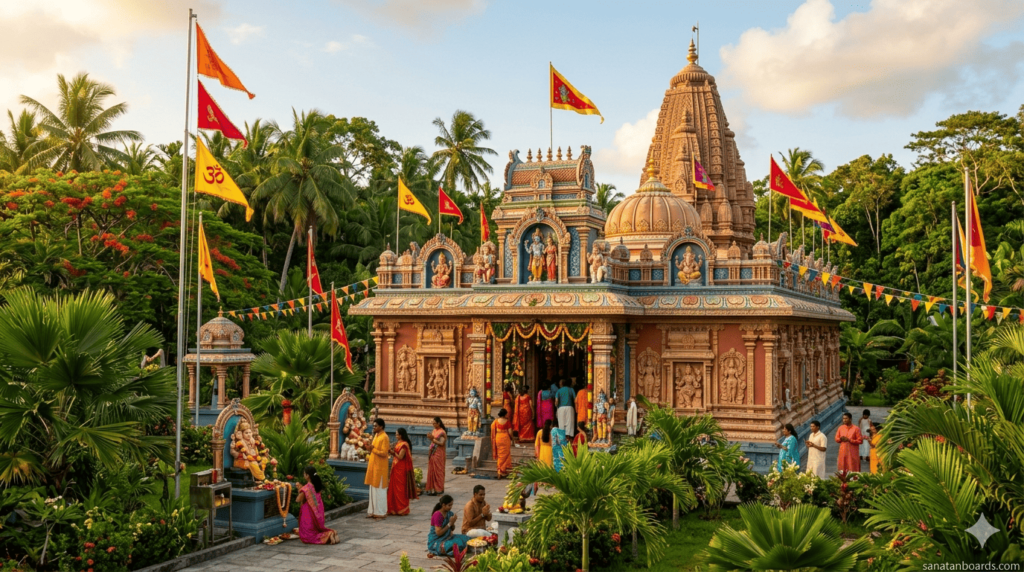
What Is Hindu Temple (Guyana) ?
A Hindu temple in Guyana is a sacred place of worship where followers of Hinduism gather to pray, perform rituals, and celebrate religious festivals. It serves as a spiritual home for the Hindu community and acts as a bridge between tradition and daily life.
These temples are dedicated to various Hindu deities such as Lord Shiva, Lord Vishnu, Goddess Lakshmi, Goddess Durga, and Lord Hanuman. Inside the temple, idols (murti) are placed in sanctified spaces where priests and devotees perform rituals known as puja. Offerings such as flowers, fruits, incense, and lamps are made to express devotion.
In Guyana, Hindu temples are usually built and maintained by local communities. They are often managed by religious committees that ensure daily prayers, maintenance, and organization of events. Unlike large temple complexes in India, many temples in Guyana are community-centered and serve local neighborhoods.
The temple also acts as a cultural hub. It is a place where people gather not only for religious worship but also for education and social interaction. Religious teachings, moral values, and cultural traditions are passed down through temple activities.
Hindu temples in Guyana also reflect adaptation to local culture while preserving Indian heritage. Music, chanting, and rituals may incorporate both traditional Indian and local Caribbean influences. This blend creates a unique religious environment.
Overall, a Hindu temple in Guyana is more than a building—it is a symbol of faith, heritage, and community identity that continues to guide and support Hindu life in the country.
Who Is Required Hindu Temple (Guyana) ?
Hindu temples in Guyana are required primarily by the Indo-Guyanese Hindu population, who use them for spiritual, cultural, and social purposes. These individuals follow Hindu beliefs and rely on temples for religious guidance and worship.
Devotees of all age groups require temples. Elderly members use temples for regular prayer and spiritual peace, while younger generations attend to learn about traditions, rituals, and cultural values. Parents also bring children to temples to help them stay connected with their heritage.
Priests, known as pandits, also require temples as spaces to perform rituals, conduct ceremonies, and guide the community in religious practices. Without temples, it would be difficult to maintain structured religious services and cultural continuity.
Community leaders and cultural organizations also depend on temples as centers for organizing festivals, charity events, and educational programs. Temples help bring people together during important life events such as weddings, naming ceremonies, and funerals.
Additionally, researchers, historians, and cultural scholars may also study Hindu temples in Guyana to understand migration history, cultural preservation, and religious adaptation in diaspora communities.
In a broader sense, even non-Hindu members of society benefit indirectly from temples, as they promote social harmony, cultural diversity, and community engagement.
Thus, Hindu temples in Guyana are required by individuals seeking spiritual fulfillment, cultural identity, education, and community connection.
When Hindu Temple (Guyana) Is Required ?
Hindu temples in Guyana are required throughout the year, as they are central to daily religious life as well as special occasions. Their importance is both continuous and event-based.
On a daily basis, temples are used for morning and evening prayers. Devotees visit to offer puja, meditate, and seek blessings. Priests perform rituals every day to maintain spiritual sanctity. This daily usage ensures that the temple remains an active spiritual center.
Temples are especially required during religious festivals. Major Hindu festivals such as Diwali, Phagwah (Holi), Maha Shivaratri, and Janmashtami are celebrated with great devotion in Guyana. During these times, temples become crowded with devotees participating in special prayers, singing devotional songs, and sharing food.
Life events also determine when temples are required. Important ceremonies such as weddings, births (naming ceremonies), house blessings, and funerals are conducted in or through temple priests. These rituals require sacred space and religious authority, making temples essential.
Temples are also required during times of personal difficulty or crisis. Many devotees visit temples seeking peace, guidance, or blessings during illness, financial hardship, or emotional distress.
Educational and cultural programs also increase the need for temples. Weekly classes, religious discussions, and cultural training sessions are often held in temple spaces, especially for children and youth.
In addition, temples are required during community gatherings and charity work. They serve as meeting points for organizing food distribution, fundraising, and social support activities.
Thus, Hindu temples in Guyana are not limited to specific times; they are required continuously for worship, occasionally for ceremonies, seasonally for festivals, and socially for community activities.
Where Hindu Temple (Guyana) Is Required ?
Hindu temples in Guyana are required wherever Hindu communities reside across the country. They are typically found in regions with significant Indo-Guyanese populations.
The capital city, Georgetown, contains several prominent temples that serve large urban populations. These temples act as major religious centers for city residents. Other urban areas such as New Amsterdam and Linden also have temples that serve their local Hindu communities.
In rural areas, especially along the coastal regions of Guyana, smaller temples are commonly found. These areas historically had large populations of Indian indentured laborers, and many descendants still live there today. Rural temples often serve as both religious and community centers.
Temples are also required in villages where Hindu families live in close-knit communities. In such locations, temples may be simple structures but are deeply significant for daily worship and cultural continuity.
Beyond physical geography, temples are required in social spaces where Hindu cultural identity is maintained. Schools, community halls, and cultural centers may host temporary temple-like setups during festivals and religious events.
Diaspora communities within Guyana’s multicultural society also create the need for temples wherever Hindu traditions are practiced. Even in areas with mixed populations, temples act as symbols of identity and belonging.
Thus, Hindu temples in Guyana are required in both urban and rural settings, wherever Hindu communities exist. Their presence ensures that religious practices, cultural traditions, and community values remain accessible to all devotees regardless of location.
How Hindu Temple (Guyana) Is Required ?
Hindu temples in Guyana are required through community effort, religious practice, and cultural participation. Their establishment and maintenance depend on collective involvement.
Temples are built through donations and contributions from local Hindu communities. Members of the community provide financial support, land, and labor to construct and maintain temple buildings. This collective effort reflects shared religious devotion.
Once established, temples are maintained by committees responsible for organizing prayers, festivals, and daily activities. Priests are appointed to perform rituals according to Hindu traditions. These rituals follow sacred scriptures and ensure spiritual discipline.
Temples are required through structured worship practices. Daily pujas, chanting of mantras, and offerings to deities are conducted to maintain spiritual balance. Devotees participate by attending services and contributing offerings.
Cultural education is another way temples are required. They function as learning centers where children and youth are taught religious values, language, and traditional practices. This ensures cultural preservation across generations.
Temples are also required through social involvement. They organize charity events, food distribution, and community support programs. This strengthens social bonds and promotes unity.
During festivals, temples are required for organizing large gatherings, decorations, processions, and special rituals. Volunteers help manage these events, ensuring smooth participation.
In this way, Hindu temples in Guyana are not only built but actively sustained through religious devotion, community participation, and cultural responsibility.
Case Study On Hindu Temple (Guyana)
Hindu temples in Guyana offer a strong example of cultural preservation within a diaspora community. A case study of these temples highlights their role in maintaining religious identity, community cohesion, and cultural continuity.
During the period of Indian indentureship in the 19th and early 20th centuries, many Indians were brought to Guyana to work on plantations. They carried with them their religious beliefs, but initially lacked formal places of worship. Early religious gatherings were held in homes or open spaces. Over time, as communities grew, dedicated temples were constructed.
One significant aspect of Hindu temples in Guyana is their role in preserving tradition despite geographic distance from India. Rituals, festivals, and prayers closely follow Hindu customs, even though they have adapted to local conditions. This demonstrates cultural resilience.
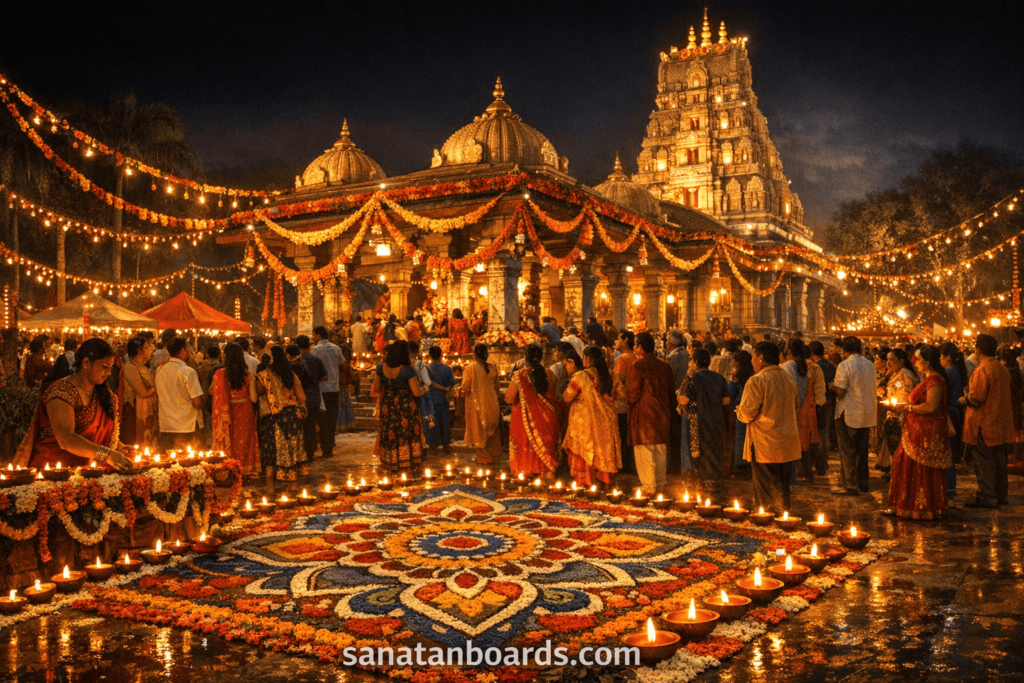
A key case example is the celebration of Diwali in Guyana. Temples become central locations where thousands gather to light diyas, perform Lakshmi puja, and share festive meals. The celebration not only has religious meaning but also strengthens social unity among Indo-Guyanese people.
Another example is the role of temples in education. Many temples run Sunday schools where children learn Hindi, Hindu scriptures, and moral values. This helps younger generations stay connected to their heritage despite being in a multicultural environment.
Temples also play a role in social support. In times of crisis such as illness, death, or financial hardship, temple communities often provide assistance through donations, counseling, and collective prayer. This shows the temple’s role beyond religious functions.
Over time, Hindu temples in Guyana have also contributed to national multicultural identity. They are recognized as important cultural institutions in the country’s diverse society. Festivals organized by temples are often attended by people from different religious backgrounds, promoting interfaith harmony.
However, challenges exist. Some temples face issues such as limited funding, maintenance difficulties, and generational shifts where younger members may become less engaged. Despite this, many temples continue to thrive due to strong community support.
The case study demonstrates that Hindu temples in Guyana are not static structures but evolving institutions that adapt while preserving tradition. #sanatanboardsinvasai They remain essential for religious life, cultural identity, and social cohesion.
White Paper On Hindu Temple (Guyana)
Hindu temples in Guyana represent a significant socio-religious institution within a multicultural nation. This white paper examines their structure, function, challenges, and long-term importance.
Overview
Hindu temples serve as centers of worship, cultural education, and community engagement. They support the spiritual needs of Indo-Guyanese Hindus while contributing to national cultural diversity.
Functionality
Temples operate through daily rituals, festival celebrations, and life-cycle ceremonies. They are managed by committees and priests who ensure religious authenticity and organizational stability. Their activities include pujas, scripture reading, cultural classes, and community service.
Cultural Importance
Temples preserve Indian heritage in Guyana. They maintain languages such as Hindi and Sanskrit through prayer and teaching. Festivals like Diwali and Holi are central to cultural expression and community bonding.
Social Role
Temples act as community centers where individuals gather for support, discussion, and cooperation. They provide charity services, food distribution, and assistance during crises.
Challenges
Despite their importance, temples face challenges such as:
- Financial limitations for maintenance and expansion
- Declining youth participation in some areas
- Need for modernization while preserving tradition
- Infrastructure constraints in rural regions
Opportunities
There are opportunities for development, including:
- Digitalization of religious education
- Youth engagement programs
- Cultural tourism initiatives
- Interfaith dialogue platforms
Impact
Hindu temples contribute significantly to Guyana’s social harmony by promoting tolerance and cultural understanding. They help maintain identity among Indo-Guyanese while fostering integration within a diverse society.
Conclusion
Hindu temples in Guyana are vital institutions that blend religion, culture, and community service. Their continued support is essential for cultural preservation and social cohesion.
Industry Application On Hindu Temple (Guyana)
Although primarily religious institutions, Hindu temples in Guyana have indirect applications across various social and economic sectors.
Cultural Industry
Temples contribute to the cultural and heritage sector by preserving traditional music, dance, rituals, and festivals. Cultural performances during festivals attract visitors and support local artisans and performers.
Tourism Sector
Religious tourism is an emerging area where temples play a role. Visitors interested in cultural diversity and heritage often attend festivals or visit temples. This supports local hospitality and transportation services.
Education Sector
Temples function as informal educational institutions. They teach language, ethics, history, and religious studies. This complements formal education systems by instilling moral values and cultural awareness.
Community Development
Temples support social welfare programs such as food distribution, disaster relief, and charity events. These activities contribute to community development and social stability.
Media and Communication
Religious events held at temples are often covered by local media, contributing to cultural storytelling and national identity representation. Digital platforms also broadcast temple activities to wider audiences.
Event Management
Temples organize large-scale events such as festivals, weddings, and cultural programs. This creates demand for services like event planning, decoration, catering, and logistics.
Social Cohesion Industry (Indirect Application)
Temples help reduce social fragmentation by fostering unity. This indirectly supports national development by maintaining peaceful community relations.
Conclusion
Hindu temples in Guyana influence multiple sectors beyond religion. They contribute to culture, education, tourism, and social development, #sanatanboardsinmumbai making them important community institutions with wide-ranging applications.
source : yatri doctor
ASK FAQ
1. What is the importance of Hindu temples in Guyana?
Hindu temples in Guyana are important for worship, cultural preservation, festivals, and community unity among Indo-Guyanese Hindus.
2. How did Hindu temples develop in Guyana?
They developed after Indian indentured laborers arrived and later built temples to continue their religious practices.
3. Where are Hindu temples located in Guyana?
They are mainly found in Georgetown, New Amsterdam, Linden, and coastal villages with Hindu populations.
4. What activities take place in Hindu temples in Guyana?
Daily prayers, puja rituals, festivals, weddings, and cultural education are commonly held.
5. Why are Hindu temples important today in Guyana?
They help preserve religion, culture, and identity while supporting community bonding and education.
Table of Contents
Disclaimer: This content is provided strictly for educational and informational purposes only. It is intended to offer a general overview and understanding of Hindu temples in Guyana from cultural, historical, and social perspectives. It does not represent any official religious authority, organization, or academic institution. While reasonable care has been taken to ensure accuracy, completeness and correctness are not guaranteed. Readers should verify information from reliable and authoritative sources before drawing conclusions. This material should not be considered professional, religious, or historical advice under any circumstances.