
AMBAJI TEMPLE (GUJARAT)
The sacred shrine of Ambaji Temple is one of the most revered pilgrimage sites in India, located in the Banaskantha district of Gujarat. This temple holds immense spiritual importance and is dedicated to Goddess Amba, a powerful form of Shakti worshipped widely across the country. Situated near the Aravalli mountain range, the temple attracts millions of devotees every year who come seeking blessings, peace, and fulfillment of their wishes.
Ambaji Temple is considered one of the 51 sacred Shakti Peethas, making it a significant spiritual center in Hindu mythology. It is believed that the heart of Goddess Sati fell at this site, giving it divine energy and eternal sanctity. The temple does not house an idol in traditional form; instead, the worship is performed on a sacred Shree Yantra, symbolizing the divine power of the goddess.
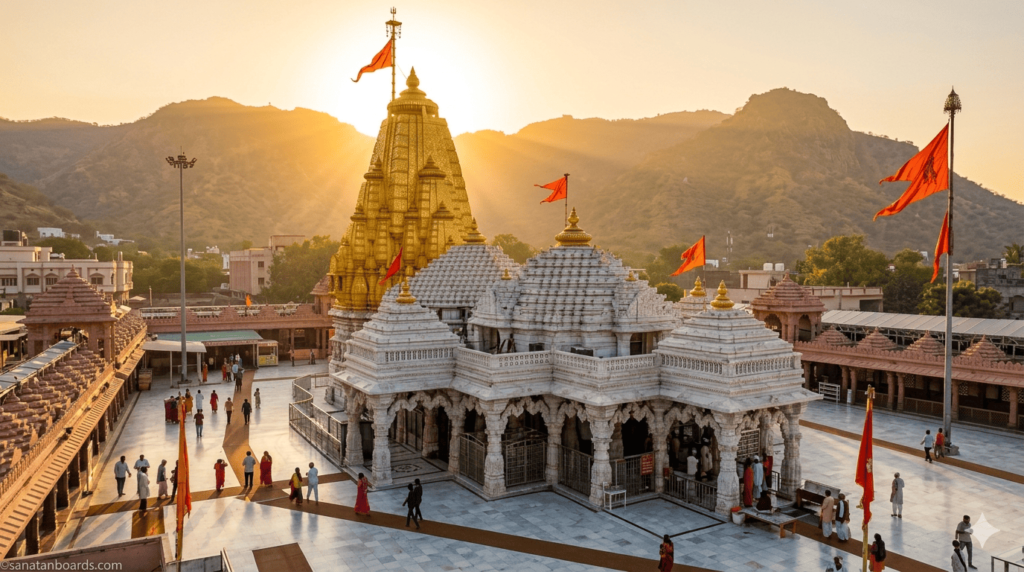
The temple architecture is simple yet deeply spiritual, reflecting purity and devotion rather than grandeur. The white marble structure, intricate carvings and serene surroundings create a peaceful environment for meditation and prayer. Devotees often experience a strong emotional and spiritual connection when visiting this holy place.
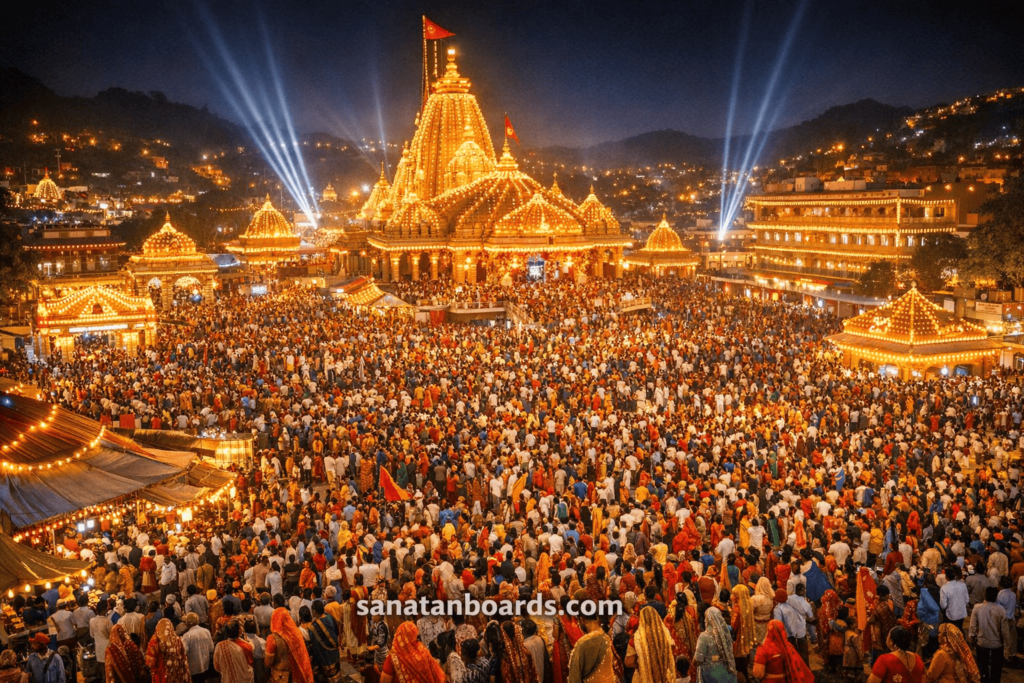
Ambaji Temple is also culturally significant, as it becomes the center of major festivals like Bhadarvi Poonam, which attracts huge gatherings of pilgrims. The atmosphere during such events is filled with devotion, chanting, and traditional rituals, making it a vibrant spiritual experience.
What Is Ambaji Temple (Gujarat) ?
Ambaji Temple is a highly respected Hindu pilgrimage site known for its deep religious and mythological importance. It is dedicated to Goddess Amba, who represents strength, protection, and divine feminine energy. Unlike many temples, this sacred place does not contain an idol of the goddess. Instead, worship is performed on a holy geometric symbol called the Shree Yantra, which is considered extremely powerful in spiritual practices.
The temple is located in the Banaskantha district of Gujarat, near the border of Rajasthan. It is surrounded by the scenic Aravalli hills, which add to its peaceful and divine atmosphere. The location itself is believed to enhance the spiritual energy of the temple.
Ambaji Temple is recognized as one of the 51 Shakti Peethas in Hindu tradition. According to mythology, it is the place where the heart of Goddess Sati fell, making it one of the most powerful centers of divine feminine energy. This belief makes the temple a major attraction for devotees of Shakti worship.
The temple complex is well-organized and includes prayer halls, sacred spaces, and facilities for pilgrims. Devotees participate in rituals such as aarti, chanting, and offerings, which create a deeply spiritual environment.
Ambaji Temple is not only a religious site but also a cultural symbol. It represents faith, devotion, and the continuity of ancient traditions. The temple plays a vital role in preserving spiritual heritage and continues to be a source of inspiration for millions of visitors.
Who Is Required Ambaji Temple (Gujarat) ?
Ambaji Temple is primarily required by devotees, spiritual seekers, and followers of Hindu traditions who worship Goddess Amba or Shakti. It serves as a sacred destination for people who believe in divine feminine energy and seek blessings for strength, protection, and prosperity.
Pilgrims from across India and even from other countries visit this temple to fulfill religious vows, perform rituals, and express gratitude for answered prayers. Many devotees come with personal wishes, health concerns, or life challenges, believing that the goddess has the power to guide and support them.
The temple is also required by spiritual practitioners who follow Shakti worship and Tantric traditions. They consider the Shree Yantra worship at Ambaji as highly powerful for meditation and spiritual growth.
Apart from religious followers, historians, researchers, and cultural enthusiasts also find Ambaji Temple important. It provides insights into ancient Hindu mythology, temple architecture, and traditional rituals that have been preserved for centuries.
Local communities in Gujarat also depend on the temple economically and culturally. It supports tourism, local businesses, and cultural festivals, making it an essential part of regional identity.
Thus, Ambaji Temple is required not only for spiritual purposes but also for cultural preservation, tourism development, and historical understanding. It serves multiple groups of people, each connecting with the temple in their own meaningful way.
When Ambaji Temple (Gujarat) Is Required ?
Ambaji Temple is required throughout the year, but its importance becomes especially significant during religious festivals, pilgrimage seasons, and personal spiritual needs. The temple remains open daily, welcoming devotees who seek blessings and spiritual peace at any time.
One of the most important times when the temple is highly required is during the Bhadarvi Poonam festival. During this period, millions of pilgrims gather to worship Goddess Amba. This event is considered extremely sacred, and the entire region of Gujarat becomes spiritually vibrant with devotional activities, processions, and rituals.
The temple is also required during Navratri, a major festival dedicated to Goddess Durga and her forms. Devotees visit Ambaji to perform special prayers, fasting, and night-long worship ceremonies. This period is considered highly auspicious for seeking divine blessings.
Apart from festivals, the temple is required during personal life events such as marriage, childbirth, health issues, or major life decisions. Many devotees visit to seek guidance, strength, and emotional relief during difficult times.
Weekends and holidays also see a higher requirement as families and tourists visit for spiritual experiences and cultural exploration.
In a broader sense, Ambaji Temple is required whenever individuals feel the need for spiritual connection, mental peace, or divine intervention. Its presence serves as a constant source of faith and hope, making it relevant at all times of life.
Where Ambaji Temple (Gujarat) Is Required ?
Ambaji Temple is required in the Banaskantha district of Gujarat, located near the border of Rajasthan in western India. The temple is situated in the town of Ambaji, which is surrounded by the scenic Aravalli mountain range.
Geographically, this location holds both spiritual and cultural importance. The natural landscape adds to the peaceful environment of the temple, making it ideal for meditation and pilgrimage. The hills, valleys, and greenery around the temple create a calming atmosphere that enhances the spiritual experience of visitors.
The temple’s location also makes it accessible from major cities like Ahmedabad, Udaipur, and Mount Abu. This connectivity increases the number of pilgrims and tourists visiting throughout the year.
From a spiritual perspective, the temple is considered to be located at a powerful energy point. Being one of the 51 Shakti Peethas, it is believed that divine energy naturally flows through this region, making it a sacred space for worship and rituals.
Culturally, the temple is required in this region as it serves as a central hub for religious gatherings, festivals, and traditional events. It strengthens the cultural identity of the local population and preserves ancient practices.
Thus, Ambaji Temple is required not only as a physical location but also as a spiritual landmark deeply rooted in geography, culture, and faith.
How Ambaji Temple (Gujarat) Is Required ?
Ambaji Temple is required through structured rituals, devotion, and traditional worship practices that have been followed for centuries. The primary method of worship involves the Shree Yantra, a sacred geometric symbol that represents the goddess instead of a physical idol.
Devotees perform rituals such as aarti, chanting of mantras, offering flowers, coconuts, and prayers to seek blessings. The temple priests follow strict Vedic traditions to maintain the sanctity of the shrine. These rituals create a powerful spiritual atmosphere that connects devotees with divine energy.
Pilgrims also participate in pradakshina (circumambulation of the temple), fasting, and devotional singing. These practices are believed to purify the mind and strengthen faith.
The temple is required in daily spiritual life through regular prayers and seasonal festivals. Special arrangements are made during major events like Bhadarvi Poonam, where large-scale devotional activities take place in Gujarat.
From a cultural perspective, the temple is maintained through community participation, donations, and government support. This ensures its smooth functioning and preservation of heritage.
Case Study On Ambaji Temple (Gujarat)
Ambaji Temple (Gujarat) provides a compelling real-world case study of how a religious destination can evolve into a major socio-economic and cultural hub. Located in the Banaskantha district, the temple attracts millions of devotees annually, making it one of the most significant pilgrimage centers in western India. This case study explores its impact on tourism, local economy, infrastructure development, and cultural sustainability.
One of the most striking aspects of Ambaji Temple is its ability to attract large-scale footfall consistently throughout the year. However, during peak periods such as Bhadarvi Poonam and Navratri, the number of visitors increases exponentially. This seasonal surge creates both opportunities and challenges. On one hand, it boosts economic activity; on the other, it puts pressure on infrastructure and resources.
From an economic perspective, the temple has transformed the surrounding region into a thriving marketplace. Local vendors, shopkeepers, hoteliers, and transport providers depend heavily on the influx of pilgrims. Small-scale businesses selling पूजा items, handicrafts, and food experience significant growth. This has led to improved livelihoods and reduced unemployment in the region.
Infrastructure development is another key outcome highlighted in this case study. To accommodate the growing number of visitors, the government has invested in better roads, parking facilities, sanitation systems, and public amenities. The connectivity between Ambaji and nearby cities like Ahmedabad and Abu Road has improved significantly, making the temple more accessible.
The temple also plays a vital role in preserving cultural and religious traditions. Rituals, festivals, and community practices are maintained with great devotion, ensuring that ancient customs continue to thrive in a modern setting. This cultural continuity strengthens the identity of the region and enhances its appeal as a heritage destination.
However, the case study also reveals several challenges. Overcrowding during peak seasons can lead to safety concerns and logistical issues. Waste management becomes a major problem, as large gatherings generate significant amounts of garbage. Environmental degradation, particularly in the surrounding hills, is another concern that requires attention.
To address these challenges, authorities have implemented various measures such as crowd control systems, digital queue management, and improved waste disposal mechanisms. Community participation has also been encouraged to maintain cleanliness and order.
In conclusion, Ambaji Temple (Gujarat) serves as an excellent case study of how religious tourism can drive economic growth and cultural preservation while also highlighting the need for sustainable management practices.
White Paper On Ambaji Temple (Gujarat)
Ambaji Temple (Gujarat) stands as a significant example of the integration of spirituality, tourism, and regional development. This white paper aims to analyze the temple’s role in religious tourism, its economic contributions, infrastructure advancements, and the challenges associated with sustainability.
As one of the 51 Shakti Peethas, Ambaji Temple holds immense religious importance. This status ensures a steady flow of pilgrims from across India, making it a key driver of religious tourism in Gujarat. The temple’s unique feature of worshipping the Shree Visa Yantra instead of a physical idol adds to its distinct identity and attracts spiritually inclined visitors.
Economically, the temple contributes significantly to the local and regional economy. The continuous flow of visitors generates demand for accommodation, food services, transportation, and retail. This has led to the growth of small and medium enterprises in the area. रोजगार opportunities have increased, improving the overall standard of living for local residents.
Infrastructure development around Ambaji Temple has been substantial. Government initiatives have focused on improving road connectivity, enhancing public transportation, and upgrading sanitation facilities. The introduction of digital services such as online darshan booking and information systems has improved visitor management and convenience.
Culturally, the temple plays a crucial role in preserving traditional practices. Festivals like Navratri and Bhadarvi Poonam are celebrated with great enthusiasm, showcasing the rich cultural heritage of the region. These events also serve as a platform for cultural exchange and community engagement.
Despite these benefits, the temple faces several challenges related to sustainability. High visitor density during peak periods leads to environmental stress, including waste generation and resource depletion. Managing these issues requires a strategic approach that balances development with conservation.
Recommendations outlined in this white paper include the implementation of sustainable tourism practices, such as eco-friendly waste management systems, promotion of green transportation, and awareness campaigns for visitors. Collaboration between government authorities, local communities, and private stakeholders is essential for long-term success.
Furthermore, the adoption of smart technologies can enhance operational efficiency. Data-driven crowd management systems and real-time monitoring can help prevent overcrowding and improve safety.
Overall, Ambaji Temple stands as a case of #Sanatanboardsinvasai successful integration of faith, economy, and culture, making it a valuable subject for policy, tourism, and heritage studies.
Industry Application On Ambaji Temple (Gujarat)
Ambaji Temple (Gujarat) has wide-ranging applications across multiple industries, making it more than just a religious site. Its influence extends into tourism, hospitality, infrastructure, cultural industries, and even technology.
In the tourism industry, Ambaji Temple serves as a major attraction that draws millions of visitors annually. धार्मिक tourism is a significant segment in India, and Ambaji plays a key role in this sector. Travel agencies, tour operators, and transport services benefit from the consistent demand generated by pilgrims. The temple also contributes to destination branding for Gujarat as a culturally rich and spiritually significant state.
The hospitality industry is another major beneficiary. Hotels, guesthouses, and भोजन facilities experience high occupancy rates, especially during festivals. This demand has led to the development of new accommodations and improved service standards. स्थानीय food vendors and restaurants also thrive due to the influx of visitors.
In the infrastructure sector, the presence of Ambaji Temple has driven development projects such as road construction, public transport systems, and sanitation facilities. These improvements not only benefit pilgrims but also enhance the quality of life for local residents.
The temple also has applications in the cultural and creative industries. Festivals and rituals provide opportunities for cultural performances, handicrafts, and traditional art forms. Local artisans gain exposure and economic support through the sale of their products.
In the field of education and research, Ambaji Temple serves as a valuable case for studies in religion, sociology, and tourism management. Researchers analyze visitor behavior, economic impact, and cultural practices associated with the temple.
Technology also plays an increasingly important role. Digital platforms for darshan booking, crowd management, and information dissemination have improved efficiency and user experience. This demonstrates how traditional धार्मिक institutions can adopt modern solutions.
Additionally, the temple has applications in the environmental sector. The need to manage large crowds has led to initiatives focused on waste management and sustainability. These practices can serve as models for other pilgrimage sites.
Thus, Ambaji Temple #Sanatanboardsinmumbai functions as an economic catalyst that influences multiple industries while maintaining its core spiritual identity.
In conclusion, Ambaji Temple (Gujarat) is not only a place of worship but also a multi-industry driver that influences tourism, economy, culture, infrastructure, and technology. Its व्यापक impact highlights the importance of integrating tradition with modern development to achieve sustainable growth.
source : Curly Tales
ASK FAQ
1. What is the significance of Ambaji Temple in Gujarat?
Ambaji Temple is one of the 51 Shakti Peethas and is dedicated to Goddess Amba, making it a highly sacred site for Hindu devotees.
2. Where is Ambaji Temple located?
It is located in the Banaskantha district of Gujarat, near the Aravalli hills, close to the Gujarat–Rajasthan border.
3. What is the best time to visit Ambaji Temple?
The best time to visit is during Bhadarvi Poonam (August–September) and winter months for pleasant weather.
4. How to reach Ambaji Temple easily?
You can reach by road via Palanpur or Abu Road; the nearest railway station is Abu Road, about 20 km away.
5. Why is Ambaji Temple famous among pilgrims?
It is famous for its spiritual energy, absence of an idol (only a sacred yantra is worshipped), and large festivals attracting thousands of devotees.
Table of Contents
DISCLAIMER
This content is provided only for general educational and informational purposes and is not intended to promote or influence any religious beliefs or sentiments. The details shared are based on commonly available historical, cultural, and traditional references, and may vary in interpretation. Readers are advised to verify information from authentic sources if needed, and use their own judgment before drawing conclusions. No intention is made to offend, hurt, or misrepresent any religion, place, or community.