
JWALAMUKHI TEMPLE (HIMACHAL PRADESH)
The Jwalamukhi Temple is one of the most revered and unique pilgrimage sites in India. Located in the Kangra district of Himachal Pradesh, this sacred temple is dedicated to Goddess Jwalamukhi, a manifestation of Goddess Durga. What makes this temple extraordinary is the presence of natural eternal flames that emerge from fissures in the rock which are worshipped as the goddess herself rather than a traditional idol.
The temple holds immense religious significance in Hindu mythology and is considered one of the 51 Shakti Peethas. According to legend, it is believed that the tongue of Goddess Sati fell at this location when Lord Shiva carried her charred body across the universe. Since then, the site has been regarded as a powerful center of divine energy.
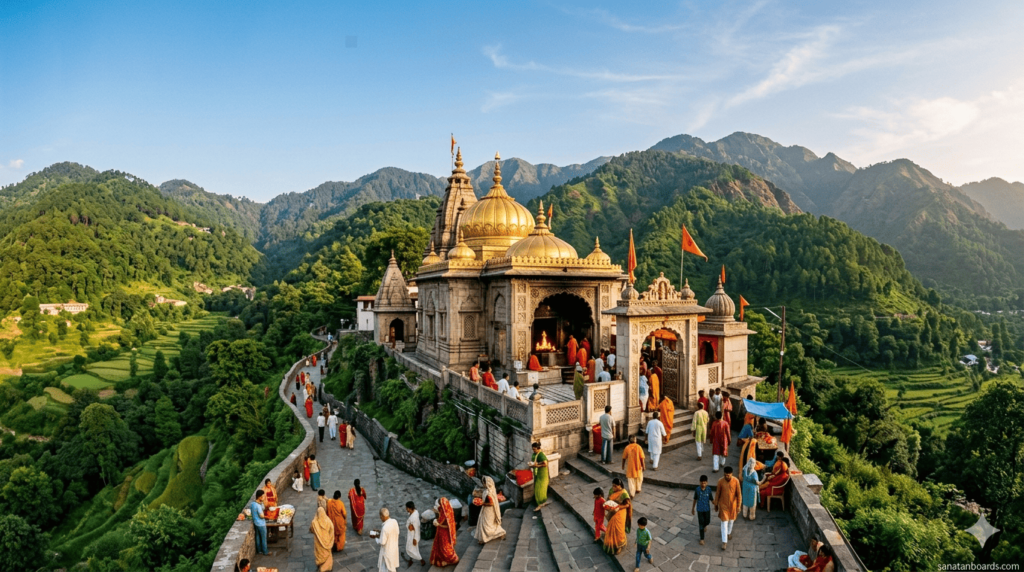
Pilgrims from across the country visit this temple to seek blessings offer prayers, and witness the miraculous flames that burn continuously without any visible fuel source. The temple’s architecture reflects a blend of traditional and regional styles, with a gold-plated dome and intricate carvings enhancing its spiritual ambiance.
Apart from its religious importance, the temple also attracts tourists, researchers, and historians who are intrigued by its natural phenomena and cultural heritage. The surrounding landscape, filled with hills and greenery, adds to the serene and mystical experience of visiting the temple.
The Jwalamukhi Temple stands as a symbol of faith, devotion, and mystery, making it a significant destination for both spiritual seekers and curious minds.
What Is Jwalamukhi Temple (Himachal Pradesh) ?
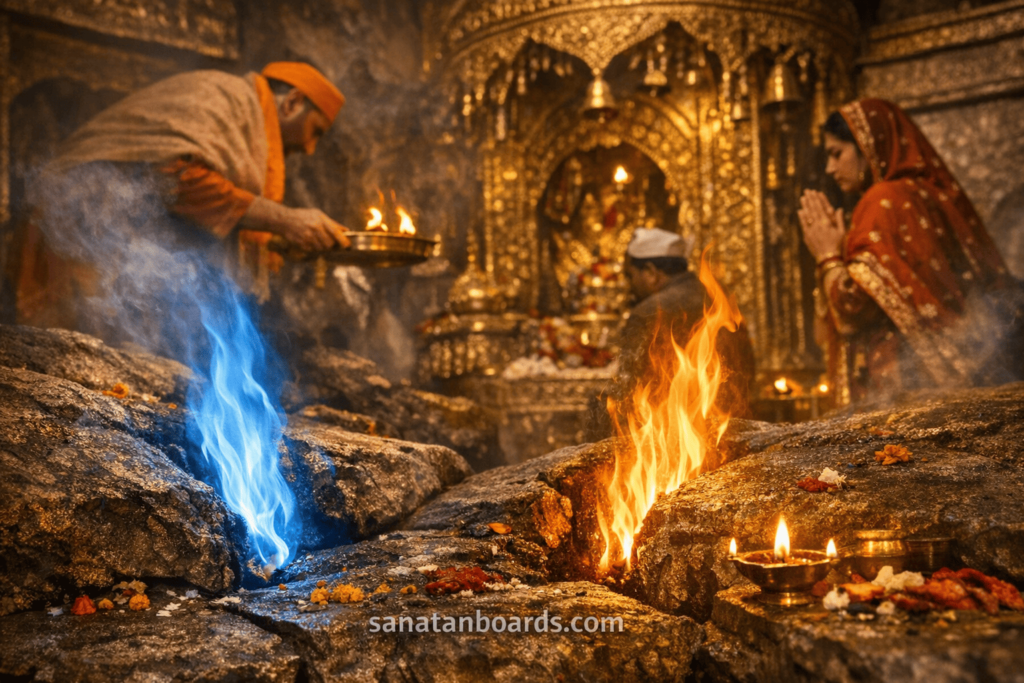
The Jwalamukhi Temple is a sacred Hindu shrine dedicated to Goddess Jwalamukhi, who is worshipped in the form of an eternal flame. Unlike most temples where idols represent deities, this temple is unique because the divine presence is symbolized by natural flames that continuously burn from cracks in the earth.
These flames are believed to be manifestations of the goddess herself, representing her eternal energy and power. There are multiple flames within the temple, each associated with different forms of the goddess, such as Mahakali, Annapurna, Chandi, and Hinglaj. Devotees offer prayers, flowers, ghee, and other sacred items to these flames as a mark of devotion.
The temple is also recognized as one of the Shakti Peethas, making it an important site in Hindu religious tradition. It holds a deep mythological connection to the story of Goddess Sati, which further enhances its spiritual significance.
Structurally, the temple features a simple yet powerful design, focusing more on the sacred flames than elaborate idols or decorations. The sanctum is built over the fissures from which the flames emerge, and priests conduct daily rituals to honor the goddess.
In addition to its religious importance, the temple is also a site of scientific curiosity. Many researchers have studied the flames to understand their origin, often linking them to natural gas emissions. However, for devotees, the flames are purely divine and beyond scientific explanation.
Overall, the Jwalamukhi Temple represents a rare combination of spirituality, mythology, and natural wonder, making it one of the most fascinating temples in India.
Who Is Required Jwalamukhi Temple (Himachal Pradesh) ?
The Jwalamukhi Temple is significant for a wide range of individuals and groups who seek spiritual, cultural, and intellectual enrichment. Primarily, it is important for devotees of Goddess Durga and followers of Hinduism who believe in the divine power of Shakti. For them, visiting the temple is an act of devotion and a way to receive blessings, fulfill wishes, and find inner peace.
Pilgrims from different parts of India and abroad consider the temple a must-visit spiritual destination, especially those undertaking journeys to Shakti Peethas. It is particularly important for individuals seeking relief from personal struggles, as the goddess is believed to grant strength and protection.
Apart from religious followers, the temple is also relevant to historians and cultural researchers. They study the temple’s origins, its connection to ancient mythology, and its role in shaping regional traditions and beliefs. The temple serves as a living example of how faith and history intertwine in Indian culture.
Scientists and geologists are another group for whom the temple holds significance. The continuous flames present a natural phenomenon that attracts scientific investigation, especially in understanding underground gas emissions and geological formations.
Tourists and travel enthusiasts are also drawn to the temple due to its scenic location and unique features. It offers an opportunity to explore the cultural richness of Himachal Pradesh while experiencing a place that combines nature and spirituality.
Thus, the Jwalamukhi Temple is required and valued by devotees, scholars, scientists, and travelers alike, each finding their own meaning and purpose in its presence.
When Jwalamukhi Temple (Himachal Pradesh) Is Required ?
The Jwalamukhi Temple is considered particularly important during specific times and occasions that hold religious and cultural significance. One of the most prominent periods when the temple is required or visited in large numbers is during the Navratri festival. This festival, dedicated to Goddess Durga, occurs twice a year and attracts thousands of devotees who come to offer prayers and seek blessings.
During Navratri, the temple becomes a center of vibrant spiritual activity. Special पूजा (rituals), aartis, and ceremonies are conducted, and devotees often observe fasting and participate in religious gatherings. The atmosphere during this time is filled with devotion and energy, making it one of the most auspicious periods to visit the temple.
Apart from Navratri, the temple is also important during other Hindu festivals such as Diwali and Makar Sankranti. These occasions see increased footfall as people believe that visiting the temple during these times brings prosperity and good fortune.
On a personal level, individuals visit the temple during significant moments in their lives. This includes times of hardship, important decisions, or celebrations such as marriages and new beginnings. The temple serves as a place where people seek guidance, strength, and blessings from the goddess.
Seasonally, the best time to visit the temple is between March and October when the weather in Himachal Pradesh is pleasant and suitable for travel. During winter months, accessibility can become challenging due to cold weather conditions, although some devotees still visit during this time.
The temple is also relevant during times of academic or research interest, particularly for those studying religion, culture, or natural phenomena. Researchers may choose specific periods to observe rituals or study the flames under different environmental conditions.
Where Jwalamukhi Temple (Himachal Pradesh) Is Required ?
The Jwalamukhi Temple is located in the Kangra district of Himachal Pradesh in northern India. It lies in the lower Himalayan region, surrounded by scenic hills and natural beauty, which enhances its spiritual and cultural appeal.
Geographically, the temple is situated near the town of Jwalamukhi, which is well-connected by road to major cities such as Dharamshala and Kangra. The nearest railway station is in Pathankot, and the closest airport is Gaggal Airport in Kangra. This accessibility makes it convenient for pilgrims and tourists to reach the temple from different parts of the country.
The temple’s location is not only important geographically but also spiritually. Being one of the Shakti Peethas, it is part of a network of sacred sites spread across the Indian subcontinent. Devotees often include Jwalamukhi Temple as part of a larger pilgrimage circuit that includes other important temples in Himachal Pradesh.
Within the temple परिसर (complex), the sacred flames are located in the main sanctum, where devotees gather to offer prayers. The surrounding area includes smaller shrines, facilities for pilgrims, and spaces for conducting rituals.
The temple is also relevant in educational and research contexts, where its location in a geologically active region provides opportunities for scientific study. The natural gas emissions that sustain the flames are of particular interest to researchers studying earth sciences.
Additionally, the temple plays a role in promoting regional tourism and local economy. Its presence supports businesses such as hotels, restaurants, and transport services in the surrounding area.
Thus, the Jwalamukhi Temple is required both as a physical location for pilgrimage and as a significant cultural and geographical landmark in Himachal Pradesh.
How Jwalamukhi Temple (Himachal Pradesh) Is Required ?
The Jwalamukhi Temple is required in multiple ways, depending on the perspective of the individuals interacting with it. From a religious standpoint, it serves as a vital center for worship and devotion. Devotees engage in rituals such as offering prayers, lighting lamps, and participating in aartis to connect with the divine energy of Goddess Jwalamukhi.
The temple is also required as a cultural institution that preserves and promotes traditional practices. Festivals, rituals, and local customs associated with the temple help maintain cultural continuity and strengthen community bonds.
From a scientific perspective, the temple is required as a site of study. The natural flames provide an opportunity for researchers to explore geological phenomena, particularly the presence of underground gases. This contributes to a better understanding of natural processes and resource distribution.
In the tourism sector, the temple plays a crucial role in attracting visitors, thereby supporting the local economy. It creates employment opportunities and encourages the development of infrastructure such as roads, accommodations, and public services.
Educationally, the temple is used as a case study in subjects like history, religion, and environmental science. It offers real-world insights into how natural phenomena can be integrated into cultural and religious frameworks.
Overall, the Jwalamukhi Temple is required as a spiritual hub, cultural landmark, scientific site, and economic contributor, making it an integral part of both local and broader societal systems.
Case Study On Jwalamukhi Temple (Himachal Pradesh)
The Jwalamukhi Temple provides an excellent case study for understanding the intersection of religion, natural phenomena, and socio-economic impact. This case study explores how the temple functions as a multi-dimensional institution influencing various aspects of society.
Historically, the temple has been a center of devotion for centuries. Its association with the Shakti Peeth tradition has established it as a significant pilgrimage site. Over time, it has attracted not only devotees but also rulers and historical figures who contributed to its development and maintenance.
One of the most unique aspects of the temple is the presence of natural flames. These flames have been burning continuously and are believed to be fueled by natural gas emissions. While scientists explain this phenomenon through geological processes, devotees consider it a divine miracle. This dual interpretation makes the temple a fascinating subject for interdisciplinary study.
Economically, the temple has a significant impact on the local community. It generates revenue through tourism and pilgrimage activities. Local businesses, including hotels, shops, and transport services, benefit from the steady flow of visitors. The temple also creates employment opportunities for priests, guides, and service providers.
Socially, the temple acts as a unifying force. It brings together people from diverse backgrounds who share a common faith. Festivals and rituals conducted at the temple foster a sense of community and cultural identity.
From an environmental perspective, the temple highlights the importance of preserving natural resources. The flames, being a natural phenomenon, require careful management to ensure their continuity without causing ecological harm.
Challenges faced by the temple include managing large crowds, maintaining infrastructure, and balancing religious practices with environmental conservation. Authorities and temple management work together to address these issues through planning and regulation.
This case study demonstrates how the Jwalamukhi Temple serves as more than just a place of worship. It is a dynamic institution #Sanatanboardsinhimachalpradesh that influences religious beliefs, economic development, scientific research, and social cohesion.v
White Paper On Jwalamukhi Temple (Himachal Pradesh)
The Jwalamukhi Temple represents a unique convergence of spirituality, natural science, and cultural heritage. This white paper aims to provide a structured analysis of its significance, challenges, and future potential.
The temple’s primary importance lies in its religious value as a Shakti Peeth. It attracts millions of devotees annually, making it a key component of India’s spiritual tourism network. The continuous flames, which are central to the temple’s identity, distinguish it from other religious sites.
From a scientific standpoint, the flames are believed to result from natural gas emissions. This presents an opportunity for further research in geology and energy resources. Understanding the source and sustainability of these emissions can contribute to scientific knowledge and potential applications.
Economically, the temple contributes significantly to regional development. It supports tourism-related industries and generates income for local communities. However, this also creates challenges such as overcrowding and strain on infrastructure.
Culturally, the temple plays a vital role in preserving traditions and promoting heritage. It serves as a platform for cultural expression through festivals, rituals, and local practices.
Key challenges include environmental sustainability, crowd management, and infrastructure development. Addressing these issues requires coordinated efforts between government authorities, temple management, and local communities.
Future recommendations include implementing sustainable tourism practices, enhancing research initiatives, and improving facilities for visitors. Digital technologies can also be used to manage crowds and provide information to pilgrims.
In conclusion, the Jwalamukhi Temple is a multifaceted institution with significant religious, scientific, and economic value. Strategic #Sanatanboardsinvasai planning and sustainable practices are essential to ensure its continued relevance and preservation.
Industry Application On Jwalamukhi Temple (Himachal Pradesh)
The Jwalamukhi Temple plays a significant role across multiple industries due to its religious importance, natural uniqueness, and continuous flow of visitors. Its influence extends beyond spirituality into economic, cultural, and developmental sectors.
1. Tourism and Hospitality Industry
One of the most prominent applications of the temple is in the tourism sector. The temple attracts thousands of pilgrims and tourists every year, which directly boosts the hospitality industry. Hotels, guest houses, restaurants, and travel agencies benefit from the consistent influx of visitors. Tour operators often include the temple in Himachal Pradesh pilgrimage circuits, increasing regional tourism demand.
2. Religious and Spiritual Industry
The temple is a key center for religious activities and spiritual tourism. It supports priests, पूजा service providers, and vendors selling religious items such as prasad, flowers, and souvenirs. The temple contributes to sustaining traditional practices and rituals, thereby strengthening the organized religious sector.
3. Local Economy and Small Business Sector
The presence of the temple generates employment and business opportunities for local communities. Street vendors, shopkeepers, transport operators, and guides rely heavily on the temple’s visitor base. Seasonal festivals further increase income generation, making the temple an economic backbone for nearby areas.
4. Infrastructure and Development Industry
Due to its popularity, government authorities invest in infrastructure development around the temple. Roads, transportation facilities, sanitation systems, and public amenities are improved to accommodate visitors. This leads to overall regional development and better connectivity.
5. Research and Scientific Industry
The eternal flames of the temple have attracted researchers and scientists, especially in geology and environmental science. Studies on natural gas emissions and underground geological formations contribute to academic and scientific advancements. The temple thus serves as a natural research site.
6. Cultural and Heritage Industry
The temple promotes preservation of Indian traditions, rituals, and folklore. Festivals like Navratri enhance cultural tourism and encourage documentation of heritage practices. This supports industries related to cultural preservation, media, and education.
7. Media and Content Industry
The uniqueness of the temple makes it a subject for documentaries, blogs, travel vlogs, and educational content. Content creators, filmmakers, and writers use the temple as a #Sanatanboardsinmumbai topic for storytelling, increasing its global visibility.
Overall, the Jwalamukhi Temple is not only a place of worship but also a multi-industry contributor that supports tourism, economy, research, and cultural preservation simultaneously.
source : Yatra Vats
ASK FAQ
1. What is special about Jwalamukhi Temple?
The temple is famous for its eternal natural flames that burn continuously without any visible fuel. These flames are worshipped as the physical manifestation of Goddess Jwalamukhi, making it unique among Hindu temples.
2. Where is Jwalamukhi Temple located?
It is located in the Kangra district of Himachal Pradesh, India, near the town of Jwalamukhi. It is well connected by road, rail (Pathankot), and nearby airport (Gaggal).
3. Why is Jwalamukhi Temple considered a Shakti Peetha?
It is believed that the tongue of Goddess Sati fell at this site, which makes it one of the sacred Shakti Peethas in Hindu mythology.
4. When is the best time to visit Jwalamukhi Temple?
The best time to visit is during Navratri and between March to October, when the weather is pleasant and the temple hosts special rituals and celebrations.
5. How can you reach Jwalamukhi Temple?
You can reach the temple by road from major cities. The nearest railway station is Pathankot, and the nearest airport is Gaggal Airport (Kangra), followed by a short drive.
Table of Contents
Disclaimer
This content is intended for informational and educational purposes only. The information presented is based on general knowledge, cultural beliefs, and publicly available sources. Religious interpretations, historical accounts, and scientific explanations may vary, and readers are encouraged to conduct further research or consult relevant experts for detailed understanding.