SHIRIDI (MAHARASHTRA) – SAI BABA TEMPLE
Shirdi is one of the most significant pilgrimage destinations in India, widely known for the sacred shrine of Shri Sai Baba Temple. Located in the Ahmednagar district of Maharashtra, Shirdi is a small town that has gained global recognition due to the spiritual presence and teachings of Sai Baba of Shirdi. Every year, millions of devotees from across India and abroad visit this holy place seeking peace blessings, and spiritual guidance.
The temple complex is not just a religious site but a center of faith, devotion, and humanitarian values. Sai Baba, who lived in Shirdi during the late 19th and early 20th century emphasized universal brotherhood, love, forgiveness, charity, and equality among all religions. His teachings attracted followers from all faiths, making Shirdi a symbol of unity and harmony.
The shrine stands on the place where Sai Baba spent most of his life and where he attained samadhi in 1918. The temple complex includes Samadhi Mandir, Dwarkamai mosque, Chavadi, and Gurusthan, each holding deep historical and spiritual significance. Devotees believe that prayers offered here are fulfilled with faith and sincerity.
Today, Shirdi has transformed into a well-developed pilgrimage town with modern facilities, accommodations, and transport connectivity, yet it retains its spiritual essence. The atmosphere is filled with chants of “Sai Ram,” creating a peaceful and divine environment.
Shirdi Sai Baba Temple is not only a religious destination but also a center of spiritual learning, attracting people who seek inner peace and moral guidance in their lives.
What Is Shiridi (Maharashtra) – Sai Baba Temple ?
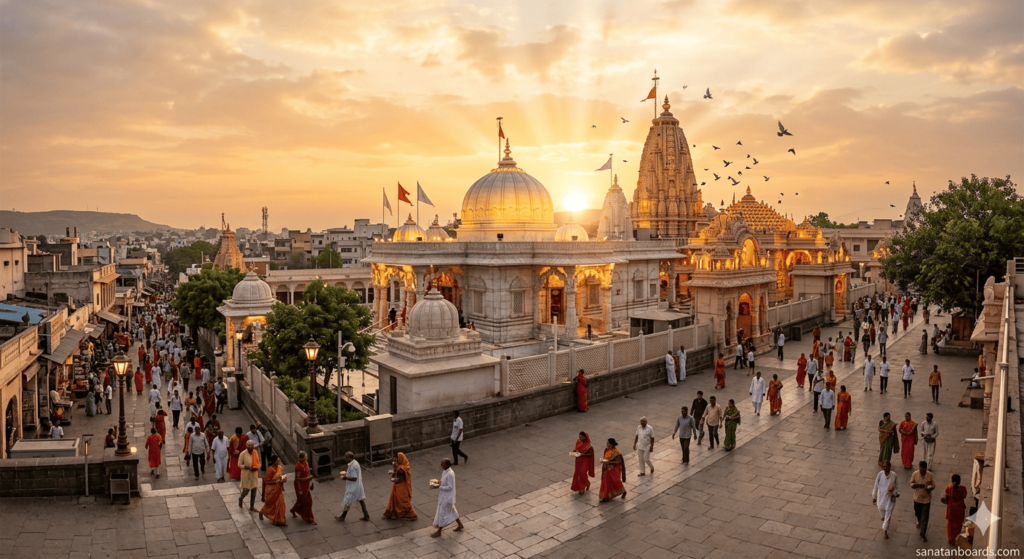
Shirdi is a pilgrimage town located in the western Indian state of Maharashtra. It is internationally famous due to the presence of the shrine dedicated to Sai Baba of Shirdi, a revered saint who lived here for many years. The town is considered one of the most important spiritual centers in India.
The main attraction of Shirdi is the Shri Sai Baba Temple, which is built at the place where Sai Baba spent his life and where his samadhi is located. This temple is visited by devotees of all religions, making it a unique symbol of unity and devotion.
Shirdi was originally a small rural village, but it gained importance in the late 19th century when Sai Baba arrived and started living among the villagers. Over time, his miracles, teachings, and simple lifestyle attracted followers from different backgrounds. After his passing in 1918, the village gradually developed into a major spiritual destination.
Today, Shirdi includes several sacred sites such as Dwarkamai, where Sai Baba lived for most of his life, Chavadi where he used to rest alternately, and Gurusthan, believed to be the place where he was first seen as a child. These places together form a complete spiritual circuit for devotees.
The town is well connected by road, rail, and air, making it accessible to pilgrims from all over the world. It also has hotels, dharamshalas, and facilities to accommodate large numbers of visitors.
Shirdi is not just a geographical location but a symbol of faith, devotion, and spiritual unity that continues to inspire millions of people.
Who Is Required Shiridi (Maharashtra) – Sai Baba Temple
Shirdi is required by individuals who are seeking spiritual growth, peace of mind, and emotional healing. People from all walks of life visit the sacred shrine of Sai Baba of Shirdi and the Shri Sai Baba Temple for different personal, spiritual, and psychological reasons.
Devotees who face stress, financial difficulties, health concerns, or emotional struggles often visit Shirdi to find comfort and hope. The teachings of Sai Baba, which emphasize patience, faith, and surrender, attract those who are looking for direction in life. People who believe in devotion and prayer find Shirdi especially meaningful.
Shirdi is also important for spiritual seekers who wish to understand the deeper meaning of life beyond material existence. Many individuals interested in meditation, spirituality, and self-realization visit the town to experience its peaceful environment.
Families often visit Shirdi to seek blessings for harmony, prosperity, and well-being. It is common for people to travel in groups for pilgrimage, especially during festivals and special occasions.
In addition, Shirdi is visited by scholars, historians, and researchers who study Sai Baba’s life, teachings, and influence on Indian society. His message of unity among religions makes Shirdi relevant for those studying cultural and religious harmony.
Even tourists who are not necessarily religious visit Shirdi to experience its cultural richness and spiritual atmosphere. The temple town offers a sense of calm that appeals to anyone seeking a break from fast-paced modern life.
Thus, Shirdi is required not only by devotees but by anyone in search of peace, guidance, and positive transformation in life.
When Shiridi (Maharashtra) – Sai Baba Temple Is Required ?
Shirdi is required at various stages of human life, especially when individuals face emotional, spiritual, or life-changing situations. The presence of Sai Baba of Shirdi and the sacred environment of Shri Sai Baba Temple make it a destination people turn to during important moments.
People often visit Shirdi when they experience hardship, loss, or uncertainty in life. During financial struggles, health issues, or family conflicts, devotees seek spiritual strength and hope by praying at the temple. The belief in Sai Baba’s teachings gives them courage to face difficulties.
Shirdi is also visited during moments of gratitude and celebration. Many people travel to the shrine after achieving success in business, career, or personal life as a form of thanksgiving. It is common for devotees to fulfill vows or promises made earlier.
Special religious occasions, festivals, and anniversaries of Sai Baba are key times when Shirdi becomes highly significant. Events like Guru Purnima, Ram Navami, and Sai Baba Punyatithi attract large gatherings of devotees from across the world.
Additionally, Shirdi is visited during life transitions such as marriages, childbirth, or new beginnings. Families often seek blessings for a prosperous and peaceful future.
People also visit when they feel spiritually disconnected or mentally disturbed. The calm environment of Shirdi helps individuals regain balance and inner peace.
In modern times, Shirdi is also visited during travel or tourism planning, especially when people want to combine spiritual exploration with cultural experience.
Thus, Shirdi becomes important not just at one specific time, but throughout different phases of life whenever faith, guidance, and emotional strength are needed.
Where Shiridi (Maharashtra) – Sai Baba Temple Is Required ?
Shirdi is located in the Ahmednagar district of the Indian state of Maharashtra. It is situated in the western part of India and is easily accessible from major cities like Mumbai, Pune, and Nashik. The central attraction of this town is the Shri Sai Baba Temple, which stands at the heart of the pilgrimage site.
Geographically, Shirdi is part of a semi-arid region with moderate climate conditions. Despite its small size, it has developed into a major religious hub due to the global popularity of Sai Baba of Shirdi.
The temple complex is located in the center of the town, making it easily accessible to pilgrims. Around the temple, there are important spiritual locations such as Dwarkamai, Chavadi, and Gurusthan, all within walking distance. This makes Shirdi a compact yet highly significant pilgrimage destination.
Shirdi is well connected through multiple transport systems. The nearest airport is Shirdi International Airport, which connects to several major cities. Rail connectivity is available through Sainagar Shirdi Railway Station. Road networks also connect Shirdi to highways and nearby urban centers, allowing smooth travel for devotees.
The town is surrounded by a developing infrastructure that supports tourism and pilgrimage activities. Hotels, dharamshalas, and guest houses are available for visitors of different economic backgrounds.
Shirdi’s location in Maharashtra also places it within a culturally rich region known for its historical and religious heritage. This enhances its importance as a spiritual center.
Thus, Shirdi is not just a point on the map but a globally recognized destination that holds deep spiritual and cultural significance, attracting millions of people every year.
How Shiridi (Maharashtra) – Sai Baba Temple Is Required ?
Shirdi functions as a major pilgrimage center due to the devotion surrounding Sai Baba of Shirdi and the sacred structure of Shri Sai Baba Temple. The way Shirdi operates spiritually and organizationally makes it one of the most visited religious destinations in India.
Devotees enter the temple complex with a structured darshan system that allows thousands of visitors to worship daily. The temple trust manages queues, offerings, and rituals in an organized manner to ensure smooth flow of pilgrims.
The spiritual experience in Shirdi is centered around prayer, chanting, and offerings at Sai Baba’s samadhi. Devotees often participate in aarti ceremonies held multiple times a day, creating a deeply devotional atmosphere.
Shirdi also functions through its supporting spiritual sites. Visitors follow a traditional circuit that includes Dwarkamai, where Sai Baba lived, Chavadi, where he rested, and Gurusthan, where his spiritual presence is believed to have been first felt.
The teachings of Sai Baba are practiced through acts of charity, feeding the poor, and helping visitors in need. The temple trust runs various charitable activities, including food distribution and accommodation facilities.
Technological systems such as online booking, donation systems, and live darshan streaming have made Shirdi more accessible to global devotees.
Security, crowd management, and infrastructure planning ensure that millions of visitors can be accommodated during peak seasons.
Thus, Shirdi operates as both a spiritual and administrative system that blends devotion, tradition, and modern management, allowing millions to experience the teachings of Sai Baba in an organized way.
Case Study On Shiridi (Maharashtra) – Sai Baba Temple
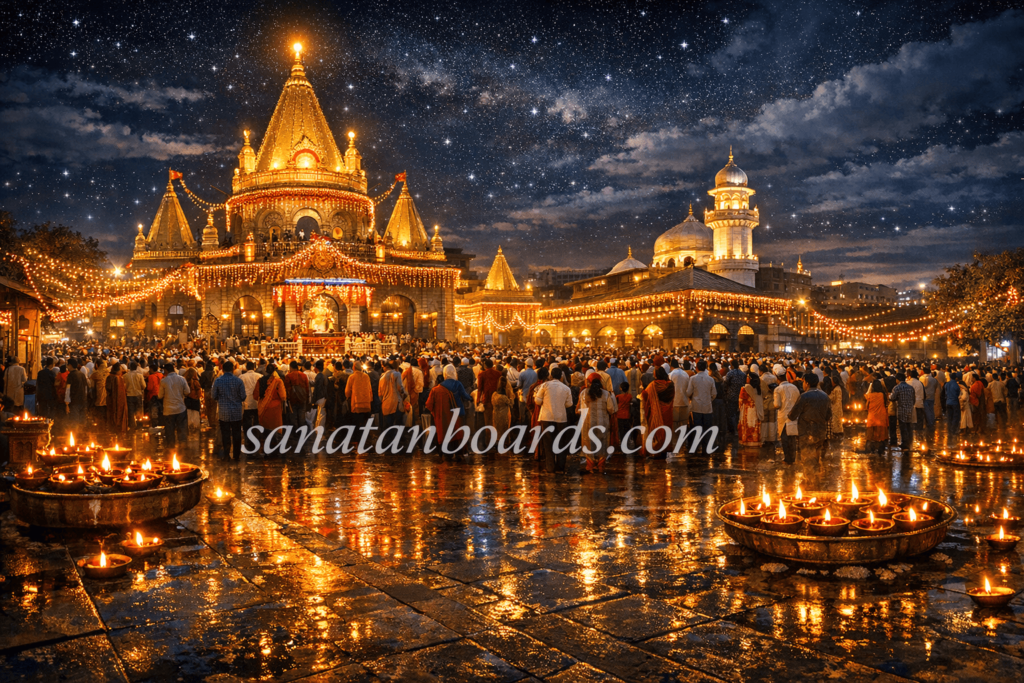
Shirdi serves as a unique case study in the development of religious tourism, spiritual influence, and socio-economic transformation. The presence of Sai Baba of Shirdi and the establishment of Shri Sai Baba Temple have transformed a small rural village into one of the most visited pilgrimage centers in the world.
Historically, Shirdi was a small and relatively unknown village. The arrival of Sai Baba in the late 19th century marked a turning point. His simple lifestyle, teachings of unity, and acts of compassion gradually attracted followers from various regions. After his passing in 1918, devotees preserved his resting place, which became the foundation of the modern temple complex.
From a socio-economic perspective, Shirdi’s transformation is remarkable. The influx of pilgrims led to the development of infrastructure such as roads, railways, airports, hotels, and local businesses. The economy of the region now heavily depends on pilgrimage tourism, creating employment opportunities for thousands of local residents.
Spiritually, Shirdi represents a model of interfaith harmony. Sai Baba’s teachings transcended religious boundaries, attracting Hindu, Muslim, and other faith followers equally. This inclusivity is reflected in the temple’s practices, where rituals incorporate elements of different traditions.
The management of Shirdi is also a notable example of organized religious administration. The Shri Sai Baba Sansthan Trust oversees temple operations, donation management, food distribution, accommodation, and crowd control. The system ensures transparency and efficiency in handling millions of visitors annually.
Shirdi also demonstrates the psychological impact of faith-based destinations. Many visitors report emotional relief, reduced stress, and renewed hope after visiting the shrine. This highlights the role of spiritual environments in mental well-being.
However, the rapid growth of Shirdi has also introduced challenges such as overcrowding, environmental pressure, and infrastructure demands. Managing peak pilgrimage seasons requires advanced planning and resource allocation.
Despite these challenges, Shirdi continues to thrive as a global spiritual destination. Its success lies in the combination of deep-rooted faith, cultural heritage, and modern management systems.
Thus, Shirdi stands as a powerful case study of how spirituality can influence urban development, economy, and social harmony on a large scale.
White Paper On Shiridi (Maharashtra) – Sai Baba Temple
Shirdi represents one of the most significant models of spiritual tourism and religious infrastructure development in India. The presence of Sai Baba of Shirdi and the establishment of Shri Sai Baba Temple have created a framework that integrates faith, administration, and socio-economic growth.
Shirdi functions as a major pilgrimage hub that attracts millions of visitors annually. The core structure of this system is built around organized temple management, efficient crowd handling, and large-scale hospitality services. The Shri Sai Baba Sansthan Trust plays a central role in ensuring smooth operations, including rituals, donations, food distribution, and accommodation facilities.
From an infrastructure perspective, Shirdi has evolved into a well-connected destination with air, rail, and road networks. The development of Shirdi International Airport has significantly improved accessibility for national and international pilgrims. This infrastructure expansion demonstrates how spiritual destinations can drive regional development.
Economically, Shirdi contributes significantly to Maharashtra’s tourism sector. The inflow of pilgrims supports local businesses such as hotels, transport services, food vendors, and souvenir shops. This creates a sustainable ecosystem that benefits both the local population and the wider region.
Socially, Shirdi promotes values of unity, compassion, and service. The teachings of Sai Baba emphasize equality among all religions, which is reflected in the inclusive nature of the pilgrimage site. Devotees from diverse backgrounds visit without discrimination, reinforcing social harmony.
Technological integration has further enhanced Shirdi’s operations. Online booking systems, digital donation platforms, and live streaming of rituals have made the temple accessible to a global audience. This modernization ensures transparency and convenience for devotees.
Environmental management is also an important aspect. With increasing visitor numbers, waste management, water usage, and sustainability practices have become essential components of Shirdi’s administration.
Challenges include overcrowding during peak seasons, maintaining infrastructure quality, and balancing modernization with tradition. Addressing these challenges requires continuous planning and investment.
In conclusion, Shirdi serves as a benchmark for #Sanatanboardsinvasai how spiritual centers can evolve into well-managed, economically significant, and socially impactful destinations while preserving their religious essence.
Industry Application On Shiridi (Maharashtra) – Sai Baba Temple
Shirdi offers multiple applications across industries such as tourism, hospitality, transportation, infrastructure, digital services, and cultural management. The influence of Sai Baba of Shirdi and the operations of Shri Sai Baba Temple make it a practical model for large-scale service industry systems.
In the tourism industry, Shirdi is a prime example of religious tourism development. It demonstrates how spiritual destinations can attract millions of visitors annually, generating significant revenue and employment opportunities. Travel agencies, tour operators, and hospitality businesses design packages specifically centered around Shirdi pilgrimages.
In the hospitality sector, Shirdi showcases high-demand accommodation management. Hotels, lodges, and dharamshalas operate at large scale, especially during festivals. The system highlights the importance of capacity planning, customer service, and affordable lodging solutions in tourism-heavy regions.
The transportation industry also benefits greatly from Shirdi’s development. Air connectivity through Shirdi Airport, rail connectivity via Sainagar Shirdi station, and extensive road networks demonstrate integrated transport planning. This model is useful for developing transport hubs around high-traffic destinations.
In digital services, Shirdi has adopted online booking systems, e-donation platforms, and virtual darshan services. These innovations are relevant to the broader digital transformation industry, showcasing how traditional institutions can integrate technology to improve accessibility and efficiency.
From an infrastructure development perspective, Shirdi is a model for small-town urbanization driven by tourism. The growth of roads, sanitation systems, public utilities, and commercial spaces reflects how demand-driven infrastructure evolves.
In the cultural and heritage industry, Shirdi plays a key role in preserving and promoting spiritual traditions. The teachings of Sai Baba are integrated into cultural storytelling, media, and educational content, making it a valuable cultural asset.
Event management is another industry impacted by Shirdi. Large religious gatherings such as Guru Purnima and Ram Navami require extensive planning, crowd control, and logistics management, offering insights into large-scale event coordination.
Finally, Shirdi demonstrates the importance of sustainable tourism practices. Managing environmental impact, maintaining cleanliness, and ensuring resource efficiency are critical for long-term success.
Thus, Shirdi serves as a multi-industry model that #Sanatanboardsinmumbai combines spirituality with modern economic and technological systems, offering valuable lessons for global tourism and service industries.
source : Traveller Rishabh
ASK FAQ
1. What is Shirdi famous for?
Shirdi is famous for the sacred Shri Sai Baba Temple, dedicated to Sai Baba of Shirdi, attracting millions of devotees for blessings, peace, and spiritual guidance.
2. Where is Shirdi located?
Shirdi is located in the Ahmednagar district of Maharashtra, India. It is a major pilgrimage town known for its religious importance.
3. Who was Sai Baba of Shirdi?
Sai Baba of Shirdi was a revered spiritual saint known for his teachings of love, unity, forgiveness, and equality among all religions.
4. Why do people visit Shirdi Sai Baba Temple?
People visit to seek peace, fulfill wishes, express gratitude, and experience spiritual healing and blessings at the holy shrine.
5. When is the best time to visit Shirdi?
The best time to visit Shirdi is from October to March, and during festivals like Guru Purnima and Ram Navami when celebrations are grand.
Table of Contents
DISCLAIMER
This content is created for educational and informational purposes only. It is based on general historical, cultural, and spiritual references related to Shirdi and Sai Baba. The information provided is not intended to promote any religious belief, nor does it claim absolute accuracy of historical interpretations. Readers are advised to use their own understanding and refer to verified sources for detailed or official information.