NEPAL (SANATAN DHARMA HUB)
Nepal, a landlocked country nestled in the Himalayas, holds a unique and deeply rooted identity as a center of Sanatan Dharma, often referred to as Hinduism in a broader context. The phrase “Nepal (Sanatan Dharma Hub)” reflects the country’s longstanding spiritual heritage, sacred geography, and living traditions that continue to shape its culture and society. For centuries, Nepal has served as a sanctuary where ancient Vedic practices, temple rituals, festivals, and philosophical teachings are preserved and practiced in their authentic forms.
Unlike many regions where traditions have evolved under external influences, Nepal has maintained a remarkable continuity of Sanatan Dharma. The country is home to some of the oldest temples, sacred rivers, and pilgrimage sites that attract devotees from across the world. Spiritual life is not separate from daily living here; rather, it is deeply integrated into the social fabric, influencing art architecture, governance, and community values.
The concept of Nepal as a “Sanatan Dharma Hub” is not limited to religious identity alone. It represents a cultural ecosystem where spirituality, knowledge systems, yoga, meditation, and philosophical inquiry coexist harmoniously. The preservation of rituals, scriptures, and oral traditions has contributed to Nepal’s recognition as a living repository of ancient wisdom.
In modern times, this identity also positions Nepal as a destination for spiritual tourism, cultural research, and holistic learning. Scholars, practitioners, and seekers visit Nepal to explore its temples, participate in rituals, and study traditional practices. As globalization reshapes cultural landscapes worldwide, Nepal continues to stand as a significant center for the preservation and promotion of Sanatan Dharma.
What Is Nepal (Sanatan Dharma Hub) ?
Nepal (Sanatan Dharma Hub) refers to the conceptual and cultural understanding of Nepal as a central place where the principles, practices, and philosophy of Sanatan Dharma are actively preserved and practiced. Sanatan Dharma, meaning “eternal order” or “universal truth,” encompasses a wide range of spiritual traditions, rituals, and philosophical teachings that have evolved over thousands of years in the Indian subcontinent.
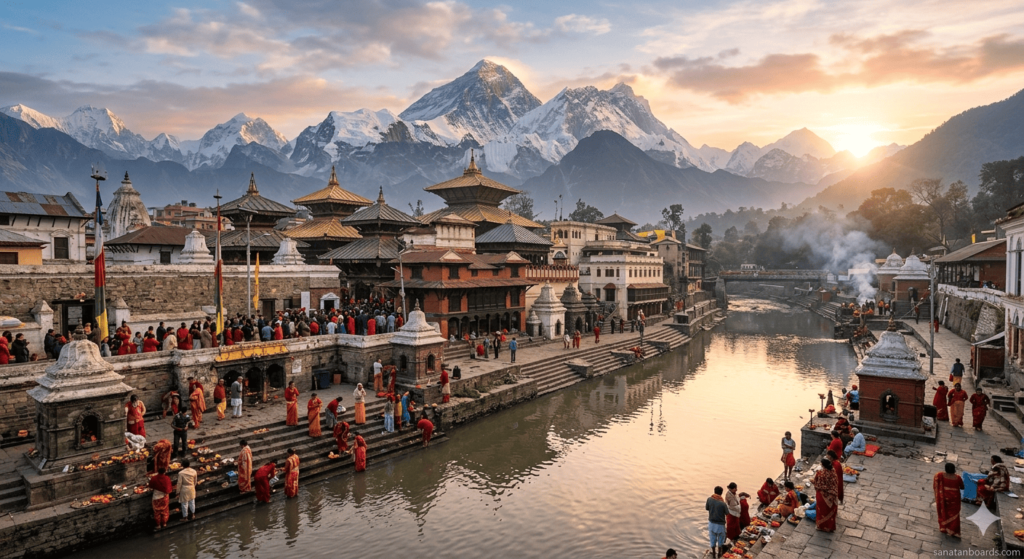
Nepal’s identity as a Sanatan Dharma hub stems from several key factors. First, it is home to numerous sacred sites, including temples dedicated to various deities, pilgrimage routes, and holy rivers that hold deep spiritual significance. These sites are not merely historical landmarks but active centers of worship and learning. Rituals performed in these locations follow ancient traditions that have been passed down through generations.
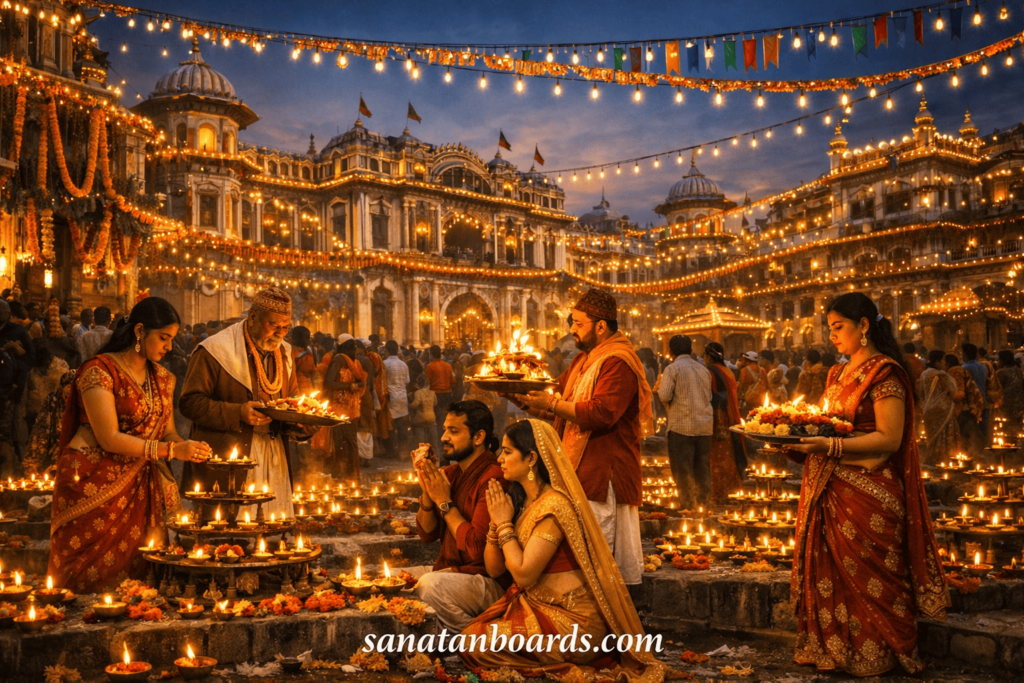
Second, Nepal has historically maintained a strong connection to Vedic culture and practices. The use of Sanskrit in rituals, the continuation of priestly traditions, and the observance of festivals aligned with the Hindu lunar calendar all contribute to this identity. Festivals such as Dashain and Tihar are not only cultural celebrations but also expressions of Sanatan Dharma’s values and cosmology.
Third, Nepal serves as a meeting point for different spiritual paths within Sanatan Dharma, including devotion (bhakti), knowledge (jnana), and disciplined practice (yoga). This diversity allows individuals to engage with spirituality in ways that suit their personal beliefs and lifestyles.
Furthermore, Nepal’s role extends beyond religious practice to include education and preservation. Traditional learning systems, scriptural studies, and philosophical discourse continue to thrive in various institutions and communities. This ensures that knowledge is not only preserved but also transmitted to future generations.
In a broader sense, Nepal (Sanatan Dharma Hub) symbolizes a living tradition where ancient wisdom remains relevant in contemporary life. It highlights the country’s role in maintaining a spiritual legacy that continues to inspire individuals seeking meaning, balance, and connection.
Who Is Required Nepal (Sanatan Dharma Hub) ?
The concept of Nepal as a Sanatan Dharma Hub is relevant to a wide range of individuals and groups, each with distinct needs and interests. Primarily, spiritual seekers and practitioners are among those who benefit most from this environment. Individuals interested in exploring deeper aspects of spirituality, meditation, and traditional rituals often turn to Nepal as a place where authentic practices are still accessible.
Scholars and researchers also require such a hub. Those studying religion, philosophy, anthropology, and history find Nepal to be a valuable resource due to its well-preserved traditions and living practices. The country offers opportunities to observe rituals firsthand, interact with practitioners, and study ancient texts within their cultural context.
Pilgrims form another important group. Devotees from different parts of the world visit Nepal to perform religious duties, seek blessings, and connect with sacred spaces. These journeys are often seen as transformative experiences that strengthen faith and provide spiritual fulfillment.
Cultural enthusiasts and tourists also find value in Nepal’s identity as a Sanatan Dharma Hub. The country’s festivals, architecture, art forms, and daily customs provide insights into a way of life that is deeply rooted in spiritual principles. This attracts individuals interested in experiencing cultural diversity and heritage.
Additionally, modern individuals seeking mental well-being and holistic lifestyles are increasingly drawn to such environments. Practices like yoga, meditation, and mindfulness, which are integral to Sanatan Dharma, are widely practiced in Nepal and offer tools for stress management and personal growth.
Even policymakers and cultural preservationists recognize the importance of maintaining such hubs. They see Nepal as a model for safeguarding intangible cultural heritage while promoting sustainable tourism and education.
When Nepal (Sanatan Dharma Hub) Is Required ?
The relevance of Nepal as a Sanatan Dharma Hub arises at various moments depending on individual and societal needs. On a personal level, individuals often seek such a hub during periods of introspection, transition, or crisis. Times of uncertainty, stress, or major life changes can lead people to search for meaning and guidance, making Nepal’s spiritual environment particularly valuable.
Religious occasions and festivals are another significant time when this hub becomes essential. During major celebrations aligned with the Hindu calendar, Nepal becomes a focal point for rituals, gatherings, and cultural expressions. These events provide opportunities for collective worship, community bonding, and reaffirmation of beliefs.
From an academic perspective, Nepal is required when there is a need to study or document traditional practices in their original context. Researchers often visit during specific seasons or festivals to observe rituals and collect data that cannot be replicated elsewhere.
On a broader societal level, the need for such a hub becomes evident during times of cultural erosion or globalization. As traditional practices face the risk of being diluted or forgotten, Nepal serves as a reference point for authenticity and preservation. It becomes a place where original traditions can be studied, revived, and sustained.
Additionally, in the context of global wellness trends, Nepal is increasingly relevant when individuals seek natural and holistic approaches to health. Retreats, meditation programs, and spiritual teachings offered in Nepal align with these needs, making it a destination during periods of self-improvement and healing.
Where Nepal (Sanatan Dharma Hub) Is Required ?
The relevance of Nepal as a Sanatan Dharma Hub extends beyond its geographical boundaries. While physically located in South Asia, its influence and necessity are felt globally. Within Nepal, specific regions such as temple complexes, pilgrimage routes, and cultural centers serve as focal points for spiritual activities.
Internationally, the concept is required in places where diaspora communities seek to maintain connections with their cultural and spiritual roots. Nepal acts as a reference point, providing authenticity and continuity for traditions practiced abroad.
Educational institutions and research centers around the world also require such a hub. Nepal offers a living example of Sanatan Dharma in practice, making it an important location for field studies and experiential learning.
In the digital age, the idea of Nepal as a hub extends into virtual spaces as well. Online platforms, courses, and cultural exchanges allow people from different countries to access knowledge and practices associated with Nepal’s spiritual heritage.
Tourism sectors across various countries also recognize the importance of Nepal as a destination for spiritual travel. Travel agencies, wellness centers, and cultural organizations collaborate with Nepal-based institutions to provide authentic experiences.
How Nepal (Sanatan Dharma Hub) Is Required ?
Nepal fulfills its role as a Sanatan Dharma Hub through multiple interconnected mechanisms. One of the primary ways is through the preservation of rituals and traditions. Daily worship practices, temple ceremonies, and festival celebrations maintain continuity with ancient customs.
Education plays a crucial role. Traditional schools and institutions teach scriptures, philosophy, and ritual practices, ensuring that knowledge is passed on to future generations. This structured transmission helps sustain the authenticity of traditions.
Community involvement is another key factor. Families and local communities actively participate in religious and cultural practices, making spirituality a shared experience rather than an isolated activity. This collective engagement strengthens cultural identity.
Tourism and pilgrimage infrastructure also contribute to this role. Facilities that support visitors, such as guided tours, accommodations, and cultural programs, make it easier for people to engage with Nepal’s spiritual environment.
Government and organizational support further enhance this function. Policies aimed at heritage conservation, temple maintenance, and cultural promotion help protect important sites and practices.
Finally, Nepal adapts to modern contexts by integrating traditional practices with contemporary needs. Wellness programs, meditation retreats, and cultural workshops present Sanatan Dharma in ways that are accessible to a global audience.
Through these methods, Nepal continues to serve as a vital hub for spiritual and cultural preservation.
Case Study On Nepal (Sanatan Dharma Hub)
Nepal’s identity as a Sanatan Dharma Hub can be understood through a case study approach that examines its cultural ecosystem, institutions, and global impact. One notable example is the functioning of temple-based communities and their role in preserving traditions.
Temple complexes in Nepal are not isolated religious structures but dynamic centers of social, cultural, and educational activity. Priests, scholars, artisans, and devotees interact within these spaces, creating a self-sustaining system. Rituals are performed daily, following guidelines established in ancient scriptures. These practices are not only acts of devotion but also serve as educational experiences for younger generations.
Another important aspect is the integration of festivals into public life. Major celebrations involve entire communities, reinforcing shared values and collective identity. These events also attract international visitors, contributing to cultural exchange and economic activity.
Educational institutions play a significant role in this ecosystem. Traditional learning centers focus on teaching Sanskrit, philosophy, and ritual practices. Students often undergo rigorous training, ensuring that knowledge is preserved with accuracy and depth.
The tourism sector provides another dimension to this case study. Nepal’s recognition as a spiritual destination has led to the development of infrastructure that supports visitors. Guided tours, cultural programs, and wellness retreats allow tourists to engage with local traditions in meaningful ways. This not only generates revenue but also promotes global awareness of Sanatan Dharma.
Challenges also exist within this framework. Urbanization, modernization, and external cultural influences pose risks to traditional practices. However, efforts are being made to address these challenges through policy measures, community initiatives, and international collaborations.
One notable outcome of Nepal’s role as a hub is its influence on global spiritual practices. Yoga, meditation, and holistic wellness programs inspired by Sanatan Dharma have gained popularity worldwide. Nepal contributes to this trend by offering authentic experiences and teachings.
This case study highlights how Nepal functions as a living system where tradition, education, community, and global engagement intersect. It demonstrates the country’s ability to maintain its spiritual heritage while adapting to contemporary realities.
White Paper On Nepal (Sanatan Dharma Hub)
The concept of Nepal as a Sanatan Dharma Hub presents significant opportunities for cultural preservation, education, and sustainable development. This white paper outlines key aspects, challenges, and recommendations for strengthening this role.
Nepal’s strategic importance lies in its ability to preserve ancient traditions in their authentic form. This includes temple rituals, festivals, and philosophical teachings that have remained largely unchanged over centuries. Such preservation is valuable not only for cultural reasons but also for academic and global understanding of spiritual systems.
However, challenges must be addressed to sustain this role. Rapid urbanization and changing lifestyles can lead to the erosion of traditional practices. Additionally, the commercialization of spiritual tourism may compromise authenticity if not managed carefully.
To address these issues, a multi-faceted approach is required. First, policy frameworks should focus on heritage conservation. This includes protecting historical sites, supporting traditional practitioners, and promoting sustainable tourism practices.
Second, education systems should integrate traditional knowledge with modern methodologies. This ensures that younger generations remain connected to their cultural roots while being equipped to engage with global contexts.
Third, digital platforms can be leveraged to expand access to knowledge. Online courses, virtual tours, and digital archives can make Nepal’s spiritual heritage accessible to a wider audience.
Collaboration between government, communities, and international organizations is essential. Such partnerships can provide resources, expertise, and global visibility.
Economic considerations also play a role. By promoting responsible tourism and cultural industries, Nepal can generate revenue while preserving its heritage. This creates a sustainable model that benefits both local communities and visitors.
In conclusion, Nepal (Sanatan Dharma Hub) represents a unique opportunity to preserve and promote ancient wisdom in a modern world. Strategic #sanatanboardsinvasai planning and collaborative efforts are key to ensuring its continued relevance and impact.
Industry Application On Nepal (Sanatan Dharma Hub)
The concept of Nepal as a Sanatan Dharma Hub holds significant practical value across a wide range of industries, including tourism, education, wellness, cultural management, and digital media. This multidimensional relevance makes Nepal not only a spiritual center but also an important contributor to economic and intellectual development.
In the tourism sector, Nepal’s deep-rooted spiritual identity serves as a powerful attraction. Sacred sites such as Pashupatinath Temple and Muktinath Temple draw pilgrims and cultural tourists from across the globe. Travel companies curate specialized packages that combine temple visits, participation in traditional festivals, and guided meditation experiences. These offerings enhance the depth of visitor engagement while simultaneously generating income for local communities, artisans, and service providers.
The wellness industry has also found strong alignment with Nepal’s spiritual ecosystem. Ancient practices like yoga and meditation, rooted in Sanatan Dharma philosophy, are increasingly sought after in modern lifestyles. Nepal provides a serene and authentic environment for such practices, especially in regions like Pokhara, where natural beauty complements spiritual retreats. Wellness centers and training institutes attract global participants seeking mental clarity, physical balance, and holistic healing.
In the field of education and research, Nepal acts as a living laboratory. Academic institutions collaborate with local scholars and traditional practitioners to study religious texts, rituals, and philosophical systems in their original context. Cities like Kathmandu host numerous cultural and research institutions that facilitate fieldwork, enabling deeper insights that go beyond classroom learning.
The cultural and creative industries are equally influenced by Sanatan Dharma. Nepal’s temples, sculptures, and traditional crafts reflect intricate symbolism and spiritual narratives. These elements inspire artists, architects, and designers, creating works that are both culturally meaningful and economically valuable. Handicrafts, religious art, and heritage architecture contribute significantly to both domestic and international markets.
Media and digital platforms are expanding the global reach of Nepal’s spiritual heritage. Documentaries, virtual tours, and online learning platforms allow audiences worldwide to engage with Nepal’s traditions without geographical limitations. This digital transformation not only increases awareness but also creates new opportunities for cultural exchange and preservation.
However, the growing interest across industries also brings challenges. Over-commercialization risks diluting the authenticity of sacred traditions, while increased tourism can strain environmental and cultural resources. Balancing growth with preservation is essential.
By implementing sustainable tourism practices, promoting ethical engagement, and respecting traditional values, industries can responsibly leverage Nepal’s identity as a Sanatan Dharma Hub. This ensures that economic development goes hand in hand with cultural preservation, #sanatanboardsinmumbai allowing Nepal to maintain its spiritual legacy while adapting to modern global demands.
source : History Connect
ASK FAQ
1. Why is Nepal called a Sanatan Dharma Hub?
Nepal is called a Sanatan Dharma Hub because it preserves ancient Hindu traditions, temples, rituals, and spiritual practices in their original form, making it a living center of Sanatan culture.
2. Which are the most important spiritual sites in Nepal?
Key spiritual sites include Pashupatinath Temple, Muktinath Temple, and Janaki Temple, which attract pilgrims from around the world.
3. How does Nepal contribute to spiritual tourism?
Nepal promotes spiritual tourism through pilgrimage sites, meditation retreats, yoga programs, and cultural festivals that provide authentic religious and cultural experiences.
4. What role does Nepal play in preserving Sanatan Dharma?
Nepal plays a key role by maintaining traditional rituals, Sanskrit-based learning, temple culture, and festivals that keep Sanatan Dharma alive across generations.
5. How is Nepal important for yoga and meditation practices?
Nepal offers a peaceful natural environment and authentic spiritual teachings, making it an ideal destination for yoga, meditation, and holistic wellness practices.
Table of Contents
Disclaimer (100 words)
This content is intended for informational and educational purposes only. It presents a conceptual understanding of Nepal as a center of Sanatan Dharma based on cultural, historical, and social perspectives. The information does not promote or favor any particular belief system, nor does it claim exclusivity or absolute authority on the subject. Interpretations may vary depending on individual viewpoints, scholarly research, and evolving contexts. Readers are encouraged to conduct further research and consult multiple sources for a comprehensive understanding. The aim is to provide a balanced and respectful overview without misrepresentation, bias, or disregard for diverse cultural and spiritual perspectives.