
KOLKATA KALIGHAT KALI TEMPLE (WEST BENGAL)
The Kalighat Kali Temple is one of the most significant and sacred Hindu temples located in Kolkata, West Bengal. It is dedicated to Goddess Kali, the fierce form of Shakti, who symbolizes power, protection, and destruction of evil forces. The temple holds immense spiritual importance and is considered one of the 51 Shakti Peethas in Hindu tradition. According to belief, it is the place where the toes of Goddess Sati fell, making it a deeply revered pilgrimage site for devotees across India and abroad.
Kalighat Kali Temple attracts millions of pilgrims every year who come seeking blessings, peace, and fulfillment of wishes. The temple is not only a religious center but also a cultural and historical landmark that reflects centuries of devotion and tradition. The architecture of the temple is simple yet spiritually powerful, with its main sanctum housing the idol of Goddess Kali which is uniquely worshipped in a form different from many other temples.
Located in the bustling city of Kolkata, the temple stands as a contrast between modern urban life and deep-rooted spirituality. The constant flow of devotees, priests, rituals, and chants creates an atmosphere filled with divine energy. The temple is especially crowded during festivals such as Kali Puja and Diwali when devotees gather in large numbers to offer prayers and perform rituals.
Kalighat is also associated with various legends and mythological stories that enhance its religious significance. Over time, it has become not just a place of worship but also a symbol of faith, resilience, and cultural identity for the people of Bengal. Its presence continues to inspire devotion and remains an important part of India’s spiritual heritage.
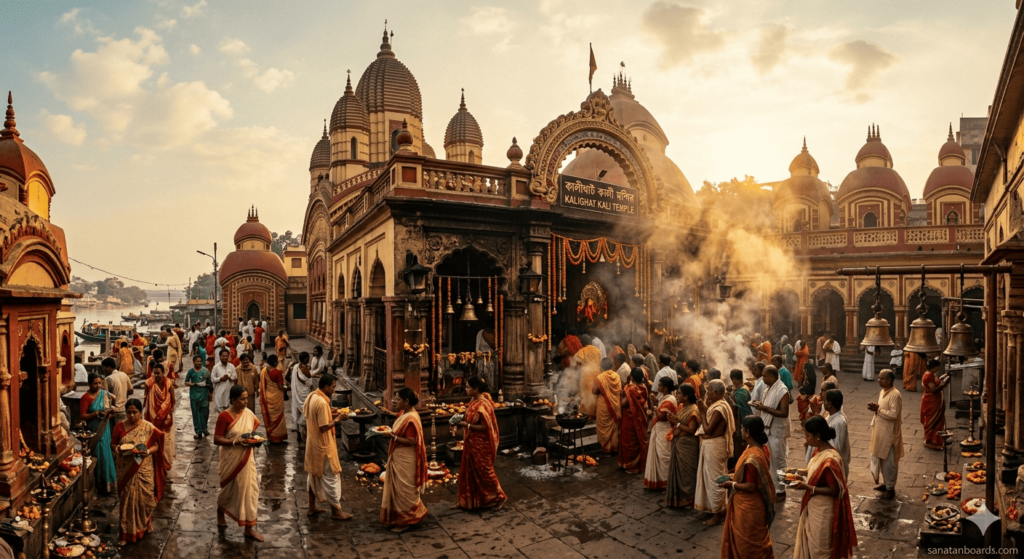
What Is Kolkata Kalighat Kali Temple (West Bengal) ?
The Kalighat Kali Temple is a Hindu religious shrine dedicated to Goddess Kali, who is worshipped as the supreme deity of power and destruction of evil. It is one of the most important Shakti Peethas, which are sacred sites in Hindu mythology associated with Goddess Sati and Lord Shiva. The temple represents the divine feminine energy known as “Shakti,” which is believed to govern creation and destruction in the universe.
Kalighat Kali Temple is not just a place of worship but also a spiritual symbol deeply embedded in Hindu beliefs and rituals. The idol of Goddess Kali in the temple is distinct, depicting her with a long tongue, multiple arms, and a powerful expression that symbolizes the destruction of evil and protection of devotees.
The temple is managed by traditional priests known as “Sebaits,” who follow centuries-old rituals. Devotees offer flowers, sweets, and animal sacrifices (in symbolic or traditional forms) as part of worship practices. The temple complex also includes smaller shrines dedicated to other deities, enhancing its spiritual environment.
Historically, the temple has evolved over centuries from a simple riverbank shrine to a major pilgrimage site. It has witnessed changes in architecture, administration, and rituals while maintaining its core spiritual essence. The temple plays a vital role in preserving cultural and religious traditions of Bengal.
Kalighat Temple is also a center of social and cultural gathering. People from different regions and backgrounds visit it with faith and devotion. It represents the idea of divine justice and protection, where devotees believe that Goddess Kali fulfills prayers and removes obstacles from life.
Who Is Required Kolkata Kalighat Kali Temple (West Bengal) ?
The Kalighat Kali Temple is required by devotees, spiritual seekers, pilgrims, and individuals who believe in Goddess Kali and seek her blessings for protection, strength, and guidance in life. It is especially significant for followers of Shaktism, a tradition within Hinduism that worships the divine feminine energy as the supreme power.
Kalighat Kali Temple is also required by people who are going through emotional distress, life challenges, or seeking solutions to personal and family problems. Many devotees believe that offering prayers here brings peace of mind, removes negative energies, and fulfills wishes.
Apart from religious devotees, historians, researchers, and cultural enthusiasts are also drawn to the temple. They study its rituals, architecture, and historical significance as part of India’s spiritual and cultural heritage. Tourists who visit Kolkata often include the temple in their itinerary to experience its spiritual atmosphere and cultural richness.
Priests and temple authorities are essential participants as they maintain rituals, manage daily worship, and ensure that traditional practices continue without interruption. Local communities around Kalighat also depend on the temple for cultural identity and economic activity, as it attracts a large number of visitors every day.
The temple is also required in a broader cultural sense, as it represents continuity of ancient traditions in modern times. It serves as a place where faith, devotion, and cultural values are preserved and passed on to future generations. In essence, anyone seeking spiritual connection, cultural understanding, or religious fulfillment may find relevance in visiting or understanding Kalighat Kali Temple.
When Kolkata Kalighat Kali Temple (West Bengal) Is Required ?
The Kalighat Kali Temple is required at various moments in human life, particularly during times of emotional need, spiritual seeking, festivals, and important life transitions. Devotees often visit the temple when they face challenges such as illness, financial struggles, family issues, or mental stress. In such situations, they believe that prayers to Goddess Kali provide strength, courage, and relief from difficulties.
Kalighat Kali Temple is especially required during major Hindu festivals such as Kali Puja, Diwali, Navratri, and Durga-related celebrations. During these periods, the temple becomes a major center of worship, with thousands of devotees gathering to offer prayers, perform rituals, and seek blessings. The spiritual energy during these times is considered highly powerful.
The temple is also required during important life events such as marriages, childbirth, business beginnings, and new ventures. Many people visit to seek divine approval and blessings before starting new phases of life. It is believed that Goddess Kali removes obstacles and ensures success when worshipped with devotion.
In addition, individuals may visit the temple during moments of personal transformation or spiritual awakening. People who feel disconnected, confused, or seeking deeper meaning in life often turn to the temple for guidance and inner peace.
The temple is also required historically and culturally throughout the year as it remains open for daily worship and rituals. There is no specific time restriction for devotion, as faith can be expressed at any moment. However, early mornings and evenings are considered especially sacred for prayers.
Where Kolkata Kalighat Kali Temple (West Bengal) Is Required ?
The Kalighat Kali Temple is required in the geographical and cultural landscape of Kolkata, West Bengal, India. It is situated in the southern part of Kolkata near the banks of the Adi Ganga (a historic distributary of the Hooghly River). The temple is located in a densely populated urban area, making it easily accessible to both local devotees and visitors from other regions.
Kalighat Kali Temple is required within this specific location because Kolkata has historically been a major center of culture, spirituality, and religious diversity. The temple adds to the city’s identity as a spiritual hub where tradition and modern life coexist.
The temple is also required within the broader context of West Bengal’s religious geography. The state is known for its deep devotion to Goddess Kali and Durga, and Kalighat serves as one of the most important pilgrimage sites in this tradition. It is part of a network of sacred places that define the spiritual map of eastern India.
On a cultural level, the temple is required in the hearts and daily lives of people who live nearby. For many residents of Kolkata, visiting Kalighat is part of routine religious practice. It serves as a place for prayer, reflection, and community gathering.
The temple is also required for tourists and pilgrims who travel from across India and abroad. It is often included in religious tourism circuits in Kolkata, along with other cultural landmarks. Its location in a busy metropolitan area makes it a unique blend of spirituality within an urban environment.
Thus, Kalighat Kali Temple is not just required in a physical location but also within the cultural, spiritual, and social identity of Kolkata and West Bengal.
How Kolkata Kalighat Kali Temple (West Bengal) Is Required ?
The Kalighat Kali Temple is required through structured rituals, devotional practices, and traditional worship methods that have been followed for centuries. Devotees participate in prayer ceremonies, offer flowers, sweets, and incense, and chant mantras dedicated to Goddess Kali. These practices form the core way in which the temple is experienced spiritually.
Kalighat Kali Temple is required through a system of organized temple management led by priests known as Sebaits. They perform daily rituals such as “aarti,” “bhog offering,” and special pujas. These rituals are conducted according to ancient scriptures and traditions passed down through generations.
The temple is also required through symbolic practices. Devotees express their faith through offerings, prayers, and sometimes vows (mannat), which they believe will be fulfilled by the goddess. Animal sacrifice was historically part of worship, though modern practices have become more symbolic and regulated.
Accessibility also defines how the temple is required. Located in a busy area of Kolkata, it can be reached by road and public transport. Devotees often queue for hours to enter the sanctum, especially during festivals. The temple administration ensures smooth flow of visitors and maintains order during peak times.
The temple’s spiritual requirement is also fulfilled through festivals and community participation. During events like Kali Puja, the temple is decorated and rituals are intensified, creating a powerful spiritual environment. These collective practices strengthen faith and cultural unity among devotees.

Case Study On Kolkata Kalighat Kali Temple (West Bengal)
The Kalighat Kali Temple serves as a significant case study in the study of religious heritage, cultural continuity, and urban spirituality in India. It demonstrates how ancient religious traditions can coexist and adapt within a modern metropolitan environment like Kolkata.
Kalighat Kali Temple represents a living example of Shakti worship that has survived centuries of social, political, and urban transformation. Historically, the temple is believed to be one of the 51 Shakti Peethas, making it a highly revered pilgrimage site. Over time, it has evolved from a small shrine near a riverbank into a major religious institution.
From a cultural perspective, the temple plays a key role in preserving Bengali religious identity. It is deeply associated with the worship of Goddess Kali, who symbolizes strength, protection, and destruction of evil. The temple’s rituals, festivals, and daily worship practices provide continuity to ancient traditions that might otherwise have faded in urban modernization.
Economically, the temple significantly contributes to local livelihoods. Thousands of vendors, shopkeepers, priests, and service providers depend on the daily influx of devotees. The surrounding area has developed into a vibrant religious marketplace, showcasing how spirituality and economy are interconnected.
Socially, the temple functions as a unifying space where people from different backgrounds come together. Despite differences in caste, class, or region, devotees share a common spiritual experience. This inclusivity highlights the temple’s role in fostering social cohesion.
From an urban development perspective, the temple presents both opportunities and challenges. Its location in a densely populated area creates issues related to crowd management, sanitation, and infrastructure. However, it also enhances Kolkata’s identity as a city deeply rooted in spirituality.
Religiously, the temple is a center of intense devotion. Rituals performed here are believed to have strong spiritual power. The emotional and psychological impact on devotees is significant, as many report feelings of relief, hope, and inner peace after visiting.
The temple also reflects adaptation over time. While traditional rituals continue, modern management systems have been introduced to handle large crowds and maintain order. This balance between tradition and modernization is a key feature of the case study.
In conclusion, Kalighat Kali Temple stands as a model of how religious heritage can remain relevant in contemporary society while continuing to influence cultural, economic, and spiritual life.
White Paper On Kolkata Kalighat Kali Temple (West Bengal)
The Kalighat Kali Temple is an important religious institution that serves as a model for studying the integration of spirituality, heritage management, and urban religious ecosystems. This white paper examines its structural, cultural, and operational significance.
Kalighat Kali Temple functions as a key religious node within Kolkata’s spiritual infrastructure. It attracts millions of visitors annually, making it one of the most significant pilgrimage destinations in eastern India. The temple’s operations involve coordination between priests, administrative authorities, and civic bodies.
From a governance perspective, the temple is managed through a traditional hereditary priest system combined with modern administrative oversight. This dual structure ensures continuity of rituals while addressing contemporary needs such as crowd control, security, and sanitation.
Culturally, the temple plays a vital role in preserving intangible heritage. Rituals, chants, and festivals associated with Goddess Kali form an essential part of Bengal’s cultural identity. These practices contribute to maintaining historical continuity in a rapidly modernizing urban environment.
Economically, the temple generates a significant ecosystem of religious tourism. Local businesses, including flower vendors, prasad sellers, transportation providers, and accommodation services, benefit from the constant flow of visitors. This makes the temple a key contributor to micro-economies in the region.
From a sustainability perspective, the temple faces challenges such as waste management, overcrowding, and infrastructure stress during peak festival periods. Addressing these issues requires coordinated efforts between municipal authorities and temple management.
Technologically, there is potential for digitization of services such as online darshan updates, queue management systems, and digital donation platforms. These improvements can enhance visitor experience while maintaining traditional practices.
The temple also holds psychological and social significance. It provides emotional support to devotees, acting as a place for reflection, hope, and spiritual reassurance. This intangible benefit is a critical aspect of its societal value.
In terms of policy implications, religious institutions like Kalighat Temple highlight the need for balanced heritage conservation frameworks that respect tradition while incorporating modern governance systems.
Overall, Kalighat Kali Temple represents a #Sanatanboardsinvasai complex intersection of faith, economy, governance, and culture, making it an important subject for continued study and structured management.
Industry Application On Kolkata Kalighat Kali Temple (West Bengal)
The Kalighat Kali Temple has several indirect industry applications, particularly in tourism, hospitality, retail, transportation, and cultural heritage management.
Kalighat Kali Temple significantly contributes to religious tourism industry development. Pilgrims and visitors generate demand for travel services, including local transport, guided tours, and intercity travel services. This supports airlines, railways, taxis, and app-based mobility services.
The hospitality industry also benefits, as hotels, lodges, and guest houses around Kolkata experience consistent occupancy due to temple visitors. Food services, restaurants, and street vendors also thrive in the surrounding areas, creating a strong micro-economy.
In retail, the temple supports businesses selling religious items such as flowers, incense sticks, idols, prayer materials, and souvenirs. This creates a continuous demand cycle that sustains small and medium enterprises.
The cultural heritage and tourism management sector also finds relevance in the temple’s operations. It serves as a case example for managing large-scale pilgrimage sites in urban environments. Lessons from Kalighat Temple can be applied to crowd management, heritage preservation, and visitor experience design.
Additionally, the temple influences media and content industries. Documentary filmmakers, researchers, and travel bloggers often feature it as part of cultural storytelling. This enhances digital tourism promotion and cultural documentation.
In the public administration sector, the temple provides insights into managing religious sites in densely populated cities. This includes coordination #Sanatanboardsinmumbai between civic authorities, sanitation departments, and law enforcement agencies.
Thus, the Kalighat Kali Temple indirectly supports multiple industries by acting as a focal point of cultural, spiritual, and economic activity.
source : Learn with Tojo
ASK FAQ
1. What is Kalighat Kali Temple in Kolkata famous for?
Kalighat Kali Temple is famous as one of the 51 Shakti Peethas dedicated to Goddess Kali, attracting millions of devotees for blessings, protection, and spiritual fulfillment.
2. Where is Kalighat Kali Temple located?
Kalighat Kali Temple is located in Kalighat area of Kolkata, West Bengal, India, near the Adi Ganga river, and is easily accessible from all parts of the city.
3. Why is Kalighat Kali Temple important in Hinduism?
It is important because it is believed to be a Shakti Peetha where the toes of Goddess Sati fell, making it a powerful spiritual site for worship of Goddess Kali.
4. When is the best time to visit Kalighat Kali Temple?
The best time to visit is during early mornings or festivals like Kali Puja and Diwali when the temple is highly decorated and spiritually vibrant.
5. How can devotees worship at Kalighat Kali Temple?
Devotees can worship by offering flowers, sweets, and prayers, participating in aarti, and following temple rituals conducted by priests inside the sanctum.
Table of Contents
Disclaimer
The information provided above is for general informational and descriptive purposes only. It is based on cultural, historical, and traditional references related to the subject. Interpretations of religious beliefs, rituals, and practices may vary among individuals and communities. Readers are advised to consider this content as a general overview and not as definitive religious or doctrinal guidance.