
PASHUPATINATH TEMPLE (KATHMANDU)
Pashupatinath Temple is one of the most sacred Hindu temples in the world, dedicated to Lord Shiva in his form as “Pashupati,” meaning the Lord of all living beings. Located in Kathmandu along the banks of the Bagmati River, the temple is not only a place of worship but also a major cultural, spiritual, and historical landmark of Nepal.
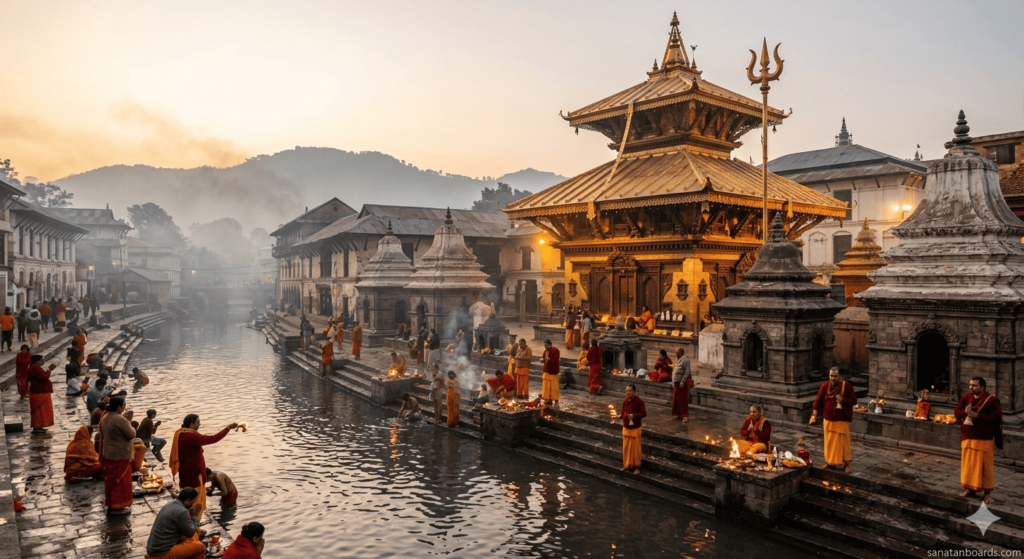
The temple complex is an extensive area filled with shrines, ashrams, inscriptions, and sculptures dating back centuries. Its main pagoda-style structure features a golden roof intricately carved wooden rafters, and silver-plated doors. Only Hindus are allowed to enter the inner sanctum, but visitors from around the world can observe the temple’s exterior and surrounding rituals.
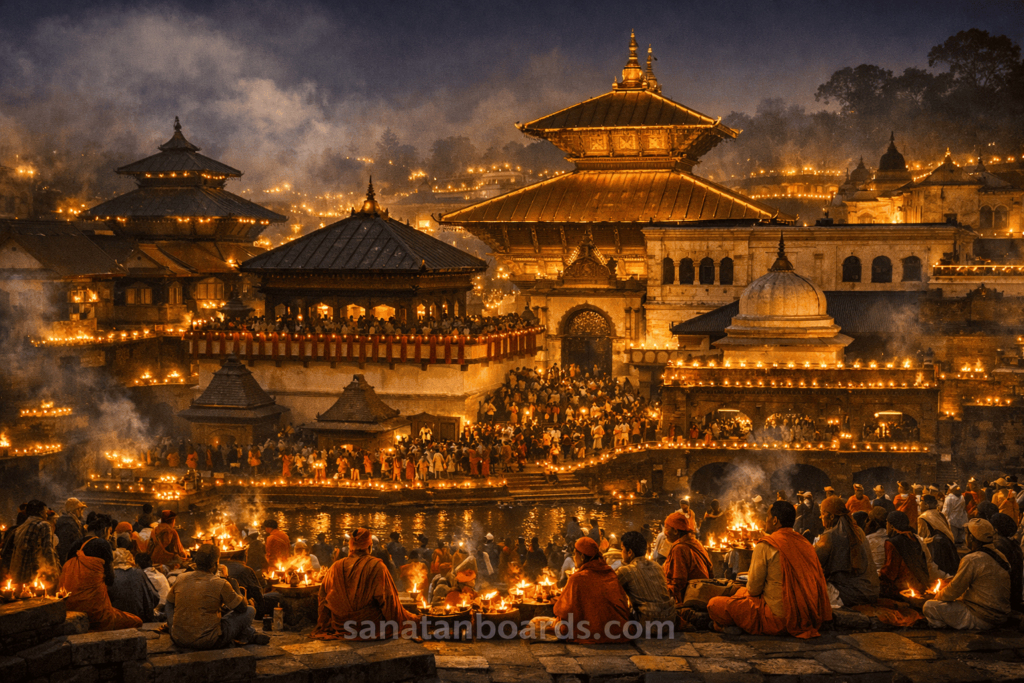
Pashupatinath is especially significant during festivals such as Maha Shivaratri,when thousands of devotees and sadhus gather to worship Shiva. The temple also plays a central role in Hindu funeral rites, as cremations are performed on the ghats along the Bagmati River, symbolizing the cycle of life and death.
Recognized as a UNESCO World Heritage Site, the temple reflects Nepal’s deep-rooted religious traditions and architectural brilliance. It serves as a hub for spiritual seekers, historians, and tourists alike. The atmosphere of the temple is both solemn and vibrant, combining devotion, ritual, and cultural expression.
Overall, Pashupatinath Temple stands as a timeless symbol of faith, drawing millions of pilgrims and visitors each year who seek blessings, peace, and a deeper understanding of Hindu philosophy.
What Is Pashupatinath Temple (Kathmandu) ?
Pashupatinath Temple is a revered Hindu temple complex dedicated to Lord Shiva, worshipped here as Pashupati, the protector of all living beings. It is one of the holiest temples in Hinduism and holds immense religious importance, especially among followers of Shaivism.
The temple’s origins are believed to date back to ancient times, with historical records indicating its existence as early as the 5th century. Over centuries, it has been reconstructed and expanded by various rulers, making it a blend of architectural styles and historical influences. The main temple is built in the traditional Nepalese pagoda style, featuring tiered roofs, ornate carvings, and sacred symbolism.
The central shrine houses a unique Shiva lingam with four faces, representing different aspects of Shiva. This sacred idol is the focal point of worship and is accessible only to practicing Hindus. Surrounding the main temple are numerous smaller shrines dedicated to various deities, saints, and mythological figures.
One of the defining features of Pashupatinath is its location along the Bagmati River, which is considered holy. The riverbanks serve as cremation grounds where traditional Hindu last rites are performed. This aspect makes the temple not just a place of worship but also a significant site for rituals related to life, death, and rebirth.
The temple complex is also a center for religious learning and spiritual practice. Sadhus, or holy men, often reside here, engaging in meditation and rituals. During major festivals like Maha Shivaratri and Teej, the temple becomes a vibrant hub of devotion and celebration.
Recognized globally, Pashupatinath Temple is part of the Kathmandu Valley UNESCO World Heritage Sites. It represents the spiritual heart of Nepal and continues to be a living heritage site where ancient traditions are preserved and practiced daily.
Who Is Required Pashupatinath Temple (Kathmandu) ?
Pashupatinath Temple serves a wide range of individuals and communities, each engaging with the temple for different spiritual, cultural, or social purposes. Primarily, the temple is essential for Hindu devotees, especially those who worship Lord Shiva. For them, visiting Pashupatinath is considered a deeply sacred act that brings spiritual purification and divine blessings.
Pilgrims from Nepal, India, and across the world travel to the temple seeking peace, fulfillment of wishes, and liberation from the cycle of birth and death. For many elderly devotees, visiting Pashupatinath is part of their spiritual journey toward moksha, or salvation.
The temple is also important for families performing last rites for deceased loved ones. The ghats along the Bagmati River are central to Hindu funeral practices, and many believe that cremation at this site ensures a better transition of the soul into the afterlife.
Religious scholars, historians, and researchers also require the temple as a source of knowledge and study. Its architecture, inscriptions, rituals, and traditions provide valuable insights into ancient Hindu practices and Nepalese culture.
Tourists and cultural enthusiasts form another important group. Even though non-Hindus cannot enter the inner sanctum, they visit the temple complex to observe rituals, appreciate architecture, and understand spiritual traditions. For them, Pashupatinath offers a unique cultural experience.
Sadhus and spiritual practitioners depend on the temple as a place for meditation, ascetic practices, and religious discourse. It acts as a spiritual hub where knowledge is shared and preserved.
Additionally, the temple plays a role in the local economy by supporting artisans, guides, vendors, and hospitality services. Thus, it indirectly benefits the broader community.
When Pashupatinath Temple (Kathmandu) Is Required?
Pashupatinath Temple is required at various times depending on religious, cultural, and personal contexts. For Hindu devotees, the temple holds year-round significance, but certain occasions make it especially important.
One of the most significant times is during Maha Shivaratri, a festival dedicated to Lord Shiva. On this day, thousands of pilgrims gather at the temple to offer prayers, perform rituals, and seek blessings. The temple becomes a vibrant center of devotion, attracting visitors from across the globe.
Another important time is during Teej, a festival celebrated by women for marital happiness and well-being. Women visit the temple, observe fasts, and participate in prayers dedicated to Shiva.
The temple is also required during daily worship routines. Devotees visit in the early morning and evening to perform puja, offer flowers, and seek spiritual peace. Regular visits are believed to strengthen one’s connection with the divine.
A particularly significant context is during funeral rites. The Bagmati River ghats are used for cremation ceremonies, making the temple essential at the time of death. Families bring their deceased loved ones here to perform last rites, believing it aids the soul’s journey toward liberation.
The temple is also relevant during life transitions such as birthdays, marriages, and religious milestones. People visit to seek blessings for new beginnings or to express gratitude for life events.
For tourists, the temple is often visited during travel seasons when exploring the cultural heritage of Kathmandu. The best times are early mornings or evenings when rituals are most active.
In a broader sense, the temple is required whenever individuals seek spiritual guidance, emotional solace, or cultural understanding. It acts as a constant presence in the lives of many, offering support during both joyful and sorrowful times.
Thus, Pashupatinath Temple is not limited to a specific time—it is relevant across daily life, festivals, and major life events.
Where Pashupatinath Temple (Kathmandu) Is Required?
Pashupatinath Temple is located in the eastern part of Kathmandu, on the banks of the Bagmati River. Its geographical setting plays a crucial role in its religious and cultural significance.
The temple is required primarily within the Kathmandu Valley, where it serves as a central hub for spiritual and cultural activities. Its proximity to the Bagmati River enhances its importance, as the river is considered sacred in Hinduism and is used for purification rituals and cremation ceremonies.
Beyond its physical location, the temple is symbolically “required” in the broader context of Hindu religious geography. It is considered one of the most important Shiva temples in the world, making it a key pilgrimage destination alongside other sacred sites.
The temple is also required in academic and cultural institutions as a subject of study. Its architecture, rituals, and historical relevance make it an important reference point in fields such as history, religion, anthropology, and art.
In tourism, Pashupatinath is a must-visit destination in Nepal. It is often included in travel itineraries, making it an essential part of the country’s cultural identity and global image.
For the local community, the temple is required as a place of daily worship, social gathering, and economic activity. It supports livelihoods through tourism, religious services, and local businesses.
In a spiritual sense, the temple transcends physical boundaries. Devotees around the world regard it as a sacred place, even if they cannot visit in person. Its significance is carried through stories, rituals, and beliefs practiced globally.
Thus, Pashupatinath Temple is required not only in its physical location in Kathmandu but also in spiritual, cultural, academic, and global contexts.
How Pashupatinath Temple (Kathmandu) Is Required ?
Pashupatinath Temple is required in multiple ways that reflect its spiritual, cultural, and societal importance. Its role extends beyond being a place of worship to becoming an integral part of people’s lives.
Spiritually, the temple is required as a center for devotion to Lord Shiva. Devotees engage in rituals such as prayer, meditation, and offerings, which help them connect with the divine and find inner peace.
Culturally, the temple preserves ancient traditions, festivals, and rituals. It acts as a living heritage site where practices are continuously passed down through generations. Festivals like Maha Shivaratri showcase the temple’s cultural vibrancy and communal spirit.
Socially, the temple is required as a gathering place where people come together for religious and cultural activities. It strengthens community bonds and provides a sense of belonging.
Economically, the temple supports local livelihoods. Vendors, artisans, guides, and hospitality services benefit from the influx of pilgrims and tourists. This makes it an important contributor to the local economy.
Educationally, the temple is a valuable resource for learning about Hinduism, Nepalese culture, and historical architecture. Scholars and students use it as a case study for various disciplines.
Emotionally, the temple provides comfort during difficult times, especially during funeral rites. It helps individuals cope with loss and understand the cycle of life and death.
Case Study On Pashupatinath Temple (Kathmandu)
The Pashupatinath Temple stands as one of the most significant religious and cultural institutions in South Asia, offering a rich case study in heritage preservation, religious tourism, and socio-economic impact. Located in Kathmandu, the temple is dedicated to Lord Shiva and attracts millions of pilgrims and visitors annually.
Historically, the temple dates back to at least the 5th century, though its origins may be even older. Over time, it has undergone multiple reconstructions due to natural disasters and aging infrastructure. Despite these challenges, the temple has maintained its traditional pagoda-style architecture, characterized by tiered roofs, intricate wood carvings, and sacred symbolism. This continuity reflects the resilience of Nepalese cultural heritage.
One of the key aspects of this case study is religious tourism. Pashupatinath is a major pilgrimage destination, particularly during festivals like Maha Shivaratri. During such events, the number of visitors increases dramatically, creating both opportunities and challenges. On one hand, tourism generates significant revenue for local businesses, including hotels, transport services, and vendors. On the other hand, it puts pressure on infrastructure, sanitation, and crowd management systems.
Another important dimension is cultural preservation. The temple functions as a living heritage site where rituals, traditions, and festivals are actively practiced. The presence of sadhus and priests ensures the continuation of spiritual teachings and religious customs. This makes the temple not just a historical monument but an active center of faith.
Environmental concerns form a critical part of the case study. The Bagmati River, which flows alongside the temple, is considered sacred but has suffered from pollution due to urbanization and waste disposal. Efforts by the government and organizations have been initiated to clean the river and restore its sanctity. These initiatives highlight the importance of integrating environmental management with heritage conservation.
Governance and management of the temple involve multiple stakeholders, including government bodies, temple trusts, and local communities. Effective coordination among these groups is essential for maintaining the balance between religious activities and tourism development. Policies restricting access to certain areas help preserve the sanctity of the temple while still allowing visitors to experience its cultural richness.
In conclusion, Pashupatinath Temple serves as a comprehensive case study of how a धार्मिक site can influence multiple sectors, including tourism, culture, environment, and economy. Its ability to preserve tradition while adapting to modern challenges makes it a valuable example for heritage management worldwide.
White Paper On Pashupatinath Temple (Kathmandu)
The Pashupatinath Temple represents a vital intersection of spirituality, heritage conservation, and sustainable development. As a UNESCO World Heritage Site, it holds immense importance not only for Nepal but also for global cultural preservation efforts.
This white paper aims to analyze the temple’s current status, key challenges, and strategic opportunities for long-term sustainability. The temple’s primary role as a धार्मिक center dedicated to Lord Shiva makes it a focal point for millions of devotees. At the same time, its architectural and historical significance attracts tourists and researchers from around the world.
One of the core issues addressed in this paper is heritage conservation. The temple’s structure, though resilient, requires continuous maintenance to withstand environmental factors and heavy footfall. Restoration efforts must adhere to traditional building techniques to maintain authenticity. Any modernization should be carefully planned to avoid compromising the temple’s historical integrity.
Environmental sustainability is another critical concern. The Bagmati River, an integral part of the temple’s ecosystem, has faced severe pollution. This not only affects the environment but also diminishes the spiritual value of the site. Government initiatives and non-governmental organizations have undertaken river-cleaning projects, but long-term solutions require stricter waste management policies and public awareness campaigns.
Tourism management is equally important. While tourism contributes significantly to the economy, unregulated visitor flow can lead to overcrowding and degradation of the site. Implementing controlled entry systems, improving infrastructure, and promoting responsible tourism are essential steps. Digital solutions such as online ticketing and virtual tours can help manage crowds effectively.
Community involvement plays a crucial role in sustainable management. Local residents, priests, and business owners are directly impacted by the temple’s activities. Their participation in decision-making processes ensures that policies are practical and inclusive.
Technology offers new opportunities for preservation and accessibility. Digital documentation of artifacts, virtual reality experiences, and online educational resources can enhance global awareness while reducing physical strain on the site.
Policy recommendations include establishing a dedicated heritage management authority, increasing funding for conservation projects, and strengthening collaboration with international organizations. Regular monitoring and evaluation mechanisms should also be implemented to assess the effectiveness of these initiatives.
In conclusion, the future of Pashupatinath Temple depends on a balanced approach that integrates conservation, sustainability, and development. By addressing current challenges and leveraging modern solutions, the temple can #sanatanboardsinvasai continue to serve as a symbol of cultural and spiritual heritage for generations to come.
Industry Application On Pashupatinath Temple (Kathmandu)
The Pashupatinath Temple demonstrates significant relevance across multiple industries, highlighting how a cultural and religious site can influence economic growth, education, and sustainable development.
In the tourism industry, Pashupatinath Temple is a प्रमुख attraction that draws international and domestic visitors. Travel agencies design specialized pilgrimage and cultural tours centered around the temple. The influx of tourists supports the hospitality sector, including hotels, restaurants, and transportation services. This creates employment opportunities and contributes to the national economy.
The education and research sector also benefits greatly. The temple serves as a case study in disciplines such as history, archaeology, religious studies, and architecture. Universities and academic institutions use it as a practical example to understand ancient construction techniques, cultural practices, and religious philosophies. Researchers analyze inscriptions, rituals, and social dynamics associated with the temple.
In the cultural and creative industries, Pashupatinath inspires art, literature, and media. Documentaries, films, and books often feature the temple, promoting cultural awareness and heritage appreciation. Festivals celebrated at the temple provide content for cultural programs and tourism promotions.
Urban planning and heritage management industries gain valuable insights from the temple’s preservation strategies. Balancing modernization with conservation is a major challenge in urban development, and Pashupatinath offers a model for sustainable heritage management. Lessons learned here can be applied to other historical sites worldwide.
The environmental sector is actively involved due to the condition of the Bagmati River. Environmental organizations work on projects related to river cleaning, waste management, and ecological restoration. These initiatives demonstrate how religious sites can become focal points for environmental activism and awareness.
The local economy is another area of impact. Small businesses, including vendors, artisans, and guides, rely on the temple for their livelihood. The demand for religious items, souvenirs, and services creates a micro-economy that supports the surrounding community.
Technology and digital industries are also finding applications. Virtual tours, online पूजा services, and digital archives are being developed to enhance accessibility and preserve cultural heritage. These innovations allow people from around the world to engage with the temple without physically visiting it.
In conclusion, Pashupatinath Temple is not limited to its धार्मिक role. It serves as a dynamic asset influencing tourism, education, culture, environment, and technology sectors. #sanatanboardsinindia Its multifaceted applications make it a valuable model for integrating heritage with modern industry practices.
SOURCE : Yatra Mitra
ASK FAQ
1. What is the significance of Pashupatinath Temple?
Pashupatinath Temple is one of the holiest Hindu temples dedicated to Lord Shiva. It is important for spiritual worship, pilgrimage, and performing sacred rituals, especially those related to life and death.
2. Where is Pashupatinath Temple located?
The temple is located in Kathmandu, Nepal, on the banks of the Bagmati River, making it a central religious and cultural landmark.
3. Why is Pashupatinath Temple famous?
Pashupatinath Temple is famous for its religious importance, ancient architecture, and its role in Hindu cremation rituals along the Bagmati River.
4. Can non-Hindus enter Pashupatinath Temple?
Non-Hindus are not allowed inside the main temple, but they can visit the surrounding complex and observe rituals from designated areas.
5. Which festival is most important at Pashupatinath Temple?
The most important festival celebrated at Pashupatinath Temple is Maha Shivaratri, dedicated to Lord Shiva, attracting thousands of devotees every year.
Table of Contents
Disclaimer
This content is intended for educational and informational purposes only. While efforts have been made to ensure accuracy, details related to Pashupatinath Temple may vary based on sources, interpretations, and ongoing developments. धार्मिक beliefs, practices, and historical interpretations may differ among individuals and communities. Readers are encouraged to verify information from official or scholarly sources before making conclusions or decisions. This material does not intend to offend any religious sentiments or cultural values. It is recommended to approach the subject with respect and sensitivity toward traditions and beliefs associated with the temple and its significance.