
OTHER IMPORTANT GLOBAL HINDU HERITAGE SITES
OTHER IMPORTANT GLOBAL HINDU HERITAGE SITES refers to collection of historically, culturally, and spiritually significant locations across the world that are associated with Hindu civilization, traditions, temples, architecture, and ancient knowledge systems. These sites include temples, pilgrimage destinations, UNESCO recognized cultural landscapes, and archaeological remains that reflect the diversity and depth of Hindu heritage beyond single country. They are found in India, Nepal, Indonesia, Bangladesh, Pakistan, Sri Lanka, Cambodia, Thailand, and other regions influenced by ancient Hindu empires and trade routes.
Many of these heritage sites are still active centers of worship, while others are preserved as historical monuments showcasing art, sculpture, and temple architecture. The preservation of these sites is essential for understanding global Hindu history, religious practices, and cultural evolution over thousands of years. These heritage locations also contribute to tourism, education, and intercultural dialogue, attracting scholars, devotees, and travelers from around the world.
In many cases, they represent blend of spiritual significance and architectural brilliance, with intricate carvings, sacred rituals, and historical inscriptions. Efforts by governments, UNESCO, and cultural organizations help in conserving these sites against natural decay, urbanization, and human neglect. Understanding these sites provides insight into spread of Hinduism and its influence on global culture, philosophy, and art forms.
They stand as living testimonies of faith, history, and human creativity, connecting past with present in meaningful ways. Global Hindu heritage sites continue to inspire millions, serving as bridges between civilizations and promoting respect for cultural diversity. Their recognition highlights importance of preserving ancient traditions while adapting to modern conservation challenges across different regions of world. These sites ultimately strengthen global understanding of Hindu heritage and encourage continued research, protection, and awareness among future generations worldwide ensuring cultural continuity and historical knowledge preservation for global humanity heritage understanding globally.
What Is Other Important Global Hindu Heritage Sites ?
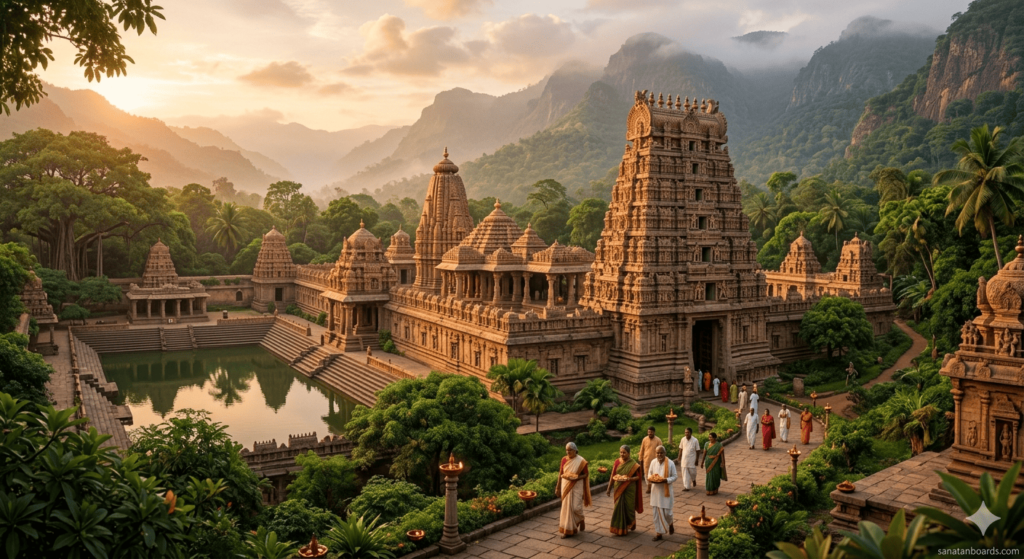
OTHER IMPORTANT GLOBAL HINDU HERITAGE SITES are significant cultural and religious locations spread across different parts of the world that represent the historical development, spiritual traditions, and architectural achievements of Hindu civilization. These sites include ancient temples, pilgrimage destinations, sacred rivers, cave complexes, and archaeological ruins that reflect the long-standing presence and influence of Hindu culture beyond its primary origin region. They are not limited to one geographical boundary but are found across South Asia and Southeast Asia due to historical trade migration, and the expansion of ancient kingdoms.
These heritage sites are characterized by their religious importance, historical depth, and artistic excellence. Many temples showcase intricate stone carvings, towering gopurams, detailed sculptures, and inscriptions that narrate mythological stories and historical events. Some sites remain active places of worship where rituals and festivals continue to be performed, while others are preserved as protected monuments for educational and cultural purposes.
The concept of global Hindu heritage sites also includes locations influenced by Hindu philosophy, even if they are no longer primarily used for worship. These places provide evidence of cultural exchange between ancient civilizations and demonstrate how Hindu traditions shaped architecture, language, and social practices in different regions.
Organizations such as UNESCO and various national heritage bodies play an important role in identifying and conserving these sites. Their efforts ensure protection from environmental damage, urban expansion, and neglect. Preservation of these sites is important for maintaining historical continuity and passing knowledge to future generations.
These sites also contribute to tourism and academic research, attracting historians, archaeologists, spiritual seekers, and travelers. They serve as living classrooms for understanding ancient science, astronomy, art, and religious practices. In a broader sense, they represent unity in diversity by showcasing how Hindu culture adapted and integrated with local traditions across different regions.
Overall, global Hindu heritage sites are valuable treasures of human civilization that preserve spiritual identity, historical memory, and cultural richness. They continue to inspire respect, curiosity, and deeper understanding of one of the world’s oldest living traditions.
Who Is Required Other Important Global Hindu Heritage Sites ?
The preservation, study, and management of OTHER IMPORTANT GLOBAL HINDU HERITAGE SITES require involvement of multiple groups of people and institutions working together to ensure their protection and continuity. These stakeholders include governments, archaeologists, historians, conservation experts, religious authorities, local communities, and international organizations.
Governments play a primary role by creating laws, policies, and funding systems for heritage conservation. They are responsible for declaring protected monuments, maintaining security, and supporting restoration projects. Without government support, many heritage sites would face neglect or damage due to urban expansion and environmental factors.
Archaeologists and historians are essential for researching and documenting the historical importance of these sites. They study inscriptions, architecture, artifacts, and ancient texts to understand the cultural and historical context of each location. Their research helps in accurate restoration and interpretation of heritage values.
Conservation experts and architects are required to physically preserve and restore damaged structures. They use scientific methods and traditional techniques to ensure that restoration work maintains authenticity while preventing further deterioration.
Religious authorities and practitioners are also important because many of these sites remain active places of worship. Their involvement ensures that religious traditions and rituals are respected during conservation efforts.
Local communities play a crucial role in protecting heritage sites as they are often the first guardians of these locations. Their participation ensures sustainable preservation through awareness, tourism support, and cultural pride.
International organizations such as UNESCO are required for global recognition and support. They provide technical assistance, funding guidance, and global awareness campaigns to protect endangered sites.
Educational institutions and researchers contribute by promoting studies and spreading knowledge about these heritage sites. Tourism departments also play a role in managing visitors responsibly to avoid damage.
Thus, a collaborative effort from all these groups is required to ensure that global Hindu heritage sites remain preserved for future generations while maintaining their cultural, spiritual, and historical significance.
When Other Important Global Hindu Heritage Sites Is Required ?
OTHER IMPORTANT GLOBAL HINDU HERITAGE SITES become relevant and required in various situations where cultural preservation, historical understanding, tourism development, and educational research are involved. Their importance is especially highlighted when societies aim to protect ancient heritage from destruction, neglect, or modernization pressures.
These sites are required during heritage conservation projects when governments or organizations identify structures that are at risk due to environmental damage, urban development, or natural disasters. In such cases, restoration and protection efforts are initiated to preserve their original form and significance.
They are also required in academic research and historical studies. Scholars and archaeologists study these sites to understand ancient civilizations, religious practices, architectural evolution, and cultural exchange between regions. This helps in building a complete understanding of global Hindu history.
During religious and cultural festivals, many of these sites become active centers of worship and community gathering. They are required for performing rituals, maintaining traditions, and continuing spiritual practices that have existed for centuries.
In the tourism industry, these heritage sites are required as major attractions that contribute to local and national economies. They draw visitors interested in history, spirituality, and architecture, making them important for cultural tourism development.
They are also required in educational contexts where students learn about ancient history, art, and culture. Schools, colleges, and universities use these sites as real-world examples for teaching heritage studies and cultural anthropology.
In disaster management situations, these sites require special attention to ensure protection from earthquakes, floods, or human-made damage. Emergency restoration and safeguarding measures become necessary.
Furthermore, they are required in international cultural exchange programs where countries collaborate to preserve shared heritage and promote global understanding.
Overall, global Hindu heritage sites are required whenever there is a need to preserve history, promote culture, support education, enhance tourism, or maintain spiritual traditions, ensuring that these valuable treasures remain protected for future generations.
Where Other Important Global Hindu Heritage Sites Is Required ?
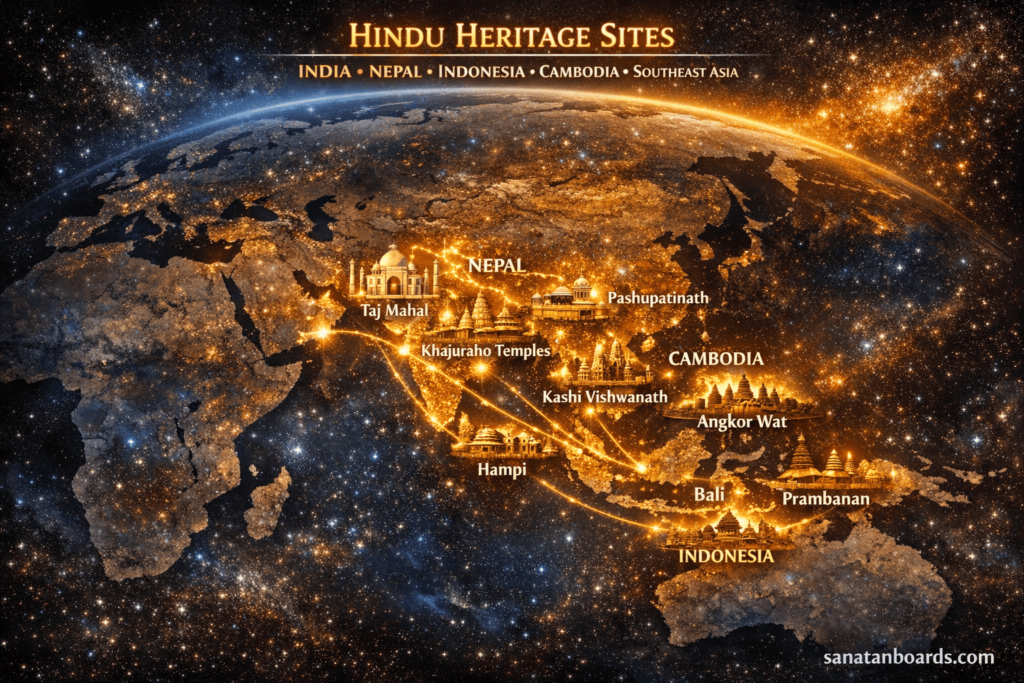
OTHER IMPORTANT GLOBAL HINDU HERITAGE SITES are required in various geographical regions across the world where historical evidence of Hindu civilization exists or where cultural influence of Hindu traditions has been significant. These locations are primarily found in South Asia, Southeast Asia, and certain parts of Central Asia, reflecting the spread of ancient Hindu kingdoms and cultural exchange through trade routes.
India is the central location where the majority of Hindu heritage sites exist, including ancient temples, pilgrimage centers, and architectural wonders. Nepal also holds important sites such as sacred temples and mountain shrines that are deeply connected to Hindu traditions. Sri Lanka contains historical sites influenced by Hindu culture due to ancient connections with Indian kingdoms.
In Southeast Asia, countries like Indonesia, Cambodia, Thailand, and Malaysia contain significant Hindu heritage sites that reflect the influence of ancient empires such as the Khmer and Srivijaya kingdoms. Temples like Angkor Wat in Cambodia and Prambanan in Indonesia demonstrate the architectural and cultural spread of Hindu civilization beyond India.
Bangladesh and Pakistan also contain archaeological remains and temples that reflect the historical presence of Hindu communities. These sites are important for understanding regional history and cultural diversity.
In addition to Asia, some Hindu heritage influences can be found in diaspora communities across Europe, Africa, and the Americas, where temples and cultural centers preserve traditions and practices.
These sites are required in urban areas where heritage preservation must be balanced with modern development. They are also found in rural and forest regions where ancient temples and ruins still exist in natural surroundings.
Internationally, organizations like UNESCO identify and protect these sites across different countries to ensure global recognition and conservation.
Thus, global Hindu heritage sites are required wherever historical, cultural, and spiritual traces of Hindu civilization exist, making them important across multiple continents and regions of the world.
How Other Important Global Hindu Heritage Sites Is Required ?
OTHER IMPORTANT GLOBAL HINDU HERITAGE SITES are required through structured processes of identification, preservation, restoration, and management involving multiple scientific, cultural, and administrative methods. The requirement begins with identifying sites of historical and cultural importance through archaeological surveys, historical research, and local documentation.
Once identified, these sites are required to be officially recognized by government bodies or international organizations. Legal protection is then applied to prevent unauthorized construction, destruction, or alteration. This ensures that the authenticity and integrity of the site are maintained.
Preservation is carried out using conservation techniques that include structural stabilization, chemical treatment of materials, and environmental protection measures. Experts carefully study original architectural methods to ensure restoration remains true to historical designs.
Digital technology is also used in the form of 3D scanning, mapping, and documentation. This helps in creating virtual records of heritage sites for research and educational purposes.
Community involvement is another important requirement. Local populations are encouraged to participate in protection efforts through awareness programs and cultural engagement. This ensures long-term sustainability of conservation efforts.
Tourism management systems are also required to regulate visitor flow, prevent damage, and maintain cleanliness at heritage sites. Controlled tourism helps in generating revenue while preserving site integrity.
Educational programs are required to spread awareness about the importance of these sites among students and researchers. This helps in building future generations of heritage protectors.
In disaster-prone areas, emergency response systems are required to protect sites from natural calamities such as earthquakes, floods, or fires.
International cooperation is required for sharing knowledge, funding, and technical expertise. Organizations like UNESCO play a key role in coordinating global preservation efforts.
Overall, global Hindu heritage sites are required through a combination of legal protection, scientific restoration, community participation, technological support, and international collaboration to ensure their survival and continued cultural relevance.
Case Study On Other Important Global Hindu Heritage Sites
The study of OTHER IMPORTANT GLOBAL HINDU HERITAGE SITES can be understood through the case of Angkor Wat in Cambodia, one of the most significant examples of Hindu architectural influence outside India. Built in the 12th century by King Suryavarman II, Angkor Wat was originally dedicated to Lord Vishnu and later transformed into a Buddhist site. It represents the spread of Hindu culture through the Khmer Empire and stands as a symbol of ancient engineering, spirituality, and artistic excellence.
Angkor Wat demonstrates how Hindu heritage traveled beyond the Indian subcontinent through trade, diplomacy, and cultural exchange. The temple complex reflects the principles of Hindu cosmology, with its layout symbolizing Mount Meru, the mythical center of the universe. Its intricate carvings depict scenes from Hindu epics such as the Ramayana and Mahabharata, showcasing deep philosophical and religious narratives.
Over time, the site faced challenges such as jungle invasion, war, and neglect. By the 19th and 20th centuries, restoration efforts began with international cooperation. UNESCO later recognized Angkor Wat as a World Heritage Site, highlighting its global importance. Conservation programs involved archaeologists, architects, historians, and local authorities working together to restore damaged structures while preserving authenticity.
Another example is Prambanan Temple in Indonesia, dedicated to Hindu deities Shiva, Vishnu, and Brahma. Built in the 9th century, it reflects the influence of Hinduism in Southeast Asia. The temple complex suffered damage due to earthquakes but has been carefully restored using modern conservation techniques combined with traditional architectural knowledge.
These case studies show the importance of global Hindu heritage sites in preserving cultural identity across regions. They also highlight the challenges faced, such as environmental degradation, political instability, and lack of awareness.
The conservation of such sites requires continuous monitoring, funding, and community involvement. Tourism plays a dual role by providing financial support but also creating pressure on fragile structures. Therefore, sustainable tourism practices are essential.
Educational programs and research initiatives around these sites have helped increase global understanding of Hindu civilization. They serve as living laboratories for studying ancient architecture, engineering, and religious philosophy.
In conclusion, case studies like Angkor Wat and Prambanan demonstrate that global Hindu heritage sites are not only historical monuments but also symbols of cultural exchange, resilience, and human creativity. Their preservation ensures that ancient knowledge and traditions continue to inspire future generations while strengthening global cultural heritage awareness.
White Paper On Other Important Global Hindu Heritage Sites
A white paper on OTHER IMPORTANT GLOBAL HINDU HERITAGE SITES focuses on the importance, challenges, and strategies related to preserving and promoting Hindu cultural heritage across the world. These sites represent a vast network of temples, monuments, and sacred landscapes that reflect the historical spread and influence of Hindu civilization.
The significance of these sites lies in their cultural, spiritual, and educational value. They serve as evidence of ancient architectural excellence, religious traditions, and philosophical development. Many of these sites are still active centers of worship, making them living heritage locations rather than static monuments.
However, these sites face multiple challenges. Environmental factors such as weathering, climate change, and natural disasters cause structural damage. Urbanization and industrial development also threaten their surroundings. In some cases, lack of awareness leads to neglect or inappropriate restoration efforts that damage original structures.
Another major challenge is limited funding and resources for conservation. Many countries struggle to allocate sufficient budgets for heritage preservation, especially in developing regions where multiple priorities exist.
To address these challenges, a structured approach is required. Governments must implement strong legal frameworks to protect heritage sites from unauthorized activities. International cooperation through organizations like UNESCO can provide technical expertise and financial assistance.
Technological solutions such as digital mapping, 3D reconstruction, and artificial intelligence-based monitoring systems can help in documenting and preserving heritage sites more effectively. These tools allow experts to track deterioration and plan restoration accurately.
Community participation is also essential. Local populations should be educated about the importance of heritage conservation and involved in protection efforts. This creates a sense of ownership and responsibility.
Tourism management strategies must be developed to ensure sustainable visitation. Controlled access, guided tours, and visitor education programs can reduce damage while promoting cultural awareness.
Educational institutions should include heritage studies in their curriculum to promote long-term awareness among students. Research initiatives can further enhance understanding of historical and cultural significance.
In conclusion, global Hindu heritage sites require a balanced approach combining legal protection, scientific conservation, technological innovation, and community engagement. A white paper emphasizes that preserving these sites is not only about protecting structures #sanatanboardsinvasai but also about safeguarding cultural identity, historical knowledge, and spiritual traditions for future generations.b
Industry Application On Other Important Global Hindu Heritage Sites
OTHER IMPORTANT GLOBAL HINDU HERITAGE SITES have wide-ranging applications across multiple industries including tourism, education, architecture, technology, cultural research, and heritage conservation. These applications demonstrate how ancient cultural sites continue to contribute to modern development and global knowledge systems.
In the tourism industry, these heritage sites are major attractions that generate significant economic benefits. They attract domestic and international visitors interested in history, spirituality, and architecture. Tourism services such as guided tours, heritage walks, and cultural festivals are developed around these sites, creating employment opportunities and supporting local economies.
In the education sector, these sites are used as real-world learning resources for students studying history, archaeology, architecture, and cultural studies. Universities and research institutions conduct field studies to analyze ancient construction techniques, inscriptions, and cultural traditions. This enhances academic understanding of ancient civilizations.
In architecture and engineering industries, Hindu heritage sites provide inspiration for design principles, structural techniques, and artistic patterns. Modern architects study temple layouts, symmetry, and material usage to incorporate traditional aesthetics into contemporary designs.
In the technology sector, digital tools are used to preserve and promote heritage sites. 3D modeling, virtual reality, and augmented reality applications allow global audiences to explore these sites remotely. Digital archives and databases help in documentation and research.
Cultural industries such as film, media, and art also draw inspiration from these heritage sites. They are featured in documentaries, historical films, and artistic works that promote cultural awareness and storytelling.
In the conservation industry, specialized professionals work on restoration projects using scientific methods and traditional techniques. This includes material science, environmental monitoring, and structural engineering to ensure long-term preservation.
Government and policy-making sectors also use heritage sites for cultural diplomacy and international relations. They represent national identity and are often included in cultural exchange programs between countries.
Additionally, spiritual and wellness industries benefit from these sites as they attract pilgrims and individuals seeking spiritual experiences. Meditation, yoga, and traditional healing practices are often associated with these heritage locations.
In conclusion, global Hindu heritage sites have diverse applications across industries, contributing not only to cultural preservation but also to economic development, #sanatanboardsinmumbai education, technology advancement, and global cooperation. Their relevance extends far beyond history, making them valuable assets in modern society.
source : infoweb
ASK FAQ
1. What are global Hindu heritage sites?
Global Hindu heritage sites are culturally and historically significant locations around the world that reflect Hindu civilization, including temples, monuments, and archaeological sites that showcase ancient traditions, architecture, and spirituality.
2. Why are Hindu heritage sites important globally?
They are important because they preserve ancient culture, religious traditions, and historical architecture, while also supporting tourism, education, and intercultural understanding across different countries.
3. Where are major Hindu heritage sites located outside India?
Major sites are found in Nepal, Sri Lanka, Cambodia, Indonesia, Thailand, Bangladesh, and Pakistan, reflecting the historical spread of Hindu culture through trade and ancient kingdoms.
4. How are global Hindu heritage sites preserved?
They are preserved through government protection laws, UNESCO recognition, archaeological restoration, digital documentation, and community involvement to prevent damage and maintain authenticity.
5. Who protects Hindu heritage sites internationally?
Protection is provided by governments, UNESCO, archaeologists, historians, local communities, and conservation experts who work together to safeguard and restore these cultural landmarks.
Table of Contents
DISCLAIMER
This content is intended for educational and informational purposes only. It is based on general historical, cultural, and academic understanding of global Hindu heritage sites and does not claim absolute accuracy or completeness. Interpretations of historical facts may vary depending on different sources and scholarly research. Readers are encouraged to consult verified academic publications, archaeological reports, and official heritage organizations for detailed and authenticated information. No religious, political, or cultural bias is intended. The content should not be used as a substitute for professional research, official documentation, or expert guidance in heritage conservation or historical studies.