
BESAKIH TEMPLE (BALI, INDONESIA)
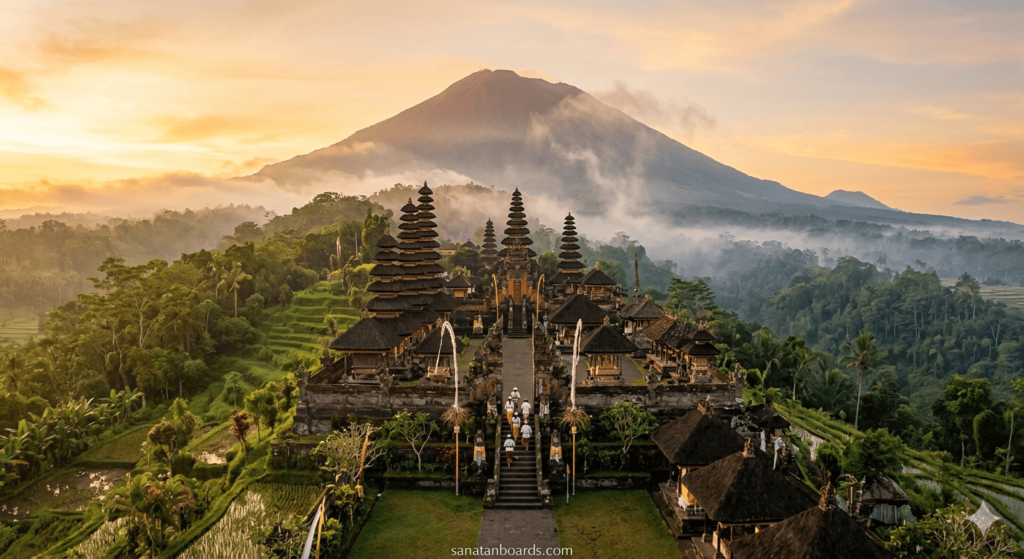
Nestled on the slopes of Mount Agung, the sacred Besakih Temple stands as the spiritual heart of Bali. Often referred to as the “Mother Temple” of the island, it is not a single structure but a vast complex of over 80 individual temples. This site reflects centuries of devotion, architecture, and cultural identity rooted deeply in Balinese Hinduism.
The temple’s elevated location offers sweeping views of rice terraces, forests, and distant coastlines, reinforcing its symbolic connection between the earthly and the divine. Built with volcanic stone and aligned with the sacred mountain, Besakih Temple embodies harmony between nature and spirituality—a central philosophy in Balinese life known as Tri Hita Karana.
For locals, it is more than a tourist destination; it is a living religious center where rituals, ceremonies, and festivals are conducted throughout the year. For visitors, it offers insight into a unique form of Hinduism that differs significantly from practices in India, blending indigenous beliefs with classical traditions.
Despite challenges such as volcanic eruptions and modernization, Besakih Temple continues to thrive as a symbol of resilience and faith. Its enduring presence highlights the importance of preserving cultural heritage in an increasingly globalized world. Whether approached as a spiritual pilgrimage or a cultural exploration, the temple remains one of the most meaningful landmarks in Indonesia.
What Is Besakih Temple (Bali, Indonesia) ?
Besakih Temple is the largest and holiest temple complex in Bali, serving as the central place of worship for Balinese Hindus. Located on the southwestern slopes of Mount Agung, the island’s highest and most sacred volcano, the temple represents a cosmic spiritual axis connecting the physical and divine realms.
Rather than a single shrine, Besakih consists of multiple temple compounds, each dedicated to different deities within the Hindu trinity—Brahma (creator), Vishnu (preserver), and Shiva (destroyer). The most prominent structure within the complex is Pura Penataran Agung, which acts as the main temple and hosts major ceremonies.
Architecturally, the temple showcases tiered pagoda-like structures known as meru towers, which symbolize sacred mountains. The number of tiers often reflects the importance of the deity honored within. Intricate carvings, stone gateways, and open courtyards create a layered spiritual experience, guiding visitors through different levels of sanctity.
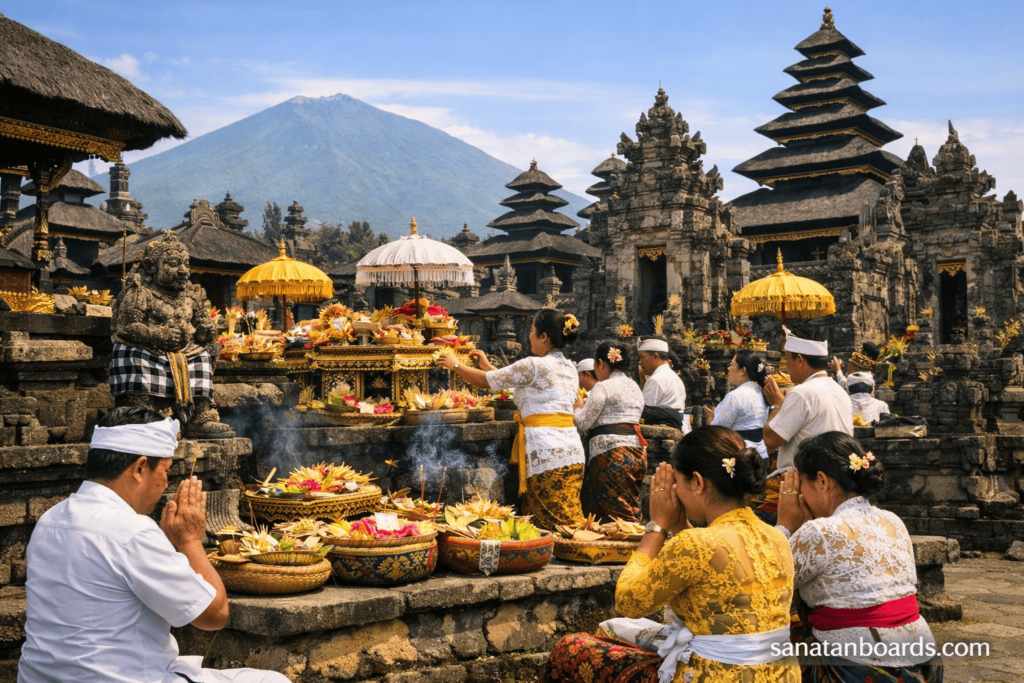
The temple plays a vital role in maintaining the spiritual balance of the island. Balinese Hinduism emphasizes harmony between humans, nature, and the divine, and Besakih Temple is central to this belief system. Rituals conducted here often involve offerings, music, dance, and communal participation, reinforcing social cohesion.
Historically, the temple dates back over a thousand years, with evidence suggesting its origins may predate Hindu influence. Over centuries, it has evolved into a complex reflecting both religious devotion and political history, as various kingdoms contributed to its expansion.
Today, Besakih Temple is both a religious sanctuary and a cultural landmark. While it attracts tourists from around the world, it remains an active place of worship. Visitors are expected to respect local customs, including wearing traditional attire and observing ceremonial practices.
Who Is Required Besakih Temple (Bali, Indonesia)
The significance of Besakih Temple extends across multiple groups, each engaging with the temple for different purposes. At its core, the temple is essential for Balinese Hindus, who rely on it as a central site for religious ceremonies, rites of passage, and communal worship. It serves as a unifying spiritual hub where individuals and families participate in rituals that reinforce their faith and cultural identity.
Priests and religious leaders depend on the temple as a place to conduct sacred ceremonies and maintain spiritual traditions. These individuals play a key role in preserving ancient practices and ensuring that rituals are performed according to established customs.
Local communities also require the temple as a cultural anchor. It is a place where traditions are passed down through generations, where festivals bring people together, and where social bonds are strengthened. The temple’s presence supports a sense of belonging and continuity in an ever-changing world.
Tourists and researchers form another group that benefits from Besakih Temple. Visitors come to experience its architectural beauty and spiritual atmosphere, while scholars study its history, art, and religious significance. This interaction fosters cross-cultural understanding and global appreciation of Balinese heritage.
Government and heritage organizations also recognize the temple’s importance. They rely on it as a symbol of national identity and a key component of cultural tourism in Indonesia. Efforts to preserve and manage the site ensure that it remains accessible while maintaining its authenticity.
Even the broader global community indirectly “requires” Besakih Temple as part of humanity’s shared cultural heritage. It represents the diversity of religious expression and the enduring relationship between people and sacred spaces.
When Besakih Temple (Bali, Indonesia) Is Required ?
Besakih Temple becomes especially significant during religious ceremonies and festivals, which occur throughout the Balinese calendar. The most important of these is the annual temple anniversary, known as Odalan, when thousands of devotees gather to offer prayers and participate in rituals. During such times, the temple serves as a focal point for spiritual renewal and communal unity.
Life-cycle events also determine when the temple is required. Ceremonies related to birth, marriage, and death often involve visits to Besakih Temple, as it is believed to provide divine blessings and protection. These moments highlight the temple’s role in guiding individuals through different stages of life.
The temple is also crucial during times of crisis or natural events. For instance, when Mount Agung shows signs of volcanic activity, local communities often turn to the temple for spiritual reassurance and protection. Rituals are conducted to restore balance and seek harmony with natural forces.
Seasonal cycles further influence the temple’s importance. Agricultural communities depend on rituals performed at Besakih to ensure good harvests and environmental balance. These ceremonies align with traditional farming practices and reflect the interconnectedness of spirituality and daily life.
In modern times, the temple is “required” whenever cultural preservation becomes a priority. As globalization influences local traditions, Besakih Temple acts as a stabilizing force, maintaining continuity and identity. Educational visits, cultural programs, and heritage initiatives often center around the temple, emphasizing its ongoing relevance.
Tourism seasons also mark periods when the temple gains prominence. Visitors from around the world plan trips to experience its rituals and architecture, making it an important site for cultural exchange.
Ultimately, Besakih Temple is required at moments of spiritual need, cultural celebration, and social connection, making it an integral part of both traditional and contemporary life in Bali.
Where Besakih Temple (Bali, Indonesia) Is Required ?
The importance of Besakih Temple is most evident within the geographical and cultural landscape of Bali, particularly in relation to Mount Agung. The temple’s location is not incidental; it is strategically positioned along the sacred axis that connects the mountain (considered the abode of gods) with the sea (associated with purification). This alignment reflects a broader spatial philosophy in Balinese culture.
Within the island, Besakih Temple is required across various regions as a central pilgrimage site. People from different villages travel to the temple to participate in ceremonies, reinforcing its role as a unifying spiritual center. Its influence extends beyond its immediate surroundings, affecting religious practices across the entire island.
In a broader sense, the temple is required within the national cultural framework of Indonesia. It serves as a key symbol of the country’s diverse religious heritage and is often highlighted in cultural representation and tourism initiatives.
Globally, Besakih Temple holds importance in academic and cultural contexts. Universities, research institutions, and cultural organizations study the temple as an example of living heritage. Its architectural design, ritual practices, and community integration provide valuable insights into sustainable cultural systems.
The temple is also “required” in the digital and educational space, where it is featured in documentaries, virtual tours, and academic resources. These platforms extend its reach beyond physical boundaries, allowing people worldwide to engage with its significance.
How Besakih Temple (Bali, Indonesia) Is Required ?
The necessity of Besakih Temple is realized through its functions, practices, and influence. At a fundamental level, the temple is required as a site for religious rituals. Devotees engage in offerings, prayers, and ceremonies that maintain spiritual balance and fulfill religious obligations.
The temple operates through a structured system of priests, caretakers, and community members who ensure its upkeep and ritual continuity. This collaborative approach reflects the communal nature of Balinese society, where responsibilities are shared and traditions are collectively preserved.
Architecturally, the temple is designed to guide spiritual experience. Visitors move through different courtyards, each representing a higher level of sanctity. This progression mirrors the journey toward spiritual enlightenment, making the temple an active participant in religious practice rather than just a passive structure.
Economically, the temple is required as a driver of tourism. It attracts visitors from around the world, supporting local businesses and contributing to the regional economy. However, this role is carefully balanced with the need to preserve its sacred nature.
Educationally, the temple functions as a living classroom. Students, researchers, and cultural enthusiasts learn about Balinese Hinduism, architecture, and social systems through direct engagement with the site.
Environmentally, the temple reinforces sustainable practices. Its alignment with natural elements and emphasis on harmony encourages respect for the environment, a principle increasingly relevant in modern times.
Through these interconnected roles—spiritual, social, economic, and educational—Besakih Temple demonstrates how a single site can fulfill multiple needs while maintaining its core identity.
Case Study On Besakih Temple (Bali, Indonesia)
The story of Besakih Temple offers a rich case study in balancing sacred tradition with modern pressures. Located on the slopes of Mount Agung, the temple complex has evolved over centuries into a spiritual, cultural, and socio-economic anchor for Bali.
One of the most defining moments in its history occurred during the 1963 eruption of Mount Agung. Lava flows devastated nearby villages but narrowly missed the main temple complex. For the local population, this घटना was interpreted as a divine sign, reinforcing the temple’s sacred status. From a case study perspective, this incident highlights how natural disasters can shape cultural narratives and strengthen collective belief systems. It also underscores the importance of disaster resilience planning for heritage sites situated in high-risk environments.
Tourism presents another key dimension of this case. Over the past few decades, Besakih Temple has become a major attraction, drawing both domestic and international visitors. While tourism has boosted the local economy—creating jobs in guiding, transportation, and hospitality—it has also introduced challenges. Issues such as overcrowding, commercialization, and inappropriate visitor behavior have occasionally disrupted the temple’s spiritual atmosphere.
To address these concerns, local authorities and community leaders have implemented management strategies. These include regulated entry systems, mandatory use of local guides, and dress codes to ensure respect for religious customs. Community participation plays a crucial role here, as local residents are actively involved in maintaining both the physical site and its cultural integrity.
Another aspect of the case study is governance. The temple operates under a hybrid management model that combines traditional leadership with government oversight. This dual system ensures that decisions respect cultural values while also addressing practical needs such as infrastructure development and visitor management. It demonstrates how collaborative governance can be effective in managing complex heritage sites.
Educational value is also central to this case. Besakih Temple serves as a living classroom for students and researchers studying religion, architecture, and anthropology. Its layered structure, ritual practices, and community involvement provide real-world insights that cannot be replicated in textbooks.
In conclusion, Besakih Temple illustrates the challenges and opportunities inherent in preserving a living heritage site. Its ability to adapt to modern demands while maintaining its spiritual essence makes it a valuable model for heritage management worldwide.
White Paper On Besakih Temple (Bali, Indonesia)
This white paper examines Besakih Temple as a strategic cultural asset within the broader context of heritage conservation and sustainable development. Situated in Indonesia, the temple represents a unique intersection of religion, community, and economy.
From a heritage conservation standpoint, Besakih Temple is a living cultural system rather than a static monument. Its value lies not only in its architecture but also in its ongoing rituals, festivals, and community engagement. Preservation strategies must therefore extend beyond physical maintenance to include safeguarding intangible cultural practices. This requires active participation from local communities, who are the primary custodians of these traditions.
Economically, the temple plays a significant role in Bali’s tourism industry. It attracts thousands of visitors annually, contributing to revenue generation and employment. However, this economic benefit comes with risks. Unregulated tourism can lead to environmental degradation, strain on local resources, and erosion of cultural authenticity. Sustainable tourism policies are essential to mitigate these risks.
Socially, Besakih Temple strengthens community identity and cohesion. It serves as a central gathering place for religious ceremonies and cultural events, fostering a sense of belonging among residents. This social function is particularly important in the context of globalization, where traditional values may be challenged by external influences.
Policy recommendations for the temple’s future management include implementing visitor capacity limits, enhancing infrastructure to handle tourist flow, and promoting cultural education programs. Digital technologies such as virtual tours and online archives can also help reduce physical pressure on the site while expanding its global reach.
Environmental considerations are equally important. Given its proximity to Mount Agung, the temple is vulnerable to प्राकृतिक hazards. Disaster preparedness plans, including evacuation protocols and structural reinforcements, are critical to ensuring its long-term survival.
In conclusion, Besakih Temple represents a model for integrating cultural preservation with economic development. Its continued success depends on a balanced #sanatanboardsinvasai approach that respects its sacred nature while adapting to contemporary challenges. Collaborative efforts among government bodies, local communities, and international organizations will be key to achieving this balance.
Industry Application On Besakih Temple (Bali, Indonesia)
The influence of Besakih Temple extends far beyond its religious significance, impacting multiple industries including tourism, education, cultural management, and technology. Its role as a cultural landmark makes it a valuable case for understanding how heritage sites can drive economic and social development.
In the tourism industry, Besakih Temple is a प्रमुख attraction within Bali. Travel companies design curated experiences around visits to the temple, often integrating cultural performances, local cuisine, and nearby प्राकृतिक landscapes. This creates a holistic tourism product that appeals to a wide range of visitors. The temple’s reputation as the “Mother Temple” enhances its marketability, making it a cornerstone of Bali’s tourism branding.
The hospitality sector benefits directly from this influx of visitors. Hotels, guesthouses, restaurants, and transportation services all experience increased demand. This economic activity supports local livelihoods and contributes to regional development. However, it also necessitates careful planning to avoid overdevelopment and ensure sustainability.
In the education industry, Besakih Temple serves as a practical learning environment. Universities and research institutions use it as a field site for studying architecture, religion, and cultural systems. Students gain firsthand experience of how traditional practices coexist with modern influences, enriching their academic understanding.
Cultural industries also draw inspiration from the temple. Artists, filmmakers, and writers often incorporate its imagery and themes into their work, promoting global awareness of Balinese culture. Documentaries and digital media projects featuring the temple help preserve and disseminate its cultural significance.
The field of heritage management uses Besakih Temple as a reference model. Its hybrid governance structure and community involvement provide insights into effective management practices. Lessons learned from its challenges—such as balancing tourism with preservation—can be applied to other heritage sites around the world.
Technology plays an increasingly important role in expanding the temple’s reach. Virtual reality tours, 3D mapping, and digital archives allow people to explore the site remotely. These innovations not only enhance accessibility but also reduce physical strain on the temple परिसर.
In summary, Besakih Temple demonstrates how a cultural #sanatanboardsinmumbai heritage site can influence multiple industries. Its integration into tourism, education, and technology highlights the interconnected nature of modern economies and the enduring relevance of cultural landmarks.
source : DmitriyArbatov
ASK FAQ
1. What is Besakih Temple famous for?
Besakih Temple is famous for being the largest and holiest Hindu temple complex in Bali. Known as the “Mother Temple,” it consists of over 80 temples and serves as the central place of worship for Balinese Hindus.
2. Where is Besakih Temple located?
Besakih Temple is located on the slopes of Mount Agung in eastern Bali, Indonesia. Its elevated position makes it spiritually significant and offers scenic views.
3. Why is Besakih Temple important in Bali?
The temple is important because it is the spiritual center of Balinese Hinduism. It hosts major religious ceremonies and symbolizes harmony between humans, nature, and the divine.
4. Can tourists visit Besakih Temple?
Yes, tourists can visit Besakih Temple, but they must follow cultural rules such as wearing modest clothing and respecting religious ceremonies, as it remains an active place of worship.
5. When is the best time to visit Besakih Temple?
The best time to visit is during dry months (April to October) for pleasant weather, or during temple festivals to experience traditional ceremonies, though it may be more crowded.
Table of Contents
Disclaimer
This content is intended for informational and general knowledge purposes only. While efforts have been made to ensure accuracy, details about Besakih Temple may vary due to cultural interpretations, ongoing research, or changes over time. Readers are encouraged to consult official sources or local authorities when planning visits or conducting academic work. The material does not replace professional, religious, or cultural guidance. Any actions taken based on this information are at the reader’s discretion, and no responsibility is assumed for decisions made using this content.