INDONESIA & CAMBODIA (HINDU HERITAGE)
Indonesia and Cambodia stand as remarkable examples of how Hindu heritage traveled beyond the Indian subcontinent and flourished in Southeast Asia. This cultural exchange was not the result of conquest but of trade, migration, and intellectual interaction over centuries. Merchants, scholars, and priests carried with them ideas of religion, governance, art, and language, which were gradually integrated into local traditions.
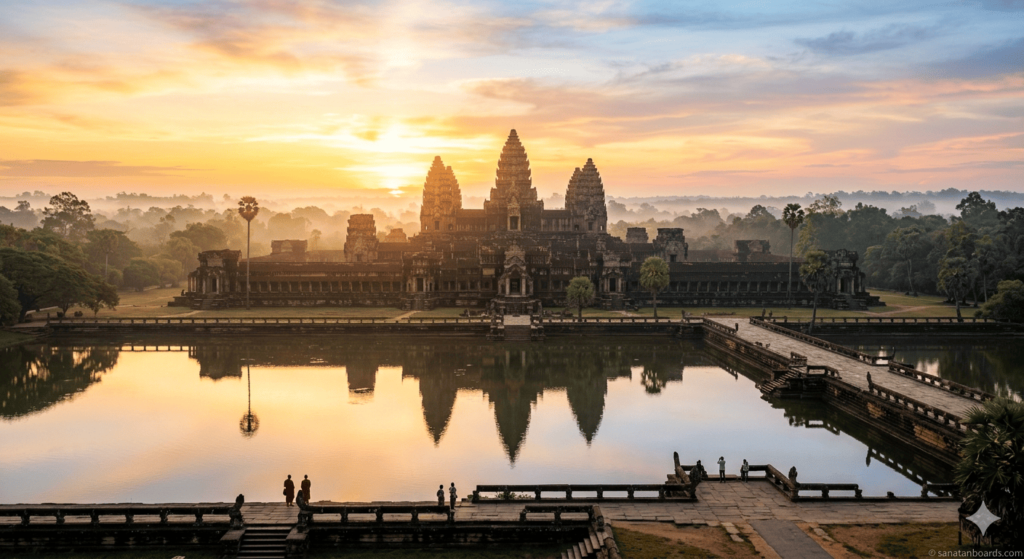
In Cambodia, the influence of Hinduism is most visibly expressed through grand temple complexes such as Angkor Wat and Angkor Thom. These architectural marvels, dedicated to deities like Vishnu and Shiva showcase intricate carvings depicting epics like the Ramayana and Mahabharata. The Khmer Empire used Hindu cosmology to shape its political ideology, presenting kings as divine representatives.
Indonesia, particularly the island of Bali, continues to practice a vibrant form of Hinduism today. Historical empires such as Majapahit Empire played a key role in spreading Hindu culture across the archipelago. Temples like Prambanan Temple highlight the artistic and spiritual sophistication of the period.
This shared heritage reflects a unique blend of Indian philosophical roots with local customs and beliefs. Rather than copying Indian traditions, both regions adapted them, creating distinct cultural identities. Rituals, festivals, dance forms, and languages still carry traces of Sanskrit influence.
The legacy of Hindu heritage in Indonesia and Cambodia is not merely historical—it continues to shape identity, tourism, and cultural pride. It stands as a powerful example of peaceful cultural diffusion and the enduring impact of ideas across borders.
What Is Indonesia & Cambodia (Hindu Heritage) ?
Indonesia and Cambodia’s Hindu heritage refers to the historical, cultural, religious, and artistic influences derived from Hinduism that took root in these regions between the early centuries CE and the medieval period. This heritage is not limited to religion alone but extends to governance systems, architecture, language, and social structures.
In Cambodia, Hindu heritage is deeply tied to the Khmer Empire, which flourished between the 9th and 15th centuries. Kings adopted Hindu concepts such as “Devaraja” (god-king), blending spirituality with political authority. Temples like Angkor Wat were constructed not only as places of worship but as symbolic representations of Mount Meru, the cosmic center in Hindu cosmology. The carvings on temple walls narrate stories from sacred texts, embedding philosophy into art.
In Indonesia, Hindu influence spread through trade routes connecting India with Southeast Asia. The Srivijaya Empire and Majapahit Empire played significant roles in promoting Hindu-Buddhist culture. Even after the spread of Islam, Hindu traditions survived strongly in Bali, where daily offerings, temple rituals, and festivals continue to reflect ancient practices.
This heritage is characterized by adaptation rather than replication. Local beliefs merged with Hindu philosophy, resulting in unique expressions. For example, Balinese Hinduism incorporates ancestor worship and animistic traditions alongside classical Hindu teachings.
Language also reflects this influence. Sanskrit terms entered local vocabularies, influencing names, literature, and inscriptions. Scripts used in ancient inscriptions often derived from Indian writing systems.
Thus, Indonesia and Cambodia’s Hindu heritage represents a fusion of imported ideas and indigenous creativity. It is a living testament to cultural exchange, demonstrating how civilizations evolve through interaction while maintaining their uniqueness.
Who Is Required Indonesia & Cambodia (Hindu Heritage) ?
The heritage of Hindu influence in Indonesia and Cambodia is not confined to a single group—it involves multiple stakeholders across history and the present. Historically, the primary agents were Indian traders, scholars, and priests who introduced Hindu philosophy, rituals, and governance models. They were not conquerors but facilitators of cultural exchange, bringing knowledge systems that resonated with local elites.
Local rulers in Cambodia and Indonesia played a crucial role in adopting and institutionalizing Hindu traditions. Khmer kings, for instance, embraced the concept of divine kingship, legitimizing their rule through religion. Similarly, rulers of the Majapahit Empire promoted Hindu culture to unify their territories and strengthen political identity.
Artisans, architects, and scholars were also essential contributors. The creators of temples like Prambanan Temple and Angkor Wat translated philosophical ideas into physical structures, ensuring that knowledge was preserved visually and symbolically.
In the modern context, this heritage involves historians, archaeologists, and cultural preservationists who work to study and protect these ancient sites. Governments in both countries actively promote these monuments as national treasures and tourism assets.
Local communities, especially in Bali, continue to practice traditions rooted in Hinduism. Their daily rituals, ceremonies, and social systems keep the heritage alive in a living form rather than as a relic of the past.
Tourists and global audiences also play a role. By visiting and appreciating these sites, they contribute to economic sustainability and global awareness of this cultural legacy.
When Indonesia & Cambodia (Hindu Heritage) Is Required ?
The relevance of Indonesia and Cambodia’s Hindu heritage spans across time—past, present, and future. Historically, it was crucial during the formation of early Southeast Asian civilizations. Between the 1st and 15th centuries CE, Hindu ideas influenced governance, architecture, and societal organization. During this period, kingdoms like the Khmer Empire and the Majapahit Empire relied on Hindu principles to legitimize authority and structure their societies.
In the present day, this heritage is highly relevant in cultural preservation and national identity. Monuments such as Angkor Wat are symbols of national pride and are even featured on Cambodia’s flag. In Indonesia, particularly Bali, Hindu traditions guide daily life, from temple ceremonies to community organization.
The heritage is also relevant in education and research. Scholars study these sites and traditions to understand cultural diffusion, historical trade networks, and the evolution of civilizations. It offers insights into how ideas travel and adapt across regions.
Tourism is another major area where this heritage is essential today. Millions of visitors travel to Southeast Asia to experience its historical richness, contributing significantly to local economies.
Looking ahead, this heritage will remain important for sustainable development and cultural continuity. As globalization increases, preserving unique cultural identities becomes more critical. These traditions provide a sense of rootedness and continuity in a rapidly changing world.
Thus, the relevance of this heritage is not limited to a specific time—it is continuously required for understanding history, shaping identity, and guiding future cultural preservation efforts.
Where Indonesia & Cambodia (Hindu Heritage) Is Required ?
The Hindu heritage of Indonesia and Cambodia is most prominently visible in specific geographic and cultural spaces, but its influence extends beyond physical locations. In Cambodia, the Angkor region is the epicenter of this heritage. Sites like Angkor Wat and Angkor Thom serve as monumental representations of Hindu cosmology and architecture.
In Indonesia, the island of Bali is the most significant center of living Hindu tradition. Temples, rituals, and festivals are deeply integrated into everyday life. Additionally, historical sites such as Prambanan Temple highlight the spread of Hindu culture across Java.
Beyond these locations, the heritage is relevant in museums, academic institutions, and cultural organizations worldwide. Artifacts, inscriptions, and sculptures are preserved and studied globally, contributing to a broader understanding of human history.
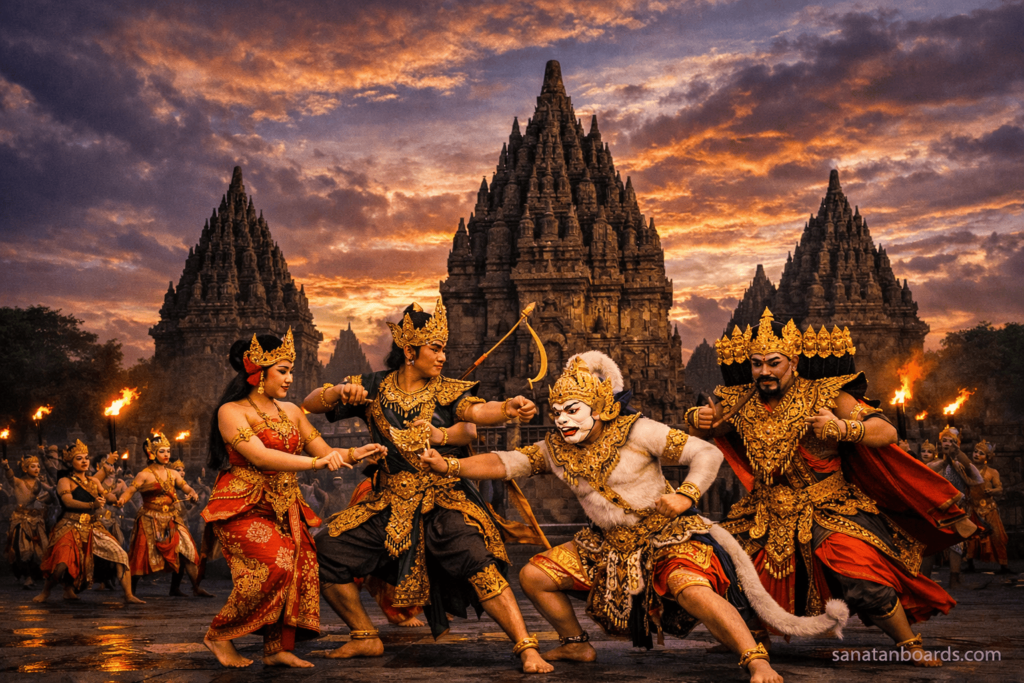
It is also present in intangible cultural spaces—language, literature, dance, and rituals. For instance, traditional performances based on the Ramayana continue in both countries, reflecting enduring cultural narratives.
Digital platforms and global tourism have further expanded the “where” of this heritage. Virtual tours, documentaries, and online archives make these cultural assets accessible worldwide.
Thus, while geographically rooted in Southeast Asia, the relevance of this heritage extends globally, influencing education, tourism, and cultural appreciation across borders.
How Indonesia & Cambodia (Hindu Heritage) Is Required ?
The relevance of Hindu heritage in Indonesia and Cambodia lies in how it contributes to cultural identity, education, and economic development. One of the primary ways it is required is through cultural preservation. Governments and international organizations invest in maintaining sites like Angkor Wat to ensure they remain intact for future generations.
It also plays a role in shaping identity. In Bali, Hindu practices influence social organization, festivals, and daily routines, providing a sense of continuity and belonging. These traditions act as a cultural anchor in a rapidly modernizing world.
Education is another key area. This heritage serves as a valuable resource for understanding ancient civilizations, art, and philosophy. It helps students and researchers explore themes such as cultural exchange and adaptation.
Economically, tourism driven by heritage sites generates revenue and employment. Visitors attracted to temples like Prambanan Temple contribute to local economies, supporting businesses and infrastructure development.
Finally, this heritage fosters global cultural appreciation. It demonstrates how ideas can travel and transform, promoting respect for diversity and shared human history.
Case Study On Indonesia & Cambodia (Hindu Heritage)
The historical trajectory of Hindu heritage in Southeast Asia can be best understood through two contrasting yet interconnected examples: the Angkor civilization of Cambodia and the living Hindu traditions of Indonesia, particularly in Bali. These cases demonstrate how cultural ideas originating from India were absorbed, adapted, and sustained in different ways across time and geography.
In Cambodia, the Angkor period (9th to 15th century CE) represents the peak of Hindu influence. The monumental complex of Angkor Wat stands as one of the most sophisticated architectural achievements in the world. Originally dedicated to the Hindu deity Vishnu, the temple was designed as a symbolic representation of the cosmos. Its central towers represent Mount Meru, the mythical center of the universe in Hindu cosmology, while the surrounding moats symbolize the cosmic ocean.
The Khmer rulers strategically adopted Hinduism as a state ideology. The concept of Devaraja, or “god-king,” positioned the ruler as a divine intermediary, strengthening political authority and unity. The walls of Angkor Wat and nearby complexes like Angkor Thom are adorned with intricate bas-reliefs depicting scenes from the Ramayana and Mahabharata, effectively merging religion, storytelling, and governance.
However, over time, Cambodia experienced a religious transition toward Buddhism, and Hinduism gradually declined as a dominant practice. Despite this shift, the architectural and artistic legacy remained intact, transforming Angkor into a symbol of national identity and heritage preservation.
Indonesia presents a different case. While Hinduism once flourished across various regions under empires such as the Majapahit Empire, its most enduring presence today is found in Bali. Unlike Cambodia, Bali did not merely preserve Hindu heritage as a historical artifact—it continues to practice it as a living tradition.
Balinese Hinduism is distinct in its integration of local animistic beliefs, ancestor worship, and Hindu philosophy. Daily offerings, temple festivals, and community rituals form an integral part of life. This continuous practice has allowed the culture to evolve organically rather than remain static.
Architectural landmarks like Prambanan Temple, although located in Java, further illustrate the historical depth of Hindu influence in Indonesia. These temples highlight advanced engineering, artistic expression, and spiritual symbolism.
From a comparative perspective, Cambodia represents a model of heritage preservation through monumental architecture and tourism, while Indonesia—particularly Bali—demonstrates the sustainability of living traditions. Cambodia relies heavily on conservation efforts and international support to maintain its heritage sites, whereas Bali’s traditions are preserved through daily practice and community participation.
This case study underscores two critical approaches to cultural heritage: preservation and continuity. Both are essential for maintaining the relevance of historical traditions in the modern world. Together, they illustrate how Hindu heritage has not only shaped the past but continues to influence contemporary identity, economy, and cultural expression in Southeast Asia.
White Paper On Indonesia & Cambodia (Hindu Heritage)
Executive Overview
The Hindu heritage of Indonesia and Cambodia represents a vital cultural and economic resource with global significance. Rooted in early trade interactions between India and Southeast Asia, this heritage has evolved into a complex system of architecture, art, governance, and living traditions. This paper examines its historical importance, current challenges, and strategic opportunities for sustainable management.
Historical Context
Between the 1st and 15th centuries CE, Hinduism spread across Southeast Asia through maritime trade networks. Empires such as the Majapahit Empire and the Khmer Empire adopted Hindu principles to legitimize political authority and structure society. Monumental constructions like Angkor Wat and Prambanan Temple stand as enduring evidence of this cultural integration.
Current Significance
Today, Hindu heritage contributes significantly to national identity and tourism. Angkor Wat is a global icon and a major source of revenue for Cambodia, while Bali’s living Hindu traditions attract millions of visitors annually. These heritage assets serve not only as historical landmarks but also as platforms for cultural diplomacy and international collaboration.
Key Challenges
Despite its importance, this heritage faces several challenges:
- Environmental Degradation: Climate change, erosion, and natural wear threaten ancient structures.
- Overtourism: High visitor volumes can damage fragile sites and disrupt local communities.
- Resource Constraints: Conservation efforts require significant funding and technical expertise.
- Cultural Dilution: Globalization may lead to the commercialization or misrepresentation of traditions.
Strategic Recommendations
To ensure sustainability, a multi-pronged approach is necessary:
- Advanced Conservation Techniques
Utilize digital mapping, 3D reconstruction, and AI-driven monitoring to preserve sites like Angkor Wat. - Sustainable Tourism Models
Implement visitor caps, eco-friendly infrastructure, and community-based tourism to reduce environmental impact. - Community Engagement
Empower local populations to participate in heritage management, ensuring that preservation efforts align with cultural values. - Educational Integration
Incorporate heritage studies into school curricula to foster awareness and appreciation among younger generations. - International Collaboration
Strengthen partnerships with global organizations for funding, expertise, and research.
Economic Implications
Heritage tourism generates employment, supports small businesses, and contributes to GDP. However, economic benefits must be balanced with preservation to avoid long-term नुकसान (damage) to cultural assets.
Conclusion
The Hindu heritage of Indonesia and Cambodia is both a legacy of the past and a strategic asset for the future. By adopting sustainable practices and fostering global cooperation, #sanatanboardsinvasai these nations can preserve their cultural wealth while leveraging it for economic and social development.
Industry Application On Indonesia & Cambodia (Hindu Heritage)
The Hindu heritage of Indonesia and Cambodia extends far beyond historical significance, playing a transformative role across multiple industries. Its influence can be observed in tourism, education, media, cultural production, and emerging digital technologies.
Tourism Industry
Tourism is the most prominent sector benefiting from this heritage. Iconic sites such as Angkor Wat and Prambanan Temple attract millions of international visitors each year. Travel companies design immersive experiences that include guided tours, storytelling sessions, and cultural performances based on Hindu epics.
In Bali, tourism is deeply intertwined with living Hindu traditions. Visitors participate in temple festivals, observe daily rituals, and experience local customs firsthand. This creates a unique form of experiential tourism that goes beyond sightseeing.
Education and Research
Academic institutions leverage this heritage for research in history, archaeology, anthropology, and religious studies. Universities collaborate globally to study temple architecture, inscriptions, and cultural practices. This not only advances knowledge but also strengthens international academic ties.
Media and Entertainment
The narratives depicted in temple carvings—especially from the Ramayana and Mahabharata—serve as inspiration for films, documentaries, animation, and digital storytelling. These stories are adapted into modern formats, making them accessible to global audiences.
Cultural and Creative Industries
Local artisans and craftsmen draw inspiration from Hindu motifs and temple designs. Sculptures, textiles, paintings, and souvenirs reflect mythological themes, contributing to the creative economy. Traditional dance and music performances also thrive, often reenacting epic stories.
Technology and Digital Innovation
Emerging technologies are transforming how heritage is preserved and experienced. Virtual reality (VR) allows users to explore sites like Angkor Thom remotely, while digital archiving ensures long-term preservation of artifacts and inscriptions. Augmented reality (AR) applications enhance on-site visitor experiences by providing interactive information.
Policy and Governance
Governments use heritage as a tool for cultural diplomacy and national branding. International recognition of sites strengthens global partnerships and attracts investment. Policies are increasingly focused on balancing economic benefits with conservation needs.
Challenges in Industry Application
While the opportunities are vast, challenges remain. Over-commercialization can dilute cultural authenticity, and excessive tourism may strain local resources. Ethical considerations must guide industry practices to ensure respect for cultural significance.
Future Prospects
The integration of heritage with modern industries is expected to grow. Sustainable tourism, digital innovation, and global collaboration will play key roles in shaping the future. By maintaining a balance between tradition and modernization, Indonesia and Cambodia can continue to benefit from their rich Hindu heritage.
Conclusion
The industry applications of Hindu heritage in Indonesia and Cambodia demonstrate its dynamic relevance in the modern world. It is not merely a relic of the #sanatanboardsinmumbai past but a living resource that drives economic growth, cultural expression, and global engagement.
source : THE INDO TREKKER
ASK FAQ
1. What is the Hindu heritage of Indonesia and Cambodia?
The Hindu heritage of Indonesia and Cambodia refers to the cultural, religious, and architectural influence of Hinduism that spread through trade and interaction with India. This influence is visible in temples like Angkor Wat and Prambanan Temple, as well as in art, language, and traditions that continue today.
2. Why is Hindu heritage important in Cambodia and Indonesia?
Hindu heritage is important because it shaped early governance, architecture, and cultural identity in both regions. It also contributes significantly to tourism, education, and global cultural understanding, especially through iconic historical sites and living traditions in Bali.
3. Which are the most famous Hindu sites in Cambodia and Indonesia?
The most famous sites include Angkor Wat and Angkor Thom in Cambodia, and Prambanan Temple in Indonesia. These sites reflect advanced architecture and deep spiritual symbolism.
4. How did Hinduism spread to Indonesia and Cambodia?
Hinduism spread mainly through trade routes between India and Southeast Asia. Merchants, priests, and scholars introduced religious ideas, which were adopted by local rulers and blended with indigenous beliefs over time.
5. Is Hinduism still practiced in Indonesia and Cambodia today?
Hinduism is actively practiced in Indonesia, especially in Bali, where it remains a major religion. In Cambodia, Hinduism is no longer widely practiced but continues to influence culture and is preserved through historical monuments and traditions.
Table of Contents
Disclaimer
This content is intended for informational and general knowledge purposes only. While efforts have been made to present accurate and well-researched information about Indonesia and Cambodia’s Hindu heritage, interpretations of historical and cultural developments may vary among scholars. The article does not aim to promote any specific belief system or viewpoint. Readers are encouraged to consult additional academic sources, experts, and official publications for deeper understanding or research purposes. Cultural heritage is complex and evolving, and this content represents a simplified overview rather than a comprehensive or definitive account of the subject.