
HINDU SABHA TEMPLE (CANADA)
The Hindu Sabha Temple in Canada represents one of the most significant places of worship for the Hindu community living in the country. It stands not only as a religious center but also as a cultural, spiritual, and social hub for people who follow Hindu traditions and values. In a multicultural nation like Canada,such temples play an important role in preserving cultural identity while promoting harmony among diverse communities.
The temple reflects centuries-old Hindu philosophy, rituals, and practices that are now being continued in a modern Western environment. It provides a sacred space where devotees can perform prayers, celebrate festivals, and participate in religious ceremonies such as weddings, naming ceremonies, and spiritual discourses. Beyond religious functions, it also acts as a place where community members gather, share experiences, and support one another.
In addition, the Hindu Sabha Temple contributes to interfaith understanding by welcoming visitors from different backgrounds. It helps educate people about Hindu beliefs, values like dharma (righteousness), karma (action and consequence), and moksha (liberation), as well as practices such as meditation and yoga.
The presence of such a temple in Canada highlights the country’s diversity and acceptance of multiple cultures. It also provides younger generations born outside India with a strong connection to their roots. Through religious education classes and cultural programs, children and youth learn about Indian heritage, languages, and traditions.
Overall, the Hindu Sabha Temple is more than just a religious structure. It is a living institution that preserves tradition, fosters unity, and strengthens the spiritual lives of its community members while contributing positively to Canadian multicultural society.
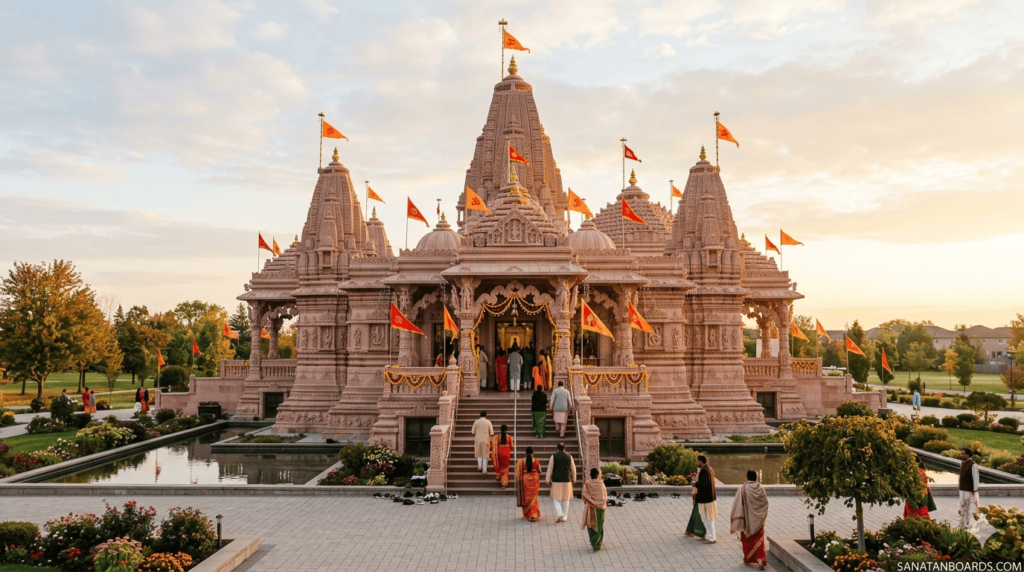
What Is Hindu Sabha Temple (Canada) ?
The Hindu Sabha Temple in Canada is a Hindu place of worship established to serve the spiritual and cultural needs of the Hindu diaspora. It is a structured religious institution where devotees gather to worship deities according to Hindu traditions. The temple typically follows rituals based on scriptures such as the Vedas, Upanishads, and Puranas.
Inside the temple, there are idols of various Hindu deities such as Lord Shiva, Lord Vishnu, Goddess Lakshmi, Lord Ganesha, and others. These deities are worshipped through daily rituals, offerings, chanting of mantras, and devotional singing known as bhajans. The temple is designed to provide a peaceful and sacred atmosphere that supports meditation and prayer.
Apart from religious worship, the Hindu Sabha Temple also functions as a cultural center. It organizes religious festivals like Diwali, Navratri, Holi, and Janmashtami, bringing the community together in celebration. These events include traditional music, dance, food, and spiritual teachings, helping preserve Indian culture in a foreign land.
The temple also provides educational services such as Sanskrit classes, Hindu philosophy lessons, and youth programs. These initiatives help younger generations understand their cultural identity and values.
Furthermore, it plays a charitable role by participating in community service activities like food distribution, charity drives, and support for those in need.
Thus, the Hindu Sabha Temple in Canada is not just a religious building but a complete institution that integrates spirituality, culture, education, and social service. It serves as a bridge between ancient Hindu traditions and modern Canadian society, ensuring that cultural heritage is preserved and passed on to future generations.
Who Is Required Hindu Sabha Temple (Canada) ?
The Hindu Sabha Temple in Canada is primarily required by the Hindu community living in Canada, especially immigrants and their descendants who follow Hinduism. It serves individuals and families who wish to practice their religion in a structured and traditional environment.
It is especially important for first-generation immigrants who moved from countries like India, Nepal, Sri Lanka, Trinidad and Tobago, Fiji, and other regions where Hinduism is widely practiced. For them, the temple provides emotional comfort, spiritual grounding, and a connection to their homeland.
The temple is also required by second and third-generation Hindu Canadians who may not have grown up in India but still want to learn and practice their cultural and religious traditions. It helps them stay connected to their identity and understand Hindu rituals, festivals, and values.
Additionally, elderly members of the community rely on the temple for spiritual support and social interaction. It becomes a place where they can meet others, participate in prayers, and feel a sense of belonging.
Beyond Hindus, the temple is also useful for researchers, students, and individuals from other faiths who want to learn about Hinduism and its practices. It promotes interfaith understanding and cultural awareness.
Community leaders and cultural organizations also benefit from the temple as it serves as a venue for events, discussions, and social initiatives.
When Hindu Sabha Temple (Canada) Is Required ?
The Hindu Sabha Temple in Canada is required throughout the year, but its importance becomes especially significant during religious festivals, life events, and moments of spiritual need.
It is required daily for devotees who wish to perform morning and evening prayers, offer rituals, and seek blessings. Many individuals visit the temple regularly as part of their spiritual routine, using it as a place for meditation and inner peace.
The temple becomes highly important during major Hindu festivals such as Diwali, Navratri, Holi, Raksha Bandhan, and Janmashtami. During these times, large gatherings take place, and the temple organizes special ceremonies, cultural performances, and community meals. These festivals are essential for maintaining cultural traditions and passing them on to younger generations.
It is also required during life events such as weddings, baby naming ceremonies, engagements, and funerals. Hindu rituals performed at the temple ensure that these important milestones are conducted according to religious customs and traditions.
The temple is needed during times of personal difficulty or emotional distress. Many people visit to pray for strength, guidance, and peace of mind during challenges such as illness, financial struggles, or family issues.
Additionally, the temple is required during educational programs and religious classes conducted for children and youth. These sessions often take place on weekends or during school holidays, helping young members learn about Hindu scriptures, values, and culture.
It also becomes essential during community events, charity drives, and interfaith gatherings organized throughout the year.
Overall, the Hindu Sabha Temple is required continuously, but its significance increases during festivals, rituals, and important life moments. It acts as a spiritual anchor that supports individuals and the community at all stages of life.
Where Hindu Sabha Temple (Canada) Is Required ?
The Hindu Sabha Temple in Canada is required primarily in regions where there is a significant Hindu population. Canada, being a multicultural country, has several cities where Hindu communities are concentrated, and such temples serve as central places of worship.
It is especially required in urban and suburban areas where immigrant populations settle due to employment, education, and better living opportunities. These areas include large cities like Toronto, Brampton, Mississauga, Vancouver, and Montreal, where cultural diversity is high.
Within these communities, the temple acts as a central hub where people can gather for religious, cultural, and social activities. It is usually located in accessible areas so that families, elderly individuals, and youth can easily visit.
The temple is also required in educational and cultural contexts. Schools, universities, and community organizations often collaborate with such temples to promote multicultural understanding and awareness of Hindu traditions.
In addition, it is needed in diaspora communities that are far from their countries of origin. For many Hindus living in Canada, the temple becomes the closest connection to traditional Indian culture and spirituality.
It is also important in areas where cultural integration is actively encouraged. The temple serves as a bridge between Hindu traditions and Canadian society, promoting respect and understanding between different communities.
Moreover, the temple is required wherever there is a need for community support services such as counseling, charity work, and cultural preservation programs.
How Hindu Sabha Temple (Canada) Is Required ?
The Hindu Sabha Temple in Canada is required through structured planning, community support, and continuous participation from devotees and organizers.
It is established through collective efforts of Hindu communities who come together to build a dedicated space for worship and cultural preservation. Funding is usually provided through donations, community contributions, and fundraising events.
Once established, the temple operates through organized systems that include priests, volunteers, and management committees. Priests perform daily rituals and ceremonies based on Hindu scriptures, while volunteers help manage events, maintain cleanliness, and support visitors.
The temple functions through regular schedules that include morning and evening prayers, weekly religious classes, and monthly cultural programs. Special arrangements are made during festivals and large gatherings to accommodate increased attendance.
It is required through active participation from the community. Devotees attend prayers, contribute donations, and take part in religious and cultural activities. Without community involvement, the temple cannot function effectively.
Technology also plays a role in modern temple operations. Many temples use online platforms for announcements, donations, and live-streaming religious events for those who cannot attend physically.
Additionally, it is maintained through adherence to cultural and religious guidelines. Rituals are conducted according to Hindu traditions, ensuring authenticity and spiritual significance.
Educational programs are another way the temple is required. Classes, workshops, and cultural training sessions help younger generations stay connected with their heritage.
Thus, the Hindu Sabha Temple is required through a combination of community effort, structured management, religious practices, and modern support systems that ensure its smooth functioning and long-term sustainability.

Case Study On Hindu Sabha Temple (Canada)
The Hindu Sabha Temple in Canada serves as an important example of how immigrant communities preserve their cultural and religious identity while adapting to a new country. Over the years, it has developed into a strong community institution that supports spiritual, cultural, and social needs.
A key aspect of the temple’s development is its foundation by early Hindu immigrants who sought a place of worship in Canada. Initially, gatherings were small and held in rented community halls. As the community grew, the need for a permanent temple became evident. Through collective donations and volunteer efforts, the temple structure was established.
One major case study aspect is its role in community integration. The temple has successfully created a space where people from different age groups come together. Elderly members find comfort in daily prayers, while youth engage in cultural learning programs. This intergenerational interaction strengthens cultural continuity.
During major festivals like Diwali, the temple hosts large-scale celebrations that attract thousands of visitors. These events include religious rituals, cultural performances, and community meals. This demonstrates how the temple functions not only as a religious center but also as a cultural festival hub.
Another important aspect is its educational contribution. The temple runs weekend schools where children learn Hindi or other Indian languages, Hindu scriptures, and traditional values. This helps preserve cultural identity among younger generations born in Canada.
The temple also plays a significant role in charitable activities. It organizes food drives, disaster relief donations, and support programs for underprivileged families. These initiatives highlight the temple’s commitment to social responsibility.
Challenges faced by the temple include managing large crowds during festivals, maintaining funding for operations, and balancing traditional practices with modern Canadian regulations. Despite these challenges, the temple has managed to sustain itself through strong community involvement.
Another notable case study point is interfaith engagement. The temple has hosted visitors from different religious backgrounds, promoting understanding and harmony between communities. This contributes to Canada’s multicultural framework.
Overall, the Hindu Sabha Temple stands as a successful model of cultural preservation, community organization, and social service in a diaspora setting. It demonstrates how religious institutions can evolve to meet modern needs while preserving ancient traditions.
White Paper On Hindu Sabha Temple (Canada)
The Hindu Sabha Temple in Canada can be analyzed as a structured socio-religious institution that plays a multi-dimensional role in diaspora communities. It functions across three main domains: spirituality, culture, and community development.
From a spiritual perspective, the temple provides a dedicated environment for Hindu worship. It ensures continuity of rituals and practices that are rooted in ancient scriptures. The presence of deities, priests, and regular ceremonies supports the spiritual well-being of devotees.
From a cultural perspective, the temple acts as a preservation center for Hindu traditions. It organizes festivals, cultural programs, and educational activities that reinforce cultural identity among Canadian Hindus. This is particularly important for younger generations who are growing up outside India.
From a community development perspective, the temple serves as a social institution. It provides space for community meetings, charitable work, and support services. It strengthens social bonds among members of the Hindu diaspora.
Operationally, the temple is managed through a governance structure that includes elected committees, volunteers, and religious leaders. Funding is primarily donation-based, ensuring community ownership and participation.
The temple also integrates technology for outreach. Online streaming of events, digital donation systems, and social media engagement help expand its reach beyond physical boundaries.
Key challenges include maintaining financial sustainability, managing cultural diversity within Hindu traditions, and adapting to legal and social frameworks in Canada. However, these challenges are addressed through community collaboration and transparent management.
The impact of the temple is significant in terms of identity preservation, social cohesion, and cultural education. It helps individuals maintain a sense of #hindusabhatempleinvasai belonging while living in a multicultural environment.
In conclusion, the Hindu Sabha Temple represents a successful model of diaspora institution building that balances tradition with modernity.
Industry Application On Hindu Sabha Temple (Canada)
The Hindu Sabha Temple in Canada can be analyzed from an “industry application” perspective in terms of religion-based community infrastructure, cultural management, and non-profit organizational systems.
In the religious services sector, the temple operates as a structured provider of spiritual services. It offers daily worship, ritual ceremonies, religious counseling, and festival management. This aligns with broader patterns seen in faith-based organizations globally.
In the cultural preservation industry, the temple functions as a center for heritage management. It organizes language classes, cultural workshops, and traditional arts programs. These activities support the preservation of intangible cultural assets.
From a non-profit management perspective, the temple demonstrates key principles such as volunteer coordination, donation management, event planning, and community engagement. It operates without profit motives, relying instead on collective contribution and participation.
In the education sector, the temple provides supplementary learning through weekend schools and religious instruction. This contributes to informal education systems that complement formal schooling in Canada.
In the tourism and cultural exchange industry, temples like Hindu Sabha Temple attract visitors interested in understanding Hindu traditions. This promotes cultural tourism and intercultural dialogue.
In social welfare applications, the temple participates in charity work, food distribution, and disaster relief. These activities align with corporate social responsibility models seen in larger organizations.
In digital transformation trends, the temple uses online platforms for outreach, virtual participation in rituals, and community communication. This reflects the increasing digitalization of religious institutions worldwide.
Furthermore, the temple serves as a case model for diaspora community infrastructure development. It demonstrates how immigrant communities build institutions that support identity preservation and social integration.
In conclusion, the Hindu Sabha Temple operates across multiple industry domains including religion, education, non-profit management, #hindusabhatempleincanada cultural preservation, and digital engagement, making it a multifunctional institution within Canadian society.
source : Indian Mom in Canada
ASK FAQ
1. What is Hindu Sabha Temple in Canada?
Hindu Sabha Temple in Canada is a Hindu place of worship that serves as a religious, cultural, and community center for Hindu devotees living in Canada.
2. Where is Hindu Sabha Temple located in Canada?
The Hindu Sabha Temple is located in Ontario, Canada, and serves a large Hindu community in the surrounding regions.
3. Why is Hindu Sabha Temple important in Canada?
It is important because it helps preserve Hindu culture, supports religious practices, and brings the community together through festivals and events.
4. Who visits Hindu Sabha Temple in Canada?
Hindu devotees, families, youth, elders, and visitors interested in Hindu culture and traditions visit the temple regularly.
5. What activities are done in Hindu Sabha Temple Canada?
Daily prayers, religious ceremonies, festivals, cultural programs, educational classes, and community services are conducted in the temple.
Table of Contents
Disclaimer: This content is provided for educational and informational purposes only. It is intended to give a general overview of the Hindu Sabha Temple in Canada and its cultural, social, and religious significance within the Hindu community. The information is based on commonly understood aspects of Hindu temples and diaspora institutions and should not be considered as official, legal, or institutional documentation. Any historical organizational, or functional descriptions are for academic understanding and may vary in real-world contexts. Readers are advised to refer to official temple sources or verified publications for accurate and updated information.