VAISHNO DEVI (JAMMU & KASHMIR)
Vaishno Devi Temple is one of the most revered pilgrimage destinations located in the Trikuta Hills of Jammu & Kashmir. It holds a significant place in Indian culture, spirituality, and tradition. Situated at an altitude of around 5,200 feet, this sacred shrine attracts millions of devotees every year from different parts of the world. The journey to the shrine is considered both physically challenging and spiritually uplifting.
The pilgrimage begins from Katra, a small town that serves as the base camp for devotees. From here, pilgrims undertake a trek of approximately 13 kilometers to reach the holy cave shrine. The path is well-developed and includes resting points, food stalls, medical facilities, and transportation options like ponies and battery-operated vehicles for those who need assistance.
Vaishno Devi is dedicated to Goddess Vaishno, believed to be a combined form of Goddess Lakshmi, Goddess Saraswati, and Goddess Kali. The shrine is deeply rooted in Hindu mythology and is considered a powerful Shakti Peetha. Devotees believe that the Goddess fulfills the wishes of those who visit with true devotion and faith.
The atmosphere throughout the journey is filled with spiritual chants of “Jai Mata Di,” which creates a sense of unity and devotion among pilgrims. The natural beauty of the surrounding mountains combined with the spiritual energy of the place, makes it a unique experience.
Over the years, infrastructure development has made the pilgrimage safer and more accessible. Facilities like helicopter services, online registration systems and improved trekking paths have enhanced the overall experience. Despite modernization, the spiritual essence of the shrine remains unchanged.
Vaishno Devi is not just a religious destination but also a symbol of faith, endurance, and devotion that continues to inspire millions of people across generations.
What Is Vaishno Devi (Jammu & Kashmir) ?
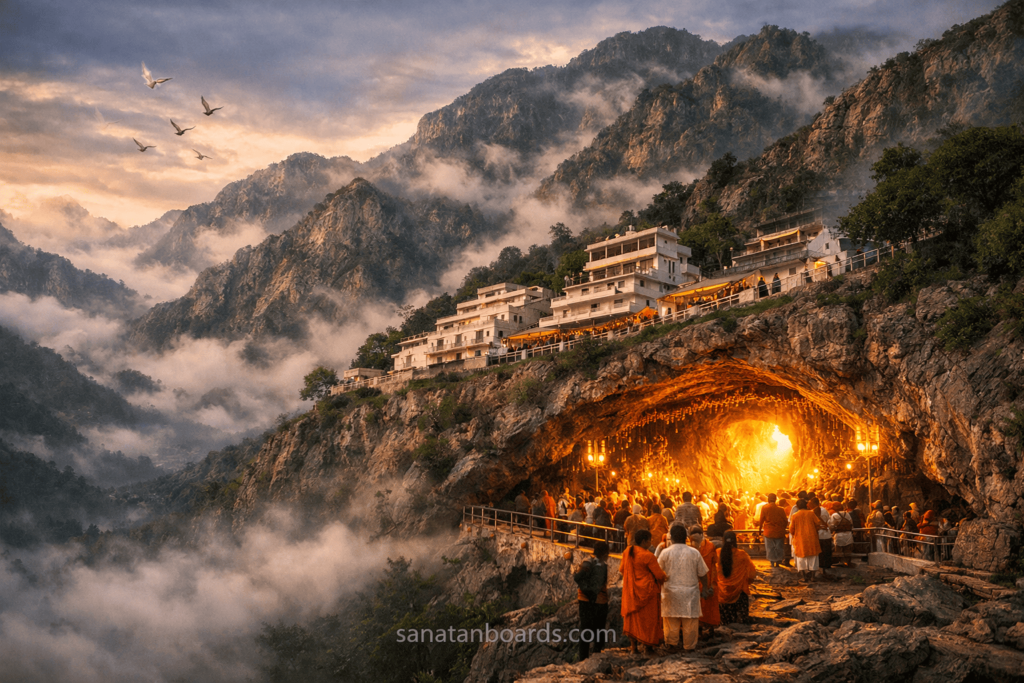
Vaishno Devi Temple is a sacred Hindu shrine located in the Trikuta Mountains. It is dedicated to Goddess Vaishno, who is believed to be an incarnation of divine feminine energy. The shrine is situated inside a natural cave where three sacred rock formations, known as “Pindis,” are worshipped as manifestations of the Goddess.
The temple is one of the most visited pilgrimage sites in India. It represents faith, devotion, and spiritual awakening. The journey to the shrine is not just a physical trek but also a symbolic path of devotion and purification. Pilgrims believe that only those who are called by the Goddess are able to complete the journey.
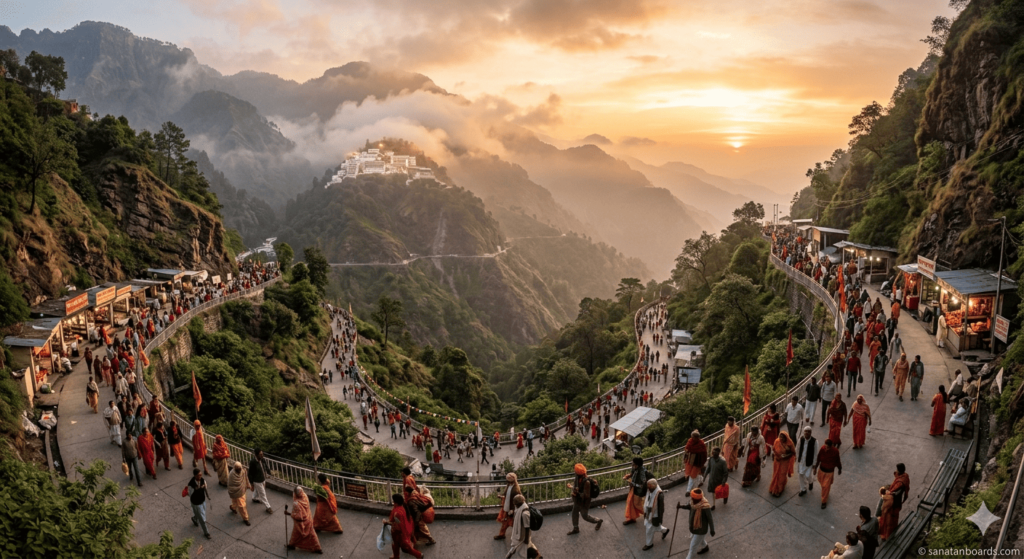
The structure of the pilgrimage route is well organized. Starting from Katra, devotees register and begin their ascent on foot or with the help of ponies, palkis, or helicopters. The route includes several checkpoints such as Banganga, Charan Paduka, Ardhkuwari, and Sanjichhat before reaching the main shrine.
The temple is managed by the Shri Mata Vaishno Devi Shrine Board, which ensures proper maintenance, security, and facilities for visitors. Over time, technological advancements have improved crowd management and safety measures.
Culturally, Vaishno Devi holds immense importance. It is believed that the Goddess fulfills the wishes of devotees who visit with pure intentions. Many people undertake the pilgrimage during Navratri and other auspicious occasions.
The shrine also plays a major role in tourism and the local economy, providing employment opportunities and boosting infrastructure in the region. Its significance extends beyond religion, representing harmony between nature, spirituality, and human effort.
Who Is Required Vaishno Devi (Jammu & Kashmir) ?
Vaishno Devi Temple is considered essential for individuals seeking spiritual growth, peace of mind, and fulfillment of heartfelt desires. Devotees from all walks of life visit the shrine regardless of age, background, or social status. It is believed that those who are guided by inner faith or divine calling are naturally drawn to the pilgrimage.
People who are facing emotional stress, personal struggles, or life challenges often feel a strong spiritual pull toward the shrine. Many individuals also visit to express gratitude after the fulfillment of wishes or recovery from difficulties. Families frequently undertake the journey together to seek blessings for health, prosperity, and harmony.
The shrine is also significant for those who follow Hindu spiritual traditions, especially devotees of Goddess Shakti. It serves as a center of devotion for people who believe in divine feminine energy and its protective power.
Pilgrims who are physically and mentally prepared for a journey involving trekking and endurance are most suited for this pilgrimage. However, modern facilities like ponies, palkis, and helicopter services make it accessible to elderly individuals and those with physical limitations.
Additionally, spiritual seekers, travelers interested in cultural heritage, and individuals exploring India’s religious traditions also find value in visiting this sacred site. The pilgrimage offers not only religious fulfillment but also a deep connection with nature and inner reflection.
When Vaishno Devi (Jammu & Kashmir) Is Required ?
Vaishno Devi Temple is considered most significant during specific spiritual periods, personal life phases, and auspicious timings. One of the most important times for visiting the shrine is during Navratri, a nine-day festival dedicated to Goddess Durga and her forms. During this period, millions of devotees visit the shrine, believing that prayers offered at this time are especially powerful.
The pilgrimage is also undertaken when individuals experience major life transitions. These may include starting a new career, marriage, childbirth, business expansion, or recovery from illness. Devotees often choose to visit before or after such events to seek divine blessings and guidance.
Another important timing is when individuals feel spiritually disconnected or emotionally disturbed. The journey is believed to help restore inner peace and clarity. Many people choose to visit during moments of uncertainty or when seeking direction in life.
Seasonally, the shrine is open throughout the year, but the most preferred months are March to October due to favorable weather conditions. Winter months attract fewer pilgrims because of heavy snowfall and challenging trekking conditions, although some still undertake the journey during this time for a more secluded spiritual experience.
The shrine is also visited during personal vows or “mannat” fulfillment. Devotees often promise to visit the shrine once their wishes are granted, making timing dependent on the fulfillment of those prayers.
From a cultural perspective, weekends, holidays, and religious festivals see higher footfall, while weekdays are relatively less crowded, allowing a more peaceful experience.
Thus, the requirement of visiting Vaishno Devi is not fixed to a single time but is deeply connected to personal faith, spiritual need, and life circumstances.
Where Vaishno Devi (Jammu & Kashmir) Is Required ?
Vaishno Devi Temple is located in the Trikuta Hills near the town of Katra in the Reasi district of Jammu & Kashmir, India. This region is part of the northern Himalayan mountain range and is known for its scenic beauty, rugged terrain, and spiritual significance.
The shrine is situated inside a natural cave at an altitude of approximately 5,200 feet above sea level. The geographical setting plays an important role in shaping the pilgrimage experience. The surrounding environment includes dense forests, rocky hills, and flowing streams, creating a serene and spiritually uplifting atmosphere.
Katra serves as the main base point where all pilgrims begin their journey. It is well connected by road and rail networks to major cities like Jammu, Delhi, and other parts of India. From Katra, the 13-kilometer trek begins towards the main shrine, passing through important locations such as Banganga, Ardhkuwari, and Sanjichhat.
The shrine is also strategically located in a region that combines accessibility with natural isolation. While it is reachable through modern transportation systems, the final approach requires physical effort, symbolizing devotion and determination.
The location holds cultural importance as it lies in a historically rich region of India, known for ancient traditions, mythology, and religious harmony. The presence of the shrine has also contributed to the development of infrastructure in the surrounding areas, including hotels, healthcare facilities, and transportation services.
In a broader sense, Vaishno Devi is not just a physical place but also a spiritual destination that exists in the collective consciousness of devotees worldwide. It represents a sacred space where geography meets faith, making its location both physically and spiritually significant.
How Vaishno Devi (Jammu & Kashmir) Is Required ?
Vaishno Devi Temple is required through a combination of devotion, preparation, and structured pilgrimage systems. The journey begins with registration at Katra, which is mandatory for all pilgrims. This ensures safety, crowd management, and organized movement of devotees.
After registration, pilgrims begin the ascent either on foot or by using ponies, palkis, or battery-operated vehicles. The route is designed to accommodate people of different physical abilities while maintaining the spiritual essence of the journey. Along the way, facilities such as resting shelters, food stalls, and medical assistance are available.
Devotion plays a key role in how the pilgrimage is undertaken. Pilgrims often chant prayers, sing hymns, and maintain spiritual discipline throughout the journey. The belief is that sincere faith is essential for completing the pilgrimage successfully.
Modern technology has also made the process more efficient. Online booking systems for helicopter services and accommodations have simplified travel planning. Security arrangements and surveillance systems ensure the safety of millions of visitors each year.
The final stage of the journey involves reaching the holy cave shrine, where devotees offer prayers and seek blessings from the three sacred pindis representing the Goddess. The experience is considered deeply transformative, combining physical endurance with spiritual fulfillment.
Environmental sustainability is also an important aspect. Measures are in place to manage waste, protect the natural surroundings, and preserve the ecological balance of the region.
Thus, the requirement of Vaishno Devi pilgrimage is fulfilled through a blend of tradition, devotion, infrastructure, and disciplined travel systems that ensure a meaningful experience for every visitor.
Case Study On Vaishno Devi (Jammu & Kashmir)
Vaishno Devi Temple serves as a powerful case study in religious tourism management, infrastructure development, and large-scale crowd control in a challenging mountainous environment.
The shrine attracts over ten million pilgrims annually, making it one of the most visited religious sites in the world. Managing such a massive influx of visitors in a geographically constrained region requires advanced planning, coordination, and continuous improvement.
One of the most significant aspects of the case study is the role of the Shri Mata Vaishno Devi Shrine Board, which oversees administration, infrastructure, and services. The board has implemented systems for registration, accommodation, emergency response, and crowd regulation. This structured governance model has significantly improved the pilgrimage experience.
Infrastructure development is another key factor. The trekking route from Katra has been upgraded with paved pathways, lighting systems, resting points, and medical facilities. Ropeways, battery-operated vehicles, and helicopter services have been introduced to reduce physical strain and increase accessibility.
A major challenge addressed in this case is disaster and crowd management. Due to the high number of visitors, especially during festivals like Navratri, systems have been established for real-time monitoring, emergency evacuation, and weather alerts. These measures help prevent overcrowding and ensure pilgrim safety.
Economic impact is also an important dimension. The pilgrimage supports local livelihoods through tourism, hospitality, transport, and retail services. Thousands of local residents are employed directly or indirectly due to the shrine’s operations. This has contributed to regional development and improved living standards.
Environmental management is another critical area. The shrine authorities have introduced waste management systems, plastic control measures, and eco-friendly initiatives to preserve the fragile Himalayan ecosystem. Efforts are made to balance tourism with environmental sustainability.
From a technological perspective, digital ticketing, surveillance cameras, and online services have modernized the pilgrimage system. These innovations have improved transparency, reduced manual errors, and enhanced visitor experience.
Socially, the shrine promotes unity and inclusivity. People from different regions, languages, and backgrounds come together in shared devotion. This creates a unique environment of cultural harmony.
The case study demonstrates how a religious site can be effectively managed as a complex socio-economic system. It highlights the integration of tradition with modern governance, ensuring that spiritual values are preserved while accommodating growing demand.
White Paper On Vaishno Devi (Jammu & Kashmir)
Vaishno Devi Temple represents a significant model of sustainable religious tourism, combining spiritual heritage with structured governance and modern infrastructure.
The pilgrimage ecosystem is built around a well-defined framework that includes administration, transportation, safety, hospitality, and environmental management. The Shri Mata Vaishno Devi Shrine Board plays a central role in coordinating these functions, ensuring smooth operations throughout the year.
A key component of this system is accessibility. The pilgrimage route has been designed to accommodate millions of visitors while maintaining safety standards. Multiple transport options, including trekking paths, pony services, palkis, battery vehicles, and helicopter services, ensure inclusivity for all age groups and physical conditions.
Security and crowd management are critical pillars. The implementation of surveillance systems, entry registration, and real-time monitoring helps manage large crowds efficiently. During peak seasons, additional personnel and emergency protocols are activated to maintain order.
Sustainability is another major focus area. The shrine region adopts waste management systems, plastic reduction initiatives, and ecological conservation programs. These measures are essential to protect the fragile Himalayan environment from the impact of mass tourism.
Economic development generated by the pilgrimage is substantial. The shrine supports local businesses, hospitality services, transportation networks, and small-scale vendors. This economic ecosystem has transformed Katra and surrounding areas into a thriving tourism hub.
Digital transformation has further enhanced operations. Online booking systems, information portals, and digital payment solutions have streamlined services for pilgrims. These advancements have improved efficiency and reduced dependency on manual processes.
From a cultural perspective, the shrine serves as a unifying spiritual center. It attracts devotees from diverse backgrounds, fostering cultural exchange and national integration. The shared experience of devotion strengthens social harmony.
Risk management is also a key focus. The mountainous terrain is prone to weather fluctuations, landslides, and high footfall pressure. Preparedness measures, including emergency shelters and communication systems, are in place to handle such situations.
In conclusion, Vaishno Devi stands as a comprehensive model of how religious destinations can be managed sustainably while preserving #sanatanboardsinvasai cultural and spiritual significance. It demonstrates the balance between tradition, modernization, and environmental responsibility.
Industry Application On Vaishno Devi (Jammu & Kashmir)
Vaishno Devi Temple is not only a major spiritual destination but also a powerful example of how a pilgrimage ecosystem can influence and contribute to multiple industries. Its impact extends far beyond religion, shaping tourism, transportation, hospitality, infrastructure, technology, and public administration.
In the tourism industry, Vaishno Devi acts as one of the strongest pilgrimage-driven travel hubs in India. Millions of visitors travel every year, creating continuous demand for tour packages, travel agencies, guided services, and seasonal pilgrimage planning. This consistent inflow of tourists supports both domestic tourism growth and regional branding of Jammu & Kashmir as a spiritual destination.
The transportation industry has been significantly developed due to this pilgrimage. Katra is well connected through rail and road networks, and special services such as helicopter rides, battery-operated vehicles, ropeways, and palki/pony services are widely used. These systems serve as a model for transport solutions in other hilly and high-density pilgrimage areas. Continuous upgrades in mobility infrastructure have improved accessibility for elderly and differently-abled pilgrims.
In the hospitality sector, the pilgrimage has led to the growth of hotels, guest houses, lodges, dharamshalas, and food establishments in Katra and nearby regions. This has created a stable income source for local communities. The demand for accommodation peaks during festivals and Navratri, encouraging seasonal expansion and service diversification within the hospitality industry.
The infrastructure industry has also seen major development. Construction of durable trekking paths, resting shelters, bridges, lighting systems, water supply facilities, and medical aid centers demonstrates advanced planning in difficult mountainous terrain. These engineering solutions are studied as best practices for infrastructure development in remote and ecologically sensitive regions.
In the technology and digital services industry, Vaishno Devi has become a model for smart pilgrimage management. Online registration systems, digital ticketing, CCTV surveillance, crowd monitoring systems, and mobile applications are widely used. These technologies help in managing large crowds efficiently while ensuring safety and transparency. Such systems are increasingly adopted in other pilgrimage sites and mass gathering events.
The public administration and disaster management sector also benefits from the Vaishno Devi model. Structured crowd control, emergency response systems, weather alerts, and real-time monitoring techniques are implemented to handle high footfall and natural risks like landslides or extreme weather conditions.
In addition, the pilgrimage indirectly supports the local economy and micro-enterprises, including souvenir shops, transport operators, small vendors, and service providers, creating widespread employment opportunities.
Overall, Vaishno Devi serves as a multi-industry #sanatanboardsinmumbai development model where spirituality and economic systems work together, influencing large-scale industrial growth and sustainable regional development.
source : Yatra Mitra
ASK FAQ
1. What is Vaishno Devi famous for?
Vaishno Devi Temple is famous as one of the most sacred Hindu pilgrimage sites dedicated to Goddess Vaishno, attracting millions of devotees every year for blessings and spiritual fulfillment.
2. Where is Vaishno Devi located?
Vaishno Devi is located in the Trikuta Hills near Katra in the Reasi district of Jammu & Kashmir, India, at an altitude of about 5,200 feet.
3. How to reach Vaishno Devi Temple?
Pilgrims first reach Katra by road or rail, then undertake a 13 km trek or use ponies, palkis, or helicopter services to reach the shrine.
4. When is the best time to visit Vaishno Devi?
The best time to visit Vaishno Devi is between March and October, while Navratri is the most auspicious and crowded pilgrimage period.
5. Why do people visit Vaishno Devi?
People visit Vaishno Devi to seek blessings of Goddess Vaishno for health, peace, prosperity, and fulfillment of personal wishes, as it is believed she fulfills true devotees’ desires.
Table of Contents
DISCLAIMER
This content is prepared for informational, educational, and knowledge-sharing purposes only. It is intended to support blog writing and general learning. It does not promote any belief, opinion, or claim, and readers are advised to use their own judgment and refer to verified sources for accuracy when required.