
KAMAKHYA DEVI (ASSAM)
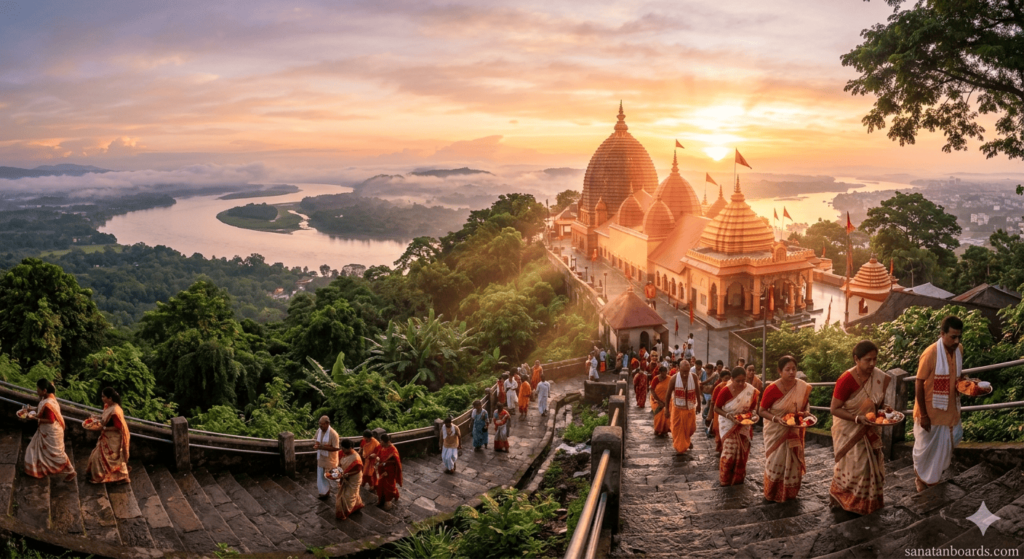
Kamakhya Temple is one of the most revered and mysterious spiritual sites in India, dedicated to Goddess Kamakhya, an embodiment of divine feminine power. Located atop the Nilachal Hill in Guwahati, the temple is a major center of Tantric worship and holds immense religious, cultural, and historical significance. Unlike many other temples in India Kamakhya does not house an idol; instead, the sanctum contains a natural rock formation symbolizing the yoni (womb) of the goddess, representing fertility and creation.
The temple is deeply associated with the ancient tradition of Shaktism, where the goddess is worshipped as the supreme power. It is also considered one of the most important Shakti Peethas believed to be the place where parts of Goddess Sati’s body fell during the cosmic events described in Hindu mythology. This association elevates its spiritual importance among devotees across the country and beyond.
Kamakhya Temple is also known for its unique rituals and festivals, particularly the Ambubachi Mela, which celebrates the annual menstruation of the goddess. This event draws thousands of pilgrims, sadhus, and tourists, making it not only a religious gathering but also a cultural phenomenon.
Beyond its spiritual aura, the temple stands as an architectural marvel, blending traditional Assamese style with intricate carvings and historical influences. Over centuries, it has been rebuilt and preserved by various rulers, reflecting the resilience of faith and tradition.
Overall, Kamakhya Devi Temple represents a powerful fusion of mythology, spirituality, and cultural heritage, making it a unique and significant destination in India’s religious landscape.
What Is Kamakhya Devi (Assam) ?
Kamakhya Temple is a sacred Hindu temple dedicated to Goddess Kamakhya, symbolizing the creative and generative force of the universe. It is not just a place of worship but also a center of Tantric practices, making it distinct from many other temples in India.
The temple is one of the 51 Shakti Peethas, which are considered highly sacred in Hindu tradition. According to mythology, when Goddess Sati sacrificed herself, her body parts fell at different places across the Indian subcontinent. Kamakhya is believed to be the site where her reproductive organ (yoni) fell, symbolizing fertility, power, and creation.
Unlike conventional temples where idols are worshipped, Kamakhya Temple houses a natural underground spring that keeps the rock formation moist. This unique representation emphasizes the concept of nature as divine and reinforces the temple’s association with fertility and life cycles.
The temple is also a major hub of Tantric worship, attracting practitioners who seek spiritual power and enlightenment. Rituals performed here often differ from mainstream Hindu practices, focusing more on esoteric traditions and symbolic offerings.
Architecturally, the temple reflects a blend of indigenous Assamese and medieval styles. Its dome-shaped structure, intricate carvings, and historical modifications tell the story of its long-standing importance.
Who Is Required Kamakhya Devi (Assam) ?
Goddess Kamakhya is revered by a diverse group of devotees, each seeking different forms of spiritual, emotional, and material fulfillment. The temple primarily attracts followers of Shaktism, who consider the goddess as the ultimate source of power and energy.
Devotees who seek blessings related to fertility, marriage, and childbirth often visit Kamakhya Temple. The goddess is associated with creation and procreation, making her particularly significant for individuals and couples hoping to start or expand their families.
Tantric practitioners and spiritual seekers also form an important group connected to Kamakhya Devi. They visit the temple to perform rituals aimed at gaining spiritual insight, power, and enlightenment. The temple’s reputation as a center for Tantric practices makes it unique among Hindu pilgrimage sites.
In addition, people facing personal struggles—such as health issues, financial difficulties, or emotional distress—turn to the goddess for guidance and support. The belief in her protective and nurturing nature draws individuals seeking solace and strength.
Scholars, historians, and cultural enthusiasts are also “required” in the sense that they study the temple to understand its historical, architectural, and anthropological significance. It serves as a living example of ancient traditions that continue to thrive in modern times.
Tourists and travelers, though not always religiously inclined, visit Kamakhya to experience its unique atmosphere, rituals, and scenic location. The temple thus caters to a wide spectrum of people, each finding their own meaning and purpose in their connection with the goddess.
When Kamakhya Devi (Assam) Is Required ?
The relevance of Kamakhya Temple becomes especially significant during specific times, occasions, and phases of life when individuals seek divine intervention or spiritual connection.
One of the most important times when Kamakhya Devi is “required” is during the Ambubachi Mela, an annual festival that marks the symbolic menstruation of Goddess Kamakhya. This period is considered highly sacred, as it celebrates fertility, creation, and the regenerative power of nature. Devotees believe that visiting the temple during this time brings immense blessings and spiritual merit.
Apart from festivals, people turn to Kamakhya Devi during personal milestones such as marriage, childbirth, and new beginnings. The goddess is associated with fertility and prosperity, making her worship significant during these life events.
Challenging times in life also lead individuals to seek the goddess’s blessings. During periods of uncertainty, stress, or hardship, devotees visit the temple to find peace, strength, and guidance. The belief in her protective nature makes her an important spiritual anchor.
In the context of spiritual practices, Tantric rituals performed at specific times—often determined by astrological calculations—highlight another dimension of when Kamakhya Devi is required. Practitioners believe that certain alignments enhance the effectiveness of rituals conducted at the temple.
Seasonal changes and agricultural cycles also play a role. In agrarian societies, fertility-related worship becomes important during planting and harvesting seasons, linking the goddess to the prosperity of the land.
Thus, Kamakhya Devi is “required” not only during religious festivals but also at critical moments in personal and collective life, serving as a source of spiritual strength, renewal, and hope.
Where Kamakhya Devi (Assam) Is Required ?
Kamakhya Temple holds significance not only in its physical location but also in broader spiritual, cultural, and symbolic contexts.
Geographically, the temple is located in Guwahati, making it a central pilgrimage site in Northeast India. Devotees from across the country travel to this location to experience its spiritual energy and participate in rituals.
However, the “where” extends beyond physical space. Kamakhya Devi is also invoked in homes and local shrines by devotees who may not be able to visit the temple. Through prayers, rituals, and symbolic offerings, the goddess’s presence is believed to transcend geographical boundaries.
In the realm of spirituality, Kamakhya is “required” in spaces where individuals seek deeper understanding and connection with divine feminine energy. Meditation centers, spiritual gatherings, and Tantric practices often invoke her energy.
Culturally, the temple plays a role in festivals, folklore, and traditions across Assam and other parts of India. It influences art, music, and literature, making it relevant in creative and cultural spaces.
Academically, Kamakhya is studied in universities and research institutions focusing on religion, anthropology, and history. Scholars explore its significance to understand ancient traditions and their continuity.
Thus, Kamakhya Devi is required both at her sacred physical site and in various symbolic, cultural, and intellectual spaces, reflecting her व्यापक (wide-reaching) influence.
How Kamakhya Devi (Assam) Is Required ?
The importance of Goddess Kamakhya is realized through various practices, beliefs, and experiences that connect devotees to her divine energy.
Primarily, she is worshipped through rituals and offerings at Kamakhya Temple. Devotees perform पूजा (worship), offer flowers, and participate in ceremonies to seek blessings. The rituals often emphasize natural elements, reflecting the goddess’s connection to fertility and creation.
Tantric practices form another important aspect of how Kamakhya Devi is required. These practices involve specific मंत्र (chants), meditation, and symbolic rituals aimed at spiritual growth and self-realization. They highlight a deeper, more esoteric dimension of worship.
Emotionally and psychologically, devotees connect with the goddess as a source of comfort and strength. In times of distress, prayer becomes a way to cope and find inner peace.
Socially, the temple fosters a sense of community. Festivals like Ambubachi Mela bring people together, creating shared experiences and reinforcing cultural identity.
Educationally, Kamakhya serves as a subject of study, helping people understand ancient traditions, gender symbolism, and cultural practices.
Thus, Kamakhya Devi is required through worship, spiritual practices, emotional connection, and cultural participation, making her an integral part of many lives.
Case Study On Kamakhya Devi (Assam)
The Kamakhya Temple stands as a compelling case study that highlights the intersection of religion, culture, economy, and social transformation in India. Located in Guwahati, the temple is not only a spiritual center but also a dynamic institution influencing multiple aspects of society.
Historically, the temple has undergone several phases of destruction and reconstruction. It was originally built in ancient times but was later destroyed and rebuilt by regional kings, particularly during the Koch dynasty. This continuity reflects the resilience of faith and the enduring importance of Goddess Kamakhya in the spiritual consciousness of the region. The temple’s architecture, which blends indigenous Assamese and medieval styles, further reflects its historical evolution.
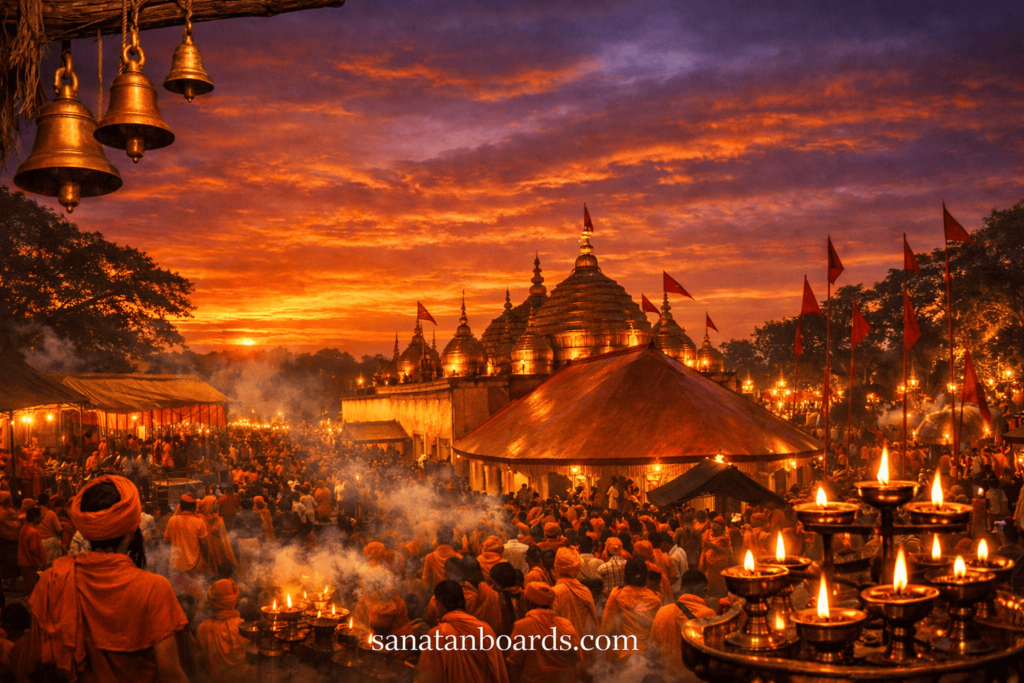
One of the most significant aspects of this case study is the Ambubachi Mela, an annual festival that draws lakhs of pilgrims, sadhus, and tourists. During this period, the temple remains closed for a few days, symbolizing the annual menstruation of the goddess. When it reopens, devotees gather in large numbers to receive blessings. This event has a profound socio-economic impact, generating revenue for local businesses such as hotels, transport services, food vendors, and handicraft sellers. It effectively transforms Guwahati into a hub of economic activity during the festival period.
From a sociological perspective, Kamakhya Temple challenges traditional taboos associated with menstruation by celebrating it as a sacred and natural process. This perspective provides an alternative narrative that promotes acceptance and respect for biological cycles, particularly those associated with women. As a result, the temple is often discussed in academic circles as an example of progressive symbolism within ancient traditions.
The temple is also a center for Tantric practices, which sets it apart from many other religious sites. Tantric practitioners visit the temple seeking spiritual growth, knowledge, and power. These practices, though often misunderstood, form an integral part of the temple’s identity and contribute to its uniqueness.
However, the temple also faces challenges. The large influx of visitors during peak seasons puts pressure on infrastructure, sanitation, and environmental resources. Waste management becomes a significant concern, and there is a need for sustainable practices to preserve the surrounding ecosystem of Nilachal Hill.
In conclusion, the Kamakhya Temple case study demonstrates how a religious institution can influence economic development, social norms, cultural preservation, and environmental challenges. It serves as a powerful example of how tradition and modernity coexist, shaping both local and broader societal dynamics.
White Paper On Kamakhya Devi (Assam)
The Kamakhya Temple represents a unique and multifaceted institution that integrates spirituality, cultural heritage, and economic development. This white paper aims to analyze its significance, challenges, and future potential from a structured and analytical perspective.
Overview and Significance
Situated in Guwahati, Kamakhya Temple is one of the most important Shakti Peethas in India. Dedicated to Goddess Kamakhya, the temple symbolizes fertility, creation, and feminine energy. Its unique form of worship, which focuses on a natural rock formation rather than an idol, distinguishes it from other Hindu temples.
Cultural and Religious Impact
The temple plays a crucial role in preserving ancient traditions, particularly those associated with Tantric practices. Festivals like Ambubachi Mela highlight the temple’s cultural importance and attract a diverse range of participants, including pilgrims, scholars, and tourists. These events reinforce regional identity and contribute to cultural continuity.
Economic Contributions
Kamakhya Temple significantly contributes to the local and regional economy. The steady flow of pilgrims supports industries such as hospitality, transportation, and retail. During major festivals, the economic impact is amplified, creating temporary employment opportunities and boosting income for local communities.
Challenges and Issues
Despite its benefits, the temple faces several challenges. Overcrowding during peak seasons can lead to safety concerns and strain infrastructure. Environmental degradation, including waste accumulation and deforestation, poses a threat to the surrounding ecosystem. Additionally, the commercialization of religious activities raises concerns about maintaining the sanctity of the temple.
Policy Recommendations
To address these challenges, a multi-pronged approach is required:
- Implementation of sustainable tourism practices
- Improved infrastructure and crowd management systems
- Waste management and environmental conservation initiatives
- Use of digital technologies for visitor regulation and information dissemination
Future Prospects
With proper planning and management, Kamakhya Temple has the potential to serve as a model for sustainable religious tourism. Integrating modern technology while preserving traditional practices can enhance visitor experience and ensure long-term sustainability.
Conclusion
The Kamakhya Temple is more than a religious site; it is a living institution that influences culture, economy, and society. By addressing current #Sanatanboardsinvasai challenges and leveraging opportunities, it can continue to thrive as a symbol of spiritual and cultural significance.
Industry Application On Kamakhya Devi (Assam)
The influence of Kamakhya Temple extends far beyond its religious significance, impacting multiple industries and sectors. Its role as a major pilgrimage site in Guwahati makes it a key driver of economic and cultural activity.
Tourism Industry
The most prominent application is in the tourism sector. Kamakhya Temple attracts millions of visitors annually, including pilgrims, domestic tourists, and international travelers. This influx creates demand for accommodation, transportation, guided tours, and other services. Religious tourism packages often include Kamakhya as a major destination, contributing significantly to Assam’s tourism revenue.
Hospitality and Service Sector
Hotels, guest houses, restaurants, and travel agencies benefit directly from the temple’s popularity. During peak seasons such as Ambubachi Mela, occupancy rates increase dramatically, leading to higher revenues. The service sector also sees growth in areas such as local transportation, food services, and event management.
Handicrafts and Local Businesses
Local artisans and small businesses gain from the sale of religious items, souvenirs, and traditional handicrafts. Products such as पूजा items, textiles, and handmade artifacts find a ready market among visitors. This supports the preservation of traditional crafts and provides livelihoods to local communities.
Media and Cultural Industry
Kamakhya Temple has inspired documentaries, books, films, and digital content. Its unique rituals and cultural significance make it an attractive subject for media production. This contributes to the broader cultural industry and helps promote awareness about Assam’s heritage.
Academic and Research Sector
The temple serves as an important subject for research in fields such as anthropology, religious studies, history, and gender studies. Scholars study its rituals, symbolism, and social impact, contributing to academic knowledge and discourse.
Wellness and Spiritual Industry
With the growing global interest in spirituality and wellness, Kamakhya’s association with divine feminine energy and Tantric practices attracts spiritual seekers. This creates opportunities for retreats, workshops, and guided spiritual experiences.
Infrastructure Development
The need to accommodate large numbers of visitors has led to improvements in infrastructure, including roads, transportation networks, and public facilities. This development benefits not only tourists but also local residents.
Conclusion
The Kamakhya Temple exemplifies how a religious institution can influence diverse industries, from tourism and hospitality to media and academia. #Sanatanboardsinmumbai Its impact demonstrates the interconnectedness of spirituality, culture, and economic development, making it a significant driver of regional growth.
source : Ravi On Trip
ASK FAQ
1. What is the significance of Kamakhya Temple?
Kamakhya Temple is one of the most important Shakti Peethas in India, dedicated to Goddess Kamakhya. It symbolizes fertility, feminine energy, and creation, and is especially known for its unique Tantric worship practices.
2. Why is Kamakhya Temple famous?
The temple is famous for the Ambubachi Mela, which celebrates the annual menstruation of the goddess. It is also known for not having a traditional idol but a natural rock formation representing divine feminine power.
3. Where is Kamakhya Temple located?
Kamakhya Temple is located on Nilachal Hill in Guwahati, making it one of the प्रमुख pilgrimage destinations in Northeast India.
4. What are the main festivals of Kamakhya Temple?
The most important festival is Ambubachi Mela. Other festivals include Durga Puja and Manasha Puja, which attract thousands of devotees every year.
5. What makes Kamakhya Temple unique among temples in India?
Its uniqueness lies in Tantric rituals, the absence of a deity idol, and the worship of a natural yoni-shaped rock, representing fertility and the power of creation.
Table of Contents
Disclaimer
This content is intended for informational and knowledge-sharing purposes only. It is based on cultural, historical, and religious references associated with Kamakhya Devi Temple and does not intend to hurt any sentiments or beliefs. Interpretations may vary across sources and traditions.