
SHAKTI PEETHAS (MAJOR DEVI TEMPLES)
Shakti Peethas are among the most sacred and spiritually significant places associated with the worship of Goddess Shakti, the divine feminine energy in Hindu tradition. These holy sites are spread across the Indian subcontinent and are deeply rooted in ancient mythology, devotion, and cultural heritage. They are considered powerful centers of spiritual energy where devotees seek blessings, peace, protection, and liberation from difficulties in life.
The origin of Shakti Peethas is linked to the story of Goddess Sati and Lord Shiva. According to ancient beliefs, when Goddess Sati sacrificed herself during a sacred ritual performed by her father Daksha, Lord Shiva became deeply sorrowful and carried her body across the universe. To restore cosmic balance Lord Vishnu used his divine weapon, the Sudarshan Chakra, to cut Sati’s body into several parts. Wherever these body parts fell on Earth, those locations became sacred shrines known as Shakti Peethas.
Each Shakti Peetha is associated with a specific body part of Goddess Sati and is also linked with Lord Shiva in a corresponding form. These temples are not only places of worship but also represent unity between divine feminine and masculine energies.
Shakti Peethas are found in India, Nepal, Bangladesh, Sri Lanka, and Pakistan, reflecting their widespread cultural importance. Pilgrims from all over the world visit these shrines throughout the year, especially during Navratri and other festivals dedicated to Goddess Durga.
These sacred temples are considered highly powerful for spiritual awakening, wish fulfillment, and inner transformation. They symbolize faith, devotion, and the eternal presence of divine energy in the universe, making them an important part of Hindu religious tradition and spiritual practice.
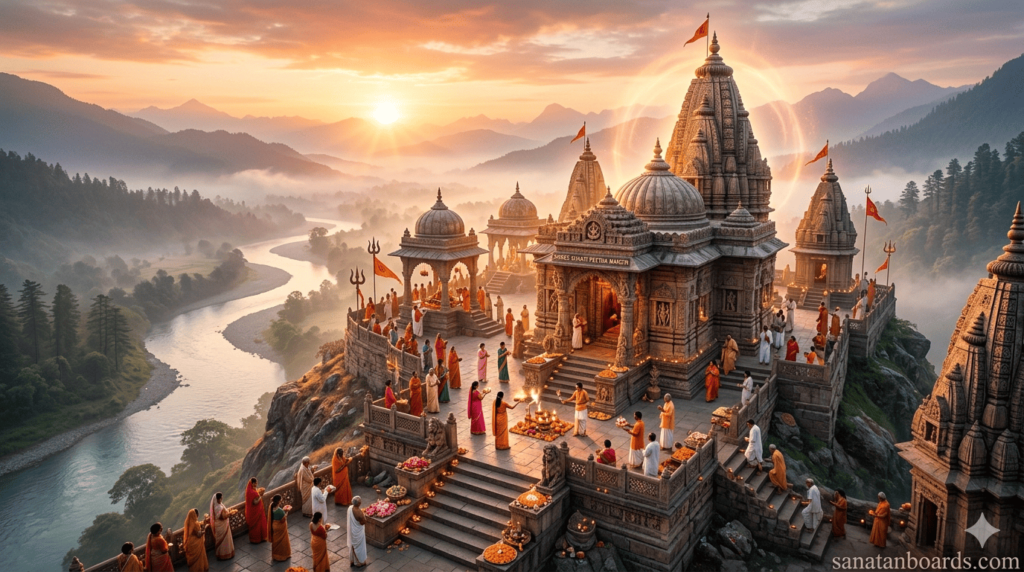
What Is Shakti Peethas (Major Devi Temples) ?
Shakti Peethas are holy shrines dedicated to Goddess Shakti, who represents divine feminine energy, strength, and creation. These temples are believed to be formed at places where parts of Goddess Sati’s body fell after her self-sacrifice and Lord Vishnu’s intervention to restore balance in the universe.
In Hindu tradition, there are traditionally 51, 52, or 108 Shakti Peethas mentioned in various scriptures, though the most commonly accepted number is 51. Each Shakti Peetha is considered uniquely powerful because it represents a specific aspect of the Goddess. Along with the Goddess, a form of Lord Shiva is also worshipped at each site, symbolizing the balance of cosmic energies.
Each temple has its own legend, rituals, and significance. For example, some Shakti Peethas are associated with the Goddess’s eyes, while others are linked to her hands, heart, or ornaments. These symbolic associations enhance the spiritual importance of each site.
Shakti Peethas are not just religious places but also cultural landmarks that reflect ancient traditions, architecture, and local beliefs. Many of these temples have existed for centuries and have been maintained through generations of devotion.
Devotees believe that visiting these temples can remove negative energy, fulfill wishes, and bring peace of mind. The worship practices vary from region to region, but the devotion toward the Goddess remains the central focus everywhere.
Who Is Required Shakti Peethas (Major Devi Temples)?
Shakti Peethas are required or significant for individuals who seek spiritual growth, inner peace, and divine blessings from Goddess Shakti. These sacred places are especially important for devotees of Hinduism who follow the path of Shaktism, where the Goddess is considered the supreme power of the universe.
People facing emotional struggles, life challenges, or mental stress often visit Shakti Peethas to find comfort and strength. The spiritual environment of these temples helps individuals feel connected to a higher power and encourages positivity and hope.
They are also important for pilgrims who follow religious traditions and wish to complete sacred journeys. Many devotees believe that visiting multiple Shakti Peethas in their lifetime brings spiritual completeness and liberation from negative karma.
Shakti Peethas are also significant for scholars, historians, and cultural researchers who study ancient traditions, mythology, temple architecture, and religious practices. These sites provide valuable insight into early Indian civilization and spiritual philosophy.
In addition, people seeking blessings for family well-being, health, marriage, or success often visit these temples. The rituals performed at Shakti Peethas are believed to remove obstacles and bring prosperity.
Spiritual seekers and yogis also consider these temples important meditation spaces. The energy of these places is believed to support deep meditation and self-realization.
Overall, Shakti Peethas are required for anyone seeking divine connection, cultural understanding, emotional healing, or spiritual transformation. They serve as sacred spaces where faith and devotion meet inner peace and universal energy.
When Shakti Peethas (Major Devi Temples) Is Required ?
Shakti Peethas are considered important at various stages of life and during specific spiritual or personal circumstances. Devotees often visit these sacred temples at times when they feel the need for divine guidance, emotional strength, or solutions to life’s challenges.
One of the most common times when Shakti Peethas are visited is during religious festivals, especially Navratri. This nine-day festival dedicated to Goddess Durga is considered highly auspicious, and millions of devotees visit Shakti Peethas during this period to seek blessings and perform special rituals.
Shakti Peethas are also required during difficult life situations such as illness, financial struggles, relationship issues, or emotional distress. Many devotees believe that praying at these sacred sites brings relief, clarity, and positive transformation in life.
Important life events such as marriage, childbirth, new business ventures, or career beginnings are also times when people visit Shakti Peethas. They seek divine blessings for success, stability, and protection from obstacles.
Additionally, spiritual seekers visit these temples when they feel disconnected, lost, or in search of deeper meaning in life. The peaceful and powerful environment of Shakti Peethas helps individuals reflect, meditate, and reconnect with their inner self.
In some traditions, pilgrimages to Shakti Peethas are undertaken as part of vows or religious commitments. Devotees may visit these temples after fulfilling a wish or as an expression of gratitude to the Goddess.
Shakti Peethas are also important during times of natural disasters or personal crises, when people seek emotional strength and faith to overcome hardships. The belief in divine protection plays a major role in such visits.
Thus, Shakti Peethas are not limited to a single occasion but are required whenever individuals seek spiritual support, emotional healing, or divine blessings throughout different phases of life.
Where Shakti Peethas (Major Devi Temples) Is Required ?
Shakti Peethas are located across several regions in the Indian subcontinent, making them accessible to devotees in different geographical areas. These sacred temples are primarily found in India, Nepal, Bangladesh, Pakistan, and Sri Lanka, reflecting the widespread devotion to Goddess Shakti.
In India, Shakti Peethas are spread across multiple states including West Bengal, Assam, Himachal Pradesh, Maharashtra, Gujarat, Tamil Nadu, and Odisha. Each region has its own culturally significant temple dedicated to the Goddess. For example, Kamakhya Temple in Assam and Kalighat Temple in West Bengal are among the most famous Shakti Peethas.
Nepal is home to several important Shakti Peethas as well, with the most notable being the Guhyeshwari Temple near Kathmandu. Bangladesh also holds significant shrines such as Jeshoreshwari Temple, which attracts devotees from across borders.
These temples are often located in areas with historical, cultural, or mythological importance. Many are situated near rivers, mountains, or ancient trade routes, symbolizing the connection between nature and spirituality.
Shakti Peethas are required in these locations because they serve as spiritual centers for surrounding communities. They act as hubs of religious activity, cultural preservation, and social gathering. Local populations depend on these temples for festivals, rituals, and traditional ceremonies.
In addition, these temples play a role in promoting tourism and pilgrimage. Devotees travel long distances to visit multiple Shakti Peethas, contributing to cultural exchange and economic activity in these regions.
The presence of Shakti Peethas in diverse locations also reflects the unity of spiritual belief across different cultures and regions. Despite geographical boundaries, devotion to the Goddess remains consistent and deeply rooted.
Thus, Shakti Peethas are required wherever spiritual energy, cultural heritage, and religious devotion converge, making them significant landmarks across South Asia.
How Shakti Peethas (Major Devi Temples) Is Required ?
Shakti Peethas are required through structured worship practices, rituals, pilgrimages, and spiritual disciplines that have been followed for centuries. The way devotees engage with these sacred temples involves both traditional customs and personal devotion.
The primary method of worship involves offering prayers, flowers, incense, lamps, and sacred food items to the Goddess. Devotees chant mantras such as “Om Shakti” or specific Devi hymns to invoke divine blessings. These rituals are believed to purify the mind and environment.
Pilgrimage is another important way Shakti Peethas are required in spiritual practice. Devotees travel from different regions to visit multiple Shakti Peethas as part of religious vows or spiritual journeys. This pilgrimage is considered a form of devotion and self-discipline.
Festivals like Navratri play a major role in the functioning of Shakti Peethas. During these times, temples conduct special ceremonies, cultural programs, and community gatherings. These events strengthen devotion and bring people together in shared faith.
Meditation and spiritual reflection are also important aspects of engagement with Shakti Peethas. Many devotees spend time in silence and prayer within temple premises to connect with inner consciousness.
In some traditions, fasting and penance are observed before visiting Shakti Peethas. These practices symbolize dedication, purity, and surrender to divine power.
Temple priests perform daily rituals and maintain sacred traditions that have been passed down through generations. These structured practices ensure the continuous spiritual energy of the temples.

Case Study On Shakti Peethas (Major Devi Temples)
One notable case study of Shakti Peethas can be observed through the cultural and spiritual significance of the Kamakhya Temple in Assam, India. This temple is one of the most revered Shakti Peethas and attracts millions of devotees every year from different parts of the world.
The Kamakhya Temple is associated with the yoni (creative power) of Goddess Sati, symbolizing fertility, creation, and feminine energy. Unlike many traditional temples, it does not contain an idol of the Goddess but instead worships a natural rock formation, emphasizing the concept of divine energy beyond physical form.
One of the most significant events at this temple is the annual Ambubachi Mela. During this festival, it is believed that the Goddess undergoes her yearly menstruation cycle, symbolizing the fertility of the Earth. The temple remains closed for three days and reopens with grand celebrations. This event attracts thousands of pilgrims, saints, and tourists.
From a cultural perspective, Kamakhya Temple plays a major role in preserving ancient Tantric traditions. Scholars and spiritual practitioners study its rituals, symbolism, and historical significance to understand early forms of spiritual practices in India.
Economically, the temple contributes significantly to local livelihoods. The influx of pilgrims during festivals supports local businesses, including hospitality, transportation, handicrafts, and food services. This creates a strong economic ecosystem around the temple.
Socially, the temple promotes unity among diverse groups of people. Devotees from different regions, languages, and backgrounds come together, creating a shared spiritual experience.
From a governance perspective, the temple is maintained with the support of local authorities and religious trusts. Proper management ensures smooth functioning during large festivals and pilgrimages.
Environmentally, the temple area faces challenges due to heavy footfall during peak seasons. Efforts are made to manage waste, control crowd movement, and preserve the natural surroundings.
Spiritually, the temple serves as a center for devotion, meditation, and inner transformation. Many devotees report feelings of peace, emotional healing, and renewed faith after visiting.
This case study demonstrates how Shakti Peethas are not only religious sites but also cultural, economic, and social institutions that influence multiple aspects of life.
White Paper On Shakti Peethas (Major Devi Temples)
Shakti Peethas represent a network of sacred temples dedicated to Goddess Shakti, embodying the divine feminine force in Hindu tradition. These temples hold immense religious, cultural, historical, and spiritual importance across South Asia.
The origin of Shakti Peethas is deeply rooted in mythological narratives, particularly the story of Goddess Sati and Lord Shiva. The division of Sati’s body into multiple parts symbolizes the diffusion of divine energy across the Earth, making each site a powerful spiritual center.
From a religious perspective, Shakti Peethas function as pilgrimage destinations that strengthen devotion and spiritual discipline. They serve as focal points for worship, rituals, and festivals dedicated to the Goddess. The consistent flow of devotees highlights their enduring significance.
Culturally, these temples preserve ancient traditions, art forms, and architectural styles. Each Shakti Peetha reflects regional influences, showcasing diversity within a unified spiritual framework. They also play a key role in preserving oral traditions, folklore, and rituals.
Economically, Shakti Peethas contribute to local and regional economies through pilgrimage tourism. They generate income for local communities through hospitality, transport, handicrafts, and religious offerings. Festivals significantly boost economic activity.
Socially, these temples act as community centers where people gather for religious and cultural events. They promote social cohesion, shared identity, and intergenerational transmission of traditions.
From an environmental perspective, many Shakti Peethas are located in ecologically sensitive areas. Sustainable management is required to balance religious tourism with environmental conservation.
Technologically, modern management of temples includes digital donation systems, online darshan facilities, and crowd control mechanisms. These innovations help improve accessibility and efficiency.
Policy-wise, governments and temple #Sanatanboardsinvasai trusts collaborate to ensure safety, infrastructure development, and heritage preservation.
Industry Application On Shakti Peethas (Major Devi Temples)
Shakti Peethas, while primarily spiritual and religious in nature, have wide-ranging applications across multiple industries including tourism, hospitality, culture, media, education, and digital technology.
In the tourism industry, Shakti Peethas serve as major pilgrimage destinations attracting millions of domestic and international visitors. This creates demand for travel services, guided tours, transportation systems, and pilgrimage packages. Religious tourism is a significant sector that contributes to regional development.
The hospitality industry benefits greatly from the presence of Shakti Peethas. Hotels, guest houses, dharamshalas, and local accommodation services operate extensively around these temples. Food services and local vendors also experience increased demand during festivals and pilgrimage seasons.
In the cultural and heritage sector, Shakti Peethas play an important role in preserving traditional arts, rituals, music, and dance forms. Cultural organizations often document and promote temple festivals and rituals to maintain heritage awareness.
The media and entertainment industry also draws inspiration from Shakti Peethas. Documentaries, films, devotional music, and literature often explore stories and legends associated with these sacred sites. This helps in spreading cultural knowledge to wider audiences.
In the education sector, Shakti Peethas are studied in history, religious studies, anthropology, and cultural studies. They provide insights into ancient civilizations, mythology, and spiritual traditions.
The digital technology industry has also begun to integrate Shakti Peethas into virtual platforms. Online streaming of temple rituals, virtual tours, mobile applications for pilgrimage planning, and digital donation systems are becoming increasingly common.
Infrastructure development is another major industry impacted by Shakti Peethas. Roads, transportation networks, sanitation systems, and public facilities are developed to support large numbers of pilgrims.
Local handicraft and retail industries also benefit, as devotees purchase religious items, souvenirs, and offerings near temple sites. This supports small businesses and traditional artisans.
Overall, Shakti Peethas function as multi-industry influencers, contributing to economic growth, cultural preservation, technological advancement, #Sanatanboardsinmumbai and social development while maintaining their spiritual foundation.
source : Hidden Gems of INDIA
ASK FAQ
1. What are Shakti Peethas in Hinduism?
Shakti Peethas are sacred temples dedicated to Goddess Shakti, believed to be formed where parts of Goddess Sati’s body fell. They are powerful pilgrimage sites symbolizing divine feminine energy.
2. How many Shakti Peethas are there in India?
There are commonly believed to be 51 Shakti Peethas spread across India and neighboring countries, each representing a unique form of Goddess Shakti.
3. Why are Shakti Peethas important for devotees?
Shakti Peethas are important because they are believed to grant blessings, remove negative energy, fulfill wishes, and provide spiritual peace and strength.
4. Which is the most famous Shakti Peetha?
One of the most famous Shakti Peethas is Kamakhya Temple, known for its powerful spiritual significance and the annual Ambubachi Mela festival.
5. When is the best time to visit Shakti Peethas?
The best time to visit Shakti Peethas is during Navratri and other Hindu festivals dedicated to Goddess Durga, when special prayers and celebrations take place.
Table of Contents
DISCLAIMER
The information provided is for general knowledge and informational understanding of cultural, historical, and spiritual traditions associated with Shakti Peethas. Interpretations may vary across different texts, regions, and belief systems.