
RISHIKESH (UTTARAKHAND)
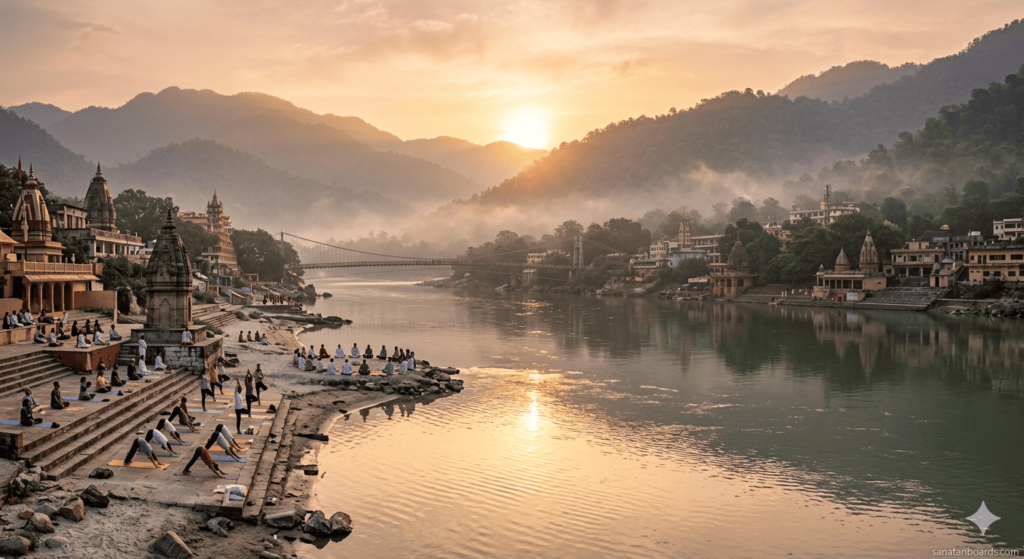
Rishikesh, located in the northern state of Uttarakhand, is widely recognized as one of the most important destinations for yoga, meditation, and spiritual learning in the world. Situated along the banks of the sacred river Ganga and surrounded by the Himalayan foothills, this town has a unique atmosphere that naturally promotes peace, reflection, and inner transformation. Over time, it has evolved from a quiet spiritual retreat into a globally known center for seekers of wellness and self-discovery.
Rishikesh holds a special place in ancient Indian traditions. It is believed that sages and saints have practiced deep meditation in this region for thousands of years. The natural environment, combined with spiritual energy, makes it an ideal location for practices such as yoga, pranayama (breathing techniques), and meditation. Unlike modern urban cities Rishikesh maintains a calm rhythm of life where spiritual discipline is part of daily living.
The town gained global recognition when yoga was introduced to international audiences in the 20th century. Since then, people from different countries have traveled here to learn authentic yoga practices from experienced gurus and ashrams. Institutions like Parmarth Niketan and Sivananda Ashram have played a major role in spreading traditional teachings.
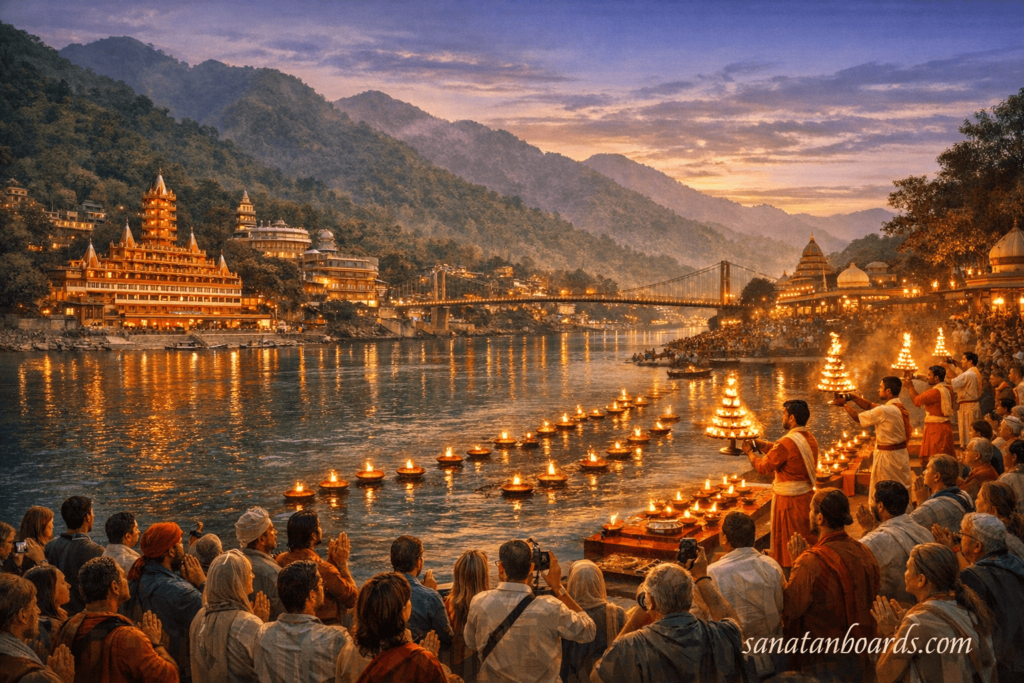
Another defining feature of Rishikesh is its cultural and spiritual harmony. The evening Ganga Aarti, performed on the riverbanks, creates a powerful atmosphere of devotion and unity. The sound of bells, chants, and flowing water enhances the sense of spiritual awakening among visitors.
Today, Rishikesh stands as a bridge between ancient wisdom and modern wellness practices. It attracts spiritual seekers, yoga practitioners, researchers, and tourists who are searching for balance, healing, and deeper meaning in life. This unique combination of natural beauty and spiritual heritage makes it one of the most influential yoga destinations in the world.
What Is Rishikesh (Uttarakhand) – Yoga And Spirituality Hub ?
Rishikesh is a spiritual town known globally as a center for yoga, meditation, and holistic healing practices. It is not just a geographical location but a cultural and spiritual identity that represents India’s ancient wisdom traditions. The town is situated in the Himalayan foothills along the holy river Ganga, which is considered sacred in Indian philosophy and spirituality.
Rishikesh is often referred to as the “Yoga Capital of the World” because of its deep association with yogic traditions. It is home to numerous ashrams, yoga schools, and spiritual retreats that teach classical forms of yoga such as Hatha Yoga, Raja Yoga, and Kundalini Yoga. These institutions preserve ancient teachings that focus on physical health, mental clarity, and spiritual growth.
The town’s environment plays a key role in its identity. The clean air, flowing river, and forested hills create a natural setting that supports meditation and self-reflection. Unlike fast-paced cities, Rishikesh encourages a slow and mindful lifestyle. This makes it suitable for individuals seeking peace away from stress and distractions.
Spirituality in Rishikesh is not limited to religious practices. It is a way of life that includes discipline, simplicity, and connection with nature. The daily rituals along the Ganga, including prayers and chanting, reflect a deep sense of devotion and cultural continuity.
Rishikesh also serves as a global meeting point where people from different cultures come together to learn yoga and explore spiritual philosophies. Workshops, retreats, and teacher training programs are conducted throughout the year, attracting visitors from all over the world.
Who Is Required Rishikesh (Uttarakhand) – Yoga And Spirituality Hub ?
Rishikesh is required by a wide range of individuals who seek physical, mental, and spiritual well-being. It is not limited to any specific group but serves anyone looking for transformation, peace, and self-awareness.
First, yoga practitioners and beginners find Rishikesh essential for learning authentic yoga. Many people around the world practice yoga in gyms or online platforms, but Rishikesh offers traditional teachings directly from experienced gurus. This makes it ideal for those who want to deepen their understanding of yoga beyond physical exercise.
Second, spiritual seekers and meditation practitioners are naturally drawn to this place. Individuals who are searching for inner peace, life purpose, or mental clarity often visit Rishikesh to engage in meditation retreats and spiritual discourses. The environment supports introspection and emotional healing.
Third, wellness enthusiasts and health-conscious individuals also require Rishikesh’s offerings. With increasing stress in modern lifestyles, many people look for natural healing methods such as Ayurveda, detox programs, and holistic wellness practices available in the region.
Fourth, students and researchers of philosophy, religion, and Indian culture find Rishikesh valuable for academic and experiential learning. The town provides real-life exposure to ancient Indian traditions and yogic sciences.
Fifth, travelers and tourists who seek meaningful experiences rather than just sightseeing are also part of the audience. They visit Rishikesh to experience its cultural richness, river rituals, and serene landscapes.
Lastly, professionals dealing with stress, burnout, or mental fatigue often turn to Rishikesh for relaxation and mental reset. The calm environment helps restore balance and productivity.
Overall, Rishikesh is required by anyone who values inner growth, wellness, and spiritual understanding, making it a universal destination for holistic development.
When Rishikesh (Uttarakhand) – Yoga And Spirituality Hub Is Required ?
Rishikesh becomes required at different stages of life depending on an individual’s physical, mental, and emotional condition. It is not bound to a fixed time but is relevant whenever a person feels the need for balance, healing, or transformation.
One of the most common situations when Rishikesh is required is during periods of stress and mental exhaustion. In modern life, people often face pressure from work, studies, or personal responsibilities. When this stress becomes overwhelming, individuals seek peaceful environments where they can relax and regain clarity. Rishikesh provides such an environment through yoga, meditation, and natural surroundings.
It is also required during life transitions. People going through major changes such as career shifts, relationship challenges, or personal loss often turn to spiritual practices to find direction. Rishikesh offers guidance through spiritual teachings and reflective practices that help individuals make better life decisions.
Another important time is when someone wants to begin or deepen their yoga journey. Beginners often choose Rishikesh when they are ready to learn authentic yoga beyond physical fitness. Similarly, advanced practitioners visit when they want to refine their techniques or become certified yoga instructors.
Rishikesh is also required during health recovery phases. Individuals recovering from physical illness or mental health challenges often benefit from holistic healing practices available in the region, such as Ayurveda, meditation, and breathwork.
Additionally, it becomes relevant during periods of self-discovery. When individuals feel disconnected from their purpose or direction in life, spending time in Rishikesh helps them reconnect with themselves.
Seasonally, many people prefer visiting during favorable weather conditions, especially between September and April, when the climate supports outdoor activities and spiritual retreats.
Where Rishikesh (Uttarakhand) – Yoga And Spirituality Hub Is Required ?
Rishikesh is required in locations and environments that support peace, spiritual growth, and natural healing. While physically it exists in the northern part of India along the banks of the Ganga River, its influence and necessity extend far beyond its geographical boundaries.
Geographically, Rishikesh is located at the foothills of the Himalayas, where nature plays a vital role in supporting meditation and yoga practices. The riverbanks, forest areas, and mountain surroundings create an ideal atmosphere for retreats and spiritual gatherings. Within the town, various ashrams, yoga schools, and meditation centers serve as key locations where people engage in learning and practice.
It is required in places where individuals seek escape from urban environments. Cities with high pollution, noise, and fast-paced lifestyles often push people to look for calmer destinations. Rishikesh becomes a required alternative in such cases because it offers a completely different lifestyle focused on simplicity and mindfulness.
Rishikesh is also required in educational and wellness institutions globally. Many yoga schools and wellness centers across the world refer to Rishikesh as a model for authentic yogic teaching. Some even design their curriculum based on practices originated from this region.
On a symbolic level, Rishikesh is required anywhere the principles of yoga and spirituality are practiced. Whether in homes, studios, or retreats across different countries, the teachings of Rishikesh influence global wellness culture.
It is also required in tourism sectors focusing on spiritual travel. Travel agencies, wellness retreats, and cultural programs often include Rishikesh as a key destination for holistic experiences.
Thus, Rishikesh is not only required in its physical location but also in global spaces where peace, wellness, and spiritual learning are valued and practiced.
How Rishikesh (Uttarakhand) – Yoga And Spirituality Hub Is Required ?
Rishikesh is required through structured systems of learning, practice, and lifestyle integration that promote physical, mental, and spiritual well-being. It functions through a combination of traditional knowledge, disciplined routines, and natural environment support.
The primary way Rishikesh is required is through yoga education. Ashrams and yoga schools offer structured courses ranging from beginner-level yoga to advanced teacher training programs. These programs include physical postures (asanas), breathing techniques (pranayama), meditation practices, and philosophical teachings based on ancient texts.
Another important method is spiritual practice. Daily meditation sessions, chanting, and satsangs (spiritual gatherings) help individuals develop inner awareness. These practices are often guided by experienced teachers who follow traditional lineages of yogic wisdom.
Rishikesh is also required through lifestyle discipline. Visitors and residents are encouraged to follow simple living habits such as vegetarian diets, early morning routines, and reduced digital distractions. This lifestyle supports mental clarity and emotional balance.
Additionally, natural surroundings play a crucial role. The presence of the Ganga River, clean air, and peaceful landscapes naturally support relaxation and healing. Many wellness retreats integrate outdoor yoga sessions and river meditation to enhance the experience.
Workshops and retreats are another way Rishikesh is required. These short-term programs allow individuals to disconnect from daily stress and focus on self-improvement. They often combine yoga, Ayurveda, and mindfulness training.
Finally, Rishikesh is required through global influence. Teachers trained in Rishikesh carry its practices worldwide, spreading its methodologies across yoga studios, wellness centers, and educational platforms.
Case Study On Rishikesh (Uttarakhand) – Yoga And Spirituality Hub
Rishikesh serves as a powerful case study in the global growth of wellness tourism and spiritual education. Its transformation from a traditional pilgrimage town into an international yoga destination demonstrates the integration of culture, economy, and spirituality.
Historically, Rishikesh was primarily a religious center where sages practiced meditation along the Ganga River. Over time, as yoga gained global attention, the town became a focal point for spiritual learning. The presence of established institutions such as ashrams and yoga schools helped formalize its role in yoga education.
A key turning point came during the mid-20th century when international visitors began arriving in search of authentic yoga teachings. This cultural exchange led to the establishment of structured teacher training programs that attracted global students. As a result, Rishikesh transitioned into a global hub for yoga certification and spiritual retreats.
Economically, this transformation significantly impacted the local community. The rise of tourism led to the development of hospitality services, including guest houses, cafes, wellness centers, and travel agencies. Many local residents found employment opportunities in teaching, guiding, and hospitality sectors. This created a sustainable economic model centered around wellness tourism.
Socially, Rishikesh became a melting pot of cultures. Visitors from different countries brought diverse perspectives, leading to a multicultural environment. Despite this global influence, the town maintained its traditional values, including vegetarian lifestyle norms and respect for sacred spaces.
From a wellness perspective, Rishikesh became a model for holistic health practices. Studies of visitor experiences often highlight improvements in mental clarity, stress reduction, and emotional balance after participating in yoga and meditation programs. The natural environment plays a significant role in these outcomes.
However, the growth also brought challenges. Increased tourism placed pressure on local infrastructure and the environment. Managing waste, preserving river cleanliness, and maintaining cultural authenticity became important issues for local authorities and communities.
In response, several initiatives were introduced to promote sustainable tourism. Many ashrams adopted eco-friendly practices, including waste reduction, organic food cultivation, and river conservation efforts. These measures aim to balance development with environmental protection.
Today, Rishikesh stands as a successful case study of how a small spiritual town can evolve into a global wellness destination while retaining its cultural identity. It demonstrates the potential of combining tradition with modern global demand for wellness and mindfulness.
White Paper On Rishikesh (Uttarakhand) – Yoga And Spirituality Hub
Rishikesh represents a unique convergence of spirituality, wellness tourism, and cultural heritage. This white paper examines its structural framework, global significance, and role in the development of holistic health ecosystems.
Rishikesh functions as a centralized node in the global yoga industry. It provides standardized yoga education through certified teacher training programs that attract international participants. These programs follow traditional yogic philosophies while adapting to global learning requirements.
The ecosystem includes ashrams, wellness centers, educational institutions, and tourism infrastructure. Each component contributes to the overall functioning of Rishikesh as a spiritual hub. Ashrams preserve ancient teachings, while modern centers provide structured courses and accommodations for global visitors.
Economically, Rishikesh contributes significantly to Uttarakhand’s tourism revenue. Wellness tourism forms a major segment, with visitors spending on accommodation, training programs, retreats, and local services. This creates employment opportunities and supports small businesses.
From a socio-cultural perspective, Rishikesh acts as a preservation center for Indian spiritual traditions. Practices such as yoga, meditation, chanting, and Ganga rituals are maintained and shared with global audiences. This ensures continuity of intangible cultural heritage.
Environmentally, the region faces both opportunities and challenges. While natural beauty enhances its appeal, increasing tourist inflow requires sustainable management. Efforts such as river conservation, eco-friendly tourism, and controlled development are essential to maintaining ecological balance.
Globally, Rishikesh has influenced the wellness industry by shaping modern yoga practices. Many international yoga schools trace their teaching lineage back to this region. It has become a benchmark for authentic yoga education.
However, scalability challenges exist. Infrastructure limitations, environmental pressures, and commercialization risks must be addressed to ensure long-term sustainability. Policy frameworks focusing on responsible tourism and cultural preservation are crucial.
Technological integration is also emerging, with online yoga training programs extending Rishikesh’s teachings worldwide. This hybrid model expands accessibility while maintaining traditional authenticity.
In conclusion, Rishikesh represents a sustainable #Sanatanboardsinvasai model for integrating spirituality, economy, and global wellness needs, making it a critical asset in the global health and tourism ecosystem.
Industry Application On Rishikesh (Uttarakhand) – Yoga And Spirituality Hub
Rishikesh plays a major role in multiple global industries, especially those connected with wellness, tourism, education, healthcare, and lifestyle development. Its influence extends beyond being a spiritual destination and contributes significantly to modern economic and cultural systems.
1. Wellness and Yoga Industry
Rishikesh is one of the most influential centers for the global yoga and wellness industry. It provides authentic yoga training, meditation techniques, and holistic healing practices. Many yoga studios and wellness brands worldwide design their programs based on traditional methods taught in Rishikesh. Teacher training certifications (TTC) from this region are highly valued internationally.
2. Tourism and Hospitality Industry
The town is a key driver of spiritual and eco-tourism. Tour operators design packages focused on yoga retreats, river experiences, and Himalayan wellness journeys. Hotels, guest houses, and retreat centers integrate yoga sessions, organic food, and meditation programs, creating a “wellness hospitality” model that is now adopted globally.
3. Education and Training Sector
Rishikesh is widely used as a model for yoga education and spiritual studies. Many institutions across the world replicate its curriculum structure, which includes asanas, pranayama, philosophy, and meditation. It also attracts international students for immersive learning programs in traditional yoga sciences.
4. Healthcare and Mental Wellness Industry
The practices originating from Rishikesh are applied in stress management, psychotherapy support, rehabilitation programs, and alternative healing systems. Yoga therapy and mindfulness techniques are increasingly used in hospitals and wellness clinics to improve mental and physical health outcomes.
5. Digital and Online Wellness Platforms
With the rise of virtual learning, Rishikesh-inspired yoga content is widely used in mobile apps, online classes, and global wellness platforms. Many instructors trained in Rishikesh now teach through digital platforms, making its knowledge accessible worldwide.
6. Lifestyle and Consumer Wellness Industry
Rishikesh influences lifestyle trends such as vegan/vegetarian diets, mindfulness living, eco-friendly habits, and wellness retreats. Global wellness brands use these principles to design products and experiences focused on balance and well-being.
Conclusion
Rishikesh acts as a foundation for multiple #Sanatanboardsinmumbai industries by combining traditional knowledge with modern applications, making it a global hub for wellness innovation and spiritual development.
source : Yogic Chronicles
ASK FAQ
1. What is Rishikesh famous for?
Rishikesh is famous as the “Yoga Capital of the World” for yoga, meditation, spiritual retreats, and its sacred location along the Ganga River.
2. Why is Rishikesh called a yoga hub?
Rishikesh is called a yoga hub because it has many traditional ashrams, certified yoga schools, and authentic teachings of yoga and meditation.
3. Which activities can be done in Rishikesh for spirituality?
Visitors can practice yoga, meditation, attend Ganga Aarti, join spiritual retreats, and learn Ayurveda-based wellness practices.
4. Who visits Rishikesh for yoga and wellness?
Yoga learners, spiritual seekers, wellness tourists, researchers, and people looking for stress relief and inner peace visit Rishikesh.
5. How does Rishikesh support wellness tourism?
Rishikesh supports wellness tourism through yoga retreats, healing centers, Ayurvedic treatments, eco-friendly stays, and meditation programs.
Table of Contents
Disclaimer
The information provided is intended solely for general knowledge and informational use. It is based on cultural, historical, and widely known references about Rishikesh and its significance. It should not be interpreted as professional, medical, or academic certification guidance.