
NASIK PANCHAVATI (MAHARASHTRA) – LINKED TO LORD RAMA
Nashik is one of the most ancient and spiritually significant cities in India, located on the banks of the Godavari River. Within Nashik lies a deeply revered sacred area known as Panchavati, which holds immense cultural, religious, and historical importance. The region is closely associated with the epic journey of Lord Rama, making it a major pilgrimage destination for devotees and spiritual seekers.
Panchavati is believed to be the place where Lord Rama, along with Goddess Sita and Lord Lakshmana, spent a significant part of their exile period as described in the Ramayana. The word “Panchavati” is derived from two Sanskrit words: “Pancha” meaning five and “Vati” meaning banyan trees, referring to the five sacred banyan trees that once existed in the region. These trees symbolized spiritual strength meditation, and harmony with nature.
Over time, Panchavati has evolved into a powerful spiritual landscape where mythology and geography merge. It attracts millions of pilgrims, historians, researchers, and tourists who wish to experience the divine connection between mythology and real-world geography. The area is home to several temples, sacred ghats, and historical sites that continue to preserve the spiritual essence of ancient India.
Today, Panchavati is not only a religious center but also a cultural heritage site that reflects India’s timeless traditions, beliefs and architectural legacy. It plays a vital role in promoting religious tourism in Maharashtra and preserving the stories of the Ramayana for future generations. The spiritual aura of Panchavati continues to inspire devotion, peace, and cultural identity among people across the world.
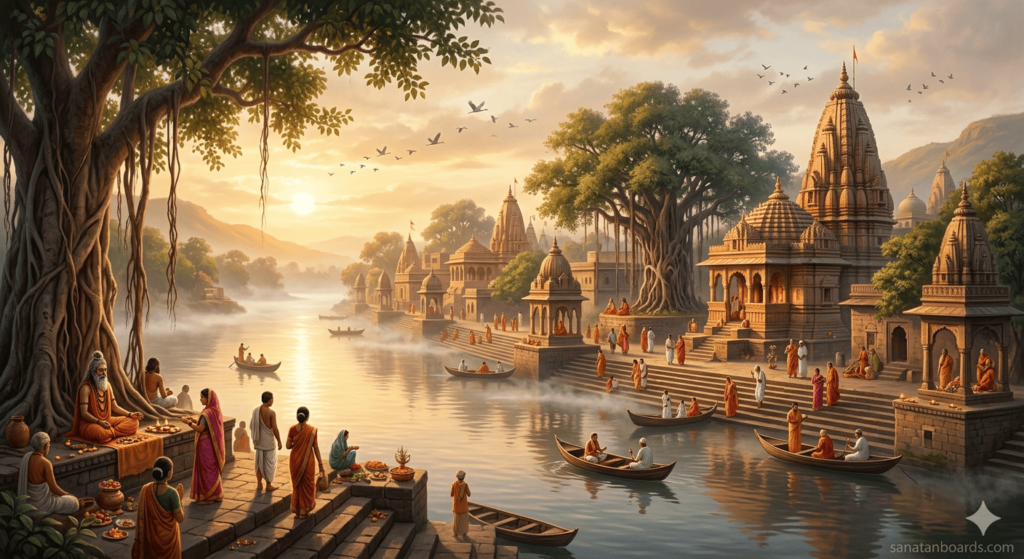
What Is Nasik Panchavati (Maharashtra) – Linked To Lord Rama ?
Panchavati is a sacred locality within Nashik that holds deep religious significance in Hindu tradition. It is widely recognized as the place where Lord Rama stayed during his 14-year exile, as narrated in the epic Ramayana. Because of this connection, Panchavati has become one of the most important pilgrimage destinations in India.
Geographically situated along the banks of the holy Godavari River, Panchavati is home to numerous temples and sacred sites. Some of the most well-known landmarks include ancient temples dedicated to Lord Rama, Sita, and Lakshmana, along with ghats where devotees perform rituals and prayers. The natural surroundings, combined with spiritual significance, make Panchavati a unique blend of mythology and geography.
Historically, Panchavati is believed to have been a dense forest region with five prominent banyan trees, which is how it derived its name. These trees were considered sacred and symbolized endurance, wisdom, and spiritual grounding. Over centuries, the area transformed into a structured pilgrimage site while still preserving its mythological essence.
Culturally, Panchavati plays a key role in shaping the religious identity of Nashik. It is also associated with several key events from the Ramayana, including episodes involving Sita Haran (the abduction of Sita). Because of this, it is deeply embedded in Hindu storytelling, rituals, and traditions.
Today, Panchavati stands as a living representation of ancient Indian spirituality. It is not just a historical or mythological site but a vibrant religious hub that continues to attract pilgrims, scholars, and tourists seeking spiritual enlightenment and cultural understanding.
Who Is Required Nasik Panchavati (Maharashtra) – Linked To Lord Rama ?
Panchavati is required for a wide range of individuals and groups due to its spiritual, cultural, historical, and educational importance. First and foremost, it is essential for devotees of Lord Rama who seek spiritual connection and wish to retrace the sacred journey described in the Ramayana. Pilgrims visit Panchavati to perform rituals, prayers, and religious ceremonies that are believed to bring peace and spiritual fulfillment.
Historians and researchers also require Panchavati as a significant study site. It offers insights into ancient Indian civilization, mythological geography, and the blending of folklore with real-world locations. Scholars of religion, culture, and archaeology often study Panchavati to understand how epics like the Ramayana influence cultural landscapes.
Tourists and cultural enthusiasts are another important group who require Panchavati for exploration and experiential learning. The site provides a deep cultural experience through its temples, river ghats, and storytelling traditions. It helps visitors understand Indian heritage and spiritual practices in a real-world context.
Students and educators also benefit from studying Panchavati as part of academic curricula related to history, religion, and cultural studies. It serves as a practical example of how mythology and geography intersect.
Additionally, spiritual seekers and meditation practitioners require Panchavati for its peaceful environment and divine atmosphere. The presence of sacred spaces along the Godavari River supports reflection, meditation, and inner growth.
Thus, Panchavati is required not only for religious purposes but also for educational, cultural, and spiritual development across multiple disciplines and communities.
When Nasik Panchavati (Maharashtra) – Linked To Lord Rama Is Required ?
Panchavati is required at different times depending on religious, cultural, and seasonal contexts. One of the most important times is during Hindu festivals such as Ram Navami, which celebrates the birth of Lord Rama. During this period, thousands of devotees visit Panchavati to participate in prayers, processions, and rituals. The spiritual energy of the place is believed to be at its peak during such occasions.
Another significant time is during pilgrimage seasons, especially in the cooler months between October and March. This period is ideal for travel and exploration, making it the most preferred time for tourists and devotees. The climate during this time enhances the experience of visiting temples, ghats, and sacred sites.
Panchavati is also required during personal religious milestones such as ancestral rituals (shraddha), spiritual vows, and life ceremonies. Many devotees visit the ghats of the Godavari River in Panchavati to perform these rituals, believing it brings blessings and peace to their ancestors.
From an academic perspective, Panchavati is required throughout the year for research, field studies, and cultural documentation. Historians, students, and researchers often visit the site at different times to observe rituals, architecture, and local traditions in various seasons.
It is also required during spiritual retreats and meditation periods when individuals seek peace, reflection, and detachment from daily life. The calm and sacred environment of Panchavati makes it suitable for inner healing and spiritual growth at any time of the year.
Furthermore, during tourism peak seasons and cultural festivals organized by local authorities, Panchavati becomes a center of attraction for visitors from across India and abroad. These events help preserve and promote cultural heritage.
Thus, Panchavati is required not only at fixed religious times but also throughout the year for spiritual, cultural, educational, and personal development purposes. Its relevance remains constant regardless of time, making it a timeless sacred destination.
Where Nasik Panchavati (Maharashtra) – Linked To Lord Rama Is Required ?
Nashik is located in the northwestern region of Maharashtra and serves as a major cultural and religious hub. Within this city lies Panchavati, which is specifically required in areas associated with pilgrimage, religious tourism, and cultural heritage preservation.
Geographically, Panchavati is required along the banks of the Godavari River, which is one of the most sacred rivers in Hindu tradition. The riverbanks serve as important locations for rituals, bathing ceremonies, and religious offerings. The presence of ghats and temples makes this area a central point for spiritual activities.
From a religious perspective, Panchavati is required in Hindu pilgrimage circuits across India. It is often included in travel routes that connect other sacred cities and temples. Devotees of Lord Rama specifically include Panchavati in their spiritual journey as it represents an important phase of the Ramayana narrative.
Culturally, Panchavati is required in Maharashtra’s heritage tourism map. It attracts visitors from different states and countries who wish to experience India’s mythological history. It is also required in educational tours organized by schools and universities studying Indian culture and ancient literature.
Administratively, the area is required for heritage conservation and tourism development. Government and cultural organizations focus on maintaining temples, ghats, and historical structures to preserve its authenticity and spiritual significance.
Spiritually, Panchavati is required wherever individuals seek peace, devotion, and connection with divine stories. It serves as a symbolic space where mythology meets real geography, making it relevant in both physical and spiritual landscapes.
Thus, Panchavati is required in religious circuits, tourism maps, cultural studies, and spiritual journeys, making it a multidimensional sacred location.
How Nasik Panchavati (Maharashtra) – Linked To Lord Rama Is Required ?
Panchavati is considered “required” in different contexts because of its religious, cultural, educational, and socio-economic importance. The idea of its requirement mainly comes from its deep association with Lord Rama and its role as a living heritage site within Nashik.
From a religious perspective, Panchavati is required for devotees who follow the Ramayana tradition. It is believed to be the sacred place where Lord Rama, along with Sita and Lakshmana, stayed during their exile. Because of this belief, it becomes essential for pilgrimage activities, rituals, prayers, and spiritual practices. Devotees visit to connect with divine history and experience spiritual peace.
From a cultural and traditional perspective, Panchavati is required to preserve ancient Indian heritage. It helps maintain stories, rituals, and values passed down through generations. Festivals, temple traditions, and river rituals along the Godavari River continue to keep this cultural identity alive.
From an educational and research perspective, Panchavati is required as a real-world case study for students of history, archaeology, religious studies, and anthropology. It helps researchers understand how mythology influences geography, society, and cultural development.
From a tourism and economic perspective, Panchavati is required because it supports local livelihoods. Pilgrims and tourists contribute to the economy of Nashik through hotels, transport, food services, and local businesses.
From a spiritual and personal development perspective, it is required for meditation, reflection, and inner peace. Many people visit seeking mental calmness and spiritual growth in a sacred environment.
Thus, Panchavati is “required” not as a necessity for survival, but as a vital cultural, spiritual, and historical space that continues to shape religious belief, education, tourism, and identity in India.

Case Study On Nasik Panchavati (Maharashtra) – Linked To Lord Rama
Panchavati in Nashik offers a rich case study in the integration of mythology, heritage tourism, and cultural sustainability. The site is deeply rooted in the narrative of Lord Rama and demonstrates how ancient epics can influence modern geography and socio-economic development.
One of the key aspects of this case study is religious tourism management. Panchavati attracts a large number of pilgrims throughout the year, especially during festivals like Ram Navami. The influx of visitors creates both opportunities and challenges. On one hand, it boosts the local economy through tourism-related activities such as lodging, transport, and food services. On the other hand, it requires effective crowd management, sanitation, and infrastructure planning.
Another aspect is cultural preservation. Panchavati contains temples, ghats, and sacred spaces that must be preserved to maintain historical authenticity. Authorities and local communities work together to restore structures, manage environmental impact, and protect the spiritual atmosphere of the region.
Environmental sustainability is also a key part of the case study. The Godavari River plays a central role in rituals and daily activities. However, increasing tourism has raised concerns about pollution and ecological balance. Efforts have been made to improve cleanliness drives, waste management systems, and awareness campaigns to protect the river ecosystem.
From an academic perspective, Panchavati serves as a field study site for historians, anthropologists, and religious scholars. It provides real-world evidence of how mythology shapes cultural identity and geography. Students and researchers analyze rituals, architecture, and oral traditions to understand the continuity of ancient practices.
Economically, Panchavati contributes significantly to Nashik’s tourism industry. Small businesses, guides, and local artisans benefit from the steady flow of visitors. This demonstrates how heritage sites can support sustainable local economies when managed properly.
Socially, Panchavati fosters community engagement. Local residents participate in festivals, temple activities, and cultural programs, strengthening social cohesion and shared identity.
In conclusion, Panchavati represents a successful yet challenging example of balancing heritage conservation, tourism development, and environmental sustainability. It highlights the importance of integrating cultural values with modern infrastructure planning.
White Paper On Nasik Panchavati (Maharashtra) – Linked To Lord Rama
Panchavati in Nashik is a critical heritage and pilgrimage site that represents the intersection of mythology, cultural identity, and socio-economic development. Rooted in the epic narrative of Lord Rama, it serves as both a spiritual destination and a case of sustainable heritage management.
The primary objective of this white paper is to analyze Panchavati as a multi-dimensional heritage ecosystem. It includes religious significance, tourism impact, environmental sustainability, and cultural preservation. The site attracts millions of visitors annually, making it one of the most important pilgrimage destinations in India.
From a heritage perspective, Panchavati requires continuous conservation efforts. Ancient temples and ghats must be maintained to preserve architectural authenticity. Restoration projects must ensure that modern interventions do not compromise historical integrity.
Tourism development is another critical dimension. Panchavati’s popularity drives economic growth in Nashik. However, unmanaged tourism can lead to overcrowding and environmental degradation. Therefore, structured tourism policies, visitor management systems, and digital ticketing solutions are recommended.
Environmental concerns, especially related to the Godavari River, require urgent attention. Waste disposal, water pollution, and seasonal crowding pose threats to ecological balance. Sustainable riverfront management, strict sanitation protocols, and public awareness campaigns are essential for long-term preservation.
Culturally, Panchavati plays a vital role in preserving intangible heritage such as rituals, oral traditions, and festivals associated with Lord Rama. These cultural expressions must be documented and promoted through educational programs and digital archives.
From a governance perspective, collaboration between government bodies, local communities, and tourism authorities is necessary. Integrated heritage management frameworks should be developed to balance religious significance with modern infrastructure needs.
Technology can also play a role in enhancing visitor experience. Digital guides, virtual tours, and mobile applications can help manage crowd flow and provide educational content without physically stressing the site.
Economically, Panchavati supports local livelihoods through tourism-related industries. Policies should ensure equitable distribution of tourism revenue and support small businesses and artisans.
In conclusion, Panchavati represents a living heritage system that requires a balanced approach between preservation and modernization. #Sanatanboardsinvasai Sustainable development strategies are essential to ensure that its spiritual and cultural legacy continues for future generations.\
Industry Application On Nasik Panchavati (Maharashtra) – Linked To Lord Rama
Panchavati plays an important role not only in religion and culture but also in multiple modern industries. Its connection with heritage, pilgrimage, and tourism makes it a valuable location for economic, educational, and technological development in Nashik.
1. Tourism and Hospitality Industry
Panchavati is a major pilgrimage destination, attracting millions of visitors every year. This directly supports:
- Hotels, lodges, and guest houses
- Travel agencies and tour operators
- Local transport services (taxis, buses, auto-rickshaws)
- Food and restaurant businesses
Religious tourism linked to Lord Rama’s exile story significantly boosts seasonal and year-round income in Nashik.
2. Heritage and Cultural Conservation Industry
Panchavati is important for maintaining ancient temples, ghats, and sacred spaces. This creates opportunities for:
- Archaeological restoration projects
- Temple renovation and stone conservation work
- Cultural heritage documentation
- Government heritage protection programs
Experts in architecture and conservation use it as a live model for preserving historical religious sites.
3. Education and Research Industry
Panchavati is widely used in academic fields such as:
- History and archaeology
- Religious and cultural studies
- Anthropology and sociology
- Mythology-based geography research
Students and researchers study its connection with the Ramayana and Lord Rama to understand the relationship between mythology and real-world locations.
4. Digital Technology Industry
Modern technology is increasingly applied to heritage sites like Panchavati:
- Virtual tourism (3D temple and ghat walkthroughs)
- Mobile apps for pilgrimage guidance
- Digital mapping of sacred routes
- Online storytelling and educational platforms
This helps global audiences experience the site remotely.
5. Environmental Management Industry
Since Panchavati is located along the Godavari River, it is important for:
- River cleaning and pollution control projects
- Waste management systems during festivals
- Sustainable tourism planning
- Eco-friendly infrastructure development
These initiatives protect the sacred river ecosystem.
6. Local Economy and Handicrafts Industry
Panchavati supports small-scale industries such as:
- Religious souvenir production
- Handicrafts and traditional items
- Flower and offering vendors
- Local markets and street businesses
Pilgrimage activity creates continuous income opportunities for local communities.
Conclusion
Panchavati is not only a spiritual site linked to Lord Rama but also a multi-industry hub supporting tourism, education, conservation, #Sanatanboardsinmumbai digital innovation, and local economic growth in Nashik.
source : Safar Aur Swaad
ASK FAQ
1. What is Panchavati in Nashik famous for?
Panchavati in Nashik is famous for its connection with Lord Rama’s exile in the Ramayana and its sacred temples along the Godavari River.
2. Why is Panchavati important in Hindu mythology?
Panchavati is important because it is believed to be the place where Lord Rama, Sita, and Lakshmana stayed during their 14-year exile.
3. Where is Panchavati located in Maharashtra?
Panchavati is located in Nashik city in Maharashtra, on the banks of the holy Godavari River.
4. What are the main attractions in Panchavati Nashik?
The main attractions include ancient temples, Ramkund, Sita Gufa, and sacred ghats connected to Ramayana history.
5. How does Panchavati support tourism in Nashik?
Panchavati attracts pilgrims and tourists, boosting local hotels, transport, markets, and religious tourism economy in Nashik.
Table of Contents
Disclaimer: This content is intended solely for educational, informational, and knowledge-sharing purposes. It is based on traditional beliefs, cultural references, and commonly known mythological narratives associated with the subject. It does not aim to verify, confirm, or challenge any religious, historical, or cultural beliefs. Readers are encouraged to interpret the information in a thoughtful and independent manner, and it should be used only for academic learning, research, or general awareness purposes.