
SEETHA AMMAN TEMPLE (SRI LANKA)
Seetha Amman Temple is one of the most revered Hindu temples in Sri Lanka, deeply connected to the ancient Indian epic, the Ramayana. Located in the cool, misty hills of Nuwara Eliya, the temple stands as a spiritual and cultural landmark that attracts devotees, historians, and travelers alike. Its significance lies in the belief that this is the very place where Sita was held captive by Ravana.
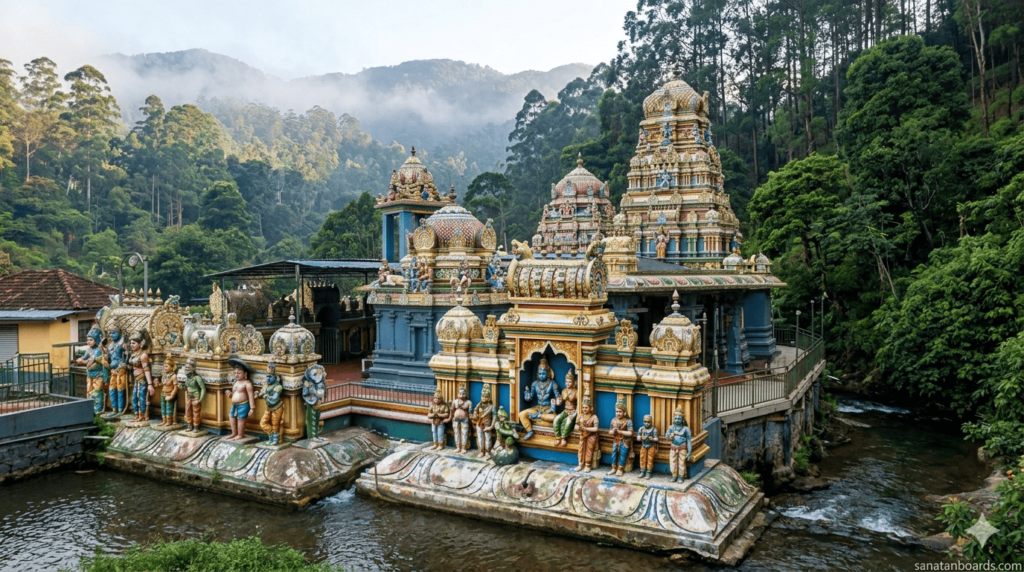
The temple is surrounded by lush greenery, flowing streams, and scenic landscapes that enhance its spiritual atmosphere. A small stream nearby is believed to be where Sita bathed and stones in the river are said to bear marks associated with Hanuman. These elements contribute to the temple’s mythical aura, making it a site where legend and geography intertwine.
Architecturally, the temple features traditional South Indian Dravidian style with colorful sculptures depicting scenes from the Ramayana. Inside, idols of Sita, Lord Rama, and Lakshmana are worshipped with great devotion. Daily rituals, prayers, and festivals are conducted, reflecting the temple’s ongoing religious importance.
Seetha Amman Temple is not only a place of worship but also a symbol of faith, resilience, and devotion. It serves as a bridge between mythology and reality, preserving centuries-old beliefs while continuing to inspire modern-day pilgrims. Its role in promoting cultural heritage and spiritual tourism in Sri Lanka makes it a unique and significant destination.
What Is Seetha Amman Temple (Sri Lanka) ?
Seetha Amman Temple is a Hindu temple believed to mark the location where Sita was kept during her captivity in the Ramayana. It is considered one of the most important Ramayana-related sites outside India, forming part of a larger spiritual trail that traces events from the epic across Sri Lanka.
The temple stands as a physical representation of mythological history. According to tradition, Sita was brought to Lanka by Ravana and kept in a secluded area known as Ashoka Vatika. The present temple is believed to be located at or near this legendary garden. The surrounding environment—with dense forests, hills, and water streams—matches descriptions from the epic, reinforcing the belief among devotees.
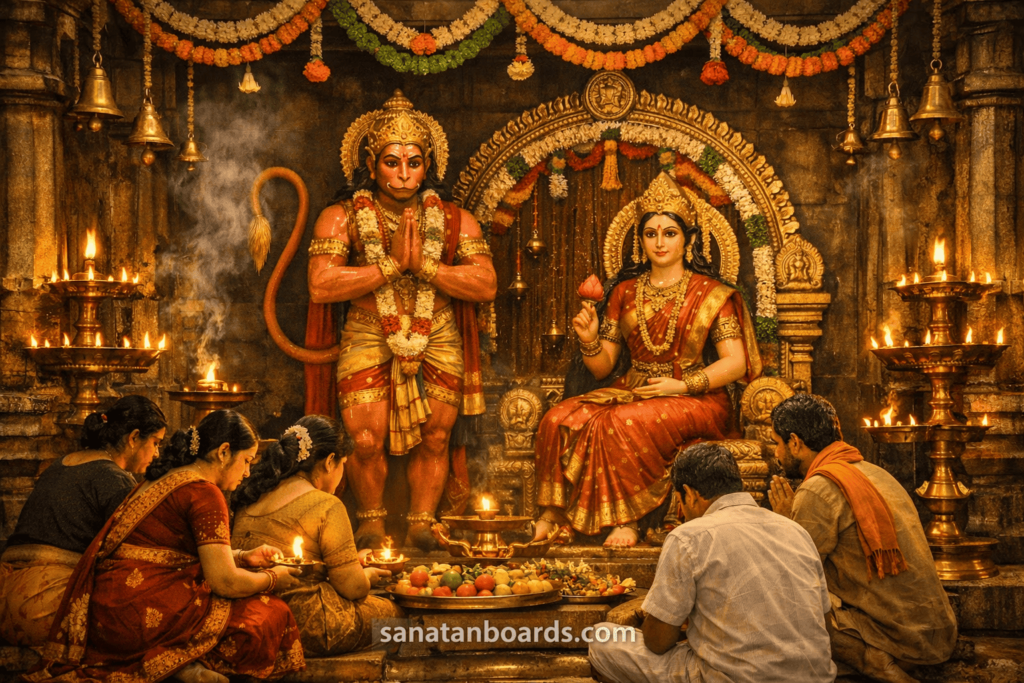
Inside the temple, statues of Rama, Sita, and Lakshmana are prominently placed, symbolizing divine unity and righteousness. The temple also features carvings and murals depicting scenes from the Ramayana, serving both religious and educational purposes. Visitors often engage in prayer, meditation, and rituals seeking blessings for peace, strength, and devotion.
The temple is also a major attraction for Ramayana tourism, a niche travel segment that connects various mythological sites across Sri Lanka. Pilgrims from India and other countries visit the temple to experience a deeper connection with the epic’s narrative. Cultural events and festivals, especially those related to Rama and Sita, are celebrated with great enthusiasm.
Who Is Required Seetha Amman Temple (Sri Lanka) ?
Seetha Amman Temple is significant for a wide range of individuals and communities, each finding unique meaning and relevance in its existence. Primarily, it holds immense importance for Hindu devotees who revere Sita as an embodiment of purity, devotion, and resilience. For them, visiting the temple is an act of faith and spiritual fulfillment.
Pilgrims following the Ramayana tradition consider the temple a must-visit destination. It allows them to connect deeply with the events of the epic, transforming a literary narrative into a tangible experience. Spiritual seekers also visit the temple to meditate and find inner peace in its tranquil surroundings.
Historians and researchers are another group for whom the temple is relevant. While the Ramayana is a mythological text, sites like Seetha Amman Temple provide cultural and geographical contexts that are valuable for study. Anthropologists and scholars interested in religious traditions and folklore find the temple a rich source of insight.
Tourists and travel enthusiasts are equally drawn to the temple, not just for its religious significance but also for its scenic beauty. The cool climate of Nuwara Eliya and the temple’s picturesque setting make it an attractive destination for nature lovers.
Cultural organizations and governments also recognize the temple’s importance. It plays a role in promoting tourism and preserving heritage. Educational institutions sometimes include such sites in their curriculum to teach students about mythology, culture, and history.
When Seetha Amman Temple (Sri Lanka) Is Required ?
The relevance of Seetha Amman Temple depends on both spiritual timing and practical contexts. For devotees, the temple is especially significant during religious festivals associated with the Ramayana, such as Rama Navami. During these times, special prayers and rituals are conducted, drawing large numbers of pilgrims.
The temple is also important during personal milestones or challenges. Many individuals visit seeking blessings for marriage, health, or success. It becomes a place of solace during difficult times, offering spiritual reassurance and hope.
From a tourism perspective, the temple is most frequently visited during Sri Lanka’s peak travel seasons. The pleasant weather in Nuwara Eliya makes it accessible and enjoyable for visitors. Travel planners often include the temple in Ramayana tour packages, making it “required” in curated itineraries.
Academically, the temple becomes relevant during studies related to mythology, religion, or South Asian culture. Students and researchers may visit as part of fieldwork or educational tours.
Culturally, the temple is required during events that promote heritage and tradition. It serves as a focal point for preserving and showcasing ancient narratives, ensuring that they are passed on to future generations.
Thus, the temple is “required” at different times depending on spiritual needs, travel plans, academic pursuits, and cultural activities. Its relevance is continuous, adapting to the context in which it is approached.
Where Seetha Amman Temple (Sri Lanka) Is Required?
Seetha Amman Temple is located in Nuwara Eliya, a central highland region of Sri Lanka known for its cool climate and lush landscapes. Its geographical setting plays a crucial role in its significance. The temple is situated near a stream and surrounded by dense vegetation, aligning with descriptions from the Ramayana.
The location is part of a broader network of Ramayana sites across Sri Lanka. These include places believed to be associated with Ravana’s kingdom and Sita’s journey. As such, the temple is “required” within this geographical narrative, serving as a key point of reference.
In tourism, the temple is included in travel circuits that cover cultural, historical, and natural attractions. It is often paired with visits to tea plantations, waterfalls, and other scenic spots in Nuwara Eliya.
From a spiritual geography perspective, the temple is considered a sacred space. Its location enhances its sanctity, as natural elements like water and forests are often associated with divine presence in Hindu belief systems.
Educationally, the temple’s location provides context for understanding how mythology is tied to real-world geography. It helps bridge the gap between narrative and place.
Therefore, the temple is “required” in specific geographical, cultural, and spiritual contexts, making its location integral to its identity and significance.
How Seetha Amman Temple (Sri Lanka) Is Required ?
The importance of Seetha Amman Temple is realized through various functions and roles it performs. Spiritually, it serves as a place of worship where rituals, prayers, and offerings are conducted. Devotees engage in acts of devotion that reinforce their faith and connection to the divine.
Culturally, the temple preserves and promotes the Ramayana narrative. Through its architecture, sculptures, and rituals, it keeps ancient traditions alive. This cultural preservation is essential for maintaining identity and continuity.
Economically, the temple contributes to tourism. It attracts visitors from different parts of the world, supporting local businesses such as hotels, guides, and transport services. This economic role highlights how religious sites can also drive development.
Educationally, the temple provides a platform for learning about mythology, history, and culture. It offers a real-world context for abstract narratives, making them more accessible and engaging.
Socially, the temple acts as a gathering place for communities. Festivals and events bring people together, fostering unity and shared identity.
Case Study On Seetha Amman Temple (Sri Lanka)
Seetha Amman Temple presents a compelling case study that illustrates how mythology, religion, tourism, and local development intersect in a meaningful way. Situated in the scenic highlands of Nuwara Eliya, the temple is widely associated with the Ramayana, particularly the episode involving Sita and Ravana. This association has transformed the temple from a regional religious site into a globally recognized spiritual destination.
Historically, the temple’s importance is rooted not in archaeological confirmation but in cultural continuity and narrative alignment. Devotees believe that the surrounding area corresponds to Ashoka Vatika, the garden where Sita was held captive. The presence of a nearby stream and specific rock formations strengthens this belief, demonstrating how geography can reinforce mythology. This phenomenon is critical in understanding how intangible heritage becomes anchored in physical space.
From a tourism perspective, the temple is a central component of the Ramayana trail in Sri Lanka. Over the years, organized tourism initiatives have increased visitor numbers significantly, particularly from India. Travel agencies design itineraries that include multiple Ramayana-related sites, with Seetha Amman Temple serving as a focal point. This has led to improvements in infrastructure such as roads, signage, and visitor facilities.
Economically, the temple has contributed to the development of the local community. Increased footfall has created opportunities for small businesses, including shops, guides, and hospitality services. Employment generation in these sectors has improved livelihoods. However, this growth also introduces challenges, such as environmental degradation, overcrowding, and the commercialization of a sacred space.
Culturally, the temple plays a vital role in preserving and promoting traditions. Rituals, festivals, and storytelling practices keep the Ramayana narrative alive. The temple also serves as an educational site where visitors learn about Hindu mythology and Sri Lankan cultural history. This dual function of devotion and education enhances its significance.
The management of the temple involves balancing religious sanctity with tourism demands. Authorities and stakeholders must ensure that development does not compromise the spiritual atmosphere. Sustainable practices, such as waste management and controlled visitor flow, are essential for long-term preservation.
In conclusion, Seetha Amman Temple exemplifies how mythological heritage can drive tourism and economic growth while maintaining cultural identity. It highlights the importance of integrating development with preservation, making it a valuable case study in heritage management and sustainable tourism.
White Paper On Seetha Amman Temple (Sri Lanka)
Seetha Amman Temple represents a strategic cultural and economic asset with significant potential for sustainable development. As a site associated with the Ramayana, it attracts a diverse audience that includes pilgrims, tourists, researchers, and cultural enthusiasts. This diversity creates opportunities for growth while also requiring structured management.
One of the primary considerations is infrastructure development. Accessibility to the temple has improved over time, but further enhancements can elevate the visitor experience. Efficient transportation networks, well-maintained roads, and adequate parking facilities are essential. Additionally, the development of visitor centers can provide information, guidance, and educational resources.
Another critical aspect is environmental sustainability. The temple is located in a delicate ecological zone characterized by greenery and water bodies. Unregulated tourism can lead to pollution and habitat disruption. Therefore, implementing eco-friendly practices such as waste segregation, recycling, and controlled construction is necessary. Authorities must also enforce regulations to protect the natural surroundings.
Cultural preservation is equally important. The temple’s identity is deeply tied to the Ramayana narrative, and preserving this connection requires documentation and research. Collaboration with academic institutions can facilitate studies that explore the historical, cultural, and geographical aspects of the site. Educational programs and workshops can further promote awareness.
Digital transformation offers additional opportunities. Creating virtual tours, mobile applications, and online content can expand the temple’s reach to a global audience. Digital platforms can also provide information about rituals, history, and travel guidelines, enhancing accessibility and engagement.
Economic development is another key focus. The temple’s popularity can be leveraged to support local businesses and create employment opportunities. However, commercialization must be managed carefully to avoid compromising the temple’s sanctity. Policies should ensure that economic activities align with cultural values.
Stakeholder collaboration is essential for effective management. Government agencies, religious authorities, local communities, and tourism organizations #sanatanboardsinmumbai must work together to develop and implement strategies. Transparent governance and community involvement can ensure that development benefits all stakeholders.
Industry Application On Seetha Amman Temple (Sri Lanka)
Seetha Amman Temple demonstrates wide-ranging applications across multiple industries, making it more than just a religious site. Its influence extends into tourism, education, media, and cultural management, highlighting its versatility as a resource.
In the tourism industry, the temple is a cornerstone of Ramayana tourism. This niche segment focuses on locations associated with the epic, attracting visitors who seek spiritual and cultural experiences. Travel agencies design comprehensive packages that include transportation, accommodation, and guided tours. The temple’s inclusion in these itineraries enhances its visibility and economic value.
The hospitality industry benefits significantly from the influx of tourists. Hotels, guesthouses, and restaurants in Nuwara Eliya experience increased demand. This growth supports local employment and encourages investment in infrastructure. However, maintaining quality and sustainability is crucial to ensure long-term success.
In education, the temple serves as a practical example for studying mythology, history, and cultural geography. Students and researchers can analyze how narratives influence real-world locations. Field visits and case studies provide hands-on learning experiences that go beyond theoretical knowledge.
The media and entertainment industry can also utilize the temple as a source of inspiration. Documentaries, films, and digital content can explore its history, mythology, and cultural significance. Such content not only educates audiences but also promotes the temple as a tourist destination.
Cultural management is another area where the temple has significant applications. It serves as a model for preserving heritage while accommodating modern demands. Professionals in this field can study its management practices to develop strategies for other heritage sites.
The temple also has potential in the digital economy. Online platforms can be used to promote virtual tourism, allowing people to explore the site remotely. This is particularly relevant in situations where physical travel is limited. Digital content can also enhance engagement and awareness.
Additionally, the temple contributes to cross-cultural exchange. Visitors from different countries bring diverse perspectives, fostering mutual understanding and appreciation. This cultural interaction enriches both visitors and the local community.
In conclusion, Seetha Amman Temple’s applications extend across various industries, making it a valuable asset beyond its धार्मिक significance. Its ability to support tourism, #sanatanboardsinindia education, media, and cultural management demonstrates its multifaceted importance in a modern context.
source : Travels Sri Lanka
ASK FAQ
1. What is Seetha Amman Temple famous for?
Seetha Amman Temple is famous for its connection to the Ramayana, where it is believed that Sita was held captive by Ravana.
2. Where is Seetha Amman Temple located?
Seetha Amman Temple is located in Nuwara Eliya, a scenic hill region known for its cool climate and natural beauty.
3. Why do people visit Seetha Amman Temple?
People visit for religious devotion, to explore Ramayana-related history, and to experience the peaceful and spiritual environment.
4. Is Seetha Amman Temple part of Ramayana tourism?
Yes, Seetha Amman Temple is a key site in Ramayana tourism, attracting pilgrims and travelers interested in epic-based heritage locations.
5. What can visitors see at Seetha Amman Temple?
Visitors can see idols of Rama, Sita, and Lakshmana, colorful carvings, and a nearby stream believed to be associated with Sita.
Table of Contents
Disclaimer
The information presented is based on cultural beliefs, traditional narratives, and commonly accepted interpretations associated with Seetha Amman Temple (Sri Lanka). While efforts have been made to ensure accuracy, certain aspects are derived from mythology and may not have scientific or historical verification. This content is intended for educational and informational purposes only and should not be considered definitive historical evidence. Readers are encouraged to conduct further research and consult credible sources for deeper understanding. The interpretation of religious and cultural significance may vary among individuals and communities.