The Pallava Dynasty was one of the most significant South Indian dynasties that ruled parts of present-day Tamil Nadu between the 4th and 9th centuries CE. Among its most notable rulers were Mahendravarman I and his son Narasimhavarman I, who played crucial roles in shaping the political, cultural, and architectural history of South India.
Mahendravarman I was known for his patronage of art, architecture, and literature. He initiated the rock-cut temple architecture style, which later became a defining feature of Pallava art. He was also a scholar and is believed to have written plays in Sanskrit.
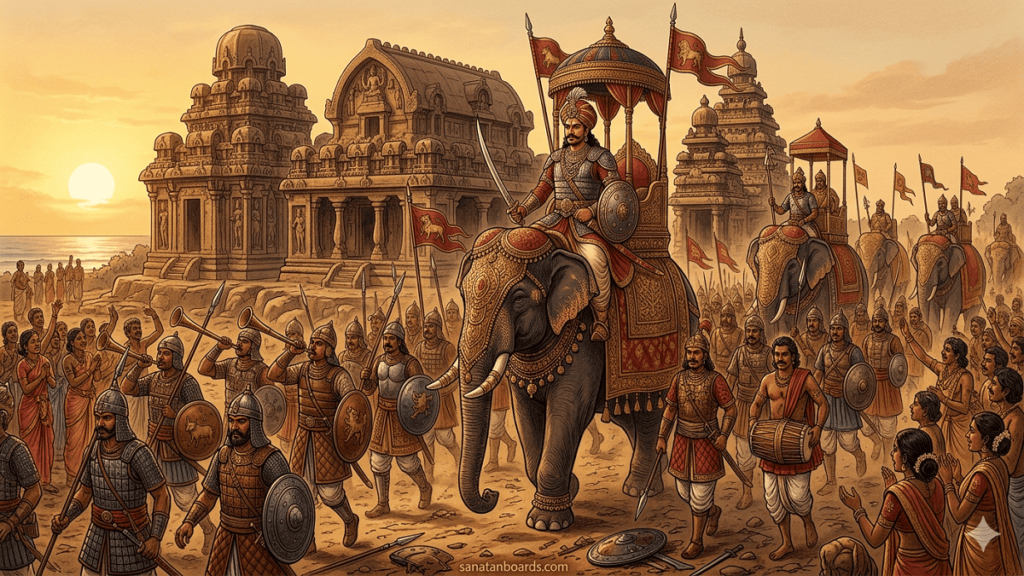
Narasimhavarman I, also known as Mamalla, expanded the Pallava kingdom and is famous for defeating the Chalukya king Pulakesin II. His reign marked the height of Pallava power. He also contributed significantly to architecture, especially in the development of monuments at Mahabalipuram.
Together, these rulers laid a strong foundation for cultural advancement and military strength. Their contributions continue to be studied for educational and historical knowledge purposes, reflecting the richness of early Indian civilization.
What Is Pallava Dynasty – King Narasimhavarman I, Mahendravarman I ?
The Pallava Dynasty refers to an ancient South Indian ruling lineage that significantly influenced the political and cultural landscape of the region. Within this dynasty two important rulers—Mahendravarman I and Narasimhavarman I—stand out for their remarkable contributions.
Mahendravarman I was an innovative ruler who introduced rock-cut architecture in South India. He transformed cave temples into artistic and religious centers, blending spirituality with creativity. His reign marked the beginning of a cultural renaissance in the Pallava kingdom.
Narasimhavarman I, his successor, was both a powerful military leader and a patron of art. He strengthened the empire by defeating rival kingdoms, especially the Chalukyas. Under his rule, the Pallava Dynasty reached its peak in terms of power and influence. He is also credited with advancing the architectural wonders seen in Mahabalipuram, including monolithic temples and sculptures.
Together, these rulers symbolize the golden phase of the Pallava Dynasty. Their contributions in governance, warfare, religion, and architecture define what the Pallava Dynasty represents in Indian history. The term, therefore, refers not only to a ruling family but also to an era of artistic brilliance, military strength, and cultural development driven by visionary kings.
Who Is Required Pallava Dynasty – King Narasimhavarman I, Mahendravarman I ?
The study of the Pallava Dynasty, particularly rulers like Mahendravarman I and Narasimhavarman I, is important for a wide range of individuals and groups.
Firstly, students and scholars of history require knowledge about these rulers to understand the development of early South Indian civilizations. Their reigns provide insights into political administration, warfare strategies, and cultural evolution during ancient times.
Secondly, archaeologists and art historians find these kings significant due to their contributions to architecture. The rock-cut temples initiated by Mahendravarman I and the structural temples developed under Narasimhavarman I are essential subjects of study in Indian art history.
Thirdly, competitive exam aspirants (such as UPSC, SSC, and state-level exams) require knowledge about the Pallava Dynasty as it is a common topic in Indian history syllabi.
Additionally, general readers and enthusiasts of Indian heritage benefit from learning about these rulers. Their achievements highlight the richness of India’s past and inspire appreciation for cultural diversity.
Finally, educators and teachers require this knowledge to pass on historical awareness to future generations. Understanding these rulers helps explain how ancient leadership, innovation, and cultural patronage shaped modern Indian identity.
When Is Pallava Dynasty – King Narasimhavarman I, Mahendravarman I Required ?
The knowledge of the Pallava Dynasty and its rulers, especially Mahendravarman I and Narasimhavarman I, is required in various academic and practical contexts.
Primarily, this topic is required during school and college education, particularly in subjects like history and social studies. Students studying ancient and medieval Indian history encounter the Pallava Dynasty as a key chapter that explains regional powers and cultural development.
It is also required during preparation for competitive examinations such as UPSC, SSC, and other government exams. Questions related to South Indian dynasties, architecture, and historical conflicts often include references to these rulers.
In academic research, this topic is required when studying the evolution of temple architecture in India. Mahendravarman I’s introduction of rock-cut temples and Narasimhavarman I’s expansion of structural architecture are important milestones in Indian art history.
The topic is also relevant when studying cultural history. The Pallava period is known for advancements in literature, religion, and fine arts. Understanding this era helps in analyzing how culture evolved over time.
Furthermore, this knowledge is required during heritage conservation efforts. Historians and conservationists studying monuments like those in Mahabalipuram rely on information about these rulers to preserve historical accuracy.
In modern times, the topic is also relevant for tourism and cultural awareness. Tour guides, historians, and educators often refer to these rulers when explaining the significance of ancient monuments.
Where Is Pallava Dynasty – King Narasimhavarman I, Mahendravarman I Required ?
The relevance of the Pallava Dynasty and rulers like Mahendravarman I and Narasimhavarman I can be seen in various places and contexts.
Geographically, this topic is most significant in South India, especially in Tamil Nadu, where the Pallavas ruled. Important historical sites like Mahabalipuram showcase the architectural achievements of these rulers. These locations serve as living examples of Pallava art and culture.
In educational institutions such as schools, colleges, and universities, the study of the Pallava Dynasty is included in history curricula. Libraries and research centers also house important materials related to this topic.
Museums across India display artifacts, inscriptions, and sculptures from the Pallava period. These institutions help preserve and present the legacy of Mahendravarman I and Narasimhavarman I.
The topic is also relevant in academic conferences and seminars where historians discuss ancient Indian civilizations. It forms a key part of discussions on South Indian history and temple architecture.
In digital spaces, such as educational websites, online courses, and e-learning platforms, the Pallava Dynasty is widely covered. Students and researchers access this information globally.
Tourism sectors also rely on this knowledge. Tour guides at historical sites explain the contributions of these rulers to visitors, enhancing cultural understanding.
Thus, the relevance of the Pallava Dynasty is not limited to one place—it exists in physical locations like monuments and museums, as well as intellectual spaces like classrooms and research institutions.
How Is Pallava Dynasty – King Narasimhavarman I, Mahendravarman I Required ?
The study of the Pallava Dynasty, particularly Mahendravarman I and Narasimhavarman I, is required through various methods and approaches.
Firstly, it is studied through historical texts and inscriptions. Ancient records, stone inscriptions, and literary works provide valuable information about these rulers and their achievements.
Secondly, archaeology plays a major role. Excavations and studies of temples and monuments help historians understand the architectural advancements made during their reigns.
Thirdly, the topic is learned through visual observation. Visiting historical sites like Mahabalipuram allows individuals to directly experience Pallava architecture and artistry.
In modern education, digital learning platforms, documentaries, and online courses make this topic more accessible. Students can explore detailed analyses and visual representations of Pallava contributions.
Comparative study is another method. By comparing the Pallava Dynasty with other dynasties, students gain a deeper understanding of its unique features and significance.
Additionally, academic discussions, seminars, and research papers help in analyzing this topic critically. Scholars interpret historical data to provide new perspectives.
Finally, practical learning through tourism and heritage walks enhances understanding. Experiencing the monuments firsthand creates a deeper connection with history.
Case Study On Pallava Dynasty – King Narasimhavarman I, Mahendravarman I
The Pallava Dynasty represents a transformative period in South Indian history, and its progress can be best understood through the leadership of Mahendravarman I and his successor Narasimhavarman I. This case study examines how their governance, military strategies, and cultural patronage contributed to the rise and consolidation of Pallava power.
Mahendravarman I came to power during a time when the Pallava kingdom faced both internal challenges and external threats, particularly from the Chalukyas. Instead of relying solely on military expansion, he focused on strengthening the internal structure of the kingdom. His administrative approach emphasized stability, economic growth, and cultural development. One of his most remarkable contributions was the introduction of rock-cut architecture, which marked a turning point in South Indian temple design.
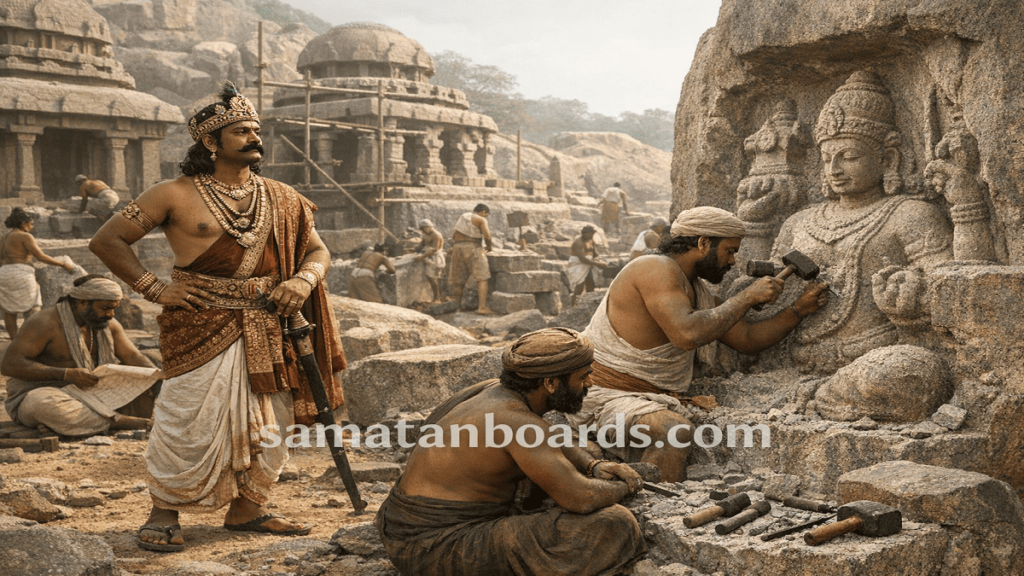
Under his rule, cave temples were carved out of solid rock, showcasing not only religious devotion but also advanced engineering skills. These temples served as centers of worship and also as symbols of political authority. Mahendravarman I was also known for his intellectual pursuits. He supported scholars, artists, and writers, contributing to a vibrant cultural environment. His reign laid a strong foundation for the future expansion of the dynasty.
The transition of power to Narasimhavarman I marked a new phase of growth and dominance. Unlike his father, Narasimhavarman I adopted a more aggressive military strategy. His most significant achievement was the defeat of the Chalukya king Pulakesin II. This victory was not just a military success but also a demonstration of strategic planning and leadership. It elevated the Pallava Dynasty to a position of supremacy in South India.
Narasimhavarman I also played a key role in expanding the geographical boundaries of the empire. His campaigns were carefully planned, and he ensured that newly acquired territories were integrated effectively into the administration. This ability to combine military strength with administrative efficiency was crucial to the long-term stability of the kingdom.
In addition to his military achievements, Narasimhavarman I continued his father’s legacy of promoting art and architecture. The development of monuments at Mahabalipuram stands as a testament to his vision. The site features monolithic temples, rock-cut caves, and intricate sculptures that reflect a high level of artistic sophistication. These structures not only served religious purposes but also acted as cultural symbols that reinforced the identity of the Pallava Dynasty.
Another important aspect of this case study is the role of religion. Both rulers supported Hinduism, particularly Shaivism, and used temple construction as a means of promoting religious practices. However, they also showed tolerance toward other religions, which contributed to social harmony within the kingdom.
The economic policies of these rulers also deserve attention. The construction of temples and monuments created employment opportunities and stimulated local economies. Trade and commerce were encouraged, and the kingdom maintained connections with other regions through maritime routes.
This case study highlights the importance of leadership in shaping the destiny of a kingdom. Mahendravarman I’s focus on cultural and administrative development created a strong base, while Narasimhavarman I’s military and architectural achievements expanded and solidified that base. Together, they represent a model of balanced governance that integrates culture, power, and innovation.
In conclusion, the success of the Pallava Dynasty during this period can be attributed to visionary leadership, strategic planning, and a #pallavadynastyinmumbai commitment to cultural growth. The legacy of these rulers continues to influence Indian history, architecture, #pallavadynastyinkarnataka and cultural studies.
White Paper On Pallava Dynasty – King Narasimhavarman I, Mahendravarman I
The Pallava Dynasty, particularly under the reigns of Mahendravarman I and Narasimhavarman I, represents a foundational period in the evolution of South Indian political systems, architectural innovation, and cultural identity. This white paper aims to provide a structured and analytical overview of their contributions and long-term significance.
Introduction
The Pallava Dynasty ruled a major portion of South India between the 4th and 9th centuries CE. The period of Mahendravarman I and Narasimhavarman I is often regarded as the golden phase of Pallava rule due to advancements in governance, military strength, and cultural achievements.
Governance and Administration
Mahendravarman I implemented policies that strengthened internal administration. His governance model focused on decentralization, allowing local authorities to manage regional affairs effectively. This system improved efficiency and ensured stability across the kingdom.
Narasimhavarman I built upon this administrative framework while also focusing on expansion. His ability to maintain control over newly acquired territories demonstrated the strength of the Pallava administrative system.
Military Strategy
The military strategies employed by these rulers were crucial to their success. Mahendravarman I adopted a defensive approach, focusing on protecting the kingdom from external threats. In contrast, Narasimhavarman I pursued an offensive strategy, leading successful campaigns against rival kingdoms.
His victory over Pulakesin II marked a turning point in South Indian history. It not only secured Pallava dominance but also demonstrated the effectiveness of strategic planning and resource management.
Architectural Innovation
One of the most significant contributions of the Pallava Dynasty was in the field of architecture. Mahendravarman I introduced rock-cut temples, which represented a shift from traditional construction methods. These temples were carved directly into rock formations, showcasing advanced engineering techniques.
Narasimhavarman I further developed this architectural style. The monuments at Mahabalipuram exemplify the transition from rock-cut to structural temples. These structures reflect a high level of artistic and technical skill.
Cultural and Religious Impact
The Pallava rulers were strong patrons of art, literature, and religion. They supported the growth of Sanskrit and Tamil literature and encouraged artistic expression. Their promotion of temple construction also played a key role in the spread of religious practices.
Economic Contributions
The construction of temples and monuments stimulated economic activity. These projects created employment opportunities and encouraged trade. The Pallava Dynasty also maintained maritime connections, which facilitated cultural and economic exchange with other regions.
Long-Term Impact
The contributions of Mahendravarman I and Narasimhavarman I had a lasting impact on Indian history. Their architectural innovations influenced later dynasties, including the Cholas. Their governance models and cultural policies also set standards for future rulers.
Conclusion
This white paper demonstrates that the success of the Pallava Dynasty was not accidental but the result of strategic leadership, #pallavadynastyinlucknow innovation, and cultural patronage. The legacy of these rulers continues to be relevant in modern studies of history, #pallavadynastyinjaipur architecture, and governance.
Industry Application On Pallava Dynasty – King Narasimhavarman I, Mahendravarman I
The historical contributions of the Pallava Dynasty, particularly under Mahendravarman I and Narasimhavarman I, extend beyond academic study and have practical applications in several modern industries. This section explores how their legacy influences contemporary fields such as architecture, tourism, education, management, and creative industries.
Architecture and Construction Industry
The innovations introduced by Mahendravarman I in rock-cut architecture have significant relevance in modern construction practices. These structures demonstrate durability, sustainability, and efficient use of natural resources. Architects today study these techniques to design eco-friendly buildings.
Narasimhavarman I’s contributions to structural temples further advanced architectural design. The monuments at Mahabalipuram serve as case examples for modern architects and engineers. The precision and artistry of these structures inspire contemporary design principles.
Tourism Industry
Historical sites associated with the Pallava Dynasty attract tourists from around the world. Locations like Mahabalipuram are major tourist destinations, contributing to local and national economies. The tourism industry benefits from guided tours, cultural programs, and heritage conservation efforts.
Tour operators and guides rely on historical knowledge of these rulers to provide meaningful experiences to visitors. This enhances cultural awareness and promotes heritage preservation.
Education Industry
The Pallava Dynasty is a key topic in history and art education. Schools, colleges, and universities include it in their curricula to teach students about ancient Indian civilization. Educational institutions also use digital tools such as virtual tours and online courses to make this topic more engaging.
Research institutions and scholars continue to study the contributions of these rulers, adding to the body of knowledge in history and archaeology.
Management and Leadership Studies
The leadership styles of Mahendravarman I and Narasimhavarman I offer valuable lessons for modern management. Mahendravarman I’s focus on stability and cultural development reflects the importance of building a strong foundation.
Narasimhavarman I’s strategic approach to expansion demonstrates the value of planning, risk management, and execution. Business leaders can draw parallels between these historical strategies and modern organizational practices.
Media and Entertainment Industry
The stories of the Pallava Dynasty provide rich material for films, documentaries, and literature. Historical narratives based on these rulers help in creating engaging content that educates and entertains audiences.
Visual representations of monuments and historical events also contribute to the preservation of cultural heritage.
Cultural and Heritage Industry
Organizations involved in heritage conservation use knowledge of the Pallava Dynasty to preserve monuments and historical sites. Conservation techniques are developed based on the original construction methods used during that period.
Cultural festivals and exhibitions also highlight the contributions of these rulers, promoting awareness and appreciation of Indian heritage.
Conclusion
The legacy of the Pallava Dynasty is not confined to history books. Its influence can be seen across multiple industries, from architecture and #sanatandharmaaccreditationboardsinmumbai tourism to education and management. The contributions of Mahendravarman I and Narasimhavarman I continue to inspire innovation, creativity, #sanatandharmaaccreditationboardsindelhi and cultural appreciation in the modern world.
source : MocomiKids
ASK FAQ
Who were Mahendravarman I and Narasimhavarman I?
They were important rulers of the Pallava Dynasty known for their contributions to architecture, military success, and cultural development in South India.
What is the significance of the Pallava Dynasty?
The Pallava Dynasty played a key role in developing South Indian art, temple architecture, and political systems between the 4th and 9th centuries CE.
What are the major achievements of Narasimhavarman I?
He defeated the Chalukya king Pulakesin II and developed famous monuments at Mahabalipuram.
What did Mahendravarman I contribute to architecture?
He introduced rock-cut temple architecture, which became a major style in South Indian temple construction.
Why is Mahabalipuram important in Pallava history?
Mahabalipuram is important because it showcases the architectural excellence and artistic achievements of the Pallava rulers.
Table of Contents
DISCLAIMER
This content is created strictly for educational learning and knowledge purposes only. The information provided is based on historical sources and interpretations that may vary among scholars and researchers. While efforts have been made to ensure accuracy and clarity, this content should not be considered as a definitive or authoritative historical record. Readers are encouraged to refer to academic books, research papers, and verified sources for deeper understanding. The purpose of this material is to enhance general awareness about the Pallava Dynasty and its rulers, including Mahendravarman I and Narasimhavarman I.