The MAURYA EMPIRE was one of the largest and most powerful empires in ancient Indian history, established by Chandragupta Maurya around 321 BCE. With the guidance of his mentor Chanakya, Chandragupta overthrew the Nanda dynasty and laid the foundation of a centralized political system.
The empire reached its peak under Ashoka, Chandragupta’s grandson. Ashoka is remembered for his transformation after the Kalinga War, which led him to adopt Buddhism and promote peace, morality, and welfare policies across his empire.
The Maurya Empire was known for its efficient administration, strong military, and economic prosperity. It introduced advanced governance systems, taxation methods, and infrastructure development such as roads and trade networks.
This topic is important for educational and knowledge purposes as it highlights leadership, governance, ethical transformation, and the evolution of political systems in ancient India. The contributions of Chandragupta and Ashoka continue to influence modern governance and moral philosophy.
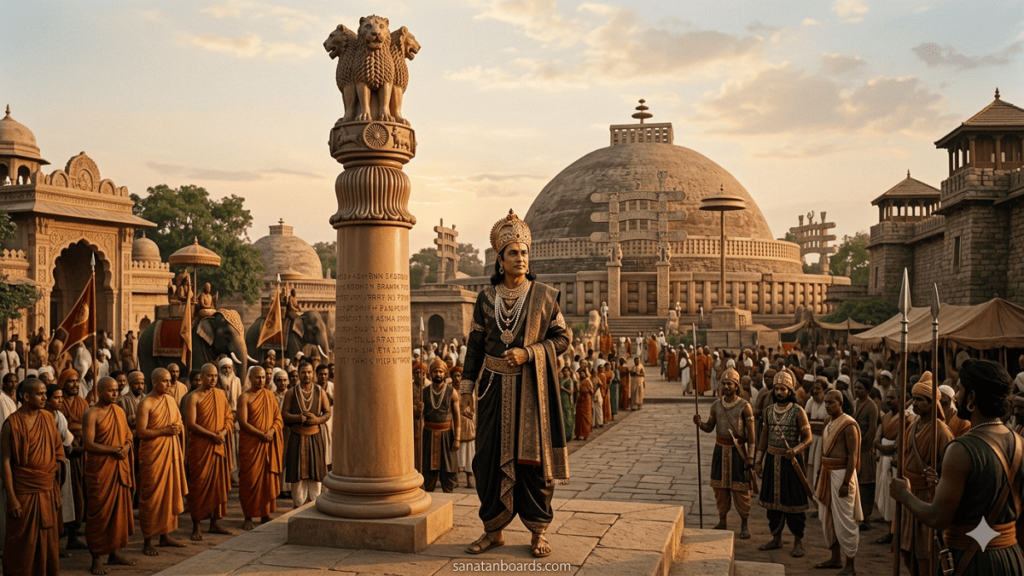
What Is Maurya Empire – Chandragupta Maurya & Ashoka ?
The Maurya Empire refers to a powerful ancient Indian dynasty that ruled a vast territory across the Indian subcontinent from the 4th to the 2nd century BCE. It represents one of the earliest examples of a unified political system in India.
Founded by Chandragupta Maurya, the empire marked the end of fragmented regional kingdoms and established centralized authority. His rule emphasized political stability, administrative organization, and territorial expansion. With the intellectual support of Chanakya, Chandragupta developed systems of governance that included taxation, law enforcement, and espionage.
Ashoka, one of the greatest rulers of this empire, redefined its identity. Initially known as a fierce conqueror, his outlook changed drastically after witnessing the destruction caused by the Kalinga War. He embraced Buddhist principles and promoted non-violence, compassion, and ethical governance.
The Maurya Empire is not just a political entity but also a symbol of transformation—from conquest to peace, and from power to moral responsibility. It highlights how leadership can evolve based on experience and reflection.
This topic also explains the foundations of administration, diplomacy, and cultural integration. It provides insight into how ancient rulers managed vast territories and diverse populations. The empire’s legacy is reflected in India’s cultural and political development.
Who Is Required In Maurya Empire – Emperor Chandragupta Maurya, Emperor Ashoka ?
The Maurya Empire is required to be understood through the contributions of key historical figures who played a major role in its foundation, expansion, and transformation. The most important personality associated with the Maurya Empire is Chandragupta Maurya. He is required in this topic because he established the empire around 321 BCE by overthrowing the Nanda dynasty. His leadership, determination, and strategic thinking helped in unifying a large part of the Indian subcontinent.
Another essential figure required in the Maurya Empire is Chanakya, also known as Kautilya. He was the mentor and advisor of Chandragupta Maurya. His knowledge of politics, economics, and administration played a crucial role in building the empire. His famous work, the Arthashastra, provides deep insights into governance, statecraft, and economic policies.
Bindusara, the son of Chandragupta Maurya, is also required in understanding the empire. He expanded the empire further into southern India and maintained political stability during his reign.
The most influential ruler of the Maurya Empire is Ashoka. He is required in this topic because of his transformation from a powerful conqueror to a promoter of peace and non-violence after the Kalinga War. Ashoka adopted Buddhism and spread its teachings across his empire and beyond.
In addition to these major figures, various ministers, governors, soldiers, and administrators are also required to understand how the empire functioned efficiently. They helped in managing different regions and ensured proper implementation of policies.
When Is Maurya Empire – Emperor Chandragupta Maurya, Emperor Ashoka Required ?
The Maurya Empire is required to be studied within a specific historical timeline, which spans from approximately 321 BCE to 185 BCE. This period is important because it marks the rise of one of the first centralized empires in ancient India. The beginning of this empire is associated with Chandragupta Maurya, who came to power around 321 BCE. This moment is required in history as it represents the end of fragmented regional kingdoms and the beginning of political unity.
The Maurya Empire is also required when studying the period after the campaigns of Alexander the Great. After his withdrawal from India, a power vacuum was created, which allowed Chandragupta Maurya to establish his rule. This makes the timeline significant in understanding shifts in political power.
The reign of Bindusara is required as it represents the phase of consolidation and expansion of the empire. However, the most important period is during the rule of Ashoka in the 3rd century BCE. A key event in this timeline is the Kalinga War around 261 BCE, which changed Ashoka’s approach to governance.
The Maurya Empire is also required in modern education systems. It is studied in schools, colleges, and competitive exams such as civil services. This period is important for understanding administration, leadership, and ethical transformation.
Additionally, the Maurya Empire is required in discussions about the development of political systems and governance models. It provides early examples of centralized administration and state control.
Therefore, the Maurya Empire is required both in its historical timeframe and in present-day academic contexts, making it an essential topic for learning and analysis.
Where Is Maurya Empire – Emperor Chandragupta Maurya, Emperor Ashoka Required ?
The Maurya Empire is required to be understood in terms of its geographical extent and influence. It covered a vast region across the Indian subcontinent, including present-day India, Pakistan, Bangladesh, and parts of Afghanistan. This wide geographical coverage makes it one of the largest empires in ancient Indian history.
The capital of the Maurya Empire was Pataliputra, located in present-day Bihar. This city served as the political and administrative center of the empire. Under Chandragupta Maurya, the empire began expanding from northern India and gradually spread to other regions.
During the reign of Ashoka, the empire reached its maximum extent. His rule covered almost the entire Indian subcontinent, except for some southern parts. This makes the Maurya Empire required in geographical and historical studies.
The “where” aspect is also required in understanding the spread of culture and religion. Ashoka played a significant role in spreading Buddhism beyond India to regions such as Sri Lanka, Central Asia, and Southeast Asia. This shows the cultural influence of the Maurya Empire.
In modern times, the Maurya Empire is required in academic institutions, museums, and archaeological research. Historical sites such as Ashokan pillars and inscriptions provide evidence of the empire’s existence and governance.
The empire is also required in global historical studies, as it demonstrates how ancient civilizations managed large territories and influenced neighboring regions.
How Is Maurya Empire – Emperor Chandragupta Maurya, Emperor Ashoka Required ?
The Maurya Empire is required to be studied to understand how effective governance, administration, and leadership were developed in ancient times. It provides one of the earliest examples of a well-organized and centralized political system.
Under Chandragupta Maurya, the empire established a strong administrative structure. The empire was divided into provinces, each governed by officials responsible for maintaining law and order. This system is required in understanding how large territories were managed efficiently.
The role of Chanakya is also important. His work, the Arthashastra, provides detailed guidelines on governance, taxation, diplomacy, and military strategy. These principles are required in studying political science and management.
The Maurya Empire is also required in understanding economic systems. It promoted agriculture, trade, and infrastructure development. Roads, irrigation systems, and trade routes were developed to support economic growth.
A major aspect of “how” the Maurya Empire is required is seen in the transformation of Ashoka after the Kalinga War. He adopted Buddhism and promoted values such as non-violence, compassion, and tolerance. His edicts, inscribed on rocks and pillars, communicated his policies to the people.
In modern contexts, the Maurya Empire is required in management studies, leadership training, and ethical governance. It provides lessons on decision-making, organization, and social responsibility.
Therefore, the Maurya Empire is required as a model for understanding how political power, administrative efficiency, and moral values can work together to build a successful society.
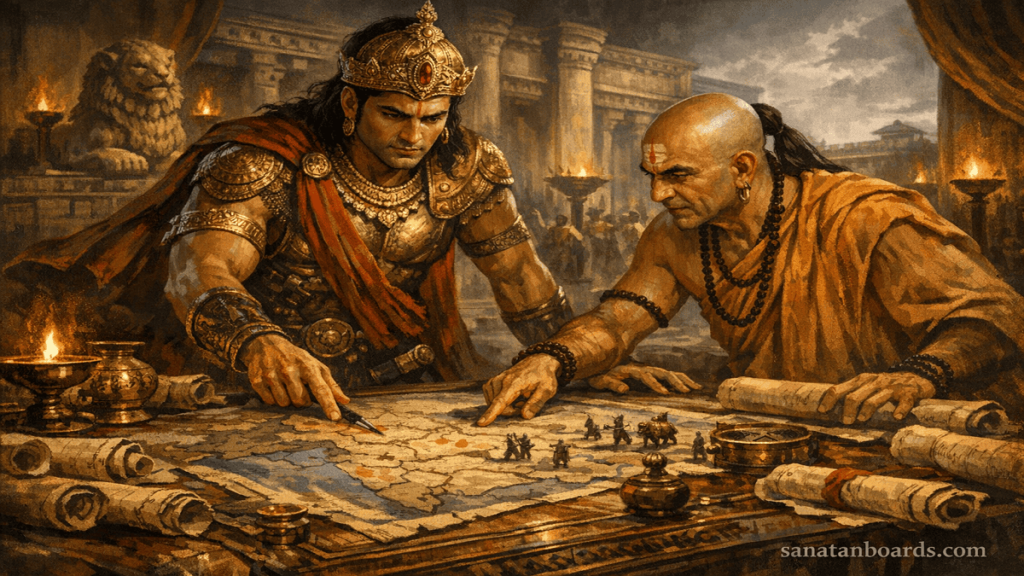
Case Study On Maurya Empire – Emperor Chandragupta Maurya, Emperor Ashoka
The Maurya Empire provides one of the most important historical case studies in leadership, governance, and transformation in ancient India. It demonstrates how strong vision, strategic planning, and ethical change can shape the course of an empire. The empire was founded by Chandragupta Maurya in 321 BCE and later reached its peak under Ashoka.
The case study begins with Chandragupta Maurya’s rise to power. At a time when India was divided into small kingdoms and political instability was common, Chandragupta, with the guidance of Chanakya, overthrew the Nanda dynasty. This phase highlights the importance of mentorship, planning and strategic execution. Chanakya’s deep understanding of politics and economics, as described in the Arthashastra, helped Chandragupta establish a centralized administrative system.
The governance model of the Maurya Empire was highly advanced. It included a well-organized bureaucracy, efficient tax collection, and a strong intelligence network. The empire was divided into provinces, each managed by officials responsible for maintaining law and order. This ensured stability across a vast territory. The administrative efficiency of the Maurya Empire serves as a strong example of early statecraft.
The second phase of the case study focuses on expansion and consolidation. Chandragupta and his successor Bindusara expanded the empire significantly. Trade, agriculture, and infrastructure were developed to support economic growth. Roads and communication systems played a key role in maintaining control over distant regions.
The most significant phase of this case study is the reign #mauryaempireinbihar of Ashoka. Initially known as a powerful and ambitious ruler, Ashoka expanded the empire further. However, the turning point came after the Kalinga War. The war caused massive destruction and loss of life, deeply affecting Ashoka.
This event led to a remarkable transformation in Ashoka’s leadership style. He abandoned the policy of conquest and adopted Buddhism. He began promoting non-violence, compassion, and ethical governance. His edicts, inscribed on pillars and rocks, communicated his policies and values to the people. This shift from military power to moral authority is one of the most unique aspects of the Maurya Empire.
The case study also highlights challenges faced by the empire. After Ashoka’s death, the empire began to decline due to weak leadership and administrative inefficiencies. This shows that sustainability of an empire depends not only on strong leaders but also on consistent governance systems.
White Paper On Maurya Empire – Emperor Chandragupta Maurya, Emperor Ashoka
Abstract
The Maurya Empire represents a foundational period in ancient Indian political history. This white paper analyzes its governance structure, administrative systems, economic policies, and ethical transformation under Ashoka.
Introduction
The Maurya Empire, established by Chandragupta Maurya, marked the beginning of centralized governance in India. It unified a large portion of the subcontinent and created a model for future political systems.
Governance Structure
The Maurya Empire was characterized by a centralized administrative system. The king held supreme authority, supported by ministers and advisors. Chanakya played a key role in shaping governance policies. His work, the Arthashastra, outlined principles of administration, taxation, and diplomacy.
The empire was divided into provinces, each governed by officials responsible for maintaining order and implementing policies. This hierarchical structure ensured efficient governance.
Economic Policies
The Maurya Empire had a strong economic foundation. Agriculture was the primary source of revenue, supported by irrigation systems. Trade was #mauryaempireinuttarpradesh encouraged through the development of roads and marketplaces. The state regulated economic activities and collected taxes to maintain stability.
Military Organization
A strong military was essential for the expansion and protection of the empire. Chandragupta Maurya maintained a large army, which helped in conquering territories and defending borders.
Ashoka’s Transformation
The reign of Ashoka introduced a new dimension to governance. After the Kalinga War, Ashoka adopted Buddhism and promoted ethical governance. His policies emphasized non-violence, religious tolerance, and public welfare.
Communication and Administration
Ashoka used inscriptions and edicts to communicate with his people. These inscriptions provide valuable historical information and reflect his commitment to transparency and accountability.
Decline of the Empire
The decline of the Maurya Empire began after Ashoka’s death. Weak successors and administrative challenges led to its eventual fall. This highlights the importance of sustainable governance systems.
Conclusion
The Maurya Empire provides a comprehensive #mauryaempireinworld model of governance that combines political strength with ethical leadership. Its legacy continues to influence modern political thought and #mauryaempireinindia aministrative practices.
Industry Application On Maurya Empire – Emperor Chandragupta Maurya, Emperor Ashoka
The Maurya Empire offers valuable insights that can be applied to modern industries, management practices, and organizational leadership. The principles developed during this period remain relevant in today’s business environment.
Leadership and Vision
The leadership of Chandragupta Maurya demonstrates the importance of vision and strategic planning. In modern industries, leaders must have a clear vision and the ability to execute plans effectively.
Role of Mentorship
The relationship between Chandragupta and Chanakya highlights the importance of mentorship. In corporate environments, mentors guide leaders in decision-making and strategy development.
Organizational Structure
The administrative system of the Maurya Empire can be compared to modern organizational structures. Clear roles, responsibilities, and hierarchy are essential for efficiency. Departments and managers in companies function similarly to provincial governors in the empire.
Strategic Management
Chanakya’s Arthashastra provides principles of strategy, risk management, and resource allocation. These concepts are directly applicable to business strategy and corporate governance.
Ethical Leadership
The transformation of Ashoka after the Kalinga War highlights the importance of ethics in leadership. Modern companies emphasize corporate social responsibility (CSR), sustainability, and ethical practices, which align with Ashoka’s principles.
Communication Systems
Ashoka’s use of edicts to communicate policies can be compared to modern corporate communication systems. Transparency and clear communication are essential for organizational success.
Crisis Management
Ashoka’s response to the Kalinga War serves as an example of crisis management. Instead of continuing conflict, he chose a path of peace and reform. Businesses can learn to adapt and change strategies during crises.
Sustainability and Growth
The Maurya Empire focused on long-term stability through infrastructure, trade, and welfare policies. Similarly, modern industries must focus on sustainable growth rather than short-term gains.
Conclusion
The Maurya Empire provides timeless#sanatandharmaaccreditationboardsinmumbai lessons for modern industries. Its principles of leadership, strategy, ethics, and organization can be applied to achieve success in today’s #sanatandharmaaccreditationboardsinvasai competitive environment.
source : GS History by Aadesh Singh
ASK FAQ
What was the Maurya Empire?
The Maurya Empire was one of the largest ancient Indian empires, founded by Chandragupta Maurya in 321 BCE. It unified most of the Indian subcontinent and introduced centralized governance, strong administration, and economic development.
Who was Chandragupta Maurya?
Chandragupta Maurya was the founder of the Maurya Empire. He established a powerful kingdom with the help of Chanakya and laid the foundation of a strong political system in ancient India.
Why is Ashoka important in the Maurya Empire?
Ashoka is important because he transformed the empire after the Kalinga War. He promoted Buddhism, peace, non-violence, and ethical governance across his empire.
When did the Maurya Empire exist?
The Maurya Empire existed from around 321 BCE to 185 BCE. It began with Chandragupta Maurya and reached its peak during the reign of Ashoka in the 3rd century BCE.
What are the main achievements of the Maurya Empire?
The Maurya Empire achieved political unity, strong administration, economic growth, and cultural development. It also spread Buddhism and introduced ethical governance under Ashoka.
Table of Contents
Disclaimer
This content is created strictly for educational and informational purposes only. It aims to enhance knowledge and understanding of the Maurya Empire and its historical significance.