
GOKARNA (KARNATAKA) – MAHABALESHWAR SHIVA TEMPLE
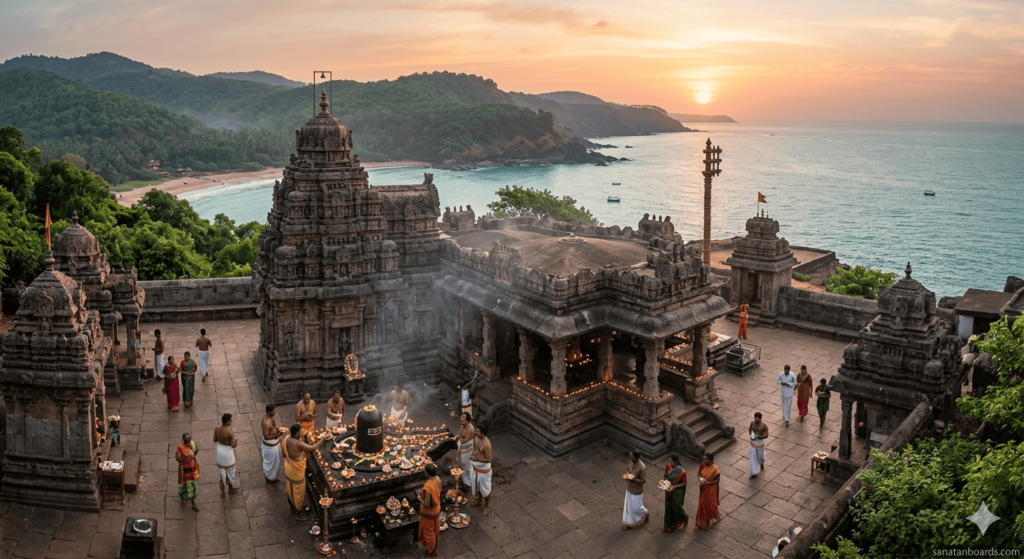
Mahabaleshwar Shiva Temple, Gokarna is one of the most sacred Hindu pilgrimage destinations located in the coastal town of Gokarna in Karnataka. It is deeply associated with Lord Shiva and is considered as important as the Jyotirlinga temples in India. The temple is situated near the Arabian Sea, which adds natural beauty and spiritual charm to its divine environment. According to Hindu belief, this temple houses the original “Atmalinga” of Lord Shiva, making it highly significant in Shaivism traditions.
Gokarna itself is a unique blend of spirituality and scenic coastal beauty. Devotees and tourists from across India and abroad visit this place not only for worship but also for peace, meditation, and cultural experience. The temple architecture reflects ancient Dravidian style built with stone structures that have survived for centuries.
The spiritual atmosphere of Mahabaleshwar Temple is peaceful yet powerful. The chants of “Om Namah Shivaya,” the rituals performed by priests, and the continuous flow of devotees create a divine energy. Unlike commercial tourist destinations Gokarna still maintains its traditional and spiritual identity.
This temple is not only a religious center but also a cultural heritage site that represents ancient Indian traditions, mythology, and devotion. It plays a major role in preserving Shaiva culture in South India. The combination of history, mythology, and natural surroundings makes it one of the most unique pilgrimage destinations in India.
What Is Gokarna (Karnataka) – Mahabaleshwar Shiva Temple ?
Mahabaleshwar Shiva Temple, Gokarna is a Hindu temple dedicated to Lord Shiva, located in the sacred town of Gokarna. It is believed to enshrine the Atmalinga, a divine symbol of Lord Shiva’s presence. The temple is one of the most important pilgrimage sites in South India and is often called the “Kashi of the South.”
The temple is part of Hindu mythology, where Ravana, the king of Lanka, is believed to have attempted to carry the Atmalinga to his kingdom. However, due to divine intervention, the lingam was placed in Gokarna and could not be moved again. This mythological story adds immense religious importance to the site.
The temple consists of a main sanctum where the Shiva Linga is worshipped. The rituals follow ancient Vedic traditions, and daily pujas are performed by trained priests. The temple also follows strict traditional customs, especially during festivals like Maha Shivaratri, when thousands of devotees gather.
Apart from religious significance, the temple is also a symbol of ancient Indian architecture. The stone carvings and structural design represent classical South Indian temple architecture. The temple environment is calm, surrounded by nature, hills, and coastal winds.
It is not just a place of worship but also a center of spiritual learning. Devotees believe that visiting this temple helps in purification of the soul and attainment of peace. The temple continues to attract saints, yogis, and spiritual seekers who come here for meditation and devotion.
Who Is Required Gokarna (Karnataka) – Mahabaleshwar Shiva Temple
Mahabaleshwar Shiva Temple, Gokarna is required for all devotees of Lord Shiva, spiritual seekers, historians, and cultural researchers. It holds special importance for people who follow Shaivism, one of the major traditions in Hinduism. Devotees who seek blessings, peace of mind, and spiritual growth often visit this temple.
It is also important for individuals who are going through emotional stress or searching for mental peace. Many people believe that visiting this temple helps in reducing negative energy and increasing positivity in life. Pilgrims often come here to perform rituals for ancestors and seek divine blessings.
Historians and researchers are also drawn to this temple due to its mythological and cultural significance. The legends of the Atmalinga and Ravana make it an important subject of study in Indian mythology and ancient traditions.
Tourists interested in Indian heritage, temple architecture, and coastal culture also find this place valuable. The temple provides insight into ancient Dravidian architectural style and traditional Hindu rituals.
In addition, yoga practitioners and meditation enthusiasts are attracted to Gokarna due to its peaceful environment. The combination of spirituality and natural beauty makes it ideal for inner reflection and self-discovery.
Thus, the temple is required not only for religious worship but also for cultural understanding, historical research, and spiritual well-being.
When Gokarna (Karnataka) – Mahabaleshwar Shiva Temple Is Required ?
Mahabaleshwar Shiva Temple, Gokarna is required during various religious, spiritual, and personal life situations. It is especially significant during Hindu festivals such as Maha Shivaratri, Shravan month, and Kartika month. During these times, devotees visit the temple in large numbers to perform special pujas and rituals dedicated to Lord Shiva.
It is also required when individuals are seeking blessings for important life events such as marriage, childbirth, career success, or recovery from illness. Many people visit the temple before starting new ventures or making major life decisions, believing that divine blessings will ensure success and protection.
The temple is also visited during ancestral rituals (pitru rituals), where devotees perform offerings for the peace of departed souls. It is believed that such rituals help in bringing spiritual balance and peace to family lineage.
On a personal level, the temple is required during emotional distress, anxiety, or spiritual confusion. Many individuals visit Gokarna to find peace of mind and reconnect with their inner self. The calm coastal environment and spiritual energy make it an ideal place for healing and meditation.
From a cultural perspective, it is required during pilgrimage tours and religious journeys across India. It is often included in temple circuits along with other major Shiva temples.
Thus, the temple becomes necessary not only at religious festivals but also at crucial emotional, spiritual, and cultural moments in life.
Where Gokarna (Karnataka) – Mahabaleshwar Shiva Temple Is Required ?
Mahabaleshwar Shiva Temple, Gokarna is required in the coastal town of Gokarna, located in the Uttara Kannada district of Karnataka, India. It is situated near the Arabian Sea, surrounded by beaches, hills, and natural landscapes that enhance its spiritual significance.
Geographically, the temple is placed in a sacred region that is believed to be one of the seven important pilgrimage towns in Hinduism. Its location near the western coastline makes it unique compared to other inland Shiva temples. The sea breeze, natural surroundings, and temple architecture together create a peaceful atmosphere.
It is required in the religious map of India as one of the most important Shiva worship centers. Many pilgrims include Gokarna in their travel route along with places like Murudeshwar and other coastal temples.
Culturally, it is required in Karnataka’s heritage identity. The temple plays a vital role in preserving ancient rituals, festivals, and traditions of South Indian Hindu culture.
Touristically, it is required in coastal tourism circuits. Visitors from around the world come to experience both spirituality and beach tourism in Gokarna. The temple acts as the central attraction of the town.
Thus, its “where” is not just a physical location but also a spiritual landmark that connects religion, geography, and culture.
How Gokarna (Karnataka) – Mahabaleshwar Shiva Temple Is Required ?
Mahabaleshwar Shiva Temple, Gokarna is required through structured rituals, devotion, and traditional practices followed by devotees and priests. Worship at the temple is performed through daily puja rituals, abhishekam (sacred bathing of Shiva Linga), and offerings like flowers, milk, and bilva leaves.
Devotees follow a disciplined process of entering the temple with respect, maintaining silence, and participating in prayers. The temple priests conduct rituals based on ancient Vedic scriptures, ensuring continuity of tradition.
It is also required through pilgrimage journeys. Devotees often travel long distances by foot, road, or train to reach Gokarna. Upon arrival, they perform rituals, take blessings, and meditate within the temple premises.
The temple is required in spiritual practice through meditation and chanting. Many seekers sit in nearby areas to practice yoga and spiritual reflection.
It is also maintained through community participation. Local priests, devotees, and temple authorities ensure its preservation, cleanliness, and ritual continuity.

Case Study On Gokarna (Karnataka) – Mahabaleshwar Shiva Temple
Ganges River is one of the most spiritually, culturally, and environmentally significant rivers in the world. Originating from the Gangotri Glacier in the Himalayas, it flows across northern and eastern India and finally merges into the Bay of Bengal. The river spans thousands of kilometers and supports one of the highest population densities on Earth.
Spiritual and Cultural Importance
In Hindu tradition, the Ganges is not just a river but a goddess known as Ganga Mata. It is believed that the river descended from heaven to Earth to purify humanity. Millions of devotees consider its waters sacred and believe that bathing in the river washes away sins and helps attain moksha (liberation from the cycle of rebirth).
Major pilgrimage centers like Varanasi, Haridwar, and Prayagraj are located along its banks. Rituals such as Ganga Aarti, cremation ceremonies, and holy dips are performed daily. Varanasi, in particular, is considered one of the oldest living cities in the world and is deeply connected with the spiritual identity of the river.
Economic and Social Role
The Ganges basin supports agriculture for nearly 40% of India’s population. The fertile plains allow cultivation of rice, wheat, sugarcane, and pulses. Fishing communities depend heavily on the river for livelihood. Additionally, inland waterways are used for transport and trade in certain regions.
The river also supports tourism and religious economy. Millions of pilgrims and tourists visit sacred towns every year, generating income for local businesses, hotels, guides, and transport services.
Environmental Challenges
Despite its sacred status, the river faces severe pollution challenges. Industrial waste, untreated sewage, plastic waste, and agricultural runoff have significantly degraded water quality. Rapid urbanization along riverbanks has worsened the problem.
Water extraction for irrigation and domestic use has reduced natural flow in many sections. Biodiversity is also affected, including endangered species like the Ganges river dolphin.
Government and Restoration Efforts
The Government of India launched the “Namami Gange Programme” to clean and restore the river. This includes sewage treatment plants, riverfront development, afforestation, and awareness campaigns.
However, success requires continuous cooperation between government agencies, industries, and citizens. Public awareness about pollution control and sustainable practices is crucial.
Conclusion
The Ganges represents a unique combination of spirituality and ecology. It is a lifeline for millions, yet it faces modern environmental stress. #Sanatanboardsinkarnataka Sustainable management is essential to preserve its cultural sanctity and ecological health for future generations.
White Paper On Gokarna (Karnataka) – Mahabaleshwar Shiva Temple
Mahabaleshwar Shiva Temple, Gokarna is a prominent religious and heritage site located in coastal Karnataka, India. This white paper evaluates its historical significance, cultural value, economic contribution, governance structure, challenges, and future recommendations.
1. Historical and Mythological Background
The temple is deeply associated with Hindu mythology, especially the legend of Ravana and the Atmalinga of Lord Shiva. According to tradition, Ravana attempted to transport the Atmalinga to Lanka, but due to divine intervention, it was placed in Gokarna and became immovable. This story gives the temple immense spiritual importance and positions it among sacred Shiva sites.
2. Cultural and Religious Significance
The temple is a major center of Shaivism. Daily rituals include abhishekam, chanting of Vedic mantras, and offering of bilva leaves. Festivals like Maha Shivaratri attract thousands of devotees.
The temple preserves traditional South Indian Dravidian architecture and ancient ritual systems that have been followed for centuries. It plays a key role in maintaining Hindu cultural identity in the region.
3. Economic Impact
Pilgrimage tourism is a major contributor to the local economy. The inflow of devotees supports hotels, restaurants, transport services, and local markets. Seasonal festivals create high economic activity, benefiting small businesses and artisans.
4. Governance and Management
The temple is managed by traditional authorities and religious administrators who ensure proper conduct of rituals and maintenance of temple property. Local participation is also significant in managing crowd flow and festival arrangements.
5. Challenges
Despite its importance, the temple faces challenges such as:
- Overcrowding during peak festivals
- Environmental pressure due to tourism
- Infrastructure limitations in Gokarna town
- Need for better waste management systems
- Preservation of ancient structures against weathering
6. Sustainability and Conservation
Sustainable tourism practices are essential. Controlled visitor flow, eco-friendly facilities, and awareness campaigns can help preserve the temple environment. Restoration of temple architecture must be done using traditional materials and methods.
7. Recommendations
- Develop structured pilgrimage management systems
- Improve sanitation and infrastructure
- Promote eco-tourism models
- Digitize temple records and rituals
- Strengthen heritage protection laws
Conclusion
The temple is not only a religious site but also a cultural and #Sanatanboardsinvasai economic pillar of the region. Balanced development and preservation strategies are necessary to ensure its long-term sustainability.
Industry Application On Gokarna (Karnataka) – Mahabaleshwar Shiva Temple
Mahabaleshwar Shiva Temple, Gokarna plays a significant indirect role in multiple industries, especially those linked to tourism, culture, infrastructure, and services. Its influence extends beyond religion into economic development and regional growth.
1. Tourism Industry
The most impacted sector is tourism. The temple attracts pilgrims and travelers from across India and abroad. This drives demand for travel agencies, tour operators, and pilgrimage packages. Gokarna is often included in spiritual tourism circuits along with other coastal temples.
Beach tourism combined with religious tourism creates a unique “spiritual + leisure” model that increases visitor stay duration and spending.
2. Hospitality Industry
Hotels, resorts, homestays, and guesthouses benefit significantly. During festivals, occupancy rates rise sharply. Local food businesses, cafes, and restaurants also depend heavily on temple visitors.
3. Transportation Industry
Railways, bus services, taxis, and private transport operators experience consistent demand due to pilgrimage travel. Seasonal spikes during festivals boost revenue in this sector.
4. Digital Tourism and Marketing Industry
With increasing digitalization, travel content creators, bloggers, and online travel platforms promote Gokarna globally. Virtual tours, online booking systems, and social media marketing contribute to its visibility.
5. Cultural and Heritage Industry
The temple supports cultural preservation initiatives. Researchers, historians, and archaeologists study its architecture and mythology. Government and private organizations invest in heritage documentation and restoration.
6. Local Handicrafts and Retail Industry
Small businesses benefit from selling religious items like flowers, incense, idols, and souvenirs. Handicrafts made by local artisans gain exposure through tourist demand.
7. Film and Media Industry
Gokarna’s scenic beaches and spiritual environment attract filmmakers and media production teams. It is often used as a shooting location for documentaries and films, indirectly promoting tourism.
8. Environmental and Sustainability Industry
The rise in tourism has created demand for waste management systems, eco-tourism planning, and sustainable infrastructure development. NGOs and environmental organizations work to preserve coastal and temple ecosystems.
9. Event and Festival Management Industry
Large-scale events like Maha Shivaratri require organized management, security, lighting, logistics, and crowd control services. This supports event management companies and local administration.
10. Government and Policy Sector
The temple influences regional planning, infrastructure development, and tourism policies. Government investments in roads, sanitation, and public facilities are often driven by pilgrimage needs.
Conclusion
The temple acts as an economic catalyst for multiple industries. Its religious importance #Sanatanboardsinmumbai translates into sustained economic activity, employment generation, and regional development.
source : Datta Mhalaskar Vlogs
ASK FAQ
1. What is Mahabaleshwar Shiva Temple in Gokarna famous for?
It is famous for housing the sacred Atmalinga of Lord Shiva and is one of the most important pilgrimage sites in Karnataka.
2. Where is Gokarna Mahabaleshwar Shiva Temple located?
It is located in Gokarna town, Uttara Kannada district, on the western coast of Karnataka, India near the Arabian Sea.
3. Why do devotees visit Gokarna Shiva Temple?
Devotees visit for spiritual blessings, peace of mind, ritual worship, and belief in purification of sins and fulfillment of wishes.
4. When is the best time to visit Gokarna Mahabaleshwar Temple?
The best time is during Maha Shivaratri and winter months (October to March) when weather and festivals attract many devotees.
5. How important is Gokarna Shiva Temple in Hinduism?
It is considered one of the holiest Shiva temples in South India, often called the “Kashi of the South” for its spiritual significance.
Table of Contents
Disclaimer
This content is prepared strictly for educational, informational, and knowledge-sharing purposes only. It is based on general cultural, historical, and religious references and is not intended to offend, misrepresent, or influence any religious beliefs or sentiments. All interpretations are written for academic-style understanding and awareness. Readers are advised to use their own discretion while referring to this material.