Sanatan Dharam Promoters

Sanatan Dharam Promoters

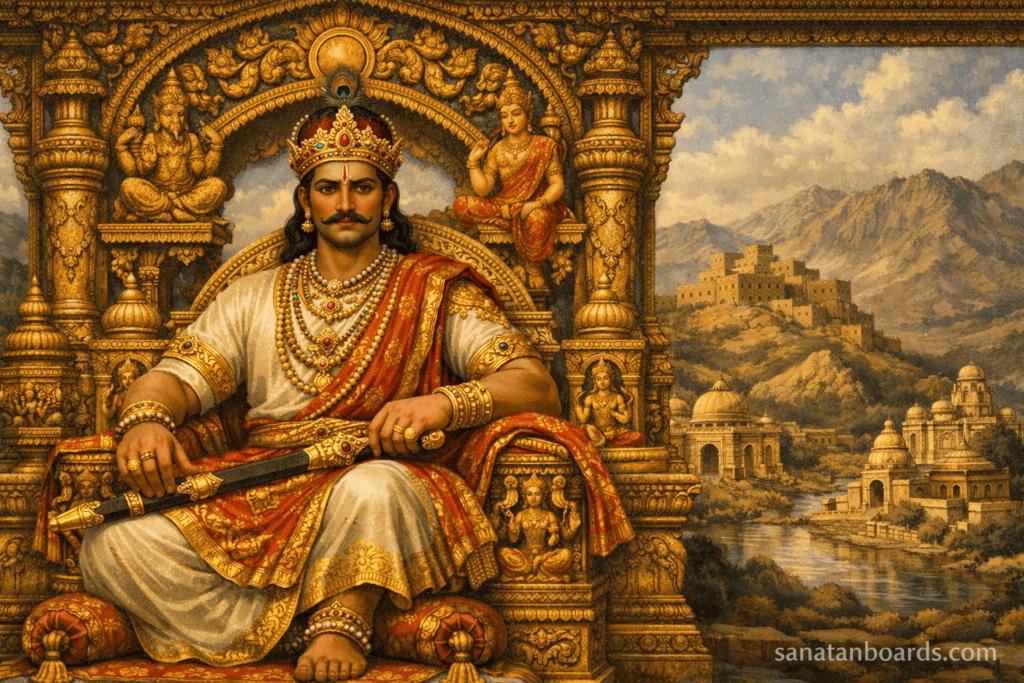
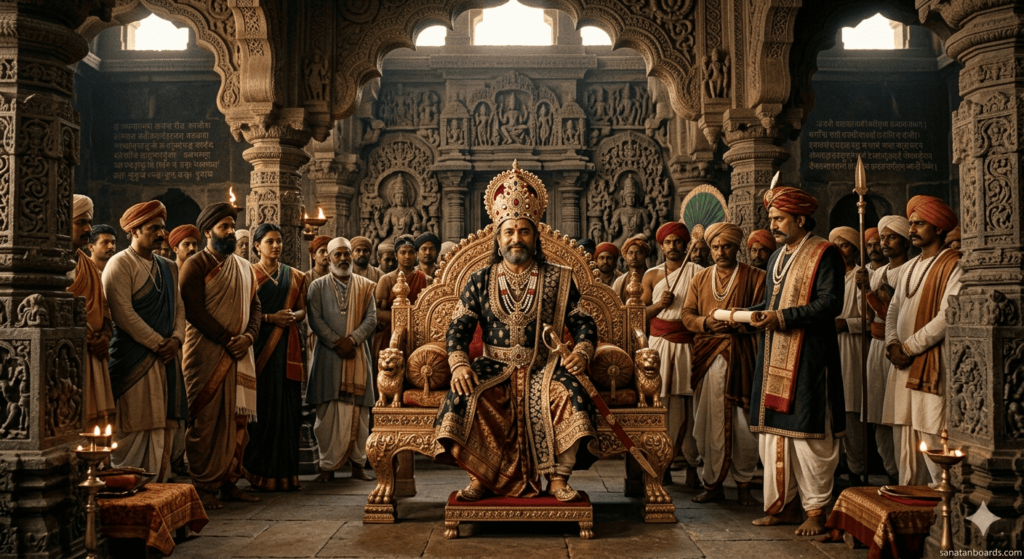
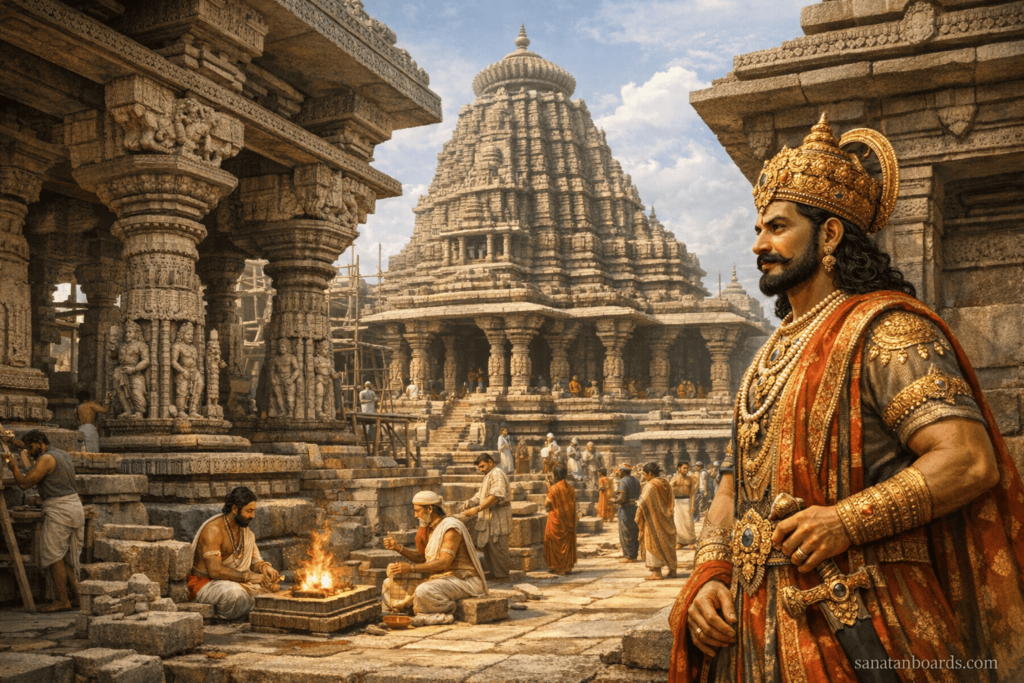
“Portrait of King Trilochanapala of the Shahi Kingdom on a golden throne with Hindu motifs, traditional attire, Kabul Valley architecture in the background; watermark sanatanboards.com.”
Sanatan Dharam Promoters, More Influential Kings of India & Abroad, Trilochanapala (Shahi Kingdom, Afghanistan)

TRILOCHANAPALA (SHAHI KINGDOM, AFGHANISTAN)

TRILOCHANAPALA (SHAHI KINGDOM, AFGHANISTAN) was the last major ruler of the Hindu Shahi dynasty during the early 11th century, governing the Kabul Valley and Gandhara region. His reign marked the final resistance of the Shahi Kingdom against the expanding Ghaznavid Empire under Mahmud of Ghazni. Known for strategic defensive battles, alliances with neighboring kingdoms, and efforts to preserve Hindu and Buddhist culture, Trilochanapala’s leadership represents a crucial chapter in early medieval South and Central Asian history. Despite his eventual defeat, his legacy highlights the challenges of frontier kingdoms, the interplay of military strategy and diplomacy, and the preservation of regional cultural identity. Today, scholars study Trilochanapala’s reign to understand the political, cultural, and military dynamics of the Shahi Kingdom and its role in shaping the historical landscape of Afghanistan and northern Pakistan

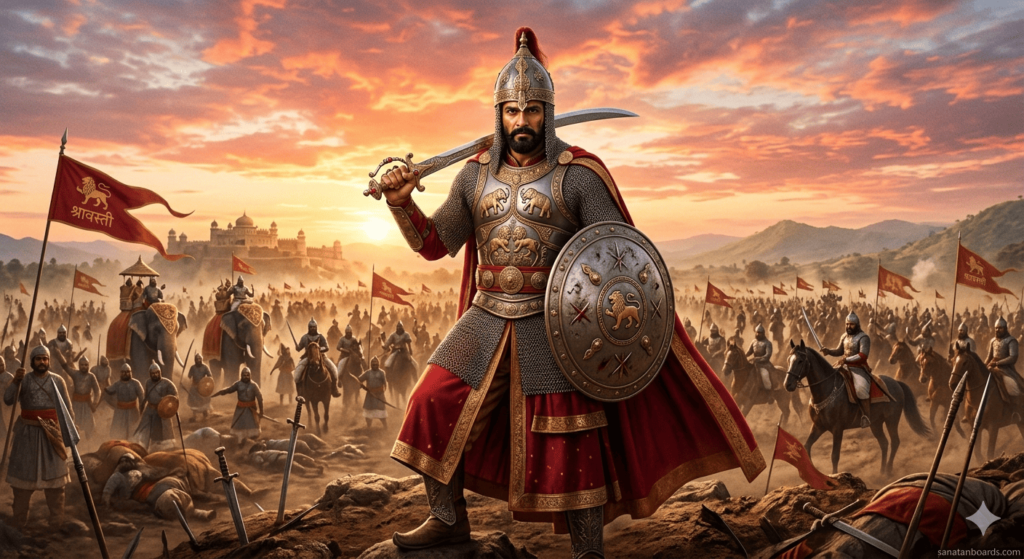
“Suheldev, Raja of Shravasti, leading his army on the battlefield, with sword and shield, 11th-century Indian armor, watermark sanatanboards.com.”
Sanatan Dharam Promoters, More Influential Kings of India & Abroad, Suheldev (Raja of Shravasti, fought Mahmud of Ghazni)

SUHELDEV (RAJA OF SHRAVASTI, FOUGHT MAHMUD OF GHAZNI)

Suheldev, the legendary Raja of Shravasti, is celebrated for his heroic resistance against Mahmud of Ghazni’s forces in the 11th century. Known for uniting local warriors and defeating Ghazi Salar Masud at the Battle of Bahraich, Suheldev’s legacy continues to inspire tales of courage, leadership, and regional pride in northern India

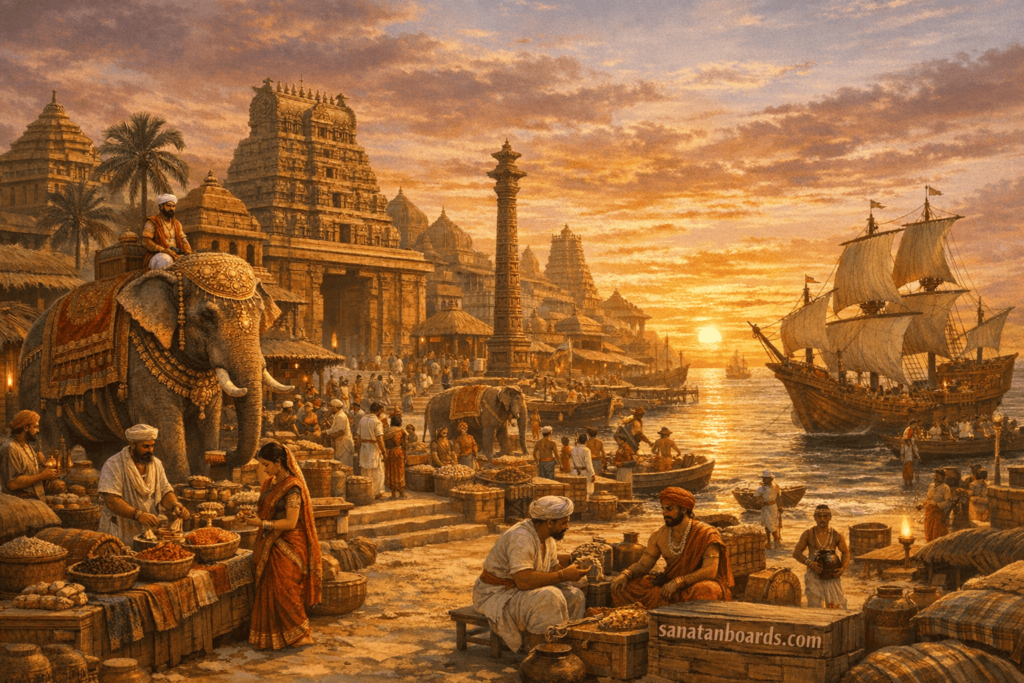
Busy port city of the Pandyan kingdom with ships and traders during Srivallabha Pandyan’s time.
Sanatan Dharam Promoters, More Influential Kings of India & Abroad, Srivallabha Pandyan

SRIVALLABHA PANDYAN

Srivallabha Pandyan represents a significant figure in the legacy of the ancient Pandyan dynasty, known for its contributions to governance, culture, and trade in South India. This blog explores the historical importance, applications, and influence of Srivallabha Pandyan across education, research, and modern industries, offering valuable insights into one of the oldest ruling traditions.

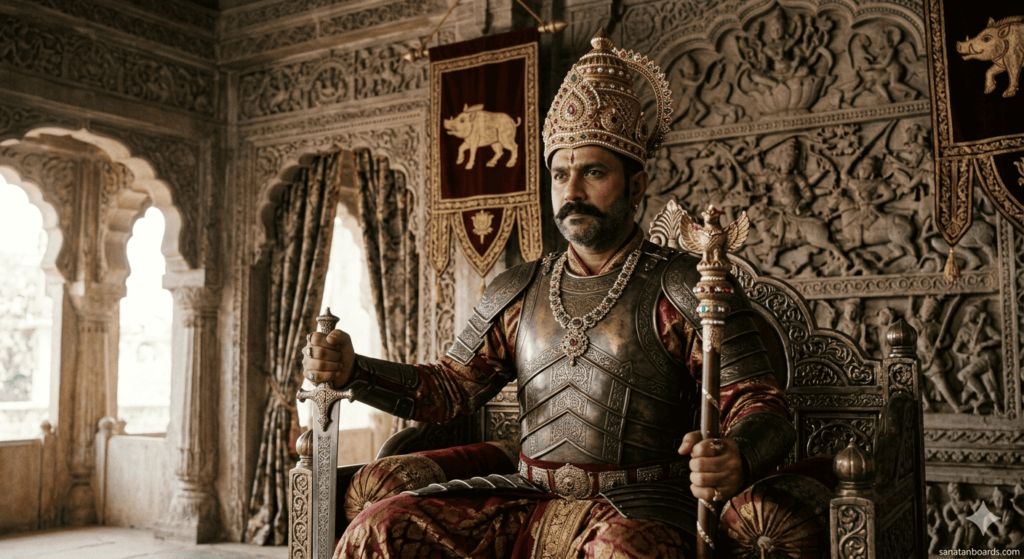
“Portrait of Someshvara I, 11th-century Western Chalukya king, seated on throne with crown and sword, watermark sanatanboards.com.”
Sanatan Dharam Promoters, More Influential Kings of India & Abroad, Someshvara I (Western Chalukya)

SOMESHVARA I (WESTERN CHALUKYA)

SOMESHVARA I (WESTERN CHALUKYA) was a pivotal 11th-century ruler of the Western Chalukya dynasty who ruled from 1042 to 1068 CE. Known for his military prowess, he successfully defended the empire against the expanding Cholas while expanding influence into Central India. Relocating the capital to Kalyani, Someshvara I strengthened administration and governance, ensuring stability across the Deccan. Beyond warfare, he was a patron of culture and literature, supporting Kannada and Sanskrit scholars, and commissioning temples that showcased the architectural brilliance of the period. His reign laid the foundation for the later Western Chalukya golden era under Vikramaditya VI. This blog explores his life, achievements, administration, military campaigns, and cultural contributions, providing a comprehensive understanding of one of medieval India’s most influential monarchs

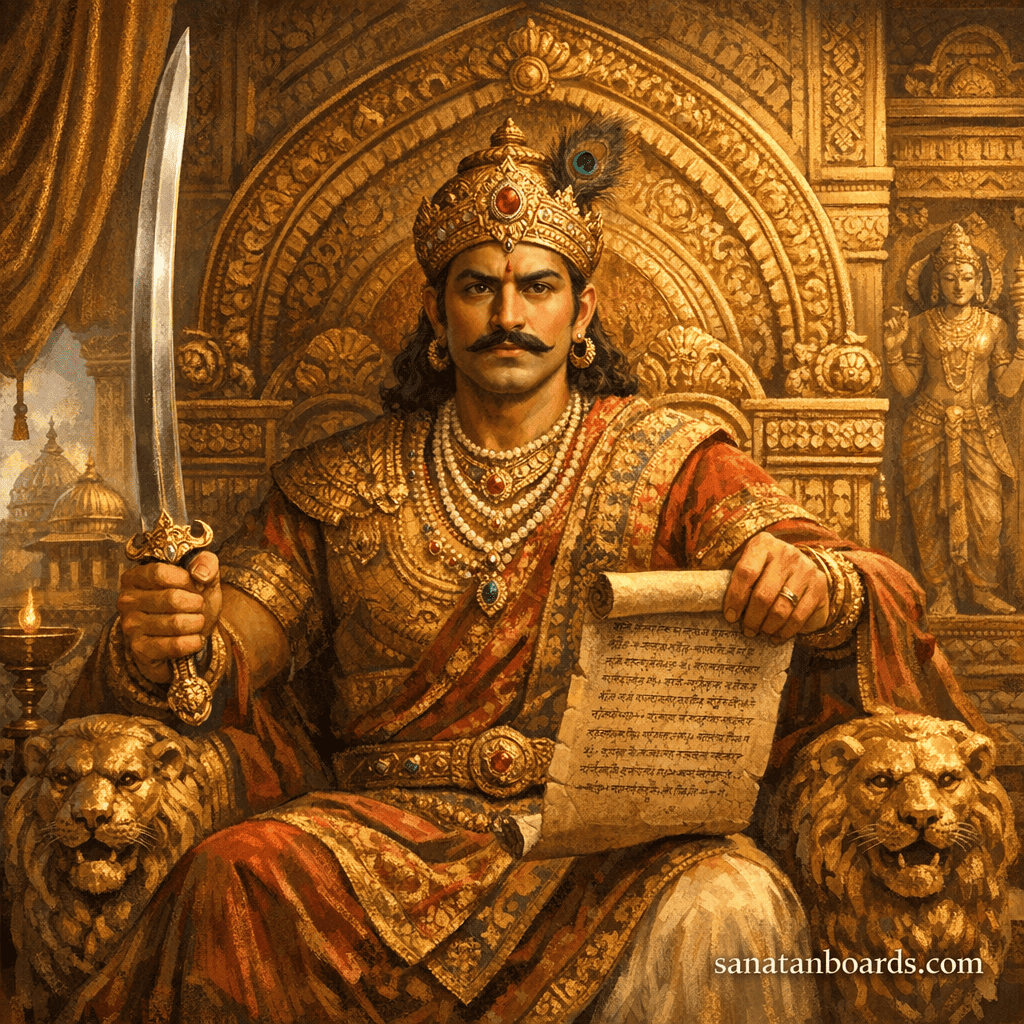
"Skandagupta on golden throne holding sword and scroll, representing power and governance, with sanatanboards.com watermark."
Sanatan Dharam Promoters, More Influential Kings of India & Abroad, Skandagupta (Last strong Gupta ruler)

SKANDAGUPTA (LAST STRONG GUPTA RULER)

Skandagupta, the last strong ruler of the Gupta dynasty (455–467 CE), is remembered for his strategic leadership, military prowess, and cultural stewardship. Ascending the throne during a period of political instability and external threats, he successfully defended the empire against the Huna invasions, strengthened the economy, and maintained administrative efficiency. Coins and inscriptions from his reign highlight his victories and divine authority, reflecting the continuation of Gupta power in turbulent times. Skandagupta also ensured the preservation of art, religion, and cultural heritage, balancing defense with governance. His reign represents the final strong phase of the Gupta Empire, offering valuable insights into leadership, crisis management, and the challenges of sustaining an empire. This blog explores who Skandagupta was, what he achieved, when and where he ruled, and how his strategies shaped Indian history, with case studies, white paper insights, and modern-day lessons from his legacy.

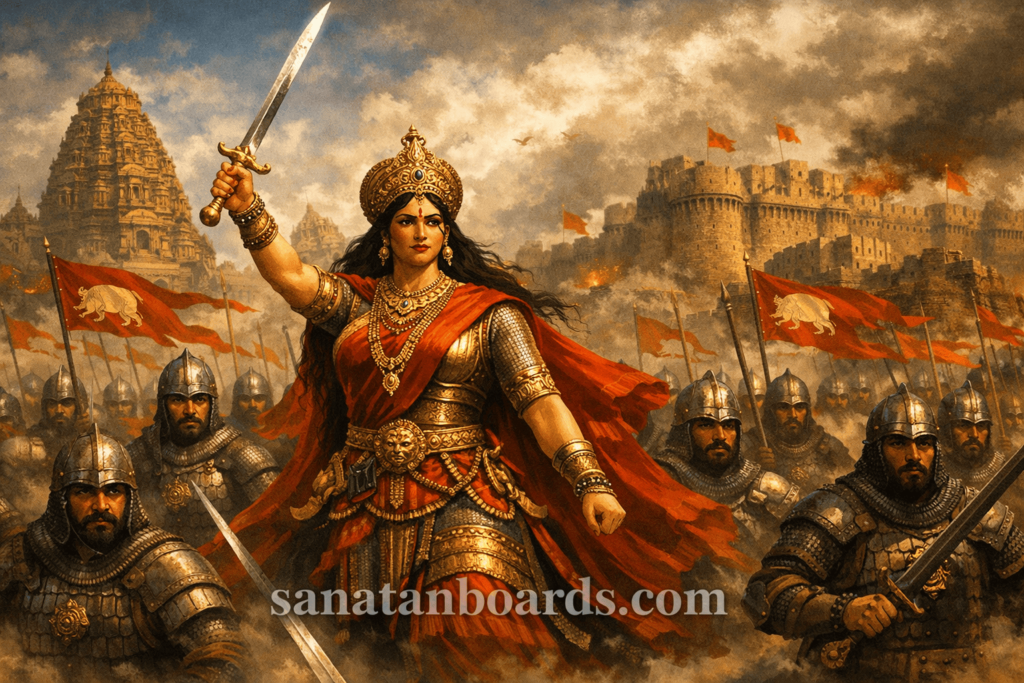
“Rudrama Devi, Kakatiya queen, leading soldiers into battle in 13th-century South India, with temples and forts in the background, watermark ‘sanatanboards.com’.”
Sanatan Dharam Promoters, More Influential Kings of India & Abroad, Rudrama Devi (Kakatiya, female warrior queen)

RUDRAMA DEVI (KAKATIYA, FEMALE WARRIOR QUEEN)

Rudrama Devi, the legendary female warrior queen of the Kakatiya dynasty, ruled the Deccan region in the 13th century with courage, strategic brilliance, and unmatched leadership. Known for breaking gender norms, leading armies, and fostering economic and cultural growth, her legacy continues to inspire generations across India and beyond

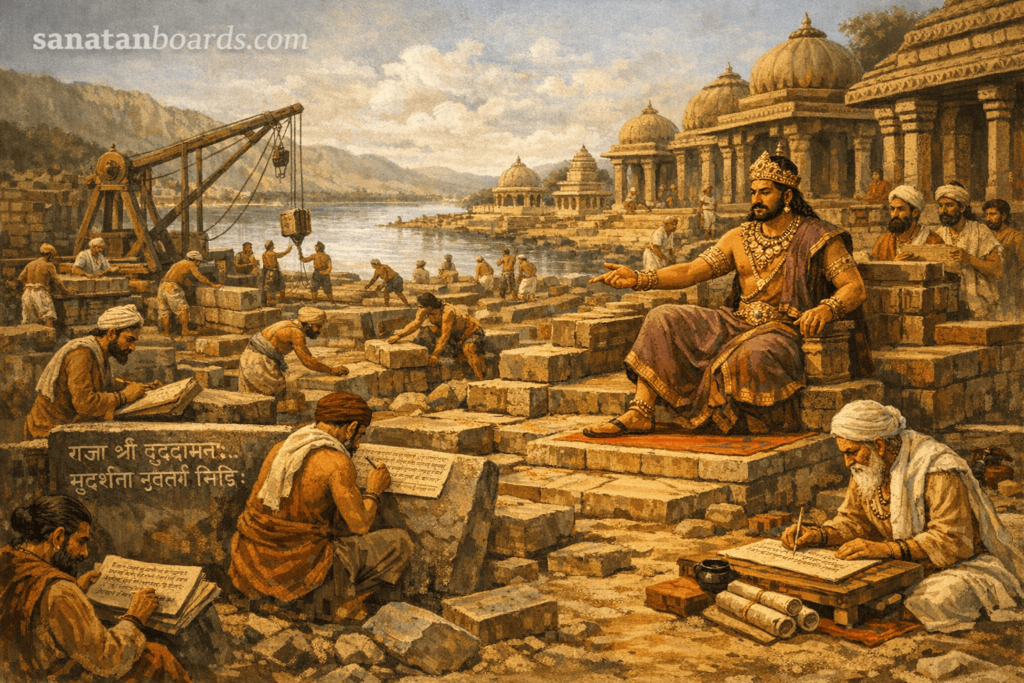
“Rudradāman I supervising Sudarśana Lake repair with scholars and workers, Sanskrit inscriptions visible, watermark sanatanboards.com.”
Sanatan Dharam Promoters, More Influential Kings of India & Abroad, Rudradaman I (Saka ruler promoting Sanskrit)

RUDRADAMAN I (SAKA RULER PROMOTING SANSKRIT)

“Rudradāman I, a powerful Saka ruler of western India, is renowned for promoting Sanskrit through royal inscriptions and public works. His reign (130–150 CE) saw the restoration of the Sudarśana Lake and the creation of the Junagadh rock inscription, one of the earliest classical Sanskrit records. By blending military strength, cultural patronage, and administrative excellence, Rudradāman set a precedent for language promotion and governance in ancient India.”

Contact Detail

Consultancy

        1 Person
        2 Product
        3 Project
        4 Organization

        1 Person
        2 Product
        3 Project
        4 Organization

Green Tech

Jobs

Enemies

      1 Sanatan Enemies
      2 Gurukul Enemies
      3 Sanatan Traitors
      4 Sanatan Population
      5 Sanatan Festivals
      6 Sanatan Star

Follow Us

2025. Copyright sanatanboards.com

Scroll to Top