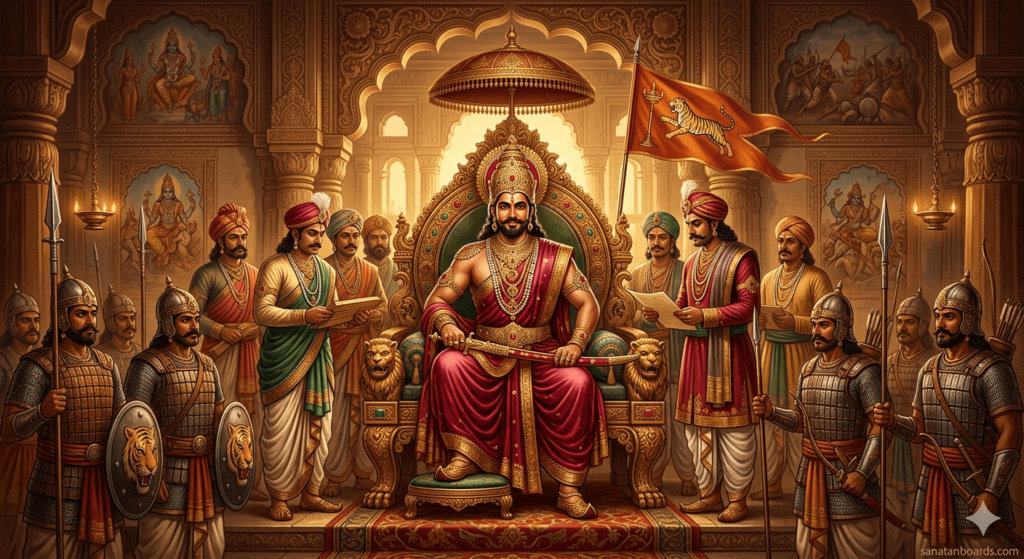
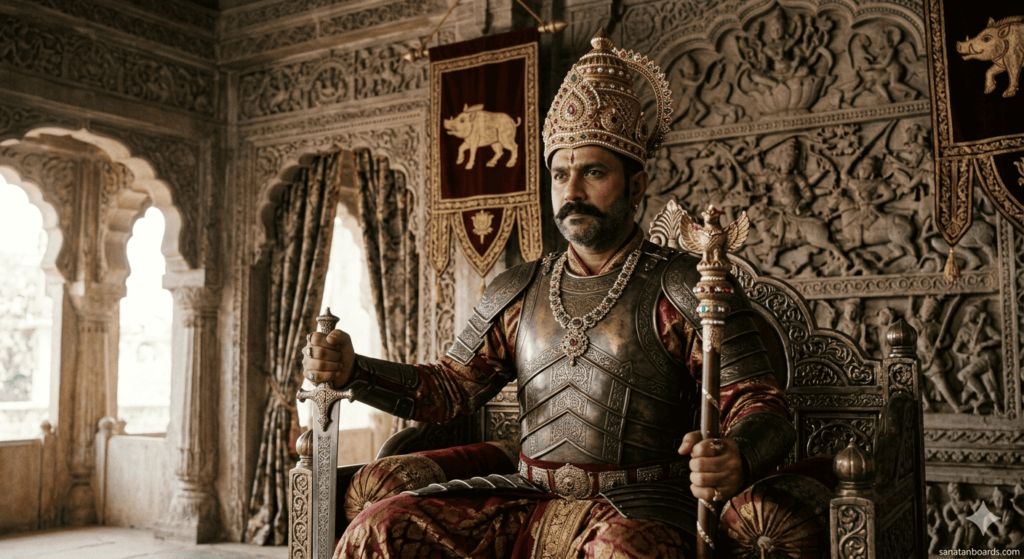
“Portrait of Someshvara I, 11th-century Western Chalukya king, seated on throne with crown and sword, watermark sanatanboards.com.”
Sanatan Dharam Promoters, More Influential Kings of India & Abroad, Someshvara I (Western Chalukya)

SOMESHVARA I (WESTERN CHALUKYA)

SOMESHVARA I (WESTERN CHALUKYA) was a pivotal 11th-century ruler of the Western Chalukya dynasty who ruled from 1042 to 1068 CE. Known for his military prowess, he successfully defended the empire against the expanding Cholas while expanding influence into Central India. Relocating the capital to Kalyani, Someshvara I strengthened administration and governance, ensuring stability across the Deccan. Beyond warfare, he was a patron of culture and literature, supporting Kannada and Sanskrit scholars, and commissioning temples that showcased the architectural brilliance of the period. His reign laid the foundation for the later Western Chalukya golden era under Vikramaditya VI. This blog explores his life, achievements, administration, military campaigns, and cultural contributions, providing a comprehensive understanding of one of medieval India’s most influential monarchs
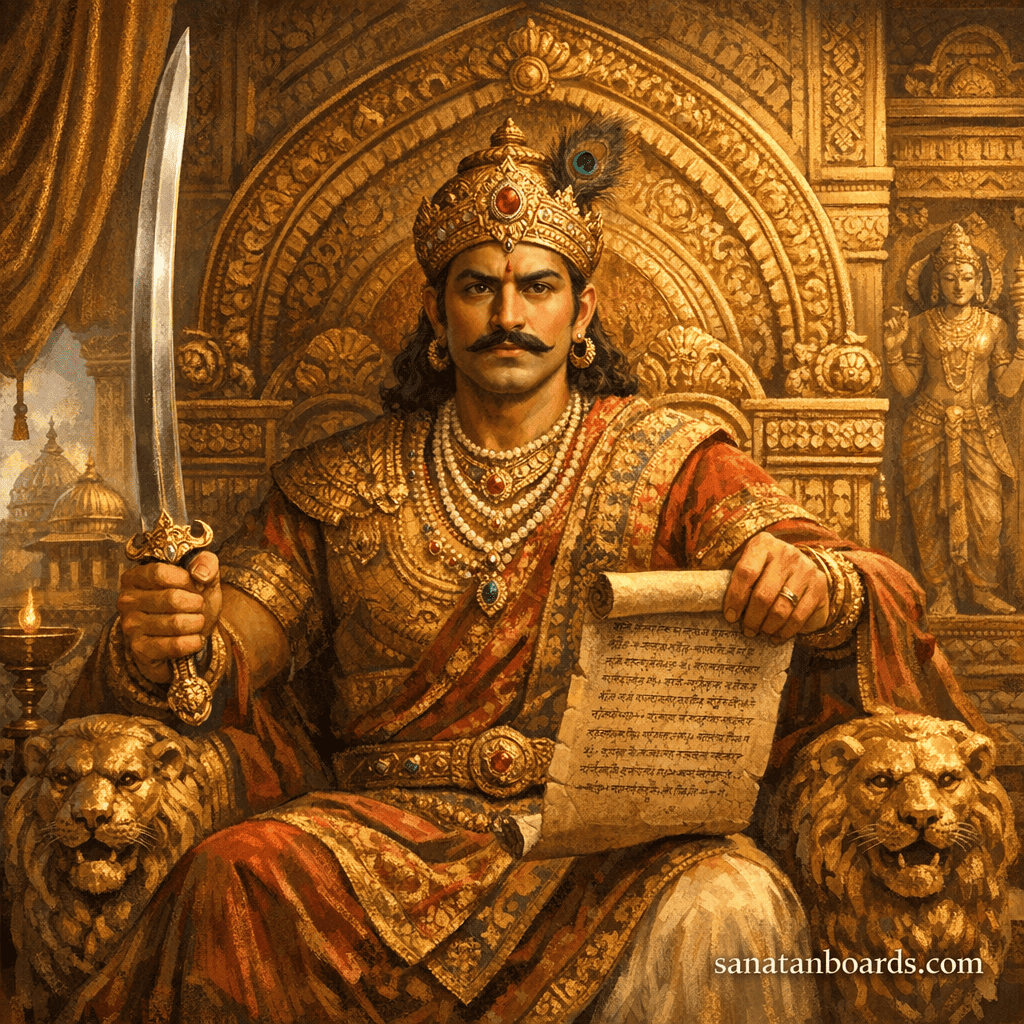
"Skandagupta on golden throne holding sword and scroll, representing power and governance, with sanatanboards.com watermark."
Sanatan Dharam Promoters, More Influential Kings of India & Abroad, Skandagupta (Last strong Gupta ruler)

SKANDAGUPTA (LAST STRONG GUPTA RULER)

Skandagupta, the last strong ruler of the Gupta dynasty (455–467 CE), is remembered for his strategic leadership, military prowess, and cultural stewardship. Ascending the throne during a period of political instability and external threats, he successfully defended the empire against the Huna invasions, strengthened the economy, and maintained administrative efficiency. Coins and inscriptions from his reign highlight his victories and divine authority, reflecting the continuation of Gupta power in turbulent times. Skandagupta also ensured the preservation of art, religion, and cultural heritage, balancing defense with governance. His reign represents the final strong phase of the Gupta Empire, offering valuable insights into leadership, crisis management, and the challenges of sustaining an empire. This blog explores who Skandagupta was, what he achieved, when and where he ruled, and how his strategies shaped Indian history, with case studies, white paper insights, and modern-day lessons from his legacy.

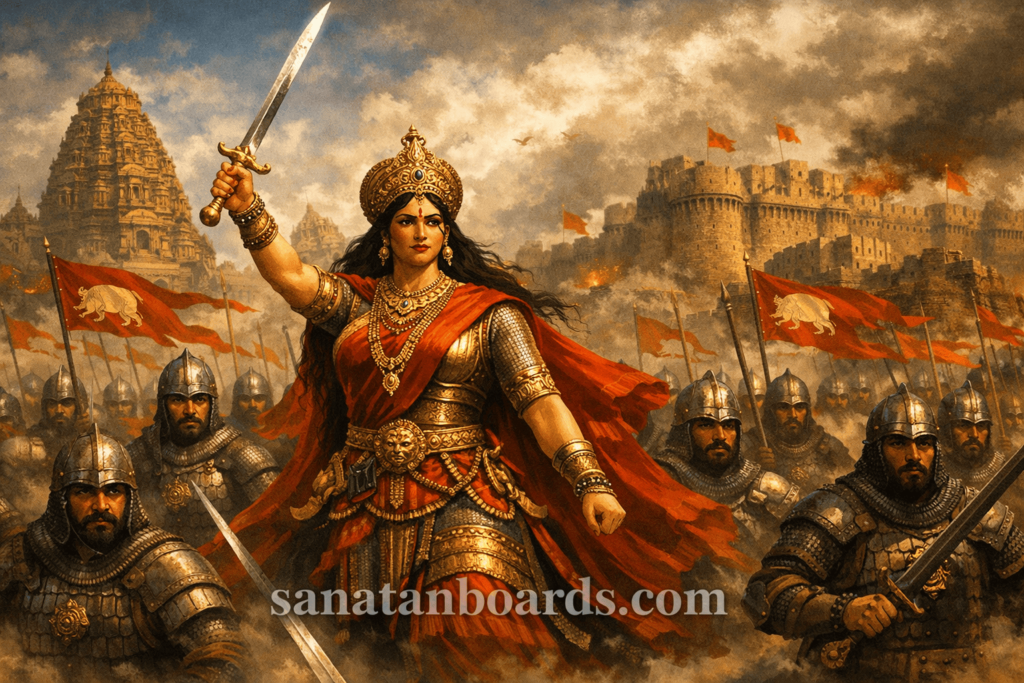
“Rudrama Devi, Kakatiya queen, leading soldiers into battle in 13th-century South India, with temples and forts in the background, watermark ‘sanatanboards.com’.”
Sanatan Dharam Promoters, More Influential Kings of India & Abroad, Rudrama Devi (Kakatiya, female warrior queen)

RUDRAMA DEVI (KAKATIYA, FEMALE WARRIOR QUEEN)

Rudrama Devi, the legendary female warrior queen of the Kakatiya dynasty, ruled the Deccan region in the 13th century with courage, strategic brilliance, and unmatched leadership. Known for breaking gender norms, leading armies, and fostering economic and cultural growth, her legacy continues to inspire generations across India and beyond

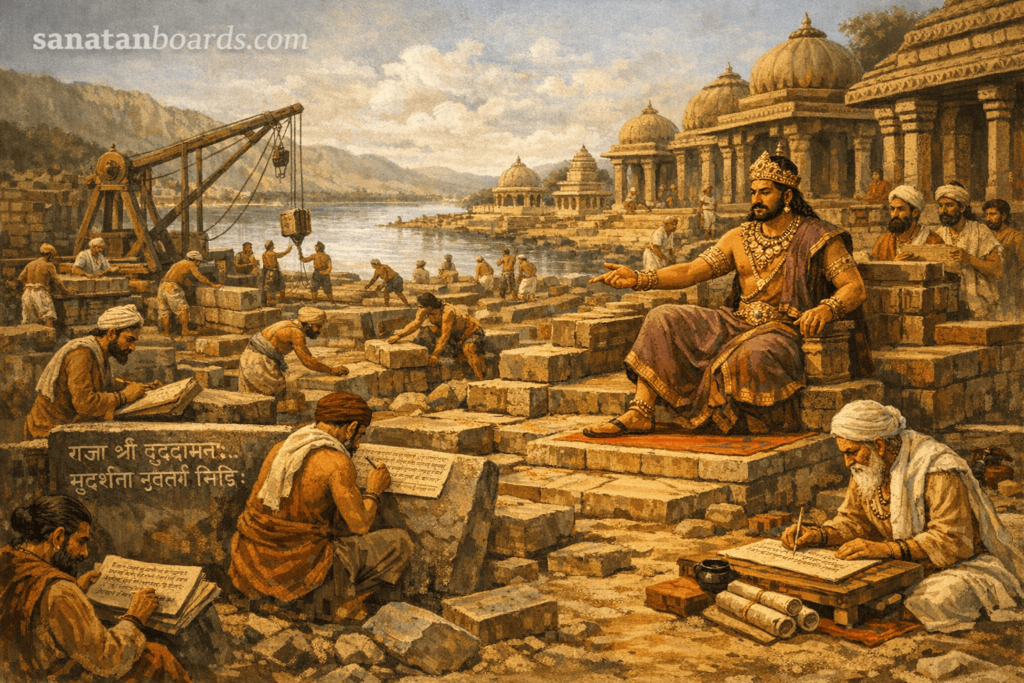
“Rudradāman I supervising Sudarśana Lake repair with scholars and workers, Sanskrit inscriptions visible, watermark sanatanboards.com.”
Sanatan Dharam Promoters, More Influential Kings of India & Abroad, Rudradaman I (Saka ruler promoting Sanskrit)

RUDRADAMAN I (SAKA RULER PROMOTING SANSKRIT)

“Rudradāman I, a powerful Saka ruler of western India, is renowned for promoting Sanskrit through royal inscriptions and public works. His reign (130–150 CE) saw the restoration of the Sudarśana Lake and the creation of the Junagadh rock inscription, one of the earliest classical Sanskrit records. By blending military strength, cultural patronage, and administrative excellence, Rudradāman set a precedent for language promotion and governance in ancient India.”

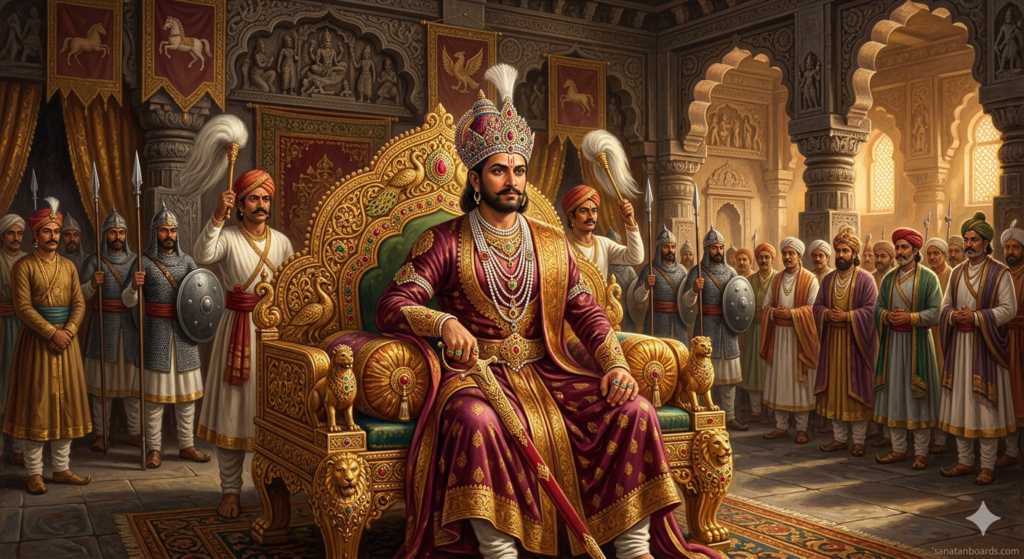
“Ramachandra Yadava seated on a golden throne in Devagiri palace with courtiers and soldiers, watermark sanatanboards.com.”
Sanatan Dharam Promoters, More Influential Kings of India & Abroad, Ramachandra Yadava

RAMACHANDRA YADAVA

Ramachandra Yadava was a 13th-century king of the Seuna (Yadava) dynasty, ruling from Devagiri in the Deccan region. Ascending the throne around 1271 CE, he strengthened his kingdom through strategic military campaigns against neighboring dynasties and adeptly navigated diplomatic relations with the rising Delhi Sultanate under Alauddin Khalji. His reign is notable not only for political and military achievements but also for cultural contributions, including temple patronage, coinage, and the promotion of arts and architecture. Scholars, historians, and students often study his leadership and governance to understand medieval Indian statecraft, regional politics, and cultural development. Today, Devagiri fort, inscriptions, and Yadava-era artifacts continue to preserve his legacy, offering insights into the rich heritage of medieval India. Ramachandra Yadava remains a significant figure for anyone exploring the intersection of diplomacy, military strategy, and cultural patronage in Indian history.

“Rajendra Chola II seated on a golden throne with temple backdrop and watermark sanatanboards.com”
Sanatan Dharam Promoters, More Influential Kings of India & Abroad, Rajendra Chola II

RAJENDRA CHOLA II

Rajendra Chola II, the Chola emperor who ruled from 1052 to 1063 CE, played a crucial role in maintaining the power and prosperity of the Chola Empire. Succeeding his elder brother, Rajadhiraja I, he stabilized the empire’s vast territories, including southern India and northern Sri Lanka, while extending influence through maritime trade to Southeast Asia. Known for his strategic military campaigns, efficient administration, and patronage of temples and culture, Rajendra Chola II preserved the legacy of the Chola dynasty during a pivotal period. His leadership ensured political stability, economic growth, and cultural enrichment, making him a key figure in medieval South Indian history. From overseeing maritime commerce and infrastructure to supporting art, literature, and religious architecture, his reign offers lessons in leadership, governance, and strategic planning that remain relevant today.

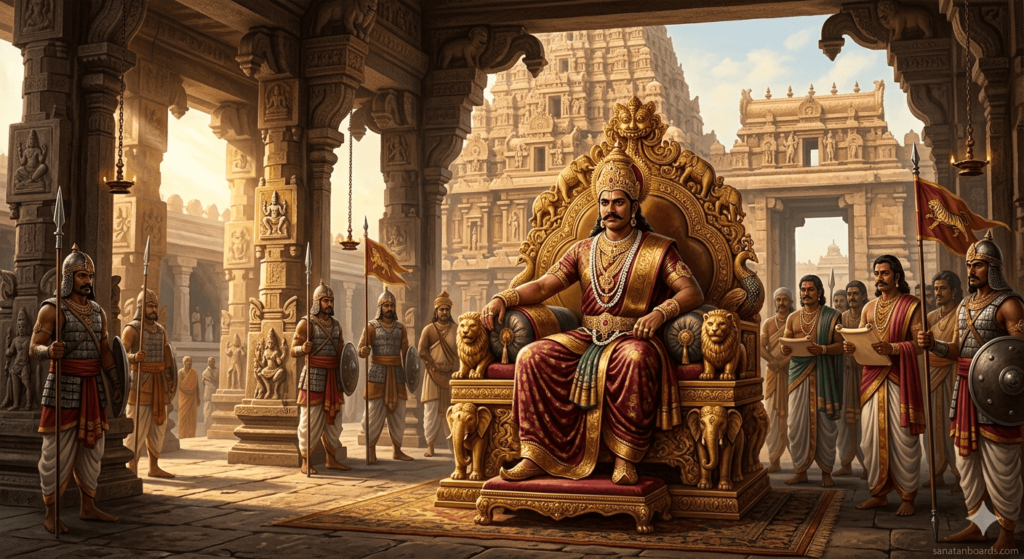
“Rajadhiraj Chola I seated on a throne with Chola soldiers and ministers, Chola flag in the background, watermark sanatanboards.com.”
Sanatan Dharam Promoters, More Influential Kings of India & Abroad, Rajadhiraj Chola

Rajadhiraj Chola

Rajadhiraj Chola I, known as the “King of Kings of the Chola Dynasty,” was a visionary ruler of medieval South India. Ascending the throne in the early 11th century CE, he combined military prowess, strategic administration, and cultural patronage to expand and consolidate the Chola Empire. His reign saw successful campaigns across South India and Sri Lanka, strengthened naval power securing vital trade routes, and a flourishing of temples, arts, and literature. Rajadhiraj Chola’s leadership exemplified the integration of strategy, governance, and cultural investment, offering lessons that remain relevant today in organizational leadership, trade management, and cultural branding. From commanding armies on the battlefield to overseeing temple construction and maritime commerce, his rule reflects a comprehensive model of imperial authority. This article explores his life, achievements, case studies, modern applications, and historical significance, providing insights into the enduring legacy of one of South India’s most influential emperors.

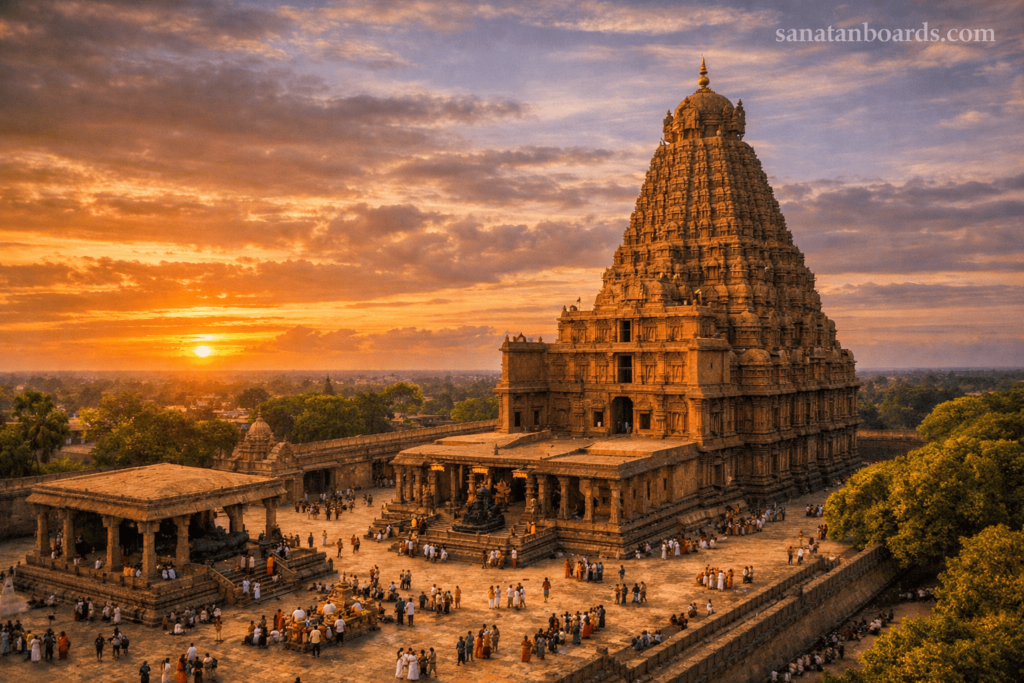
“Aerial view of Brihadeeswarar Temple with RAJA RAJA CHOLA I-era carvings, priests and devotees in courtyard, watermark sanatanboards.com”
Sanatan Dharam Promoters, More Influential Kings of India & Abroad, Raja Raja Chola I (Great temple builder)

RAJA RAJA CHOLA I (GREAT TEMPLE BUILDER)

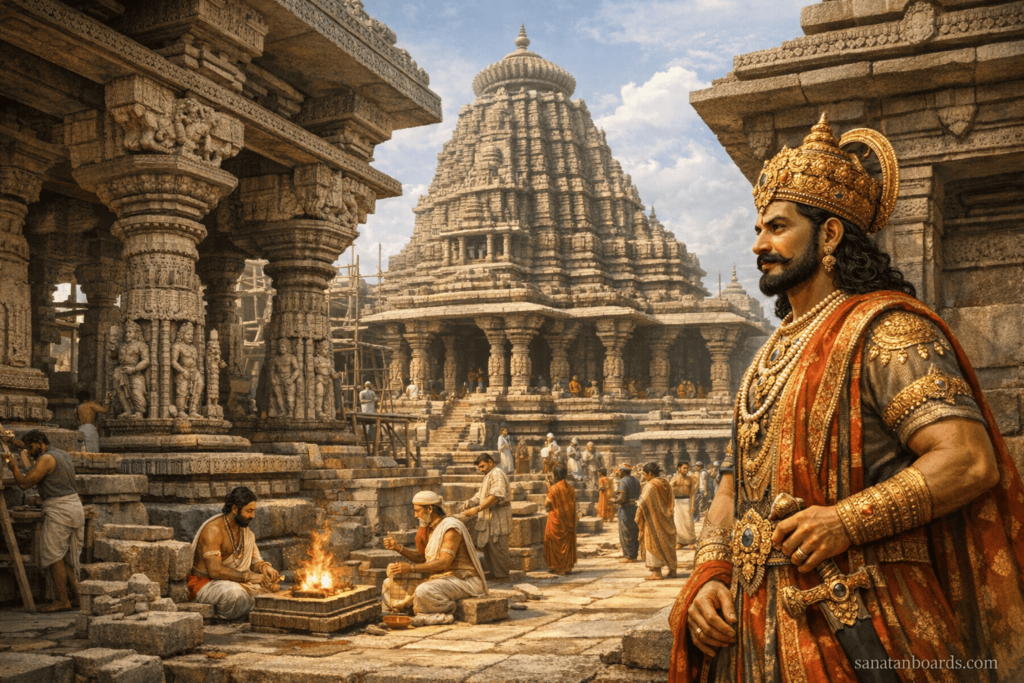
RAJA RAJA CHOLA I (GREAT TEMPLE BUILDER) was one of the most powerful rulers of the Chola dynasty, reigning from 985 to 1014 CE. Renowned as a visionary king, he transformed South India through military conquests, efficient administration, and extraordinary temple construction. His most famous work, the Brihadeeswarar Temple in Thanjavur, stands as a testament to Dravidian architectural brilliance, combining artistic excellence with religious devotion. RAJA RAJA CHOLA I’s temples were more than spiritual centers—they served as hubs for education, cultural activities, and community administration. His reign also promoted bronze sculpture, literature, and music, leaving a lasting cultural legacy. Today, historians, architects, and art enthusiasts study his contributions to understand medieval Indian governance, architecture, and cultural development. RAJA RAJA CHOLA I (GREAT TEMPLE BUILDER) remains an enduring symbol of visionary leadership, blending faith, art, and statecraft into a timeless heritage.

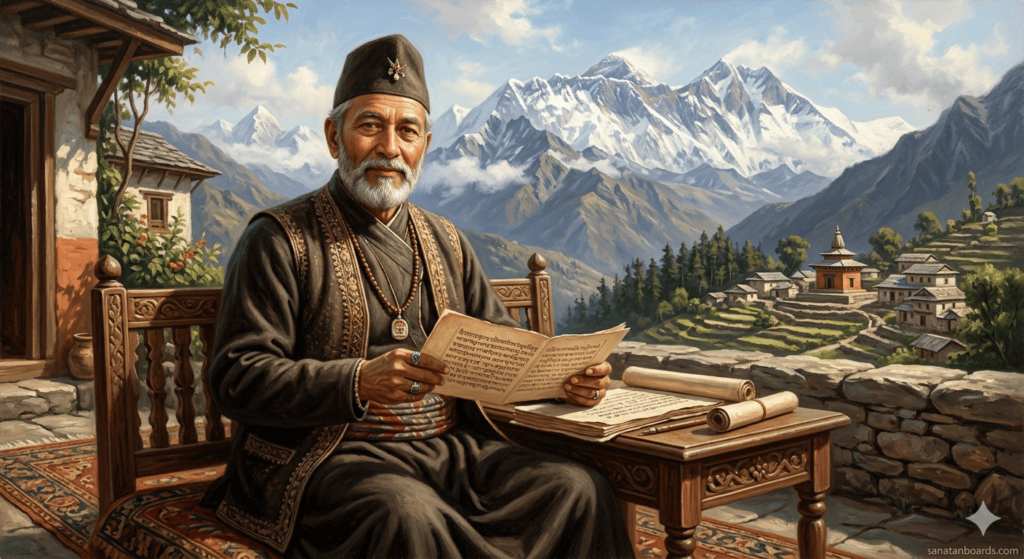
“Raghunath Singh of Nepal in traditional attire holding manuscripts with Himalayan background, soft sunlight, realistic style, watermark ‘sanatanboards.com’.”
Sanatan Dharam Promoters, More Influential Kings of India & Abroad, Raghunath Singh of Nepal

RAGHUNATH SINGH OF NEPAL

“This image represents Raghunath Singh of Nepal as a wise scholar and cultural figure. He is portrayed in traditional Nepalese attire, holding ancient manuscripts, against a serene Himalayan backdrop. The artwork is realistic and detailed, highlighting his intellectual and leadership qualities. The watermark ‘sanatanboards.com’ is placed on the bottom right to indicate source.”

Contact Detail

Consultancy

        1 Person
        2 Product
        3 Project
        4 Organization

        1 Person
        2 Product
        3 Project
        4 Organization

Green Tech

Jobs

Enemies

      1 Sanatan Enemies
      2 Gurukul Enemies
      3 Sanatan Traitors
      4 Sanatan Population
      5 Sanatan Festivals
      6 Sanatan Star

Follow Us

2025. Copyright sanatanboards.com

Scroll to Top