When we think of spiritual wisdom in India, one name shines bright—Adi Shankaracharya. Born in the 8th century CE, Shankaracharya was not just a philosopher but a visionary who brought the teachings of Vedanta to the masses in a way that still resonates today. His brilliance lay in his ability to simplify complex philosophical ideas and create a network of knowledge that continues to influence millions.
hankaracharya established monastic centers called mathas across India. These mathas weren’t just places of worship—they were hubs of learning, debate, and spiritual training. He set up four major mathas in the North, South, East, and West of India, ensuring that the knowledge of Vedanta reached every corner of the subcontinent. This network of mathas, combined with his writings and disciples, created a robust system for preserving and propagating spiritual wisdom.
What is Adi Shankaracharya Vedanta?
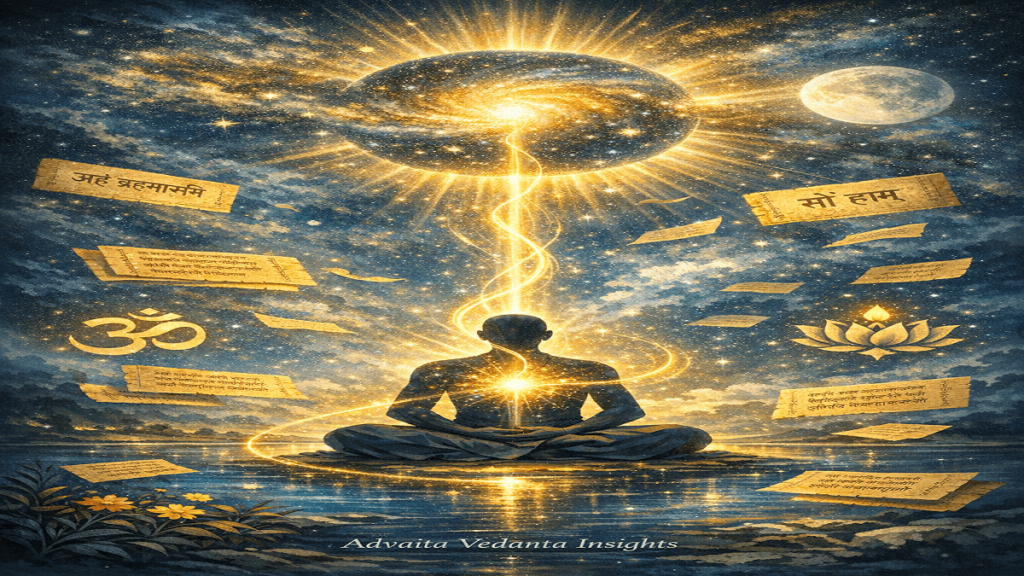
Adi Shankaracharya Vedanta is the spiritual and philosophical system established by Adi Shankaracharya, one of India’s greatest philosophers, in the 8th century CE. It is based on Vedanta, which means “the culmination of the Vedas,” the ancient sacred texts of India. Shankaracharya’s teachings focus on understanding the ultimate truth of existence and realizing the unity of the individual soul (Atman) with the supreme reality (Brahman).
Central to his philosophy is Advaita Vedanta, or non-dualism. It teaches that the world we see is temporary and illusory (Maya), and true liberation (Moksha) comes from knowledge (Jnana) of our real, eternal self. According to Shankaracharya, spiritual growth happens when we move beyond material illusions and recognize the oneness of all existence.
To spread this knowledge, Shankaracharya established four major monastic centers (mathas) across India, creating a network for learning, teaching, and spiritual practice. He also wrote clear commentaries on the Upanishads, Bhagavad Gita, and Brahmasutras, making profound philosophy accessible to seekers.
Today, Adi Shankaracharya Vedanta continues to inspire millions, teaching that self-realization, wisdom, and inner peace are achieved by understanding the eternal connection between the soul and the ultimate reality.
Who Requires Adi Shankaracharya Vedanta?
The teachings of Adi Shankaracharya and his philosophy of Advaita Vedanta are meant for anyone who seeks deeper understanding about life, spirituality, and the true nature of the self. Vedanta is not limited to monks or scholars—it can benefit people from all walks of life.
First, spiritual seekers require Vedanta because it helps them understand the connection between the individual soul (Atman) and the ultimate reality (Brahman). Through study and reflection, seekers gain clarity about life’s purpose and the path to liberation (moksha).
Second, students and scholars of philosophy benefit from Vedanta because it provides deep insights into Indian philosophical traditions. The teachings explained in texts like the Upanishads, Bhagavad Gita, and Brahma Sutras help them explore profound questions about existence, consciousness, and reality.
Third, ordinary people facing stress or confusion in life can also benefit from Vedanta. Its teachings encourage self-knowledge, inner peace, and detachment from temporary problems.
When is Adi Shankaracharya Vedanta Required?
The teachings of Adi Shankaracharya and the philosophy of Advaita Vedanta become especially important when people begin searching for deeper meaning in life. Vedanta is not limited to a specific time period or group of people—it becomes relevant whenever a person seeks truth, clarity, and spiritual understanding.
One important time when Vedanta is required is during periods of confusion or crisis in life. People often experience stress, uncertainty, or emotional struggles related to work, relationships, or personal identity. Vedanta helps individuals understand that many of these problems are temporary and connected to the material world, which is considered Maya, or illusion. By learning this philosophy, individuals can develop a calm and balanced mindset.
Vedanta is also required when a person begins a spiritual journey. Many people eventually feel a desire to understand the deeper purpose of life beyond material success. At this stage, the teachings explained in sacred texts such as the Upanishads, the Bhagavad Gita and the Brahma Sutras become very valuable. Adi Shankaracharya wrote detailed commentaries on these texts to help seekers understand the path toward self-realization.
Another time when Vedanta is needed is in the pursuit of self-knowledge and inner peace. In today’s fast-paced world, many people focus mainly on material achievements. However, Vedanta reminds us that true happiness comes from understanding our real nature—the unity of the individual soul (Atman) with the ultimate reality (Brahman).
Where is Adi Shankaracharya Vedanta Required?
The teachings of Adi Shankaracharya and the philosophy of Advaita Vedanta are relevant in many places where people seek spiritual knowledge, wisdom, and inner peace. Vedanta is not limited to one specific location; its teachings can be applied in different environments and aspects of life.
Traditionally, Vedanta was taught in spiritual and educational institutions such as monasteries and learning centers. Adi Shankaracharya established four important mathas (monastic centers) in different parts of India to spread Vedantic knowledge. These mathas became important places where scholars, monks, and students studied sacred texts like the Upanishads, the Bhagavad Gita, and the Brahma Sutras.
Vedanta is also required in temples, meditation centers, and spiritual communities, where people gather to learn about philosophy, practice meditation, and seek guidance for spiritual growth. These places provide an environment where individuals can reflect on the teachings and apply them in daily life.
In modern times, Vedanta is studied not only in religious places but also in universities and philosophy departments around the world. Many scholars and students explore its ideas to understand Indian philosophy and the concept of non-duality.
How is Adi Shankaracharya Vedanta Required?
The spiritual and philosophical network established by Adi Shankaracharya plays a vital role in preserving and spreading the teachings of Advaita Vedanta. This network was created to ensure that the knowledge of Vedanta could reach people across different regions, cultures, and generations. Even today, this network remains important for spiritual education, cultural unity, and the promotion of philosophical wisdom.
One of the main reasons the Adi Shankaracharya network is required is the preservation of ancient spiritual knowledge. The teachings of Vedanta are deeply connected to sacred texts such as the Upanishads, the Bhagavad Gita and the Brahma Sutras. Adi Shankaracharya established monastic centers known as mathas in different parts of India to protect and teach these scriptures. These centers functioned as educational institutions where scholars, monks, and students could study and practice Vedantic philosophy.
Another reason this network is required is to spread spiritual education and guidance. Through his travels and debates, Adi Shankaracharya connected different communities and encouraged people to explore the deeper meaning of life. The mathas and disciples within the network helped continue his mission by teaching meditation, self-inquiry, and ethical living. This ensured that the teachings of Advaita Vedanta were not limited to a small group but became accessible to society as a whole.
The Adi Shankaracharya network is also required for maintaining cultural and philosophical unity. India has always been home to diverse traditions and beliefs. Shankaracharya’s approach emphasized the unity of spiritual truth while respecting different practices. By establishing centers of learning in various regions, he created a system that connected people through shared philosophical ideas and spiritual values.
In modern times, the importance of this network continues to grow. Many individuals face stress, confusion, and challenges in a rapidly changing world. The teachings of Advaita Vedanta provide guidance on self-awareness, inner peace, and the understanding that the individual soul (Atman) is connected with the universal reality (Brahman). Through institutions, scholars, and spiritual teachers inspired by Adi Shankaracharya’s work, these teachings remain available to new generations.
Additionally, the network contributes to academic and philosophical studies. Universities, spiritual organizations, and cultural institutions study Vedantic philosophy to understand Indian intellectual traditions and their influence on global thought. This helps keep the teachings relevant and meaningful in contemporary society.
Case Study: Adi Shankaracharya Vedanta Network
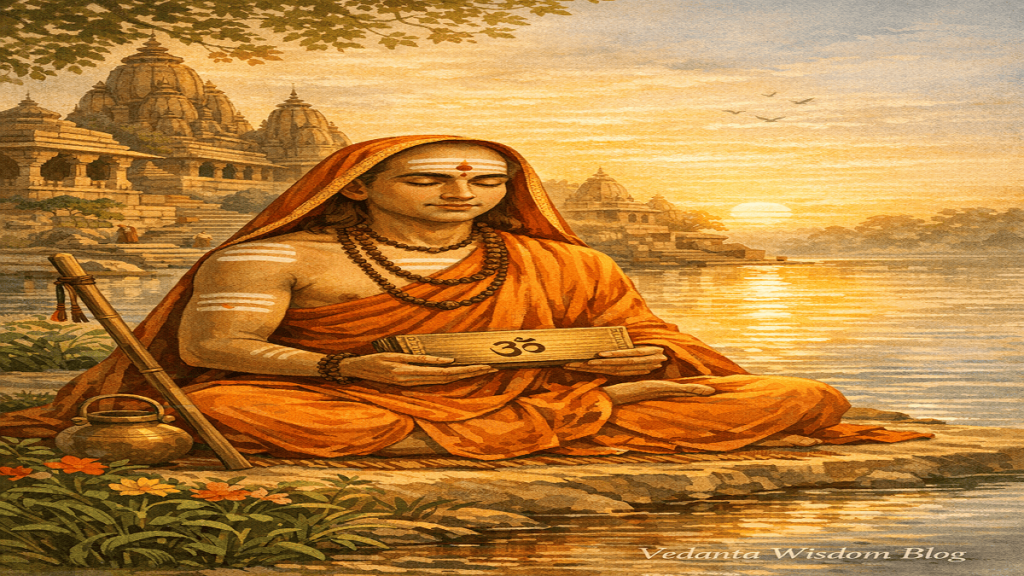
The philosophy of Adi Shankaracharya played a significant role in reviving and organizing spiritual thought in India during the 8th century. His teachings of Advaita Vedanta focused on the idea that the individual soul (Atman) and the ultimate reality (Brahman) are one and the same. This case study explores how his work created a strong philosophical and spiritual network that continues to influence society.
Background
During Shankaracharya’s time, many different religious beliefs and philosophical interpretations existed across India. These differences sometimes created confusion among people about spiritual practices and the meaning of life. Shankaracharya traveled throughout the country, engaging in debates and discussions with scholars to clarify the teachings of Vedanta and explain the concept of non-duality.
Key Actions
To spread this knowledge, Shankaracharya established four major monastic centers (mathas) in different regions of India. These centers became important institutions for learning and teaching sacred texts such as the Upanishads, the Bhagavad Gita, and the Brahma Sutras. Through these institutions, students and monks were trained to continue spreading Vedantic knowledge.
Results
The establishment of these mathas created a lasting spiritual network across India. It helped preserve philosophical teachings, encouraged disciplined learning, and united different communities under a shared understanding of spiritual truth.
Conclusion
This case study shows how Adi Shankaracharya’s efforts strengthened the study and practice of Vedanta. His network of institutions and teachings continues to inspire millions of people seeking wisdom, self-realization, and spiritual unity
White Paper On Adi Sankaracharya Vedanta Network
Introduction
The philosophical teachings of Adi Shankaracharya have played a crucial role in shaping Indian spiritual thought. His interpretation of Advaita Vedanta emphasizes the unity of the individual soul (Atman) with the ultimate reality (Brahman). This white paper explores the historical significance, core principles, and modern relevance of Adi Shankaracharya’s Vedanta philosophy.
Background
Vedanta is a philosophical tradition derived from the teachings of the Vedas. During the 8th century, spiritual knowledge in India had become fragmented due to different interpretations and practices. Adi Shankaracharya played a major role in systematizing Vedantic thought by writing commentaries on key scriptures such as the Upanishads, the Bhagavad Gita, and the Brahma Sutras.
Core Principles of Advaita Vedanta
Advaita Vedanta teaches that reality is non-dual. According to this philosophy:
- The individual self (Atman) is identical with the universal reality (Brahman).
- The material world is considered Maya, or illusion.
- Liberation (Moksha) is achieved through knowledge (Jnana) and self-realization.
Institutional Network
To ensure the preservation and spread of Vedantic knowledge, Shankaracharya established four monastic centers known as mathas in different regions of India. These centers became hubs for spiritual education, philosophical debate, and the training of future scholars and monks.
Modern Relevance
In today’s fast-paced and material-focused world, the teachings of Advaita Vedanta provide guidance for self-awareness, mental balance, and ethical living. The philosophy encourages individuals to look beyond temporary material success and seek deeper spiritual understanding.
Conclusion
The teachings of Adi Shankaracharya remain highly relevant in modern society. His structured approach to philosophy, education, and spiritual practice created a lasting intellectual and spiritual framework that continues to guide individuals toward wisdom, unity, and inner peace.
Industry Applications of Adi Shankaracharya Vedanta
The teachings of Adi Shankaracharya and the philosophy of Advaita Vedanta are not limited to spirituality alone. In modern times, these principles are also applied in different industries to improve leadership, decision-making, workplace ethics, and employee well-being.
1. Leadership and Management
In the corporate world, Vedanta teaches self-awareness and clarity of thought. Leaders who understand these principles often develop better emotional control and ethical decision-making skills. The concept of non-duality encourages leaders to see unity within teams, promoting collaboration and mutual respect among employees.
2. Mental Health and Wellness Industry
The wellness and mental health industries use Vedantic ideas such as self-reflection and detachment from negative thoughts to reduce stress and anxiety. Meditation practices inspired by Vedantic teachings help employees maintain focus, emotional balance, and productivity in the workplace.
3. Education and Training
Educational institutions and corporate training programs often incorporate Vedantic philosophy to develop critical thinking, ethical behavior, and personal growth. The teachings explained in texts like the Bhagavad Gita and the Upanishads are studied to understand deeper philosophical and moral values.
4. Technology and Innovation Culture
In the technology industry, Vedantic thinking promotes mindfulness and creativity. By encouraging deeper awareness and clarity, professionals can approach complex problems with calmness and innovative thinking.
Conclusion
The philosophy of Adi Shankaracharya Vedanta has practical applications across industries. Its focus on self-knowledge, ethical values, and mental clarity helps organizations create healthier work environments, responsible leadership, and sustainable professional growth.
source : The Lallantop
ASK FAQ
1. What is the philosophy of Adi Shankaracharya?
The philosophy of Adi Shankaracharya is known as Advaita Vedanta, which means “non-dualism.” It teaches that the individual soul (Atman) and the ultimate reality (Brahman) are one and the same. According to this philosophy, the world we see is temporary and influenced by Maya (illusion). True liberation (Moksha) is achieved through knowledge and self-realization.
Why is Advaita Vedanta important in modern life?
Advaita Vedanta is important in modern life because it teaches self-awareness, inner peace, and clarity of thought. In today’s fast-paced world, people often face stress and confusion. The teachings of Adi Shankaracharya help individuals focus on self-knowledge and understand the deeper purpose of life beyond material success.
How did Adi Shankaracharya spread Vedanta philosophy?
Adi Shankaracharya traveled across India to teach Vedanta and debate with scholars. He also established four major monastic centers (mathas) to promote learning and spiritual practice. Additionally, he wrote commentaries on important scriptures like the Upanishads and the Bhagavad Gita.
What are the main teachings of Advaita Vedanta?
The main teachings of Advaita Vedanta include the unity of Atman and Brahman, the idea that the material world is an illusion (Maya), and the belief that liberation (Moksha) can be achieved through knowledge (Jnana). These teachings encourage self-inquiry and spiritual understanding.
How can Adi Shankaracharya’s teachings help achieve inner peace?
The teachings of Adi Shankaracharya help people achieve inner peace by encouraging self-awareness, meditation, and detachment from temporary problems. By realizing the unity of the soul with the universal reality, individuals can overcome stress and live a balanced, meaningful life
Table of Contents
Disclaimer:
This blog is intended for educational and informational purposes only. The content is based on general knowledge about the teachings of Adi Shankaracharya and the philosophy of Advaita Vedanta. It does not aim to provide religious advice or represent any specific spiritual organization. Readers are encouraged to explore authentic sources and scriptures for deeper understanding.