
KRISHNA TEMPLE (RUSSIA)
The presence of Krishna temples in Russia represents a fascinating intersection of spirituality, culture, and global religious exchange. Rooted in the teachings of Lord Krishna, a central figure in Hindu philosophy and the Bhagavad Gita, these temples are primarily established and maintained by followers of the International Society for Krishna Consciousness. Over the past few decades, ISKCON has expanded beyond India, finding a dedicated community in Russia despite cultural and political differences.
Krishna temples in Russia serve as centers for spiritual learning, meditation, and cultural preservation. They offer a space where individuals can explore ancient Vedic teachings, practice devotional activities such as chanting the Hare Krishna mantra, and participate in rituals and festivals. These temples are not only religious institutions but also hubs of community engagement, where people gather to share vegetarian meals, discuss philosophy, and celebrate traditions like Janmashtami, the birth of Lord Krishna.
The development of Krishna temples in Russia has not been without challenges. Legal restrictions societal perceptions, and political scrutiny have shaped their growth and operations. However, the resilience of devotees has allowed these temples to flourish in cities like Moscow and Saint Petersburg, where they continue to attract both local followers and international visitors.
Overall, Krishna temples in Russia symbolize the universality of spiritual seeking. They demonstrate how ancient traditions can adapt and thrive in new cultural contexts, offering peace, knowledge, and a sense of belonging to people from diverse backgrounds.
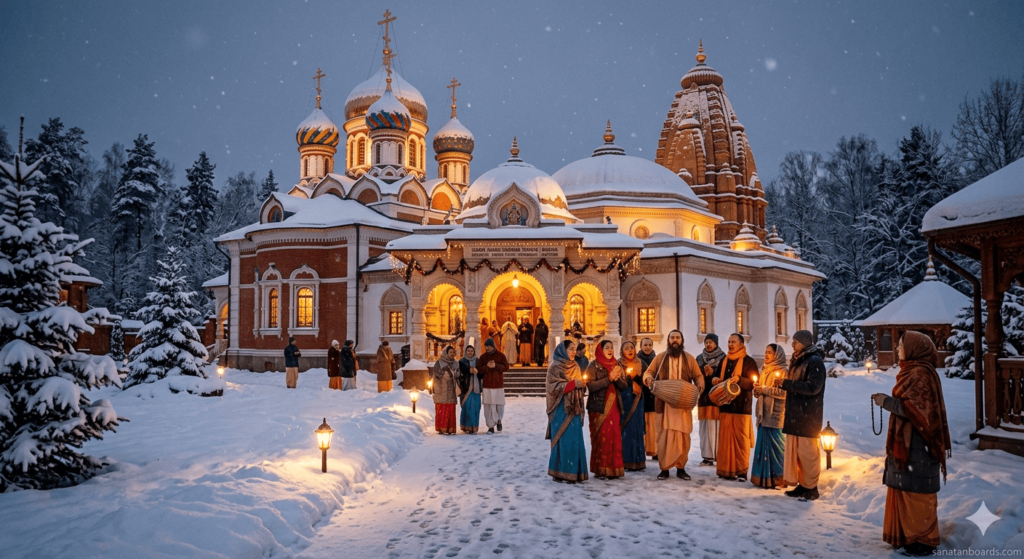
What Is Krishna Temple (Russia) ?
Krishna temples in Russia are religious and cultural centers dedicated to the worship of Lord Krishna, a revered deity in Hinduism known for his teachings on duty, devotion, and righteousness. These temples are largely operated by the International Society for Krishna Consciousness, which introduced Krishna consciousness to Russia during the late 20th century.
At their core, these temples function as places of worship where devotees engage in daily rituals, prayers, and chanting of the Hare Krishna mantra. The spiritual practices followed in these temples are based on ancient Vedic scriptures, particularly the Bhagavad Gita. Devotees believe that through devotion (bhakti), one can attain spiritual enlightenment and inner peace.
Beyond religious activities, Krishna temples in Russia also serve as educational institutions. They host lectures, workshops, and discussions on philosophy, ethics, and personal development. Visitors are introduced to concepts such as karma, reincarnation, and the nature of the soul. These teachings appeal not only to practicing Hindus but also to Russians seeking alternative spiritual paths.
Culturally, the temples play an important role in promoting Indian traditions. Festivals like Janmashtami and Ratha Yatra are celebrated with music, dance, and elaborate rituals, attracting large crowds. Vegetarian food distribution, known as prasadam, is another key feature, emphasizing compassion and non-violence.
Despite their positive contributions, Krishna temples in Russia have faced challenges, including legal restrictions and misunderstandings about their practices. Nevertheless, they continue to grow, supported by a dedicated community of followers.
Who Is Required Krishna Temple (Russia) ?
The functioning and sustainability of Krishna temples in Russia depend on a diverse group of individuals who contribute to their spiritual, administrative, and social activities. At the heart of these temples are the devotees, often referred to as practitioners of Krishna consciousness, who dedicate their lives to following the teachings of Lord Krishna.
Spiritual leaders, commonly known as gurus or temple presidents, play a crucial role. They guide devotees in understanding sacred texts like the Bhagavad Gita and ensure that rituals and practices are performed correctly. These leaders are often experienced members of the International Society for Krishna Consciousness and provide mentorship to newcomers.
Priests are another essential group. They are responsible for conducting daily पूजा (worship), maintaining the sanctity of the temple, and performing ceremonies during festivals and special occasions. Their role requires a deep understanding of rituals, discipline, and devotion.
Volunteers form the backbone of temple operations. They assist in organizing events, preparing prasadam (sanctified food), managing logistics, and maintaining the temple premises. Volunteers often come from diverse backgrounds, including students, professionals, and retirees, all united by a shared interest in spirituality.
Educators and speakers are also important. They conduct classes, workshops, and seminars on Vedic philosophy, meditation, and ethical living. Their role is to make complex spiritual concepts accessible to a broader audience, including those unfamiliar with Hindu traditions.
In addition, administrative staff handle legal, financial, and organizational matters. Given the regulatory environment in Russia, these individuals ensure compliance with local laws and maintain smooth operations.
Finally, the broader community, including visitors and supporters, plays a vital role. Their participation in temple activities helps sustain the institution both spiritually and financially.
When Krishna Temple (Russia) Is Required ?
Krishna temples in Russia are particularly significant during times when individuals seek spiritual guidance, emotional stability, or a sense of community. In modern society, where stress and uncertainty are common, these temples provide a शांत (peaceful) environment for reflection and inner growth.
They are especially relevant during major religious festivals such as Janmashtami, which celebrates the birth of Lord Krishna. During such occasions, temples become vibrant centers of celebration, drawing large numbers of devotees and visitors. These events offer an opportunity for people to connect with spiritual traditions and experience collective joy.
Krishna temples are also important during personal milestones or challenges. Individuals may visit the temple during times of grief, confusion, or decision-making, seeking clarity through prayer and meditation. The teachings of the Bhagavad Gita provide philosophical insights that help individuals navigate life’s complexities.
In addition, these temples are required in educational contexts. Students and researchers interested in religion, philosophy, or cultural studies often visit Krishna temples to gain firsthand knowledge of Vedic traditions. Workshops and lectures conducted at these temples serve as valuable learning resources.
From a societal perspective, Krishna temples are relevant in promoting values such as compassion, non-violence, and self-discipline. In times of social tension or moral uncertainty, these teachings can contribute to harmony and ethical behavior.
Moreover, for the Indian diaspora in Russia, these temples serve as cultural anchors, helping them stay connected to their roots. They provide a familiar environment where traditions, language, and customs are preserved.
Where Krishna Temple (Russia) Is Required ?
Krishna temples in Russia are primarily established in urban centers where there is a higher concentration of devotees and greater access to resources. Cities like Moscow and Saint Petersburg are key locations, hosting some of the most prominent temples operated by the International Society for Krishna Consciousness.
These urban settings provide the necessary infrastructure for organizing large gatherings, festivals, and educational programs. They also attract a diverse audience, including locals, expatriates, and tourists, making them ideal for cultural exchange and outreach.
However, the need for Krishna temples is not limited to major cities. Smaller towns and rural areas can also benefit from such institutions. In these regions, temples can serve as centers for community development, offering spiritual guidance and social support.
Educational institutions are another important location where the influence of Krishna temples is required. Collaborations between temples and universities can facilitate the study of philosophy, religion, and cultural history. This helps promote a deeper understanding of global traditions.
Additionally, Krishna temples are relevant in multicultural environments where people from different backgrounds interact. They act as bridges, fostering dialogue and mutual respect among diverse communities.
In a broader sense, Krishna temples are needed wherever there is a desire for spiritual growth and cultural enrichment. Whether in bustling cities or quiet towns, these temples provide a space for individuals to explore deeper aspects of life.
How Krishna Temple (Russia) Is Required ?
The establishment and functioning of Krishna temples in Russia involve a combination of spiritual dedication, organizational effort, and community support. These temples are typically founded by members of the International Society for Krishna Consciousness, who work to spread the teachings of Lord Krishna.
The process begins with securing a suitable location, which can be challenging due to legal and regulatory requirements. Once a space is acquired, it is transformed into a मंदिर (temple) through the installation of deities, decoration, and preparation for rituals.
Daily operations include पूजा (worship), chanting sessions, and the distribution of prasadam. These activities require coordination among priests, volunteers, and administrative staff. Regular events such as lectures and workshops are organized to engage the community and attract new visitors.
Funding is another critical aspect. Krishna temples rely on donations from devotees and supporters. Fundraising events and community contributions help sustain their activities and expand their reach.
Education plays a key role in their functioning. By offering classes on the Bhagavad Gita and other texts, temples ensure that their teachings are passed on to future generations.
Community involvement is essential. Volunteers contribute their time and skills, creating a sense of ownership and belonging. This collective effort ensures the temple’s sustainability.
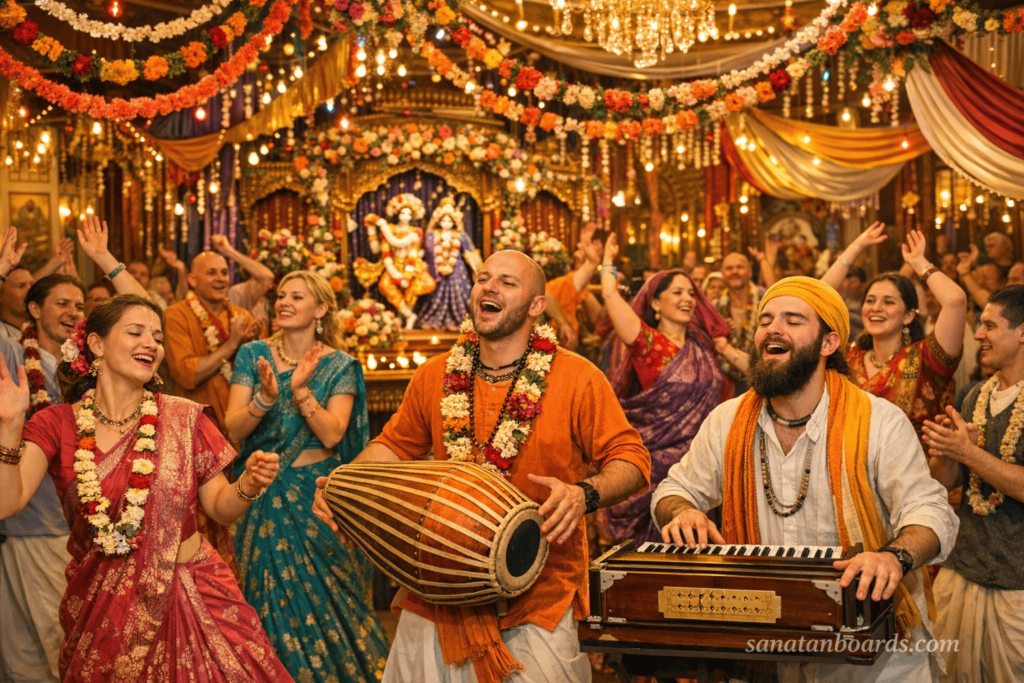
Case Study On Krishna Temple (Russia)
The expansion of Krishna temples in Russia offers a detailed case study in how global spiritual movements adapt within complex socio-political environments. The spread of Krishna consciousness in Russia is primarily linked to the efforts of the International Society for Krishna Consciousness, which introduced the teachings of Lord Krishna to the region during the late Soviet period.
During the Soviet era, religious practices were tightly controlled, and any form of organized spirituality outside state-approved institutions faced restrictions. Early followers of Krishna consciousness in Russia operated in small, informal groups, often practicing in secrecy. Despite these challenges, the movement gained a modest but dedicated following. The teachings from the Bhagavad Gita, focusing on inner peace, discipline, and devotion, resonated with individuals seeking meaning beyond material life.
After the dissolution of the Soviet Union in 1991, religious freedom increased significantly. This shift allowed ISKCON to formally establish temples and organize public events. One of the most prominent developments occurred in Moscow, where Krishna devotees created a structured community with regular worship, educational programs, and cultural festivals.
However, the growth of Krishna temples was not entirely smooth. The movement faced legal scrutiny and opposition from certain groups who viewed it as a foreign religious influence. This led to delays in construction projects and occasional legal battles over land use and religious classification. In response, ISKCON adopted a strategic approach that included legal compliance, public outreach, and community service initiatives to improve its image and legitimacy.
A key success factor in this case study is cultural adaptation. While maintaining core principles of Krishna devotion, temples in Russia localized their approach. This included translating scriptures into Russian, conducting lectures in the local language, and incorporating elements that resonated with Russian cultural sensibilities. Such adaptation made the teachings more accessible and relatable to the local population.
Another important aspect is community engagement. Krishna temples in Russia emphasize inclusivity, offering free meals (prasadam), hosting open events, and encouraging volunteer participation. These initiatives helped build trust and foster a positive reputation within local communities.
The case study highlights resilience as a central theme. Despite facing legal, cultural, and societal challenges, Krishna temples in Russia have #sanatanboardsinmumbai managed to establish a stable presence. Their ability to balance tradition with adaptation demonstrates a successful model for global religious expansion.
White Paper On Krishna Temple (Russia)
Krishna temples in Russia represent a significant example of transnational religious expansion and cultural integration. This white paper analyzes their development, operational framework, challenges, and long-term potential within the broader context of global spirituality.
The establishment of Krishna temples in Russia is largely driven by the International Society for Krishna Consciousness. This organization has played a pivotal role in spreading the teachings of Lord Krishna worldwide, with Russia emerging as one of its notable areas of expansion.
From an institutional perspective, Krishna temples function as multi-dimensional entities. They serve as places of worship, educational centers, and community hubs. Daily activities include rituals, chanting sessions, and study of sacred texts such as the Bhagavad Gita. These activities are structured to promote spiritual growth and ethical living.
Regulatory compliance is a critical aspect of temple operations in Russia. Religious organizations must adhere to strict legal frameworks, including registration requirements and oversight by government authorities. Krishna temples have had to navigate these regulations carefully to ensure their continued operation. This includes maintaining transparency in financial activities and aligning with national laws governing religious practices.
Economically, Krishna temples contribute to local communities through various channels. Festivals and cultural events attract visitors, generating economic activity in areas such as hospitality and transportation. Additionally, charitable initiatives, including food distribution programs, support underserved populations and enhance social welfare.
Socially, Krishna temples play a role in promoting intercultural dialogue. They introduce elements of Indian philosophy and traditions to Russian society, fostering mutual understanding. Educational programs and public lectures create opportunities for knowledge exchange and cultural appreciation.
Despite their contributions, Krishna temples face ongoing challenges. These include public misconceptions, occasional legal disputes, and the need to maintain relevance in a rapidly changing society. Addressing these challenges requires continuous engagement with stakeholders, including government bodies, local communities, and academic institutions.
Looking forward, the sustainability of Krishna temples in Russia depends on innovation and adaptability. The use of digital platforms for outreach, online education, and community building can significantly expand their reach. Furthermore, partnerships with educational and cultural organizations can enhance their impact.
This white paper concludes that Krishna temples in Russia have the potential to serve as models for successful cultural integration. Their emphasis on spirituality, #sanatanboardsinvasai education, and community service positions them as valuable contributors to both local and global society.
Industry Application On Krishna Temple (Russia)
Krishna temples in Russia extend their influence beyond religious practice, contributing to multiple industries including tourism, education, wellness, and food services. Their operations, largely guided by the International Society for Krishna Consciousness, demonstrate how spiritual institutions can create economic and social value across sectors.
In the tourism industry, Krishna temples act as cultural landmarks that attract both domestic and international visitors. Cities like Moscow have seen increased interest from tourists seeking unique spiritual and cultural experiences. Festivals such as Janmashtami and Ratha Yatra provide vibrant attractions featuring music, dance, and traditional rituals. These events not only enhance cultural tourism but also support local businesses such as hotels, restaurants, and transportation services.
The education sector also benefits significantly from the presence of Krishna temples. These institutions offer structured programs on philosophy, ethics, and meditation, often based on teachings from the Bhagavad Gita. Collaborations with universities and research institutions create opportunities for academic exploration of religion, culture, and spirituality. Workshops and seminars conducted by temple educators contribute to lifelong learning and intellectual development.
In the wellness industry, Krishna temples promote practices that align with modern health trends. Meditation, yoga, and vegetarianism are central to their teachings and are increasingly popular among individuals seeking holistic well-being. These practices contribute to stress reduction, mental clarity, and physical health, making them relevant in today’s fast-paced lifestyle.
The food industry is another area where Krishna temples have a notable impact. The emphasis on vegetarian cuisine has led to the establishment of restaurants and catering services associated with temple communities. These businesses promote sustainable and ethical eating habits, appealing to health-conscious consumers. The concept of prasadam, or sanctified food, adds a spiritual dimension to dining experiences.
Additionally, Krishna temples contribute to the nonprofit and social service sector. Their charitable activities, including free meal distribution and community support programs, address social issues such as hunger and inequality. These initiatives enhance their reputation and demonstrate the practical application of spiritual values.
From a broader perspective, Krishna temples in Russia illustrate how religious institutions can integrate into modern economies. By engaging with multiple industries, they create a holistic ecosystem that supports both spiritual and material well-being.
In conclusion, the industry applications of Krishna temples in Russia highlight their versatility and relevance. Their ability to contribute to tourism, education, wellness, #sanatanboardsinindia and social services underscores their importance as multifaceted institutions in contemporary society.
source : Alok Jaiswal
ASK FAQ
1. What is a Krishna Temple in Russia?
A Krishna Temple in Russia is a spiritual and cultural center dedicated to Lord Krishna, mainly operated by the International Society for Krishna Consciousness. These temples promote devotion, meditation, and teachings from the Bhagavad Gita while also serving as community hubs.
2. Where are Krishna temples located in Russia?
Krishna temples are primarily found in major cities like Moscow and Saint Petersburg, where they attract both local followers and international visitors interested in spirituality and culture.
3. Why are Krishna temples important in Russia?
Krishna temples are important because they provide spiritual guidance, promote cultural exchange, and offer community services such as free meals, meditation programs, and educational workshops.
4. Who manages Krishna temples in Russia?
Most Krishna temples in Russia are managed by devotees and leaders of the International Society for Krishna Consciousness, along with volunteers who support daily operations and events.
5. What activities take place in Krishna temples in Russia?
Common activities include daily worship, chanting, meditation sessions, lectures on the Bhagavad Gita, cultural festivals, and distribution of vegetarian food known as prasadam.
Table of Contents
Disclaimer
This content is intended for educational and informational purposes only. It does not aim to promote, criticize, or misrepresent any religion, organization, or cultural practice. Information provided is based on general knowledge and may not reflect the most recent developments or specific local conditions. Readers are encouraged to conduct further research and consult reliable sources for a deeper understanding. The perspectives discussed are neutral and designed to enhance awareness of cultural and spiritual institutions. Any resemblance to specific events or interpretations is coincidental and should not be taken as authoritative or definitive.