
MUKTINATH TEMPLE (MUSTANG)
Muktinath Temple, located in the remote Himalayan region of Mustang, stands as one of the most revered pilgrimage destinations in South Asia. Nestled at an altitude of approximately 3,800 meters at the base of the Thorong La mountain pass, the temple is both a spiritual sanctuary and a geographical marvel. Its name, “Muktinath,” is derived from two Sanskrit words: Mukti meaning liberation or salvation, and Nath meaning lord, symbolizing the “Lord of Liberation.”
The temple holds profound religious importance for followers of both Hinduism and Buddhism, making it a rare example of interfaith harmony. For Hindus, it is one of the 108 sacred Divya Desams dedicated to Vishnu, while Buddhists regard it as a place where Guru Rinpoche meditated.
Surrounded by snow-capped peaks, arid landscapes, and the Kali Gandaki River valley, the temple offers a unique blend of spirituality and natural beauty. Pilgrims and travelers alike undertake challenging journeys to reach this sacred site, driven by faith, curiosity and the desire for inner peace.
Muktinath is also known for its 108 water spouts, believed to cleanse sins, and a natural eternal flame that symbolizes the presence of divine energy. These elements combine to create a deeply symbolic and transformative experience.
Beyond religion, the temple represents resilience, cultural integration, and the timeless human pursuit of meaning. It continues to attract thousands of visitors each year, making it not only a spiritual landmark but also a significant cultural and tourism hub in Nepal.
What Is Muktinath Temple (Mustang)
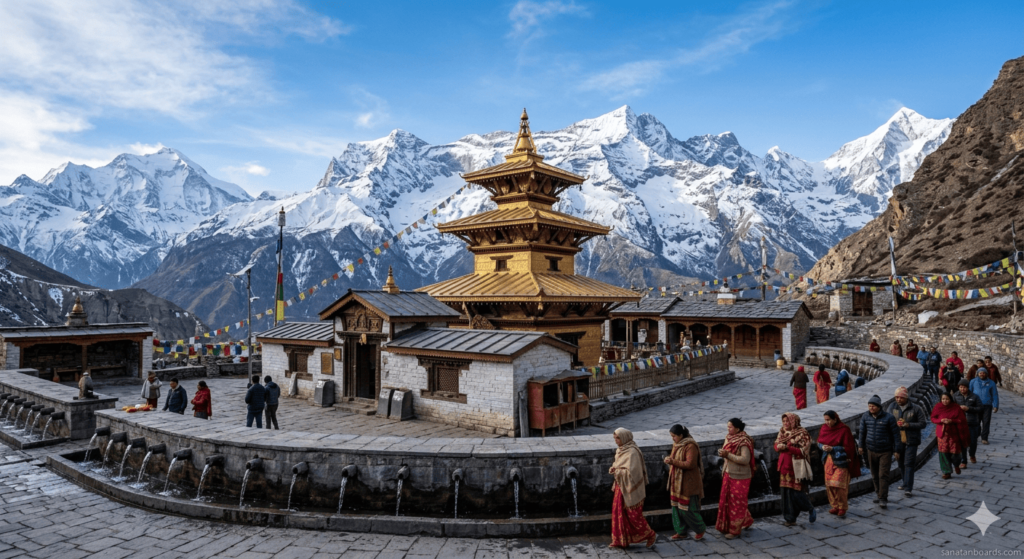
Muktinath Temple is a sacred pilgrimage site located in the trans-Himalayan region of Mustang in Nepal. It is a temple complex that holds immense spiritual value for both Hindu and Buddhist traditions, making it a unique religious convergence point.
In Hindu belief, Muktinath is one of the most sacred shrines dedicated to Vishnu, worshipped here in the form of “Shaligram,” a fossilized stone found in the Kali Gandaki River. The temple is part of the 108 Divya Desams, which are considered the holiest abodes of Vishnu. Devotees believe that visiting Muktinath grants liberation from the cycle of birth and death.
From a Buddhist perspective, the temple is known as “Chumig Gyatsa,” meaning “Hundred Waters.” It is associated with Guru Padmasambhava, who is believed to have meditated here. The presence of both Hindu priests and Buddhist nuns in the temple highlights its dual religious identity.
The temple complex is famous for its 108 water spouts arranged in a semicircle. Pilgrims bathe under these icy streams as part of a purification ritual. Nearby, there is a sacred pond where devotees take a dip before entering the temple. Another unique feature is the eternal flame, fueled naturally by gas, water, and rock, symbolizing the union of the five elements.
Architecturally, the temple is simple yet spiritually profound. Built in a pagoda style, it reflects traditional Nepali craftsmanship and resilience against harsh climatic conditions.
Muktinath Temple is not just a religious site; it is a symbol of faith, endurance, and coexistence. Its location in a remote and rugged terrain adds to its mystique, attracting pilgrims, trekkers, and spiritual seekers from around the world.
Who Is Required Muktinath Temple (Mustang)
Muktinath Temple is sought by a diverse group of individuals, each driven by unique motivations rooted in spirituality, culture, and personal growth.
Primarily, Hindu devotees consider the temple essential for achieving spiritual liberation. Followers of Vishnu visit the shrine believing that performing rituals here absolves sins and grants salvation. For them, the journey to Muktinath is not just a pilgrimage but a sacred duty that fulfills lifelong religious aspirations.
Similarly, Buddhist practitioners, especially those from Tibetan traditions, view the temple as a place of meditation and enlightenment. The association with Guru Padmasambhava makes it significant for those seeking spiritual wisdom and inner peace.
Apart from religious followers, spiritual seekers from around the world are drawn to Muktinath. These individuals may not follow a specific religion but are interested in self-discovery, mindfulness, and the transformative power of sacred spaces.
Travel enthusiasts and trekkers also “require” Muktinath in a different sense. The temple lies along the famous Annapurna Circuit trek, making it a key destination for adventure seekers. For them, reaching Muktinath represents achievement, endurance, and connection with nature.
Researchers, historians, and anthropologists find the temple valuable for studying cultural integration, religious coexistence, and Himalayan traditions. It serves as a living example of how different belief systems can coexist harmoniously.
Finally, local communities depend on the temple for economic and cultural sustainability. Tourism and pilgrimage generate income and preserve traditional practices.
Thus, Muktinath Temple is “required” by many—devotees, seekers, travelers, and scholars—each finding meaning in their own way.
When Muktinath Temple (Mustang) Is Required ?
Muktinath Temple becomes especially significant at particular times based on religious, seasonal, and personal contexts.
From a religious perspective, the temple is most “required” during important Hindu festivals such as Janai Purnima and Ram Navami. During these occasions, thousands of pilgrims visit to perform rituals and seek blessings. The belief that prayers offered during these sacred times carry greater spiritual weight makes the temple highly relevant.
Seasonally, the best time to visit Muktinath is between March to May and September to November. During these months, weather conditions are relatively stable, making travel safer and more accessible. Pilgrims and tourists plan their visits accordingly, as winter months bring extreme cold and heavy snowfall, which can limit access.
On a personal level, individuals often feel the need to visit Muktinath during times of spiritual crisis, life transitions, or emotional challenges. The temple becomes a place of reflection and renewal, offering a sense of peace and clarity.
For trekkers, the timing aligns with trekking seasons in the Annapurna region. Muktinath becomes a milestone destination, marking the completion of a challenging journey.
Culturally, the temple is relevant year-round, but its importance peaks during pilgrimage seasons when rituals, gatherings, and community interactions are at their highest.
Thus, Muktinath is “required” not just at a specific time but whenever individuals seek spiritual fulfillment, favorable travel conditions, or meaningful experiences.
Where Muktinath Temple (Mustang) Is Required ?
Muktinath Temple is located in the Mustang district of Nepal, near the border with Tibet. Positioned at an altitude of around 3,800 meters, it lies in the rain-shadow region of the Himalayas, characterized by dry landscapes and rugged terrain.
Geographically, it sits at the base of the Thorong La Pass, one of the highest trekking passes in the world. The temple is accessible via a combination of road, trekking routes, and flights to Jomsom followed by a short journey.
The “requirement” of Muktinath in terms of location extends beyond geography. It is situated at a spiritual crossroads where Hindu and Buddhist traditions intersect. This unique positioning enhances its significance as a shared sacred space.
For trekkers, its location along the Annapurna Circuit makes it a crucial stop. For pilgrims, the remote setting adds to the spiritual value, symbolizing detachment from worldly life.
The temple’s placement in a high-altitude environment also represents a metaphorical journey—ascending towards spiritual enlightenment.
Thus, Muktinath is “required” in a place that is both physically remote and spiritually central, offering a rare combination of natural beauty and divine presence.
How Muktinath Temple (Mustang) Is Required ?
Muktinath Temple is “required” through the processes, practices, and experiences that define its significance.
For devotees, the requirement is fulfilled through rituals such as bathing under the 108 water spouts, offering prayers, and visiting the eternal flame. These acts are believed to purify the soul and bring spiritual liberation.
The journey itself is an essential part of the experience. Pilgrims often travel long distances, facing physical challenges that symbolize devotion and perseverance. This कठिन journey enhances the spiritual value of reaching the temple.
From a logistical perspective, visiting Muktinath requires planning, including travel arrangements, acclimatization to high altitude, and preparation for harsh weather conditions.
For spiritual seekers, the “how” involves introspection, meditation, and connection with the environment. The serene surroundings provide an ideal setting for mindfulness and self-discovery.
Thus, Muktinath is required not just as a destination but as a process involving effort, faith, and transformation.
Case Study On Muktinath Temple (Mustang)
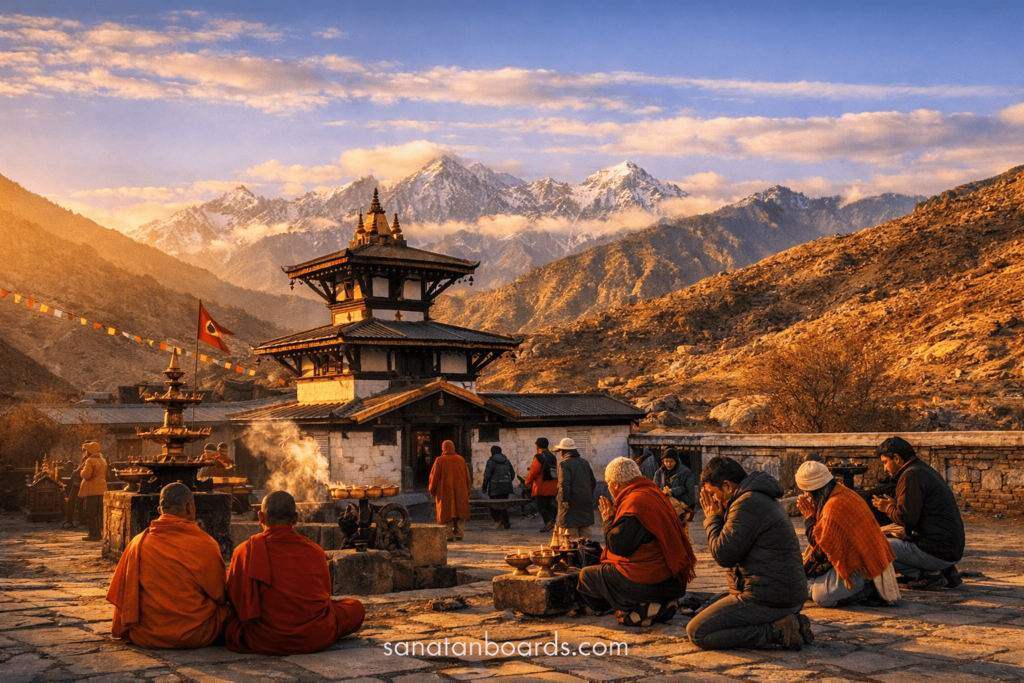
Muktinath Temple offers a compelling real-world case study that highlights the intersection of religion, tourism, sustainability, and community development. Situated in the remote Himalayan region of Mustang, the temple has evolved from a purely sacred destination into a multifaceted socio-economic hub.
One of the most significant aspects of this case is its dual religious identity. The temple is revered by followers of Hinduism and Buddhism, making it a rare example of peaceful religious coexistence. Hindu priests and Buddhist nuns jointly maintain the temple premises, symbolizing interfaith harmony. This has reduced potential religious conflicts and strengthened cultural unity in the region.
From an economic perspective, Muktinath Temple has transformed the local economy. Increased pilgrimage and tourism have led to the growth of small businesses such as guesthouses, transport services, and local handicrafts. The nearby town of Jomsom has developed into a gateway for travelers, benefiting from improved infrastructure and connectivity. Employment opportunities have increased, reducing migration from rural areas.
However, this growth has also introduced challenges. Environmental degradation is a major concern, as increased footfall leads to waste generation and strain on natural resources. The fragile Himalayan ecosystem is particularly vulnerable to pollution and climate change. To address this, local authorities and community organizations have initiated waste management programs and awareness campaigns promoting eco-friendly practices.
Another key issue is accessibility. Due to its high-altitude location, reaching Muktinath remains physically demanding and weather-dependent. While road and air connectivity have improved, they are still subject to disruptions. This limits consistent tourist flow and poses risks for emergency situations.
Culturally, the temple plays a vital role in preserving traditions and rituals. Festivals and pilgrimage activities help maintain cultural identity, but commercialization risks diluting authenticity. Balancing modernization with tradition is an ongoing challenge.
In conclusion, Muktinath Temple serves as a model for sustainable spiritual tourism. It demonstrates how religious heritage can drive economic growth while fostering social harmony. At the same time, it highlights the importance of environmental conservation and responsible tourism practices. The lessons from this case study can be applied to other pilgrimage sites worldwide.
White Paper On Muktinath Temple (Mustang)
This white paper explores Muktinath Temple as a strategic model for sustainable pilgrimage tourism and interfaith harmony. Located in the Mustang region of Nepal, the temple attracts global attention due to its religious significance and unique geographical setting.
Objective:
The primary objective is to evaluate the temple’s role in tourism development, cultural preservation, and environmental sustainability, while proposing actionable strategies for long-term growth.
Current Scenario:
Muktinath Temple receives thousands of pilgrims annually, contributing significantly to Nepal’s tourism sector. It is a key destination for both religious tourism and adventure tourism, particularly for trekkers on the Annapurna Circuit. The presence of shared religious practices between Hindus and Buddhists enhances its global appeal.
Challenges Identified:
- Infrastructure Limitations: Limited transportation facilities and healthcare services in high-altitude areas.
- Environmental Concerns: Waste management issues and ecological degradation due to increased tourism.
- Seasonal Accessibility: Harsh weather conditions restrict year-round access.
- Cultural Dilution: Commercialization may impact traditional practices and authenticity.
Opportunities:
- Sustainable Tourism Development: Implementing eco-friendly policies can preserve the environment while boosting tourism.
- Digital Promotion: Leveraging digital platforms to increase global awareness.
- Community Engagement: Empowering local communities through skill development and entrepreneurship.
- Interfaith Dialogue: Promoting the temple as a symbol of religious harmony.
Recommendations:
- Develop eco-friendly infrastructure such as solar energy systems and waste recycling units.
- Introduce regulated visitor management systems to control overcrowding.
- Enhance connectivity through improved road and air transport.
- Promote cultural education programs to preserve traditions.
- Collaborate with international organizations for sustainable development initiatives.
Conclusion:
Muktinath Temple represents a unique blend of spirituality, culture, and natural beauty. By adopting sustainable practices and strategic planning, it can serve as a global benchmark for #sanatanboardsinvasai pilgrimage tourism. The integration of environmental, economic, and cultural considerations will ensure its long-term viability and global significance.
Industry Application On Muktinath Temple (Mustang)
Muktinath Temple has broad applications across multiple industries, particularly tourism, hospitality, wellness, and cultural studies. Its unique positioning in the Himalayas makes it a valuable asset for both economic and cultural development.
Tourism Industry:
Muktinath is a प्रमुख destination for religious tourism, attracting pilgrims from India, Nepal, and other countries. Travel agencies design specialized packages that combine pilgrimage with trekking experiences in the Annapurna region. This integration of spiritual and adventure tourism enhances visitor engagement and increases revenue streams.
Hospitality Industry:
The influx of tourists has led to the growth of hotels, lodges, and homestays in the Mustang region. Local entrepreneurs benefit from increased demand for accommodation and food services. This has encouraged investment in infrastructure and improved service standards.
Wellness and Spiritual Industry:
The serene environment of Muktinath makes it ideal for meditation, yoga retreats, and spiritual healing programs. Wellness tourism is a growing sector globally, and Muktinath offers a प्राकृतिक setting for mental and emotional rejuvenation. Organizations can develop retreat programs that combine spirituality with holistic health practices.
Transportation Industry:
The need to access remote क्षेत्रों like Muktinath has driven improvements in transportation services, including flights to Jomsom and road connectivity. This creates opportunities for aviation and logistics companies to expand operations in mountainous regions.
Cultural and Educational Industry:
Muktinath serves as a case study for students and researchers in fields such as anthropology, religious studies, and environmental science. Universities and institutions can develop academic programs and research initiatives focused on Himalayan culture and interfaith harmony.
Local Economy and Entrepreneurship:
The temple supports small-scale industries such as handicrafts, local cuisine, and guide services. Community-based tourism initiatives empower local residents and promote sustainable economic development.
Challenges in Industry Application:
- Overdependence on seasonal tourism
- Environmental risks due to increased commercial activity
- Limited infrastructure for large-scale operations
Future Potential:
By integrating technology, sustainability, and community participation, Muktinath can expand its role across industries. Smart tourism solutions, eco-friendly practices, and global collaborations can enhance its impact.
Conclusion:
Muktinath Temple is more than a धार्मिक site; it is an economic and cultural driver with applications across diverse industries. Its ability to combine spirituality with #sanatanboardsinmumbai modern development makes it a valuable model for sustainable growth in similar regions worldwide.
source : Suraj Travel Vlog
ASK FAQ
1. What is the significance of Muktinath Temple?
Muktinath Temple is a sacred pilgrimage site for both Hindus and Buddhists, believed to grant spiritual liberation (moksha) and cleanse sins through its holy water spouts and rituals.
2. Where is Muktinath Temple located?
Muktinath Temple is located in the Mustang district of Nepal, at an altitude of about 3,800 meters in the Himalayan region.
3. How can you reach Muktinath Temple?
You can reach Muktinath via flights to Jomsom followed by a road journey or trekking routes like the Annapurna Circuit, depending on your preference and season.
4. What is the best time to visit Muktinath Temple?
The best time to visit is from March to May and September to November, when weather conditions are favorable and travel routes are accessible.
5. Why do pilgrims visit Muktinath Temple?
Pilgrims visit to seek salvation, perform religious rituals, and experience spiritual peace in a serene Himalayan environment.
Table of Contents
Disclaimer
This document is intended solely for educational and informational purposes regarding Muktinath Temple. While every effort has been made to ensure the accuracy and relevance of the information provided, details such as travel conditions, cultural practices, and administrative guidelines may change over time. Readers are encouraged to verify current information from official or local sources before making travel or research decisions. The content does not promote or favor any specific religious belief or practice. Interpretations of spiritual significance may vary among individuals, and respect for local customs, traditions, and environmental guidelines is strongly advised at all times.