
ANGKOR WAT (CAMBODIA)
Angkor Wat, located in Cambodia, stands as one of the most extraordinary architectural and cultural achievements in human history. Recognized globally for its grandeur and intricate design, it represents the peak of classical Khmer architecture. Built in the early 12th century, Angkor Wat was originally constructed as a Hindu temple dedicated to the god Vishnu, but over time it gradually transformed into a Buddhist site, reflecting the religious evolution of the region.
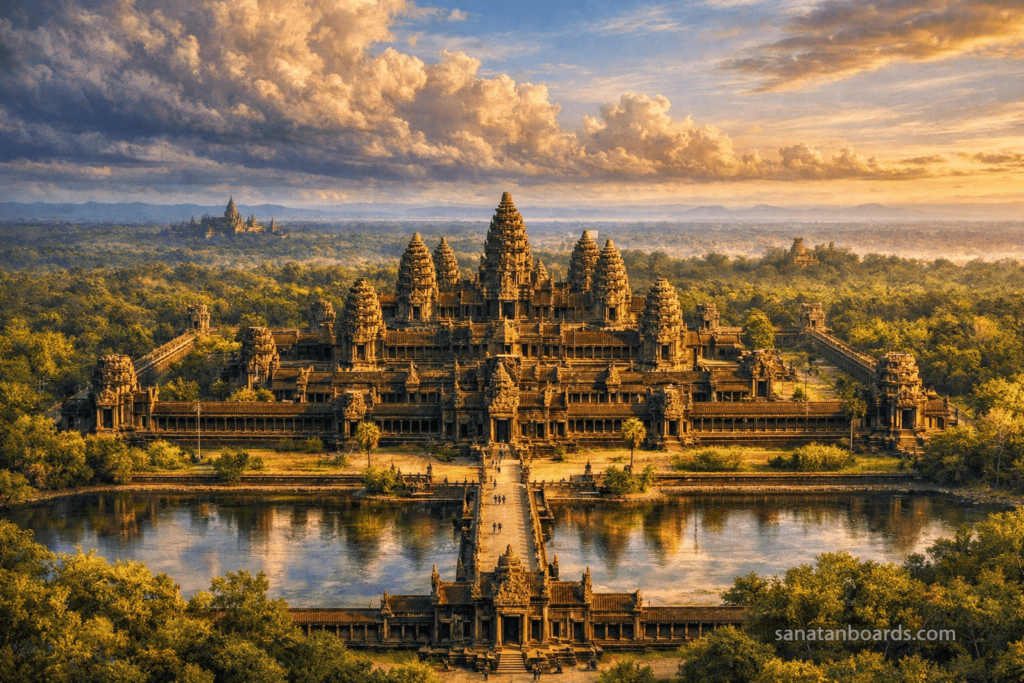
The temple complex is renowned for its massive scale, covering over 162 hectares, making it the largest religious monument in the world. Its symmetrical layout, towering spires, and detailed bas-reliefs demonstrate not only artistic brilliance but also advanced engineering techniques of the Khmer Empire. The central tower symbolizes Mount Meru, believed in Hindu mythology to be the center of the universe, while the surrounding moat represents the cosmic ocean.
Angkor Wat is also a powerful symbol of Cambodian identity and pride. It is featured on the national flag of Cambodia, highlighting its cultural and historical importance. Every year, millions of tourists from around the globe visit the site, contributing significantly to the country’s economy and global recognition.
Beyond its physical beauty, Angkor Wat offers deep insight into ancient civilizations, religious transitions, and architectural advancements. It stands as a testament to human creativity, devotion and resilience. Preserved through centuries despite natural and human challenges, it continues to inspire historians, architects, and travelers alike.
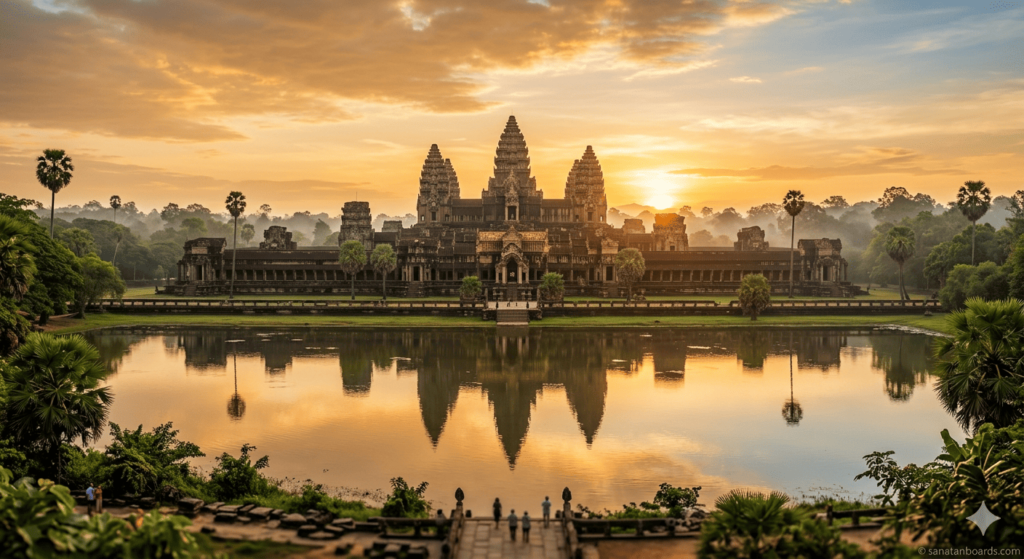
What Is Angkor Wat (Cambodia ?
Angkor Wat is a vast temple complex located in northwestern Cambodia and is widely considered one of the most important archaeological sites in Southeast Asia. It was built during the reign of King Suryavarman II in the early 12th century as a state temple and capital city of the Khmer Empire. Originally dedicated to the Hindu god Vishnu, it later transitioned into a Buddhist temple, reflecting changes in religious practices over time.
Architecturally, Angkor Wat is a masterpiece that showcases the brilliance of Khmer design and engineering. The temple is constructed primarily from sandstone blocks, carefully arranged without the use of modern binding materials. Its layout is based on a grid system, with concentric galleries and courtyards leading to the central sanctuary. The five iconic towers represent Mount Meru, the mythical home of the gods in Hindu cosmology.
One of the most remarkable features of Angkor Wat is its extensive bas-reliefs. These carvings stretch for hundreds of meters and depict scenes from Hindu epics such as the Ramayana and Mahabharata, as well as historical events and everyday life during the Khmer Empire. These artistic works provide valuable insights into ancient culture, beliefs, and social structures.
The temple is surrounded by a large moat, which not only enhances its beauty but also serves structural and symbolic purposes. The moat represents the cosmic ocean, reinforcing the temple’s connection to Hindu cosmology.
Today, Angkor Wat is a UNESCO World Heritage Site and a major tourist attraction. It attracts millions of visitors annually, making it a key contributor to Cambodia’s tourism industry. Conservation efforts are ongoing to preserve the site from environmental damage and the impact of mass tourism.
Who Is Required Angkor Wat (Cambodia) ?
The relevance of Angkor Wat extends across a wide range of individuals, groups, and professions, each benefiting from its historical, cultural, and educational value. Historians and archaeologists are among the primary groups who require Angkor Wat as a vital source of information. The site provides rich insights into the Khmer Empire, including its political systems, religious practices, and social structures. Through inscriptions, carvings, and architectural patterns, experts can reconstruct historical narratives and better understand ancient civilizations.
Architects and engineers also find Angkor Wat highly valuable. The temple demonstrates advanced construction techniques that were far ahead of their time. The precision in stone placement, drainage systems, and structural stability offer lessons that are still relevant in modern engineering and architectural design.
Students and educators benefit significantly from studying Angkor Wat. It serves as a practical example in subjects such as history, geography, art, and cultural studies. By analyzing the temple, learners can gain a deeper understanding of ancient civilizations and their contributions to the modern world.
Tourists and travelers are another group for whom Angkor Wat holds great importance. Visiting the site provides a unique opportunity to experience cultural heritage firsthand. It allows individuals to connect with history in a tangible way, fostering appreciation for global diversity and heritage conservation.
Government bodies and policymakers also require Angkor Wat as a critical asset for national identity and economic development. The site plays a major role in Cambodia’s tourism industry, generating revenue and employment opportunities. Effective management and preservation strategies are essential to sustain its value for future generations.
Finally, conservationists and environmentalists rely on Angkor Wat as a case study for heritage preservation. The challenges faced in maintaining the site, such as weathering, vegetation growth, and human impact, provide valuable lessons in sustainable conservation practices.
When Angkor Wat (Cambodia) Is Required ?
Angkor Wat becomes particularly relevant and required in various contexts depending on time, purpose, and need. One of the most significant times it is required is during academic and research activities. Scholars studying ancient history, Southeast Asian civilizations, or religious transitions rely heavily on Angkor Wat as a primary source of evidence. Its inscriptions, architectural design, and artwork provide essential data for understanding historical developments.
Angkor Wat is also required during cultural and heritage preservation efforts. As time passes, natural elements such as weather, erosion, and vegetation growth threaten the integrity of the structure. Conservation teams must continuously study and maintain the site to prevent deterioration. In this context, Angkor Wat is required whenever restoration or preservation initiatives are undertaken.
The temple is highly relevant during tourism seasons, especially between November and March when weather conditions are favorable. During this period, Angkor Wat is required as a central attraction that draws international visitors. It plays a crucial role in boosting Cambodia’s economy and promoting cultural exchange.
Religious and spiritual occasions also mark times when Angkor Wat is required. Although it is no longer an active Hindu temple, it remains an important Buddhist site. Pilgrims visit the temple during significant religious festivals and ceremonies, seeking spiritual connection and reflection.
Angkor Wat is also required in educational curricula and awareness programs. Schools, universities, and cultural organizations include it as a case study to teach about heritage, architecture, and history. This ensures that future generations understand its importance and contribute to its preservation.
In times of national representation, Angkor Wat is required as a symbol of Cambodia. It appears on the national flag and is often showcased in international events, exhibitions, and diplomatic engagements. It represents the country’s cultural identity and historical pride.
Where Angkor Wat (Cambodia) Is Required ?
Angkor Wat is primarily located in the Angkor Archaeological Park in Siem Reap Province, northwestern Cambodia. This geographical location makes it one of the most significant heritage sites in Southeast Asia. The temple complex is required and relevant within this region as a central landmark that defines Cambodia’s cultural and historical landscape. Its presence has transformed Siem Reap into a major global tourism hub.
Beyond its physical location, Angkor Wat is required in various global contexts. In academic institutions around the world, it is studied in classrooms, research centers, and universities. It is frequently referenced in subjects such as archaeology, architecture, religious studies, and Southeast Asian history. Its influence extends into textbooks, documentaries, and scholarly publications, making it globally relevant.
Angkor Wat is also required in museums and cultural exhibitions worldwide. Replicas, photographs, and digital reconstructions are displayed to educate people who cannot physically visit the site. These representations help spread awareness about Khmer heritage and promote cross-cultural understanding.
In the digital space, Angkor Wat is required in virtual learning platforms, travel websites, and heritage preservation databases. With the rise of technology, 3D models and virtual tours allow users to explore the temple remotely. This expands access and ensures that knowledge about Angkor Wat reaches a broader audience.
The site is also required in international tourism networks. Travel agencies, tour operators, and hospitality industries rely on Angkor Wat as a key attraction. It is often featured in travel itineraries, promotional campaigns, and global tourism rankings.
Furthermore, Angkor Wat is required in policy-making and heritage management organizations. Institutions responsible for cultural preservation use it as a reference point for developing strategies to protect historical monuments. Its management involves collaboration between local authorities and international bodies, highlighting its global importance.
How Angkor Wat (Cambodia) Is Required ?
Angkor Wat is required in multiple ways depending on the context in which it is being utilized. One of the primary ways is as a source of historical knowledge. Researchers and historians use the temple’s inscriptions, carvings, and layout to understand the Khmer Empire’s political structure, religious beliefs, and daily life. Through systematic study and analysis, Angkor Wat becomes a tool for reconstructing the past.
Another important way Angkor Wat is required is in architectural and engineering studies. The temple demonstrates advanced construction techniques, including precise stone alignment and effective water management systems. Modern architects and engineers study these features to gain insights into sustainable design and structural stability.
Angkor Wat is also required as a cultural and educational resource. Schools and universities incorporate it into their curricula to teach students about world heritage, art, and history. Educational programs often include case studies, visual analysis, and field visits, enabling learners to engage with the subject more deeply.
In tourism, Angkor Wat is required as a major attraction that drives economic activity. Tour operators design travel packages around the site, and local businesses benefit from the influx of visitors. It supports employment in hospitality, transportation, and guiding services, making it an essential component of the regional economy.
The temple is also required in conservation and preservation efforts. Experts use scientific methods and modern technology to monitor structural stability and environmental impact. Restoration projects rely on detailed documentation and careful planning to maintain the authenticity of the monument.
Additionally, Angkor Wat is required as a symbol of national identity. It represents Cambodia’s heritage and is used in branding, international representation, and cultural diplomacy. Its image is widely recognized and serves as a source of pride for the nation.
Case Study On Angkor Wat (Cambodia)
Angkor Wat serves as a compelling case study in the fields of heritage conservation, tourism management, and cultural sustainability. Built in the early 12th century under King Suryavarman II, the temple complex was originally a Hindu religious site before transitioning into a Buddhist center. Over centuries, it has faced numerous challenges, including natural deterioration, war, and the pressures of mass tourism.
One of the most critical aspects of this case study is the preservation of Angkor Wat. Due to its age and exposure to environmental factors such as humidity, rainfall, and vegetation growth, the structure has undergone significant wear and tear. In the late 20th century, conservation efforts intensified with the involvement of international organizations. These efforts included stabilizing foundations, restoring damaged carvings, and improving drainage systems to prevent water damage.
Tourism has played a dual role in the case of Angkor Wat. On one hand, it has provided substantial economic benefits to Cambodia. Millions of tourists visit the site annually, generating revenue and creating employment opportunities. On the other hand, excessive tourism has led to concerns about overcrowding, physical damage to the structure, and environmental degradation. Managing this balance has been a key challenge for authorities.
The Cambodian government, in collaboration with global heritage organizations, has implemented several measures to address these issues. These include limiting visitor access to certain areas, promoting sustainable tourism practices, and educating visitors about the importance of preservation. Infrastructure improvements, such as designated pathways and controlled entry points, have also been introduced to minimize damage.
Another important dimension of this case study is the role of technology in conservation. Advanced tools such as 3D scanning, satellite imaging, and digital mapping have been used to document the temple in detail. These technologies allow experts to monitor changes over time and plan restoration activities more effectively.
Community involvement is also a significant factor. Local communities depend on tourism for their livelihoods, making them key stakeholders in the preservation process. Programs have been developed to involve residents in conservation efforts and ensure that economic benefits are distributed fairly.
Angkor Wat also highlights the importance of cultural identity. As a national symbol, it represents Cambodia’s history and resilience. Efforts to preserve the site are not just about maintaining a structure but also about safeguarding a cultural legacy.
In conclusion, the case study of Angkor Wat demonstrates the complexities of managing a world heritage site. It requires a balance between conservation, tourism, and community development. The lessons learned from Angkor Wat can be applied to other heritage sites facing similar challenges, making it a valuable example in global heritage management.
White Paper On Angkor Wat (Cambodia)
Angkor Wat represents a critical subject in the discussion of cultural heritage preservation, sustainable tourism, and historical research. As the largest religious monument in the world, it holds immense value not only for Cambodia but for global heritage. This white paper examines the significance of Angkor Wat, the challenges it faces, and the strategies required for its sustainable management.
The historical importance of Angkor Wat lies in its representation of the Khmer Empire’s peak. Built in the 12th century, it reflects advanced architectural knowledge and religious devotion. The transition from Hinduism to Buddhism within the temple complex illustrates broader cultural shifts in the region.
One of the primary challenges facing Angkor Wat is environmental degradation. The tropical climate of Cambodia exposes the structure to heavy rainfall, humidity, and temperature fluctuations. These factors contribute to erosion, biological growth, and structural instability. Addressing these issues requires continuous monitoring and maintenance.
Tourism is another major factor influencing the site. While it generates significant revenue, it also places pressure on the infrastructure and environment. High foot traffic can lead to physical wear on the stone surfaces, while increased development around the site can disrupt the natural ecosystem.
To address these challenges, a multi-faceted approach is necessary. Conservation efforts must combine traditional techniques with modern technology. Digital documentation, such as 3D modeling, allows for precise analysis and restoration planning. Additionally, environmental management strategies should be implemented to control water flow and vegetation growth.
Sustainable tourism practices are essential to ensure the long-term viability of Angkor Wat. This includes regulating visitor numbers, promoting off-peak travel, and developing alternative attractions to distribute tourist traffic. Education and awareness programs can also encourage responsible behavior among visitors.
Collaboration between local authorities, international organizations, and academic institutions is crucial. Shared expertise and resources can enhance the effectiveness of preservation efforts. Policies should also focus on community engagement, ensuring that local populations benefit from tourism while contributing to conservation.
In conclusion, Angkor Wat requires a comprehensive and sustainable approach to management. By addressing environmental, economic, and social factors, #sanatanboardsinvasai it is possible to preserve this iconic monument for future generations. The lessons derived from Angkor Wat can inform global practices in heritage conservation and sustainable development.
Industry Application On Angkor Wat (Cambodia)
Angkor Wat has significant applications across various industries, making it more than just a historical monument. Its influence extends into tourism, education, architecture, media, and technology sectors.
In the tourism industry, Angkor Wat serves as a primary attraction that drives international travel to Cambodia. Tour operators, hotels, and transportation services rely heavily on the site. It contributes to job creation and economic growth, making it a cornerstone of the national economy.
In education, Angkor Wat is widely used as a teaching resource. It provides real-world examples for subjects such as history, art, and architecture. Educational institutions develop courses and research programs centered around the site, promoting academic exploration.
The architecture and construction industry also benefit from studying Angkor Wat. Its design principles, such as symmetry, proportion, and durability, inspire modern projects. Engineers analyze its construction techniques to develop sustainable building practices.
In the media and entertainment industry, Angkor Wat is frequently featured in documentaries, films, and digital content. Its visual appeal and historical significance make it an ideal subject for storytelling and creative projects.
Technology plays a growing role in the application of Angkor Wat. Virtual reality and augmented reality platforms allow users to explore the site digitally. These innovations enhance accessibility and provide immersive learning experiences.
The conservation industry also uses Angkor Wat as a model for heritage preservation. Techniques developed for its restoration are applied to other historical sites around the world.
Additionally, Angkor Wat contributes to cultural diplomacy. #sanatanboardsinmumbai It is used in international exhibitions and promotional campaigns to represent Cambodia’s heritage and attract global interest.
source : National Geographic
ASK FAQ
1. What is Angkor Wat famous for?
Angkor Wat is famous for being the largest religious monument in the world and a masterpiece of Khmer architecture. It is known for its grand design, intricate carvings, and historical significance as both a Hindu and later a Buddhist temple.
2. Where is Angkor Wat located?
Angkor Wat is located in Siem Reap Province in northwestern Cambodia. It is part of the Angkor Archaeological Park, one of the most important cultural heritage sites in Southeast Asia.
3. Who built Angkor Wat?
Angkor Wat was built by King Suryavarman II in the early 12th century. It was originally constructed as a Hindu temple dedicated to Lord Vishnu.
4. Why is Angkor Wat important?
Angkor Wat is important because it represents the cultural, religious, and architectural achievements of the Khmer Empire. It is also a national symbol of Cambodia and a UNESCO World Heritage Site.
5. When is the best time to visit Angkor Wat?
The best time to visit Angkor Wat is between November and March when the weather is cooler and drier, making it ideal for exploring the temple complex comfortably.
Table of Contents
Disclaimer
This content is intended for educational and informational purposes only. While efforts have been made to ensure accuracy and completeness, the information provided may not cover all aspects of Angkor Wat and may be subject to updates or revisions over time. Readers are encouraged to consult additional reliable sources and official publications for more detailed research or academic use. The content does not substitute professional advice, historical expertise, or official guidelines related to heritage conservation, tourism, or cultural studies. Any use of this material should be done responsibly, with proper acknowledgment and consideration of its intended purpose.