
SWAMINARAYAN TEMPLE (KENYA, NAIROBI)
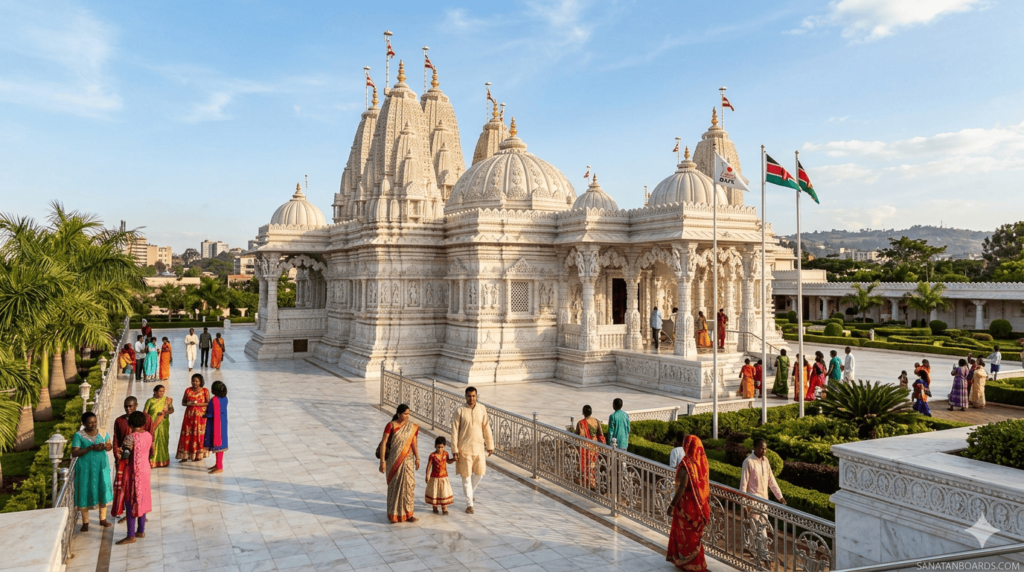
The Swaminarayan Temple in Nairobi, Kenya stands as a remarkable symbol of spiritual devotion, cultural heritage, and architectural brilliance. Situated in the heart of a vibrant and multicultural city, this temple serves not only as a place of worship but also as a center for community bonding and moral upliftment. It reflects the enduring presence and contributions of the Indian diaspora in East Africa, particularly those who follow the teachings of Bhagwan Swaminarayan.
Built with intricate craftsmanship and attention to traditional Hindu temple design, the temple showcases a blend of ancient Indian architectural styles adapted to a modern African setting. It attracts devotees, tourists, and scholars alike who are interested in spirituality, art, and cultural exchange. The serene environment within the temple premises provides a peaceful escape from the fast-paced life of Nairobi, allowing visitors to reflect, meditate, and connect with higher values.
Beyond its religious significance, the temple plays an important role in promoting education, charity, and social welfare. It hosts cultural programs, spiritual discourses, and humanitarian initiatives that benefit people from all walks of life. This makes it a dynamic institution that goes far beyond ritual practices.
In a globalized world where identities often intersect, the Swaminarayan Temple in Nairobi serves as a bridge between cultures, traditions, and generations. It stands as a testimony to how faith can inspire unity, discipline, and service. Understanding its significance provides valuable insight into how religious institutions can contribute meaningfully to society while preserving their core spiritual values.
What Is Swaminarayan Temple (Kenya, Nairobi) ?
The Swaminarayan Temple in Nairobi is a Hindu place of worship dedicated to Bhagwan Swaminarayan, the founder of the Swaminarayan Sampradaya, a spiritual movement that emphasizes devotion, morality, and disciplined living. The temple is managed by followers associated with organizations such as BAPS Swaminarayan Sanstha, which is known globally for building temples and promoting spiritual teachings.
This temple is not just a physical structure but a spiritual hub where devotees gather to practice rituals, attend prayers (aarti), and participate in religious festivals. It embodies traditional Hindu values such as dharma (righteousness), bhakti (devotion), and seva (selfless service). The temple architecture typically features intricately carved stone or marble, symbolic domes, and sacred idols installed according to Vedic rituals.
In Nairobi, the temple plays a crucial role in preserving Indian cultural identity while also integrating with the local Kenyan environment. It acts as a platform for interfaith dialogue and cultural exchange, welcoming visitors from diverse backgrounds. The temple also provides educational programs, including language classes, moral teachings for youth, and spiritual guidance for families.
Functionally, the temple serves multiple purposes: religious worship, cultural preservation, community service, and personal development. It organizes charity drives, health camps, and disaster relief efforts, reinforcing its commitment to societal well-being.
Thus, the Swaminarayan Temple in Nairobi is more than a place of prayer—it is a comprehensive institution that nurtures spiritual growth, strengthens community ties, and contributes positively to the broader society.
Who Is Required Swaminarayan Temple (Kenya, Nairobi) ?
The Swaminarayan Temple in Nairobi is relevant to a wide range of individuals and groups, each benefiting from its spiritual, cultural, and social offerings. Primarily, it serves devotees of Bhagwan Swaminarayan who seek a structured path of devotion and moral living. Followers of the Swaminarayan tradition regularly visit the temple for prayers, spiritual guidance, and participation in religious ceremonies.
The temple is also significant for the Indian diaspora living in Kenya. For many families, it acts as a cultural anchor, helping them maintain traditions, languages, and values across generations. Children and youth benefit from educational programs that teach ethics, discipline, and cultural awareness, making the temple an important institution for character development.
Beyond its immediate religious community, the temple is valuable for scholars, historians, and cultural enthusiasts interested in Hinduism, architecture, and diaspora studies. It provides insight into how religious traditions adapt and thrive in different geographical and cultural contexts.
Tourists and visitors are another group who benefit from the temple. Its architectural beauty and peaceful environment make it an attractive destination for those exploring Nairobi’s cultural diversity. Visitors often gain a deeper understanding of Hindu practices and philosophies through guided tours and interactions with devotees.
Additionally, the temple supports the broader community through charitable initiatives. People in need, regardless of their religious background, can benefit from social services such as food distribution, medical camps, and educational support.
When Swaminarayan Temple (Kenya, Nairobi) Is Required ?
The relevance of the Swaminarayan Temple in Nairobi becomes particularly evident during key moments in both individual lives and community events. For devotees, the temple is essential during daily spiritual practices such as morning and evening prayers, where individuals seek peace, clarity, and connection with the divine. These regular visits help maintain discipline and provide a sense of routine in spiritual life.
The temple becomes especially significant during Hindu festivals such as Diwali, Janmashtami, and Ram Navami. During these occasions, the temple transforms into a vibrant center of celebration, attracting large gatherings of devotees who participate in rituals, cultural programs, and communal prayers. These events reinforce cultural identity and create a strong sense of belonging among participants.
Life events also highlight the importance of the temple. Ceremonies such as weddings, naming rituals, and memorial services are often conducted within the temple premises. These milestones are deeply rooted in tradition, and the temple provides the appropriate spiritual environment and guidance for conducting them according to Vedic customs.
In times of personal difficulty or uncertainty, individuals often turn to the temple for solace and guidance. Spiritual discourses, counseling sessions, and community support systems offered by the temple help people navigate challenges such as stress, loss, or moral dilemmas.
The temple is also required during community-driven initiatives. Charity events, educational workshops, and social service activities are organized regularly, especially during times of crisis or need. For example, during health emergencies or natural disasters, the temple community often mobilizes resources to support affected individuals.
Additionally, the temple plays a role in interfaith and cultural dialogues, making it relevant during events that promote unity and understanding among different communities in Nairobi.
Overall, the Swaminarayan Temple is required not only during religious observances but also during personal, social, and cultural moments, making it a constant and dynamic presence in the lives of many.
Where Swaminarayan Temple (Kenya, Nairobi) Is Required ?
The Swaminarayan Temple in Nairobi is situated within a diverse urban environment, making its presence significant both locally and globally. Geographically, it is located in Nairobi, a major cultural and economic hub in East Africa. This strategic location allows the temple to serve a wide population, including residents, expatriates, and international visitors.
Within Nairobi, the temple is required in areas where cultural preservation and spiritual engagement are essential. It acts as a focal point for the Indian community, offering a space where traditions can be practiced and passed down. At the same time, its openness to the public ensures that people from different backgrounds can access and learn from its offerings.
On a broader scale, the temple contributes to Kenya’s multicultural landscape. It represents the harmonious coexistence of different religions and cultures within the country. By hosting events and welcoming visitors, it plays a role in fostering mutual respect and understanding among diverse communities.
The temple is also required in educational and cultural contexts. Schools, universities, and research institutions often engage with such places to study religion, architecture, and diaspora communities. The temple serves as a living example of how cultural identity can be preserved while adapting to a new environment.
Globally, the temple is part of a network of Swaminarayan temples established by organizations like BAPS Swaminarayan Sanstha. This connection allows it to participate in international initiatives, including humanitarian projects and cultural exchanges.
In digital spaces, the temple extends its reach through online platforms, enabling people worldwide to participate in virtual prayers, watch discourses, and stay connected with the community.
Thus, the Swaminarayan Temple in Nairobi is required not only in its physical location but also in cultural, educational, and global contexts, making it a significant institution beyond geographical boundaries.
How Swaminarayan Temple (Kenya, Nairobi) Is Required ?
The Swaminarayan Temple in Nairobi fulfills its role through a combination of spiritual practices, community engagement, and organizational structure. Its functioning is guided by the teachings of Swaminarayan, which emphasize devotion, discipline, and service.
Spiritually, the temple operates through daily rituals such as aarti, bhajans, and scriptural readings. These activities are conducted by trained priests and volunteers who ensure that traditions are followed accurately. Devotees participate actively, creating a collective spiritual atmosphere that fosters inner peace and devotion.
From an organizational perspective, the temple is managed by a structured system involving trustees, volunteers, and community leaders. This ensures smooth functioning and effective planning of events, programs, and services. Volunteers play a crucial role, contributing their time and skills to maintain the temple and organize activities.
The temple also fulfills its purpose through educational initiatives. Classes on religious texts, moral values, and cultural practices are conducted regularly, particularly for younger generations. These programs are designed to instill discipline, respect, and a sense of responsibility.
Social service is another key aspect of how the temple operates. Through charity drives, health camps, and community outreach programs, it addresses the needs of society. These initiatives are often organized in collaboration with local organizations and authorities.
Technologically, the temple adapts to modern times by using digital platforms to reach a wider audience. Live streaming of events, online classes, and social media engagement help maintain connection with devotees who cannot visit physically.

Case Study On Swaminarayan Temple (Kenya, Nairobi)
The Swaminarayan Temple in Nairobi serves as an excellent case study of how religious institutions can function as multidimensional centers of influence. Its development reflects the migration patterns of the Indian community to East Africa and their efforts to preserve cultural and religious identity.
Historically, the establishment of the temple was driven by the need for a dedicated place of worship among the growing Hindu population in Nairobi. Over time, it evolved from a simple gathering place into a well-organized institution with significant social and cultural impact. The involvement of organizations like BAPS Swaminarayan Sanstha played a key role in its expansion and modernization.
One of the key aspects of this case study is community engagement. The temple actively involves members in its activities, encouraging participation in rituals, volunteering, and decision-making processes. This inclusive approach strengthens community bonds and ensures sustainability.
Another important dimension is education. The temple offers structured programs that teach religious scriptures, ethical values, and cultural practices. These programs are particularly effective in engaging youth, helping them balance modern lifestyles with traditional values.
The temple’s social impact is also noteworthy. Through various charitable initiatives, it addresses issues such as poverty, healthcare, and education. For example, food distribution programs and medical camps provide essential support to underserved communities. These efforts demonstrate how religious institutions can contribute to social welfare beyond their immediate congregation.
Architecturally, the temple stands as a symbol of cultural pride. Its design incorporates traditional elements while adapting to local conditions, making it both functional and aesthetically appealing. This attracts visitors and promotes cultural tourism.
Challenges faced by the temple include maintaining relevance among younger generations and adapting to changing societal dynamics. However, its proactive approach, including the use of technology and modern communication methods, helps address these challenges effectively.
Overall, the Swaminarayan Temple in Nairobi exemplifies how a religious institution can integrate spirituality, culture, and social responsibility to create a lasting impact.
White Paper On Swaminarayan Temple (Kenya, Nairobi)
The Swaminarayan Temple in Nairobi represents a model for sustainable religious and community development. This white paper examines its structure, functions, and broader implications for society.
At its core, the temple operates on principles derived from the teachings of Bhagwan Swaminarayan, focusing on devotion, ethical conduct, and service. These principles guide all activities, from daily rituals to large-scale community programs.
Governance is a critical aspect of the temple’s success. Managed by experienced leaders and supported by dedicated volunteers, the temple maintains transparency and accountability in its operations. This ensures trust and long-term sustainability.
The temple’s educational initiatives are designed to address both spiritual and practical needs. By offering classes on values, language, and culture, it equips individuals with knowledge that is relevant in both personal and professional contexts.
From a social perspective, the temple’s outreach programs demonstrate its commitment to inclusivity and service. These programs are not limited to any specific group, reflecting a universal approach to humanitarian work.
Technological integration is another key feature. By leveraging digital tools, the temple expands its reach and enhances engagement. This is particularly important in a globalized world where physical presence is not always possible.
The temple also contributes to cultural diplomacy by showcasing Indian traditions in an international setting. This fosters cross-cultural understanding and strengthens global connections.
In conclusion, the Swaminarayan Temple in Nairobi serves as a #sanatanboardsinmumbai benchmark for how religious institutions can evolve to meet contemporary needs while staying true to their core values.
Industry Application On Swaminarayan Temple (Kenya, Nairobi)
The Swaminarayan Temple in Nairobi serves as more than a religious institution; it provides a practical model with applications across multiple industries. Its structure, operations, and community engagement strategies offer valuable insights that can be adapted in sectors such as tourism, education, architecture, social development, and organizational management.
One of the most significant industry applications is in the tourism sector. As a culturally rich and architecturally detailed site, the temple attracts both domestic and international visitors. It contributes to cultural tourism by offering an authentic experience of Hindu traditions, rituals, and art. Tour operators and travel planners can incorporate such religious landmarks into heritage circuits, thereby boosting local economies and promoting cross-cultural understanding. The temple’s ability to maintain cleanliness, organization, and visitor-friendly systems makes it a benchmark for managing tourist destinations effectively.
In the field of education, the temple functions as a center for value-based learning. Programs focused on ethics, discipline, and cultural awareness provide a framework that educational institutions can adopt. Schools and training organizations can integrate similar models to enhance character development alongside academic knowledge. The structured teaching methods used within the temple environment demonstrate how informal education systems can complement formal learning.
The architecture and construction industry also benefits from studying the temple. Its design reflects traditional craftsmanship combined with modern engineering techniques. This balance shows how cultural heritage can be preserved while meeting contemporary safety and durability standards. Architects and designers can draw inspiration from such structures to create buildings that are both functional and culturally meaningful.
In terms of social development, the temple offers a replicable model for community service. Through initiatives such as food distribution, healthcare support, and educational assistance, it demonstrates how institutions can address societal challenges effectively. Non-governmental organizations and community groups can adopt similar volunteer-driven approaches to maximize impact while maintaining sustainability.
The organizational and management sector can also learn from the temple’s governance structure. Managed by dedicated volunteers and guided by principles from BAPS Swaminarayan Sanstha, it showcases efficient coordination, leadership, and resource management. Businesses and non-profits alike can apply these principles to improve teamwork, accountability, and long-term planning.
Additionally, the temple’s use of digital platforms highlights its relevance in the modern technological landscape. Live streaming of events, online engagement, and digital communication ensure wider accessibility. This demonstrates how even traditional institutions can successfully adapt to digital transformation, offering lessons for industries aiming to expand their reach.
Overall, the Swaminarayan Temple in Nairobi stands as a multifaceted model #sanatanboardsinvasai whose practices can be applied across industries. Its integration of tradition, innovation, and community focus makes it a valuable case for understanding sustainable and impactful organizational frameworks.
source : Jalgaon Mandir
ASK FAQ
1. What is the Swaminarayan Temple in Nairobi?
The Swaminarayan Temple in Nairobi is a Hindu place of worship dedicated to Bhagwan Swaminarayan, serving as a center for spiritual practices, cultural activities, and community service.
2. Where is the Swaminarayan Temple located in Nairobi?
The temple is situated in Nairobi, Kenya, within areas accessible to both local residents and visitors, making it an important cultural and religious landmark in the city.
3. Who built the Swaminarayan Temple in Nairobi?
The temple was established by devotees associated with BAPS Swaminarayan Sanstha, a worldwide spiritual organization known for building traditional Hindu temples.
4. Why is the Swaminarayan Temple in Nairobi important?
It is important for promoting spiritual growth, preserving Indian culture, and supporting social welfare through community services like education programs and charity initiatives.
5. Can tourists visit the Swaminarayan Temple in Nairobi?
Yes, the temple is open to visitors and tourists, offering a peaceful environment along with an opportunity to explore Hindu traditions, architecture, and cultural practices.
Table of Contents
Disclaimer: This content is intended for educational and informational purposes only and does not reflect official views or endorsements of any organization or institution. While efforts have been made to ensure accuracy, the information may not be complete or up to date. Readers are advised to verify details from reliable and official sources before making any decisions. The author shall not be held responsible for any actions taken based on this content.