
Tunganath Temple (Uttarakhand) – World’s highest Shiva Temple
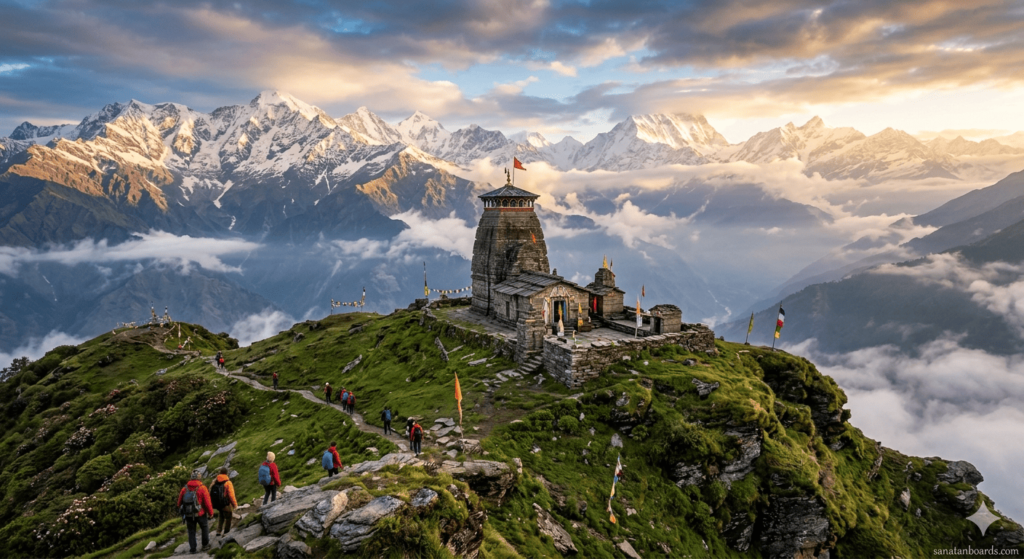
Tungnath Temple is one of the most revered and spiritually significant temples in India, located in the majestic Himalayas of Uttarakhand. Situated at an astonishing altitude of around 3,680 meters (12,073 feet), it is widely recognized as the highest Shiva temple in the world. The temple is part of the famous Panch Kedar pilgrimage circuit and holds deep mythological, religious and cultural importance in Hindu tradition.
Surrounded by snow-clad peaks, alpine meadows, and dense forests, Tungnath offers a rare combination of spirituality and natural beauty. The journey to the temple itself is considered highly sacred as devotees must trek through steep mountain trails starting from Chopta. This challenging yet serene path symbolizes devotion, endurance, and inner awakening.
According to Hindu mythology, the temple is linked to the Pandavas from the epic Mahabharata, who are believed to have built the Panch Kedar temples to seek forgiveness from Lord Shiva after the Kurukshetra war. Tungnath is believed to be the place where Lord Shiva’s arms appeared, making it spiritually unique among all Shiva shrines.
Beyond its religious significance, Tungnath also attracts trekkers, nature lovers, and photographers due to its breathtaking panoramic views of Himalayan ranges like Nanda Devi, Chaukhamba, and Trishul. The temple remains covered in snow during winter, and the idol is shifted to Mukkumath village for worship during that time.
Thus, Tungnath Temple stands as a powerful blend of devotion, mythology, adventure, and natural grandeur, making it one of the most extraordinary spiritual destinations in India.
What Is Tunganath Temple (Uttarakhand) – World’s Highest Shiva Temple ?
Tungnath Temple is a sacred Hindu shrine dedicated to Lord Shiva and is part of the Panch Kedar temples located in the Garhwal region of Uttarakhand. It is considered the highest Shiva temple in the world, positioned dramatically in the Himalayan mountain range.
The temple is believed to be over 1,000 years old, though its spiritual origins trace back to ancient Hindu mythology. It is said that after the Kurukshetra war, the Pandavas sought Lord Shiva to absolve their sins. Shiva, avoiding them, took the form of a bull and disappeared into the ground. His body parts are believed to have appeared at different locations, forming the Panch Kedar shrines, with Tungnath representing his arms.
Architecturally, the temple is simple yet powerful, built in traditional North Indian stone style. Despite its modest structure, its spiritual energy and historical relevance make it one of the most important pilgrimage sites in India.
The temple remains open only for a few months each year due to extreme weather conditions. During winter, heavy snowfall covers the region, and worship rituals are shifted to lower-altitude villages. The short pilgrimage season attracts thousands of devotees and trekkers who seek both divine blessings and natural beauty.
Tungnath is also closely associated with Chopta, often called the “Mini Switzerland of India,” which serves as the base point for the trek. The entire region is rich in biodiversity, offering views of rare Himalayan flora and fauna.
Thus, Tungnath Temple is not just a religious site but also a symbol of Himalayan spirituality and natural harmony.
Who Is Required Tunganath Temple (Uttarakhand) – World’s Highest Shiva Temple
Tungnath Temple is required by a wide range of people for different spiritual, cultural, and personal reasons. Primarily, devotees of Lord Shiva visit this sacred temple to seek blessings, peace of mind, and spiritual upliftment. It is especially significant for those undertaking the Panch Kedar pilgrimage, which is considered highly sacred in Hinduism.
Sadhus, monks, and spiritual seekers also visit Tungnath to practice meditation and penance in a calm Himalayan environment. The isolation and natural purity of the region make it ideal for deep spiritual reflection and self-realization.
Apart from religious visitors, trekkers and adventure enthusiasts are also drawn to Tungnath. The Chopta–Tungnath trek is one of the most popular short Himalayan treks in Uttarakhand, attracting beginners and experienced trekkers alike. The scenic trail, alpine forests, and snow-covered peaks make it a perfect destination for nature exploration.
Photographers, filmmakers, and travel bloggers also find Tungnath highly valuable due to its breathtaking landscapes and cultural richness. The panoramic views of Himalayan peaks provide unique visual opportunities.
Additionally, researchers and historians may study Tungnath to understand ancient temple architecture, mythological traditions, and Himalayan cultural heritage.
Even wellness seekers and individuals looking for mental peace often visit Tungnath to disconnect from urban life and reconnect with nature.
Thus, Tungnath Temple is required not only by devotees but also by travelers, scholars, and anyone seeking spiritual depth, adventure, or natural beauty.
When Tunganath Temple (Uttarakhand) – World’s Highest Shiva Temple Is Required ?
Tungnath Temple is required at different times depending on religious calendars, weather conditions, and personal intentions of visitors.
From a religious perspective, the best time to visit the temple is between April/May and October/November, when the shrine is open for pilgrims. During this period, devotees come especially during Hindu festivals such as Maha Shivaratri, when worship of Lord Shiva is considered highly auspicious. These times are spiritually significant, and the temple witnesses a large influx of pilgrims.
The temple is closed during winter months due to heavy snowfall in Uttarakhand. During this time, the idol is shifted to Mukkumath village, and devotees worship there instead. Therefore, the physical visit to Tungnath is required only in the accessible months.
From a trekking and adventure perspective, summer and early autumn are ideal. Clear skies, moderate temperatures, and blooming alpine meadows make it the best season for trekkers and photographers.
For spiritual seekers, any time the temple is open is considered appropriate, especially early mornings and weekdays when the crowd is minimal. Sunrise and sunset hours are particularly powerful for meditation and reflection.
For researchers or cultural explorers, visits are often planned during pilgrimage seasons to observe rituals, architecture, and local traditions in active practice.
In personal terms, individuals may feel the need to visit Tungnath during life transitions, emotional stress, or spiritual searching phases, as the temple is believed to provide mental clarity and peace.
Thus, Tungnath Temple is required both seasonally and situationally—depending on weather accessibility, religious timing, and personal spiritual or exploratory needs.
Where Tunganath Temple (Uttarakhand) – World’s Highest Shiva Temple Is Required ?
Tungnath Temple is located in the Rudraprayag district of the Indian state of Uttarakhand. It is situated in the Garhwal Himalayan range, near the popular trekking base of Chopta.
The temple sits at an altitude of approximately 3,680 meters, making it the highest Shiva temple in the world. Its location is remote, surrounded by dense rhododendron forests, alpine meadows, and snow-covered Himalayan peaks. This geographical positioning adds both difficulty and beauty to the pilgrimage experience.
Tungnath is part of the Panch Kedar circuit, which includes other sacred temples like Kedarnath, Rudranath, Madhyamaheshwar, and Kalpeshwar. Its location plays a vital role in maintaining its spiritual significance, as it is believed to be one of the places where Lord Shiva’s body parts appeared.
The temple’s proximity to Chopta makes it accessible via a trek of around 3.5 kilometers. This trek is relatively short but steep, attracting both pilgrims and adventure travelers.
Being located in the Himalayas, Tungnath experiences extreme climatic conditions. Heavy snowfall in winter isolates the temple, while summers bring mild weather suitable for pilgrimage.
Its remote Himalayan location also ensures ecological richness, with diverse flora and fauna found in the surrounding region. This makes it not just a religious destination but also an important ecological zone in Uttarakhand.
Thus, Tungnath Temple is required in a high-altitude sacred Himalayan setting that enhances its spiritual aura and natural beauty.
How Tunganath Temple (Uttarakhand) – World’s Highest Shiva Temple Is Required ?
Tungnath Temple is required through a combination of trekking, devotion, and pilgrimage practices.
To reach the temple, visitors typically begin their journey from Chopta, which is accessible by road from major towns in Uttarakhand. From Chopta, a well-defined trekking trail of about 3.5 kilometers leads to the temple. The trek is steep in certain sections but manageable for most individuals with basic fitness.
Devotees often undertake the journey on foot as a form of spiritual discipline. The act of trekking uphill is considered symbolic of overcoming life’s challenges and ego before reaching the divine presence of Lord Shiva.
Ritual practices at the temple include offering prayers, performing “aarti,” and meditating in front of the Shiva shrine. Local priests conduct traditional ceremonies following ancient Vedic customs.
During the pilgrimage season, basic facilities such as food stalls and resting points are available along the route, helping visitors complete the journey safely.
Weather preparedness is essential, as conditions in the Himalayas can change rapidly. Warm clothing, proper trekking shoes, and hydration are necessary for a successful visit.
The temple is also required through local cultural practices, where nearby villagers participate in seasonal rituals and festivals, preserving ancient traditions.
Thus, reaching and experiencing Tungnath is not just a physical process but also a spiritual journey combining effort, devotion, and connection with nature.

Case Study On Tunganath Temple (Uttarakhand) – World’s Highest Shiva Temple
Tungnath Temple serves as a unique case study in the integration of spirituality, tourism, ecology, and cultural preservation in the Himalayan region of Uttarakhand.
Background
Tungnath is one of the five sacred shrines of the Panch Kedar pilgrimage. Its mythological significance, combined with its high-altitude location, makes it a critical site for religious tourism and cultural heritage. Despite its remote location, it attracts thousands of visitors annually.
Spiritual Significance
The temple is dedicated to Lord Shiva and is deeply embedded in Hindu mythology. It represents the place where Shiva’s arms appeared after the Pandavas’ penance. This spiritual narrative has sustained pilgrimage traditions for centuries.
Tourism Development
In recent decades, Tungnath has become a major trekking destination. The Chopta-Tungnath trail is promoted as one of the easiest Himalayan treks, bringing both domestic and international tourists. This has contributed to the local economy through homestays, guides, and small businesses.
Environmental Impact
The increasing footfall has created environmental challenges, including waste management issues and pressure on fragile alpine ecosystems. Authorities in Uttarakhand have implemented conservation measures, but balancing tourism and ecology remains an ongoing concern.
Socio-Economic Role
Local communities benefit significantly from pilgrimage-based tourism. Employment opportunities have increased in hospitality, transportation, and guiding services. However, seasonal dependency on tourism also creates economic fluctuations.
Challenges
- Extreme weather conditions restrict access for several months
- Limited infrastructure in high-altitude regions
- Environmental degradation due to increasing tourism
- Need for sustainable tourism management
Success Factors
- Strong religious significance ensures continuous visitor interest
- Accessibility via Chopta trek enhances popularity
- Natural beauty attracts diverse visitor groups
- Cultural heritage strengthens identity and preservation efforts
Conclusion of Case Study
Tungnath demonstrates how a sacred site can evolve into a multi-dimensional destination combining religion, tourism, and ecology. However, sustainable management is essential to preserve its sanctity and environment.
White Paper On Tunganath Temple (Uttarakhand) – World’s Highest Shiva Temple
Tungnath Temple represents a critical intersection of cultural heritage, spiritual significance, and sustainable tourism development in Uttarakhand.
Executive Summary
This white paper examines Tungnath as a high-altitude pilgrimage site with increasing tourism demand. It highlights its religious importance, environmental sensitivity, and socio-economic impact on surrounding communities.
Historical and Cultural Context
Tungnath is part of the ancient Panch Kedar pilgrimage tradition. Its mythological association with Lord Shiva and the Pandavas has preserved its cultural relevance for centuries. The temple reflects traditional Himalayan stone architecture and ancient Hindu rituals.
Strategic Importance
The temple’s location at high altitude makes it both a spiritual destination and a natural tourism asset. It contributes to Uttarakhand’s identity as a major pilgrimage and eco-tourism hub.
Tourism Growth Trends
In recent years, there has been a steady rise in domestic and international visitors. The Chopta-Tungnath trek is widely promoted as an accessible Himalayan trekking route, increasing footfall significantly.
Environmental Sustainability Concerns
The fragile Himalayan ecosystem faces risks from:
- Waste accumulation
- Trail erosion
- Pressure on natural resources
Sustainable tourism practices are essential to preserve biodiversity and ecological balance.
Infrastructure and Accessibility
While basic trekking infrastructure exists, challenges remain in:
- Medical facilities
- Emergency evacuation systems
- Waste management systems
- Weather-resilient infrastructure
Socio-Economic Impact
Tourism has positively impacted local livelihoods through:
- Homestays and guest services
- Trekking guides and porters
- Local transport services
However, income instability during off-seasons remains a concern.
Policy Recommendations
- Implement strict eco-tourism guidelines
- Improve waste disposal systems
- Enhance trekking safety infrastructure
- Promote responsible tourism awareness campaigns
- Develop year-round alternative livelihoods
Future Outlook
With proper management, Tungnath can serve as a model for sustainable pilgrimage tourism in high-altitude regions, balancing spiritual heritage with environmental conservation.
Conclusion
Tungnath’s significance extends beyond religion into #Sanatanboardsinvasai environmental and socio-economic domains. Strategic planning is essential to ensure its long-term preservation and sustainable development.
Industry Application On Tunganath Temple (Uttarakhand) – World’s Highest Shiva Temple
Tungnath Temple, located in the Himalayan region of Uttarakhand, has significant multi-sector applications beyond its religious importance. Its influence extends into tourism, hospitality, transport, media, environmental studies, and local economic development.
1. Tourism Industry Application
Tungnath is a major driver of both pilgrimage tourism and adventure tourism. The Chopta–Tungnath trekking route is widely promoted in Himalayan travel circuits. Travel companies design specialized packages that include guided treks, spiritual tours, and combined itineraries covering nearby destinations like Chopta and Chandrashila. This boosts seasonal and off-season tourism demand and strengthens Uttarakhand’s identity as a leading spiritual tourism hub.
2. Hospitality and Service Industry
The increasing number of visitors supports a growing hospitality ecosystem in nearby areas such as Chopta. Homestays, eco-lodges, guesthouses, and small hotels benefit directly from pilgrimage and trekking seasons. Local families often run homestays, creating micro-entrepreneurship opportunities and improving rural income levels. Food services, trekking guides, and camping operators also form an essential part of this industry chain.
3. Transportation and Logistics Sector
Access to Tungnath depends heavily on road and trekking logistics. Taxi services, jeep operators, and local transport providers connect major towns like Rudraprayag and Ukhimath to Chopta. Additionally, porter services and mule transport support pilgrims carrying supplies. This creates a seasonal but strong employment base for local communities.
4. Media, Digital Content, and Film Industry
Tungnath’s scenic Himalayan backdrop makes it highly valuable for travel documentaries, photography, cinematography, and digital content creation. Travel influencers, bloggers, and filmmakers frequently feature the temple in visual storytelling projects. This increases global visibility of Uttarakhand’s tourism potential and promotes destination marketing.
5. Environmental Research and Sustainability Sector
Due to its fragile Himalayan ecosystem, Tungnath is also important for environmental research. Scientists study climate change effects, biodiversity patterns, and ecological sustainability in high-altitude regions. It serves as a real-world case study for eco-tourism models and conservation planning.
6. Wellness and Spiritual Tourism Industry
The temple contributes to the growing wellness tourism sector. Visitors often combine pilgrimage with meditation, yoga, and mental wellness practices in nearby peaceful Himalayan zones. This supports retreats and holistic healing tourism models.
7. Local Economic Development
Tungnath indirectly strengthens the rural economy by generating employment in guiding services, food supply chains, transportation, and small-scale retail. Seasonal tourism boosts cash flow in remote Himalayan villages.
Conclusion
Tungnath Temple acts as a multi-industry catalyst. #Sanatanboardsinmumbai It supports economic growth, tourism expansion, cultural preservation, and environmental research while maintaining its core spiritual identity in the Himalayas of Uttarakhand.
source : Kanchan Naithani
ASK FAQ
1. What is Tungnath Temple famous for?
Tungnath Temple is famous for being the highest Shiva temple in the world and part of the sacred Panch Kedar pilgrimage in Uttarakhand.
2. Where is Tungnath Temple located?
Tungnath Temple is located in Rudraprayag district of Uttarakhand, India, in the Garhwal Himalayan region near Chopta.
3. Why is Tungnath Temple important in Hinduism?
It is believed to be the place where Lord Shiva’s arms appeared, making it one of the most sacred Panch Kedar temples.
4. When is the best time to visit Tungnath Temple?
The best time to visit is from April/May to October/November when the temple is open and weather conditions are favorable.
5. How can visitors reach Tungnath Temple?
Visitors reach Chopta by road and then complete a 3.5 km uphill trek to reach Tungnath Temple.
Table of Contents
Disclaimer
The information provided above is intended for general informational and descriptive purposes only. It should not be considered as professional, historical, or academic certification. Details related to mythology, historical interpretation, and cultural significance may vary across sources and traditions. Visitors planning a trip should verify current travel conditions, weather updates, and local guidelines before undertaking any journey.