
KOTILINGESHWARA TEMPLE (KARNATAKA)
The Kotilingeshwara Temple stands as one of the most extraordinary spiritual landmarks in India, widely known for housing an immense collection of Shiva Lingas. Located in the serene village of Kammasandra in Karnataka, this temple represents a unique blend of devotion, scale, and cultural symbolism. The term “Kotilingeshwara” itself translates to “one crore (10 million) lingas of Lord Shiva,” reflecting the temple’s grand vision and spiritual ambition.
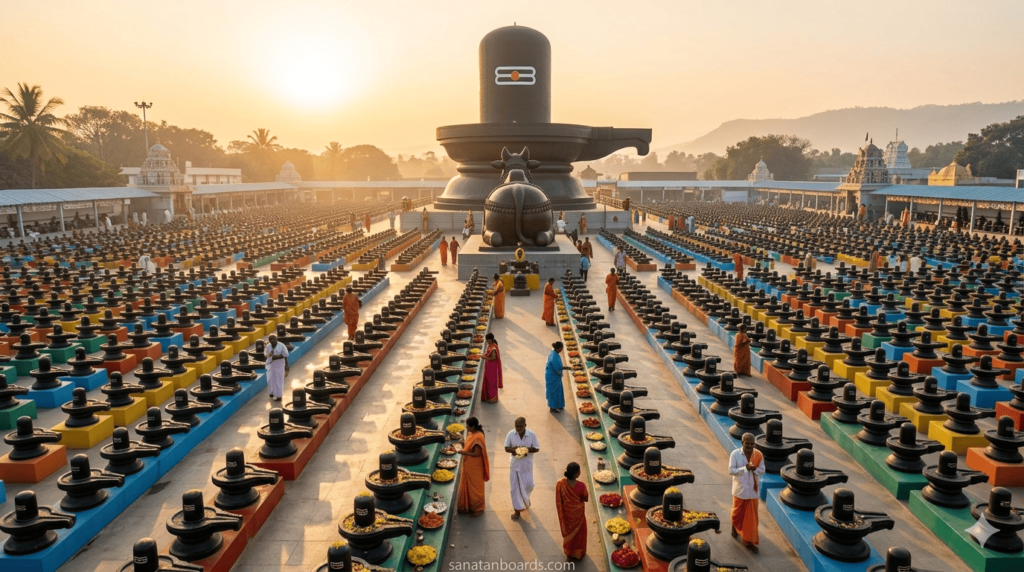
Unlike traditional temples that focus on a single sanctum, this temple expands devotion across an expansive landscape filled with countless Shiva Lingas of varying sizes. At the center stands a massive main Linga, towering above the rest, accompanied by an equally impressive statue of Nandi the sacred bull and vehicle of Lord Shiva. Surrounding these are rows upon rows of smaller lingas, each installed by devotees seeking blessings, fulfillment of wishes, or spiritual merit.
The temple has become a significant pilgrimage destination, drawing visitors not only from across India but also from around the world. Its peaceful environment, combined with its visual grandeur, creates a deeply reflective atmosphere. Devotees often participate in rituals, prayers, and offerings, making the temple an active center of spiritual engagement.
What makes this temple particularly fascinating is not just its scale but its participatory nature. Visitors are encouraged to contribute by installing Shiva Lingas, symbolizing personal devotion and collective spirituality. This ongoing process continues to expand the temple’s count toward its ambitious goal of one crore lingas.
Overall, Kotilingeshwara Temple is more than a place of worship—it is a living expression of faith, unity, and the enduring cultural heritage of Hindu traditions.
What Is Kotilingeshwara Temple (Karnataka) – One Crore Shiva Lingasv ?
The Kotilingeshwara Temple is a prominent Hindu pilgrimage site dedicated to Lord Shiva, distinguished by its unique concept of housing millions of Shiva Lingas in one location. It is not a conventional temple in terms of structure or design; instead, it represents a vast spiritual complex where devotion is expressed through multiplicity rather than singularity.
The temple’s central feature is a gigantic Shiva Linga, which rises prominently and serves as the focal point of worship. Alongside it stands a large Nandi statue, symbolizing strength, loyalty, and devotion. Surrounding these central icons are thousands of smaller Shiva Lingas, each installed by devotees as an offering or in fulfillment of personal vows. These lingas are arranged in orderly rows, creating a visually striking and spiritually immersive environment.
The temple was conceptualized with the vision of reaching one crore Shiva Lingas, a symbolic number representing infinite devotion and divine presence. Each Linga installed in the temple is considered sacred, and devotees believe that offering prayers here multiplies spiritual benefits.
In addition to its religious significance, the temple also serves as a cultural landmark that reflects the diversity and inclusiveness of Hindu worship practices. People from different backgrounds come together to participate in rituals, making it a space of shared faith and community bonding.
The temple complex also includes smaller shrines dedicated to other deities, enhancing its role as a comprehensive spiritual destination. Its open layout allows visitors to walk among the lingas, offering a unique interactive experience.
Who Is Required Kotilingeshwara Temple (Karnataka) – One Crore Shiva Lingasv ?
The Kotilingeshwara Temple holds significance for a wide range of individuals, each drawn by different motivations and beliefs. Primarily, it is important for devotees of Lord Shiva who seek blessings, spiritual growth, and fulfillment of personal desires. Many visitors come with specific intentions, such as health, prosperity, success, or peace of mind, and participate in rituals to express their devotion.
Pilgrims and spiritual seekers form a major group connected to the temple. For them, the temple offers an opportunity to engage in prayer, meditation, and reflection in a peaceful environment. The presence of numerous Shiva Lingas enhances the sense of divine energy, making it an ideal place for spiritual practices.
The temple is also relevant for cultural enthusiasts and historians who are interested in understanding religious traditions and architectural uniqueness. Its concept of installing one crore lingas reflects a rare approach to temple design and community participation, making it an important subject of study.
Tourists and travelers are another group for whom the temple holds importance. Its visual appeal, combined with its cultural significance, makes it a popular destination for those exploring Karnataka’s heritage. The temple provides a unique experience that goes beyond typical sightseeing.
Additionally, families often visit the temple to perform rituals, celebrate religious occasions, or introduce younger generations to cultural traditions. It becomes a place where values, beliefs, and practices are passed down.
When Kotilingeshwara Temple (Karnataka) – One Crore Shiva Lingasv Is Required ?
The Kotilingeshwara Temple becomes particularly significant during specific times and circumstances that align with spiritual, cultural, and personal needs. One of the most important occasions is during major Hindu festivals dedicated to Lord Shiva, such as Mahashivaratri. During this time, the temple witnesses a large influx of devotees who gather to perform rituals, offer prayers, and participate in celebrations that honor the divine.
Apart from festivals, the temple is often visited during moments of personal transition or challenge. Individuals seeking guidance, relief from difficulties, or fulfillment of wishes turn to the temple as a source of hope and faith. It is believed that installing a Shiva Linga during such times can bring positive outcomes and spiritual support.
The temple is also relevant during life events such as marriages, anniversaries, or the beginning of new ventures. Families and individuals visit to seek blessings for prosperity and success. These visits are often accompanied by rituals that symbolize new beginnings and divine protection.
Seasonal factors also influence the timing of visits. Many prefer to visit during cooler months when the weather is more comfortable, allowing for a more relaxed and immersive experience. However, the temple remains open throughout the year, accommodating visitors at all times.
Educational visits and group tours often take place when institutions organize trips to explore cultural and religious sites. These visits provide an opportunity to understand the temple’s significance in a broader context.
Where Kotilingeshwara Temple (Karnataka) – One Crore Shiva Lingasv Is Required ?
The Kotilingeshwara Temple is located in Kammasandra village in the Kolar district of Karnataka, India. This location plays a crucial role in its significance, as it is situated in a region known for its cultural richness and accessibility. The temple lies approximately 100 kilometers from Bengaluru, making it a convenient destination for both local and outstation visitors.
The rural setting of the temple adds to its charm, offering a शांत and peaceful environment away from the hustle and bustle of city life. This makes it an ideal place for spiritual reflection and relaxation. The surrounding landscape, characterized by open spaces and greenery, enhances the overall experience for visitors.
The temple is well-connected by road, allowing easy access from major cities and towns. Visitors can reach the site via private vehicles, buses, or organized tours. Its proximity to Bengaluru also makes it a popular weekend destination.
In terms of broader context, the temple is an important part of Karnataka’s religious tourism circuit. It complements other significant temples and heritage sites in the region, contributing to the state’s cultural identity.
The concept of “where it is required” also extends beyond its physical location. The temple serves as a symbolic space where spiritual practices and cultural traditions are preserved and shared. It becomes a focal point for community gatherings and collective worship.
Overall, the location of Kotilingeshwara Temple enhances its accessibility, appeal, and significance, making it an important destination within both regional and national contexts.
How Kotilingeshwara Temple (Karnataka) – One Crore Shiva Lingasv Is Required ?
The Kotilingeshwara Temple is “required” through the ways in which individuals and communities engage with it. The primary method is through participation in rituals and the installation of Shiva Lingas. Devotees contribute by sponsoring or placing lingas within the temple परिसर, symbolizing their devotion and intentions.
The process typically involves selecting a Linga, performing rituals guided by temple priests, and offering prayers. This participatory approach makes the temple unique, as it allows individuals to actively contribute to its growth and spiritual significance.
Another way the temple is utilized is through regular worship and meditation. Visitors walk through the rows of lingas, offering prayers and reflecting on their spiritual journey. The environment encourages शांत contemplation and connection with divine energy.
The temple also functions as a venue for cultural and religious events. Festivals, ceremonies, and gatherings are organized, bringing together people from different backgrounds. These events strengthen community bonds and preserve traditions.
From a practical perspective, the temple is maintained through the efforts of management and contributions from devotees. Infrastructure, cleanliness, and facilities are managed to ensure a positive experience for visitors.

Case Study On Kotilingeshwara Temple (Karnataka) – One Crore Shiva Lingasv
The Kotilingeshwara Temple provides a compelling case study in the areas of religious innovation, community participation, and sustainable cultural development. Established with the ambitious vision of creating one crore Shiva Lingas, the temple demonstrates how a unique idea can evolve into a large-scale spiritual and socio-economic phenomenon.
One of the most notable aspects of this case is its participatory model. Unlike traditional temples that are built and maintained by specific institutions, Kotilingeshwara Temple grows through the contributions of individual devotees. Each Linga installed represents a personal story, intention, or prayer. This creates a strong emotional connection between visitors and the temple, fostering long-term engagement.
Another important factor is scalability. The temple’s design allows for continuous expansion without disrupting its core structure. New Lingas can be added systematically, ensuring that the temple evolves while maintaining its identity. This flexibility is a key factor in its success and sustainability.
The economic impact of the temple is significant. It has transformed the surrounding rural area by attracting tourists and pilgrims. Local businesses, including shops, food vendors, and transport services, benefit from the increased footfall. Employment opportunities have been created, contributing to the economic development of the region.
From a cultural perspective, the temple plays a crucial role in preserving traditions. It provides a platform for rituals, festivals, and community gatherings, ensuring that cultural practices are maintained and passed on to future generations. Educational visits further enhance its role as a center of cultural knowledge.
However, the temple also faces challenges. Managing large crowds, maintaining cleanliness, and addressing environmental concerns are ongoing issues. Effective planning and community cooperation are essential to overcome these challenges.
In conclusion, the Kotilingeshwara Temple serves as a model for how religious initiatives can achieve large-scale impact through participation, adaptability, and community involvement. It highlights the potential of combining tradition with innovative approaches to create sustainable cultural institutions.
White Paper On Kotilingeshwara Temple (Karnataka) – One Crore Shiva Lingasv
The Kotilingeshwara Temple represents a distinctive model of religious infrastructure that integrates large-scale participation, cultural preservation, and economic development. This white paper explores its conceptual foundation, operational mechanisms, and broader implications.
At its core, the temple is based on the idea of accumulating one crore Shiva Lingas, symbolizing infinite devotion and divine presence. This decentralized model allows individuals to contribute directly, creating a sense of ownership and involvement. Unlike traditional centralized worship systems, this approach distributes spiritual engagement across a vast area.
Operationally, the temple relies on a combination of structured management and community participation. Rituals are conducted systematically, and facilities are maintained to accommodate large numbers of visitors. Contributions from devotees play a crucial role in funding operations and development.
The temple also serves as a case of cultural sustainability. By preserving traditional practices while adapting to modern needs, it maintains relevance in a changing world. Educational programs and guided visits enhance its role as a cultural and knowledge center.
Economically, the temple contributes to regional development by attracting tourism and generating revenue. Its impact extends to local businesses and infrastructure, creating a positive ripple effect.
From a strategic perspective, the temple demonstrates how large-scale projects can be managed effectively through community involvement and flexible design. It offers valuable insights for similar initiatives in other regions.
In conclusion, Kotilingeshwara Temple provides a #Sanatanboardsinvasai comprehensive model for integrating spirituality, culture, and development, with potential applications across various sectors.
Industry Application On Kotilingeshwara Temple (Karnataka) – One Crore Shiva Lingasv
The Kotilingeshwara Temple is not only a spiritual landmark but also a powerful model that offers valuable applications across multiple industries. Its unique concept of housing one crore Shiva Lingas, combined with large-scale participation and continuous development, provides insights that extend beyond religion into practical, real-world sectors.
One of the most prominent applications is in the tourism industry. The temple demonstrates how a distinctive concept can attract large numbers of visitors and create a strong destination identity. Its vast layout, iconic central Shiva Linga, and countless smaller Lingas create a visually compelling experience. Tourism planners and policymakers can use this model to develop destinations that combine cultural significance with experiential engagement. The temple also promotes regional tourism by attracting visitors to nearby areas, boosting local economies.
In the cultural and heritage management sector, the temple highlights the importance of preserving traditions while allowing for innovation. Its participatory approach—where devotees install Lingas—ensures that cultural practices remain active and relevant. Heritage organizations can adopt similar strategies to involve communities in the preservation and promotion of cultural assets.
The temple also provides lessons for infrastructure and project development. Its scalable design allows for continuous expansion without disrupting the existing structure. This is particularly useful for large-scale projects that require long-term growth planning. The ability to accommodate increasing numbers of participants while maintaining organization and functionality is a key takeaway for urban planners and developers.
In the community engagement and social development sector, the temple serves as a model for participatory systems. By involving individuals directly in its growth, it creates a sense of ownership and responsibility. This approach can be applied to community-driven initiatives, non-profit projects, and social programs where public involvement is essential.
Additionally, the temple contributes to the local economy and small business ecosystem. Vendors, transport services, and hospitality businesses benefit from the steady flow of visitors. This demonstrates how cultural landmarks can act as catalysts for economic development, especially in rural areas.
In summary, Kotilingeshwara Temple offers a multi-dimensional model that can be applied across tourism, cultural management, infrastructure planning, and community development. #Sanatanboardsinmumbai Its success lies in combining tradition with participation and scalability, making it a valuable reference for various industries.
source : Akshat Gupta
ASK FAQ
1. What is Kotilingeshwara Temple famous for?
Kotilingeshwara Temple is famous for having lakhs of Shiva Lingas and its goal of reaching one crore (10 million) Lingas. It is one of the largest collections of Shiva Lingas in the world and a major spiritual destination in Karnataka.
2. Where is Kotilingeshwara Temple located?
Kotilingeshwara Temple is located in Kammasandra village in the Kolar district of Karnataka, about 100 km from Bengaluru, making it easily accessible for visitors.
3. Why do people visit Kotilingeshwara Temple?
People visit the temple to seek blessings of Lord Shiva, install Shiva Lingas for wish fulfillment, and experience its unique spiritual environment filled with thousands of Lingas.
4. How many Shiva Lingas are in Kotilingeshwara Temple?
The temple has lakhs of Shiva Lingas installed by devotees and continues to grow toward its goal of one crore Lingas, making it a continuously expanding spiritual site.
5. What is the best time to visit Kotilingeshwara Temple?
The best time to visit is during Maha Shivaratri and cooler months, when the temple atmosphere is vibrant and comfortable for exploration.
Table of Contents
Disclaimer
This content is intended for general informational purposes only. While every effort has been made to ensure accuracy and completeness, details may change over time. Readers are advised to verify information from official or local sources before making any decisions or plans related to the topic.