HARIDWAR (UTTARAKHAND) – GANGA AARTI AT HAR KI PAURI
Haridwar is one of the most sacred cities in India, located in the northern state of Uttarakhand. The city is known as the “Gateway to God” and holds immense spiritual importance in Hindu culture. It is situated on the banks of the holy river Ganga, which is believed to cleanse sins and grant spiritual liberation. Among all the religious rituals performed here, the most famous is the Ganga Aarti at Har Ki Pauri.
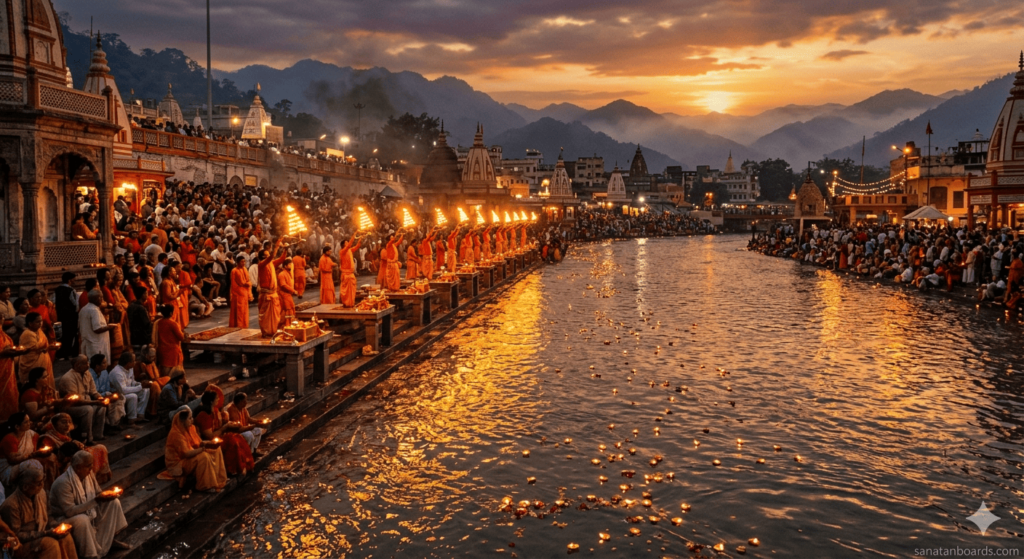
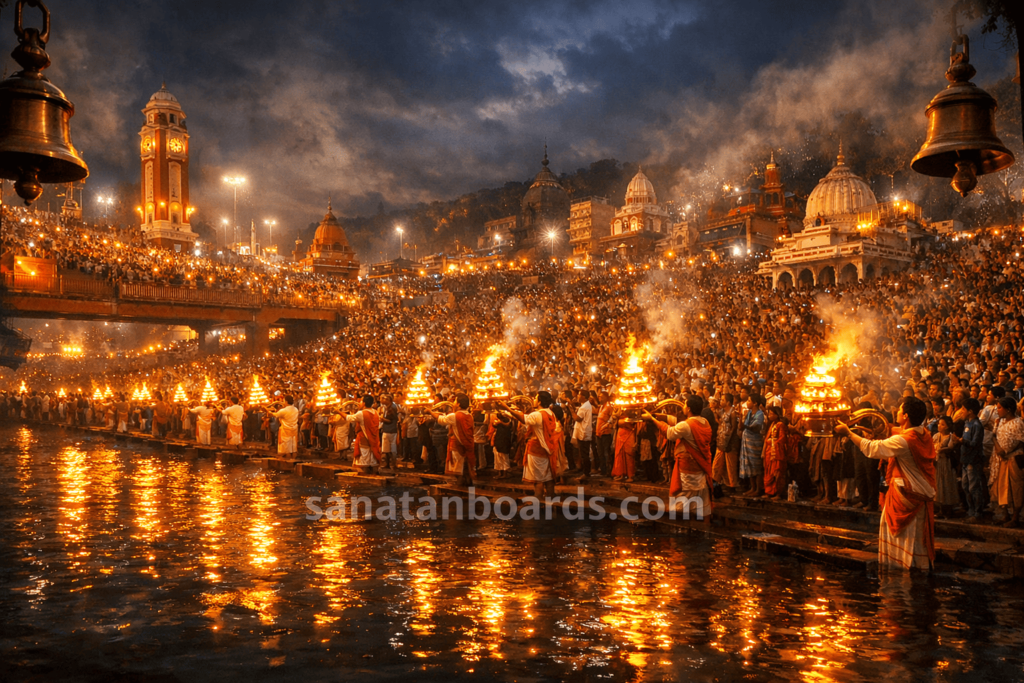
Ganga Aarti is a devotional ritual performed every evening at sunset. Priests gather on the ghats holding large oil lamps (diyas) and chant sacred hymns in praise of River Ganga. The entire atmosphere becomes spiritual, filled with bells, mantras, incense, and the glow of hundreds of lamps reflecting on the river water. Devotees from across India and the world gather to witness this divine experience.
Har Ki Pauri is considered the most sacred ghat in Haridwar. It is believed that Lord Vishnu left his footprint here, making it a highly revered pilgrimage site. The combination of spirituality, tradition and natural beauty makes the Ganga Aarti here one of the most powerful religious experiences in India.
This ritual is not just a religious event but also a cultural expression of devotion, discipline, and unity. It brings people together regardless of their background, religion, or nationality. The synchronized movements of priests, the sound of bells, and the chanting of mantras create a mesmerizing atmosphere that leaves a lasting impression on every visitor.
What Is Haridwar (Uttarakhand) – Ganga Aarti At Har Ki Pauri ?
Ganga Aarti at Har Ki Pauri is a traditional Hindu ritual dedicated to the River Ganga, considered the holiest river in India. It is performed daily at sunset and sometimes at sunrise, but the evening Aarti is the most famous and widely attended.
The ritual involves a group of trained priests standing on raised platforms facing the river. They hold large multi-tiered oil lamps and move them in synchronized circular motions while chanting prayers and hymns. The sound of conch shells, bells, and devotional songs fills the air, creating a deeply spiritual environment.
The purpose of Ganga Aarti is to express gratitude to the river, which is believed to be a goddess in Hindu tradition. Devotees offer flowers, lamps, and prayers to seek blessings, purification, and spiritual peace. The river is worshipped as a life-giving force that supports both physical and spiritual well-being.
At Har Ki Pauri, the ritual has a grand scale. Thousands of devotees gather daily, making it one of the largest spiritual gatherings in India. Floating diyas (lamps) are also released into the river, symbolizing hope, faith, and surrender to divine power.
The entire process follows strict discipline and tradition. Each movement of the priests is coordinated, and the chanting follows ancient Vedic practices. The reflection of fire on the flowing Ganga creates a magical visual experience.
In simple terms, Ganga Aarti is not just a ritual but a way of connecting humans with nature and the divine. It represents devotion, gratitude, and spiritual awakening.
Who Is Required Haridwar (Uttarakhand) – Ganga Aarti At Har Ki Pauri
The Ganga Aarti at Har Ki Pauri requires the participation and coordination of several groups of people to ensure the ritual is performed smoothly and traditionally.
The primary participants are the trained Hindu priests, who are responsible for performing the Aarti. These priests follow strict discipline, rituals, and training passed down through generations. They are well-versed in Vedic chants, mantras, and ceremonial procedures. Their synchronized movements are essential for maintaining the spiritual rhythm of the ceremony.
Devotees and pilgrims are also an important part of the Aarti. They gather at the ghats to witness the ritual, offer prayers, and participate in the spiritual experience. Their presence adds energy and devotion to the atmosphere. Many people also bring offerings such as flowers, coconuts, and oil lamps.
Local administration and temple committees play a supporting role. They manage crowd control, safety arrangements, lighting, cleanliness, and organization of the event. Since thousands of people attend daily, proper management is essential.
Boatmen and volunteers are also involved, helping devotees reach suitable viewing points on the river and assisting in managing floating lamps in the water.
In addition, sound system operators, lighting staff, and security personnel ensure that the ritual is visible, audible, and safe for everyone.
Thus, Ganga Aarti is a collective effort involving priests, devotees, administrators, and local workers. Each group plays a specific role in preserving the sanctity and smooth execution of this ancient tradition.
When Haridwar (Uttarakhand) – Ganga Aarti At Har Ki Pauri Is Required ?
The Ganga Aarti at Har Ki Pauri is required daily as part of the traditional worship of River Ganga. It is not limited to special occasions but is performed every single day throughout the year, making it a continuous spiritual practice rather than an occasional ritual.
The most important timing for Ganga Aarti is during sunset. This time is considered highly sacred in Hindu tradition because it represents the transition between day and night. This transitional moment is believed to be spiritually powerful, making it ideal for prayers and offerings. The evening Aarti usually begins shortly before sunset and continues for about 30–45 minutes.
In addition to the evening ritual, a morning Aarti is also performed at sunrise in some instances, although it is less crowded and less famous compared to the evening ceremony. Morning Aarti symbolizes new beginnings, purity, and the start of a fresh spiritual journey.
Ganga Aarti is especially significant during religious festivals such as Kumbh Mela, Ganga Dussehra, Kartik Purnima, and Diwali. During these occasions, the number of devotees increases significantly, and the ritual becomes more grand and elaborate.
The need for Ganga Aarti also extends beyond religious timing. It is required as a means of maintaining cultural continuity and preserving ancient Hindu traditions. It serves as a daily reminder of devotion, discipline, and respect for nature.
Furthermore, it is required for spiritual cleansing and emotional peace for devotees. Many believe that attending the Aarti regularly helps remove negativity and brings mental clarity.
Tourism also creates a practical requirement for the ritual. As Haridwar is a major pilgrimage destination, Ganga Aarti attracts thousands of visitors daily, supporting local tourism and cultural heritage.
In conclusion, Ganga Aarti is required daily at specific spiritual timings, during festivals, and as part of cultural and religious preservation.
Where Haridwar (Uttarakhand) – Ganga Aarti At Har Ki Pauri Is Required ?
Ganga Aarti is required at Har Ki Pauri, which is the most sacred ghat in Haridwar. Haridwar itself is located in the northern Indian state of Uttarakhand, at the foothills of the Himalayas. The city lies on the banks of the River Ganga, making it one of the most spiritually significant places in Hinduism.
Har Ki Pauri is considered the exact location where the Ganga Aarti is performed daily. The ghat has specially constructed steps and platforms that allow priests and devotees to participate in the ritual. The river flows gently beside the ghat, creating a natural and sacred setting for the ceremony.
This place is believed to be where Lord Vishnu left his footprint, making it a highly revered spiritual site. Because of this belief, Har Ki Pauri is considered the heart of religious activities in Haridwar.
The geographical setting of Haridwar enhances the importance of Ganga Aarti. Surrounded by hills and located at the point where the Ganga enters the plains, the city provides a natural spiritual environment. The flowing river, combined with the chanting and lighting of lamps, creates a powerful atmosphere.
Apart from Har Ki Pauri, smaller Ganga Aartis are also performed at other ghats in Haridwar and along the Ganga river in other cities like Varanasi and Rishikesh. However, Har Ki Pauri remains the most famous and widely attended location.
The location is also significant for tourism and pilgrimage routes. Devotees from across India and the world travel specifically to Haridwar to witness this ritual at Har Ki Pauri.
Thus, Ganga Aarti is required at Har Ki Pauri due to its religious importance, historical significance, geographical setting, and cultural centrality.
How Haridwar (Uttarakhand) – Ganga Aarti At Har Ki Pauri Is Required ?
Ganga Aarti at Har Ki Pauri is required through a well-structured and disciplined ritual process that has been followed for centuries. The ceremony follows a fixed sequence of steps that ensure spiritual accuracy and traditional authenticity.
First, priests gather at the designated platforms on the ghat before sunset. They prepare ceremonial items such as large oil lamps (deepams), incense sticks, flowers, bells, and conch shells. These items are essential for performing the ritual.
The ritual begins with the chanting of Vedic mantras dedicated to River Ganga. These chants are believed to invoke divine energy and purify the environment. The sound of bells and conch shells accompanies the chanting, creating a sacred atmosphere.
Next, priests perform synchronized movements with large multi-tiered lamps filled with burning oil. The lamps are moved in circular patterns facing the river, symbolizing devotion and surrender to the divine river goddess.
Devotees participate by offering flowers, lighting small diyas, and joining in prayers. Many people also stand along the steps or watch from boats on the river.
The entire ritual is carefully coordinated to maintain rhythm and discipline. Each priest follows a specific role, ensuring that the ceremony flows smoothly without disruption.
After the main Aarti, devotees release floating lamps into the river. This symbolizes hope, gratitude and the release of negative energy.
The ritual ends with final prayers and distribution of blessings. The coordination between priests, volunteers, and devotees ensures that the ceremony is performed respectfully and traditionally.
Thus, Ganga Aarti is required through disciplined execution, ritual preparation, collective participation, and strict adherence to tradition.
Case Study On Haridwar (Uttarakhand) – Ganga Aarti At Har Ki Pauri
The Ganga Aarti at Har Ki Pauri in Haridwar serves as a powerful case study of how ancient spiritual traditions can be preserved and integrated into modern cultural and tourism frameworks.
Har Ki Pauri has historically been a major pilgrimage site, attracting devotees for centuries. The daily Ganga Aarti evolved as a structured ritual to formalize worship of the River Ganga. Over time, it transformed into a large-scale public spiritual event.
From a cultural perspective, the Aarti represents continuity of Vedic traditions. The use of mantras, lamps, and synchronized priestly movements reflects ancient Hindu practices that have been preserved with minimal change. This continuity makes it a living example of intangible cultural heritage.
From a tourism perspective, Ganga Aarti is one of the biggest attractions in Uttarakhand. Thousands of domestic and international tourists visit Haridwar daily to witness the ceremony. This has significantly contributed to the local economy through hotels, transport, food services, and guide services.
From a social perspective, the Aarti brings together people from diverse backgrounds. Regardless of religion, nationality, or social status, everyone gathers at the ghat to witness the ritual. This creates a sense of unity and shared human experience.
From a management perspective, organizing the Aarti is a complex task. Crowd control, safety measures, cleanliness, and coordination between priests and local authorities are essential. The administration ensures that the large gatherings remain orderly and safe.
Environmental considerations are also part of the case study. With thousands of floating lamps and offerings, there is a need for sustainable practices to protect the river. Efforts are made to reduce pollution and maintain cleanliness of the Ganga.
Technological integration has also improved the experience. Public address systems, lighting arrangements, and surveillance cameras help manage crowds and enhance visibility for attendees.
The emotional and psychological impact of the Aarti is significant. Many devotees report feelings of peace, devotion, and spiritual upliftment. The combination of sound, light, and ritual creates a deeply immersive experience.
In conclusion, the Ganga Aarti at Har Ki Pauri is a successful #Sanatanboardsinuttarakhand example of balancing tradition with modern needs. It preserves ancient spirituality while supporting tourism, economy, and cultural identity.
White Paper On Haridwar (Uttarakhand) – Ganga Aarti At Har Ki Pauri
The Ganga Aarti at Har Ki Pauri represents a structured spiritual system that integrates religion, culture, tourism, and environmental considerations. This white paper examines its significance, structure, and impact.
At its core, the Aarti is a ritual worship of the River Ganga, considered sacred in Hindu tradition. It is performed daily using standardized procedures involving priests, chants, lamps, and offerings. The consistency of the ritual ensures preservation of tradition.
Culturally, the Aarti acts as a living heritage practice. It maintains ancient Vedic traditions and ensures their transmission across generations. The ritual’s structure has remained largely unchanged, preserving authenticity.
Economically, the Aarti contributes significantly to Haridwar’s tourism industry. It attracts pilgrims and tourists, supporting local businesses such as hotels, transportation, food vendors, and handicrafts. This makes it a key driver of regional economic development.
Socially, it fosters inclusivity and collective participation. People from different regions and backgrounds come together, creating a shared spiritual environment. It promotes unity and cultural exchange.
From an environmental perspective, the ritual presents both opportunities and challenges. While it promotes reverence for nature, large crowds and ritual materials can create waste. Sustainable management practices are necessary to protect the Ganga river ecosystem.
Administratively, the Aarti requires coordination between temple authorities, priests, municipal bodies, and security agencies. Efficient crowd management and infrastructure support are essential for smooth functioning.
Technologically, modern systems such as lighting, sound amplification, and surveillance enhance the experience and improve safety.
The spiritual impact of the Aarti is profound. It provides emotional relief, mental peace, and a sense of connection with nature and divinity.
This white paper concludes that Ganga Aarti is not only a #Sanatanboardsinvasai religious ritual but also a multidimensional system with cultural, economic, environmental, and social importance.
Industry Application On Haridwar (Uttarakhand) – Ganga Aarti At Har Ki Pauri
The Ganga Aarti at Haridwar, especially at Har Ki Pauri, has significant applications across multiple industries. It is not only a spiritual ritual but also a major driver of economic, cultural, and service-based sectors in India.
1. Tourism Industry
The Ganga Aarti is one of the most important attractions in religious tourism. It draws millions of visitors annually, including domestic pilgrims and international tourists. This increases the demand for guided tours, travel packages, and pilgrimage circuits covering Uttarakhand.
2. Hospitality Industry
Hotels, guest houses, dharamshalas, and homestays in Haridwar experience high occupancy due to daily visitors for Ganga Aarti. The hospitality sector benefits from food services, accommodation, and customer experience services tailored for pilgrims.
3. Transportation Industry
Railways, buses, taxis, auto-rickshaws, and private travel operators benefit greatly from the continuous inflow of visitors. Special pilgrimage trains and tour buses are often arranged during peak seasons and festivals.
4. Event Management Industry
The Ganga Aarti is a large-scale daily organized event requiring crowd control, lighting, sound systems, coordination, and security. Event management practices such as stage design, timing synchronization, and public handling are directly applied here.
5. Media and Broadcasting Industry
Television channels, digital platforms, and travel vloggers frequently cover the Ganga Aarti. It is used as spiritual content, documentary material, and promotional tourism media, increasing visibility of Haridwar globally.
6. Handicrafts and Local Markets
Local vendors benefit from selling religious items such as diyas, flowers, incense sticks, idols, and souvenirs. This supports small-scale artisans and traditional craftsmen.
7. Environmental and Waste Management Industry
Due to large gatherings, waste management, river cleanliness, and eco-friendly initiatives are essential. Organizations work on reducing pollution and promoting biodegradable offerings.
8. Digital and Technology Industry
Live streaming of Ganga Aarti on platforms like YouTube and tourism websites has expanded digital tourism. Virtual reality tours and online booking systems also enhance visitor experience.
Conclusion
The Ganga Aarti at Har Ki Pauri acts as a multi-industry ecosystem. It supports economic growth, cultural preservation, and modern tourism #Sanatanboardsinmumbai development while maintaining its spiritual identity.
source : Ramesh Kumar Vlogs
ASK FAQ
1. What is Ganga Aarti at Har Ki Pauri in Haridwar?
Ganga Aarti is a daily spiritual ritual performed at Har Ki Pauri where priests worship the River Ganga with lamps, chants, and prayers during sunset.
2. Why is Har Ki Pauri famous in Haridwar?
Har Ki Pauri is famous because it is one of the holiest ghats in Haridwar and is believed to have Lord Vishnu’s footprint, making it a major pilgrimage site.
3. When is the best time to attend Ganga Aarti?
The best time to attend Ganga Aarti is during sunset when the ritual begins, creating a spiritual atmosphere with lamps, chants, and river reflections.
4. Who performs Ganga Aarti at Haridwar?
The Ganga Aarti is performed by trained Hindu priests who follow traditional Vedic rituals with synchronized movements, mantras, and ceremonial lamps.
5. How does Ganga Aarti attract tourists in Haridwar?
Ganga Aarti attracts tourists through its spiritual ambiance, cultural experience, riverfront beauty, and large gathering of devotees from across the world.
Table of Contents
Disclaimer
This content is written for educational and informational purposes only. It is intended to provide general knowledge about cultural and religious practices and should not be considered as professional, religious, or historical authority.