The Pandyas of Tamil Nadu were one of the oldest and most important dynasties in South Indian history, with origins tracing back to the early centuries BCE. They are often grouped with the Cholas and Cheras as the three great Tamil kingdoms or Muventar. The traditional heartland of the Pandyas was Madurai and the surrounding region known historically as Pandya Nadu.
Within this long lineage, rulers with the title “Sundara Pandyan” appear several times, reflecting a royal epithet meaning “the handsome or noble Pandyan”. The name appears in different eras — including an early medieval ruler from the 10th century and later in the medieval period among the rulers who played key roles in the revival and expansion of Pandya power.
The Pandyas were known for their vibrant cultural life, promotion of Tamil literature, temple architecture, and maritime trade reaching as far as the Roman world during the Sangam Age. Although their political fortunes varied over time — from imperial heights to periods under rival dynasties — they left a deep legacy in Tamil Nadu’s history and identity.
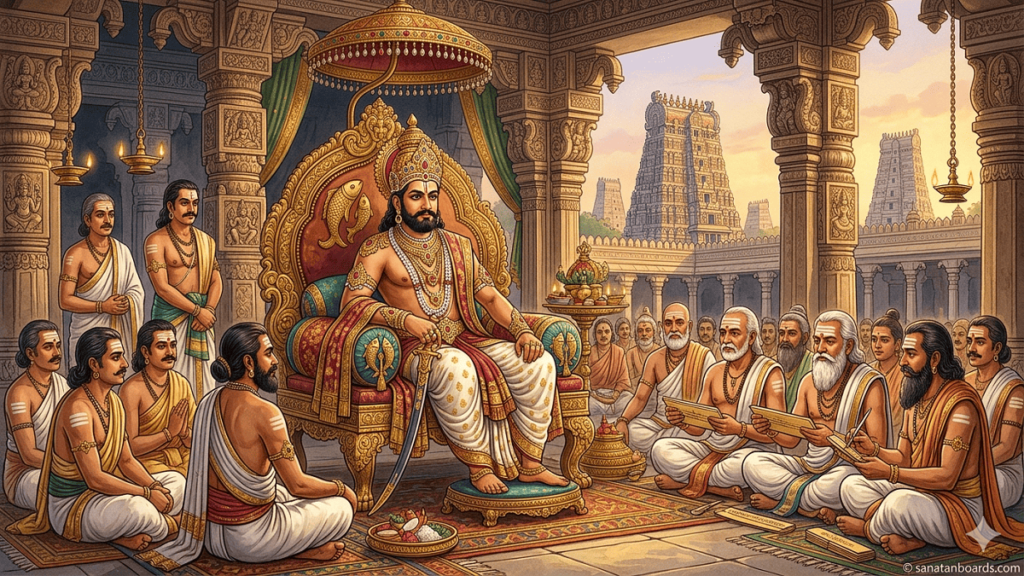
What Is Pandyas Of Tamil Nadu – Sundara Pandyan ?
The Pandyas of Tamil Nadu were a historically significant Tamil dynasty which existed from ancient to medieval times, shaping much of South Indian culture, politics, and society. The dynasty is recognized as one of the three major Tamil kingdoms alongside the Cholas and Cheres, and is frequently mentioned in ancient Tamil literature and inscriptions. Their rule was centered in Madurai and they are often credited with nurturing Tamil art, literature, religion, and trade between South India and other ancient civilizations.
Within the broader Pandya lineage, Sundara Pandyan refers to specific rulers who bore that royal title. The title “Sundara” has connotations of beauty and nobility in Tamil and Sanskrit, and during different eras several kings used it as part of their regal name. For example:
- Sundara Pandya I (10th century CE) maintained Pandya presence during a period of Chola dominance, helping preserve the dynasty’s continuity.
- In the later medieval era, rulers like Jatavarman Sundara Pandyan I played leading roles in revitalizing Pandya power during the 13th century.
The Pandyas flourished especially during the Sangam Age, around the early centuries of the Common Era, before facing periods of decline and resurgence as rival powers such as the Cholas rose and fell. Their legacy includes patronage of poetry, temple construction such as in Madurai, and fostering long-distance trade.
Understanding “PANDYAS OF TAMIL NADU – SUNDARA PANDYAN” thus means exploring not just one individual, but the role of Pandya rulers with this name and title and their contributions within the wider historical arc of one of the longest‑enduring Tamil dynasties.
Who Is Required PANDYAS OF TAMIL NADU – SUNDARA PANDYAN ?
The study of PANDYAS OF TAMIL NADU – SUNDARA PANDYAN is particularly important for historians, students, researchers, and enthusiasts of Indian history. Understanding Sundara Pandyan’s reign provides insight into the political, cultural, and economic dynamics of medieval South India.
Historians and Researchers: Scholars studying South Indian history or the evolution of Tamil dynasties need knowledge of Sundara Pandyan’s contributions to accurately reconstruct the region’s past. His reign represents a period of stability and growth within the Pandya kingdom, making it a critical case for comparative studies with contemporaneous dynasties such as the Cholas and Cheras. By examining military campaigns, administrative policies, and alliances, historians can understand how the Pandyas maintained power and influence.
Students and Educators: For students of history, archaeology, and South Asian studies, learning about Sundara Pandyan is essential for grasping the broader narrative of Tamil culture and governance. His patronage of literature, temple architecture, and trade networks highlights the interconnectedness of politics, religion, and culture. Educators can use Sundara Pandyan as a focal point to teach about medieval statecraft, economic strategies, and cultural patronage.
Cultural Enthusiasts and Tourists: Individuals interested in Tamil heritage, temple architecture, and classical literature can benefit from studying Sundara Pandyan. Temples and monuments built during his reign serve as tangible evidence of his contributions, offering both educational and cultural value.
Policy Analysts and Strategists: Though historical, Sundara Pandyan’s strategies in diplomacy, military defense, and trade offer lessons for modern governance and leadership studies. By analyzing his methods, strategists can draw parallels between ancient and contemporary administrative challenges.
When Is Pandyas Of Tamil Nadu – Sundara Pandyan Required ?
The study and understanding of PANDYAS OF TAMIL NADU – SUNDARA PANDYAN are particularly relevant when exploring the medieval period of South Indian history, roughly spanning the 13th and 14th centuries. This period was marked by frequent conflicts, evolving trade networks, and significant cultural developments, making it essential to examine Sundara Pandyan’s reign to gain a complete understanding of the era.
During Historical Studies: The knowledge of Sundara Pandyan is required when investigating the dynamics of the Pandya dynasty, especially its interactions with neighboring dynasties like the Cholas and the Cheras. His reign exemplifies a time when the Pandyas consolidated their territories, defended their kingdoms from invasions, and managed diplomatic relations. This historical context helps scholars determine the causes and effects of political decisions, territorial expansion, and governance strategies.
In Cultural and Literary Research: Sundara Pandyan’s era is crucial for studying Tamil literature, temple architecture, and artistic patronage. This period witnessed the commissioning of temples, support for classical Tamil poetry, and the growth of cultural hubs in cities like Madurai. Therefore, any research into South Indian arts and literature during the medieval period requires a deep understanding of Sundara Pandyan’s contributions.
For Educational Curriculum: The topic becomes relevant when teaching Indian history in schools and universities. Courses on medieval Indian kingdoms, trade routes, religious influences, and cultural evolution often require reference to Sundara Pandyan to illustrate the practical interplay between governance, military strategy, and cultural promotion.
In Archaeological and Tourism Contexts: The knowledge of Sundara Pandyan is required when studying or visiting historical sites in Tamil Nadu. Temples, inscriptions, and monuments from his reign provide evidence of the period’s socio-political and religious practices, helping historians and tourists alike understand the historical significance of the Pandya dynasty.
Where Is Pandyas Of Tamil Nadu – Sundara Pandyan Required ?
The knowledge of PANDYAS OF TAMIL NADU – SUNDARA PANDYAN is required in multiple geographical and contextual settings, primarily centered around Tamil Nadu and regions historically influenced by the Pandya dynasty. Understanding where his impact is most relevant helps contextualize the study of his reign and the dynasty’s historical significance.
In Tamil Nadu – The Heart of the Pandya Kingdom: Sundara Pandyan ruled primarily from Madurai, which served as the political and cultural capital of the Pandyas. The temples, inscriptions, and monuments in Madurai and surrounding regions, such as Sivaganga and Thoothukudi, reflect the architectural, cultural, and religious initiatives of his reign. Researchers, students, and historians focus on these locations to study the physical evidence of his rule.
In South India – Regional Influence: The Pandya dynasty maintained interactions with neighboring regions, including the Chola territories, Kerala (Chera kingdom), and parts of Karnataka. Understanding Sundara Pandyan’s reign is required in these areas to analyze historical conflicts, alliances, and trade routes. The spread of Pandya influence in these regions underscores the strategic and diplomatic importance of his rule.
International Trade Contexts – Southeast Asia and Sri Lanka: Sundara Pandyan’s reign was also significant in overseas trade, particularly with Sri Lanka, the Maldives, and Southeast Asian ports. Merchants and historians studying the maritime economy of medieval South India often examine Sundara Pandyan’s policies to understand trade networks, economic strategies, and cultural exchanges that transcended local boundaries.
Academic and Cultural Institutions Globally: Knowledge of Sundara Pandyan is required in universities, museums, and research centers globally where South Indian history, Tamil studies, and medieval Indian kingdoms are part of the curriculum. Scholars focusing on comparative studies of Indian dynasties, temple architecture, or literature often use his reign as a case study for understanding regional governance and cultural patronage.
Tourism and Heritage Sites: Temples, inscriptions, and other heritage monuments in Tamil Nadu are direct sites where the legacy of Sundara Pandyan is observed. Students, tourists, and historians visiting these locations rely on his historical context to appreciate their significance.
How Pandyas Of Tamil Nadu – Sundara Pandyan Is Required ?
1. Historical Research and Documentation: Scholars rely on ancient inscriptions, copper plates, and historical records to reconstruct the reign of Sundara Pandyan. Inscriptions on temples, royal edicts, and administrative records provide insights into governance, taxation, military campaigns, and diplomatic relations. By carefully analyzing these primary sources, historians can understand the policies and achievements of Sundara Pandyan.
2. Archaeological Studies: Temples, monuments, and ruins from Sundara Pandyan’s era are examined by archaeologists to learn about architecture, religious practices, and urban planning. For example, studies of the Madurai Meenakshi Temple and other Pandya constructions reveal his contributions to temple architecture and cultural life. Excavations and preservation of such sites allow researchers to piece together the social and cultural context of the period.
3. Literary Analysis: Sundara Pandyan was a patron of Tamil literature and poetry. Texts from his reign often celebrate his rule, provide moral guidance, and reflect the society of the time. Researchers analyze works by court poets, religious texts, and contemporary literature to understand how Sundara Pandyan influenced Tamil culture and promoted education and arts.
4. Comparative Studies: By comparing the Pandya dynasty under Sundara Pandyan with neighboring dynasties like the Cholas and Cheras, scholars can study differences in governance, military strategy, trade policies, and cultural patronage. This method helps highlight what made Sundara Pandyan’s reign unique and effective.
5. Educational and Experiential Learning: Teachers, students, and cultural enthusiasts learn “how” through classroom study, guided tours of heritage sites, and museum exhibits. Modern technology, including digital archives, virtual tours, and interactive maps, allows learners to explore Sundara Pandyan’s legacy beyond physical locations.
6. Interdisciplinary Approach: Understanding his reign also involves economics, sociology, and anthropology. His trade policies, societal structures, and religious patronage are studied to gain a holistic view of his governance and its impact on Tamil society.
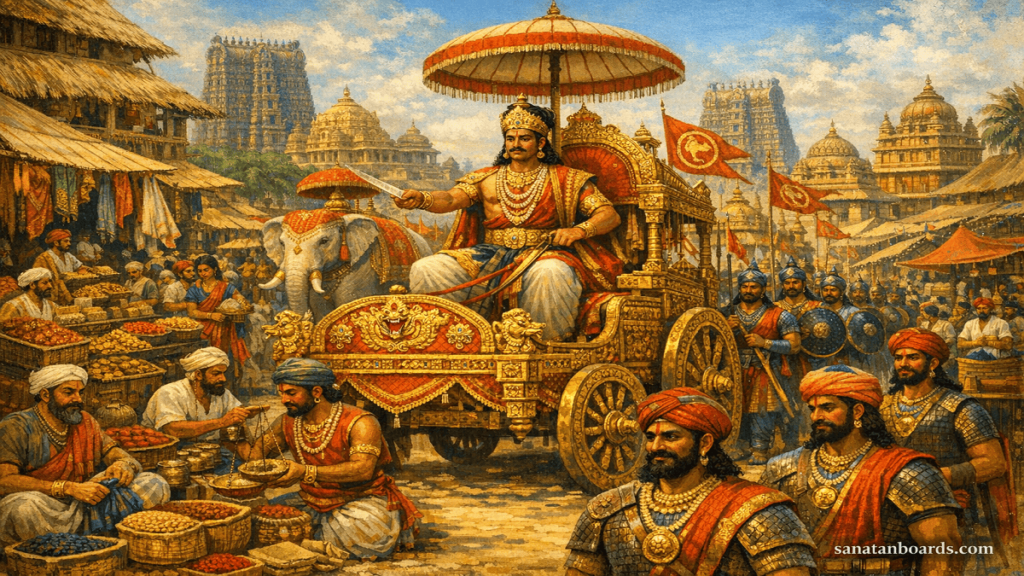
Case Study On Pandyas Of Tamil Nadu – Sundara Pandyan
Introduction
The Pandyas of Tamil Nadu were a major South Indian dynasty, historically recognized for their contributions to politics, culture, and trade. Among their rulers, Sundara Pandyan stands out as a significant figure during the medieval period. His reign is marked by political consolidation, military defense, cultural patronage, and economic expansion. This case study explores his contributions, governance style, and legacy, providing an in-depth understanding of the PANDYAS OF TAMIL NADU – SUNDARA PANDYAN and their historical significance.
Historical Context
During the medieval period, South India was dominated by three major dynasties: the Cholas, Cheras, and Pandyas. The Pandyas controlled the southernmost regions of Tamil Nadu, with Madurai as their political and cultural center. Sundara Pandyan ascended to the throne during a time of territorial disputes and political instability. Neighboring dynasties, particularly the Cholas, frequently contested Pandya territories, necessitating strong leadership and strategic governance.
Sundara Pandyan’s reign is placed roughly in the 13th–14th centuries, a period when Tamil literature and temple architecture flourished. Trade with Southeast Asia, Sri Lanka, and other maritime regions increased economic prosperity, further reinforcing the Pandya kingdom’s influence.
Political and Administrative Contributions
Sundara Pandyan’s administration focused on centralized governance while respecting local structures. He implemented policies that strengthened revenue collection and military organization. Historical inscriptions indicate that he maintained a network of local chieftains and officials to ensure smooth administration across the kingdom.
Diplomatically, Sundara Pandyan was adept at forging alliances. He maintained relations with other South Indian dynasties and foreign traders. This approach helped stabilize the kingdom, reduce conflicts, and secure trade routes, highlighting his political foresight.
Military Strategies
Sundara Pandyan’s reign is noted for military vigilance and defense. He successfully repelled invasions from the Cholas and other neighboring powers. His military organization included infantry, cavalry, and strategic fortifications, ensuring that the Pandya territories remained secure. Additionally, he leveraged naval trade protection to maintain economic dominance in the region.
Cultural and Religious Patronage
Sundara Pandyan was a patron of Tamil literature, temple construction, and arts. Scholars, poets, and religious leaders received royal support, resulting in a flourishing cultural environment. Temples such as the Meenakshi Temple in Madurai witnessed expansion during his reign, reflecting both spiritual and social importance.
Literary works from this period often praised his benevolent rule, illustrating how rulers used patronage to strengthen political legitimacy and cultural influence. The king also encouraged festivals and public gatherings, fostering a cohesive social identity within the kingdom.
Economic Contributions
Trade under Sundara Pandyan expanded significantly. Ports in southern Tamil Nadu facilitated commerce with Sri Lanka, the Maldives, and Southeast Asia. The king encouraged the exchange of goods such as pearls, textiles, spices, and precious metals. Economic prosperity supported not only the royal treasury but also arts, culture, and urban development.
Legacy
Sundara Pandyan’s reign left a lasting imprint on Tamil Nadu’s history. His effective administration, military strategy, and cultural patronage strengthened the Pandya dynasty’s position. Modern scholars study his reign to understand medieval governance, regional politics, and cultural development in South India.
His contributions continue to influence heritage studies, tourism, and Tamil cultural identity. The temples, inscriptions, and literary works from his era provide tangible evidence of his governance and social vision.
Conclusion
The case study of PANDYAS OF TAMIL NADU – SUNDARA PANDYAN highlights how a ruler can simultaneously achieve political #pandyasoftamilnadu stability, military strength, economic prosperity, and cultural enrichment. Sundara Pandyan exemplifies a balanced approach to governance, demonstrating the interconnectedness of administration, trade, religion, and arts.
Studying his reign provides critical insights into medieval Tamil society and offers valuable lessons for students, historians, and cultural enthusiasts seeking to understand the enduring legacy of the Pandya dynasty. Sundara Pandyan remains a symbol of effective l#pandyasoftamilnadu eadership, cultural patronage, and historical significance in South India.
White Paper On Pandyas Of Tamil Nadu – Sundara Pandyan
Executive Summary
The PANDYAS OF TAMIL NADU – SUNDARA PANDYAN represents a significant historical period in South India during which the Pandya dynasty achieved political stability, cultural renaissance, and economic growth. This white paper examines Sundara Pandyan’s reign, analyzing his governance, military strategies, cultural contributions, and economic policies. The objective is to provide a comprehensive understanding of his impact on medieval Tamil Nadu and the enduring legacy of the Pandya dynasty.
Introduction
The Pandya dynasty, one of the oldest Tamil dynasties, played a pivotal role in shaping the history of South India. Among its rulers, Sundara Pandyan is particularly noteworthy for consolidating political power, promoting trade, and patronizing Tamil literature and arts. This white paper explores the multiple dimensions of his reign, presenting a structured overview suitable for educational, academic, and cultural research purposes.
Historical Context
During the medieval period, Tamil Nadu was a hub of political, economic, and cultural activity. The Pandyas, based in Madurai, competed with other South Indian powers such as the Cholas and Cheras. Sundara Pandyan’s reign occurred at a time when the region required strong leadership to manage conflicts, stabilize administration, and encourage economic and cultural growth.
Historical sources, including inscriptions, temple records, and literary works, indicate that Sundara Pandyan successfully navigated political challenges, defended his territories, and expanded his kingdom’s influence in regional trade and culture.
Governance and Administrative Policies
Sundara Pandyan implemented a centralized yet flexible administration. Local chieftains were incorporated into the governance framework to maintain order across the kingdom. Revenue collection, law enforcement, and civic management were systematically organized, ensuring efficiency.
Key administrative strategies included:
- Decentralized oversight through regional officials.
- Tax reforms to support trade and temple activities.
- Legal frameworks reflected in inscriptions, emphasizing justice and social stability.
His governance model allowed the Pandya kingdom to withstand internal and external pressures, reinforcing the importance of strategic leadership in maintaining regional stability.
Military Strategy and Defense
Sundara Pandyan’s reign was marked by military vigilance. He strengthened fortifications, organized infantry and cavalry, and maintained a disciplined army to defend against rival dynasties like the Cholas.
His military strategy included:
- Securing strategic locations and trade routes.
- Maintaining alliances with neighboring kingdoms to deter invasions.
- Utilizing naval protection to safeguard overseas commerce.
This approach ensured the kingdom’s territorial integrity and contributed to long-term political stability.
Cultural and Religious Patronage
A major aspect of Sundara Pandyan’s legacy is his patronage of Tamil culture. Temples were constructed or renovated, including enhancements to the Meenakshi Temple in Madurai, fostering religious and cultural cohesion.
Literature flourished under his patronage:
- Court poets composed works celebrating his rule.
- Religious texts and moral treatises promoted ethical governance.
- Festivals and public events strengthened social cohesion.
Through these efforts, Sundara Pandyan not only enhanced cultural identity but also legitimized his rule and strengthened political authority.
Economic Policies and Trade
Trade under Sundara Pandyan expanded both regionally and internationally. Southern Tamil Nadu became a hub for maritime trade with Sri Lanka, Southeast Asia, and the Maldives. Commodities included:
- Pearls and precious stones.
- Textiles and spices.
- Agricultural products.
Economic prosperity supported the state treasury, funded temple constructions, and facilitated cultural initiatives, demonstrating the interconnection between economic policy and societal growth.
Legacy and Significance
Sundara Pandyan’s reign left a lasting imprint on Tamil Nadu’s political, cultural, and economic landscape:
- Strengthened Pandya sovereignty and military power.
- Preserved and promoted Tamil literature and temple architecture.
- Enhanced trade networks and urban development.
His reign serves as a case study in effective leadership, illustrating the integration of governance, culture, and economic management.
Recommendations for Study and Preservation
For historians, educators, and cultural institutions:
- Preserve inscriptions and monuments related to Sundara Pandyan’s reign.
- Incorporate his contributions into academic curricula on medieval South Indian history.
- Promote research on the economic, political, and cultural interactions of the Pandya dynasty.
- Encourage tourism and heritage education around Pandya-era sites in Tamil Nadu.
These measures ensure that the legacy of PANDYAS OF TAMIL NADU – SUNDARA PANDYAN continues to inform and educate future generations.
Conclusion
The white paper highlights that Sundara Pandyan’s reign represents a critical period in South Indian history, where political strategy, cultural patronage, #pandyasoftamilnadu and economic foresight intersected. By examining his governance, military policies, and cultural contributions, scholars and students gain a comprehensive understanding of the medieval Pandya dynasty. Sundara Pandyan remains a symbol of effective leadership, serving as both an #pandyasoftamilnadu educational and cultural reference point in Tamil Nadu’s history.
Industry Application On Pandyas Of Tamil Nadu – Sundara Pandyan
Introduction
The historical study of PANDYAS OF TAMIL NADU – SUNDARA PANDYAN extends beyond academic interest and has practical applications across multiple modern industries, including education, tourism, heritage management, publishing, cultural research, and digital technology. By analyzing his reign, businesses and organizations can derive insights into governance, cultural patronage, trade, and strategic planning, applying these lessons in contemporary contexts.
1. Educational Industry
Sundara Pandyan’s contributions are highly relevant to the education sector, particularly in curriculum design and cultural studies. Schools, universities, and online learning platforms can use his reign as a case study for teaching:
- History and Governance: Students learn about medieval statecraft, military strategy, and political alliances.
- Literature and Language: His patronage of Tamil poets provides materials for literary analysis and language studies.
- Economics: Trade and taxation systems from his reign offer historical perspectives on economic management.
Institutions can develop modules, courses, and workshops centered around his achievements, fostering interdisciplinary learning and critical thinking.
2. Tourism and Heritage Industry
The legacy of Sundara Pandyan significantly impacts tourism in Tamil Nadu. Key applications include:
- Heritage Tourism: Temples such as the Meenakshi Temple in Madurai and other Pandya-era monuments attract both domestic and international tourists. Guided tours, interactive exhibits, and historical storytelling enhance visitor engagement.
- Cultural Festivals: Reenactments and cultural events based on Sundara Pandyan’s era create tourism opportunities while promoting local traditions.
- Archaeological Tourism: Excavations and museum exhibits showcasing inscriptions, coins, and artifacts allow tourists to explore history firsthand.
Tourism businesses can leverage the rich history of Sundara Pandyan to develop educational packages, heritage walks, and digital apps for virtual exploration.
3. Publishing and Media Industry
The publishing industry benefits from content inspired by Sundara Pandyan:
- Books and Journals: Academic books, biographies, and historical research papers provide material for scholars and students.
- Digital Media: Documentaries, podcasts, and educational YouTube channels focused on his reign can reach global audiences.
- Storytelling and Historical Fiction: Writers and creators can develop novels, comics, and scripts based on his life, blending entertainment with education.
Media companies can explore Sundara Pandyan’s reign as a source for engaging and informative content.
4. Cultural Research and NGOs
Cultural organizations and research NGOs apply the study of Sundara Pandyan to:
- Preservation of Temples and Monuments: Ensuring the longevity of Pandya-era structures through conservation projects.
- Documentation of Tamil Literature: Translating, analyzing, and publishing literary works from his court.
- Community Engagement: Educating local populations about historical heritage to foster cultural pride.
These activities support the protection and promotion of Tamil heritage while contributing to social and cultural sustainability.
5. Digital Technology and Innovation
Modern technology can enhance the application of Sundara Pandyan’s legacy:
- Virtual Reality (VR) and Augmented Reality (AR): Virtual tours of Pandya-era temples and historical sites allow global access to his reign.
- Interactive Learning Apps: Gamified learning platforms can teach students about his administration, military campaigns, and cultural contributions.
- Digital Archives: Scanned inscriptions, manuscripts, and temple layouts make research accessible to scholars worldwide.
Tech companies and educational startups can leverage historical data for innovative learning experiences.
6. Strategic and Business Insights
Sundara Pandyan’s approach to trade, diplomacy, and administration offers lessons for modern businesses:
- Supply Chain Management: His maritime trade policies highlight efficient resource distribution and logistics.
- Leadership and Governance: Strategies for conflict resolution, alliance-building, and organizational structure can inspire corporate management models.
- Cultural Branding: Promoting Tamil heritage through products, literature, or tourism strengthens brand identity for companies in heritage-related sectors.
By studying historical governance and economic policies, modern enterprises can draw parallels and create value-driven strategies.
7. Summary of Industry Applications
| Industry Sector | Application of Sundara Pandyan’s Legacy |
|---|---|
| Education | Curriculum, historical case studies, interdisciplinary learning |
| Tourism | Heritage tours, cultural festivals, archaeological exploration |
| Publishing & Media | Books, documentaries, podcasts, historical fiction |
| Cultural NGOs | Preservation, documentation, community education |
| Digital Technology | VR/AR tours, gamified learning, digital archives |
| Business Strategy | Leadership, trade analysis, cultural branding |
Conclusion
The study of PANDYAS OF TAMIL NADU – SUNDARA PANDYAN demonstrates that historical research can have tangible applications across multiple modern industries. From education and tourism to digital technology and business strategy, his reign provides lessons in governance, trade, cultural patronage, and strategic thinking. By leveraging Sundara Pandyan’s legacy, industries can foster #sanatandharmaaccreditationboardsinmumbai cultural awareness, promote heritage preservation, and create innovative learning and business opportunities.
The historical insights gained from his reign not only enrich #sanatandharmaaccreditationboardsindelhi educational knowledge but also contribute to economic, cultural, and technological growth in contemporary contexts.
SOURCE : WorldInsights
ASK FAQ
Who was Sundara Pandyan in Tamil Nadu?
Sundara Pandyan was a medieval ruler of the Pandya dynasty, known for strengthening the kingdom, promoting Tamil literature, and enhancing trade and temple architecture.
What are the major contributions of Sundara Pandyan?
He contributed to political stability, cultural patronage, temple construction, literary support, and overseas trade in South India.
Where did Sundara Pandyan rule in Tamil Nadu?
He ruled primarily from Madurai, the cultural and political center of the Pandya kingdom.
When did Sundara Pandyan rule the Pandya dynasty?
His reign occurred during the 13th–14th centuries, a period of cultural and economic growth in Tamil Nadu.
Why is Sundara Pandyan important in history?
He is important for his effective governance, military strategy, promotion of Tamil culture, and influence on regional trade networks.
Table of Contents
Disclaimer
The information provided in this blog on PANDYAS OF TAMIL NADU – SUNDARA PANDYAN is intended solely for educational and knowledge purposes. While every effort has been made to ensure accuracy, historical interpretations may vary due to the limitations of available sources, inscriptions, and scholarly research. Readers should consult primary historical texts, archaeological records, and academic publications for detailed study. This content does not constitute professional advice or official historical authority. The author and platform disclaim any responsibility for errors, omissions, or interpretations arising from the use of this material.