The Pandya Dynasty is one of the ancient Tamil dynasties that played a crucial role in the history of South India. Among its most prominent rulers were King Nedunjeliyan and Maravarman Kulasekara Pandyan, whose reigns marked periods of political consolidation, cultural development, and military achievements. The dynasty’s origin can be traced back over two millennia, with its capital at Madurai, serving as a hub of administration, trade, and Tamil literature.
King Nedunjeliyan is remembered for his strong governance, promotion of literature, and the expansion of trade routes. Historical sources highlight his administrative acumen, which stabilized the Pandya rule in the region. Meanwhile, Maravarman Kulasekara Pandyan is celebrated for his military campaigns and diplomatic strategies that strengthened the dynasty’s influence across South India.
The Pandya Dynasty significantly contributed to Tamil culture, including temple architecture, literature and art forms. Both rulers ensured prosperity by supporting scholars, poets, and merchants. Studying the Pandya Dynasty and these kings provides valuable insight into the political, cultural, and economic structures of early Tamil civilization. This exploration is essential for students and enthusiasts seeking knowledge about South India’s rich historical heritage.
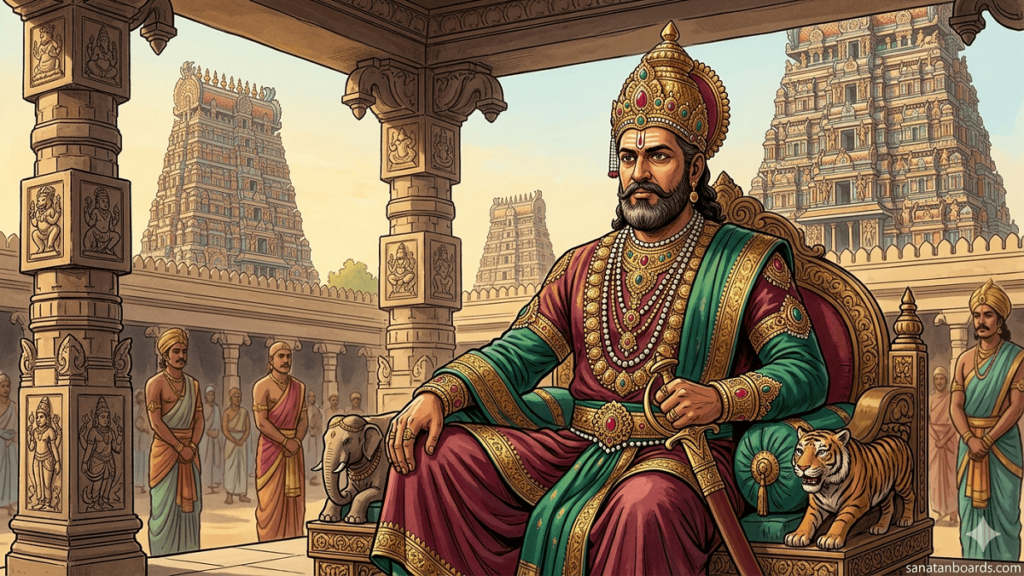
What Is Pandya Dynasty – King Nedunjeliyan, Maravarman Kulasekara Pandyan ?
The Pandya Dynasty is one of the three major Tamil dynasties of ancient South India, along with the Cholas and the Cheras. This dynasty flourished primarily in the southernmost part of the Indian subcontinent, with its capital at Madurai. The Pandyas are historically noted for their stable governance, prosperous trade networks, and patronage of arts and literature.
King Nedunjeliyan was one of the early and most significant rulers of the Pandya Dynasty. He is celebrated for his administrative skills, maintaining law and order, and promoting agriculture and commerce. According to Sangam literature, Nedunjeliyan was a just ruler who protected his subjects and encouraged cultural development, particularly in Tamil poetry and literature. His reign laid a foundation for the subsequent expansion of the dynasty’s influence.
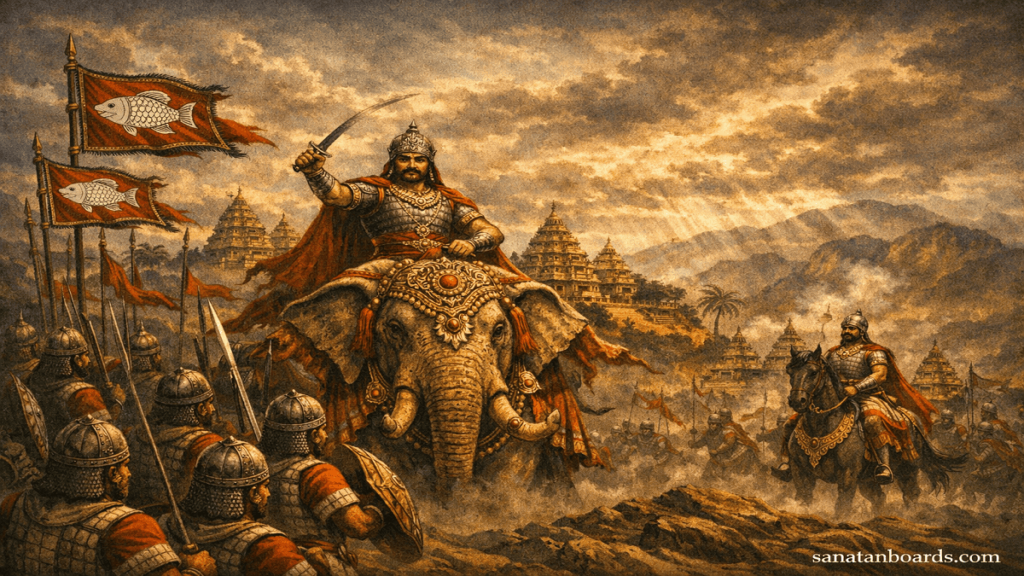
On the other hand, Maravarman Kulasekara Pandyan, ruling in the later phase of the Pandya Dynasty, is remembered for his military and diplomatic achievements. He led campaigns to expand the kingdom’s territories and secured trade relations with neighboring regions. His reign is particularly notable for fostering political stability, encouraging maritime trade, and supporting temple constructions that showcased the architectural brilliance of the Pandyas.
Both rulers collectively contributed to making the Pandya Dynasty a symbol of Tamil pride and cultural excellence. Their governance, coupled with strategic military prowess, allowed the Pandyas to thrive for centuries. Studying their leadership provides insight into the political, cultural, and economic frameworks of early South India, revealing how dynasties shaped history through governance, culture, and diplomacy.
Who Is Required – Pandya Dynasty, King Nedunjeliyan, Maravarman Kulasekara Pandyan ?
Understanding the Pandya Dynasty and the significant rulers King Nedunjeliyan and Maravarman Kulasekara Pandyan is essential for anyone studying South Indian history, Tamil culture, or ancient governance systems. The “who is required” question can be approached from an educational, cultural, and historical perspective—essentially, who needs to learn about them and why.
Firstly, students of history and archaeology require knowledge of these rulers because the Pandya Dynasty provides critical insights into the political and social structures of ancient Tamil Nadu. King Nedunjeliyan’s administration demonstrates early examples of governance systems, law enforcement, and public welfare initiatives, while Maravarman Kulasekara Pandyan’s reign highlights military strategy, diplomacy, and economic expansion through trade. Understanding their roles helps learners appreciate the evolution of leadership, kingdom management, and cultural integration in South India.
Secondly, scholars of Tamil literature and culture find these rulers indispensable. Both Nedunjeliyan and Maravarman Kulasekara Pandyan were patrons of Tamil poetry, literature, and temple art. Sangam texts, inscriptions, and historical records often reference their contributions, making them vital subjects for researchers seeking authentic sources of Tamil heritage. Their support for education, arts, and religious architecture underlines the intersection of governance and cultural flourishing in ancient dynasties.
Thirdly, educators, curriculum developers, and knowledge enthusiasts require awareness of the Pandya Dynasty. Teaching students about these rulers ensures continuity of cultural memory and historical understanding. It also helps learners contextualize modern Tamil Nadu’s social and cultural identity, as many traditions and festivals have roots tracing back to the Pandya era.
Finally, tourists, historians, and heritage conservationists benefit from studying these kings. Knowledge of the Pandya Dynasty, its rulers, and their achievements enhances the appreciation of historic sites such as Madurai Meenakshi Temple and ancient trade hubs. Understanding who these rulers were and their contributions allows individuals to connect with India’s ancient civilization in a meaningful way.
When Is Pandya Dynasty, King Nedunjeliyan, Maravarman Kulasekara Pandyan Required ?
King Nedunjeliyan and Maravarman Kulasekara Pandyan, played their roles is essential for grasping the historical and cultural timeline of South India. The Pandya Dynasty’s origins date back over two millennia, making it one of the longest-standing dynasties in Indian history. The rulers in focus represent different periods of the dynasty’s evolution, each contributing uniquely to political stability, cultural development, and trade expansion.
King Nedunjeliyan ruled during the early to mid-phase of the Pandya Dynasty, often associated with the Sangam period (circa 3rd century BCE to 3rd century CE). His reign is marked by consolidation of power in the southern Tamil region, ensuring law, order, and the growth of agriculture and trade. Literary sources, including Sangam poems, highlight his rule as a time of prosperity and cultural flourishing. Understanding this period is crucial for historians and students as it provides context for the early administrative systems and the social life of the time.
Maravarman Kulasekara Pandyan, on the other hand, belonged to the later phase of the Pandya Dynasty (circa 12th–13th centuries CE). His era is noted for aggressive military campaigns, expansion of territories, and strengthening diplomatic and trade relationships. This period also saw the construction of temples, the promotion of arts, and the encouragement of maritime trade that connected South India with Southeast Asia. Knowing this timeline helps learners comprehend how the Pandya Dynasty evolved over centuries and adapted to changing political, economic, and cultural landscapes.
The study of when these rulers reigned is not only academic but also aids in chronological understanding of South Indian history. By knowing the historical periods associated with Nedunjeliyan and Maravarman Kulasekara Pandyan, students can correlate developments in architecture, literature, trade, and governance with the broader Indian and global historical context.
knowledge of when these rulers were active helps learners, researchers, and educators place the Pandya Dynasty in a temporal framework, connecting their achievements to specific centuries, cultural developments, and historical milestones. This understanding forms the foundation for deeper study of Tamil history and its lasting influence on South Indian civilization.
Where Is Pandya Dynasty, King Nedunjeliyan, Maravarman Kulasekara Pandyan Required ?
where the Pandya Dynasty, along with rulers King Nedunjeliyan and Maravarman Kulasekara Pandyan, held influence is crucial for studying the geography, trade, and cultural impact of ancient South India. The Pandya Dynasty was primarily based in the southernmost part of the Indian subcontinent, with Madurai serving as the capital city. Madurai, located on the banks of the Vaigai River, was the administrative, cultural, and economic hub of the dynasty and remains a significant historical center today.
King Nedunjeliyan governed regions that largely encompassed present-day southern Tamil Nadu, including areas around Madurai, Tirunelveli, and Ramanathapuram. These regions were fertile, supporting agriculture, and strategically located near trade routes connecting the eastern and western coasts of South India. The dynasty also engaged in maritime trade via ports on the southeastern coast, allowing cultural and economic exchange with Southeast Asia. Nedunjeliyan’s rule ensured stability in these areas, fostering prosperity and enabling cultural developments such as the Sangam literary traditions.
Maravarman Kulasekara Pandyan, ruling several centuries later, expanded the Pandya influence to a broader territory, including northern Tamil Nadu and parts of Kerala. His reign strengthened the dynasty’s maritime presence, with access to ports facilitating trade in spices, pearls, textiles, and other valuable commodities. Temple architecture flourished under his rule, particularly in Madurai and surrounding regions, highlighting the dynasty’s cultural footprint. By understanding where these kings ruled, learners can trace the geographic spread of Pandya political, economic, and cultural influence across South India.
Studying where the Pandya Dynasty operated also provides context for heritage tourism, archaeology, and historical preservation. Many temples, monuments, and inscriptions across southern Tamil Nadu bear the marks of Pandya rule, offering tangible evidence of the dynasty’s presence. Places like the Meenakshi Amman Temple in Madurai exemplify the architectural brilliance and religious significance of the era.
How Pandya Dynasty, King Nedunjeliyan, Maravarman Kulasekara Pandyan Is Required ?
King Nedunjeliyan and Maravarman Kulasekara Pandyan, operated provides critical insight into the mechanisms of governance, culture, trade, and military strategy in ancient South India. “How” refers to the methods, processes, and approaches through which these kings ruled, expanded influence, and contributed to Tamil civilization.
King Nedunjeliyan implemented effective administrative systems that emphasized law, justice, and public welfare. He maintained control over agricultural production by ensuring irrigation systems and land management were well-organized, supporting both food security and trade. Cultural promotion was achieved through patronage of scholars, poets, and artists, leading to the flourishing of Sangam literature, which remains a vital source of Tamil history. Nedunjeliyan also strengthened political alliances with neighboring kingdoms through diplomacy and strategic marriages, ensuring stability in the southern region of the subcontinent.
Maravarman Kulasekara Pandyan, ruling centuries later, demonstrated a more expansive approach. He strengthened the dynasty’s military capabilities, using campaigns to secure borders and expand influence. Maritime trade was promoted through the development of ports and trade agreements, connecting South India with Southeast Asia and the Indian Ocean network. Temple construction, a hallmark of his reign, was undertaken not only for religious purposes but also to showcase the dynasty’s wealth, architectural skill, and cultural influence. By supporting artisans and craftsmen, Maravarman Kulasekara Pandyan ensured that Tamil culture remained vibrant and visible across the region.
Both rulers also governed through a hierarchical administrative system, delegating responsibilities to local chieftains and ministers while maintaining centralized authority. They used inscriptions, coins, and temple endowments to communicate policies, assert legitimacy, and preserve records for posterity. This methodical approach allowed their kingdoms to thrive economically, politically, and culturally.
Case Study On Pandya Dynasty – King Nedunjeliyan, Maravarman Kulasekara Pandyan
Introduction
The Pandya Dynasty is one of the oldest and most influential dynasties in South Indian history, with a legacy spanning over two millennia. Among its distinguished rulers, King Nedunjeliyan and Maravarman Kulasekara Pandyan stand out for their contributions to governance, culture, trade, and military expansion. This case study examines their reigns, administrative practices, cultural contributions, economic policies, and the broader impact of the dynasty on Tamil civilization.
Historical Context
The Pandya Dynasty emerged alongside the Chola and Chera dynasties as a dominant political and cultural force in South India. Its capital, Madurai, became a hub for trade, administration, and literature. During the Sangam period (circa 3rd century BCE to 3rd century CE), the Pandyas established themselves as a stable and prosperous kingdom. King Nedunjeliyan’s reign coincided with this period, while Maravarman Kulasekara Pandyan ruled in the later medieval period (circa 12th–13th centuries CE), during which the dynasty experienced territorial expansion and strengthened maritime trade.
Governance and Administration
King Nedunjeliyan implemented efficient governance structures. He maintained law and order, appointed ministers to oversee regional administration, and ensured effective tax collection and land management. Agricultural development was a priority; irrigation systems were constructed and maintained to support the agrarian economy. Nedunjeliyan’s administration also emphasized justice, protecting subjects from exploitation and promoting social stability.
Maravarman Kulasekara Pandyan expanded on this administrative model by establishing a more extensive hierarchical system. Provincial governors managed territories while reporting to the king, allowing centralized authority alongside local administration. Maravarman also used inscriptions, temple endowments, and coinage to assert legitimacy and communicate policies across the kingdom.
Military Strategy
King Nedunjeliyan relied on diplomacy and strategic alliances, though he maintained a capable military to defend the kingdom’s borders. Maravarman Kulasekara Pandyan, in contrast, conducted aggressive military campaigns to expand territories into northern Tamil Nadu and parts of Kerala. His naval strategy strengthened maritime trade and secured ports, which were crucial for commerce with Southeast Asia. These campaigns were often coupled with cultural patronage to integrate conquered regions peacefully into the Pandya domain.
Cultural Contributions
Both rulers were patrons of Tamil literature, art, and architecture. Nedunjeliyan’s reign coincided with the flourishing of Sangam literature, which documented social, political, and cultural life. Maravarman Kulasekara Pandyan oversaw the construction of temples, promoting Dravidian architecture, stone sculptures, and religious iconography. The Meenakshi Amman Temple in Madurai exemplifies the dynasty’s architectural and religious contributions. Supporting poets, scholars, and artisans ensured that the dynasty’s cultural influence endured beyond their reigns.
Economic Policies and Trade
The Pandyas maintained robust trade networks, with access to both the Bay of Bengal and Indian Ocean. King Nedunjeliyan supported local trade, agriculture, and artisanal industries. Maravarman Kulasekara Pandyan expanded maritime trade, exporting spices, textiles, and pearls to Southeast Asia and beyond. Ports under his supervision became centers of cultural exchange and economic growth, reinforcing the dynasty’s wealth and influence.
Societal Impact
The combined governance, cultural, and economic strategies of these rulers ensured the Pandya Dynasty’s stability and prosperity. Their reigns fostered education, literature, and social order, influencing Tamil culture and society for centuries. By protecting temples, supporting scholars, and promoting commerce, the Pandyas created a model for sustainable governance and cultural patronage.
Lessons and Insights
This case study illustrates the importance of strategic governance, cultural patronage, and trade expansion in sustaining a kingdom. King Nedunjeliyan demonstrates how consolidation and stability form the foundation of long-term prosperity. Maravarman Kulasekara Pandyan exemplifies the significance of expansion, diplomacy, and economic foresight in enhancing a dynasty’s influence. Modern historians, educators, and policymakers can draw lessons from their approaches to administration, trade management, and cultural investment.
Conclusion
The Pandya Dynasty, particularly under King Nedunjeliyan and Maravarman Kulasekara Pandyan, played a transformative role in South Indian history. #pandyadynastyinmumbai Their leadership shaped political stability, cultural development, and economic prosperity, leaving a legacy that continues to inform Tamil heritage, literature, and architecture. Studying these rulers provides critical insights into how strategic governance, military strategy, and cultural patronage can sustain and expand a civilization over centuries.
White Paper On Pandya Dynasty – King Nedunjeliyan, Maravarman Kulasekara Pandyan
Executive Summary
The Pandya Dynasty represents one of the most enduring and influential dynasties in South Indian history. Among its notable rulers, King Nedunjeliyan and Maravarman Kulasekara Pandyan are remembered for their administrative expertise, military achievements, cultural patronage, and trade expansion. This white paper examines their reigns, providing an analytical framework for understanding their impact on governance, society, economy, and culture in Tamil Nadu. The objective is to provide educators, researchers, and heritage enthusiasts with a structured overview that highlights lessons in leadership, statecraft, and cultural preservation.
Introduction
The Pandya Dynasty, along with the Chola and Chera dynasties, formed the triad of ancient Tamil powers. Centered in Madurai, the dynasty governed the southernmost parts of India, contributing to politics, trade, and Tamil culture. Historical sources, including Sangam literature, inscriptions, and temple architecture, provide valuable evidence of their governance and cultural activities. This white paper focuses on the contributions of King Nedunjeliyan, representing early consolidation, and Maravarman Kulasekara Pandyan, representing territorial expansion and economic growth.
Governance and Administrative Framework
King Nedunjeliyan prioritized internal stability and efficient governance. His administration included regional governors and ministers responsible for agriculture, taxation, and law enforcement. By ensuring effective irrigation systems and land management, he stabilized agricultural production, supporting both local food supply and trade. Nedunjeliyan also promoted social justice, cultural patronage, and literacy, laying a strong foundation for sustained governance.
Maravarman Kulasekara Pandyan, ruling in the 12th–13th centuries CE, expanded the administrative framework to manage a larger territory. He established provincial governors and empowered local chieftains under centralized oversight, ensuring cohesive administration across diverse regions. Policies communicated through inscriptions and temple endowments reinforced legitimacy and cultural continuity.
Military Strategy and Security
Nedunjeliyan relied on a disciplined military alongside strategic alliances to maintain regional stability. Maravarman Kulasekara Pandyan, by contrast, conducted active campaigns to expand Pandya influence into northern Tamil Nadu and Kerala, securing borders and key trade routes. Naval strategy under Maravarman Kulasekara facilitated maritime trade, strengthening both the economy and regional diplomacy. These approaches ensured territorial integrity while fostering wealth generation through commerce.
Cultural Patronage
Both rulers significantly influenced Tamil culture. Nedunjeliyan supported Sangam literature, which recorded social, political, and poetic achievements of the era. Maravarman Kulasekara Pandyan’s reign saw the construction and renovation of temples, including iconic structures in Madurai. Artistic patronage included sculpting, stone inscriptions, and literary sponsorship, reinforcing Tamil identity and cultural sophistication.
Economic Development and Trade
Economic strategy played a pivotal role in the dynasty’s sustainability. Nedunjeliyan promoted local trade, agriculture, and artisanal production. Maravarman Kulasekara Pandyan focused on maritime trade, exporting spices, pearls, and textiles. Strategic port management allowed Pandya trade to extend to Southeast Asia, contributing to wealth accumulation and cross-cultural exchange.
Societal Impact
The reigns of Nedunjeliyan and Maravarman Kulasekara Pandyan reinforced social stability, cultural pride, and economic prosperity. Their policies encouraged education, promoted literature, and ensured public welfare. Religious and cultural institutions flourished, providing the population with spiritual and social cohesion.
Lessons Learned and Strategic Insights
Key takeaways include:
- Foundational Governance: Stability under Nedunjeliyan demonstrates the importance of law, order, and agricultural management in sustaining a civilization.
- Expansion with Cultural Integration: Maravarman Kulasekara Pandyan illustrates that territorial and economic growth is most effective when paired with cultural investment.
- Trade and Diplomacy: Economic prosperity relies on strategic trade networks, diplomatic alliances, and infrastructure development.
- Cultural Continuity: Patronage of arts, literature, and religious architecture ensures enduring societal legacy.
Conclusion
The Pandya Dynasty’s historical significance is exemplified through the reigns of King Nedunjeliyan and Maravarman Kulasekara Pandyan. #pandyadynastyintamil Their governance, military strategy, cultural patronage, and economic policies created a model of sustainable, prosperous, and culturally rich civilization. For historians, educators, and cultural enthusiasts, #pandyadynastyinindia understanding these rulers provides valuable lessons in leadership, statecraft, and heritage preservation.
Industry Application On Pandya Dynasty – King Nedunjeliyan, Maravarman Kulasekara Pandyan
Introduction
The Pandya Dynasty, particularly under King Nedunjeliyan and Maravarman Kulasekara Pandyan, may seem distant from modern industry, yet their governance, trade strategies, cultural investments, and administrative systems provide valuable insights applicable across multiple sectors today. By analyzing historical models, modern industries can derive lessons in leadership, project management, trade networks, cultural branding, and sustainable development. This paper explores how ancient Pandya practices can influence contemporary business, tourism, education, and heritage industries.
Governance and Leadership Lessons for Modern Organizations
King Nedunjeliyan’s focus on stability, administrative efficiency, and justice provides a blueprint for modern organizational leadership. In corporate governance, clear hierarchies, delegation of responsibilities, and strong internal control systems mirror the administrative strategies of the Pandya Dynasty. Similarly, Maravarman Kulasekara Pandyan’s methods of territorial expansion and trade diplomacy emphasize strategic growth and international partnerships. Businesses today can apply these principles to:
- Operational Efficiency – Implementing decentralized management while maintaining centralized oversight.
- Strategic Expansion – Using diplomacy, partnerships, and calculated risk-taking for growth.
- Cultural Leadership – Encouraging employee engagement and corporate social responsibility, similar to the Pandya kings’ support of arts and education.
Trade and Economic Lessons for Business and Commerce
The Pandya Dynasty thrived through local and international trade, exporting spices, textiles, and pearls. Modern commerce can learn from:
- Diversification: Pandya trade included multiple goods across regions; businesses today can diversify product lines to reduce risk.
- Global Connectivity: Maravarman Kulasekara Pandyan’s maritime strategy highlights the importance of supply chain management and international trade relations.
- Branding through Culture: The dynasty promoted regional culture alongside trade, establishing the Tamil identity globally—similar to modern businesses using cultural branding to distinguish products in international markets.
Tourism and Heritage Industry Applications
The architectural and cultural contributions of the Pandyas, including temples, inscriptions, and art, create significant opportunities for the heritage tourism industry. Lessons for the industry include:
- Cultural Preservation as an Asset – Maintaining temples and historical sites as tourist attractions, generating revenue and cultural education.
- Experiential Tourism – Creating immersive experiences, such as guided tours of Madurai and historical exhibitions, reflecting the dynasty’s history.
- Sustainable Development – Using historical knowledge to plan infrastructure without damaging heritage sites, mirroring the dynasty’s emphasis on urban planning and public welfare.
Education and Research Industry Applications
The study of Pandya governance, trade, and culture can inform educational industries by:
- Designing curricula around historical governance and leadership models.
- Using case studies of Nedunjeliyan and Maravarman Kulasekara Pandyan to teach project management, strategic planning, and cultural appreciation.
- Promoting interdisciplinary research combining history, archaeology, economics, and political science.
Arts, Media, and Cultural Industries
The Pandya Dynasty’s patronage of literature, temple art, and architecture offers inspiration for creative industries:
- Film and Media – Historical narratives of Pandya kings can be adapted into films, documentaries, and digital media content.
- Artisanal and Craft Sectors – Temple sculptures and traditional designs inspire contemporary crafts, architecture, and jewelry industries.
- Cultural Branding – Businesses can integrate elements of Pandya heritage in product design to create identity-driven markets.
Technology and Modern Applications
Even in technology, lessons emerge from the dynasty’s focus on communication, record-keeping, and trade networks:
- Information Management – Inscriptions and temple records mirror modern data documentation practices.
- Logistics Optimization – Maritime trade strategies can inspire modern supply chain management, emphasizing efficiency, risk assessment, and global connections.
- Innovation through Tradition – Applying historical insights in modern problem-solving can promote creative and culturally informed solutions.
Conclusion
The Pandya Dynasty, under King Nedunjeliyan and Maravarman Kulasekara Pandyan, demonstrates how leadership, governance, trade, #sanatandharmaaccreditationboardsinmumbai culture, and infrastructure can influence societal prosperity. Modern industries—business, tourism, education, arts, and technology—can draw actionable insights from their strategies. #sanatandharmaaccreditationboardsintamil By integrating historical lessons into contemporary practices, industries not only gain operational advantages but also contribute to cultural preservation and heritage promotion.
source : theOpenBook
ASK FAQ
Who was King Nedunjeliyan of the Pandya Dynasty?
King Nedunjeliyan was a prominent ruler of the Pandya Dynasty, known for strong governance, promoting Tamil literature, and stabilizing trade and agriculture during the Sangam period.
What are the achievements of Maravarman Kulasekara Pandyan?
Maravarman Kulasekara Pandyan expanded the Pandya territories, strengthened maritime trade, built temples, and patronized Tamil arts and literature in the 12th–13th centuries CE.
When did the Pandya Dynasty rule South India?
The Pandya Dynasty ruled from ancient times (circa 3rd century BCE) through medieval periods, with notable rulers like Nedunjeliyan and Maravarman Kulasekara Pandyan shaping its history.
Where was the Pandya Dynasty based?
The Pandya Dynasty was based in southern Tamil Nadu, with Madurai as its capital, and controlled key trade and cultural centers across South India.
How did the Pandya Dynasty influence Tamil culture?
Through temple construction, literary patronage, trade expansion, and governance, the Pandya Dynasty promoted Tamil art, architecture, poetry, and social development across centuries.
Table of Contents
Disclaimer
All information provided is for educational and knowledge purposes only. The historical facts, interpretations, and examples are based on literary sources, inscriptions, and scholarly research. This content is not intended for commercial, political, or religious endorsement. While efforts are made to ensure accuracy, some historical details may vary due to the nature of ancient records and ongoing research. Readers are encouraged to consult primary sources, archaeological findings, and academic publications for deeper study. The content aims to enhance understanding of the Pandya Dynasty, King Nedunjeliyan, and Maravarman Kulasekara Pandyan without making absolute claims or judgments about history.