The Vedic Knowledge Network is an initiative that aims to preserve, organize, and share the profound knowledge contained in the Vedas—ancient Indian scriptures dating back thousands of years. These texts cover a wide range of subjects, including philosophy, spirituality, mathematics, astronomy, medicine, and even social governance.
What Is Vedic Knowledge Network?
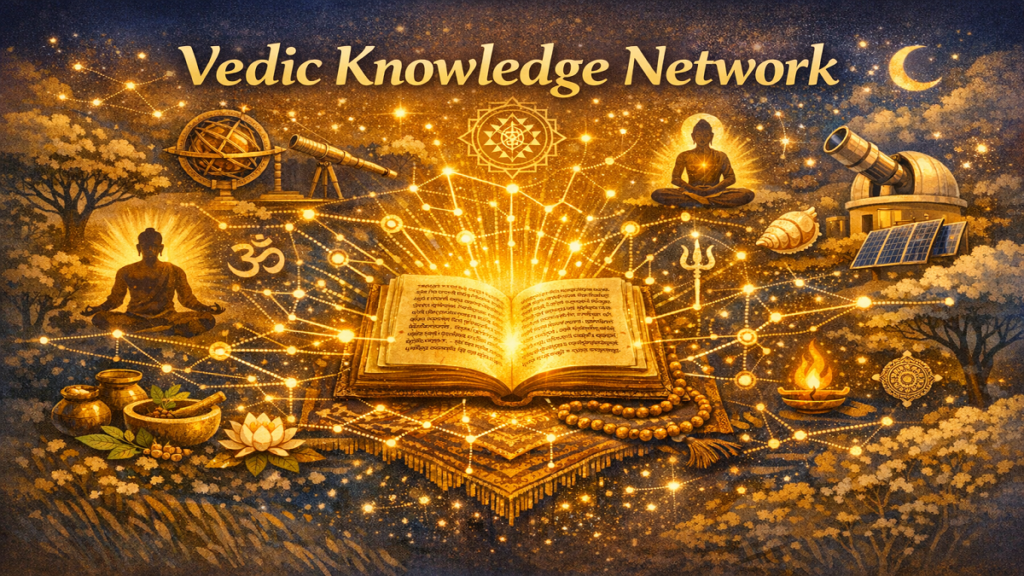
The Vedic Knowledge Network is a modern initiative designed to preserve, organize, and share the ancient wisdom of the Vedas, the foundational texts of Indian civilization. These scriptures, composed thousands of years ago, contain insights on spirituality, philosophy, science, health, astronomy, and ethics. The Vedic Knowledge Network brings these teachings into a structured, accessible format for learners, researchers, and curious minds worldwide.
Unlike traditional repositories of knowledge, which may be fragmented or difficult to access, the Vedic Knowledge Network creates a connected framework. It links concepts across different disciplines, helping users see the relationships between philosophy, meditation, Ayurveda, mathematics, and other areas of Vedic wisdom. This holistic approach makes learning more meaningful, as it shows how ancient knowledge was interwoven with everyday life, science, and human well-being.
One of the key purposes of the network is preservation. Many Vedic texts were transmitted orally or existed in fragile manuscripts, making them vulnerable to loss. By digitizing, cataloging, and connecting these teachings, the network ensures that this invaluable heritage remains available for future generations.
The network also focuses on accessibility. Students, teachers, and researchers no longer need specialized resources or rare texts to explore Vedic knowledge. Through organized categories, cross-references, and contextual explanations, the network makes learning intuitive and engaging.
Beyond academics, the Vedic Knowledge Network offers practical relevance today. Its teachings on wellness, meditation, environmental awareness, and ethical living provide timeless guidance for modern challenges.
Who Is Required For Vedic Knowledge?
The truth is: Vedic knowledge is not limited to any one type of person—it’s universal—but traditionally, there are a few roles and attitudes that make engagement with it meaningful. Here’s a breakdown:
1. Learners / Seekers
Anyone who is genuinely curious or seeking wisdom can benefit from Vedic knowledge. Traditionally, learners were expected to have discipline, respect for the teachings, and a sincere desire to understand life, spirituality, and ethics. Today, students, researchers, and spiritual seekers all fall into this category.
2. Teachers / Gurus
In the traditional system, a guru or teacher was essential to guide learners, interpret texts, and ensure proper understanding. The guru-student relationship emphasized personal guidance, mentorship, and contextual learning.
3. Practitioners
Vedic knowledge is practical as well as theoretical. People who practice yoga, meditation, Ayurveda, or Vedic rituals are actively applying these teachings in daily life. Their practice reinforces understanding and helps preserve the knowledge.
4. Researchers / Scholars
Modern scholars, historians, and scientists can engage with Vedic knowledge academically. The network’s digitization and structured frameworks make it easier for researchers to explore connections between ancient science, philosophy, and modern disciplines.
5. Anyone Seeking Wisdom
Ultimately, Vedic knowledge is intended for all of humanity. Its teachings about ethics, the mind, nature, and the cosmos are universal. The “requirement” is simply an open mind, curiosity, and willingness to learn.
When Vedic Knowledge Is Required?
1. During Spiritual Seeking
When someone is looking for deeper meaning, purpose, or connection with the universe, Vedic knowledge provides insights into the nature of the self, consciousness, and cosmic order.
2. For Personal Growth and Mindfulness
The Vedas and associated teachings like yoga and meditation offer tools for mental clarity, emotional balance, and ethical living. Anyone seeking personal growth can benefit from this knowledge.
3. When Practicing Health and Wellness
Vedic wisdom includes Ayurveda, dietetics, and lifestyle guidance. People turn to it when they want to improve health, prevent disease, or harmonize body, mind, and environment.
4. For Understanding Life’s Challenges
Vedic knowledge provides moral and philosophical guidance, helping individuals make decisions, face difficulties, or maintain ethical conduct in daily life.
5. During Academic or Scientific Exploration
Researchers and scholars use Vedic texts to explore ancient science, mathematics, astronomy, and social systems, applying it to modern questions.
6. For Cultural and Heritage Awareness
Those interested in understanding Indian traditions, rituals, and philosophy rely on Vedic knowledge to preserve and practice their cultural heritage.
Where Vedic Knowledge Is Required?
Vedic knowledge, rooted in the ancient Vedas of India, is much more than spiritual or religious instruction—it is a comprehensive system covering philosophy, science, ethics, wellness, and the arts. Its application is not limited to temples or classrooms; it is required in many areas of life, society, and modern learning. Understanding where Vedic knowledge is needed helps us see its relevance in both personal growth and collective development.
1. In Personal Life
At an individual level, Vedic knowledge provides guidance for self-development, mindfulness, and emotional balance. The teachings of the Vedas and associated practices like yoga and meditation help individuals understand their mind, emotions, and purpose in life. People facing stress, confusion, or existential questions often turn to these teachings for clarity and inner peace. Vedic knowledge encourages a disciplined, ethical, and conscious way of living, making it highly relevant for anyone seeking personal growth and well-being.
2. In Health and Wellness
Vedic knowledge forms the foundation of Ayurveda, the ancient system of medicine, as well as practices like yoga and pranayama. These disciplines emphasize holistic health, focusing not only on the body but also on the mind and environment. For anyone pursuing preventive healthcare, alternative medicine, or lifestyle improvement, Vedic knowledge provides timeless guidance. Its emphasis on natural remedies, seasonal routines, and mental wellness is especially relevant today, when modern life often leads to physical and mental imbalances.
3. In Education and Learning
Vedic knowledge is required in education and intellectual exploration, particularly for those studying philosophy, literature, linguistics, or the history of science. The Vedas contain sophisticated ideas in mathematics, astronomy, linguistics, and logic, many of which influenced later scientific developments. Researchers and students can benefit from understanding these concepts, not only to preserve cultural heritage but also to explore connections between ancient knowledge and modern science.
4. In Ethical and Moral Decision-Making
Vedic knowledge provides a moral compass for individuals and societies. Its teachings on dharma (duty), ethics, and righteous living are highly relevant in decision-making, governance, and leadership. Whether it’s guiding personal choices, managing relationships, or shaping social policies, the principles derived from the Vedas help maintain balance, fairness, and responsibility.
5. In Cultural and Spiritual Practices
Temples, rituals, festivals, and traditional arts all rely on Vedic knowledge. This makes it essential for cultural preservation, helping communities understand their roots, maintain practices, and pass traditions to future generations. Beyond ritual, it fosters spiritual awareness, reflection, and a sense of connection to the universe.
6. In Environmental and Social Understanding
Vedic texts emphasize harmony with nature and sustainable living. In today’s world, where environmental challenges are critical, Vedic principles about ecology, conservation, and responsible resource use are increasingly relevant. Similarly, its teachings on social harmony, mutual respect, and ethical coexistence provide insights into creating balanced communities.
How Vedic Knowledge is Required?
Vedic knowledge, derived from the ancient Vedas, is not merely theoretical—it is practical, applicable, and transformative. Understanding how it is required helps us see how this wisdom can guide modern life, from personal growth to societal development.
1. Through Learning and Study
The first step in acquiring Vedic knowledge is structured learning. Traditionally, students studied under a guru (teacher) to understand the texts, mantras, and philosophy deeply. In modern contexts, this can be through online platforms, courses, or the Vedic Knowledge Network. Learning systematically ensures that the knowledge is understood correctly, with context, application, and integrity.
2. Through Practice
Vedic knowledge is required not just in theory but in practice. Yoga, meditation, rituals, and ethical living are ways to apply this wisdom. For example:
- Yoga and meditation cultivate mental clarity and emotional balance.
- Ayurvedic routines maintain physical health.
- Ethical principles guide personal and professional decisions.
By practicing what is learned, individuals internalize the teachings, making them a living part of life rather than just abstract ideas.
3. Through Reflection and Application
Vedic knowledge encourages critical reflection and conscious action. Learning how to face life challenges, make decisions, and interact with society requires understanding principles like dharma (duty), karma (cause and effect), and ahimsa (non-violence). Applying these principles thoughtfully in daily life is how Vedic knowledge becomes truly relevant.
4. Through Sharing and Teaching
Knowledge grows when it is shared. Teachers, mentors, and practitioners spread Vedic wisdom to others, ensuring that it reaches new generations. This helps preserve heritage while making it meaningful for contemporary society.
5. Through Integration with Modern Life
Vedic knowledge is required when it is integrated with modern needs—whether in healthcare, education, leadership, or environmental practices. For example, Ayurvedic principles can complement modern medicine, and ethical teachings can guide corporate and social responsibility.
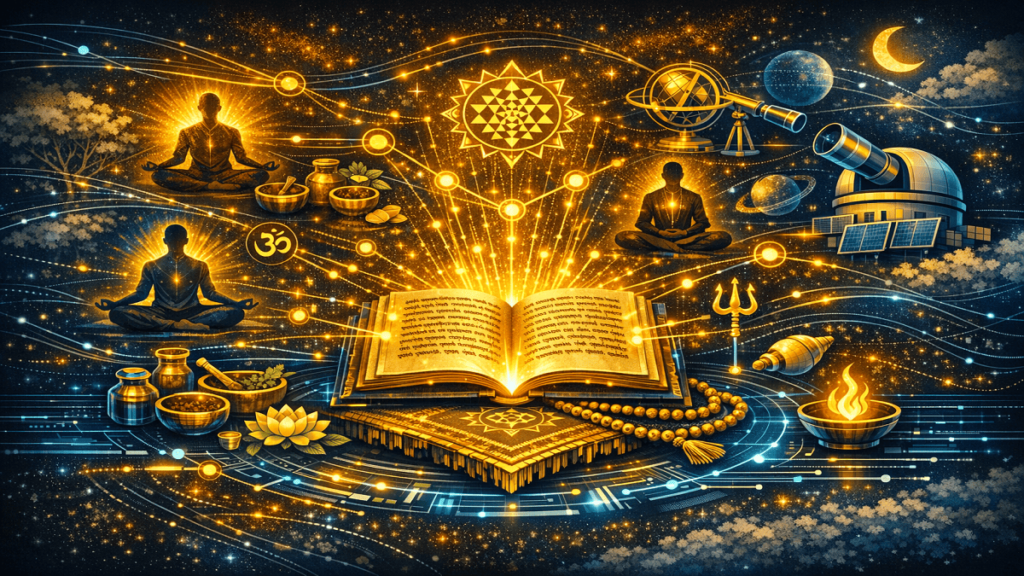
Case Study : Vedic Knowledge Network
Background
The Vedic Knowledge Network (VKN) is an initiative aimed at preserving and sharing the wisdom of the Vedas—ancient Indian texts covering spirituality, philosophy, health, mathematics, and astronomy. Traditionally, this knowledge was passed orally or through rare manuscripts, making access limited. With the advent of digital technology, the VKN digitized and structured Vedic teachings, making them globally accessible.
Objective
The primary objective of the VKN is to connect learners, practitioners, and researchers with authentic Vedic knowledge while ensuring its practical application in modern life. It seeks to:
- Preserve ancient texts digitally.
- Provide structured learning for students and researchers.
- Promote practical applications in health, meditation, and ethical living.
Implementation
- Digital Library: The VKN digitized manuscripts and organized them into thematic categories, making navigation simple and intuitive.
- Learning Modules: Interactive courses and tutorials were developed for yoga, Ayurveda, Vedic philosophy, and meditation.
- Community Engagement: Forums and discussion groups allow learners to discuss interpretations, applications, and real-life integration.
- Integration with Modern Research: Scholars use the network to explore links between ancient knowledge and modern science, such as Ayurveda in preventive healthcare or Vedic astronomy in mathematics.
Results
- Increased Accessibility: Students and researchers worldwide can access authentic Vedic knowledge without needing rare texts or traditional gurus.
- Practical Application: Many learners report improved mental clarity, better health routines, and enhanced ethical decision-making.
- Academic Research: Universities and researchers have published papers integrating Vedic insights with modern science and wellness practices.
- Cultural Preservation: The network has strengthened awareness of Indian heritage, rituals, and philosophical teachings.
Conclusion
The Vedic Knowledge Network demonstrates that ancient wisdom can be relevant in the modern world when structured and made accessible. By combining preservation, learning, and practical application, the VKN serves as a bridge between the past and present. It shows that Vedic knowledge is not just historicalit is a living resource that can enhance personal well-being, education, and societal growth.
White Paper On The vedic knowledge network
Executive Summary
The Vedic Knowledge Network (VKN) is an innovative initiative designed to digitize, organize, and disseminate the profound wisdom of the Vedas—ancient Indian texts encompassing philosophy, spirituality, health, mathematics, astronomy, and ethics. This white paper explores the importance, structure, applications, and impact of the VKN, demonstrating how it serves as a bridge between timeless knowledge and contemporary needs.
1. Introduction
The Vedas, composed thousands of years ago, represent one of the most comprehensive knowledge systems in human history. Traditionally transmitted orally or through fragile manuscripts, much of this wisdom was difficult to access in modern times. The VKN addresses this challenge by creating a structured, digital framework that enables learners, researchers, and practitioners to explore, understand, and apply Vedic knowledge globally.
2. Objectives of the Vedic Knowledge Network
The primary goals of the VKN include:
- Preservation: Digitally archive ancient Vedic manuscripts and teachings.
- Accessibility: Provide structured learning modules and resources for students, researchers, and practitioners worldwide.
- Practical Application: Facilitate the use of Vedic knowledge in modern wellness, education, ethical decision-making, and environmental awareness.
- Research Integration: Enable scholars to explore connections between Vedic concepts and contemporary science, medicine, and philosophy.
3. Structure and Implementation
The VKN employs a multi-layered approach:
- Digital Repository: Comprehensive database of Vedic texts, commentaries, and related resources.
- Thematic Categorization: Knowledge is organized by domains such as Ayurveda, Yoga, Vedic philosophy, astronomy, and ethics.
- Learning Modules: Interactive courses, tutorials, and guided practices for practical learning.
- Community Engagement: Forums and discussion groups to promote collaborative learning and interpretation.
- Research Support: Tools for scholars to analyze, cross-reference, and integrate Vedic insights into modern studies.
4. Applications of Vedic Knowledge
The VKN demonstrates the relevance of Vedic wisdom in modern life:
- Personal Well-being: Yoga, meditation, and Ayurveda improve mental and physical health.
- Ethical Decision-Making: Principles such as dharma and ahimsa guide personal and professional conduct.
- Education and Research: Provides a framework for studying ancient science, mathematics, and philosophy.
- Cultural Preservation: Strengthens understanding of Indian heritage, rituals, and practices.
- Environmental Awareness: Encourages sustainable living and ecological harmony.
5. Impact and Outcomes
Since its implementation, the VKN has achieved:
- Widespread global access to authentic Vedic texts.
- Increased academic research linking ancient knowledge with modern applications.
- Enhanced personal wellness and ethical awareness among users.
- Strengthened cultural preservation and awareness of Vedic heritage.
6. Conclusion
The Vedic Knowledge Network is a living bridge between the ancient and modern worlds. By preserving texts, enabling structured learning, and encouraging practical application, it demonstrates that Vedic wisdom is not just historical—it is timeless, actionable, and globally relevant. The VKN serves as a model for how ancient knowledge systems can be revitalized and integrated into contemporary life.
Industry Applications of the Vedic Knowledge Network
The Vedic Knowledge Network (VKN) is not only a repository of ancient wisdom but also a practical resource with significant applications across industries. By digitizing and structuring knowledge from the Vedas, the network enables organizations, researchers, and professionals to integrate timeless insights into modern business, healthcare, education, and technology.
1. Healthcare and Wellness Industry
Vedic knowledge underpins Ayurveda, yoga, and holistic wellness practices. The network provides:
- Guidance for developing Ayurvedic products, wellness programs, and health apps.
- Evidence-based insights for mental health, stress management, and preventive care.
- Support for integrating traditional practices with modern medical research, enabling personalized wellness solutions.
Example: Wellness resorts and clinics use VKN resources to design therapies based on seasonal routines, dietary principles, and yoga protocols from Vedic teachings.
2. Education and Research Sector
The VKN offers structured learning for schools, universities, and research institutions:
- Incorporation of Vedic mathematics, astronomy, and philosophy into STEM and humanities curricula.
- Digital resources for scholarly research, enabling comparative studies between ancient and modern scientific methods.
- Training modules for teachers to deliver Vedic knowledge in a modern, accessible format.
Example: Universities offering courses in Vedic sciences leverage the network to create interactive, interdisciplinary programs combining philosophy, ethics, and technology.
3. Corporate and Leadership Development
Vedic teachings emphasize ethics, decision-making, and leadership:
- Principles like dharma (duty) and ahimsa (non-violence) guide corporate governance and CSR initiatives.
- Meditation, mindfulness, and ethical frameworks improve employee well-being and productivity.
- Leadership programs use VKN insights to develop values-based decision-making and sustainable strategies.
4. Technology and Innovation
Vedic concepts inspire AI, data organization, and knowledge networks:
- Structured frameworks from VKN can be used for semantic knowledge mapping and AI learning models.
- Inspiration for innovation in sustainable technologies, based on harmony with nature emphasized in Vedic texts.
5. Cultural and Tourism Industry
VKN resources help preserve heritage and enrich cultural experiences:
- Designing heritage tours, educational programs, and museum exhibits.
- Promoting understanding of rituals, festivals, and Vedic arts for global audiences.
Conclusion
The Vedic Knowledge Network bridges ancient wisdom and modern industry applications. From healthcare and education to corporate leadership, technology, and cultural preservation, VKN provides actionable insights that enhance innovation, ethics, and sustainability. By applying Vedic knowledge across industries, organizations can combine traditional wisdom with modern solutions, creating holistic and meaningful impact.
SOURCE : Beyond Bharat
ASK FAQ
1. What is the Vedic Knowledge Network?
The Vedic Knowledge Network (VKN) is a digital initiative that preserves, organizes, and shares the wisdom of the Vedas—ancient Indian scriptures covering spirituality, philosophy, health, mathematics, and astronomy. It provides structured learning resources for students, researchers, and practitioners, making Vedic knowledge accessible globally.
2. Who can benefit from the Vedic Knowledge Network?
Anyone interested in personal growth, wellness, cultural heritage, or academic research can benefit. This includes students, spiritual seekers, educators, healthcare professionals, and researchers. The network caters to anyone seeking practical and theoretical knowledge from the Vedas.
3. How is Vedic knowledge applied in modern life?
Vedic knowledge is applied in areas such as yoga, meditation, Ayurveda, ethical decision-making, leadership, and environmental sustainability. It provides practical guidance for mental clarity, physical well-being, moral conduct, and innovative solutions in modern industries.
4. Why is the Vedic Knowledge Network important today?
The network preserves ancient wisdom that might otherwise be lost, makes it accessible digitally, and connects it to modern challenges. It helps individuals improve wellness, supports researchers in exploring ancient science, and promotes cultural preservation and ethical living.
5. Which industries can use insights from the Vedic Knowledge Network?
Industries such as healthcare and wellness, education, corporate leadership, technology, and tourism can use Vedic insights. Examples include Ayurvedic products, mindfulness programs, values-based corporate leadership, AI knowledge frameworks, and heritage tourism experiences.
Table of Contents
Disclaimer:
The content on this blog is for informational and educational purposes only. It is based on historical and traditional sources of Vedic knowledge and does not constitute professional, medical, or spiritual advice. Readers should consult qualified experts for personal, medical, or legal guidance.