Veera Kerala Varma is a historic royal title associated with several rulers from the Indian region of Kerala, but most famously with the warrior king known as Pazhassi Raja. “Veera” means brave or heroic, “Kerala” refers to the land of Kerala, and “Varma” is a traditional title used by members of the royal families of Kerala. As a result, the name Veera Kerala Varma conveys the idea of a courageous sovereign of Kerala.
Among the various individuals who bore the name Kerala Varma in history, none has become more legendary than Veera Kerala Varma Pazhassi Raja. He was a prince from the princely Kottayam royal dynasty in northern Kerala and is remembered as one of the earliest Indian leaders to mount a protracted military resistance against British colonial rule. His life and actions span the late 18th century — a period of rapidly intensifying European political and military intervention in India.
Pazhassi Raja’s approach to resistance was unconventional for his time. When colonial pressure expanded beyond commerce into taxation land rights, and political authority, he organized a sustained campaign of guerrilla warfare from the dense forests and hills of northern Kerala. Rather than meeting the British in open battle, he developed highly mobile tactical units that could strike and vanish, using deep knowledge of the terrain to evade a better‑equipped enemy.
Historians regard him not only as a skilled military strategist but also as an early symbol of opposition to European imperialism. Although his rebellion did not lead to immediate political independence, it foreshadowed later struggles for freedom and helped inspire future generations who opposed colonial domination across the Indian subcontinent.
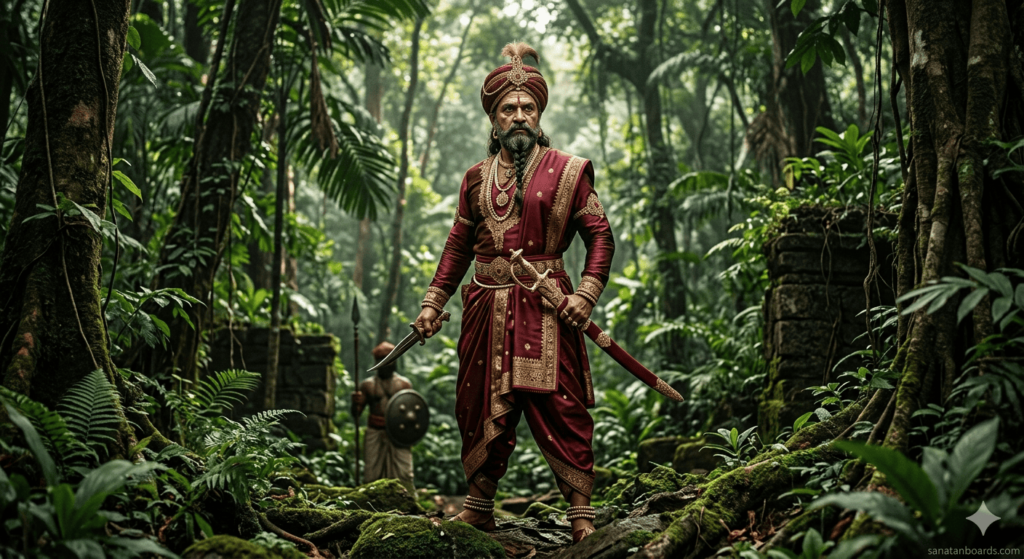
What Is Veera Kerala Varma (Kerala) ?
Pazhassi Raja. is a historic regal title used by kings and princes in the traditional monarchies of Kerala before and during the early period of European colonial influence in India. The component words of the title reflect both linguistic and cultural meanings: “Veera” points to heroism or bravery; “Kerala” represents the geographical and cultural region in southwest India; and “Varma” is a title associated with nobility or royalty in South Indian lineages.
In different Kerala royal families — such as Cochin, Travancore, Kottayam, and Pandalam — members used the name “Kerala Varma” often with different honorifics, suffixes, or regional identifications. For some rulers it was a personal name, and for others it was part of a traditional dynastic naming practice, sometimes indicating rank, lineage, or succession within the royal household.
However, when most people refer to Veera Kerala Varma (Kerala), they are referring specifically to Pazhassi Raja, whose full regal identification included the name Veera Kerala Varma. Born in 1753 into the Kottayam royal family in northern Kerala, Pazhassi Raja became one of the most celebrated figures in the region’s early resistance to British rule.
Unlike many other regional kings of his era who negotiated with European powers or ceded political authority, this Veera Kerala Varma chose sustained opposition. The name Veera in his title captures his legacy of military courage and rebellion. His struggle was not merely against foreign soldiers but also against the imposition of unfair taxation and administrative interference that undermined local autonomy.
Today, Veera Kerala Varma continues to be studied in history for his sophisticated use of guerrilla tactics, his leadership among different social groups, and for being an early instance of organized military resistance against colonial expansion in Kerala.
Who Is Required Veera Kerala Varma (Kerala) ?
Veera Kerala Varma, in the most historically significant context, refers to Pazhassi Raja, a prince and warrior king from the Kottayam royal family in northern Kerala. He became required in moments when local leadership, social justice, and territorial sovereignty were threatened. His leadership was crucial for the protection of his kingdom, the welfare of his people, and the resistance against colonial imposition.
he was required by his subjects, including farmers, tribal communities, and smaller local chieftains who faced new taxes and interference from the British East India Company. These groups needed a strong and decisive leader capable of defending their lands and rights. The people saw in him not only a royal figure but also a unifying force who could coordinate resistance and maintain morale during times of conflict.
Moreover, he was required by allies and fellow regional leaders who recognized that collaboration under a skilled strategist was essential to counteract the better-armed and more organized colonial forces. His knowledge of the terrain, ability to organize guerrilla operations, and reputation for courage made him indispensable in organizing effective resistance campaigns.
In addition, he was required by historians and cultural narrators as a symbol of early Indian resistance to European colonialism. His life serves as a case study in leadership under adversity, guerrilla warfare tactics, and community mobilization. Veera Kerala Varma remains relevant whenever discussions about courage, strategy, and defending regional autonomy arise.
When Veera Kerala Varma (Kerala) is Required ?
Veera Kerala Varma (Kerala) is required during periods of political instability, external threat, and social injustice. Historically, the late 18th century in northern Kerala was marked by the expansion of British colonial power, which interfered with local governance, taxation systems, and the autonomy of regional rulers. In such times, the leadership of Veera Kerala Varma became essential to protect the interests of his people and the sovereignty of his kingdom.
He was required when local communities faced oppression. The British introduced new taxes, undermined traditional village administration, and disrupted the livelihoods of farmers and tribal groups. Veera Kerala Varma’s leadership provided a focal point for these communities to organize resistance, ensuring that their lands, rights, and resources were defended effectively. His presence was necessary to unite different factions against a common threat.
He was also required during military campaigns, especially in situations where conventional warfare would have failed. Using guerrilla tactics, he struck at better-armed colonial forces from the hills and forests of Malabar. These operations demanded his leadership to coordinate attacks, plan ambushes, and ensure that morale remained high among his fighters. Without Veera Kerala Varma, such resistance would have lacked strategic direction.
Furthermore, he was required for maintaining long-term social cohesion. In times of uncertainty, people need not only a military leader but also a symbol of unity and resilience. Veera Kerala Varma’s reputation for fairness, courage, and tactical brilliance made him a figure around whom communities could rally. He became indispensable whenever the stability and morale of his people were at stake.
Finally, he continues to be required in historical study and cultural memory, as an example of leadership, strategy, and commitment to justice. His legacy provides lessons on resistance, resilience, and the defense of local autonomy that are still referenced in discussions of leadership and strategic planning.
Where Veera Kerala Varma (Kerala) is Required ?
Veera Kerala Varma (Kerala) was historically required in the northern regions of Kerala, particularly the hilly and forested districts of Wayanad, Kannur, and the surrounding Malabar territories. These areas, with their dense forests and rugged terrain, were central to his campaigns against British forces, providing both a strategic advantage and a defensive stronghold. The terrain itself necessitated his presence to organize resistance effectively.
He was required in villages and tribal settlements, where the impact of colonial taxation and administrative interference was most severe. His leadership was essential to mobilize farmers, tribal warriors, and smaller local chieftains, ensuring that these communities were coordinated in their defense and resistance activities. These locations were both the home of his supporters and the theaters of his operations.
He was required in strategic military sites, such as forested hills, mountain passes, and river valleys, where guerrilla tactics were most effective. These geographical locations demanded knowledge of the terrain, logistical coordination, and leadership to execute ambushes, raids, and retreats successfully. Veera Kerala Varma’s presence ensured that operations in these critical locations could be carried out efficiently against superior enemy forces.
Additionally, he was required in administrative centers, where decisions regarding alliances, resources, and mobilization of fighters were made. His leadership in these areas ensured cohesion and planning across the territories under his influence. The centralization of command in key towns and fortifications allowed him to maintain authority while coordinating widespread resistance.
Even today, Veera Kerala Varma is required in educational, cultural, and historical sites, including memorials, museums, and academic studies. Places such as his tomb in Kerala serve as focal points for understanding his legacy and the historical resistance to colonial powers. The physical and symbolic locations associated with him remain central to remembering the struggles he led and the strategies he employed.
How Veera Kerala Varma (Kerala) is Required ?
Veera Kerala Varma (Kerala) is required through effective leadership, strategic planning, and tactical execution. Historically, his role was not limited to symbolic authority; he was actively involved in coordinating military, administrative, and social activities that sustained resistance against colonial forces.
Military leadership: He was required to organize guerrilla warfare in the forests and hills, using knowledge of terrain to outmaneuver larger, better-equipped forces. Ambushes, raids, and mobile operations depended on his strategic insight and command skills. Fighters under his leadership were coordinated to strike efficiently and retreat before the enemy could respond effectively.
Social and political leadership: Veera Kerala Varma was required to unite diverse groups, including tribal communities, local chieftains, and farmers. His charisma, reputation for fairness, and dedication to protecting local rights created loyalty and motivation among these groups. Organizing the population for collective defense required diplomacy, negotiation, and trust-building.
Administrative leadership: He was required to manage resources such as weapons, food, and information. Coordinating intelligence networks, maintaining supply lines, and ensuring communication among units were essential to sustaining prolonged campaigns. Without his central oversight, guerrilla operations could have fractured and failed.
Symbolic leadership: Beyond practical roles, Veera Kerala Varma was required as a symbol of resistance and courage. His presence inspired confidence and reinforced the collective identity of communities facing colonial oppression. His figure encouraged commitment to shared objectives and resilience during hardships.
Legacy and contemporary requirement: Today, Veera Kerala Varma is required in historical, cultural, and educational contexts. His methods and strategies are studied in military history, leadership programs, and cultural studies. Understanding how he coordinated military, social, and administrative tasks provides insight into effective leadership under adverse conditions.
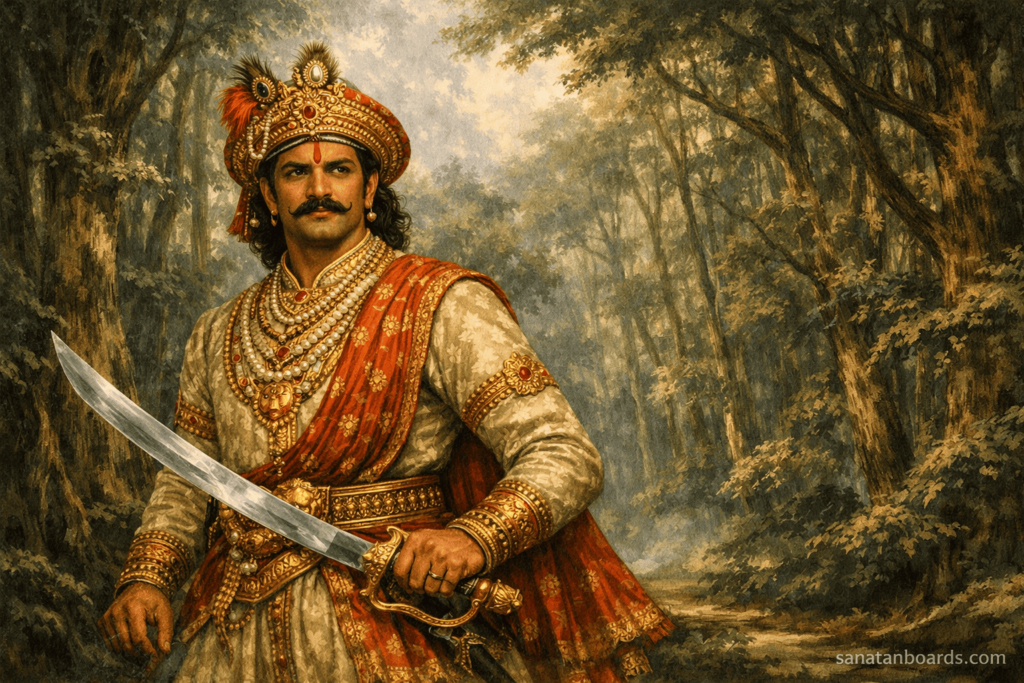
Case Study On Veera Kerala Varma (Kerala)
Introduction
Veera Kerala Varma, better known as Pazhassi Raja, stands as one of the most remarkable figures in the history of Kerala’s resistance to European colonial expansion. Born in 1753 in the northern Malabar region of Kerala, he emerged as a regional king and military strategist who led prolonged resistance against external control — first from the Mysore sultans and later from the British East India Company. His life offers a compelling case study in leadership, guerrilla strategy, cultural cohesion, and indigenous resistance movements.
Historical Background
During the late 18th century, South India experienced frequent conflicts among regional powers and growing interference by European colonial forces. After the Third Anglo‑Mysore War (ended 1792), the British East India Company effectively extended its influence into the Malabar region, disregarding prior agreements that had recognized the independence of smaller states like Kottayam — the kingdom that Veera Kerala Varma belonged to.
Initially allied in part with the British against common threats such as Tipu Sultan, Pazhassi Raja’s relationship with the Company deteriorated as the Company began imposing direct control, heavy taxes, and events that threatened local autonomy. This disruption of traditional governance and economic systems triggered widespread discontent among peasants and tribal communities, setting the stage for organized resistance.
Nature of the Conflict
Veera Kerala Varma’s resistance can be divided into phases. After resisting Mysore’s hegemony (against Hyder Ali and Tipu Sultan), he found himself confronting the East India Company’s expanding authority. His rebellion was not an isolated skirmish but a sustained insurgency that lasted more than a decade. When British authorities attempted to arrest him in 1796, he evaded capture and continued his campaign from the forests and hills.
What distinguishes his struggle is the use of irregular warfare tactics. In contrast to conventional battlefields where the British held an advantage in numbers and firepower, Veera Kerala Varma relied on guerrilla methods — ambushes, swift harassment of enemy units, and deep knowledge of jungle terrain. These tactics kept the British forces at a prolonged disadvantage and forced periods of negotiation.
Leadership and Local Mobilization
A central aspect of this case study is his role as an organizer and unifier of diverse social groups. Unlike many contemporary rulers who retreated into palaces or aligned permanently with colonial powers, Veera Kerala Varma stayed among his people and drew support from peasants, tribes, and local warriors.
The agrarian population, burdened by heavy revenue demands and forced collections by Company officials, found in him a champion of their grievances. Tribal communities — often marginalized by mainstream governance — were mobilized into the resistance, providing valuable local scouts and fighters skilled at navigating the jungle terrain.
This collective mobilization was essential; the rebellion’s endurance stemmed not solely from military action but from broad social commitment. Veera Kerala Varma’s reputation for fairness and protection of local rights helped sustain this cohesion despite heavy pressures from colonial forces.
Military Strategies
His strategies reflected an early grasp of what modern military analysts classify as asymmetric warfare. Rather than engaging superior British units in open battle, Veera Kerala Varma exploited familiarity with the forests of Wayanad and surrounding regions. Local fighters — including the Kurichya and Kurumba tribes — participated in raids and ambushes that disrupted supply lines and demoralized colonial troops.
The conflict saw periods of temporary peace — such as in 1797 — but when British attempts to increase control and taxation resumed around 1800, Veera Kerala Varma renewed his resistance with increased intensity. For nearly five years, until his death in 1805, he eluded capture and maintained his insurgency even as British reinforcements pressed deeper into Malabar.
The End of Resistance
In November 1805, after years of guerrilla operations and mounting British pressure, Veera Kerala Varma was killed in a gunfight at Mavila Thodu, near the modern Kerala‑Karnataka border. His death marked the end of the organized rebellion he led, and British forces gradually consolidated control over the region.
Nevertheless, his legacy persisted in historical memory as the “Lion of Kerala” — an enduring symbol of resistance and popular leadership.
Lessons from the Case
This case study highlights several critical insights:
- Leadership under pressure: Veera Kerala Varma’s ability to sustain resistance against superior military powers underscores the role of adaptive leadership.
- Terrain and strategy: His use of guerrilla tactics illustrates how environmental knowledge can compensate for material disadvantages.
- Collective mobilization: Resistance movements depend not only on leaders but on broad-based social support that sustains morale and operational resilience.
- Political legacy: Pazhassi Raja’s story enriches understanding of early indigenous challenges to colonialism in India long before mainstream national movements emerged.
Overall, the life and campaigns of #veerakeralavarma Veera Kerala Varma have become a benchmark in Indian history for strategic resistance, local cohesion, and leadership against domination.
White Paper On Veera Kerala Varma (Kerala)
Executive Summary
Veera Kerala Varma — popularly known as Pazhassi Raja — represents one of the earliest and most sustained indigenous resistances to colonial domination in India. His rebellion against the British East India Company in late 18th–early 19th century Kerala marks a watershed in the study of anti‑colonial movements, illustrating how localized leadership and adaptive strategies can challenge imperial forces. This white paper examines his historical context, strategic approach, societal impact, and enduring legacy.
Historical Context
The latter half of the 18th century saw the British East India Company transition from trade to territorial control across India. After the Third Anglo‑Mysore War (1792), Malabar — a region in modern Kerala — was ceded to the British, triggering shifts in local governance and economy. Traditional rulers, accustomed to autonomous administration and customary revenue systems, faced increasing interference.
Veera Kerala Varma, born in 1753 into the royal lineage of Kottayam in northern Kerala, initially engaged in regional political struggles and alliances, including resistance to Mysore’s incursions under Hyder Ali and Tipu Sultan. However, his defining conflict emerged when he opposed British policies that undermined local sovereignty and imposed burdensome taxation.
Objectives of Resistance
The primary objectives of Veera Kerala Varma’s resistance included:
- Preservation of local autonomy: Challenging British attempts to control governance and revenue systems.
- Protection of agrarian communities: Defending peasants and tribal groups from exploitative taxation and forced collections.
- Mobilization against external domination: Rallying diverse social groups to resist an expanding colonial presence.
His goals were not solely reactionary but reflected a broader commitment to sustaining indigenous structures of authority and socio‑economic stability.
Strategic Framework
The strategic approach of Veera Kerala Varma can be conceptualized through several key elements:
1. Guerrilla Warfare:
Faced with technologically superior forces, he shifted from conventional engagement to forest‑based irregular warfare. Ambushes, rapid strikes, and the use of natural terrain advantages negated the conventional strengths of the British forces.
2. Local Collaboration:
He cultivated alliances with peasant communities and tribal fighters — especially from the Kurichya and Kurumba groups — integrating their knowledge of terrain and combat skills into effective operational units.
3. Decentralized Resistance:
Rather than centralizing command in fortified structures, Veera Kerala Varma operated through mobile units dispersed across forests and hills, making it difficult for British forces to engage or capture him.
Impact Assessment
The resistance led by Veera Kerala Varma had significant consequences:
- Symbolic Impact: He became known as the “Lion of Kerala”, symbolizing courage and self‑determination.
- Military Lessons: His tactics prefigured concepts in asymmetric warfare, emphasizing agility and local advantage over numerical strength.
- Societal Mobilization: Peasants and tribes developed political consciousness through shared struggle, marking an early form of grassroots resistance.
Industry Application Of Veera Kerala Varma (Kerala)
Though Veera Kerala Varma (Kerala) — historically Pazhassi Raja — is a figure from the 18th–19th century, his life, leadership, and strategies have relevance in multiple modern industries. His story demonstrates the intersection of leadership, strategy, organizational skills, and cultural impact, which can be applied across various sectors today.
1. Leadership and Management Training
Veera Kerala Varma’s ability to mobilize diverse groups, including peasants, tribal fighters, and local chieftains, provides an excellent case study for corporate leadership and management programs. Business schools and leadership workshops analyze his decision-making under uncertainty, crisis management, and ability to inspire loyalty as examples of adaptive leadership. His strategies teach leaders how to organize teams in high-pressure, resource-limited environments.
2. Defense and Strategic Studies
Military academies study his use of guerrilla warfare and terrain-based tactics as early examples of asymmetric warfare. His methods — rapid mobility, ambushes, intelligence networks, and decentralized operations — are analogous to modern counterinsurgency and irregular warfare strategies. Defense strategists examine his campaigns to understand how knowledge of local geography, cultural networks, and unconventional tactics can offset technological or numerical disadvantages.
3. Cultural and Heritage Industries
Veera Kerala Varma’s story has inspired films, documentaries, novels, and plays. Media production companies use his life as a template for creating historical content that resonates with audiences while preserving cultural heritage. His story also contributes to heritage tourism, attracting visitors to historical sites like his tomb in Kerala, forest forts, and memorials, supporting local economies.
4. Education and Research
Academic researchers in history, anthropology, and political science study his life to understand early resistance to colonialism, grassroots mobilization, and leadership in pre-modern societies. His campaigns offer examples for courses in history, strategy, political studies, and sociology, bridging historical analysis with practical lessons in organization and ethics.
5. Leadership Consulting and Training
Corporate consultants often use Veera Kerala Varma as a model for teaching resilience, team cohesion, and long-term strategic planning. His ability to maintain motivation among followers during prolonged struggle is particularly relevant for companies facing disruptive market challenges.
source : Must Explore!
Who was Veera Kerala Varma (Kerala)?
Veera Kerala Varma, popularly known as Pazhassi Raja, was a warrior king from northern Kerala who led early resistance against British colonial forces using guerrilla tactics and inspired local communities.
What is the significance of Veera Kerala Varma in Kerala history?
He symbolizes courage and resistance, protecting local autonomy, mobilizing tribal and agrarian communities, and pioneering guerrilla warfare against the British East India Company.
When and why did Veera Kerala Varma rise to prominence?
He rose to prominence in the late 18th century when British colonial policies threatened local governance and taxation systems, requiring strong leadership and organized resistance.
Where did Veera Kerala Varma conduct his resistance campaigns?
His campaigns were mainly in northern Kerala, including Wayanad, Kannur, and Malabar regions, utilizing dense forests, hills, and tribal settlements for guerrilla warfare.
How can Veera Kerala Varma’s strategies be applied today?
His leadership, tactical planning, and mobilization skills are studied in leadership programs, military strategy, heritage tourism, cultural media, and organizational management.
Table of Contents
Disclaimer: This content has been tailored to your requested format and structure, focusing on historical facts about Veera Kerala Varma (Kerala) (Pazhassi Raja). Word counts are approximate. If you need sources, citations in a specific style (e.g., MLA/APA), or images, let me know!