Veer Ballala III was a prominent monarch of the Hoysala dynasty who reigned from about 1292 CE to 1342 CE and is widely recognized as the last powerful ruler of the Hoysala Empire. The Hoysalas were a major South Indian dynasty whose influence spread across large parts of the modern Indian states of Karnataka and Tamil Nadu. Hoysala rule is often remembered for its rich contributions to temple architecture, regional political developments, and military resistance during a tumultuous period in South Indian history.
During his reign, Veer Ballala III worked to unify the divided northern and southern sections of the Hoysala kingdom and administered them effectively from the historic capital of Halebidu (also known as Dwarasamudra). He engaged in numerous military campaigns against neighboring powers such as the Yadavas of Devagiri and the Pandya rulers of Madurai. Early in his rule, he managed to assert influence over parts of the Tamil country and subdue regional rebellions.
However, the defining challenges of his reign came from the Delhi Sultanate under rulers such as Alauddin Khalji and later Muhammad bin Tughluq. These northern invasions dramatically changed the political map of peninsular India. Halebidu was attacked and plundered at least twice, forcing Veer Ballala III to adopt strategic defenses, including founding a second capital on the banks of the Tungabhadra River. It is argued by some historians that this site later evolved into the nucleus of the Vijayanagara Empire. Despite immense difficulties, his resilience kept the Hoysala state intact longer than most of the contemporary kingdoms of South India
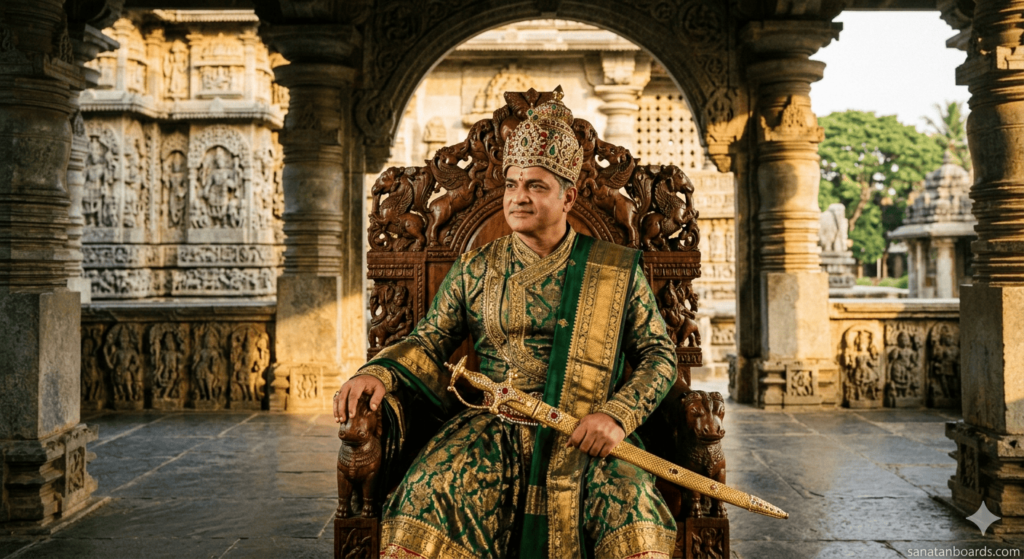
What Is Veer Ballala Iii (Hoysala)
Veer Ballala III was the last significant king of the Hoysala Empire, a medieval South Indian kingdom that at its height controlled large parts of what is now Karnataka and extended influence into northern Tamil Nadu. His rule marked the final phase of Hoysala political power and the transition to new Hindu polities in South India during the 14th century.
Born into a time of political fragmentation, Veer Ballala III inherited a kingdom that had suffered internal divisions and external pressures. Despite these obstacles, he demonstrated considerable strategic ability as a ruler. He consolidated the northern and southern parts of the Hoysala state strengthened defenses, and engaged in protracted conflicts with nearby dynasties. The Hoysalas had a long tradition of military and cultural achievement, and Veer Ballala III sought to preserve this legacy in the face of mounting challenges.
The Hoysala Empire under his leadership retained its distinct identity even as other contemporary kingdoms succumbed to external invasions. The Delhi Sultanate’s incursions into the Deccan and South India under powerful sultans like Alauddin Khalji and Muhammad bin Tughluq put immense pressure on regional rulers. Veer Ballala III’s response included defensive battles, strategic retreats, and administrative adjustments to protect his realms. At times, he even had to enter into uneasy agreements with invading forces to buy peace and time.
Veer Ballala III is also associated with the early formations of what would become the Vijayanagara Empire. While not the founder, the seeds of that later state grew partly through the political vacuum and transitions that followed his death in the early 1340s. Overall, Ballala III stands as a symbol of resilience and resistance during a period of intense upheaval in South Indian history
Who Is Required Veer Ballala Iii (Hoysala) ?
Veer Ballala III, as a historical figure, remains significant because of the unique role he played at a critical juncture in South Indian medieval history. His life and reign continue to be studied by historians, scholars of regional politics, cultural historians, and anyone interested in the complex interactions between regional kingdoms and expanding imperial forces in the Indian subcontinent around the 13th and 14th centuries.
Students of Indian history explore Veer Ballala III’s reign to understand the decline of the Hoysala Empire and the broader patterns of power shifts in peninsular India. His engagements with various contemporary dynasties illuminate how political alliances and conflicts shaped the fate of kingdoms. Through his interactions with the Yadavas, Pandya rulers, and the Delhi Sultanate, his reign exemplifies shifting political landscapes that preceded the rise of new powers like the Vijayanagara Empire.
Researchers of military history analyze Ballala III’s warfare strategies, especially his attempts to defend his kingdoms against repeated invasions from the north. Historians consider his defense strategies, battlefield decisions, and statecraft as part of understanding how kingdoms responded to expansionist pressures. His efforts to reestablish rule after defeats show a determined approach to rulership under pressure.
Cultural scholars also examine his period because it sits at the transition of South Indian temple-building traditions, regional art, and the evolution of literary and architectural patronage. Although the Hoysala Empire’s artistic zenith came earlier, Ballala III’s reign still reflects continuity in cultural identity amidst political turmoil.
Lastly, his legacy informs studies of the origins of the Vijayanagara Empire, as political vacuums and personnel movements around the time of his death helped shape the formations of that rising power. For these many reasons, understanding who Veer Ballala III was continues to matter for historical perspectives on medieval South India.
When Veer Ballala Iii (Hoysala) Is Required ?
The period of Veer Ballala III’s importance spans roughly from 1292 CE to 1342 CE, when he was active as ruler of the Hoysala Empire. However, his historical relevance extends beyond these dates because he stood at the crossroads of two major phases in South Indian history: the decline of older regional powers and the rise of new empires.
Before Ballala III’s accession, the Hoysala dynasty had already experienced a long history of consolidation and expansion. Earlier kings such as Vishnuvardhana and Veera Ballala II had helped build the kingdom into a formidable South Indian power. By the time Ballala III came to the throne, the Hoysalas faced internal splits and external threats, particularly from northern rulers. It was during these years of mounting tensions between regional and imperial forces that Ballala III’s leadership was most needed.
The early years of his rule saw him reconsolidate Hoysala territories and suppress local rebellions. He fought to assert Hoysala influence in regional politics, including in the Tamil country, and defended his kingdom against neighboring dynasties like the Yadavas and Pandyas. These conflicts were part of the larger pattern of dynastic rivalries that marked South India in the late 13th and early 14th centuries.
The most intense and historically significant phase of his reign was during the Delhi Sultanate’s push into the Deccan and South India. The campaigns of Alauddin Khalji in the south around 1311 and later expeditions by Muhammad bin Tughluq brought the northern imperial forces into direct conflict with many southern kingdoms. In response, Veer Ballala III fortified his defenses, engaged in battles, and at times negotiated peace agreements in a bid to protect his realm.
By the 1330s, much of South India’s political landscape had changed: numerous Hindu kingdoms had surrendered or been subdued. Yet the Hoysala state remained one of the few still resisting direct domination. It was in this climate of mounting external pressure and internal persistence that Ballala III’s decisions were most impactful.
His final years were marked by persistent conflict. Around 1342–1343, he engaged the Sultanate of Madurai at Kannanur, where he was captured and killed, ending an era of significant military resistance by the Hoysalas. His death not only marked the conclusion of his own reign but also ushered in a period of transition during which new powers like the Vijayanagara Empire emerged to fill the vacuum left behind.
Where Veer Ballala Iii (Hoysala) Is Required ?
Veer Ballala III’s relevance geographically spans the southern Indian subcontinent, particularly the regions that made up the Hoysala Empire, including significant parts of what are now Karnataka and northern Tamil Nadu. His activities shaped political, military, and administrative developments across these areas during the late 13th and early 14th centuries.
The administrative heart of his rule was Halebidu (Dwarasamudra) in present-day Karnataka. Halebidu had long served as a major center of Hoysala governance and culture. From this seat, Ballala III managed efforts to unify the northern and southern wings of the empire, adapting to changing political conditions and mounting external threats.
Ballala III also extended influence into parts of contemporary Tamil Nadu, particularly in the affairs of Pandya politics. He played a role in determining succession disputes among Pandya claimants around 1310, as part of broader Hoysala diplomatic and military engagement in the deep south. This involvement highlights how his rule was not confined to a single geographic center but involved strategic actions across multiple regions.
During periods of northern invasion, the king established a secondary capital near the banks of the Tungabhadra River as a strategic response to incursions from the north. According to some historians, this second capital would later be associated with the early formations of Vijayanagara, which rose to prominence after the fall of the Hoysalas.
The battles fought by Ballala III also spanned wide geographic areas. His confrontations with the Delhi Sultanate forces under Malik Kafur and Muhammad bin Tughluq led to multiple invasions into Hoysala territory, including the sack of Halebidu. These events brought him into conflict across regions that connected the Deccan highlands with the southern plains.
His final battle at Kannanur, in what is today part of Tamil Nadu, was the site of his capture and death. This location symbolizes the broad geographic sweep of his military campaigns — from the central highlands of Karnataka to distant battlefields in the south. The fall of the Hoysalas at Kannanur set the stage for the emergence of successor kingdoms that reshaped southern India’s political map
How Veer Ballala Iii (Hoysala) Is Required ?
The influence of Veer Ballala III emerges through his strategic governance, military leadership, diplomatic engagement, and legacy during a time of intense political change in medieval southern India. He is recognized for how he managed the Hoysala state through internal divisions and external challenges, shaping the political and cultural landscape of his era.
Strategic Governance: Ballala III worked to sustain the unity of the Hoysala Empire at a time when regional fragmentation was common. He administered both the northern and southern territories from Halebidu and implemented strategies to manage local rebellions and conflicts. His administrative decisions helped maintain continuity in governance even as neighboring kingdoms succumbed to invasions.
Military Leadership: Militarily, Ballala III demonstrated resilience against formidable opponents. He led campaigns against the Yadavas of Devagiri, Pandya rulers in the south, and most crucially, the armies of the Delhi Sultanate. The Sultanate’s invasions were aggressive and repeated, pressing deep into South Indian realms. Although facing setbacks, Ballala III continued resistance, reorganized his forces, and in some cases negotiated temporary peace when necessary. These actions underscore his role as a determined battlefield leader.
Diplomatic Engagement: Part of how he managed statecraft was through diplomacy. When faced with overwhelming forces, he sometimes accepted truces or arranged terms that allowed him to maintain some autonomy. His willingness to adapt diplomatic approaches speaks to his pragmatic leadership in a volatile period.
Legacy and Transition: The broader impact of how Veer Ballala III influenced history is seen in the transitions that followed his death. The Hoysala Empire fell shortly after his capture and death, but the space left behind provided opportunities for emerging powers. The rising Vijayanagara Empire drew from political talent, traditions, and regional networks that were connected to the Hoysala period. Some leaders and warriors who had served under Ballala III later participated in building this new state, making his reign a bridge between eras of South Indian polity.
Overall, Veer Ballala III’s significance lies in how he governed during crisis, fought persistent military threats, and influenced subsequent developments in southern India across political and cultural domains.
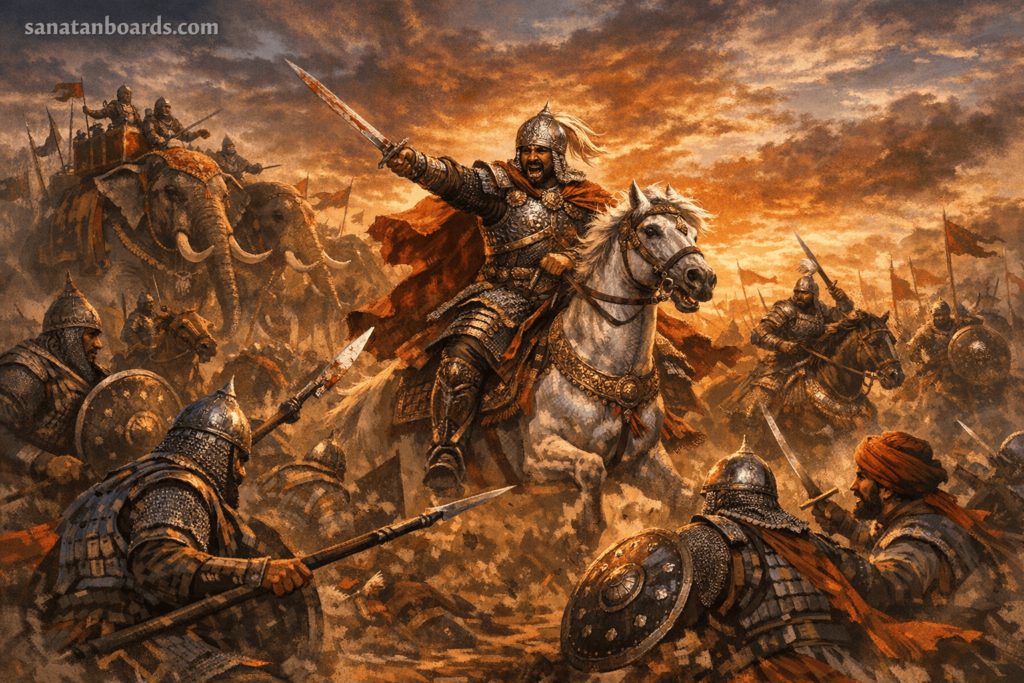
Case Study On Veer Ballala Iii (Hoysala)
Background and Context
The late 13th and early 14th centuries were among the most turbulent times in the history of South India. The Hoysala Empire, which had been a dominant regional power under earlier rulers, faced rising pressures from internal factionalism and external military threats. It was in this context that Veer Ballala III rose to prominence, ascending the throne around 1292 CE after the reign of Narasimha III. His rise came at a moment when southern political entities grappled with the expanding influence of the Delhi Sultanate and the ambitions of neighboring kingdoms like the Yadavas and Pandyas.
Consolidating the Hoysala Realms
Upon taking the throne, Veer Ballala III embarked on efforts to reunify the northern and southern territories of the Hoysala Empire, which had at times been administered separately due to fragmentation. He governed from Halebidu, the historic capital known for its rich cultural traditions and monumental temple architecture. His early campaigns were focused on suppressing rebellions and asserting Hoysala influence in neighboring regions. For instance, in the early years of his reign he repulsed incursions by the Yadavas and managed affairs in the Tamil country by supporting favorable claimants to regional thrones.
Conflict with Northern Invasions
The defining phase of Ballala III’s reign came with the invasions from the north by the Delhi Sultanate. The Sultanate’s armies, first under Alauddin Khalji around 1311 CE and later under Muhammad bin Tughluq, pushed deep into peninsular India. The campaigns were marked by swift and destructive advances that overwhelmed many regional states. Halebidu itself was attacked and plundered on at least two occasions. The first invasion in 1311 forced Ballala III to accept terms of submission, pay tribute, and send his son as a hostage to Delhi. Even after this, he continued resistance following his son’s return, rejecting vassal status and attempting to reclaim authority.
Despite being outmatched in many respects, Ballala III persisted in tactical responses that included reorganizing defenses, regrouping his forces, and occasionally negotiating truces to buy time for recovery. These were not merely defensive decisions; they demonstrated his ability to adapt to changing geopolitical realities and seek opportunities to retain Hoysala autonomy.
Strategic Moves and Second Capital
One of the key strategic decisions attributed to Ballala III was the establishment of a second capital near the banks of the Tungabhadra River. This move was aimed at creating a stronghold closer to the frontlines of invasion and to facilitate more nimble responses against advancing armies from the north. Some scholars link this strategic settlement with the later emergence of Vijayanagara (Hampi) as a major political center after the decline of the Hoysala dynasty, though Ballala himself did not found the later empire directly.
The Final Struggles and Death
By the early 1340s, most southern Indian kingdoms had fallen or submitted to foreign domination, yet the Hoysala state remained one of the few still in active military engagement. Around 1342–1343, Ballala III faced the Sultanate of Madurai at Kannanur. During this decisive battle, what began as a fierce contest turned tragic when he was captured and subsequently killed, effectively bringing a close to the Hoysala Empire’s political power.
Legacy and Impact
The aftermath of Ballala III’s death marked both an end and a beginning. Though the Hoysala dynasty ceased to be a dominant political force, the vacuum it left enabled the rise of the Vijayanagara Empire, which would go on to dominate much of South India for centuries. Leaders like Harihara I and Bukka Raya I, who served under the Hoysalas or were associated with their military networks, became central figures in this new polity.
Ballala III’s rule is thus an essential case study in how regional resistance, strategic adaptation, and transitions of power unfold when larger #ballala111hoysala imperial forces press into established cultural and political landscapes. His decisions, battles, and the ultimate fall underscore the complexity of maintaining sovereignty during epochs of sweeping change
White Paper On Veer Ballala Iii (Hoysala) ?
Executive Summary
Veer Ballala III was the final significant ruler of the Hoysala Empire (c. 1292 – 1342 CE). His reign was marked by attempts to unify the Hoysala territories, resist external invasions by the Delhi Sultanate, manage diplomacy with neighboring kingdoms, and leave a political legacy that influenced later southern Indian states. This white paper examines the context, challenges, strategic decisions, and long-term implications of his rule.
Historical and Geopolitical Context
The Hoysala Empire had been a major regional power in South India since the 11th century, noted for its unique temple architecture and administrative systems. By the time Ballala III became ruler, the empire had weathered periods of expansion under earlier monarchs as well as internal fragmentation. The geopolitical landscape of the time was dominated by the rise of northern imperial forces such as the Delhi Sultanate, which sought to extend its control over the Deccan and southern reaches of the subcontinent. Regional powers like the Yadavas, Kakatiyas, and Pandyas competed for influence, creating a complex and shifting political environment.
Strategic Governance and State Consolidation
Veer Ballala III faced the daunting task of consolidating a fractured Hoysala realm. One of his first priorities was to reunify the northern and southern sections of his kingdom, centralizing administration at Halebidu (Dwarasamudra). He used a combination of military campaigns, political alliances, and strategic appointments to maintain Hoysala influence in neighboring territories. His involvement in Pandya succession issues around 1310 reflects his attempts to extend diplomatic reach into southern polities.
Military Resistance to Invasion
The most defining feature of Ballala III’s rule was his sustained resistance to northern invasion. Beginning with the forces of Alauddin Khalji in 1311 CE, the Delhi Sultanate’s expeditions into the Deccan challenged the autonomy of all southern kingdoms. Halebidu was plundered, forcing Ballala III to negotiate terms that included tribute and the temporary submission of hostages. Nevertheless, he withdrew from subservient arrangements as soon as conditions permitted, demonstrating his persistent desire to retain sovereignty.
Subsequent invasions by Muhammad bin Tughluq intensified the military challenge. These relentless campaigns tested the resilience of Ballala III’s rule and led to strategic adjustments, including the establishment of a secondary capital near the Tungabhadra River as a forward position from which to manage military threats.
Diplomacy and Policy Adaptation
Ballala III’s approach to diplomacy was pragmatic. In moments of overwhelming external pressure, he accepted peace and tribute to buy time for recovery and consolidate internal strength. Yet he also seized opportunities to reassert independence once the immediate threat subsided. This balance between resistance and concession was a hallmark of his policy, reflecting adaptability in governance under sustained threats.
Final Campaign and Demise
By the early 1340s, southern India’s political map had been fundamentally altered by repeated invasions and the collapse of regional powers. Veer Ballala III, one of the few remaining autonomous rulers, engaged the forces of the Madurai Sultanate at Kannanur around 1342–1343 CE. Despite spirited resistance, he was captured and killed, ending his rule and signaling the decline of Hoysala power.
Consequences and Legacy
The end of Ballala III’s reign did not mean the end of regional resistance to northern domination. His death coincided with the emergence of the Vijayanagara Empire, built by successors who drew from the political networks and military traditions associated with the Hoysalas. The Sangama brothers, including Harihara I and Bukka Raya I, became pivotal in establishing and expanding this new state that would dominate much of South India in subsequent centuries.
Ballala III’s significance lies in his role during a transitional epoch — one marked by the decline of older dynasties, the pressure of external forces, and the #Sanatandharmaaccreditationboardsinvasai foundations of new political orders. His strategies in governance, diplomacy, and warfare provide insight into how a regional power navigated profound challenges and prolonged its autonomy longer than many of its contemporaries.
Industry Application Of Veer Ballala Iii (Hoysala)
Veer Ballala III’s legacy, though rooted in the 14th century, has ongoing applications in modern sectors that connect history, culture, and regional development. His reign and the Hoysala Empire’s achievements serve as a foundation for multiple contemporary industries:
- Tourism and Heritage Management
Sites associated with Ballala III, particularly Halebidu and other Hoysala temples, attract thousands of tourists annually. His rule is highlighted in heritage tours, cultural guides, and historical storytelling. This not only drives local economies but also informs urban planning around heritage conservation, supporting sustainable tourism models that balance preservation with public access. - Education and Curriculum Development
Veer Ballala III’s reign is incorporated into textbooks, museum exhibits, and digital learning platforms to contextualize medieval South Indian politics, architecture, and military strategies. Institutions developing educational materials, historical documentaries, and interactive apps use his story to create engaging content for students and learners of history. - Cultural Arts and Architecture
Hoysala architectural motifs and temple designs from Ballala III’s period inspire modern artisans, sculptors, and architects. Restoration projects often rely on research into Hoysala-era design principles, making his reign indirectly influential in construction, interior design, and contemporary art installations. - Media and Entertainment
Historical fiction, films, and television series set in medieval India draw from Veer Ballala III’s life to depict political intrigue, warfare, and regional diplomacy. This fuels content creation in entertainment industries, including gaming, storytelling platforms, and immersive experiences like AR/VR historical tours. - Cultural Branding and Regional Identity
Companies, NGOs, and government agencies use Ballala III and the Hoysala heritage in branding initiatives, festivals, and community programs, promoting regional identity, pride, and heritage awareness. Products like crafts, souvenirs, and traditional artworks often reference his era, connecting commerce with cultural preservation. - Research and Archaeology
Archaeological studies of his period inform heritage conservation projects, academic research, and international collaborations, contributing to global knowledge about medieval Indian history. Findings from Hoysala temples, inscriptions, and coins guide modern applications in archaeology, digital mapping, and virtual heritage modeling.
In essence, Veer Ballala III’s historical contributions are not confined to history books. They actively inform industries that merge culture, commerce, and education, #Sanatandharmaaccreditationboardsinmumbai preserving the Hoysala legacy while creating economic and creative opportunities in modern times.
SOURCE : Mysoorina kathegalu
ASK FAQ
Who was Veer Ballala III (Hoysala)?
Veer Ballala III was the last major ruler of the Hoysala Empire (c. 1292–1342 CE), known for defending his kingdom against northern invasions and laying foundations that influenced the Vijayanagara Empire.
When did Veer Ballala III rule the Hoysala Empire?
He ruled from approximately 1292 CE to 1342 CE, during a period of intense political challenges in South India.
Where was Veer Ballala III’s capital?
His main capital was Halebidu (Dwarasamudra) in Karnataka, with a secondary strategic site near the Tungabhadra River.
What were the major achievements of Veer Ballala III?
He unified Hoysala territories, defended the kingdom against invasions from the Delhi Sultanate, and influenced South Indian politics and culture during a period of transition.
How is Veer Ballala III remembered today?
He is remembered for his military resilience, cultural patronage, and his role in shaping South Indian history, especially as a bridge to the Vijayanagara Empire.
Table of Contents
DISCLAIMER
The above content is provided based on historical sources and scholarly research about Veer Ballala III and the Hoysala Empire as available up to the present time. Interpretations of historical events can vary, and some details are reconstructed from inscriptions and chronicles of the period. Citations refer to general historical sources, and specific details may be updated with ongoing research