The Kanva Dynasty was a short‑lived but significant ruling house in ancient Indian history that succeeded the declining Shunga Dynasty in the region of Magadha in northern India. The dynasty was established by Vasudeva Kanva, a Brahmin minister, who rose to power in around 73 BCE by overthrowing the last Shunga ruler, Devabhuti, thereby ending nearly a century of Shunga rule.
Vasudeva Kanva, originally an amatya (minister) in the Shunga court, used political influence and strategic maneuvering to depose Devabhuti, an act sometimes described in historical sources as assassination. After seizing the throne, Vasudeva founded the Kanva line, known as the Kanvayanas or Kanva dynasty Despite its relatively brief period of dominance, the Kanva Dynasty played a crucial role in the transitional phase of Indian history following the Mauryan and Shunga empires, preserving the administrative structure of Magadha while also facing emerging regional powers in northern and central India.
The dynasty ruled approximately from 73 BCE to 28 BCE and included only a handful of rulers: Vasudeva, followed by his son Bhumimitra, then Narayana, and finally Susarman. Although often remembered for its short duration, the Kanva Dynasty continued Brahmanical traditions and Vedic culture while maintaining political authority in Magadha till it was eventually displaced by the expanding Satavahana Empire.
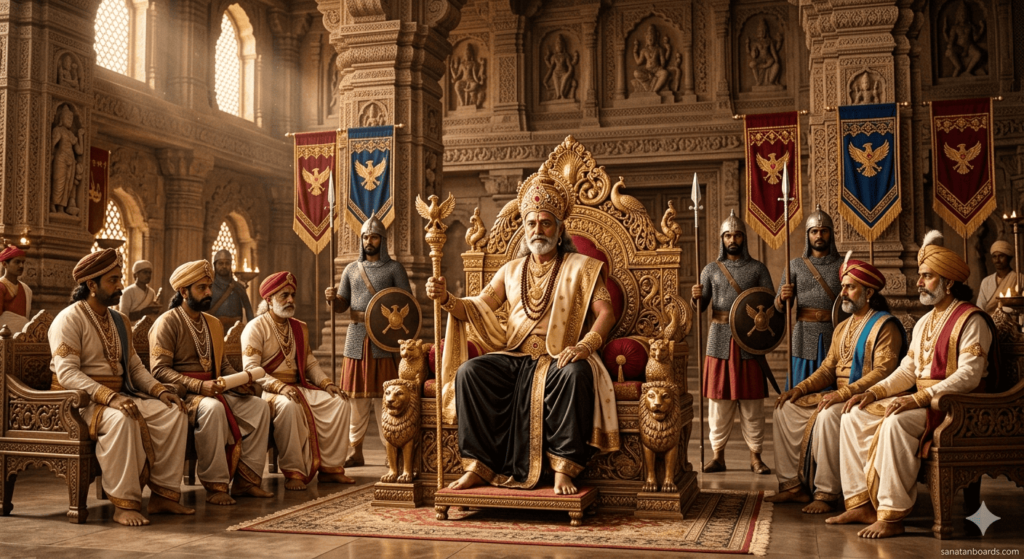
What Is Vasudeva Kanva (Kanva Dynasty) ?
Vasudeva Kanva was a Brahmin statesman and the founder of the Kanva Dynasty in ancient India. He is historically recognized for being the catalyst who replaced the waning Shunga rule in the powerful kingdom of Magadha in eastern India. Originally serving as a minister (amatya) under the last Shunga king, Devabhuti, Vasudeva Kanva leveraged his position and influence to challenge the authority of the incumbent ruler.
According to classical sources, Vasudeva orchestrated the removal of Devabhuti from power in approximately 73 BCE, thereby establishing himself as the sovereign. His ascension marked a shift in political power that reflected the declining strength of the Shungas and the rise of smaller regional dynasties in the Indian subcontinent. The establishment of the Kanva Dynasty was supported by later literary and historical accounts such as the Puranas and Harshacharita, which mention the political intrigue and transfer of power involving Vasudeva and the Shunga monarchy.
Despite founding a new ruling line, Vasudeva Kanva continued many administrative customs of the earlier regimes, maintaining Pataliputra (modern Patna) and Vidisha as key political centers. The Kanva Dynasty is characterized by a focus on preserving cultural traditions and Brahmanical practices, though it did not establish a long‑lasting empire like some of its predecessors.
Vasudeva’s legacy is primarily rooted in his role as a transitional ruler who bridged the gap between large imperial structures and the increasingly fragmented political landscape of late ancient India. His dynasty’s rule lasted for about four decades before it was absorbed into the expanding influence of other powers such as the Satavahanas.
Who Is Required Vasudeva Kanva (Kanva Dynasty) ?
The phrase “who is required Vasudeva Kanva (Kanva Dynasty)” can be understood as identifying who played a central role in establishing and sustaining the Kanva Dynasty. The primary figure required for the rise of the Kanva Dynasty was, of course, Vasudeva Kanva himself, a Brahmin minister in the court of the last Shunga king, Devabhuti. His political skill, strategic vision, and deep understanding of the administrative machinery were essential in founding the new dynasty. Without such a figure, the transition from Shunga to Kanva rule might not have occurred.
Vasudeva’s position as an amatya (minister) in Magadha’s royal court was critical. He had access to the inner workings of the state, including the treasury, military arrangements, and bureaucratic networks. This access allowed him to orchestrate the overthrow of Devabhuti, a move that required both careful planning and decisive action. The support of trusted allies in the court, including other officials, soldiers, and regional administrators, was also required to successfully establish his authority.
Beyond the founder, the Kanva Dynasty required competent successors to maintain its rule. Figures such as Bhumimitra, Narayana, and Susarman, Vasudeva’s successors, were necessary to preserve continuity and legitimacy. Each ruler had to command loyalty from the military, enforce governance, and uphold the cultural and religious norms that defined the dynasty’s identity.
In addition, the broader society — Brahmins, local administrators, and influential landowners — was required to sustain the Kanva Dynasty’s influence. Their cooperation and recognition of Vasudeva’s authority helped consolidate the new dynasty’s rule in the political and cultural landscape of ancient Magadha.
When Vasudeva Kanva (Kanva Dynasty) Is Required ?
The question “when Vasudeva Kanva (Kanva Dynasty) is required” refers to the historical period when Vasudeva Kanva’s leadership and the Kanva Dynasty became essential in the Indian political landscape. This period emerges in the 1st century BCE, during the decline of the Shunga Dynasty, which had ruled Magadha and surrounding regions for nearly a century. By around 73 BCE, the Shunga rulers had weakened due to internal mismanagement, corruption, and external pressures, creating a vacuum in leadership that necessitated a decisive new ruler.
Vasudeva Kanva was required at this specific moment because the kingdom of Magadha, a historically strategic region, needed stability and capable governance. The last Shunga king, Devabhuti, was perceived as ineffective and unable to maintain administrative order. Without a strong figure to intervene, political fragmentation and social unrest could have intensified, threatening the prosperity of Magadha and its surrounding territories.
Additionally, Vasudeva’s intervention was required in the broader context of regional power dynamics. The period saw the rise of smaller kingdoms and emerging powers in central and northern India, such as the Satavahanas and Indo-Greeks. In such a volatile environment, a capable ruler was essential to consolidate authority, defend territory, and maintain continuity of governance. Vasudeva Kanva’s timely ascension ensured that Magadha did not fall into complete disorder during this transitional period.
The Kanva Dynasty also addressed cultural and religious requirements. Brahmanical traditions needed a protector in the form of a Brahmin ruler, which Vasudeva Kanva embodied. By enforcing rituals, supporting priests, and maintaining Vedic social norms, he fulfilled a societal requirement that reinforced legitimacy in the eyes of the population.
Where Vasudeva Kanva (Kanva Dynasty) Is Required ?
The “where Vasudeva Kanva (Kanva Dynasty) is required” relates to the geographical and political regions where his leadership became critical. The Kanva Dynasty primarily ruled in Magadha, which corresponds to modern-day Bihar in eastern India, with Pataliputra (now Patna) serving as the political capital. Magadha was historically a center of power, administration, and culture in India, and control over this region was vital for maintaining influence in the subcontinent.
Vasudeva Kanva was required in key urban centers and administrative hubs. Pataliputra, being the political capital, was essential for governing the empire, managing the treasury, and organizing the military. Another significant city was Vidisha, which had long been an administrative and religious center. The presence of Vasudeva in these regions ensured the consolidation of authority, legitimization of the new dynasty, and the continuation of governance structures inherited from the Shungas.
Beyond urban centers, Vasudeva’s rule was required across rural territories and smaller provinces of Magadha. Maintaining loyalty among local administrators, landowners, and Brahmin communities was essential to sustain political control and social stability. These areas were critical for collecting revenue, supporting armies, and reinforcing cultural traditions.
The Kanva Dynasty also played a role in neighboring regions, such as parts of central India, where influence from Shungas persisted. Vasudeva Kanva’s presence was required to counter rival regional powers, including the Indo-Greeks and emerging Satavahana forces. Controlling these territories ensured that Magadha remained a central authority in the eastern and central Indian political sphere.
How Vasudeva Kanva (Kanva Dynasty) Is Required ?
It addresses the methods, strategies, and mechanisms through which Vasudeva Kanva established and maintained his dynasty. Vasudeva was required through political acumen, strategic alliances, administrative expertise, and cultural legitimacy, all of which enabled him to replace the Shunga Dynasty and maintain authority over Magadha.
Political Acumen: Vasudeva Kanva used his position as a minister to understand weaknesses in the Shunga regime. He required careful planning and strategic execution to remove Devabhuti, demonstrating how his skills were essential for a successful transfer of power.
Strategic Alliances: Vasudeva was required to gain the support of key figures in the court, including military leaders and influential Brahmins. These alliances ensured the smooth takeover and minimized resistance during the initial stages of his rule.
Administrative Expertise: Once in power, Vasudeva Kanva was required to maintain existing administrative frameworks inherited from the Shungas. This included revenue collection, law enforcement, and military organization. Without such administrative capability, the new dynasty could have collapsed under internal disorder.
Cultural Legitimacy: Vasudeva’s Brahmin identity was required to legitimize his rule. By supporting Vedic rituals, temple constructions, and religious institutions, he reinforced social acceptance and loyalty among the population. Cultural and religious reinforcement helped consolidate his political power.
Military Control: Vasudeva Kanva was required to command the army directly or through trusted generals to prevent rebellion and maintain order. His rule relied on balancing coercive power with administrative authority.
Succession Planning: Vasudeva was also required to groom successors to ensure the dynasty’s continuity. The presence of capable heirs, like Bhumimitra, was crucial for maintaining the dynasty’s legitimacy and operational stability.
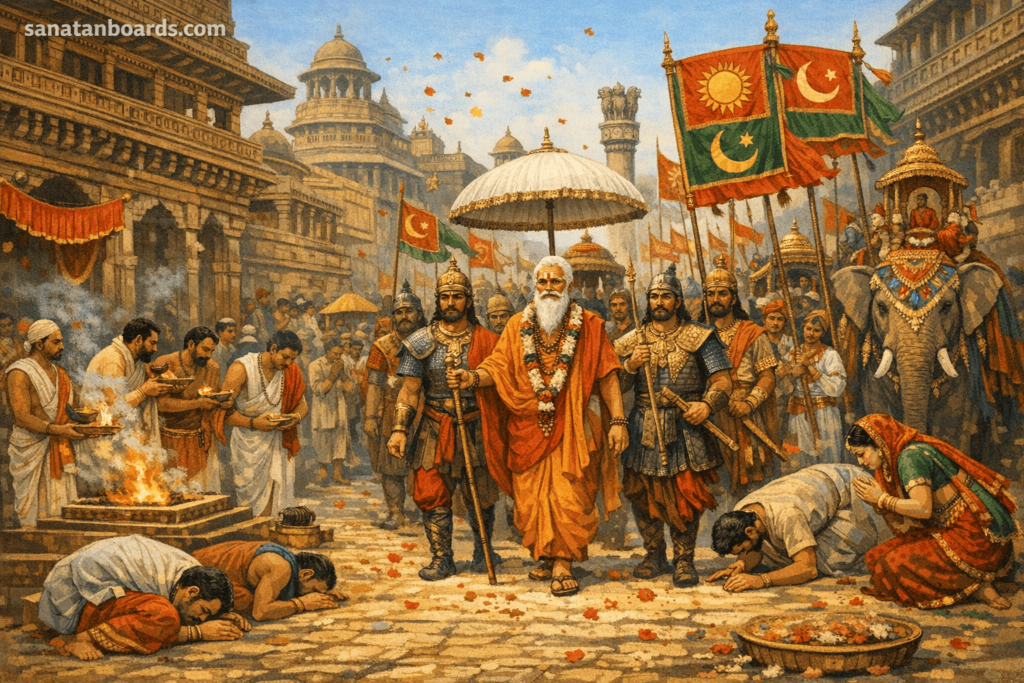
Case Study On Vasudeva Kanva (Kanva Dynasty)
The Kanva Dynasty, though brief, provides an important case study in the dynamics of political transition and administrative continuity in ancient India. Founded by Vasudeva Kanva around 73 BCE, the dynasty illustrates how ministers could leverage declining imperial authority to establish new regimes. The case of Vasudeva Kanva demonstrates key lessons in leadership, strategy, governance, and cultural legitimacy.
Background
The Shunga Dynasty, which preceded the Kanvas, had ruled Magadha since the fall of the Mauryan Empire. By the time of Devabhuti, the last Shunga king, the empire was weakened by administrative inefficiency, corruption, and external pressures. This created a vacuum in which ambitious and capable individuals could seize power. Vasudeva Kanva, a Brahmin minister, emerged as a central figure. He was uniquely positioned to capitalize on the Shungas’ decline due to his political knowledge, access to court networks, and influence over administrative machinery.
Strategic Takeover
Vasudeva’s rise to power was not sudden. It required careful observation of court politics, alliances with key stakeholders, and decisive action at the right moment. Historical sources suggest that he orchestrated the removal or assassination of Devabhuti, thereby claiming the throne. This strategic intervention demonstrates the importance of timing and intelligence in political transitions. Vasudeva’s case shows that leadership is often about recognizing opportunities in periods of systemic weakness.
Governance and Administration
Once in power, Vasudeva Kanva had to consolidate authority and maintain administrative continuity. He retained much of the Shunga administrative structure, including tax collection systems, provincial governance, and military organization. This continuity helped stabilize Magadha and reduced resistance from bureaucrats and regional governors. Moreover, Vasudeva emphasized law and order, ensuring that local administrators were loyal and that revenue flows were uninterrupted. The Kanva Dynasty, therefore, serves as an example of pragmatic governance, where a new dynasty relies on inherited systems rather than radical restructuring.
Cultural and Religious Legitimacy
Vasudeva’s Brahmin identity was central to legitimizing his rule. By promoting Brahmanical rituals, patronizing temples, and supporting priests, he reinforced his authority in the eyes of both elites and the general populace. Cultural and religious legitimacy proved as important as political and military control, highlighting the intertwined nature of governance and societal acceptance in ancient India.
Succession and Dynastic Challenges
The Kanva Dynasty was short-lived, lasting only about four decades, with rulers such as Bhumimitra, Narayana, and Susarman succeeding Vasudeva. While they maintained relative stability, the dynasty eventually succumbed to external pressures, particularly from the expanding Satavahana Empire. The case study underscores the importance of succession planning and adaptability, as even well-established regimes can face extinction if external threats are not managed.
Lessons Learned
- Timing and Strategy: Leadership emerges at moments of opportunity. Vasudeva Kanva seized power during a period of political vulnerability.
- Continuity vs. Change: Retaining administrative systems can stabilize governance during transitions.
- Cultural Legitimacy: Societal recognition and religious endorsement can strengthen political authority.
- Short-Term Dynasties: Even brief dynasties can influence regional politics and serve as a bridge between declining and rising empires.
The Kanva Dynasty’s story is a valuable case study in political strategy, governance, and cultural integration, demonstrating how leadership, legitimacy, and timing intersect in historical transitions.
White Paper On Vasudeva Kanva (Kanva Dynasty)
Executive Summary
The Kanva Dynasty, established by Vasudeva Kanva around 73 BCE, represents a transitional phase in ancient Indian history. This white paper examines the historical context, political strategies, governance models, and socio-cultural impact of the Kanva Dynasty. It provides insights into the mechanisms through which ministers can ascend to power and maintain authority during periods of imperial decline.
Introduction
Following the decline of the Shunga Dynasty, Magadha required a strong ruler to stabilize governance and preserve socio-cultural traditions. Vasudeva Kanva, a Brahmin minister, founded the Kanva Dynasty by leveraging political acumen, administrative knowledge, and cultural legitimacy. The dynasty lasted approximately four decades, providing a case of short-term dynastic rule that nonetheless had meaningful influence.
Political Context
By the late 1st century BCE, the Shunga Dynasty had weakened due to internal corruption, decentralization, and military vulnerabilities. The vacuum created opportunities for influential ministers like Vasudeva Kanva to seize power. This situation exemplifies the principle that political transitions often occur when existing structures fail to respond effectively to systemic pressures.
Leadership and Strategy
Vasudeva Kanva’s rise required several key actions:
- Intelligence Gathering: Understanding Shunga weaknesses and alliances.
- Strategic Alliances: Gaining support from influential court members.
- Decisive Action: Overthrowing Devabhuti to assume the throne.
- Administrative Consolidation: Retaining bureaucratic systems to stabilize rule.
This multi-faceted approach highlights the importance of strategic planning, timing, and situational awareness in governance.
Governance Model
The Kanva Dynasty emphasized continuity of administration. Key aspects included:
- Revenue Systems: Ensuring tax collection and economic stability.
- Provincial Governance: Maintaining loyalty among regional governors.
- Military Control: Securing territory against internal and external threats.
- Cultural Patronage: Supporting Brahmanical traditions to legitimize authority.
This model illustrates how short-term dynasties can sustain governance by blending inherited structures with the ruler’s strategic vision.
Socio-Cultural Impact
Vasudeva Kanva’s Brahmin identity enabled him to enforce religious and cultural legitimacy, crucial for stabilizing societal acceptance. Rituals, patronage of priests, and support for Brahmanical customs strengthened his authority, demonstrating the critical interplay between political power and societal norms.
Challenges and Decline
The Kanva Dynasty eventually faced pressure from the Satavahanas and regional powers. Limited territorial expansion, short rule, and external threats led to its absorption into emerging empires. The decline emphasizes the importance of adaptability, military strategy, and long-term planning even for capable rulers.
Conclusion and Recommendations
- Political power often emerges in periods of systemic weakness.
- Administrative continuity enhances stability during dynastic transitions.
- Cultural legitimacy strengthens the ruler’s authority and societal compliance.
- Short dynasties, though temporary, play a critical role in shaping regional history.
This white paper provides a framework #vasudevakanvakanvadynasty for analyzing political transitions, leadership strategies, and governance structures using the Kanva Dynasty as a case study.
Industry Application Of Vasudeva Kanva (Kanva Dynasty)
Although the Kanva Dynasty ruled over two thousand years ago, the strategies and lessons from Vasudeva Kanva’s leadership can be applied metaphorically to modern industry, business management, and organizational development.
1. Leadership in Transitional Periods
Vasudeva Kanva rose to power during a decline of the Shunga Dynasty, a period marked by instability and uncertainty. Modern industries often face similar transitional periods—market disruption, leadership changes, or technological shifts. Companies can apply this lesson by identifying emerging opportunities during organizational change and positioning themselves to lead effectively, just as Vasudeva leveraged a weakening regime to establish the Kanva Dynasty.
2. Strategic Planning and Risk Management
The Kanva Dynasty demonstrates the importance of strategic foresight and calculated risk-taking. Vasudeva Kanva carefully assessed weaknesses in the Shunga regime before taking action. In industries today, risk analysis, market research, and competitor assessment are critical for launching new products, entering markets, or restructuring organizations. Leaders can emulate Vasudeva’s meticulous planning when making high-stakes decisions.
3. Administrative Continuity
Vasudeva retained existing administrative structures from the Shunga period, ensuring governance remained stable. Similarly, in corporate management, maintaining core operational systems while introducing reforms can prevent disruption. Organizations undergoing mergers, acquisitions, or leadership transitions can use this principle to maintain efficiency and continuity.
4. Cultural and Organizational Legitimacy
Vasudeva reinforced his authority through cultural and religious legitimacy, which secured loyalty and social acceptance. In modern industries, this can be translated into corporate culture, branding, and stakeholder trust. Companies that align their leadership with organizational values and social responsibility can build loyalty among employees, partners, and customers.
5. Succession Planning
The eventual decline of the Kanva Dynasty underscores the importance of planning for succession. For modern enterprises, establishing a clear leadership pipeline, mentorship programs, and knowledge transfer systems ensures sustainability even when key leaders leave.
6. Crisis and Conflict Management
Vasudeva Kanva navigated potential rebellion and external threats to maintain control. Today, organizations can apply this principle in conflict resolution, competitive strategy, and crisis management, ensuring resilience in volatile markets.
Conclusion
The story of Vasudeva Kanva and the Kanva Dynasty offers timeless insights into leadership, strategic planning, governance, and organizational resilience. #Sanatandharmaaccreditationboardsinmumbai Modern industries can draw lessons from how the Kanva rulers handled uncertainty, maintained operational continuity, and legitimized authority, #Sanatandharmaaccreditationboardsinvasai applying these concepts to enhance competitiveness, stability, and sustainable growth.
source : The Epic Channel
ASK FAQ
Who was Vasudeva Kanva?
Vasudeva Kanva was a Brahmin minister who founded the Kanva Dynasty around 73 BCE, overthrowing the last Shunga king, Devabhuti, to rule Magadha.
When did the Kanva Dynasty rule India?
The Kanva Dynasty ruled from approximately 73 BCE to 28 BCE, succeeding the declining Shunga Dynasty in eastern India.
What was the significance of the Kanva Dynasty?
The Kanva Dynasty stabilized Magadha during a period of political transition, maintained administrative systems, and upheld Brahmanical cultural traditions.
How did Vasudeva Kanva come to power?
Vasudeva Kanva used his position as a minister to orchestrate the removal of Devabhuti, combining political strategy, alliances, and administrative expertise to establish his rule.
Why is Vasudeva Kanva important in Indian history?
He represents the transition between major dynasties, showing how leadership, strategic planning, and cultural legitimacy shaped governance in ancient India.
Table of Contents
Disclaimer
The information provided in this content is for educational and informational purposes only. It is based on historical sources and academic interpretations of the Kanva Dynasty and Vasudeva Kanva. While efforts have been made to ensure accuracy, historical records from this period are limited, and some details may vary according to different scholarly sources. This content is not intended as professional, legal, or historical advice.