The name Vaidyanath (Jharkhand) refers to one of the most revered spiritual destinations in India, located in the city of Deoghar in the state of Jharkhand. It is widely associated with the sacred shrine of Baidyanath Temple Deoghar, which holds deep cultural, historical, and religious importance. The site is known for its ancient legacy, architectural significance, and continuous devotion from millions of visitors across the world.
The region of Vaidyanath is considered a powerful spiritual center that attracts pilgrims throughout the year. It is especially significant during religious gatherings when large numbers of devotees come together to offer prayers and perform rituals. The environment of the place reflects a blend of tradition, faith, and cultural heritage that has been preserved for centuries.
Deoghar, meaning “abode of the gods,” enhances the spiritual identity of Vaidyanath. The temple complex and surrounding areas are known for their sacred atmosphere, where people seek blessings, peace, and fulfillment of personal wishes. The site also represents unity among devotees coming from different regions and backgrounds.
Vaidyanath (Jharkhand) is not only a religious landmark but also a center of social and cultural interaction. Local traditions, festivals, and rituals associated with this place have been passed down through generations. The influence of this sacred destination extends beyond spirituality, impacting tourism, local economy, and cultural preservation.
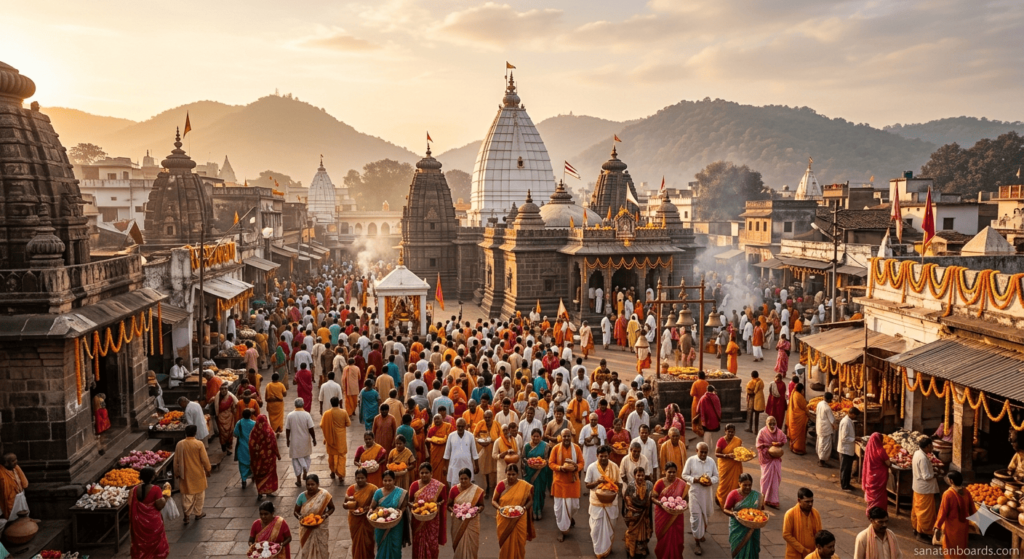
What Is Vaidyanath (Jharkhand) ?
Vaidyanath (Jharkhand) refers to a sacred religious site located in Deoghar district, primarily known for the presence of the holy shrine of Baidyanath Temple Deoghar. It is considered one of the most important spiritual destinations in India and is deeply rooted in ancient traditions and mythology.
The term “Vaidyanath” is associated with divine healing and spiritual protection. The site is believed to be a place where faith and devotion merge to create a powerful spiritual experience. Devotees visit this place with the belief that prayers offered here bring peace, prosperity, and relief from difficulties.
Geographically, Vaidyanath is situated in Jharkhand, a state known for its natural beauty, tribal culture, and historical significance. The temple complex in Deoghar is surrounded by a vibrant environment that enhances the spiritual experience of visitors.
The structure of the temple and its rituals reflect centuries-old traditions. Daily prayers seasonal festivals, and special ceremonies form an integral part of its identity. The architecture and design of the temple reflect ancient craftsmanship and cultural richness.
Vaidyanath is also recognized as a major pilgrimage center, attracting visitors from across India and abroad. The site becomes especially active during major religious occasions when large gatherings take place.
In a broader sense, Vaidyanath (Jharkhand) represents a combination of faith, culture, and tradition. It is not just a physical location but a symbol of spiritual belief that has been preserved and respected over generations. The importance of this place continues to grow as it remains a center of devotion and cultural unity.
Who Is Required Vaidyanath (Jharkhand) ?
The significance of Vaidyanath (Jharkhand) is relevant to a wide range of individuals who seek spiritual, cultural, and emotional fulfillment. The sacred shrine of Baidyanath Temple Deoghar attracts people from different walks of life, each with unique intentions and needs.
Primarily, devotees and spiritual seekers are the most frequent visitors. They come with faith and devotion, seeking blessings, inner peace, and resolution of personal challenges. For such individuals, the site serves as a center of prayer and spiritual connection.
Pilgrims who follow traditional religious practices also find this place essential. Many consider visiting Vaidyanath as part of their spiritual journey or religious obligation. It is often included in pilgrimage circuits that hold deep cultural importance.
Apart from religious visitors, scholars and researchers also find value in studying Vaidyanath (Jharkhand). They explore its historical background, architectural design, cultural impact, and sociological relevance. This helps in understanding the evolution of traditions and belief systems.
Tourists interested in heritage and culture are also drawn to this destination. The site offers insights into ancient customs, local traditions, and regional identity.
Local communities depend on the significance of Vaidyanath for livelihood opportunities related to tourism, hospitality, and services. Thus, it indirectly supports economic development in the region.
When Vaidyanath (Jharkhand) Is Required ?
The need or relevance of Vaidyanath (Jharkhand) arises at various moments in an individual’s life, depending on spiritual, emotional, and situational circumstances. The sacred site of Baidyanath Temple Deoghar becomes significant during both personal and collective experiences.
One of the primary times when it is required is during periods of emotional distress or uncertainty. Individuals often seek spiritual comfort when facing challenges such as illness, financial difficulties, or personal struggles. In such times, visiting this sacred place is believed to provide mental peace and strength.
It is also required during important life events such as milestones, family ceremonies, or major decisions. Many people consider seeking blessings before beginning new ventures, marriages, or journeys.
Religious festivals and pilgrimage seasons are another important time when Vaidyanath becomes highly relevant. During these periods, large gatherings take place, and the spiritual environment becomes more intense and meaningful.
Additionally, individuals may feel the need to visit this place during moments of gratitude or fulfillment. After achieving success or recovery from hardship, people often express their thanks through prayers and offerings.
From a cultural perspective, Vaidyanath is required during traditional observances that have been passed down through generations. Families often maintain the practice of visiting the shrine at specific times of the year.
Scholars and cultural researchers may find it necessary to study the site during research projects or historical documentation efforts.
Thus, the requirement of Vaidyanath (Jharkhand) is not limited to a single occasion. It arises in moments of difficulty, celebration, devotion, and cultural tradition. Its significance remains constant across different phases of human life, making it a timeless center of faith and reflection.
Where Vaidyanath (Jharkhand) Is Required ?
Vaidyanath (Jharkhand) is primarily required in the region of Deoghar, located in the eastern Indian state of Jharkhand. The central spiritual location is the temple complex of Baidyanath Temple Deoghar, which serves as the focal point of religious and cultural activities.
Geographically, the site is situated in a region that is easily accessible from different parts of India. This makes it a key destination for pilgrims traveling from various states. The surrounding areas of Deoghar also play an important role in supporting the infrastructure required for visitors, including accommodation, transportation, and local services.
Beyond its physical location, Vaidyanath is required wherever people carry its spiritual influence. Devotees who have visited the site often carry its significance back to their homes, integrating its beliefs into their daily lives.
It is also required in cultural and religious institutions that promote traditional practices. Temples, community centers, and spiritual gatherings across different regions often reference Vaidyanath as part of religious teachings and rituals.
In a broader sense, the importance of Vaidyanath extends to educational and cultural discussions across India and beyond. It is studied in historical, architectural, and sociological contexts in academic institutions.
Tourism and pilgrimage networks also require Vaidyanath as a key destination. Travel routes and religious circuits are often designed around such significant sites.
Thus, while the physical location is Deoghar in Jharkhand, the relevance of Vaidyanath spreads widely across regions, communities, and cultural spaces. Its presence is both local and universal in its influence.
How Vaidyanath (Jharkhand) Is Required ?
The way Vaidyanath (Jharkhand) is required can be understood through rituals, traditions, travel practices, and cultural participation. The sacred shrine of Baidyanath Temple Deoghar is accessed through a structured combination of devotion and organized pilgrimage.
Devotees typically arrive with a planned spiritual intention. They participate in prayers, offerings, and traditional rituals that are conducted within the temple premises. These practices are guided by long-established customs that define how worship is performed.
Pilgrimage routes are an important aspect of how Vaidyanath is required. Many visitors travel long distances on foot or through organized transport systems, following traditional pathways that hold religious meaning.
Local priests and temple authorities play a key role in maintaining the structure of rituals. They guide visitors on how to perform ceremonies correctly, ensuring that traditions are preserved.
Cultural participation also defines how the site is required. Festivals and special occasions involve collective worship, singing of devotional songs, and communal gatherings.
From a practical perspective, infrastructure such as roads, lodging facilities, and public services support the flow of visitors, making the experience accessible and organized.
Thus, Vaidyanath (Jharkhand) is required through a combination of devotion, structured rituals, travel systems, and cultural practices that together create a meaningful experience for visitors.
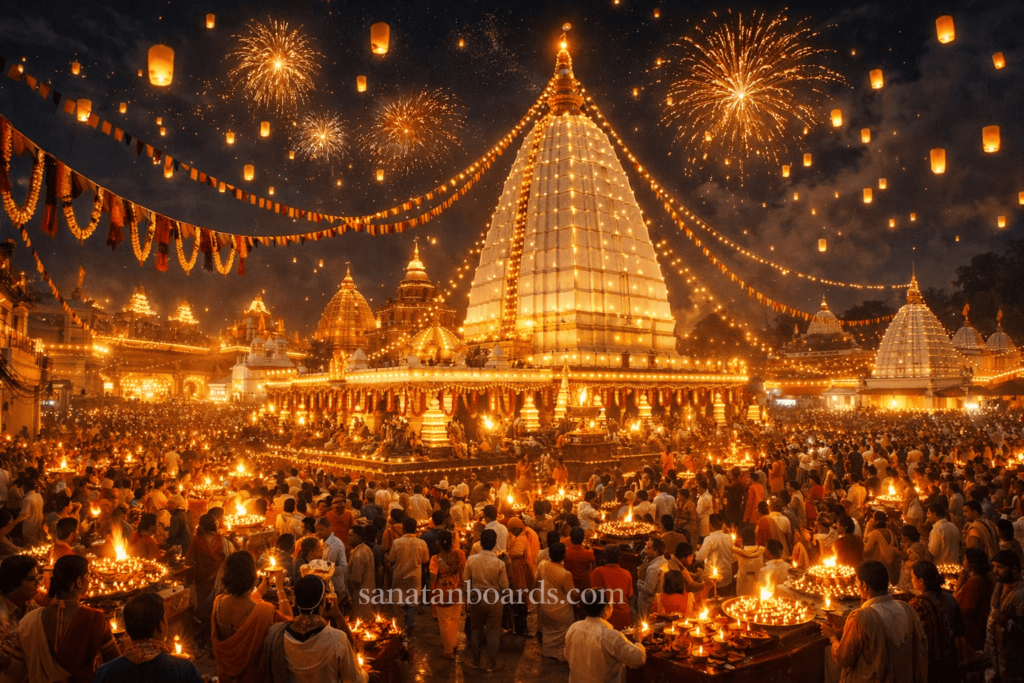
Case Study On Vaidyanath (Jharkhand)
The case study of Vaidyanath (Jharkhand) focuses on its role as a major pilgrimage center, cultural hub, and socio-economic influencer in the region of Deoghar. The presence of Baidyanath Temple Deoghar makes it one of the most visited spiritual destinations in eastern India.
Historically, the site has been associated with ancient traditions and mythological narratives that have shaped its identity over centuries. The temple complex has evolved from a small place of worship into a large-scale pilgrimage destination attracting millions of visitors annually.
From a cultural perspective, Vaidyanath plays a central role in preserving rituals, festivals, and traditional practices. Major religious events draw large crowds, creating a vibrant environment of devotion and collective participation. These gatherings also strengthen community bonds among visitors from different regions.
Economically, the impact of Vaidyanath on Deoghar is significant. The influx of pilgrims supports local businesses, including hotels, transportation services, food vendors, and handicrafts. This creates employment opportunities and contributes to regional development.
Infrastructure development around the temple has improved accessibility and visitor experience. Roads, public facilities, and management systems have been developed to handle large numbers of pilgrims efficiently.
Socially, the site serves as a unifying space where people from diverse backgrounds come together. It promotes cultural exchange and reinforces shared traditions. The interactions among visitors create a sense of unity and belonging.
Environmental considerations have also become part of managing the site. Efforts are made to maintain cleanliness and sustainability due to the high volume of visitors.
The case study also highlights the challenges faced, such as overcrowding during peak seasons and the need for better resource management. Authorities continuously work to balance tradition with modernization.
Overall, Vaidyanath (Jharkhand) represents a complex system of spiritual belief, cultural heritage, economic activity, and social interaction. #Sanatanboardsinjharkhand It stands as a living example of how religious sites can influence multiple dimensions of society.
White Paper On Vaidyanath (Jharkhand)
The white paper on Vaidyanath (Jharkhand) examines its multidimensional significance as a spiritual, cultural, economic, and social entity centered around Baidyanath Temple Deoghar. The objective is to analyze its current status, challenges, and future potential.
From a spiritual standpoint, Vaidyanath is one of the most important pilgrimage destinations in India. It attracts a large number of devotees throughout the year, especially during major religious events. The site holds deep emotional and cultural value for millions of people.
Culturally, the site preserves centuries-old traditions and rituals. These practices contribute to the continuity of heritage and identity in the region. The temple serves as a center for cultural expression and religious learning.
Economically, Vaidyanath significantly contributes to the local and regional economy. Tourism generated by pilgrims supports hospitality, transportation, retail, and service sectors. This creates a sustainable economic ecosystem around Deoghar.
Infrastructure development has improved accessibility and management of large crowds. However, continuous improvement is required to handle increasing visitor numbers efficiently.
Despite its strengths, the site faces challenges such as overcrowding, waste management, and environmental pressure. Addressing these issues is essential for long-term sustainability.
The white paper suggests the need for improved crowd control systems, digital management tools, and enhanced facilities for visitors. Sustainable development practices should be integrated to preserve the cultural and environmental integrity of the site.
There is also a need for greater documentation and research to preserve historical knowledge and cultural practices associated with Vaidyanath.
In conclusion, Vaidyanath (Jharkhand) represents a #Sanatanboardsinvasai powerful combination of faith, culture, and economic importance. Its future development requires a balanced approach that respects tradition while embracing modernization.
Industry Application On Vaidyanath (Jharkhand)
The influence of Vaidyanath (Jharkhand), centered around the sacred shrine of Baidyanath Temple Deoghar, extends far beyond its spiritual importance and has strong connections with multiple industries. Its continuous inflow of visitors and cultural significance creates a wide range of economic and developmental applications.
1. Tourism Industry
The most direct application is in tourism. Vaidyanath is a major pilgrimage destination that attracts millions of visitors every year. This leads to the development of pilgrimage tourism services such as guided tours, travel packages, information centers, and seasonal tourism planning. The destination is often included in religious tourism circuits, boosting regional and national tourism growth.
2. Hospitality Industry
The hospitality sector benefits significantly due to the constant demand for accommodation and food services. Hotels, lodges, dharamshalas, guest houses, and homestays operate extensively in Deoghar. Restaurants and local food vendors also experience increased business during peak pilgrimage seasons, contributing to local income generation and employment.
3. Transportation Industry
Transportation networks play a critical role in supporting access to Vaidyanath. Railways, buses, taxis, and private travel operators provide connectivity to Deoghar from different parts of India. Special travel arrangements are often made during festivals and peak seasons to manage the high passenger flow.
4. Local Handicraft and Retail Industry
Local artisans and small businesses benefit through the sale of religious items, souvenirs, handicrafts, flowers, and ritual materials. This supports traditional crafts and helps preserve regional culture while providing livelihood opportunities to local communities.
5. Digital and Service Industry
With increasing modernization, digital platforms are being used for information dissemination, travel planning, and crowd management. Online booking systems for accommodation and transport, as well as digital guides, are becoming more relevant in improving visitor experience.
6. Infrastructure and Construction Industry
The growing number of visitors has led to continuous development of infrastructure such as roads, bridges, public facilities, sanitation systems, and crowd management structures. Construction companies and government projects play an important role in maintaining and upgrading these facilities.
7. Employment Generation
Across all these industries, Vaidyanath indirectly generates large-scale employment opportunities for local residents, including service workers, guides, drivers, shopkeepers, and hotel staff.
Conclusion
Vaidyanath (Jharkhand) acts as a strong economic driver, influencing #Sanatanboardsinmumbai multiple industries while maintaining its cultural and spiritual identity. Its impact supports both regional development and traditional livelihoods, making it an important integrated socio-economic hub.
source : Yatra Mitra
ASK FAQ
What is Vaidyanath (Jharkhand) famous for?
Vaidyanath (Jharkhand) is famous for the sacred pilgrimage site Baidyanath Temple Deoghar, which is one of the most important religious destinations in India known for devotion and spiritual significance.
2. Where is Vaidyanath (Jharkhand) located?
It is located in Deoghar district, Jharkhand, India, and is easily accessible by road, rail, and air from major cities.
3. Why do people visit Vaidyanath (Jharkhand)?
People visit for spiritual blessings, religious rituals, peace of mind, and to participate in important festivals and pilgrimages.
4. When is the best time to visit Vaidyanath (Jharkhand)?
The best time is during religious festivals and cooler months, when large pilgrimages take place and the weather is more comfortable.
5. How does Vaidyanath (Jharkhand) impact the economy?
It boosts tourism, hospitality, transport, and local businesses, generating employment and supporting the regional economy of Deoghar and nearby areas.
Table of Contents
DISCLAIMER
This content is intended for informational and descriptive purposes only. It does not represent any official religious authority, endorsement, or verification. Readers are encouraged to refer to verified local sources or official institutions for precise and updated information.