The Taittiriya Upanishad, one of the principal Upanishads of the Yajurveda, is a profound spiritual text of ancient India that explores the nature of reality, self-knowledge, and ultimate truth. Its teachings emphasize the importance of wisdom, ethical living, and self-realization. In the modern context, the concept of a Taittiriya Upanishad Network is emerging as an educational and philosophical framework that connects scholars, learners, and institutions to study and disseminate the knowledge of this ancient scripture.
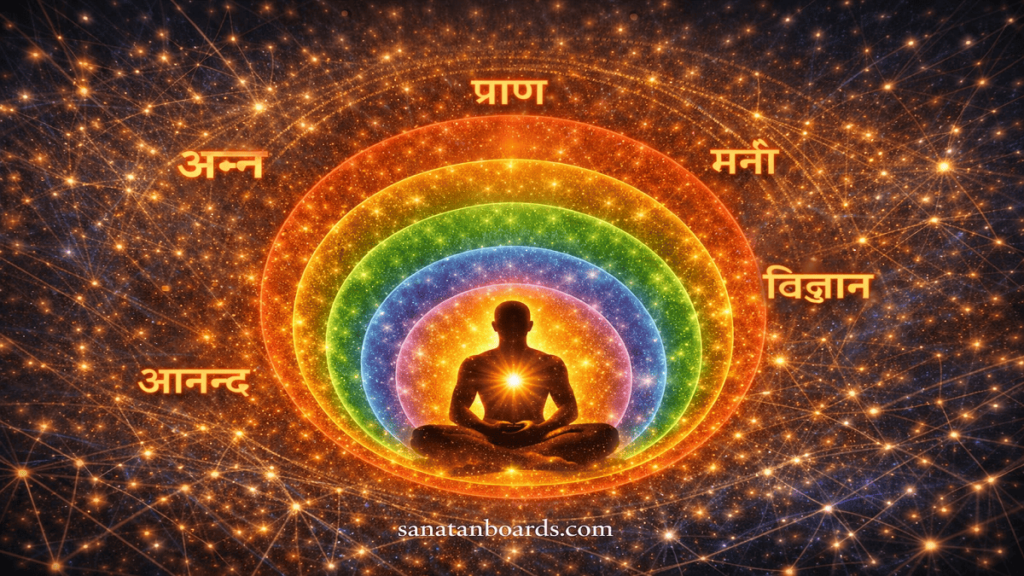
A Taittiriya Upanishad Network is designed to facilitate structured learning of the Upanishad’s teachings, incorporating discussions, interpretations, and practical applications in daily life. It enables learners to engage with the concepts of Annamaya, Pranamaya, Manomaya, Vijnanamaya and Anandamaya Koshas—the five sheaths of human existence described in the Upanishad.
By using digital tools, workshops, and interactive study programs, this network brings together enthusiasts from different backgrounds to explore the philosophical depth of the Taittiriya Upanishad. Beyond spiritual learning, it encourages holistic development, critical thinking, and ethical reasoning. For students, researchers, and spiritual aspirants, the Taittiriya Upanishad Network serves as a bridge between ancient wisdom and contemporary educational practices, making the timeless knowledge of the Upanishads accessible to all.

What Is Taittiriya Upanishad Network ?
The Taittiriya Upanishad Network can be understood as an organized framework for the study, discussion, and dissemination of the teachings of the Taittiriya Upanishad. This Upanishad, belonging to the Krishna Yajurveda, is divided into three sections: Shiksha Valli, Ananda Valli, and Bhrigu Valli, which cover phonetics, ethical living, meditation, knowledge of the self, and the path to bliss. The network provides a structured approach to understanding these sections in depth.
At its core, the Taittiriya Upanishad Network combines traditional scriptural study with modern educational tools, including online lectures, collaborative forums, and research initiatives. It enables learners to not only read and interpret the verses but also to apply the teachings to personal growth and professional development. The network emphasizes experiential learning, encouraging participants to explore the five Koshas (sheaths of human existence) and develop awareness at physical, mental, intellectual, and blissful levels.
Moreover, the network acts as a global knowledge platform, connecting scholars, spiritual teachers, and enthusiasts. It supports comparative studies, critical discussions, and translations of the Upanishad, making it accessible across languages and cultures. The network may also include mentorship programs, workshops, and retreats aimed at deepening comprehension of the philosophy.
By linking academic research with practical application, the Taittiriya Upanishad Network helps preserve the ancient wisdom while promoting contemporary learning. It is a bridge between the timeless teachings of the Upanishads and the modern need for ethical guidance, self-awareness, and holistic education.
Who is required for Taittiriya Upanishad Network ?
The Taittiriya Upanishad Network serves as a vital resource for various groups of learners, educators, and spiritual aspirants who are interested in the study of ancient Indian philosophy and its application in modern life.
Primarily, students of Vedic literature and Indian philosophy require this network to gain a structured and comprehensive understanding of the Taittiriya Upanishad. The network provides access to authenticated texts, expert interpretations, and guided discussions, making it easier for learners to grasp complex philosophical concepts. It is especially beneficial for postgraduate and doctoral scholars conducting research in Sanskrit, philosophy, and comparative religion.
Spiritual aspirants and practitioners also benefit from the network, as it provides tools for practical application of the Upanishad’s teachings. The focus on the five Koshas and meditative exercises helps individuals cultivate self-awareness, inner peace, and ethical living.
Educators and teachers seeking to integrate ancient wisdom into curricula can use the network to create educational modules, workshops, and seminars. By doing so, they can introduce students to ethical reasoning, mindfulness, and holistic development.
Additionally, professionals and life coaches exploring philosophical frameworks for personal development, leadership, and decision-making can leverage the network. The Taittiriya Upanishad’s emphasis on knowledge, virtue, and bliss provides timeless guidance for achieving balance in personal and professional life.
Finally, anyone with a curiosity about Indian culture, philosophy, and spirituality can benefit from the Taittiriya Upanishad Network. Its accessible format, digital resources, and collaborative structure make it suitable for both beginners and advanced learners seeking to connect with ancient wisdom.
When Is Taittiriya Upanishad Network Required ?
The Taittiriya Upanishad Network becomes particularly essential during periods of intellectual, spiritual, or ethical exploration. It is required whenever individuals, students, or organizations seek structured access to the wisdom of the Taittiriya Upanishad and aim to integrate it into their lives or work.
Firstly, for students and scholars of Indian philosophy, the network is crucial during research or academic pursuits. Whether analyzing Sanskrit texts, comparing philosophical doctrines, or preparing for advanced studies, the network provides authentic resources, expert interpretations, and collaborative forums. It ensures that learners engage deeply with the Upanishad’s teachings rather than relying on fragmented or secondary sources.
Secondly, for spiritual aspirants, the network is necessary when one seeks guidance on self-realization and holistic development. The Taittiriya Upanishad emphasizes the five Koshas—physical, vital, mental, intellectual, and blissful sheaths. Structured guidance from the network allows aspirants to practice meditation, reflection, and ethical living at the appropriate stages of their spiritual journey. Without such guidance, aspirants may struggle to apply abstract teachings effectively.
The network is also required for educational institutions and educators aiming to include Vedic wisdom in curricula. In classrooms, workshops, or retreats, teachers need accurate, structured, and interactive resources to communicate the teachings of the Upanishad. The network supplies lesson plans, discussion modules, and collaborative platforms to ensure meaningful learning experiences.
In the corporate or professional realm, the network becomes valuable during personal development, leadership training, or ethical decision-making programs. Organizations seeking to cultivate mindfulness, resilience, and ethical reasoning in employees can use the network to integrate ancient philosophical insights into modern professional practices.
Finally, the network is essential whenever there is a need for cross-cultural philosophical exchange. As interest in Indian spirituality and holistic education grows globally, learners and educators from different cultures require structured, reliable access to the teachings of the Taittiriya Upanishad.
Where Is Taittiriya Upanishad Network Required ?
The Taittiriya Upanishad Network is required in multiple contexts where the study and application of ancient wisdom can bring meaningful impact. Its necessity spans educational institutions, spiritual centers, workplaces, and even digital platforms worldwide.
Primarily, the network is essential in educational institutions, such as universities, colleges, and schools offering courses in philosophy, religion, or Sanskrit. Here, it serves as a structured resource for both students and educators. In classrooms, lectures, and research labs, the network provides access to original texts, commentaries, translations, and interactive learning tools. By integrating the network, institutions can foster a deeper understanding of the Taittiriya Upanishad’s philosophical, ethical, and spiritual teachings.
Secondly, the network is required in spiritual centers, ashrams, and meditation retreats. These locations often focus on guiding individuals in self-realization, ethical living, and mindfulness practices. The Taittiriya Upanishad Network supplies structured programs, discussion forums, and practical exercises to enhance the spiritual journey of practitioners. Meditation on the five Koshas, ethical teachings, and reflective practices become more systematic through the network.
In the corporate and professional environment, the network finds its application in leadership development programs, wellness initiatives, and ethical training modules. Organizations seeking to promote resilience, mindfulness, and ethical decision-making can leverage the network’s resources for structured workshops and seminars.
Furthermore, the network is increasingly required in the digital space, including online learning platforms, virtual classrooms, and knowledge-sharing forums. As learners and researchers globally seek access to authentic philosophical content, the network provides multilingual resources, webinars, and interactive tools, making the ancient wisdom of the Taittiriya Upanishad accessible anywhere in the world.
Finally, the network is necessary in cross-disciplinary research hubs, where scholars from psychology, management, education, and spirituality collaborate. The philosophical insights from the Upanishad enrich studies in ethics, human consciousness, and holistic development.
How is Taittiriya Upanishad Network Required ?
The Taittiriya Upanishad Network is required through systematic approaches that facilitate study, understanding, and application of the Upanishad’s teachings. Its implementation can vary depending on the audience, objectives, and context, but the focus remains on structured, practical, and experiential learning.
Firstly, the network is required as a digital learning platform. Through online lectures, interactive forums, and webinars, learners can access authenticated texts, translations, and commentaries. This digital setup allows scholars and enthusiasts from different regions to study the Taittiriya Upanishad collaboratively. Features like discussion boards, Q&A sessions with experts, and virtual workshops enable real-time engagement and mentorship.
Secondly, it is required as a classroom or institutional framework. Educators can integrate the network into curricula to teach philosophy, ethics, and meditation practices. Structured lesson plans, case studies, and practical exercises make abstract concepts more tangible. Students can learn about the five Koshas, ethical principles, and meditation techniques in a systematic and gradual manner.
The network is also required as a spiritual and experiential guide. Meditation retreats, ashrams, and workshops can use it to introduce practical applications of the Upanishad’s teachings. Guided exercises on self-awareness, reflection, and ethical decision-making help individuals internalize philosophical insights, fostering holistic development.
In professional settings, the network is required as a tool for personal and organizational growth. Companies can design leadership programs, wellness initiatives, and ethical decision-making workshops based on the Upanishad’s principles. Structured modules, interactive sessions, and reflective practices derived from the network help employees cultivate mindfulness, resilience, and ethical behavior.
Finally, it is required as a research and collaborative platform. Scholars and practitioners from diverse disciplines—philosophy, psychology, education, and management—can use the network to study the Upanishad’s relevance in modern contexts. Comparative studies, interdisciplinary research, and knowledge-sharing initiatives benefit from the organized framework provided by the network.
Case Study On Taittiriya Upanishad Network
Background:
The Taittiriya Upanishad Network (TUN) was conceptualized to bridge the gap between ancient philosophical wisdom and modern educational practices. In 2023, an educational institute in India launched a pilot program integrating TUN into its curriculum for students of philosophy, Sanskrit, and holistic studies. The goal was to evaluate how structured access to the Upanishad’s teachings could enhance learning outcomes, personal development, and ethical reasoning among students.
Implementation:
The institute adopted a multi-tiered approach. First, it digitized the Taittiriya Upanishad texts with expert commentaries and translations. Then, it created an online learning platform for students, including video lectures, interactive discussion forums, and guided meditation modules based on the five Koshas (Annamaya, Pranamaya, Manomaya, Vijnanamaya, Anandamaya).
Parallelly, in-person workshops were conducted, where students engaged in reflective exercises, ethical dilemma discussions, and meditative practices. Faculty members guided students in understanding the philosophical nuances of the Upanishad, encouraging critical thinking and self-reflection. To assess impact, surveys and performance evaluations were conducted periodically.
Results:
Within six months, the program demonstrated notable outcomes. Students reported enhanced self-awareness, improved emotional regulation, and a stronger sense of ethical responsibility. Academic engagement improved as learners could contextualize abstract philosophical concepts into daily life scenarios. For example, discussions on the Ananda Kosha (bliss sheath) helped students explore emotional well-being, while lessons on the Vijnanamaya Kosha (intellectual sheath) fostered analytical thinking and problem-solving skills.
The network also facilitated collaboration with external scholars and spiritual mentors, enabling a cross-cultural exchange of knowledge. International students participating online highlighted the accessibility and clarity of the digital resources, emphasizing the value of TUN in global education.
Challenges:
Despite its success, the program faced challenges. Some students struggled with Sanskrit terminology and abstract concepts, requiring additional tutoring sessions. Technical limitations, such as inconsistent internet connectivity, affected participation in online discussions. These challenges underscored the need for blended learning models that combine digital resources with personalized mentorship.
Conclusion:
The case study demonstrates that the Taittiriya Upanishad Network can effectively enhance academic, spiritual, and personal development when implemented #taittiriyaupanishadnetworkingujrat thoughtfully. Structured digital platforms, interactive workshops, and mentorship programs enable learners to engage deeply with the Upanishad’s teachings. This pilot program illustrates TUN’s potential to transform philosophical education, providing a replicable #taittiriyaupanishadnetworkinkarnataka model for institutions seeking to integrate ancient wisdom with modern learning methodologies.
White Paper On Taittiriya Upanishad Network
Introduction:
The Taittiriya Upanishad Network (TUN) is an innovative educational and philosophical platform designed to facilitate the study, understanding, and application of the Taittiriya Upanishad. This ancient text, part of the Krishna Yajurveda, emphasizes self-realization, ethical living, and holistic development through exploration of the five Koshas (Annamaya, Pranamaya, Manomaya, Vijnanamaya, Anandamaya). Modern learners often face challenges accessing authentic interpretations and practical applications of this text, which the network seeks to address.
Purpose and Objectives:
The primary purpose of TUN is to create a structured, accessible, and interactive framework for learners, educators, and spiritual aspirants. Its objectives include:
- Educational Integration: Provide academic resources for students and researchers of philosophy, Sanskrit, and comparative religion.
- Spiritual Application: Offer practical tools for meditation, reflection, and ethical decision-making.
- Global Accessibility: Utilize digital platforms to reach learners across cultural and linguistic boundaries.
- Holistic Development: Encourage self-awareness, emotional intelligence, intellectual growth, and ethical reasoning.
Structure and Components:
TUN operates through a combination of digital and in-person learning methods:
- Digital Platform: Includes online texts, translations, commentaries, webinars, and interactive discussion forums.
- Workshops and Retreats: Practical sessions for meditation, ethical exercises, and reflective learning.
- Mentorship Programs: Guidance from scholars and spiritual teachers to help learners interpret and apply philosophical concepts.
- Collaborative Research: Encourages interdisciplinary research linking philosophy, psychology, education, and management.
Implementation Strategies:
Effective deployment of TUN involves:
- Curriculum integration in academic institutions.
- Blended learning models combining online modules with offline workshops.
- Collaboration with international scholars to expand accessibility and credibility.
- Periodic assessments to measure learner engagement, comprehension, and application of teachings.
Impact and Benefits:
The Taittiriya Upanishad Network fosters:
- Enhanced Self-awareness: Learners understand the five Koshas and develop a balanced approach to physical, mental, intellectual, and emotional well-being.
- Ethical and Moral Development: Encourages responsible decision-making in personal and professional contexts.
- Cross-Cultural Knowledge Sharing: Provides global access to Indian philosophical traditions.
- Academic Advancement: Supports scholarly research and curriculum development.
Conclusion:
The Taittiriya Upanishad Network bridges the ancient and the modern, making profound Vedic knowledge accessible to contemporary learners. By providing a #taittiriyaupanishadnetworkinmumbai structured framework for study and practice, it ensures that the timeless wisdom of the Taittiriya Upanishad continues to guide ethical, intellectual, and #taittiriyaupanishadnetworkinvasai spiritual development in modern educational, professional, and personal settings.
Industry Applications Of Taittiriya Upanishad Network
The Taittiriya Upanishad Network (TUN) is not only relevant for education and spiritual practice but also offers significant applications across modern industries. By integrating ancient philosophical insights with contemporary practices, organizations can enhance personal development, leadership, ethical governance, and workplace wellness.
1. Education and Research:
Educational institutions leverage TUN to enrich curricula in philosophy, psychology, ethics, and Sanskrit studies. Universities and schools incorporate workshops, online resources, and collaborative forums from TUN to provide students with a holistic understanding of the five Koshas and ethical principles. The network enables interdisciplinary research linking ancient wisdom with modern cognitive science, leadership, and emotional intelligence studies.
2. Corporate Leadership and Management:
Organizations use TUN principles to design leadership training programs. Lessons from the Upanishad, such as the integration of intellectual, emotional, and ethical faculties, support decision-making, conflict resolution, and team management. Meditation and mindfulness exercises derived from the network promote employee focus, resilience, and stress management. Leaders trained in TUN frameworks develop ethical and balanced approaches to strategic challenges.
3. Health and Wellness Industry:
The Kosha-based teachings of the Taittiriya Upanishad are applied in wellness programs to support holistic health. Integrating physical (Annamaya) and vital (Pranamaya) practices with mental and emotional development enhances personal well-being. Yoga instructors, life coaches, and wellness consultants use TUN-inspired techniques to design mindfulness, stress reduction, and emotional intelligence programs.
4. Technology and Digital Learning:
EdTech companies implement TUN as part of digital learning platforms, providing access to online courses, webinars, and interactive modules. The network supports AI-based personalized learning paths, multilingual content, and virtual collaboration, making ancient wisdom accessible globally. This enhances the reach of Vedic studies beyond traditional classrooms.
5. Ethical Governance and Social Responsibility:
Organizations and NGOs integrate TUN principles to guide ethical practices, corporate social responsibility, and community engagement. The Upanishad’s focus on ethical reasoning and self-awareness informs policies, corporate codes of conduct, and sustainable business strategies.
6. Creative and Cultural Industries:
Writers, filmmakers, and artists draw inspiration from TUN to create content that explores human consciousness, ethics, and spirituality. The network provides context, authentic interpretation, and creative guidance for projects based on Vedic philosophy.
Conclusion:
The Taittiriya Upanishad Network offers versatile industry applications by translating ancient wisdom into practical tools for personal growth, leadership, #sanatandharmaaccreditationboardsinmumbai wellness, ethics, education, and creative expression. Its structured framework ensures that organizations, educators, and professionals can effectively integrate philosophical insights into #sanatandharmaaccreditationboardsinvasai modern workflows, fostering holistic development, ethical awareness, and intellectual advancement across industries.
source : Sri Sathya Sai Official
ASK FAQ
What is the Taittiriya Upanishad Network?
A structured platform for studying, interpreting, and applying the teachings of the Taittiriya Upanishad for education, spiritual growth, and holistic development.
Who can benefit from the Taittiriya Upanishad Network?
Students, scholars, spiritual aspirants, educators, and professionals seeking ethical guidance, self-awareness, or philosophical knowledge.
When should one use the Taittiriya Upanishad Network?
During academic research, spiritual practice, ethical training, or personal development programs.
Where is the Taittiriya Upanishad Network applied?
In educational institutions, spiritual centers, workplaces, digital learning platforms, and research hubs.
How does the Taittiriya Upanishad Network help individuals and organizations?
By providing structured learning, meditation practices, ethical insights, and tools for holistic personal and professional growth.
Table of Contents
Disclaimer
This content is for educational and informational purposes only and is not a substitute for professional advice or spiritual guidance.