Someshvara II was a king of the Western Chalukya dynasty, ruling parts of the Indian subcontinent during the 11th century CE. He succeeded his father, Someshvara I, in 1068 CE and reigned until 1076 CE. The Western Chalukyas, also known as the Chalukyas of Kalyani, were a powerful South Indian dynasty that controlled the Deccan Plateau from the present‑day Karnataka region and influenced politics, culture, and religion across central and southern India during this era.
Someshvara II inherited an empire facing significant internal and external challenges. His father had fought prolonged wars with the Chola rulers of Tamil Nadu, draining resources and creating political instability. The Chola‑Chalukya rivalry was one of the defining conflicts of the period, marked by shifting alliances and battles over control of strategic regions like Vengi and the fertile Tungabhadra‑Krishna valleys.
As the eldest son of Someshvara I, Someshvara II was expected to consolidate his father’s gains and uphold Chalukya power in the region. However, his reign was overshadowed by intense familial rivalry with his younger brother, Vikramaditya VI, who was both more ambitious and politically skilled. This sustained internal dissent significantly weakened the Chalukyan state and set the stage for a dynastic struggle that would define the latter years of Someshvara’s rule.
Despite these challenges, Someshvara II worked to administer his kingdom, uphold its traditional governance systems, and manage ongoing external pressures. His life and reign provide a compelling glimpse into the complex matrix of medieval Indian politics, where dynastic loyalty, military prowess, and diplomatic alliances determined the fate of kingdoms
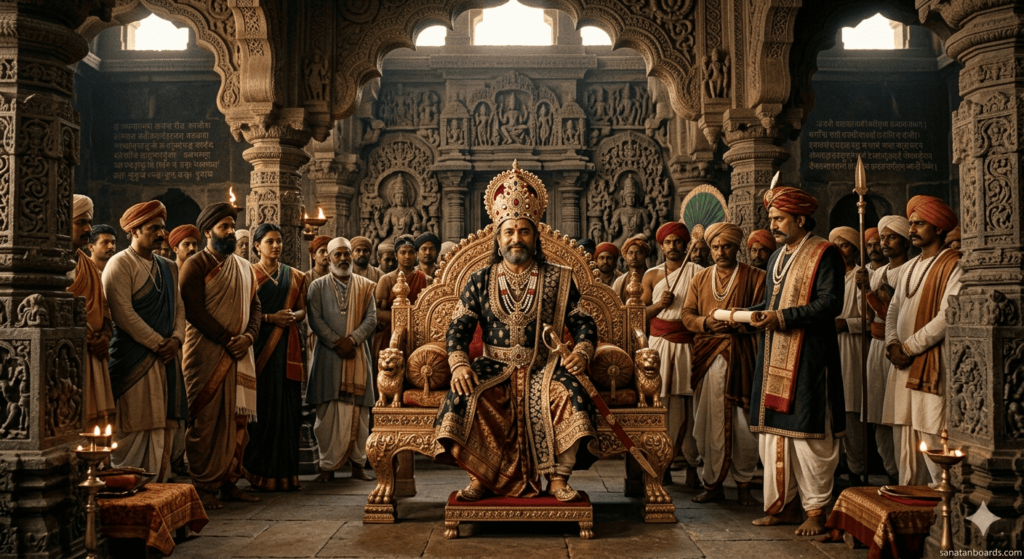
What Is Someshvara Ii (Western Chalukya) ?
Someshvara II was a medieval Indian monarch of the Western Chalukya Empire who ascended the throne in 1068 CE after the death of his father, Someshvara I. The Western Chalukyas, also called the Kalyani Chalukyas, were an influential dynasty in the Deccan region (primarily modern Karnataka) that ruled from the late 10th century into the 12th century CE and played a major role in shaping political and cultural life in southern India.
Someshvara’s rule lasted roughly eight years, during which time he faced multifaceted threats to his authority. His reign was characterised by intense internal rivalry, primarily with his younger brother Vikramaditya VI, who was eager for power and ultimately succeeded in dethroning him. Vikramaditya’s ambition and political maneuvering became decisive factors in Someshvara’s downfall.
Externally, Someshvara II had to contend with renewed Chola aggression. Soon after his coronation, forces led by Virarajendra Chola invaded Chalukya territory, besieging strategic towns and challenging the empire’s military strength. These incursions created a volatile political climate and demonstrated the continuing rivalry between the Chola and Chalukya dynasties for dominance in southern India.
Someshvara II’s policies combined military resistance, diplomatic alliances, and attempts at consolidating control over key regions. For instance, historical records suggest that around 1070 CE, he expanded Chalukya territory into Malwa, showcasing that his reign was not only defensive but also aimed at political expansion.
Despite these efforts, Someshvara II’s reign was ultimately unsuccessful in maintaining a stable seat of power. His brother’s growing influence among nobles and strategic alliances, including those with Chola forces, gradually eroded his position. By 1076 CE, Vikramaditya VI deposed Someshvara and declared himself king, ushering in a new era for the Western Chalukyas.
Who Is Required SOMESHVARA II (WESTERN CHALUKYA) ?
In the context of historical analysis, explaining “who is required” for a figure like Someshvara II means identifying why his role and actions were significant for the history of the Western Chalukya dynasty. Someshvara II was required as the legitimate heir to the throne following the death of his father, Someshvara I, making him the centrepiece of dynastic continuity in a critical historical era.
His position as king was not merely a title; it was essential for maintaining the integrity and sovereignty of a large medieval Indian empire facing both external threats and internal power struggles. The Chalukya Empire at this time was in a transitional phase: continuing long‑standing conflict with the Chola dynasty in the south and managing a complex network of nobles, feudatories, and regional powers across central India. In this climate, a strong monarch was needed to unify forces and sustain political stability.
Someshvara II’s reign, though marked by adversity, highlights the burden of kingship in an age when dynastic succession could determine the fate of entire regions. His struggles underscore that a ruler was required not only to inherit the throne but to defend it against powerful competitors — both within his own family and outside enemies. This is particularly evident in his rivalry with Vikramaditya VI, whose political ambitions and military strategies ultimately overcame Someshvara’s authority.
Moreover, Someshvara’s reign was required for historians to understand the patterns of medieval Indian polity — how kingship, allegiance, military alliances, and dynastic rivalry shaped the evolution of kingdoms in the subcontinent. His tenure also reveals the fragile nature of medieval statecraft, where a king’s legitimacy was constantly challenged by powerful nobles and aspiring heirs.
When Someshvara Ii (Western Chalukya) Is Required ?
The reign of Someshvara II is historically significant for understanding the timeline of the Western Chalukya dynasty, particularly during the mid-11th century CE. He ascended the throne in 1068 CE, immediately following the death of his father Someshvara I, at a time when the empire faced both internal and external challenges. His period of rule, lasting until 1076 CE, was required as it represents a transitional phase in the dynasty’s history — a period that saw the continuation of Chalukya-Chola conflicts, the consolidation of territorial control, and the emergence of new power dynamics within the royal family.
This era was marked by significant political turbulence. External threats primarily came from the Chola dynasty, which was expanding aggressively into the Deccan region. The Cholas sought to dominate territories such as Vengi and the Krishna-Tungabhadra basin, areas that were vital for trade and agriculture. Someshvara II’s presence on the throne during this period was required to organize military resistance, negotiate alliances, and preserve the sovereignty of the Chalukya state.
Internally, Someshvara II’s reign was required to address succession disputes. His younger brother Vikramaditya VI challenged his authority and gradually built support among powerful nobles. Historians view this period as crucial for understanding the mechanisms of medieval Indian dynastic politics, particularly how legitimacy, martial strength, and noble allegiance influenced governance. Without Someshvara II on the throne, the sequence of power transitions and the eventual rise of Vikramaditya VI would be difficult to contextualize.
Furthermore, this timeframe is required for analyzing the socio-cultural developments of the Western Chalukya Empire. Even during periods of political instability, the dynasty continued to patronize temple architecture, inscriptions, and literature, which shaped the cultural identity of the Deccan region. Someshvara II’s reign, though short, coincided with efforts to maintain these traditions, ensuring continuity in the kingdom’s administrative and cultural practices.
Where Someshvara Ii (Western Chalukya) Is Required ?
The relevance of Someshvara II can be understood geographically in terms of where his rule and influence were felt. The Western Chalukya Empire, during his reign, extended primarily across the Deccan Plateau, encompassing modern-day Karnataka, parts of Maharashtra, and portions of Telangana and Andhra Pradesh. These regions were historically strategic due to their fertile river valleys, trade routes, and central location between northern and southern India.
Someshvara II’s authority was particularly required in Kalyani, the Chalukya capital (present-day Basavakalyan, Karnataka), which served as the administrative and political hub of the dynasty. From this center, he coordinated defense against the Cholas, managed relations with local feudatories, and supervised governance. Control over key cities and forts was essential for maintaining political stability, and the king’s presence in these areas symbolized the continuity of Chalukya rule.
Additionally, Someshvara II’s reign was required in regions bordering the Chola Empire, such as Vengi and the Krishna-Tungabhadra basin. These areas were often contested, and their control determined economic and military advantage. The king’s strategic campaigns and alliances in these border regions highlight where his leadership was essential for asserting Chalukya dominance.
Moreover, Someshvara II’s presence was required in feudatory territories across the empire, where local rulers wielded significant autonomy. By traveling to these areas, issuing edicts, and confirming loyalty, the king reinforced central authority, preventing rebellion and ensuring that taxes and tributes were collected. This demonstrates that the requirement of his leadership extended beyond the capital to the entire geographical spread of the Western Chalukya realm.
Finally, Someshvara II’s rule was required culturally across temples and learning centers in the empire. Patronage of art, architecture, and religious institutions was crucial to legitimize his reign and strengthen public perception of the Chalukya dynasty. In essence, his influence was geographically both political and cultural, spanning central administrative hubs, contested borderlands, and religious centers.
How Someshvara Ii (Western Chalukya) Is Required ?
The requirement of Someshvara II can be analyzed in terms of how his presence and actions shaped the Western Chalukya Empire during the mid-11th century. As a monarch, he was required to assert authority, defend the realm, manage succession disputes, and maintain cultural continuity. These functions demonstrate the multifaceted nature of kingship in medieval India.
1. Military and Strategic Requirement: Someshvara II was required to lead the military against the Cholas, who were expanding northward from Tamil Nadu into the Deccan. His strategies involved deploying armies to key locations such as Vengi and the Krishna-Tungabhadra river valleys, fortifying defensive positions, and coordinating campaigns to prevent Chola dominance. This demonstrates that a king was not only a ceremonial figure but the central organizer of warfare and defense in a turbulent era.
2. Political and Dynastic Requirement: Internally, Someshvara II was required to manage the ambitions of his younger brother, Vikramaditya VI, and maintain loyalty among nobles and feudatories. He issued edicts, confirmed land grants, and mediated disputes, which were essential to prevent rebellion. Without his intervention, the empire risked fragmentation, as loyalty was often conditional and dependent on the strength of the ruler.
3. Administrative Requirement: Someshvara II was also required to oversee governance and administration, ensuring tax collection, maintaining law and order, and supervising trade routes. This helped sustain the economic foundations of the empire and reinforced Chalukya authority across its territories. Administrative oversight was critical, especially during times of external invasion and internal instability.
4. Cultural and Religious Requirement: Even during his politically challenging reign, Someshvara II was required to patronize temples, inscriptions, and literary activities, supporting the cultural identity of the Western Chalukya Empire. This served both to legitimize his rule and maintain continuity with Chalukya traditions, which emphasized the symbiotic relationship between kingship, religion, and public life
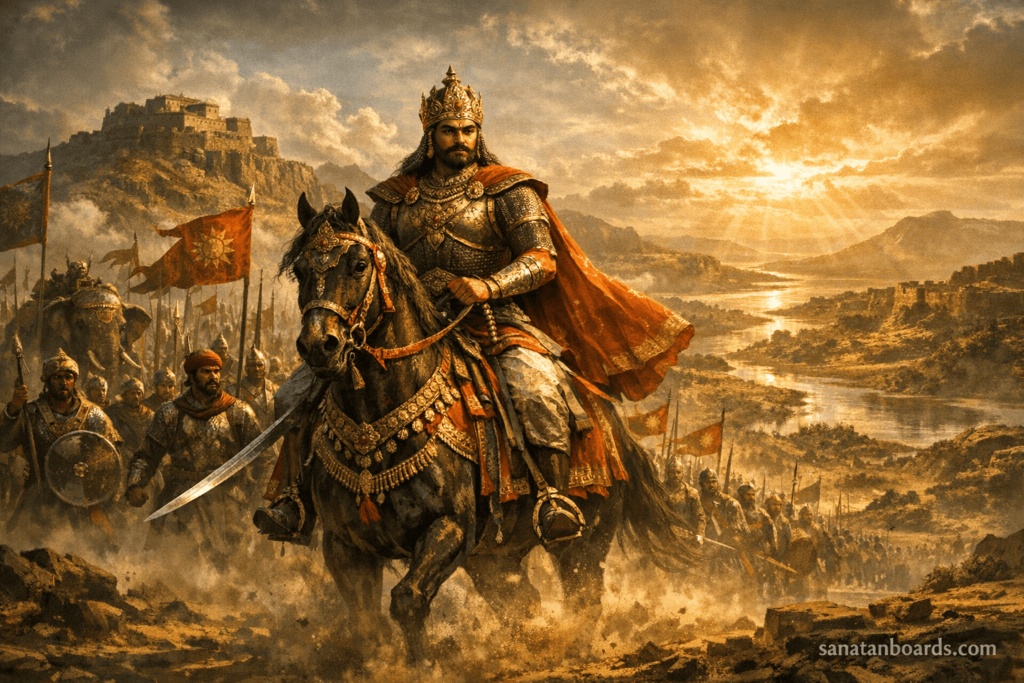
Case Study On Someshvara Ii (Western Chalukya)
Background: Someshvara II, eldest son of Someshvara I, ascended the Western Chalukya throne in 1068 CE, inheriting a kingdom that had recently concluded prolonged conflicts with the Cholas. The empire was extensive, covering parts of Karnataka, Maharashtra, Telangana, and Andhra Pradesh, but internal divisions threatened its stability.
Key Challenge – Dynastic Rivalry: Someshvara II’s reign was dominated by a power struggle with his younger brother Vikramaditya VI, a politically astute and ambitious prince. Vikramaditya gained the support of influential feudatories and nobles, while Someshvara relied on the traditional administrative apparatus inherited from his father. This internal division weakened the empire and made it vulnerable to external threats.
Military Engagements: Soon after assuming power, Someshvara II faced renewed pressure from the Cholas. Virarajendra Chola launched campaigns into Chalukya territories, targeting strategic regions like Vengi and the Krishna-Tungabhadra basin. Someshvara II deployed his forces to defend these regions, but the dual challenge of external invasion and internal betrayal limited his effectiveness. Historical inscriptions suggest that while he achieved some temporary successes, his campaigns failed to secure lasting territorial stability.
Administrative and Cultural Policies: Despite political turbulence, Someshvara II continued the Chalukya tradition of temple building and inscriptions, particularly in Kalyani and surrounding regions. These acts reinforced the dynasty’s legitimacy and cultural identity. He also maintained administrative routines, ensuring that taxes, trade, and justice systems functioned effectively across the empire. Such policies illustrate his commitment to governance even under duress.
Outcome and Lessons: By 1076 CE, Vikramaditya VI successfully deposed Someshvara II, becoming king. This dynastic coup illustrates the importance of political acumen, alliances, and personal ambition in medieval Indian politics. Someshvara II’s case highlights how even capable kings can lose power due to internal dissent and strategic miscalculations. For historians, this period provides insights into the fragility of succession, the role of military strength, and the interplay between culture and politics.
Analysis: The case study of Someshvara II emphasizes several key points:
- Dynastic succession was often precarious, requiring continuous support from nobles.
- Military strategy alone was insufficient without internal political cohesion.
- Cultural and administrative continuity helped legitimize the king, even if it could not prevent deposition.
- Historical understanding of medieval kingdoms relies on examining rulers like Someshvara II, whose reigns were short but pivotal in shaping subsequent developments.
In conclusion, Someshvara II’s reign, though short-lived, was required for contextualizing the rise of Vikramaditya VI, understanding Chalukya-Chola interactions, and analyzing medieval Deccan politics. The case study demonstrates that medieval kingship depended not only on inheritance and military skill but also on political foresight and ability to manage complex relationships with nobles, rivals, and neighboring kingdoms.
White Paper On Someshvara Ii (Western Chalukya)
Introduction
The Western Chalukya dynasty, prominent in the Deccan region from the late 10th to the 12th century CE, played a critical role in shaping medieval South Indian history. Someshvara II, who ruled from 1068–1076 CE, represents a pivotal period in the dynasty’s evolution. His reign, though brief, reflects the challenges of dynastic succession, military conflicts with neighboring kingdoms, and cultural stewardship. This white paper examines his rule in the context of political, administrative, military, and cultural frameworks, providing insights into the governance and historical significance of the Western Chalukyas.
Historical Context
Someshvara II ascended the throne following the death of his father, Someshvara I, inheriting an empire that had been involved in prolonged conflicts with the Cholas of Tamil Nadu. The Chola-Chalukya rivalry, focused on fertile territories like Vengi and the Krishna-Tungabhadra basin, created persistent pressure on the Chalukya administration. Externally, Someshvara II was required to defend these critical regions, while internally, he faced rivalry from his younger brother Vikramaditya VI, who ultimately usurped the throne.
Governance and Administration
During his reign, Someshvara II maintained centralized administrative structures established by his predecessors. Governance involved oversight of taxation, revenue collection, justice, and trade regulation. The king relied on regional feudatories to administer distant territories but remained the central figure for legitimizing authority. Despite internal challenges, he upheld administrative norms, ensuring continuity in governance, which highlights the necessity of strong leadership in medieval Indian polities.
Military Strategies
Someshvara II’s rule was significantly shaped by military engagements. He was required to defend Chalukya borders from Chola incursions and suppress rebellions by local chiefs who supported his brother. Inscriptions indicate that defensive measures included fortifications, troop mobilizations and alliances with loyal feudatories. However, his military efforts were compromised by internal dissension, illustrating how dynastic rivalry can weaken even strategically sound campaigns.
Cultural Contributions
Even under political strain, Someshvara II maintained the Chalukya tradition of temple patronage and literary support, particularly in Kalyani. Temples not only served religious purposes but reinforced royal authority and social cohesion. Such cultural initiatives were essential for legitimizing rule, even amidst familial conflicts and military challenges.
Succession and Legacy
Someshvara II was ultimately deposed by Vikramaditya VI, whose politically savvy maneuvers and military alliances reshaped the Chalukya dynasty. However, the short reign of Someshvara II provides key insights into medieval governance, highlighting the interplay of dynastic rivalry, administrative control, and military strategy. The lessons from his rule continue to inform historical scholarship on succession politics and statecraft in pre-modern India.
Conclusion
This white paper underscores that Someshvara II, though a transitional figure, was critical in understanding the challenges and functions of medieval kingship. #Sanatandharmaaccreditationboardsinmumbai His reign illustrates the multifaceted responsibilities of a ruler: defending the kingdom, managing internal rivalries, sustaining administration, and promoting cultural identity. Studying his tenure offers valuable perspectives on the #Sanatandharmaaccreditationboardsinvasai political and cultural dynamics of the Western Chalukya Empire, forming a bridge between the reigns of Someshvara I and Vikramaditya VI.
Industry Application On Someshvara Ii (Western Chalukya)
Although Someshvara II ruled in the 11th century, his reign provides valuable lessons for multiple modern industries through the principles of leadership, governance, strategic planning, and cultural preservation.
1. Leadership and Management
Someshvara II’s tenure, marked by internal rivalry and external conflict, demonstrates the importance of succession planning, crisis management, and delegation of authority. Modern corporate and organizational leaders can study his reign to understand:
- How leadership legitimacy depends on both formal authority and personal alliances.
- The impact of internal rivalry on organizational stability.
- Strategies to maintain operational continuity under pressure or uncertainty.
These lessons are particularly relevant in industries such as corporate governance, consulting, and executive management training, where historical examples illuminate modern organizational challenges.
2. Strategic Planning and Military Management
The conflicts between the Western Chalukyas and the Cholas offer a case study in strategic resource allocation, risk assessment, and territorial defense planning. Military academies and strategic studies programs can leverage his campaigns to:
- Analyze defensive and offensive strategies in resource-constrained environments.
- Understand long-term planning versus immediate tactical decisions.
- Explore the role of alliances and stakeholder management in achieving strategic objectives.
This has applications in defense strategy, security planning, and risk management sectors today.
3. Cultural Heritage and Tourism
Someshvara II patronized temples, inscriptions, and art, reflecting the dynasty’s cultural identity. Modern applications include:
- Heritage conservation projects, where understanding the historical significance of sites is critical.
- Tourism development, using temples and monuments as educational and cultural attractions.
- Educational programs, incorporating history into community engagement and museum exhibitions.
Industries in archaeology, heritage tourism, and cultural resource management benefit directly from these lessons.
4. Education and Research
His reign provides rich material for historical, political science, and archaeology curricula:
- Case studies in dynastic politics and governance.
- Examples of medieval administrative systems and cultural patronage.
- Insight into interstate conflicts in pre-modern India, useful for comparative political analysis.
Universities, research institutes, and online learning platforms can apply this information for course content, research publications, and workshops.
5. Governance and Policy Analysis
The internal challenges during Someshvara II’s reign highlight how policy and administrative frameworks interact with leadership and political loyalty:
- Studying his reign can inform modern public administration and policy formulation, especially in handling competing stakeholders.
- Lessons in power dynamics and conflict resolution are applicable to both government institutions and corporate boards.
source The Epic Channel
ASK FAQ
Who was Someshvara II of the Western Chalukya dynasty?
Someshvara II was an 11th-century king of the Western Chalukya dynasty, ruling from 1068 to 1076 CE. He inherited the throne after his father, Someshvara I, and faced internal rivalry with his brother Vikramaditya VI and military pressure from the Chola dynasty.
When did Someshvara II rule the Western Chalukyas?
Someshvara II ruled the Western Chalukya Empire from 1068 CE to 1076 CE, a period marked by dynastic rivalry and ongoing conflicts with the Chola Empire.
What were the major achievements of Someshvara II?
Someshvara II maintained the Chalukya administrative system, patronized temples and inscriptions, defended key territories against Chola invasions, and sustained cultural continuity despite internal and external challenges.
Where was the capital of Someshvara II’s reign?
The capital of Someshvara II was Kalyani (modern-day Basavakalyan, Karnataka), from where he managed administration, military campaigns, and cultural patronage across the Western Chalukya territories.
Why is Someshvara II important in Chalukya history?
Someshvara II’s reign is important for understanding dynastic succession, Chalukya-Chola conflicts, and medieval Deccan politics. His short reign set the stage for his brother Vikramaditya VI’s rise and provides insights into leadership, governance, and cultural patronage.
Table of Contents
Disclaimer
The content provided above is intended solely for educational, learning, and knowledge purposes. It is based on historical records, inscriptions, and secondary scholarly sources. The information is not meant for commercial, political, or personal decision-making purposes. While care has been taken to ensure accuracy, interpretations of historical events may vary among scholars, and readers should consult primary sources for authoritative research.