Skandagupta, the last prominent ruler of the Gupta dynasty, is widely recognized for his role in defending and preserving the empire during a period of significant turmoil. The Gupta Empire, often referred to as the “Golden Age of India,” witnessed tremendous advancements in art, culture, science, and governance. However, by the time of Skandagupta’s reign, the empire faced external threats from nomadic invaders and internal instability. Ascending the throne around 455 CE, Skandagupta inherited a kingdom that required both military skill and administrative wisdom to sustain its legacy.
His reign, though relatively short, is notable for the fortification of the empire’s borders and the stabilization of its economy. Skandagupta faced the formidable challenge of repelling the Huna invasions—nomadic tribes from Central Asia who threatened northern India. Through decisive military campaigns, he successfully secured the frontiers and restored confidence among his subjects.
Skandagupta’s administration also focused on maintaining the empire’s cultural heritage. Coins and inscriptions from his reign highlight his emphasis on prosperity and governance, reflecting both political authority and divine sanction. The silver coins issued under his rule depict him as a victorious and just king, underlining the continuity of Gupta authority during a turbulent era.
Despite his efforts, the empire gradually weakened after his death due to persistent external invasions and internal dissent. Skandagupta remains a symbol of resilience and strategic leadership embodying the final phase of Gupta supremacy. His legacy provides crucial insights into the challenges of sustaining empires and the importance of capable leadership during periods of crisis.
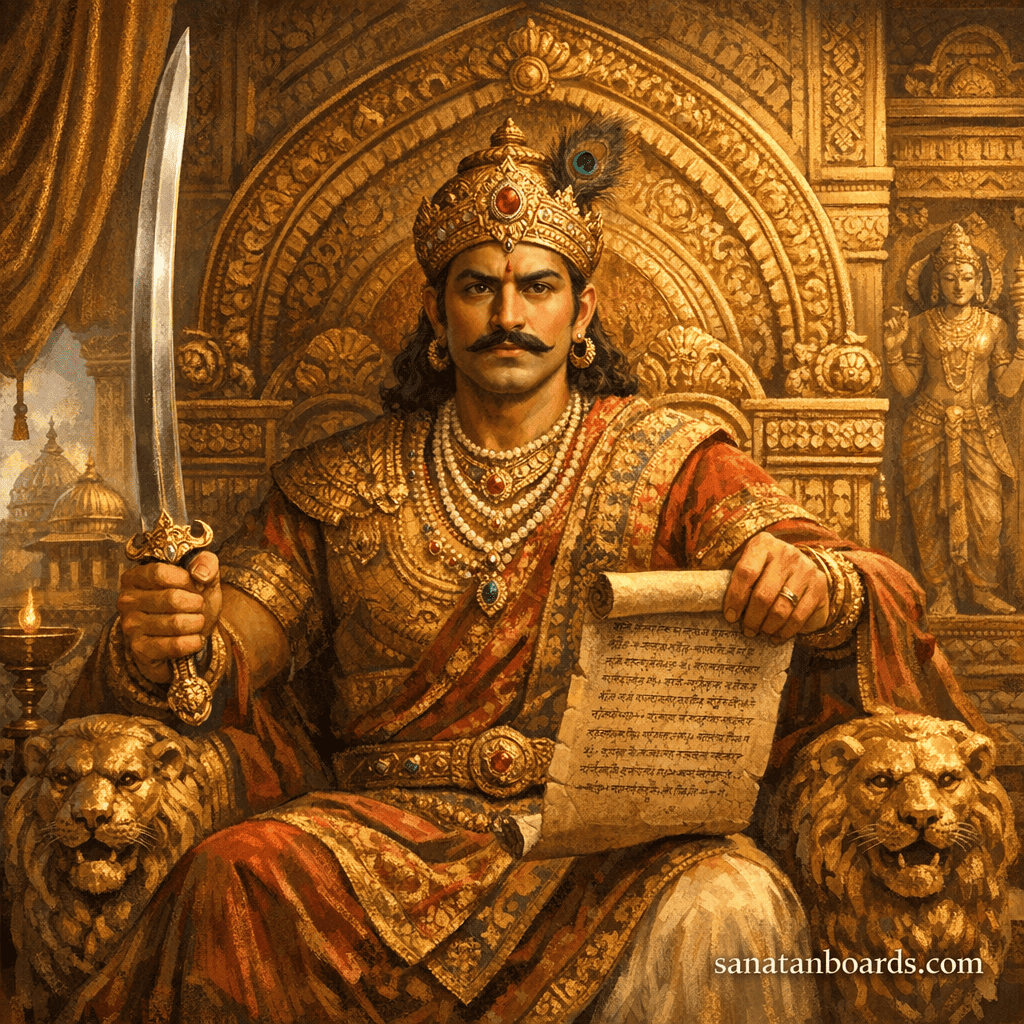
What Is Skandagupta (Last Strong Gupta Ruler) ?
Skandagupta was the last strong ruler of the Gupta dynasty, reigning in the mid-5th century CE. He is primarily remembered for his military prowess and administrative skills that temporarily revived the waning strength of the Gupta Empire. The Gupta Empire itself, which had been established in the early 4th century CE, was known for unprecedented cultural and intellectual achievements, yet by Skandagupta’s time, it faced severe threats from invading forces and internal political strife.
The most significant aspect of Skandagupta’s reign was his successful defense against the Huna invasions. The Hunas, originating from Central Asia, had already caused disruptions in northern India. Skandagupta led campaigns that secured the empire’s borders and restored the morale of his people. Historical sources, including inscriptions and coinage, document his victories and assert his authority.
Apart from military achievements, Skandagupta was also a patron of administrative and economic stability. His reign witnessed careful management of resources, reinforcement of the empire’s revenue system, and issuance of coins symbolizing both prosperity and divine endorsement. The inscriptions from his era often highlight his role as a just and capable monarch.
In addition, Skandagupta’s leadership illustrates the challenges of sustaining a large and diverse empire during times of external threat and internal unrest. Although the Gupta Empire could not fully recover after his rule, his efforts temporarily strengthened its political and military foundations. Skandagupta thus serves as a historical figure who exemplifies strategic governance, resilience, and the defense of a cultural legacy under pressure.
Who Is Required Skandagupta (Last Strong Gupta Ruler)
Skandagupta, as a historical figure, is required in the context of understanding the final phase of the Gupta Empire and the strategies employed to protect and stabilize a declining empire. Scholars, students of history, and enthusiasts of ancient Indian governance study him to grasp how leadership and military strategy influence the fate of empires.
He is also required as a reference point for military historians analyzing the methods used by Indian kings to defend against nomadic invasions. Skandagupta’s campaigns against the Hunas showcase tactical acumen, resource management, and the ability to mobilize a kingdom under duress. These aspects make his reign particularly relevant for understanding pre-medieval Indian warfare.
Administratively, Skandagupta is required as a model of economic foresight. His issuance of coins and inscriptions illustrates the importance of maintaining public confidence during periods of uncertainty. Modern historians use his policies to infer how the Gupta rulers managed taxation, resource allocation, and regional governance.
Culturally, Skandagupta is required to comprehend the endurance of Gupta art, religion, and literature even during political instability. By supporting temples, religious institutions, and public works, he ensured that the cultural achievements of the empire persisted beyond his reign.
Finally, he is required in a broader comparative study of leadership and resilience, showing how decisive action, strategic defense, and economic management can temporarily delay the decline of a major empire, even in the face of overwhelming external threats.
When Skandagupta (Last Strong Gupta Ruler) Is Required ?
The period during which Skandagupta is required historically corresponds to the mid-5th century CE, specifically around 455–467 CE, when he ascended the throne amidst political instability and external invasions. This timeframe is crucial for understanding the late Gupta era, marking a transitional phase from a flourishing empire to one struggling against fragmentation and decline.
Skandagupta is required when studying the Huna invasions of India. These invasions destabilized northern India and threatened the continuity of Gupta authority. By examining the exact period of his reign, historians can pinpoint the military strategies employed, the regions defended, and the societal response to these external pressures. His leadership during this time provides a clear example of how a ruler’s strategic actions can influence the trajectory of an empire.
Additionally, Skandagupta is required to understand the chronological development of the Gupta Empire. By situating his rule in the timeline of Gupta kings, one can see the progression from prosperity under Chandragupta II to the challenges faced in the mid-5th century. This contextualization helps illustrate patterns of administrative strength, succession issues, and military responses within ancient Indian dynasties.
From a cultural perspective, the period of Skandagupta’s reign is required to study the endurance of Gupta art, coinage, and inscriptions. These artifacts not only provide insight into his military victories but also into the economic stability and administrative sophistication maintained during his reign. The dates and events associated with Skandagupta’s rule allow scholars to track the evolution of Gupta society during a time of pressure.
Moreover, he is required when analyzing the decline of classical Indian empires and the factors contributing to political instability. His reign represents a crucial historical juncture where strong leadership delayed but could not prevent the eventual collapse of the Gupta Empire. By understanding the timing of his interventions, researchers gain perspective on the challenges of succession, governance, and defense in historical empires.
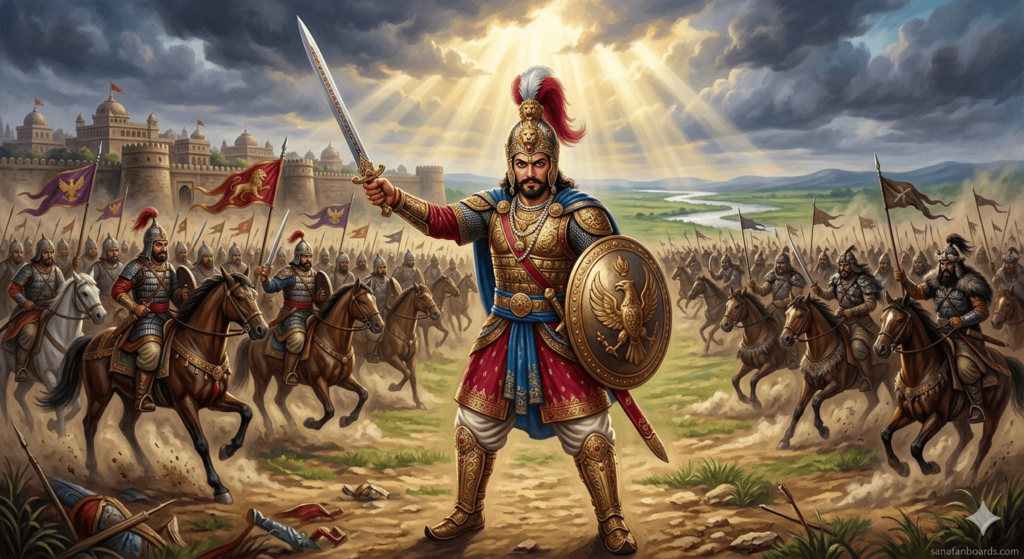
Where Skandagupta (Last Strong Gupta Ruler) Is Required ?
Skandagupta’s influence was predominantly concentrated in northern and central India, which formed the heartland of the Gupta Empire. The territories under his control included the Ganges plains, parts of modern-day Uttar Pradesh, Bihar, Madhya Pradesh, and Rajasthan. These regions were strategically significant, both economically and militarily, serving as centers of agriculture, trade, and urban development. Control over these areas was critical for maintaining the wealth and stability of the empire.
Skandagupta is required particularly along the northwestern frontiers, where the Huna invasions posed the most immediate threat. The Hunas, originating from Central Asia, attempted to penetrate the fertile plains of northern India, targeting key trade routes and urban centers. Skandagupta’s campaigns were therefore focused on regions corresponding to present-day Punjab, Haryana, and western Uttar Pradesh. Successfully defending these territories helped safeguard the broader empire from being fragmented by external incursions.
He is also required in the context of the imperial capitals and administrative hubs of the Gupta dynasty, such as Pataliputra (modern Patna) and Ujjain. These cities were not only centers of governance but also hubs for art, culture, and religion. Maintaining control over these areas ensured the continuity of Gupta administration and reinforced the legitimacy of his rule.
Beyond military and administrative concerns, Skandagupta is required in regions associated with economic activity. The fertile Gangetic plains provided agricultural surplus, which funded his armies and administrative apparatus. Coinage found in these regions attests to the prosperity maintained under his reign, even during periods of external threat.
Religious and cultural centers, including Buddhist and Hindu temples across northern India, were also under his supervision. Skandagupta’s patronage ensured that these centers continued to flourish, illustrating that his influence extended beyond politics and warfare into culture and societal stability.
How Skandagupta (Last Strong Gupta Ruler) Is Required ?
Skandagupta is required through a combination of military strategy, administrative governance, and cultural stewardship. His methods demonstrate how a ruler can effectively consolidate power, defend a kingdom, and maintain societal stability in the face of external threats.
First, militarily, Skandagupta is required through his campaigns against the Huna invaders. He mobilized forces across northern India, utilizing both infantry and cavalry strategically to defend key regions. Inscriptions and coinage from his reign celebrate these victories, showing that his military approach involved careful planning, coordination, and timely response to threats. By repelling invasions, he preserved the territorial integrity of the Gupta Empire during a critical period.
Second, he is required administratively. Skandagupta strengthened the revenue system, ensuring that taxation supported the needs of the state without causing widespread dissent. He also maintained law and order across urban and rural areas, using local administrators to implement policies effectively. The issuance of coins symbolized not only wealth but also centralized authority, reinforcing his role as a just and competent ruler.
Third, culturally, Skandagupta is required as a patron of the arts, religion, and architecture. Temples, religious institutions, and public works flourished under his reign. His governance ensured that despite military pressures, the cultural and intellectual achievements of the Gupta era continued, maintaining the empire’s identity and legacy.
He is also required in a broader context of leadership and crisis management. Skandagupta’s approach demonstrates how resilience, foresight, and decisive action can temporarily stabilize a declining empire. His strategies offer lessons in balancing immediate military needs with long-term administrative and cultural priorities.
Finally, he is required as a symbolic figure of Gupta authority. Through inscriptions, coins, and historical records, Skandagupta exemplifies the qualities expected of a ruler during times of adversity: courage, wisdom, and dedication to the welfare of the state. How he exercised his authority offers insights into the governance models of ancient India and the challenges faced by empires under external and internal pressures.
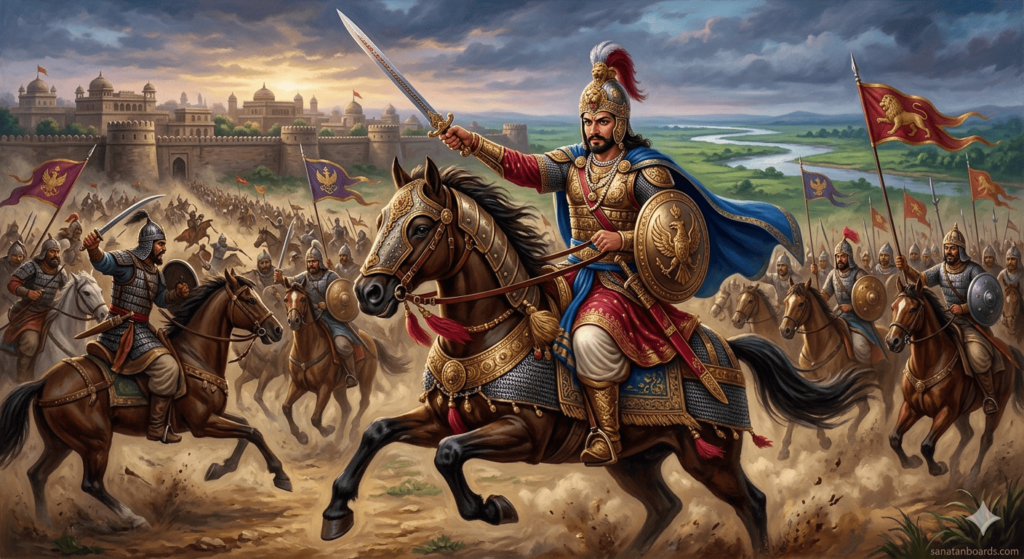
Case Study On Skandagupta (Last Strong Gupta Ruler)
Background:
Skandagupta ascended the Gupta throne around 455 CE at a time when the empire faced serious external threats and internal uncertainty. The Hunas, a nomadic tribe from Central Asia, were advancing into northern India, exploiting the weakening state of regional powers. Internally, the Gupta administration faced challenges of succession disputes and maintaining cohesion among provincial governors.
Military Strategy:
A major focus of Skandagupta’s reign was military defense. Historical inscriptions, such as the Allahabad Prashasti, highlight his victories over invading forces, portraying him as a strong and capable warrior king. The campaigns against the Hunas required strategic planning, including the deployment of troops to critical frontier regions, fortification of key cities, and the use of mobile cavalry units to counter fast-moving invaders. His ability to maintain morale among troops and civilians was vital for sustaining prolonged resistance.
Administrative Measures:
Skandagupta strengthened the financial and bureaucratic machinery of the empire. By ensuring efficient tax collection, he was able to fund his military campaigns without causing economic distress among the population. Coinage from his reign, including silver and gold issues, indicates a stable economy and serves as evidence of centralized administrative control. Local governors were supervised to prevent corruption and maintain loyalty, ensuring that regions far from the capital remained integrated into the empire.
Cultural Stewardship:
Even amid military and administrative challenges, Skandagupta supported religious and cultural institutions. Temples, religious endowments, and public works continued under his oversight. This balance between defense and culture helped preserve the Gupta identity and maintained public confidence in his rule. The inscriptions of his reign often link military victories with divine favor, reinforcing his legitimacy as a ruler.
Impact and Legacy:
The case study of Skandagupta reveals how strong leadership can temporarily stabilize a declining empire. Although the Gupta Empire eventually weakened after his death, his reign delayed its fragmentation and maintained political cohesion. He is remembered for courage, strategic foresight, and the ability to integrate military, administrative, and cultural responsibilities effectively.
Lessons Learned:
- Crisis Management: Skandagupta’s reign demonstrates the importance of decisive leadership during periods of instability.
- Integration of Military and Administration: Maintaining a strong army while ensuring economic stability is crucial for sustaining empires.
- Cultural Preservation: Supporting cultural and religious institutions reinforces legitimacy and public loyalty.
- Strategic Defense: Focused defense of critical regions can protect broader territorial integrity.
Conclusion:
Skandagupta represents the last phase of strong Gupta rule, embodying resilience and strategic leadership. His reign serves as a model for understanding how empires confront external invasions and internal instability while attempting to preserve cultural and administrative continuity. The case study underscores the multidimensional nature of leadership required to navigate complex challenges successfully.
White Paper On Skandagupta (Last Strong Gupta Ruler)
Executive Summary:
Skandagupta, reigning circa 455–467 CE, was the last strong ruler of the Gupta dynasty, a period often referred to as the Golden Age of India. His reign is a critical study in leadership, resilience, and strategic governance during a time of external threats and internal pressures. This white paper analyzes Skandagupta’s military, administrative, and cultural strategies, evaluates the outcomes of his reign, and explores lessons applicable to historical and modern leadership contexts.
Introduction:
The Gupta Empire had flourished for over a century, achieving remarkable advancements in art, literature, science, and governance. However, by the mid-5th century CE, the empire faced the dual challenges of nomadic invasions by the Hunas and internal political instability. Ascending the throne during such turbulent times, Skandagupta’s leadership was tested on multiple fronts.
Military Strategy and Defense:
Skandagupta is historically recognized for his defense of the empire against Huna invasions. Using strategic troop deployment, fortified urban centers, and a combination of infantry and cavalry units, he successfully repelled invaders from northern India. The Allahabad inscription highlights his bravery and portrays him as divinely sanctioned to protect the realm. Military success under Skandagupta temporarily restored stability, demonstrating the critical role of decisive defense in sustaining an empire.
Administrative and Economic Governance:
Beyond military achievements, Skandagupta strengthened the administrative framework of the empire. Efficient tax collection and resource management enabled him to fund military campaigns without destabilizing the economy. Coinage from his reign—both gold and silver—symbolizes economic stability and central authority. Provincial governors were monitored to maintain loyalty and administrative efficiency, ensuring governance across distant territories remained cohesive.
Cultural and Religious Patronage:
Even during times of military threat, Skandagupta maintained support for cultural and religious institutions. Temples, public works, and inscriptions flourished under his supervision. By linking victories and governance to divine favor, he reinforced his legitimacy and strengthened societal cohesion. These actions preserved the Gupta cultural legacy, emphasizing that strong leadership balances immediate defense with long-term cultural stewardship.
Outcomes and Legacy:
Skandagupta’s reign successfully delayed the decline of the Gupta Empire. Although the empire eventually weakened after his death, his leadership stabilized political structures, defended borders, and maintained economic and cultural integrity. His reign demonstrates the multidimensional requirements of leadership during periods of crisis. Historical evidence, including inscriptions and coinage, confirms his reputation as a capable and resilient ruler.
Lessons and Applications:
- Integrated Leadership: Combining military strategy, administrative governance, and cultural support is vital for maintaining stability.
- Crisis Preparedness: Proactive defense against external threats safeguards the long-term survival of an organization or state.
- Economic Sustainability: Resource management ensures the ability to respond effectively to challenges without compromising stability.
- Cultural Continuity: Supporting cultural and religious institutions reinforces public confidence and legitimizes authority.
Conclusion:
The study of Skandagupta highlights the enduring relevance of leadership, strategic foresight, and resilience. His reign offers insights into managing complex challenges while balancing immediate threats with long-term governance goals. #Sanatandharmaaccreditationboardsinvasai Skandagupta remains an exemplary figure in Indian history, representing the final strong phase of the Gupta Empire and a model for leaders navigating times of uncertainty.
Industry Application On Skandagupta (Last Strong Gupta Ruler)
Though Skandagupta lived over 1,500 years ago, his leadership principles hold relevance for modern industries, especially in areas requiring strategic planning, crisis management, and resource optimization. His approach provides lessons for organizational leadership, risk mitigation, and operational efficiency.
1. Crisis Management:
Industries facing market volatility, competition, or external disruptions can learn from Skandagupta’s defense strategies. Just as he mobilized troops and resources to counter threats, modern businesses can prepare contingency plans, allocate resources efficiently, and respond decisively to challenges.
2. Strategic Resource Allocation:
Skandagupta ensured financial stability while funding military campaigns. Similarly, industries must balance investment in growth with operational costs. Efficient budgeting, prioritization of critical projects, and sustaining core functions during crises reflect his economic foresight.
3. Leadership and Team Coordination:
Coordinating provincial governors and armies across a vast empire parallels managing large teams in corporate environments. Skandagupta’s ability to inspire loyalty, delegate authority, and monitor performance offers insights for effective leadership in complex organizations.
4. Cultural and Brand Stewardship:
Just as Skandagupta preserved Gupta culture during turbulent times, industries must maintain brand identity and organizational culture amidst change. Supporting core values, employee engagement, and public reputation ensures resilience and long-term relevance.
5. Risk Assessment and Strategic Planning:
Skandagupta’s anticipation of Huna invasions underscores the importance of foresight. Industries benefit from predictive analytics, scenario planning, and strategic risk assessment to safeguard assets and sustain growth.
Conclusion:
The principles exemplified by Skandagupta—strategic defense, resource management, cultural stewardship, and resilient leadership—are directly #Sanatandharmaaccreditationboardsinmumbai applicable to modern industries. By studying historical models of governance and crisis management, organizations can adopt strategies that promote stability, sustainability, and long-term success, even in uncertain and competitive environments.
source : The Epic Channel
ASK FAQ
Who was Skandagupta, the last strong Gupta ruler?
Skandagupta was the last significant ruler of the Gupta dynasty (455–467 CE), known for defending the empire against Huna invasions and maintaining economic and cultural stability.
What were the major achievements of Skandagupta?
His major achievements include repelling Huna invasions, strengthening the empire’s economy, issuing silver and gold coins, and supporting art, culture, and religious institutions.
When did Skandagupta rule the Gupta Empire?
Skandagupta ruled approximately between 455 CE and 467 CE during the late Gupta period, a time marked by external invasions and internal political challenges.
How did Skandagupta defend the Gupta Empire?
He defended the empire by strategically deploying troops, fortifying key cities, and leading military campaigns against the Hunas, ensuring the survival of the empire during his reign.
Why is Skandagupta considered important in Indian history?
Skandagupta is important because he represents the last strong phase of the Gupta Empire, demonstrating resilience, strategic leadership, and the preservation of culture and administration in times of crisis.
Table of Contents
Disclaimer:
The information provided above is for general knowledge, research, and writing purposes. Historical interpretations are based on available archaeological and textual evidence, and some details may vary according to scholarly sources. This content should not be considered as professional advice or authoritative historical record.