The history of the Sikh Empire is deeply intertwined with the legacy of spiritual leadership, social transformation, and political strength. At its core stand two towering figures: Guru Gobind Singh and Maharaja Ranjit Singh. Their contributions not only shaped the Sikh community but also played a crucial role in fostering unity between Hindus and Sikhs during a period of intense socio-political challenges in the Indian subcontinent.
Guru Gobind Singh, the tenth Guru of Sikhism, established the Khalsa in 1699, a collective identity that emphasized courage, equality, and justice. His teachings transcended religious divisions and encouraged solidarity among people, particularly between Hindus and Sikhs, against oppression. His philosophy was rooted in the defense of righteousness and the protection of religious freedom for all communities.
Maharaja Ranjit Singh, inspired by the values of the Sikh Gurus, built a powerful and inclusive empire in the early 19th century. His शासन was marked by secular governance, where people of different religions including Hindus, Muslims, and Sikhs, held key administrative and military positions. This inclusive approach strengthened the foundation of unity and mutual respect across communities.
The Sikh Empire thus became more than just a political entity; it represented a vision of harmony, justice, and shared identity. The collaboration and coexistence of Hindus and Sikhs during this period reflected a broader cultural synthesis that resisted fragmentation.
Understanding this historical framework offers valuable insights into leadership, unity, and governance. The legacy of Guru Gobind Singh and Maharaja Ranjit Singh continues to inspire discussions on social cohesion, religious tolerance, and nation-building in contemporary times.
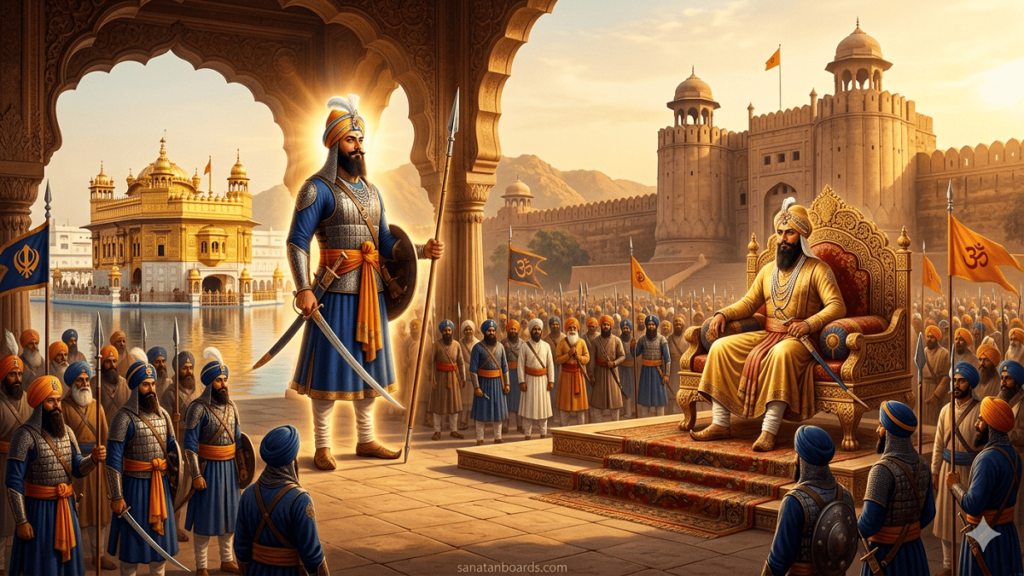
What Is Sikh Empire – Guru Gobind Singh (Hindu-Sikh Unity), Maharaja Ranjit Singh ?
The Sikh Empire refers to a powerful political state established in the early 19th century in the northwestern region of the Indian subcontinent under the leadership of Maharaja Ranjit Singh. However, its ideological and spiritual foundation was laid much earlier by Guru Gobind Singh, whose teachings emphasized unity, equality, and resistance against injustice.
Guru Gobind Singh’s creation of the Khalsa was a transformative step that redefined identity beyond caste and religious divisions. It unified people under a shared purpose of defending truth and protecting human dignity. This framework naturally encouraged cooperation between Hindus and Sikhs, as many followers of the Guru came from diverse backgrounds and were bound by common ethical values rather than rigid religious boundaries.
Maharaja Ranjit Singh translated these principles into governance. His empire was characterized by secular administration, where merit was valued over religious identity. Hindu officials served in high-ranking positions, Muslim generals led armies, and Sikh leaders guided policy—all working together under a unified political structure.
The Sikh Empire thus symbolizes a blend of spiritual philosophy and practical governance. It was not solely a religious state but a model of inclusive leadership inspired by ethical teachings. The concept of Hindu-Sikh unity within this context highlights the shared cultural and historical roots that connected the two communities.
Who Is Required Sikh Empire – Guru Gobind Singh (Hindu-Sikh Unity), Maharaja Ranjit Singh ?
The principles of Sikh Empire and Hindu-Sikh unity are required by a wide range of individuals, leaders, and communities who seek harmony, justice, and inclusive development. The teachings of Guru Gobind Singh and the governance model of Maharaja Ranjit Singh are not limited to a specific group but are relevant to anyone striving for collective progress.
Firstly, political leaders and administrators require these principles to build stable and inclusive systems. The example set by Maharaja Ranjit Singh shows how governance can succeed when it represents all communities equally. Leaders who adopt such an approach can foster trust and unity among diverse populations.
Secondly, social reformers and community leaders benefit from these ideas. Guru Gobind Singh’s emphasis on equality and justice provides a strong foundation for addressing social inequalities and promoting unity. These values help in creating communities that are resilient and cooperative.
Thirdly, educators and students require these principles to understand the importance of diversity and shared identity. Learning about the Sikh Empire and Hindu-Sikh unity encourages critical thinking about history, culture, and social harmony.
Additionally, organizations and institutions can apply these concepts to improve collaboration and inclusivity. By embracing diversity and fairness, they can create environments where individuals from different backgrounds work together effectively.
Finally, ordinary citizens also require these principles in their daily lives. Mutual respect, cooperation, and a sense of shared responsibility contribute to a peaceful and progressive society.
When Sikh Empire – Guru Gobind Singh (Hindu-Sikh Unity), Maharaja Ranjit Singh Is Required ?
The principles represented by Guru Gobind Singh and Maharaja Ranjit Singh become especially relevant during times of social division, political instability, and cultural conflict. Historically, these ideas emerged during a period when communities faced external threats and internal fragmentation. The need for unity was not optional but essential for survival and progress.
Such unity is required when societies experience religious polarization. Guru Gobind Singh’s teachings emphasized that righteousness and justice are universal values, not confined to a single religion. In times when divisions threaten peace, his message encourages collaboration and mutual respect between different communities.
Similarly, during periods of weak or fragmented governance, the model of Maharaja Ranjit Singh becomes highly relevant. His ability to bring together diverse communities under a stable and inclusive administration highlights the importance of equality and representation. When governments fail to address the needs of all people, the principles of fairness and merit-based leadership become essential.
This concept is also required in times of external threats or challenges. The Sikh Empire demonstrated that unity strengthens resilience and defense. A divided society is more vulnerable, whereas a united one can respond effectively to difficulties and uncertainties.
In modern contexts, these principles are needed during social unrest, communal tensions, and identity-based conflicts. The emphasis on shared values rather than differences helps build trust, cooperation, and long-term peace. It encourages people to focus on common goals instead of divisions.
Additionally, the idea is relevant in multicultural societies where diversity is a defining feature. The Sikh Empire’s approach shows how different communities can coexist peacefully while maintaining their unique identities.
Thus, the relevance of Sikh Empire and Hindu-Sikh unity arises whenever there is a need to restore balance, strengthen cooperation, and promote inclusive growth in society.
Where Sikh Empire – Guru Gobind Singh (Hindu-Sikh Unity) Maharaja Ranjit Singh Is Required ?
The principles of Sikh Empire and Hindu-Sikh unity are applicable in various contexts where diversity and coexistence are central. These include multicultural societies, democratic nations, and regions experiencing social or religious tensions.
They are particularly relevant in areas with diverse populations, where maintaining harmony requires mutual respect and understanding. Educational institutions, governance systems, and community organizations can benefit from these principles by promoting inclusivity and collaboration.
In regions facing conflict or division, the emphasis on unity and shared values can help rebuild trust and stability. Similarly, in global contexts where cultural interactions are increasing, these ideas provide a framework for peaceful coexistence.
How Sikh Empire – Guru Gobind Singh (Hindu-Sikh Unity), Maharaja Ranjit Singh Is Required ?
The implementation of Sikh Empire principles and Hindu-Sikh unity involves adopting inclusive practices, ethical leadership, and a commitment to equality. The teachings of Guru Gobind Singh provide a moral foundation that emphasizes courage, justice, and selflessness, while the governance of Maharaja Ranjit Singh demonstrates how these values can be applied in practical administration.
One key aspect is the promotion of equality. The Khalsa rejected caste distinctions and encouraged a shared identity based on values rather than birth. Applying this principle today means ensuring equal opportunities for all individuals, regardless of their background.
Another important aspect is inclusive governance. Maharaja Ranjit Singh’s administration included people from different religious communities, creating a balanced and effective system. Modern institutions can adopt similar approaches by encouraging diversity in leadership and decision-making roles.
The concept also requires fostering mutual respect. Dialogue, cultural exchange, and education can help bridge differences and build understanding between communities. This aligns with the broader vision of unity promoted by Guru Gobind Singh.
Additionally, the emphasis on justice and protection of rights is crucial. Both leaders highlighted the importance of standing against injustice and defending the oppressed. Implementing this principle involves strengthening legal systems and promoting accountability.
Finally, community participation plays a vital role. The success of the Sikh Empire was not only due to leadership but also the active involvement of people. Encouraging civic engagement and collective responsibility can help build stronger and more unified societies.
Thus, the practical application of these principles involves a combination of ethical values, inclusive policies, and active participation across all levels of society.
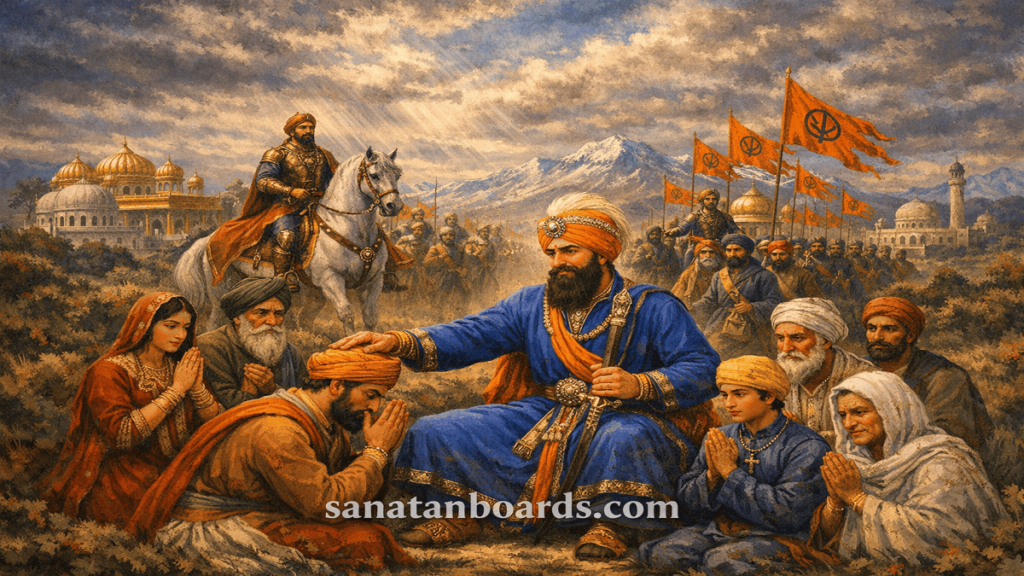
Case Study On Sikh Empire – Guru Gobind Singh (Hindu-Sikh Unity), Maharaja Ranjit Singh
A detailed case study of the Sikh Empire highlights how the principles of unity and inclusive governance were successfully implemented under Maharaja Ranjit Singh, inspired by the teachings of Guru Gobind Singh. The empire, which emerged in the early 19th century, covered a significant portion of the Punjab region and became one of the most stable and prosperous states of its time.
One of the defining features of the Sikh Empire was its commitment to religious inclusivity. Unlike many contemporary regimes, Maharaja Ranjit Singh ensured that people of all religions were treated with respect and fairness. Hindu temples, Sikh gurdwaras, and Muslim mosques were protected and supported by the state. This approach created an environment of trust and cooperation, which was essential for maintaining stability in a diverse society.
The administrative structure of the empire reflected this inclusivity. Key positions in the government were held by individuals from different religious backgrounds. Hindu officials played important roles in financial administration, Muslim leaders served as military commanders, and Sikh nobles contributed to policy-making. This diversity ensured that governance was balanced and representative of the population.
The military organization of the Sikh Empire was another example of unity in action. Soldiers from various communities served together, creating a strong and cohesive force. Their shared commitment to the state and its values strengthened their effectiveness and loyalty. This unity was particularly important in defending the empire against external threats and maintaining its sovereignty.
Economic prosperity was also a hallmark of the Sikh Empire. The administration implemented policies that encouraged agriculture, trade, and industry. Fair taxation and efficient resource management contributed to economic stability and growth. The benefits of this prosperity were shared across different communities, further reinforcing social harmony.
Leadership played a crucial role in the success of the empire. Maharaja Ranjit Singh was known for his practical wisdom, tolerance, and ability to bring people together. He respected the teachings of Guru Gobind Singh and incorporated those values into his शासन. His leadership style emphasized fairness, consultation, and adaptability, which helped maintain unity and stability.
Another important aspect was cultural integration. The Sikh Empire promoted a shared cultural identity while respecting diversity. Festivals, traditions, and social practices from different communities were celebrated, creating a sense of belonging among the people.
This case study demonstrates that the #sikhempireofmaharajaranjitsingh principles of Sikh Empire and Hindu-Sikh unity were not just ideals but were effectively implemented in governance, society, and culture. The success of the empire provides valuable #sikhempireofdelhi lessons for modern societies on how to manage diversity, promote unity, and achieve sustainable development.
White Paper On Sikh Empire – Guru Gobind Singh (Hindu-Sikh Unity), Maharaja Ranjit Singh
The Sikh Empire represents a significant historical model that combines ethical leadership with practical governance. This white paper analyzes its structure, guiding principles, and relevance in contemporary contexts, with a focus on the contributions of Guru Gobind Singh and Maharaja Ranjit Singh.
At its foundation, the Sikh Empire was built on the principles of equality, justice, and inclusivity. Guru Gobind Singh’s teachings emphasized the importance of moral responsibility, courage, and unity. These values were institutionalized during the reign of Maharaja Ranjit Singh, who translated them into effective governance practices.
The administrative system of the empire was both centralized and flexible. While the Maharaja held ultimate authority, local governance structures were empowered to manage regional affairs. This balance allowed for efficient decision-making and responsiveness to local needs. It also ensured that governance remained inclusive and representative.
The military framework of the Sikh Empire was disciplined and diverse. Soldiers from various religious and social backgrounds served together, united by a common purpose. This inclusivity strengthened the military and contributed to the overall stability of the state.
Economic management was another key strength. The empire promoted agriculture, trade, and craftsmanship, creating a stable and prosperous economy. Policies were designed to ensure fairness and reduce disparities, benefiting all sections of society.
Religious tolerance was a defining characteristic of the Sikh Empire. The state did not favor any single religion but instead supported all communities equally. This approach reduced conflict and fostered mutual respect among different groups.
In modern times, the principles of the Sikh Empire can be applied to address challenges such as social division, inequality, and governance issues. The emphasis on inclusivity and ethical leadership provides a framework for building resilient and harmonious societies.
This white paper highlights that the #sikhempireofpunjab success of the Sikh Empire was not accidental but the result of deliberate policies and values. By studying this model, contemporary leaders and institutions can gain insights into effective governance #sikhempireofgurugobindsingh and social cohesion.
Industry Application On Sikh Empire – Guru Gobind Singh (Hindu-Sikh Unity), Maharaja Ranjit Singh
The principles derived from the Sikh Empire, shaped by the teachings of Guru Gobind Singh and the governance of Maharaja Ranjit Singh, hold significant relevance across modern industries. These principles—centered on unity, inclusivity, ethical leadership, and merit-based systems—can be effectively applied to enhance organizational performance, social responsibility, and sustainable growth.
In the corporate sector, one of the most critical applications is the promotion of inclusivity and diversity. Maharaja Ranjit Singh’s administration demonstrated that when individuals from different backgrounds are given equal opportunities, the organization becomes stronger and more innovative. Modern companies can adopt this approach by building diverse teams, ensuring fair hiring practices, and creating inclusive work environments. Such diversity fosters creativity, improves problem-solving, and leads to better decision-making.
Leadership is another area where these principles are highly applicable. Guru Gobind Singh emphasized courage, integrity, and selfless service, while Maharaja Ranjit Singh practiced practical and inclusive leadership. In today’s industries, leaders who embody these values can inspire trust, motivate employees, and drive long-term success. Ethical leadership ensures that decisions are made not only for profit but also for the well-being of stakeholders and society.
In the field of human resource management, the concept of merit-based recognition is crucial. The Sikh Empire valued individuals based on their abilities rather than their background. Similarly, organizations today can benefit from performance-based evaluation systems that reward talent and hard work. This approach increases employee satisfaction and encourages a culture of excellence.
The education industry also benefits significantly from these principles. By promoting equality, respect, and collaboration, educational institutions can create environments where students from diverse backgrounds feel valued and supported. The teachings of Guru Gobind Singh encourage critical thinking and moral responsibility, which are essential for developing well-rounded individuals. Incorporating these values into educational frameworks can help prepare students for global challenges.
In governance and public administration, the model of the Sikh Empire provides a blueprint for inclusive and effective policy-making. Governments can adopt policies that ensure representation of all communities, promote transparency, and uphold justice. This approach builds public trust and enhances the legitimacy of institutions. The emphasis on unity and cooperation helps in addressing complex social issues such as inequality and conflict.
The healthcare industry can also apply these principles by focusing on equitable access to services and compassionate care. Just as the Sikh Empire emphasized the welfare of all communities, modern healthcare systems can strive to provide quality care without discrimination. Inclusivity in healthcare ensures better outcomes and strengthens public health systems.
In the field of entrepreneurship, the values of resilience, courage, and innovation are particularly relevant. Guru Gobind Singh’s emphasis on standing against challenges and Maharaja Ranjit Singh’s ability to build a powerful empire from fragmented territories reflect the importance of determination and vision. Entrepreneurs can draw inspiration from these qualities to navigate uncertainties and build successful ventures.
The social development sector benefits from the emphasis on unity and collective responsibility. Non-governmental organizations and community groups can use these principles to foster cooperation and address issues such as poverty, education, and social inequality. By promoting a sense of shared purpose, they can create lasting impact and sustainable change.
In global business environments, where cultural diversity is a defining feature, the concept of Hindu-Sikh unity offers valuable insights into managing cross-cultural interactions. Organizations that respect cultural differences while promoting shared values are more likely to succeed in international markets. This approach enhances collaboration and reduces conflicts in multicultural teams.
Technology and innovation sectors can also adopt these principles by encouraging collaborative efforts and knowledge sharing. Just as the Sikh Empire thrived on unity and cooperation, modern tech industries can benefit from open communication and teamwork. Inclusive innovation leads to solutions that address the needs of diverse populations.
Another important application is in conflict resolution and organizational management. The emphasis on justice, fairness, and dialogue helps in resolving disputes effectively. Organizations that prioritize these values can maintain a positive work environment and reduce internal conflicts.
Sustainability and corporate social responsibility are also aligned with these principles. Ethical leadership and a focus on collective well-being encourage organizations to adopt sustainable practices and contribute to society. This not only enhances their reputation but also ensures long-term success.
Furthermore, the concept of shared identity and mutual respect can strengthen organizational culture. When employees feel connected to a common purpose, they are more engaged and committed. This sense of belonging improves productivity and reduces turnover.
In conclusion, the principles of the Sikh Empire, guided by Guru Gobind Singh and implemented by Maharaja Ranjit Singh, offer a comprehensive framework for #sanatandharmaaccreditationboardsinpunjab modern industries. Their emphasis on inclusivity, ethical leadership, merit-based systems, and unity provides valuable lessons for organizations seeking growth and sustainability. By integrating these #sanatandharmaaccreditationboardsinmumbai values into their operations, industries can achieve not only economic success but also social harmony and long-term stability.
SOURCE : Kings and Generals
ASK FAQ
Who founded the Sikh Empire?
The Sikh Empire was founded by Maharaja Ranjit Singh in the early 19th century, uniting various regions under a strong and inclusive शासन.
What role did Guru Gobind Singh play in Sikh history?
Guru Gobind Singh established the Khalsa in 1699, promoting equality, courage, and unity among people beyond religious divisions.
How did the Sikh Empire promote Hindu-Sikh unity?
The Sikh Empire encouraged inclusivity by allowing Hindus, Sikhs, and Muslims to work together in governance, military, and society with mutual respect.
Why is Maharaja Ranjit Singh known as a secular ruler?
He is considered secular because he treated all religions equally and appointed people from different communities to important positions.
What is the significance of the Khalsa in unity?
The Khalsa created by Guru Gobind Singh unified people under shared values of justice, equality, and collective responsibility.
Table of Contents
Disclaimer
This content is created solely for educational, informational, and knowledge-sharing purposes. It is based on historical records and widely accepted interpretations related to Guru Gobind Singh and Maharaja Ranjit Singh. The aim is to provide a general understanding of the Sikh Empire and the concept of Hindu-Sikh unity without promoting, criticizing, or favoring any religion, community, or ideology. While efforts have been made to ensure accuracy, some details may vary based on different sources and perspectives. Readers are encouraged to conduct further research and refer to credible sources for deeper understanding and verification.