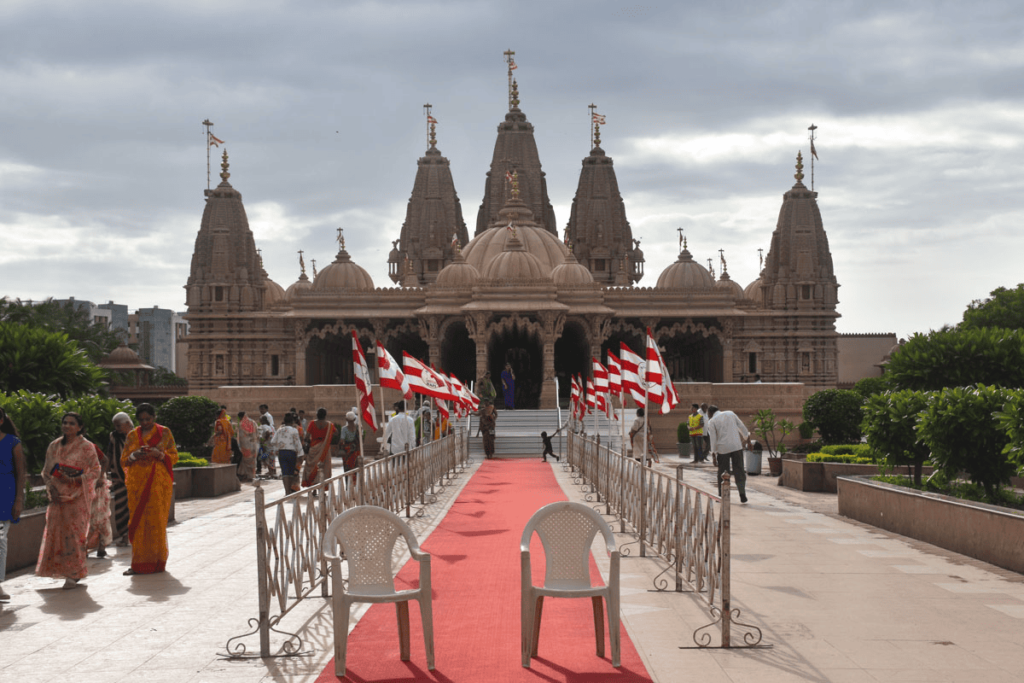
Sanatan Dharma Tourism
A Sacred Journey Through India’s Eternal Spirit
Introduction: The Rise of the Spiritual Seeker
In an era defined by digital overload and a fast-paced materialistic world, a quiet but profound revolution is taking place in the travel landscape. Travelers are no longer content with being mere spectators; they seek transformation. They are moving beyond the superficiality of “sun, sand, and sea” to delve into the profound, the eternal, and the divine. This shift has given rise to the phenomenon of Sanatan Dharma Tourism—a pilgrimage-based travel trend that invites individuals to explore the spiritual heart of India .
Sanatan Dharma, often referred to as the “eternal way of life,” is one of the world’s oldest spiritual traditions. It is not merely a religion but a complex tapestry of philosophies, rituals, yogic practices, and a deep reverence for the sacred that permeates every aspect of existence. Sanatan Dharma Tourism, therefore, is an immersive experience. It is a journey to the land of the Vedas, the Ganges, the Himalayas, and countless temples that have stood as sentinels of faith for millennia.
It is a quest for moksha (liberation), a search for inner peace, and a deep dive into a culture where the divine is a living, breathing reality. This article embarks on an extensive exploration of this sacred geography, tracing its roots in mythology, its contemporary resurgence, and its profound impact on the soul of the traveler and the economy of the nation.
The Sacred Geography of Sanatan Dharma
The landscape of the Indian subcontinent is dotted with tirthas—”crossing places” or fords where the devout can cross from the mundane world to the spiritual realm. These sites are not arbitrary; they are deeply embedded in the Puranas, the Itihasas (Ramayana and Mahabharata), and local folklore, forming a divine map that has guided pilgrims for centuries.
The Four Dhams: Anchors of the Eternal Way
At the pinnacle of the Sanatan pilgrimage circuit are the Char Dham (Four Abodes). Traditionally, this circuit involves a challenging journey to the four corners of India, representing the geographical and spiritual completeness of the faith. Conceived by the great philosopher Adi Shankaracharya in the 8th century, these four sites are:
- Badrinath (Uttarakhand): Nestled in the Garhwal Himalayas, Badrinath is the abode of Lord Vishnu in his meditative form. The temple, with its distinctive conical shape, stands on the banks of the Alaknanda River. It is a key site for Vaishnavites and is part of the smaller, more arduous Chota Char Dham circuit in the Himalayas .
- Dwarka (Gujarat): Located on the western coast, Dwarka is the legendary kingdom of Lord Krishna. The Dwarkadhish Temple, a majestic five-storied structure, is believed to have been built by Krishna’s grandson, Vajranabha. It is a vibrant testament to the tales of the Mahabharata era .
- Puri (Odisha): On the eastern coast, Puri is home to the Jagannath Temple, a colossal complex dedicated to Lord Krishna as the “Lord of the Universe.” The annual Rath Yatra (Chariot Festival), where the deities are pulled on massive wooden chariots, is one of the world’s largest religious processions, embodying universal love and compassion .
- Rameswaram (Tamil Nadu): At the tip of South India, Rameswaram is intimately linked to the Ramayana. It is from here that Lord Rama is believed to have built a bridge (Rama Setu) to Lanka to rescue Sita. The Ramanathaswamy Temple is renowned for its magnificent corridors and is a crucial site for ancestral worship .
The Twelve Jyotirlingas: Abodes of Light
If the Char Dham represent the all-pervading nature of the divine, the Jyotirlingas represent the infinite, radiant nature of Lord Shiva. These twelve shrines, spread across the country, are considered self-manifested pillars of light where Shiva is present in a particularly powerful form .
- Somnath (Gujarat): The first and foremost of the Jyotirlingas, Somnath, literally means “Lord of the Soma” (the Moon). Located in Prabhas Patan, this temple is a symbol of the resilience of Sanatan Dharma. Destroyed and rebuilt multiple times by invaders, its current structure, rebuilt after India’s independence, stands as a proud declaration of India’s indomitable spirit and self-respect .
- Kashi Vishwanath (Varanasi, UP): Perhaps the most famous of the Jyotirlingas, Kashi Vishwanath is the spiritual heart of Varanasi. The temple, dedicated to Shiva as the “Lord of the Universe,” is a cauldron of spiritual energy. The gold-plated spire and the constant chanting of “Har Har Mahadev” create an atmosphere of intense devotion .
- Mahakaleshwar (Ujjain, MP): Situated on the banks of the Kshipra River, this Jyotirlinga is unique as it faces south, a direction associated with death and transcendence, earning Shiva the epithet “Mahakal,” the Lord of Time. The famous Bhasma Aarti, performed with sacred ash, is a ritual that confronts the devotee with the impermanence of life .
- Others: The circuit also includes Kedarnath in the Himalayas, Bhimashankar in the Western Ghats, Trimbakeshwar near Nashik (source of the Godavari), and Grishneshwar in Aurangabad, each with its own unique legend and geographical significance .
The Great Confluences: Rivers, Rituals, and Liberation
Water is the great purifier in Sanatan Dharma. Rivers are not just bodies of water; they are goddesses, mothers who cleanse sins and grant liberation. The most sacred of these is the Ganges (Ganga), whose descent from heaven to earth is celebrated as a world-saving event.
- Varanasi (Kashi): The “eternal city” of Varanasi is the ultimate expression of this faith. Stretching along the Ganges’ crescent-shaped bank, its ghats (riverfront steps) are a continuous theatre of life and death. At Dashashwamedh Ghat, priests perform spectacular fire ceremonies (yajnas) every evening, offering camphor and incense to the river, accompanied by Vedic chants. At Manikarnika Ghat, the sacred cremation ground, the cycle of birth and death is laid bare. To die in Kashi and be cremated on its ghats is considered the ultimate path to liberation, a belief that draws countless elderly seekers to its lanes .
- Prayagraj (Allahabad): Known as the Tirtharaj (King of Pilgrimage Sites), Prayagraj is the site of the Triveni Sangam—the confluence of the Ganga, Yamuna, and the mythical, subterranean Saraswati. This is where the physical and the metaphysical meet. It is here that the Kumbh Mela, the largest peaceful gathering of humans on earth, takes place every 12 years. The 2025 Maha Kumbh was a testament to the enduring power of faith, attracting hundreds of millions of devotees who came to bathe at the Sangam to wash away the accumulated karmic impurities of countless lifetimes. The event’s success has spurred the government to further develop Prayagraj and other sites as major hubs for Sanatan culture tourism .
- Other Confluences: The sacred geography is filled with such confluences. In Prabhas Patan (Gujarat), the confluence of the Hiranya, Kapila, and Saraswati rivers at Triveni Ghat is considered highly auspicious for performing pitru tarpan (ancestral rites) . In Nepal, the confluence at Ruru Kshetra (Ridi) , where the Ridi Khola meets the Kaligandaki, is revered similarly to Varanasi for its spiritual potency .
The Yoga and Meditation Circuit: The Inner Pilgrimage
Sanatan Dharma is not just about external rituals; it is equally an inner science of consciousness. The practices of Yoga, Pranayama, and Dhyana are integral to the tradition, and certain places have become global hubs for this inward journey.
- Rishikesh: Known as the “Yoga Capital of the World,” Rishikesh sits in the foothills of the Himalayas where the Ganges emerges from the mountains. The town is lined with ashrams, large and small, offering courses in Ashtanga, Hatha, and Iyengar yoga. The teachings of the Yoga Sutras of Patanjali and the Upanishads come alive here. The sacred atmosphere, punctuated by the non-stop flow of the river and the evening Ganga Aarti at Parmarth Niketan and Triveni Ghat, provides the perfect setting for meditation (dhyana) and the harmonization of body, mind, and soul .
- Goa as ‘Yog Bhoomi’: Interestingly, even Goa, long synonymous with beach parties and nightlife, is undergoing a spiritual transformation. Chief Minister Pramod Sawant has actively promoted the state as a “yog bhoomi” (land of yoga) and a hub for spiritual tourism. He notes that tourists are increasingly visiting not just for the sun and sand, but to experience the state’s ancient temples and participate in its evolving culture of wellness and spirituality. This shift is supported by a 10.5% increase in tourist arrivals in early 2025, indicating a growing demand for culturally immersive and spiritually enriching experiences .
The Living Temples: Architecture, Deities, and Community
Beyond the major circuits, India is home to countless living temples, each a repository of art, culture, and unwavering faith. These are not just museums but active centers of community and spiritual life.
- Tirumala Venkateswara Temple (Andhra Pradesh): Perched on the seven hills of Tirumala, this temple dedicated to Lord Vishnu is considered the wealthiest and most visited temple in the world. The deity, Lord Venkateswara, is believed to have manifested here to save humanity from the trials of Kali Yuga. The act of waiting for hours in the queue for a fleeting darshan is itself a spiritual practice of patience and devotion .
- Kamakhya Temple (Assam): One of the 51 Shakti Peethas, the Kamakhya Temple on the Nilachal Hill in Guwahati is the most important shrine for Tantra worship. It venerates the goddess in her creative, feminine aspect, with the sanctum representing the yoni of Goddess Sati. The annual Ambubachi Mela, celebrating the goddess’s menstruation, is a unique festival that honors fertility and the power of the divine feminine .
- Ghanteshwar Mandir (Rewari, Haryana): A modern yet powerful example, this three-story temple is unique in an urban setting for housing sculptures of the entire Hindu pantheon, making it a comprehensive representation of Sanatan Dharma. It serves as a key religious spot in the region, attracting visitors who wish to connect with the deities in a peaceful environment .
- Community Management: A unique feature, highlighted by Goa’s CM, is that many of these temples, especially in regions like Goa, are not maintained by the government but by local communities. This ensures that age-old customs, traditions, and daily rituals are preserved in their most authentic form, passed down through generations, and protected from bureaucratic homogenization .
The Call of the Himalayas: Abode of Gods
The Himalayas, the abode of snow, are considered the very abode of the gods (Dev Bhoomi). The journey to the high-altitude shrines is as much a part of the spiritual experience as the destination itself.
- Kedarnath and Badrinath: Part of both the Chota Char Dham and the Jyotirlinga circuit, these temples are only open for six months of the year (April/May to October/November) due to extreme weather. The 17-km trek from Gaurikund to Kedarnath, through breathtaking mountain scenery, is a physical and mental challenge that strips the pilgrim of worldly comforts and prepares them for the grace of the Jyotirlinga. The deity of Kedarnath, a triangular stone formation, is unlike any other Shiva Lingam. Badrinath, with its hot springs and the striking Neelkanth peak as a backdrop, offers a vision of Vishnu in deep meditation .
- Vaishno Devi (Jammu & Kashmir): Located in the Trikuta Mountains, the shrine of Vaishno Devi is one of the most visited pilgrimage sites in India. The cave temple, housing the three natural rock formations (pindies) representing the goddess, is accessible via a challenging 12-km trek from Katra. The journey is a metaphor for the spiritual path, filled with devotion, faith, and the support of fellow pilgrims .
Beyond India: The Global Sanatan Circuit
The influence of Sanatan Dharma extends far beyond the political boundaries of India. The Himalayas and the ancient kingdoms of Southeast Asia hold sacred sites that are integral to the broader Sanatan consciousness.
- Nepal: The Himalayan Sanctuary
As the only Hindu kingdom (now a secular state with a Hindu majority) in the world, Nepal is a treasure trove of Sanatan culture. The Nepal Tourism Board actively promotes the country as a spiritual destination, inviting pilgrims to continue their journey into its sacred land .- Pashupatinath (Kathmandu): One of the holiest Shiva temples in the world, the Pashupatinath Temple on the banks of the Bagmati River is a UNESCO World Heritage Site. The main temple is a masterpiece of Nepalese architecture, and the surrounding complex is filled with ashrams and smaller shrines. For devout Hindus, a visit to Kathmandu is incomplete without seeking the blessings of Pashupatinath, especially during Maha Shivaratri .
- Muktinath (Mustang): At an altitude of 3,800 meters in the arid Mustang district, Muktinath (“Place of Liberation”) is sacred to both Hindus and Buddhists. For Hindus, it is a form of Lord Vishnu. The temple complex features 108 water spouts from which pilgrims bathe, a ritual believed to grant salvation. The backdrop of the stark, wind-swept Himalayas adds to the site’s profound sense of otherworldliness .
- Janakpur: The birthplace of Goddess Sita, Janakpur is a vital site for those who revere the Ramayana. The Janaki Mandir, a magnificent palace-like structure, is a major pilgrimage center, especially for devotees from India.
- Bangladesh: The Riverine Pilgrimage
Despite being a Muslim-majority nation, Bangladesh has a significant Sanatan population and a rich Hindu heritage. Sites like Langalbandh, on the banks of the Old Brahmaputra River near Dhaka, are of immense importance. Every year, on the occasion of Astami Snan, hundreds of thousands of devotees gather for a ritual bath, believing the waters possess purifying powers. The event is accompanied by a large fair, showcasing the deep-rooted and vibrant culture of the region. The local government has recognized the potential of developing such sites to boost pilgrimage tourism, benefiting the local economy and preserving the area’s rich cultural diversity .
The Renaissance of Faith: Government Initiatives and Economic Impact
The ancient practice of pilgrimage has received a modern boost through strategic government initiatives, transforming Sanatan Dharma Tourism into a major economic driver.
- Infrastructure and Corridor Development: The government, particularly in states like Uttar Pradesh, has launched massive infrastructure projects. The development of the Kashi Vishwanath Corridor in Varanasi has transformed the area around the temple, providing direct access to the Ganges and creating a world-class pilgrim facility. Inspired by the success of such projects and the massive turnout at the Maha Kumbh, the government is now focusing on developing a Banke Bihari Corridor in Mathura-Vrindavan, allocating significant funds to improve amenities, parikrama paths, and connectivity .
- Developing New Circuits: Beyond the well-trodden paths, there is a push to develop lesser-known but historically significant sites. In Uttar Pradesh, places like Naimisharanya (being developed as a “Vedic City” with a Ved Vigyan Centre), Chitrakoot, and Shukteerth are being brought into the mainstream tourism circuit. The goal is to create a “bigger religious tourism package” that showcases the depth and breadth of Sanatan culture, from the Terai region to Bundelkhand .
- Economic Boom: The numbers are staggering. Religious tourism now accounts for over 60% of domestic travel in India. The market, valued at over $200 billion in FY2024, is projected to nearly double by FY2032 . The four holy cities of Uttar Pradesh alone—Varanasi, Ayodhya, Prayagraj, and Mathura—account for over 540 million footfalls annually. The construction of the magnificent Ram Mandir in Ayodhya is expected to add another 50 to 100 million tourists each year . Schemes like Swadesh Darshan and PRASHAD, along with improved air connectivity via the UDAN scheme, are making these sacred sites more accessible than ever before, fueling a virtuous cycle of development, employment, and the preservation of heritage .
The Pilgrim’s Experience: A Tapestry of Rituals
What does a pilgrim actually do? The experience is a rich tapestry of sensory and spiritual engagements.
- The Rituals: A day might begin with a purifying bath in a sacred river or temple tank. This is followed by puja (worship) in the main sanctum, where priests, or the pilgrims themselves, offer flowers, incense, and water to the deity. The air is thick with the sound of conch shells, bells, and the chanting of shlokas (Vedic verses). Darshan—the act of seeing and being seen by the deity—is the central moment of connection .
- Ancestral Rites (Pitru Tarpan): For many, a pilgrimage is also a duty towards their ancestors. Performing shraddha and tarpan at holy sites like Prachi Tirth in Gujarat (where the Pandavas are believed to have performed rites after the Kurukshetra war) or Gaya is considered essential for the liberation of one’s forefathers. At Prachi, on the banks of the eastward-flowing Saraswati, thousands perform rituals under the ancient Moksha Peepal tree, believing it will liberate three generations of ancestors .
- Satsang and Spiritual Learning: Pilgrimages are also a time for satsang—associating with truth and holy people. Travelers listen to discourses from learned pandits and swamis, deepening their understanding of the scriptures. These teachings reinforce the values of dharma, moral responsibility, and the importance of family and social order, passing down ancient wisdom to the younger generation .
- Sacred Souvenirs: A pilgrimage is often concluded by bringing back sacred souvenirs—prasad (blessed food), a vessel of Ganga Jal (holy water), or a sacred stone like a Shaligram from the Kali Gandaki river in Nepal, believed to be a manifestation of Vishnu .
The Eternal Allure
Sanatan Dharma Tourism is far more than a niche segment of the travel industry. It is a profound expression of a living tradition. It is the soul of India (and its neighboring regions) on full display. It is the journey of the Ramayana and the Mahabharata continuing in the present day. It is a quest for meaning in a world that often seems meaningless, a search for the eternal in the ephemeral.
As the world becomes more globalized, the desire for authentic, rooted experiences grows. Pilgrims, both domestic and international, are walking these ancient paths not just as tourists, but as seekers. They are driven by a timeless urge to connect with something larger than themselves—be it the serene idol of Lord Vishnu in Badrinath, the fierce energy of Mahakal in Ujjain, or the silent, snow-capped peaks that watch over Muktinath.
In this journey, they find not just a destination, but a deeper understanding of themselves and their place in the cosmic order. The flags of Somnath and the chants of Varanasi are not just religious symbols; they are beacons calling humanity back to its spiritual home . The road to this home is open, and the journey, eternal.
List of top 100 tourism places of sanatan dharma in india & worldwide?
Hinduism has countless sacred sites, temples, rivers, and pilgrimage spots that hold immense religious and spiritual significance. Below is a comprehensive list of 100 tourism places associated with Sanatan Dharma (Hinduism) in India and worldwide.
Courtesy: Sanatan Tourist
🏔️ India: Top 75 Hindu Pilgrimage & Tourism Places
🚩 Char Dham Yatra (Four Most Sacred Pilgrimage Sites)
- Badrinath (Uttarakhand) – Vishnu Temple
- Dwarka (Gujarat) – Dwarkadhish Temple
- Puri (Odisha) – Jagannath Temple
- Rameshwaram (Tamil Nadu) – Ramanathaswamy Temple
🚩 Chota Char Dham (Uttarakhand)
- Yamunotri – Source of River Yamuna
- Gangotri – Source of River Ganga
- Kedarnath – Jyotirlinga of Lord Shiva
- Badrinath – Vishnu Temple (repeated from Char Dham)
🚩 Jyotirlingas – 12 Most Sacred Shiva Temples
- Somnath (Gujarat)
- Mallikarjuna (Andhra Pradesh)
- Mahakaleshwar (Madhya Pradesh)
- Omkareshwar (Madhya Pradesh)
- Kedarnath (Uttarakhand)
- Bhimashankar (Maharashtra)
- Kashi Vishwanath (Uttar Pradesh)
- Trimbakeshwar (Maharashtra)
- Vaidyanath (Jharkhand)
- Nageshwar (Gujarat)
- Rameshwaram (Tamil Nadu)
- Grishneshwar (Maharashtra)
🚩 Shakti Peethas (Major Devi Temples)
- Vaishno Devi (Jammu & Kashmir)
- Kamakhya Devi (Assam)
- Kolkata Kalighat Kali Temple (West Bengal)
- Jwalamukhi Temple (Himachal Pradesh)
- Mahalakshmi Temple (Kolhapur, Maharashtra)
- Meenakshi Temple (Madurai, Tamil Nadu)
- Ambaji Temple (Gujarat)
Courtesy: Be In Yogas
🚩 Other Important Temples & Pilgrimage Sites
- Ayodhya (Uttar Pradesh) – Birthplace of Lord Rama
- Varanasi (Kashi) (Uttar Pradesh) – Holy city of Shiva
- Mathura (Uttar Pradesh) – Birthplace of Lord Krishna
- Vrindavan (Uttar Pradesh) – Krishna’s childhood land
- Haridwar (Uttarakhand) – Ganga Aarti at Har Ki Pauri
- Rishikesh (Uttarakhand) – Yoga and spirituality hub
- Tirupati Balaji Temple (Andhra Pradesh) – Vishnu temple
- Jagannath Puri (Odisha) – Rath Yatra festival
- Ujjain (Madhya Pradesh) – Mahakaleshwar Jyotirlinga
- Nasik Panchavati (Maharashtra) – Linked to Lord Rama
- Dwarka (Gujarat) – Kingdom of Krishna
- Kumbakonam (Tamil Nadu) – Navagraha Temples
- Chidambaram Nataraja Temple (Tamil Nadu) – Cosmic Dance of Shiva
- Mahabalipuram (Tamil Nadu) – Shore Temple
- Ellora Caves (Maharashtra) – Kailasa Temple
- Gokarna (Karnataka) – Mahabaleshwar Shiva Temple
- Murudeshwar (Karnataka) – World’s second-largest Shiva statue
- Hampi (Karnataka) – Virupaksha Temple, Vijayanagara Empire
- Shiridi (Maharashtra) – Sai Baba Temple
- Pandharpur (Maharashtra) – Vithoba Temple
- Pushkar (Rajasthan) – Only Brahma Temple
- Ranakpur Jain Temple (Rajasthan)
- Amarnath Cave (Jammu & Kashmir) – Ice Shiva Linga
- Kangra Devi Temple (Himachal Pradesh)
- Adi Kailash & Om Parvat (Uttarakhand) – Sacred Mountain
- Patal Bhuvaneshwar (Uttarakhand) – Underground Shiva Temple
- Tunganath Temple (Uttarakhand) – World’s highest Shiva Temple
- Kotilingeshwara Temple (Karnataka) – One Crore Shiva Lingas
- Brihadeeswarar Temple (Tamil Nadu) – UNESCO Heritage Shiva Temple
- Annamalaiyar Temple (Tamil Nadu) – Arunachala Jyoti Darshan
- Rameshwaram Dhanushkodi (Tamil Nadu) – Setu Bridge remains
- Sundarbans Kali Temple (West Bengal)
- Manikarnika Ghat (Varanasi) – Sacred cremation ghat
- Ganges River – Holiest Hindu River
🌏 Worldwide: Top 25 Hindu Pilgrimage & Tourism Places
🚩 Nepal (Sanatan Dharma Hub)
- Pashupatinath Temple (Kathmandu)
- Muktinath Temple (Mustang)
🚩 Tibet & China
- Mount Kailash – Lord Shiva’s Abode
- Mansarovar Lake – Holy Water Body
🚩 Indonesia & Cambodia (Hindu Heritage)
- Prambanan Temple (Indonesia)
- Besakih Temple (Bali, Indonesia)
- Angkor Wat (Cambodia)
🚩 Sri Lanka (Ravana & Ramayana Sites)
- Ashok Vatika (Nuwara Eliya)
- Seetha Amman Temple (Sri Lanka)
- Munneswaram Temple (Sri Lanka)
- Ravana Caves (Ella, Sri Lanka)
🚩 Thailand
- Erawan Shrine (Bangkok) – Hindu Temple
- Sri Mariamman Temple (Bangkok)
🚩 Caribbean & South America
- Hindu Temple (Trinidad & Tobago)
- Hindu Temple (Guyana)
🚩 Africa
- Shree Sanatan Hindu Temple (Leicester, UK)
- Swaminarayan Temple (Kenya, Nairobi)
🚩 USA, UK & Europe
- BAPS Akshardham Temple (New Jersey, USA)
- Shiva-Vishnu Temple (California, USA)
- Neasden Swaminarayan Temple (London, UK)
🚩 Australia & Canada
- Sri Venkateswara Temple (Sydney, Australia)
- Hindu Sabha Temple (Canada)
🚩 Other Important Global Hindu Heritage Sites
- Hindu Cave Temples of Malaysia (Batu Caves)
- Krishna Temple (Russia)
- ISKCON Temples Worldwide

Table of Contents





