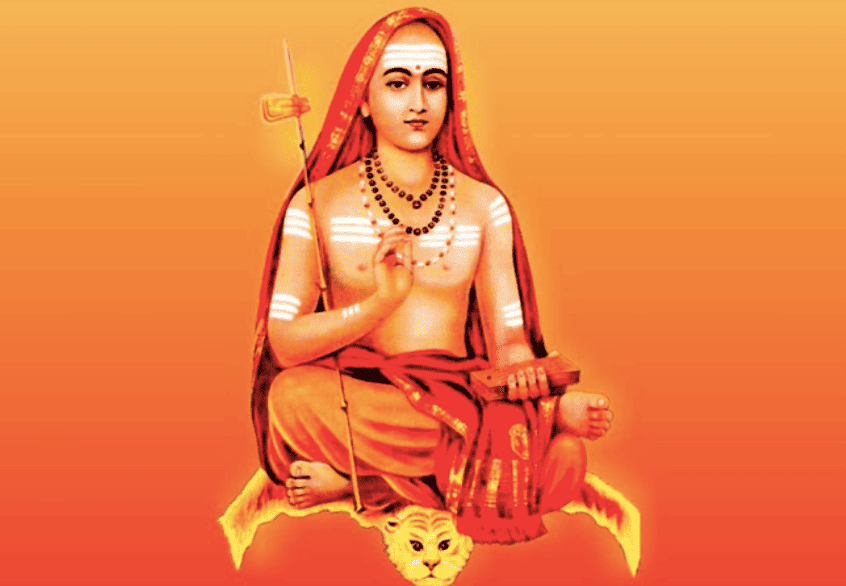
Sanatan Dharma Shankaracharya
The Unifier, Philosopher, and Eternal Guide
To speak of Adi Shankaracharya is to speak of the very spine of Hindu philosophical thought. In a mere 32 years of life (traditionally dated 788–820 CE), he accomplished what centuries could not: he revitalized, consolidated, and systematized Sanatan Dharma (the eternal order) at a time of profound existential crisis. He was not merely a philosopher but a dynamic force of nature—a theologian, commentator, poet, organizer, and spiritual revolutionary. His title, “Shankaracharya,” meaning “the teacher Shankara,” has become synonymous with a lineage of supreme spiritual authority. To understand his impact is to understand how Sanatan Dharma survived, thrived, and articulated its most profound truths to the world.
I. The Historical Crucible: India Before Shankara
Before Shankara’s advent, the spiritual landscape of India was complex and fragmented. The pristine clarity of the Vedas and Upanishads had given way to a proliferation of interpretations and practices.
- Philosophical Proliferation and Conflict: Six major darshanas (philosophical viewpoints) existed—Nyaya, Vaisheshika, Samkhya, Yoga, Mimamsa, and Vedanta. While valuable, they often contradicted each other. More critically, non-Vedic systems like Buddhism and Jainism had gained immense royal patronage and intellectual sway. Buddhist philosophy, particularly the Madhyamaka (Middle Way) of Nagarjuna, with its profound doctrine of Shunyata (emptiness), posed a rigorous intellectual challenge to the concept of a permanent Self (Atman) and a creator God.
- Ritualistic Stagnation: The Purva Mimamsa school emphasized the meticulous performance of Vedic rituals (karma-kanda) for material rewards and heaven, often overshadowing the Upanishadic quest for spiritual liberation (moksha).
- The Rise of Devotional Cults: Simultaneously, theistic movements devoted to Shiva, Vishnu, and the Goddess were burgeoning, often existing in parallel to, or slightly apart from, the Vedic corpus.
- A Need for Synthesis: Sanatan Dharma appeared as a constellation of disparate stars without a unifying galaxy. The need was for a thinker who could reconcile ritual with philosophy, theism with monism, and personal devotion with impersonal absolute truth. The age was crying out for a synthesis that could answer profound doubts and unify a fractured spiritual culture.
II. The Life of a Spiritual Prodigy: Legend and History
Shankara’s life, as recorded in later hagiographies like the Shankara Vijayams, is a tapestry of miracle, mission, and relentless activity. While historical details are interwoven with legend, the narrative outlines a compelling archetype of the divine messenger.
Born in Kaladi, Kerala, to pious Brahmin parents, Shankara exhibited signs of extraordinary intelligence and spiritual inclination from childhood. His renunciation (sannyasa) at the tender age of eight, after being permitted by his mother following a crocodile incident, marks the beginning of his destined path. He sought a guru, finding Govindapada Acharya, a disciple of the sage Gaudapada, on the banks of the Narmada. Under him, Shankara mastered the texts of Advaita (non-duality).
His guru then commanded him to go out into the world and write commentaries (bhashyas) on the principle scriptures to re-establish Vedic wisdom. Thus began his digvijaya (conquest of the quarters). Shankara traversed the length and breadth of India on foot, engaging in philosophical debates (shastrarthas) with scholars of all traditions. His debates with Mandana Mishra (a renowned Mimamsaka), with the latter’s wife Ubhaya Bharati as referee, and his profound dialogue with the ritualist Kumarila Bhatta, are legendary. He is said to have debated Buddhists, Jains, and Tantrics, invariably emerging victorious through the force of his logic and realization.
Beyond debate, he organized. He established four mathas (monastic institutions) at the four cardinal points of India to preserve and propagate Sanatan Dharma:
- Jyotir Matha at Badrinath (North) – Atharva Veda
- Govardhana Matha at Puri (East) – Rig Veda
- Sringeri Sharada Peetham at Sringeri (South) – Yajur Veda
- Dwaraka Pitha at Dwarka (West) – Sama Veda
Each was placed under one of his four chief disciples (Totakacharya, Padmapada, Hastamalaka, and Sureshvara). This act created a permanent, organized structure for spiritual authority and Vedic learning, a masterstroke of institutional foresight.
He is also credited with composing a vast corpus of original works, hymns, and poems, and with unifying various sectarian practices by installing Yantras and codifying the worship of five deities (Panchayatana Puja: Shiva, Vishnu, Devi, Ganesha, Surya). His life concluded at Kedarnath, where he is believed to have entered mahasamadhi (conscious departure from the body) at 32, his mission utterly and miraculously complete.
III. The Core of the Doctrine: Advaita Vedanta
Shankara’s philosophical system, Advaita (Non-Dual) Vedanta, is a towering edifice of logic and mystical insight. It is a rigorous interpretation of the Prasthanatrayi—the Upanishads, the Brahma Sutras, and the Bhagavad Gita. His core teachings can be distilled into the Mahavakyas (Great Sayings) of the Upanishads:
- Prajnanam Brahma (Consciousness is Brahman) – Aitareya Upanishad
- Aham Brahmasmi (I am Brahman) – Brihadaranyaka Upanishad
- Tat Tvam Asi (That Thou Art) – Chandogya Upanishad
- Ayam Atma Brahma (This Self is Brahman) – Mandukya Upanishad
From these, he built his system on a few foundational pillars:
- Brahman as the Sole Reality (Sat): The absolute, ultimate reality is Brahman. It is nirguna (without attributes), nirakara (formless), infinite, eternal, unchanging, and beyond all description. It is pure existence (sat), consciousness (chit), and bliss (ananda). This is the ground of all being.
- The Illusory World (Maya): The world of names, forms, duality, and change is not ultimately real. It is Maya, often translated as “illusion” but better understood as a “relative reality” or a “phenomenal appearance.” Maya is the inscrutable power (shakti) of Brahman that projects the manifold universe, just as a magician (mayavi) projects illusions. It has two functions: avarana (veiling the real) and vikshepa (projecting the unreal). The world is empirically real (vyavaharika satta) but transcendentally unreal (paramarthika satta).
- The Individual Self (Jiva) and Its Error: The individual soul, or jiva, is none other than Brahman itself. However, due to avidya (ignorance) and the veiling power of Maya, the jiva identifies itself with the limited body-mind complex (upadhis). This is the fundamental error of adhyasa (superimposition), mistaking the real for the unreal and the unreal for the real. The feeling of “I am the body, I am the doer, I am the enjoyer” is the root of all suffering (samsara).
- Liberation through Knowledge (Jnana): Since bondage is caused by ignorance (avidya), liberation (moksha) can only be achieved by its removal through knowledge (jnana). This is not intellectual knowledge but direct, intuitive realization (anubhava) of one’s true nature as Brahman. Shankara emphasizes that moksha is not something to be attained anew; it is the recognition of what one has always been. “I am Brahman” is not a statement of achievement but of fact.
- The Role of Karma and Bhakti: Shankara is often misrepresented as dismissing devotion and ritual. He did not. He established a graded path (adhikara-bheda). For the vast majority, ritual action (karma) and intense devotion (bhakti) are essential for purifying the mind (chitta-shuddhi) and cultivating the qualities of a seeker (sadhana-chatushtaya: discrimination, dispassion, sixfold virtues, and longing for liberation). However, for the ripe aspirant, Jnana Marga (the path of knowledge) alone is the direct means to liberation. His prolific devotional hymns (Stotras) to Shiva, Vishnu, Devi, and others attest to his embrace of bhakti as a supreme form of preparation.
IV. The Architectural Work: Commentaries and Treatises
Shankara’s literary output is staggering in its volume, depth, and clarity. His Bhashyas (commentaries) are not mere explanations; they are definitive philosophical treatises that reshape the reader’s understanding.
- Commentaries on the Prasthanatrayi: His Brahmasutra Bhashya is his magnum opus, systematically defending Advaita against all rival schools. His commentaries on the ten principal Upanishads and the Bhagavad Gita extract their non-dual essence, often reinterpreting seemingly dualistic passages in a higher light.
- Prakarana Granthas (Introductory Treatises): Works like Vivekachudamani (The Crest-Jewel of Discrimination), Upadeshasahasri (A Thousand Teachings), Atma Bodha (Knowledge of the Self), and Aparokshanubhuti (Direct Experience) are masterpieces of pedagogical clarity, outlining the path of knowledge step-by-step for sincere seekers.
- Devotional Hymns: Compositions like Saundarya Lahari (Waves of Beauty) to the Goddess, Shivananda Lahari (Waves of Shiva’s Bliss), Bhaja Govindam (Worship Govinda), and Kanakadhara Stotram are imbued with both deep philosophical meaning and intense devotional fervor, showing the seamless blend in his own consciousness.
V. The Dialectical Conquest: Engaging with Rival Schools
Shankara’s genius lay in his dialectical method. He engaged with his opponents not to vilify them, but to show how their views were partial truths sublated within the higher synthesis of Advaita.
- Against Buddhism: This was his most significant engagement. He refuted the Buddhist denial of a permanent Self (anatman) by demonstrating that the very act of denying requires a conscious denier. He argued against the momentariness of reality and the doctrine of shunyata (emptiness), positing that absolute emptiness is inconceivable and that Brahman as pure consciousness is the positive ground of all appearance. In a profound sense, he absorbed the logical rigor of Buddhist thought to fortify the Upanishadic vision.
- Against Purva Mimamsa: He challenged the primacy of ritual action, arguing that rituals, bound by time and desire, can never lead to timeless liberation. They produce only finite results and reinforce the sense of agency (kartritva-bhava). He re-established the Upanishadic Jnana Kanda as the culminating part of the Veda.
- Against Samkhya: He refuted its dualism of Purusha (consciousness) and Prakriti (matter), arguing that an insentient Prakriti could never evolve without the presence of consciousness. He also rejected its plurality of Purushas, advocating for one universal Self.
- Against Other Vedanta Schools: He preemptively addressed the interpretations that would later crystallize into Ramanuja’s Vishishtadvaita (Qualified Non-Dualism) and Madhva’s Dvaita (Dualism), defending his strict non-dual reading of the Brahma Sutras.
VI. The Living Legacy: The Shankaracharya Tradition
Shankara’s legacy is not frozen in the 8th century; it is a living, breathing tradition that continues to shape Sanatan Dharma.
- The Maths and the Shankaracharyas: The four mathas he established, along with others like Kanchi Kamakoti Peetham (which claims direct lineage), continue to function as the highest seats of Advaita learning and spiritual authority. The titular head, the Shankaracharya, is considered a Jagadguru (world teacher), playing a crucial role in guiding the faithful, preserving rituals, and intervening in social and religious matters.
- Influence on Later Thinkers: Every major philosopher who came after him had to contend with Shankara. Ramanuja, Madhva, Vallabha, and Chaitanya developed their theistic systems in explicit dialogue or opposition to Advaita. In the modern era, figures like Swami Vivekananda, Ramana Maharshi, and Sri Aurobindo have all engaged deeply with his teachings.
- Global Impact: Through the work of the Ramakrishna Mission, the Transcendental Meditation movement, and various Advaita teachers in the West (from Swami Chinmayananda to modern “neo-Advaita” speakers), Shankara’s core message of non-dual consciousness has become a global spiritual currency, influencing thinkers from Schopenhauer to Aldous Huxley.
VII. Critical Perspectives and Misconceptions
No thinker of such stature is without critics and misunderstood aspects.
- Accusations of World-Denial: Critics, including other Hindu schools, argue that by labeling the world as maya, Advaita devalues the reality of life, love, and social duty. Defenders counter that recognizing the world’s relative reality is not denial but proper perspective—it allows engagement without bondage.
- Elitism of the Path of Knowledge: Jnana Marga is seen as accessible only to a rare few intellectuals. Shankara himself acknowledged this, hence his institutionalization of devotional and ritual practices for the masses through the mathas.
- Interpretations of Maya: Later Advaitins have debated whether Maya is an illusion, a power of Brahman, or a mere epistemological error. These debates keep the philosophy dynamic.
VIII. Conclusion: The Eternal Teacher for the Eternal Dharma
Adi Shankaracharya’s life and work represent the very essence of Sanatan Dharma—eternal, adaptable, profound, and unifying. He was the ultimate synthesizer. He harmonized the impersonal Brahman with the personal Ishwara, the ascetic sannyasin with the temple devotee, the rigorous logic of the scholar with the heartfelt outpouring of the poet. He provided an intellectual fortress for Hindu thought while keeping its gates open to all through the paths of devotion and duty.
He demonstrated that Sanatan Dharma was not a collection of disparate beliefs but a coherent, rational, and experiential science of consciousness. In an age of fragmentation, he provided unity; in an age of skepticism, he provided unshakable logical foundation; in an age of ritualistic excess, he re-centered the quest for liberation.
More than a philosopher, he was a sadguru—a true teacher who, out of boundless compassion (karuna), took upon himself the monumental task of restoring the light of knowledge. He did not found a new religion; he cleared the overgrowth obscuring the eternal path. His message, echoing the Upanishads, remains the ultimate reassurance and challenge: “You are not the limited, suffering creature you take yourself to be. You are the infinite, blissful, eternal Brahman. Realize this, and be free.”
In every generation, when dogma clouds truth or fragmentation weakens spirit, the voice of Shankara calls out from the heights of Advaita, reminding humanity of its divine nature. He is, and remains, the timeless Acharya for the timeless Dharma.
Top 100 name of Sanatan Dharma Shankaracharya
Here is a list of 100 prominent names and titles associated with Sanatan Dharma and Shankaracharya, including historical figures, titles, and spiritual leaders:
1. Adi Shankaracharya Lineage (Main Four Peeths)
- Adi Shankaracharya (Founder of Advaita Vedanta, 8th century)
- Swami Swaroopanand Saraswati (Shankaracharya of Dwarka & Jyotirmath)
- Swami Bharati Tirtha (Shankaracharya of Sringeri Peeth)
- Swami Nischalananda Saraswati (Shankaracharya of Govardhan Peeth, Puri)
- Swami Avimukteshwaranand Saraswati (Successor of Swami Swaroopanand)
- Swami Sadananda Saraswati (Former Shankaracharya of Puri)
- Swami Abhinava Vidyatirtha (Shankaracharya of Sringeri, 20th century)
- Swami Chandrasekhara Bharati (Shankaracharya of Sringeri, 19th century)
- Swami Vidyaranya (14th-century Shankaracharya of Sringeri)
- Swami Bharati Krishna Tirtha (Shankaracharya of Puri, Vedic Mathematics)
Courtesy: Hyper Quest
2. Other Important Shankaracharyas
- Swami Madhusudan Saraswati (16th-century Advaita scholar)
- Swami Brahmananda Saraswati (Shankaracharya of Jyotirmath, 20th century)
- Swami Karapatri Maharaj (Great Advaita scholar)
- Swami Krishnabodha Ashrama (Jyotirmath Shankaracharya)
- Swami Vasudevananda Saraswati (Govardhan Peeth, Puri)
- Swami Niranjananda Saraswati (Jyotirmath Shankaracharya)
- Swami Nirvikalpananda Saraswati (Govardhan Peeth)
- Swami Rajarajeshwara Bharati (Sringeri Peeth)
- Swami Sacchidananda Saraswati (Jyotirmath)
- Swami Vishnu Tirtha Saraswati (Shankaracharya lineage)
3. Spiritual Titles & Names of Shankaracharya
- Jagadguru (Universal Teacher)
- Advaita Acharya (Teacher of Non-dualism)
- Bharati Tirtha (A title in Sringeri tradition)
- Saraswati (Common title in Shankaracharya lineage)
- Puri (Another common title)
- Giri (Used in monastic orders)
- Tirtha (Sacred pilgrimage)
- Ananda (Bliss, spiritual enlightenment)
- Ashrama (Stage of spiritual life)
- Paramhansa (Highest spiritual state)
4. Foundational Disciples of Adi Shankaracharya
- Padmapadacharya (Disciple, Govardhan Peeth)
- Hastamalakacharya (Disciple, Sringeri Peeth)
- Totakacharya (Disciple, Jyotirmath Peeth)
- Sureshwaracharya (Disciple, Dwarka Peeth)
5. Famous Scholars & Saints Influenced by Shankaracharya
- Swami Vivekananda (Advaita philosopher)
- Swami Chinmayananda (Advaita teacher)
- Swami Dayananda Saraswati (Modern Vedanta teacher)
- Swami Rama Tirtha (Vedanta preacher)
- Swami Sivananda Saraswati (Founder, Divine Life Society)
- Swami Yukteswar Giri (Kriya Yoga & Vedanta)
- Swami Ramatirtha (Vedantic saint)
- Swami Akhandananda Saraswati (Vedanta teacher)
- Swami Tapovan Maharaj (Guru of Swami Chinmayananda)
- Swami Omkarananda Saraswati (Advaita master)
6. Historic & Mythological Influences
- Veda Vyasa (Compiler of Vedas, Mahabharata)
- Madhusudana Saraswati (Advaita philosopher)
- Gauḍapāda (Guru of Adi Shankaracharya’s Guru)
- Govinda Bhagavatpada (Guru of Adi Shankaracharya)
- Ramana Maharshi (Advaita sage)
- Sri Ramakrishna (Spiritual master of Swami Vivekananda)
7. Shankaracharya & Hindu Temples
- Kanchipuram Shankaracharya (Kamakoti Peeth)
- Badrikashram Jyotirmath (Jyotirmath Peeth)
- Sringeri Sharada Peetham (South India)
- Dwarka Sharada Peeth (West India)
- Govardhan Math Puri (East India)
8. Other Important Vedantic Titles
- Vedanta Kesari (Lion of Vedanta)
- Sarvajna Peethadhipati (Master of Supreme Knowledge)
- Vidyashankar Bharati (Title for Shankaracharya lineage)
- Atmananda Saraswati (Advaita master)
- Anubhavashrama (Experience of the Self)
9. Shankaracharya’s Major Works
- Brahma Sutra Bhashya (Commentary on Brahma Sutras)
- Bhagavad Gita Bhashya (Commentary on Gita)
- Upanishad Bhashya (Commentaries on Upanishads)
- Vivekachudamani (Crest Jewel of Discrimination)
- Aparokshanubhuti (Direct Experience of the Self)
- Atmabodha (Knowledge of the Self)
- Drg-Drsya Viveka (Seer and the Seen)
- Tattvabodha (Knowledge of Reality)
- Saundarya Lahari (Hymn on Devi)
- Dakshinamurti Stotra (Praise of Lord Shiva)
10. Major Contributions of Shankaracharya
- Unification of Hinduism
- Revival of Advaita Vedanta
- Establishment of Monastic Orders
- Promotion of Sanskrit Learning
- Debates with Buddhist & Jain Scholars
- Installation of Jyotirlingas
- Writings on Bhakti & Jnana
- Hymns to Lord Shiva & Vishnu
- Foundation of Hindu Pilgrimage Circuits
- Influence on Modern Hindu Saints
11. Shankaracharya & Other Dharmic Traditions
- Debates with Mandana Mishra (Ritualist scholar)
- Teachings on Jnana & Bhakti (Harmony of paths)
- Teachings on Karma & Moksha (Liberation through knowledge)
- Influence on Bhakti Movement (Devotion & Advaita)
- Teachings in Char Dham Temples
- Influence on Vaishnavism & Shaivism
- Establishment of Yatra Traditions
- Harmonization of Different Vedic Schools
- Teachings on Maya (Illusion)
- Propagation of Sanatan Dharma Principles
Courtesy: Aditya Movies
12. Legacy & Influence
- Influence on Ramakrishna Mission
- Impact on ISKCON (Krishna Consciousness)
- Integration with Tantra Traditions
- Reforms in Hindu Monasticism
- Influence on Western Philosophers
- Preservation of Upanishadic Teachings
- Advaita Vedanta in Modern Universities
- Role in Hindu Renaissance
- Revival of Ancient Vedic Traditions
- Symbol of Hindu Unity & Spiritual Awakening
These names and titles showcase the profound impact of Shankaracharya on Hinduism and Sanatan Dharma.

Table of Contents